Home Blog Page 550

BREAKING: Zim lock-down extended indefinitely

0

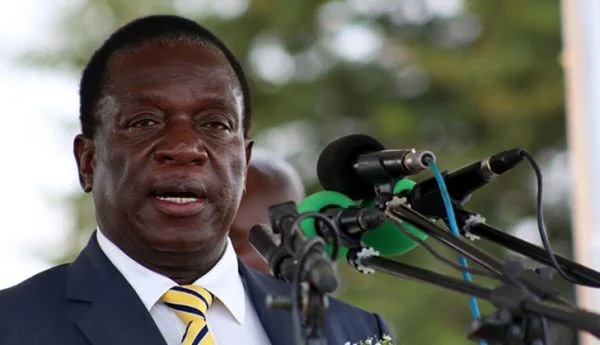
Zimbabwe President has extended the lock-down indefinitely. The President said the lockdown will be reviewed every two weeks until further notice.

See video below:

Mnangagwa to address the country on lock-down today

0

President Mnangagwa is set to address the country on lock-down today. Zimbabwe like the rest of the world is currently fighting to minimise the spread of Coronavirus Covid-19.

Zimbabwe has been under lock-down for since the end of March 2020. Mining, Agriculture and other essential services were exempted and allowed to operate. The government recently announced that formal businesses are now allowed to operate which came as a relief to already struggling businesses. However, the partial lifting of the lockdown came with its challenges.

Public transport has been scarce with Harare residents waiting for transport for over four hours. This has forced more businesses to either hire alternative transport for their workforce or still have people working from home. Banks, other outlets in many suburbs are still shut down something that Zimbabwe at the present moment cannot afford.

More countries now easing the lock-down

Italy’s government has signed a decree that will allow travel to and from the country from 3 June, as it moves to ease its coronavirus lockdown measures. 31,600 died from the virus in the country, the third-highest figure behind the US and UK.

Boris Johnson published his plan to “give people hope” in the form of his long-awaited “roadmap” for getting Britain out of its coronavirus lockdown. The UK Prime Minister in a stark admission said it is possible that a vaccine for coronavirus may never be found, meaning the UK is in for a “long haul” in the fight against the virus. He is expected to announce the partial lifting of the lock-down with more people being encouraged to return to work.

Uganda began to loosen one of Africa’s strictest anti-coronavirus lockdowns on Tuesday after President Yoweri Museveni declared the infection “tamed.” The country of 42 million reported 97 confirmed cases and no deaths in 45 days of restrictions, and Museveni said it was now better equipped to trace and detect new infections faster.

In South Africa the Main opposition leader John Steenhuisen announced the DA party’s intention to take court action to challenge lockdown regulations, arguing that President Cyril Ramaphosa left South Africans ‘bitterly disappointed’ on Wednesday night by not announcing the reopening of the economy and by not ending the hard lockdown. South Africa is also expected to ease the lock-down to level 2 or 3.

As more and more countries are beginning to lift the lock-down restrictions and remains to be seen what Zimbabwe will decide. President Mnangagwa is set to address the country on lock-down today.

Fidelity explains cash shortages at gold buying centres

0

Fidelity Printers and Refiners boss says cash shortages from their gold buying centres are due current COVID-19 pandemic that has disrupted foreign currency inflows into the country and dismissed the allegations of forex misuse by Chinhoyi employees.

Miners have been complaining that the Chinhoyi branch is out of hard currency yet Fidelity was collecting gold from miners. Some miners even went as far as accusing workers at the Chinhoyi branch of misusing the money at the expense of miners.

Fidelity Printers and Refiners general Manager Mr Fradreck Kunaka said, “We would like to reiterate that the current cash shortages have nothing to do with employees at our buying centres rather its due to the cash movement disruption brought about by the COVID 19 lockdown”.

FPR has been diligently paying all the miners who deliver their gold using the formal channels and with the relaxation on the lockdown measures, we are hoping we will start receiving cash and all payments will normalise.

The coronavirus COVID-19 is affecting over 200 countries in the world with countries resorting to restricting movements in an effort to combat the deadly disease. This has disrupted world trade as many countries banned incoming and outgoing commercial or passenger flights. South African gold refiner RAND REFINERY stopped shipping gold to London on 30 March 2020 because of a lack of commercial flights, adding to the disruption that’s upending the physical bullion market. However business is set to improve as some countries have began easing trade restrictions.

Lack of synergies between Ministries has Norton houses built on gold mines

0

Lack of synergies between the Local government and Mines and Mining Development Ministry has had some houses in Norton built on top of minable gold claims.

The Mines ministry was made aware of the development by Norton Miners Association in 2018 after inspection of Mines maps.

According to mine maps, some areas in Galloway, Ngoni Township, Katanga, Knockmalloch estate, and Knowe are built on Minable gold claims.

We contacted Norton miners Association Mr. Privelage Moyo who said,” There is a case in Norton whereby Udicop through local government was given the land for housing and Ministry of mines had claims, so now the gold is worthlessly buried under houses”.

“According to the Ministry of mines map of Norton, more gold claims are shown or marked in areas that already have residential properties. There are areas and claims were new developments were taking over vast tracks of sustainable good and very rich minable land area”.

Land use conflict between Ministries leaves a lot to be desired as local government parcels out land for urban expansion while Mines Ministry issue out claims on the same mining land, and on the other hand Ministry of Agriculture also parcelling plots.

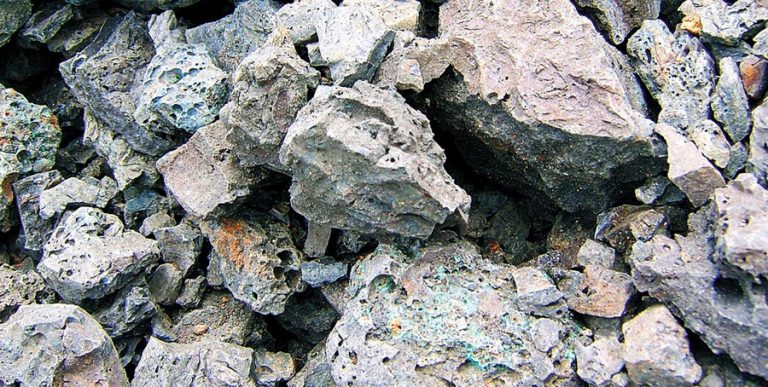
Last year Mining Zimbabwe was made aware of unprocessed sand which the department of metallurgy confirmed of consisted of gold, iron ore 52.33 per cent, and red oxide ore with 19.68 per cent which was being used for road construction on the Harare – Bulawayo dualisation project.

Issues like these can easily be eradicated by having synergies between town councils, Agriculture and Mines Ministry consultations before any land is given away.

Interview: Keith Mandisodza – Geotechnical Engineer

0

This week on Inside Mining Zimbabwe I had the privilege of interviewing not only someone with a similar name as mine but someone who is making Zimbabwe proud with the outstanding work he has done back home, on the continent and now abroad.

Keith Mandisodza has years of multi-disciplinary experience in mining and civil geotechnics and mine engineering throughout Australia, Southern Africa, South America and Madagascar to his role as Principal Geotechnical Engineer for Cartledge Mining and Geotechnics. Keith’s proven expertise is in delivering operational support studies, technical reviews and audits, operational improvement through practical and innovative solutions, open cut and underground mine design and tailings monitoring and management. Previously, Keith Mandisodza has worked as a site operational geotechnical engineer and rock mechanics engineer at different levels, both underground and open-cut, in Zimbabwe, Zambia, Madagascar, Suriname and Australia.

What is the importance of a mine geotechnical Engineer, how does continuous geotechnical data collection and analysis of importance to mines in Zimbabwe?

A geotechnical engineer is an integral part of the mine technical services, which is usually a department that is responsible for strategic mine planning and effective technical guidance of mining operations. The main role of geotechnical engineers in this integrated functional group is, to provide timely advice to management and operational teams regarding rock or soil mass responses to excavation; to provide ground engineering support to achieve mine production targets, and to identify opportunities to improve geotechnical aspects of the mine design.  These multi-faceted functional roles require enough data collection to be able to provide adequate geotechnical recommendations as per the code of ethics and engineering judgement. Continued data collection allows for improvements in supporting models that can always be inferred for guidance when making important decisions for operations. Hence, allowing for more optimisation and effective implementation of risk management instruments to prevent and mitigate against unwanted events through critical controls.

How does geotechnical data collection of significance in mine design?

The cornerstone of any practical geotechnical analysis and design work is the database upon which the definition of input material properties is defined. Even the most sophisticated analysis can become a meaningless exercise if the geotechnical information upon which it is based is inadequate or inaccurate. Hence, data collection plays a significant part in design optimisation.

Geotechnical Engineers rose to popularity around the 2000s, how have they done the world over to reduce mine accidents and improve efficiency?

Point of correction, geotechnical engineers have been around since the 1920s. In Zimbabwe, because we didn’t have geotechnical engineering courses at universities (and still don’t), it has taken long to have such a career path for many, because it is not a commonly talked about field to be considered as a career path at schools and universities. Many of us had to go through other alternative courses to practice as geotechnical engineers. Back in the day geotechnical engineers were “godfathered” in the industry after a geology degree, mining degree, or a civil engineering degree. Some had to pursue a postgraduate degree in geotechnical engineering to practice as a geotechnical engineer.  However, this has since changed through the years and geotechnical engineering undergraduate degrees are now being offered at universities worldwide, and still to be introduced at Zimbabwean universities.  My geotechnical career path has been through a geology degree, which I completed at the University of Zimbabwe, and then pursued a postgraduate degree in Geotechnics, in the United States.

Regarding the second part of the question, I may not be able to quantitatively give a statistical representation of how geotechnical engineers have done to reduce mine accidents but, since the turn of the 20th century, there is now a better understanding of the geological setup of most work environments which results in calculated risk frameworks formulation based on the knowledge accumulation, to manage geotechnical risks subsequently improving the general health, safety and environment of respective work areas. Since the turn of the decade, global technological advancements have played a critical role in the improved management of geotechnical hazards through more advanced approaches to numerically model the variability and complex geological conditions which play a critical role in geotechnical designs.

How important is risk management to geotechnical engineers, can the Zimbabwe mining sector benefit from geotechnical Engineering, and to what extent?

Risk management involves the coordination of activities to direct and control an organisation with regard to risk. In the mining (and/or civil) sector(s), geotechnical risks are often associated with an operational function to health and safety considerations as well as economic considerations for projects. It is fundamental, as geotechnical engineers, to have risk‐management skills, validated through detailed assessments of geotechnical risks to projects.

The use of modern technology in geotechnical Engineering is of importance, is the country ready to adapt to an updated mine planning software because the world is heading towards 5G network, yet we are yet to use 4G?

Yes. In fact, most mines will probably have more advanced network systems relative to most areas due to the requirement of such robust network systems, which enable operations and processing efficiency. However, regardless of the mining network requirements, the government should be setting up strategic infrastructure enabling the country to embrace technological advancement and harness its unlimited potential to systems improvements in general.

What is the significance of developing and implementing a site-specific Ground Control Management Plan in geotechnical engineering, how does modern mining gain from this? Can Small scale miners try to implement this at a small scale of course?

A geotechnical Ground Control Management Plan or GCMP, as it is known in the industry, is the main governing document for risk management of geotechnical critical controls. It is the main operational document that outlines; the regulatory framework for practice; site physical location setting and controlling factors; mine design and operation process; legal appointments, accountabilities and responsibilities of all stakeholders; risk profiling and risk management of operations; geotechnical processes considered to manage risks; mine design verification processes; quality control and quality assessments (QAQC) processes; review and audit processes. It is based on an observational method criterion where systems can be established, implemented, monitored, reviewed, and reused in that cyclic fashion.

How feasible is the statement, “to seek continuous improvement of the initial mine design to safety increase mine value and derisk long term production profile?

During the early stages of mine designing and project development, data availability is limited meaning, the reliability of the design models is low. Thus, there is a need for continuous data collection and processing to feed into these models and improve reliability. In so doing, improved designs in terms of safety and economic mine value can be implemented, reducing associated safety and productivity risks.

What is the impact of detailed geotechnical design on pit mining economics?

In most cases, the value of open-pit mining is driven by the ore to waste ratio, which subsequently determines the strip ratio. The lower the strip ratio, the higher the return for the operation and vice-versa. Slope designing through the determination of the optimum slope angle that meets both economic and safety criteria is a critical function of the geotechnical engineers. This process is achieved through the collection of relevant site geological parameters and application of rock or soil mechanics principles. It is this critical function of the geotechnical engineers to provide design parameters that produce the most value for the excavation that is reflected through the mining economics.

How does a detailed geotechnical design of importance on an underground mine?

In underground operations, optimisation of the mine infrastructure and mining method is a key metric that determines the ore extraction per meter development. Optimisation of the ground support demands relative to excavation profiles, rock mass parameters, geological structure, stress and seismicity is also critical. These importance metrics are determined by geotechnical engineers. A good design that considers all the relevant input parameters in the feasibility study of a mine site will also determine the economic values of that mine operations. Thus, geotechnical engineers play a major role in the early stages of mine design and planning.

How does a geotechnical Engineer solve the impacts of geological factors on a mine, both underground and open-pit?

A good geotechnical engineer should have a sound geological background, in both theoretical and practical aspects, to be able to deal with most issues that affect mine operations. Considering that most mines are located in geologically complex areas, it is pertinent for the geotechnical engineer to familiarise themselves with the underlying geological controls that led to the formation of the orebody on a regional and local scale, and be able to determine optimised designs and ground support requirements. Failure to preconceive the importance of underlying geological conditions lead to under-designing or over-designing, leading to safety and economic connotations.

If you meet the Mines Minister Hon Winston Chitando what five things will you advise him on Zim mining.

Through my diverse experiences in different continents, mining methods and mining governance systems, the five most important things I can advise the mines minister are,

  • Implementation of effective policies that allow for investors to invest in Zimbabwe
  • Attractive mining policies that bring employment opportunities to the locals and improve the economic situation of the country
  • Belief in our own people, especially those qualified and experienced in the field, and give them relevant opportunities to implement change through embracing technology and innovation
  • Setup of transparent systems that account for mineral exploitation and trade. Zimbabwe is known to be a mineral wealth country, yet we struggle to account for this mineral wealth in our economic systems and policies, this must change.
  • Put tighter legal frameworks to streamline the exploitation of minerals rights systematically and thus, filter away all illegal avenues through which accountability is failing currently and replace these with more robust and dynamic systems that support accountability.

What can Zimbabwe do differently to attract foreign investment?

I think to reiterate what I have highlighted above, setting up systems that attract investors will be a key factor in bringing back that lucrative attraction to the investor community. I have been in situations where companies have been looking for countries to invest and expand their respective portfolios and it’s quite unfortunate that they don’t find most African countries meeting all the key criteria that often provides that business attractiveness, mainly due to a bad reputation that has been ingrained in the way most African countries do business in general. Now, because the grain has been forged and set in that specific orientation going against the grain will result in those interested companies getting some “business splinters”, which many are not comfortable with. Hence, for Zimbabwe to be different from this outlook, it has to set up systems that counteract positively the current perception set by many African countries. This won’t be an easy feat but very achievable, and will definitely set the country as a beacon of hope for many to follow. Despite the volatility associated with doing business in the African continent, that many investors are not willing to take aboard, I do feel that the future of the mining industry is in Africa. Thus, in light of this perspective, it’s only prudent for a country to position itself strategically to be able to benefit, and take advantage of its very own potential.

What motivated you to move from geology to Geotech?

In my opinion, and I guess in many others too, geology sets a solid foundation for one to be a good geotechnical engineer. Considering that, when I started studying geology, physics, and mathematics at the University of Zimbabwe, I didn’t know what I was getting myself into. But, because I had a strong passion to understand how things work, I grew into the science and it also grew into me. Graduating with a degree in geology and physics opened an opportunity for me to work as a geologist at Shabanie mine, and it was at this mine that I was moulded into first, a rock mechanics geologist, and later a rock mechanics engineer. It took me five years to transition from underground mining, practising as a rock mechanics engineer, to open-pit mining, when I moved to Zambia, to become a geotechnical engineer. I don’t think there was any motivation to switch from being a geologist to geotechnical engineer, I am still an ardent geologist at heart and will always be. I guess for me, I evolved or transitioned into geotechnical engineering. However, the only difference I can pick between the two is, geology is a science and geotechnical engineering is a speciality branch of civil engineering that deals with earth materials and is primarily concerned with defining, understanding, and utilising through design the engineering characteristics and properties of these earth materials. On the other hand, geology is an observationally-based science employing not only the myriad of geologic principles but mathematics, chemistry, physics, and biology as tools to characterize the geologic conditions, so they are made for each other, hand-in-glove I would say.

How can mine geotechnical Engineers be incorporated into the small-scale mining sector?

Considering the hazard profile that is associated with small-scale mining, the incorporation of geotechnical engineers is critically essential and will need to be considered by relevant authorities. This will enable the effective management of risks associated with small-scale mining. However, a caveat with such a proposal for mining to proceed with intent to risk abate is the requirement for adequate ground reinforcement or support that will add unwelcome cost to the “mining process”, which might be unfavourable for many small-scale miners.

Do you ever see yourself working in the Zim mining industry?

Absolutely!  Though, there are conditions to that emphatic assertion. First, my family has to be willing to relocate from down under, something that has sort of become a norm for us, having relocated to many continents and countries alike. Also, the reason for relocation has to outweigh all the other counteracting assumptions that are currently there for us as a family. But, if there is one reason I would relocate all things being fair, it will be to bring back home the knowledge I have accumulated in foreign lands, to mentor others, and use that knowledge for the betterment of Zimbabwe. Now in saying that, there are a lot of dots that have to line up from an economic perspective in Zimbabwe, as well as policies and how this knowledge can be harnessed and effectively channelled to improve the systems. Many have already trodden that path before me and the results don’t convince me yet, so we will see.

Words to a Tsitsi who is currently studying to be a Geotech like you?

It’s good to see young girls not only pursue STEM subjects but excel. I am an avid supporter of the girl child and would like Tsitsi to know that she has chosen a great career path. It’s also good to see that you can now get career guidance in the geotechnical space, which many of us never had the chance, and had to learn along the way. Continue learning more and research more about the diversity of geotechnical engineering. Keep abreast with technological advancement, as it will continue to play a significant role in geotechnical engineering space. Get a mentor to guide you on which branch of geotechnical engineering to take, as there are many.  If you decide to follow the mining geotechnics, that will be a great choice, though it will come with a lot of challenges, many of which are learning curves both in your career and life in general. The important thing is to stay true to your passion!

Family life (wife kids)?

Keith Mandisodza is married to a lovely, childhood sweetheart and we have been blessed with three adorable girls.

Besides work what do you enjoy doing in your spare time?

Outside work, Keith Mandisodza enjoys spending time with family and travelling the world. I enjoy watching football especially when United play. I also play soccer will fellow Zimbos in the league in Brisbane. I used to play cricket during my school days but now I enjoy watching it. Outside sport, I enjoy a good read on topics ranging from leadership to science and technology. I have also recently started wine and whiskey collecting, which is quite interesting, especially finding those vintage ones.


This article first appeared in the Mining Newsweek copy of 11 May 2020. 

Chrome miners to form an association

0

A group of Chrome miners has resolved to form a Chrome miners association as a way of eliminating challenges they face in the chrome business. Unlike gold, the chrome market has few buyers making it susceptible to predatory buyers who purchase chrome at unreasonably low prices and has some miners losing out due. Mining Zimbabwe spoke to the brains behind the association, Mr Shelton Lucas.

Lucas said, ”l am a seasoned miner with a bias towards chrome and coloured quartz EG Amethyst. I got a stereotype ideology of thinking outside the box of my limitations by so doing l created groups to effectively share information on the other opportunities that need to be tapped instead of having these traditional gold rushes’.

Why do you feel a chrome miners association should be formed?

Chrome miners should form an association because the are factors affecting chrome miners that might be needing some reflex actions and tend to delay because of the sequential accessibility to the Paramount decision-makers instead of directly by so doing saving time. For example, chrome is volatile in prices as compared to some other metals it once peaked $250/t in 2016 and now its around $40/t but during the peak, no miner in Zimbabwe had a cut of the cake because of the delays caused by MMCZ through apple bridge and RBZ.

How is the association going to benefit members?

The association is going to benefit members through lobbying to the government for horizontal forward integrations. For example, the government can construct chrome smelters in Guruve, Mashava, Ngezi by so doing miners will be hedged from price volatility, poor road network mileage will be reduced and miners can also be having a solidified approach to syndication in terms of equipment hire and marketing.

The association can be able to negotiate a level playing field with other stakeholders so that we can have a standard price of chrome upper dyke lower dyke and off dyke.

It helps lobby for fair disbursement of funds from buyers to mines that are channelled from MMCZ to miners through Applebridge that it benefits all miners not only those that have connections with the people at Applebridge to avoid the cases that once happened in 2017 where some of the miners who were paid didn’t deliver and some unsuspecting miners consolidated the tonnage that was due to the buyers but were never paid.

The association will also advocate for buyers to open different chrome buying centres near the mines as in the same scenario with what Fidelity does to gold.

The association will also ring-fence the miners from chrome smelting companies that are foreign-owned because they sabotage the miners. Due to them owning the value chain that would not allow symbiosis by so doing the miner loses

How is the executive going to be formed?

The executive is going to be formed through elections from the chrome miners and investors forum. We are a group of 150 miners and we have a Whatsapp group created and administered by myself. It is not a group that was formed with a primary objective of forming an association but it was formed in July 2019 and due to the common challenges we were prompted to start an association with the thumbs up of all the active members numbering up to 150.

We have read and seen association conflicts going to court with some not wanting to step down from their positions will you consider that when forming your association?

This association is not going to be for personal aggrandizement there will not be personal individual benefits but for  all miners and they will be a clear constitution to cater for that so the guidelines and principles will be there to avoid such conflicts

Why a new one when there are existing ones like the ZMF for example?

We want a new one which is not under an umbrella group which has a specific mandate not to be represented by some other miners who are mining some other minerals other than chrome in terms of priority representation of specific fields then chrome lags behind. 

What are you going to do differently from other associations?

We are going to be different from some of the organisations because we are going to act transparently and we are people-oriented establishment moved by the plight of miners who have been affected or almost neglected by red tape.

A big challenge in the Mining Industry is miners are usually given tributaries and we once ran an article whereby a couple mined chrome on claims given to them by a chrome company only for someone to come claim they are stealing & up to today no one has come to their aid or even responded including Mines Ministry how will you help alleviate that?

The miners that are on tributaries with specific respect to the conflict that was experienced because of the communication breakdown between the allocation of ceded mines by the big companies. For instance, some miners were on tributaries and those mines were ceded to new miners and ownership changed hands without prior notices that the mines are no longer owned by those big companies to the extent that the new owner will come and claim everything and in prospective tributaries. There is a need for the proper paperwork at the lawyers and notifying the ministry also. Alleviation of these disputes can also be done at the association level before it spills in court since both parties will be affiliated and we will find the fairest way of handling disputes.

Chrome pricing is also a challenge in Zimbabwe your comments?

Chrome pricing is a challenge. It is volatile, most miners sell below the MMCZ stipulated prices because they do not get the chances of having the buyers coming directly to them. The smelting companies have their own mines they need miners as auxiliary suppliers, not main suppliers. By so doing miners are arm-twisted since there won’t be any symbiosis. This can be overcome by value addition through smelting.

Word to those who will want to join your organisation and the qualifying criteria?   

Those who want to join the organisation should be chrome miners with certificates, chrome mining companies, and those prospective chrome miners.

The members should also know that this is not a money-spinning association its direct mandate is to represent miners for the improvement of the chrome mining industry and the entire mining industry as a whole so don’t join expecting those get rich schemes.


You can get in touch with Lucas on [email protected]

As a Potential Covid-19 Induced Recession Looms… Lets go for Gold!

0

Mining analysts are predicting a strong 2020 for Gold prices. An ostensible Covid-19 prompted global recession is set to result in investors exchanging cash deposits for physical gold as a haven against a likely depreciation of the United States dollar.

By: Daniel Nhepera – Minerals Economics, Economic Research Unit

Global prices of refined gold have firmed by about 13.7% since the turn of the year, inflating from US$49.01 per gram on 2 January 2020 to a peak of US$55.82 per gram around the end of April 2020, according to the London Bullion Market Association. This was punctuated by a particular acceleration in prices in the 30 days to the first week of May 2020, where prices shot up by about 5.39%. Taking a cue from the 2008 financial crisis, it is anticipated that the restoration of normalcy for mineral markets, in the wake of the Covid-19 pandemic, may take as many as 24 months. In this time Gold is expected to outperform all other minerals on the global market, thus presenting an opportunity for Zimbabwe to ramp up efforts in output and enjoy golden returns through the downtimes.

Global markets have endured losses over the past three months on account of supply disruptions caused by the suspension of industries in China, as well as the restricted access or closing down of borders by countries worldwide. This was exacerbated by the fact that China manufactures up to one-third of world’s commodities and industrial implements, while also boasting of the world’s largest industry for the conversion of metals (Copper, Chrome and Platinum Group of Metals) and numerous Rare Earth Elements which form essential components of many hi-tech products.

This has had a knock-on effect on the economies of industrialised countries like the United States of America, who, while also battling the ravaging health effects of the Corona Virus, have had to deal with delays in the supply of essential elements from China, such as stainless steel and various technological components, to keep their own industries alive. There is, therefore, an anticipated recession on the horizon, as evidenced by the reactive measures being taken by the USA’s Federal Reserve.

In late March 2020, the Federal Reserve announced the release of a US$1.5 trillion stimulus package which is described as “short term loans to the banks to address unusual disruptions in treasury financing markets as a result of the Covid-19 outbreak.” Pursuantly, in the same month, the Federal Reserve cut its benchmark interest rate to near zero, in an action which is anticipated to permeate through the banks to the banking public, availing low-interest loans to US companies, thereby cushioning them against the effects of the pandemic. Commendably, Zimbabwe has followed the same internationally prescribed recession-proofing model, announcing a ZW$18 billion Economic Rescue Package for distressed companies, as well as trimming the RBZ lending rate from 25 per cent to 15 per cent annum.

The positions taken by the USA Federal Reserve and the Government of Zimbabwe are synonymous with authorities anticipating a recession and implementing necessary defences to avoid the recession from degenerating into a depression. The potential increase in money supply in the USA, on account of the stimulus package and the cheap loans, compounded by the possible printing of money to stimulate demand, may trigger the deflation of the United States dollar. This will bring about an investor exodus from the currency to the customary investor havens, in the form of Gold and Real Estate, as has already begun.

In lieu of this, there is room for Government, through the Ministry of Mines and Mining Development, to identify the potential returns inert within the Gold price trend, and position itself ideally, by means of appropriate policies, to harness the gains. This is particularly so given the likelihood of a converse fall in the prices of Base Minerals, Precious Stones, and Semi-Precious Stones, whose prices are, for the most part, associated with the levels of industrial activity and relative per capita level income in world economies.

Cognisant of the short term nature of the Gold price rally, which is forecast to peak at about US$58 per gram in 2021, measures instilled by Government to ramp up Gold output would have to be of immediate impact. This thereby points to targeting of the small scale gold sector, whose activities are less capital intensive and therefore require less long-lead investments; but whose work efforts notably contribute approximately 60% of Zimbabwe’s total gold output. The government has set aside ZW$1 billion from the Economic Rescue Package for the mining sector, with a healthy portion of the fund expected to benefit the small scale sector. However, despite the financial support, there is still consensus within mining circles that gold submissions to Fidelity Printers and Refiners (27.6 tonnes in 2019) may only represent about 50% of the gold output being achieved from the country. It is therefore apparent that the first port of call for Government would have to be the plugging of gold leakages. If achieved, this alone could double gold submissions to the country’s sole gold buying and marketing agency, without necessarily increasing mining activity from current levels.

Sentiments from the miners are that for the Government to achieve this it is imperative to revisit the Reserve Bank of Zimbabwe foreign currency retention policy.

Sentiments from the miners are that for the Government to achieve this it is imperative to revisit the Reserve Bank of Zimbabwe foreign currency retention policy. This was identified as a significant contributing factor to the smuggling of Gold out of the country. RBZ currently retains 45% of the foreign currency earned by miners from the export of Gold, replacing it with an equal amount in Real Time Gross Settlement, calculated at the Inter-Bank rate. This, however, submits miners to foreign exchange losses on account of the disparity in exchange rates between the RBZ and the parallel foreign exchange market. At current rates of approximately ZW$25: US$1 at the Inter-Bank market, and ZW$50: US$1 at the parallel market, and a gold price of about US$52 per gram, a miner stands to lose about ZWL$585 for every gram of Gold sold to FPR, as opposed to going the illegal Gold buyers route where they receive full payment in hard currency. It is, therefore, a no-brainer as to why a miner, keen extract all possible value from his hard-earned Gold, would opt for the risky illegal route over the Government regulated one.

The RBZ, therefore, needs to assess the gains made from maintaining the foreign currency retention policy at the status quo, against the potential losses being incurred through the smuggling of gold out of Zimbabwe to the benefit of other countries. With pleasant times for Gold prices potentially on the horizon, the Government may need to consider easing from its hardline stance on the foreign currency retention policy and parleying with the miners to the end of finding mutually amenable ground and plugging Gold leakages. This is necessary if the Government is to allow Zimbabwe an opportunity to benefit fully from its Gold resource in the times ahead.


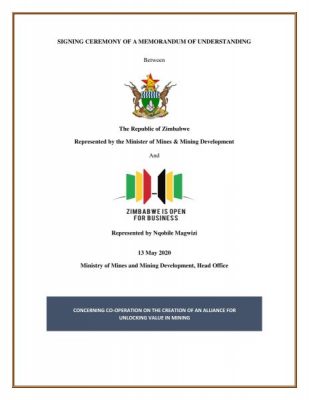
Mines Ministry and OBF sign MOU

0

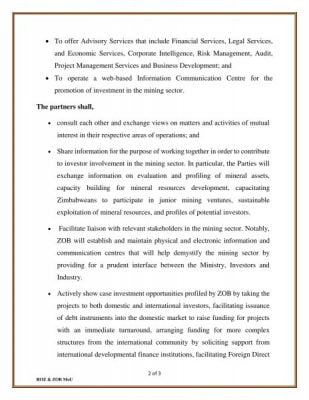
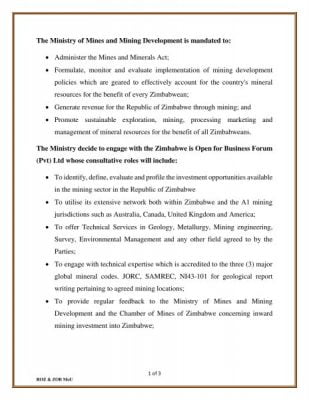
Minister of Mines and Mining Development, Winston Chitando and Zimbabwe is Open for Business Forum (Pvt) Ltd, Represented by Nyaradzo Tongogara signed yesterday signed a MoU towards increased investment for the mining sector.

According to Mines and Mining Development Ministry, the MoU seeks to unlock the mineral value in Zimbabwe and increase revenue and foreign currency inflow as the Ministry works towards a US$12 Billion mining Industry by 2023.

See documents below:-

Mines MOU


Blanket boosts gold production

0

CALEDONIA Mining Corp. registered a strong showing in the first quarter of its 2020 financial year as operating and market circumstances combined favourably – perhaps for the first in a long time for the company.

The importation of more reliable and cheaper power had reduced the potential for operational disruptions at the firm’s Blanket mine which reported a one-fifth increase in gold production of 14,233 oz (Q1 2019: 11,948 oz).

Conditions also improved for Blanket’s employees with the adoption of interbank rate introduced by the Zimbabwean government early in 2019 which eases inflationary pressure on the country.

The market overlay was also supportive. The higher dollar gold price year-on-year contributed towards a 48% increase in gross revenue. The upshot was after lower all-in sustaining costs the company booked 57.3 cents in adjusted basic earnings per share compared to 44.2c/share in the first quarter of its 2019 financial year.

Net cash from operating activities was $10.7m, a two-thirds increase on the $6.3m a year ago taking net cash and cash equivalents to $13.8m as of end-March which compares to the $8.9m position as of December 31.

Caledonia announced a 7.5c/share dividend, a 9.1% increase on the previous dividend paid in October. Future dividend payments would depend on production – which the group did not think was especially vulnerable to the COVID-19 pandemic – and whether new investment opportunities turned up elsewhere in Zimbabwe. During the quarter, the firm bought an additional 15% shareholding in Blanket increasing its stake to 64%.

Steve Curtis, CEO of Blanket, said the future looked positive for the company, but plans to expand Blanket to 80,000 oz/year by means of the Central Shaft project had been complicated by travel and border restrictions brought on by COVID-19.

“Work on Central Shaft continued throughout the lockdowns; however, completion of the project requires specialised equipment and contractors to travel to Blanket from South Africa which under the restrictions is not currently possible,” said Curtis.

“This has not yet resulted in a significant delay to the project and we are receiving a high level of support from the Zimbabwe government to address these issues with the relevant authorities in South Africa,” he said.

Gold production to slump

0

GOLD production in the small-scale mining sector is projected to drop by 29% to 12 tonnes this year due to disruptions caused by COVID-19, an official has said.

The sector, which accounts for more than 60% of gold deliveries to Fidelity Printers and Refiners — an arm of the Reserve Bank of Zimbabwe — last year produced 17 tonnes of gold while major gold producing mines produced 10 tonnes.

In total, the country’s gold output fell 17% in 2019 to 27,66 tonnes, down from 2018’s 33,29 tonnes, according to the central bank, contributing about 37% to mineral exports, down from 43% recorded in the previous year.

The decline was attributable to electricity shortages, gold leakages and inadequate equipment for small-scale miners.

Zimbabwe Miners’ Federation (ZMF) chief executive officer Wellington Takavarasha told NewsDay Business that the miners were struggling to source critical consumables such as explosives due to the COVID-19-induced lockdown.

“We are not sure as of when the COVID-19 will end. At the moment, small-scale mining companies are operating but at low levels while on the other hand prices of gold are not good,” Takavarasha said.

“Some of the miners are not operating. Last year, small-scale miners managed to produce 17 tonnes of gold and in March this year, they produced only one tonne. From these statistics, we are likely to close the year at 11 or 12 tonnes, thereabout,” he said.

Takavarasha said miners were struggling to get consumables such as explosives due to restrictions effected by supply countries such as China and South Africa.

ZMF is an umbrella body for small-scale miners in the country.

Countries around the world have enforced lockdowns and travel restrictions to combat the spread of COVID-19, crippling economies in the process.

The disease has so far killed more than 285 000 people from 4,2 million confirmed cases with Zimbabwe recording four deaths from 36 confirmed cases.

Gold is one of Zimbabwe’s biggest foreign currency earners, having accounted for US$1,3 billion in annual forex receipts in 2019, translating close to a third of total export earnings.

Last year, President Emmerson Mnangagwa launched a strategic roadmap to propel the country’s mining sector to a US$12 billion industry by 2023.

However, the target is under threat due to COVID-19.

Under the mining roadmap, gold is expected to contribute US$4 billion, platinum US$3 billion, while chrome, iron, steel, diamonds and coal contribute US$1 billion.

Lithium is expected to contribute US$500 million and US$1,5 billion will come from other minerals._Newsday