Home Blog Page 560

Full Speech by the President on additional Coronavirus stringent measures

0

Zimbabwe President Emmerson Mnangagwa on yesterday announced further stringent measures to combat the spread of coronavirus (COVID-19) after the country on Monday recorded its first coronavirus-related death.

Full Speech by the President on additional Coronavirus stringent measures

“Fellow Zimbabweans, I am addressing you yet again this evening to give further information on measures, which Government is putting in place to contain the spread of coronavirus.

These measures are also meant to mitigate the impact of the virus on our economy, and on our society in general.
Since my address to you on 17th March, 2020, when we declared Covid-19 a National Disaster, the worldwide spread of this baneful virus has been rapid and surprising.

So far more than 340 000 people have been infected globally; while more than 14 000 people have since died.

The world keeps counting both on new infections and fatalities.

It is a grim picture globally.

As already announced, our country has recorded two cases of infection, both of them imported.

Sadly, in one such case — the latest to be announced — the patient has since succumbed and died.

On behalf of the party, Zanu PF, Government, my family and on my own behalf, I wish to convey my deepest condolences to the family of the late departed on this its saddest loss.

We share in their grief and join them in bereavement.

The sad passing on one of our own, as well as the spiralling infections and deaths worldwide, require that we continue to urgently review our situation with a view to strengthening our defences through additional, more stringent measures.

Like I indicated in my previous address, we might have to limit, suspend or even forego certain social, economic and recreational activities we had grown accustomed to.

The pandemic today challenges all our normal chores, habits and behaviors, and we all now have to adapt a new, unusual social culture.

To keep pace with the fast-changing national and global situation, the Government has decided on the following additional measures which take immediate effect:

Border controls

While our borders remain open to essential traffic, both in the interest of our economy and that of corresponding economies of our region, we have decided to ban inessential travel and traffic, both in-bound or out-bound.

Except for the movement of cargo, the Government will close all our borders to human traffic.

This, however, will not affect returning residents.

Screening on essential traffic will continue to be enforced strictly, in line with best practices and guidelines prescribed by the World Health Organisation (WHO).

As announced previously, measures on designated border crossings remain in force.

Returning residents

All our returning residents will be subjected to strict screening procedures, including rigorous enforcement of the 21-day self-quarantine which must not be breached for whatever reason.

Certificates of Covid-19 fitness, especially from countries with high incidence of infections, would greatly assist all of us in controlling the pandemic both inside our country and globally.

Travel within the country

Further, from now until further notice, the Government discourages unnecessary travel in and around the country.

To the extent possible, families are encouraged to postpone non-essential travel.

Additionally, unnecessary movements beyond homes, including social visits to relatives and friends, should be avoided.

Essential trips should be trimmed to the barest minimum, both by frequency and by numbers involved.

Ban on entertainment and recreational activities

With immediate effect, the Government has put a blanket ban on gatherings around night clubs, bars, beerhalls, movie houses, swimming pools, gymnasiums, and sporting activities, until further notice.

I am aware that this curtailment of social activities will be hard on all of us.

However, such tough measures have become necessary and unavoidable for our collective safety as a nation.

Hospital visits

With immediate effect, visits to hospitals and clinics will be reduced to one visit per day, even then involving one relative per patient.

Public gatherings

With immediate effect, public gatherings may not exceed 50 persons.

Such gatherings include religious fellowships, worship, weddings, conferences, workshops, meetings and funerals.

E-Services across sectors

Wherever possible, the Government is encouraging automated electronic services in order to minimise human contact and interface.

This is particularly important in dispensing essential services such as banking, payment of utilities and other services for which on-line options are available.

Informal markets

While Government will not, at this stage, close down informal markets, citizens are encouraged to limit their visits to such markets, and in any case to reduce the members involved, as well as frequencies to these markets.

Health personnel, security personnel and other volunteer workers will be deployed in these markets to enhance screening services.

Members of the public are thus urged to assist any such measures and processes.

Mass transit and commuter services

All transport operators are encouraged to comply with public health measures which the Government will be announcing shortly, all for the safety of commuters.

These include screening on points of embarkation and occasional de-contamination operations targeting public vehicles and depots.

Contact tracing

Given the high multiplier nature of Covid-19, control and containment measures largely depend on the ability to track down and account for all persons who may have come in close contact with an infected person.

Members of the public, and especially families, are required to cooperate with health personnel and law enforcement agencies deployed on such tracing operations.

Possibilities of decongesting workplaces

Business associations of employers are encouraged to explore creative ways of reducing human concentrations at work stations.

Additionally, they are also being encouraged to observe safe social distancing parameters as set out by WHO.

Wherever possible, non-e-essential staff, or even essential staff whose services can be efficiently rendered from home, should be encouraged to take turns to work, or to serve from home, respectively.

Corporate responsibilities and responsible pricing

As we go through these extraordinary times for our nation, I would want to appeal to our business community to redouble their commitments towards social responsibilities so we tackle the pandemic together.

More importantly, I appeal to those involved in the manufacturing and trading of materials essential in the fight against coronavirus to resist the temptation of callously feeding fat on the current situation through extortionate pricing.

These materials include protective clothing, masks, and sanitisers, among other items.

Any evidence of irresponsible corporate misbehavior will leave Government with no option, but come down heavily on offenders.

We have to behave responsibly in order to protect the public.

I am also aware of concerns, which continue to be raised by our health personnel who are in the frontline of fighting this pandemic.

These great men and women are the heroes and heroines of our nation.

They continue to deliver services at great personal risk; they continue to deliver services at personal great risk, they continue to save lives.

They deserve our support; they deserve our unstinting praise and accolades.

They must be rewarded.

Above all, we should make their already risky medical chores both safer and less onerous.

The government continues to procure more items needed by our health personnel in the fight against the pandemic.

To that end, I have directed the release of additional funding towards the procurement of more safety clothing.

Additional support continues to be flown into the country, while more and more centres are being designated and appropriately equipped for purposes of enhancing our overall responsiveness to the pandemic.

Now is the time to show resolve, commitment and sacrifice on the part of us all, so together, we pull through this challenge.

Without a doubt, our collective resolve and sense of purpose will beat all odds that this pandemic may place in our way.

We have to make our nation virus-free.
I thank you and a very good evening.


Speech by the President on additional Coronavirus stringent measures
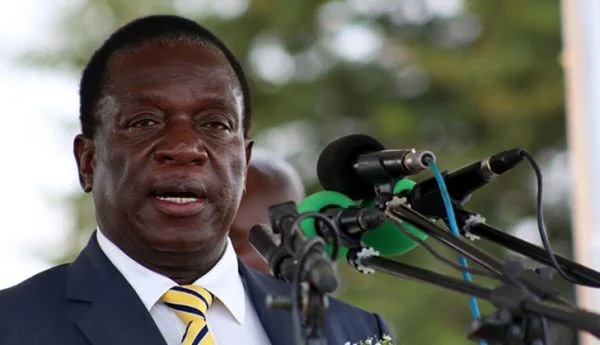
Zimbabwe shuts down borders to combat Coronavirus

0

President Emmerson Mnangagwa on Monday announced further stringent measures to combat the spread of coronavirus (COVID-19) after the country on Monday recorded its first coronavirus-related death.

The deceased was a prominent 30-year-old Media personality Zororo Makamba who had recently returned from the United States.

Mnangagwa announced a series of coronavirus fighting measures that come into force with immediate effect.

Among others, the president announced the closure of the country’s borders to all human traffic except for returning residents and cargo.

He said returning residents will be subject to strict screening procedures including rigorous enforcement of the 21-day self-quarantine.

The president also imposed a blanket ban on entertainment and recreational activities, including gatherings around night clubs, bars, beer halls, movie houses, swimming pools, gymnasiums, and sporting activities.

He discouraged citizens from undertaking unnecessary travel in and around the country.

Mnangagwa also limited visits to hospitals and clinics to one visit per day involving only one relative per patient while the number of public gatherings for such events as religious fellowships, weddings, conferences, and funerals has been limited to 50.

Government, he said, will not at this stage close informal markets but encouraged citizens to limit visits to such markets.

Businesses were also urged to come up with measures to reduce human concentration in their workplaces, with non-essential staff encouraged to work from home.

“I am aware that this curtailment of social activities will be hard on all of us. However, such tough measures have become necessary and unavoidable for our collective safety as a nation,” Mnangagwa said.

He said the government will conduct rigorous contact tracing of all the people who had come into contact with the infected persons and health personnel and law enforcement agencies will be deployed to help with the tracing operations.

“Additionally, citizens are also encouraged to observe social distancing parameters as spelled out by the World Health Organization,” he said.

Mnangagwa last week declared the pandemic a national disaster.

Xinhua

Two gold miners die in Mazoe

0

TWO illegal miners died on Sunday in two separate incidents in Mazowe, Mashonaland Central province after falling in pits at disused mines while prospecting for gold.

Provincial police spokesperson Inspector Milton Mundembe confirmed the cases.

“I can confirm two cases of sudden death of illegal miners in Mazowe on Sunday, one at Masasa Farm and the other at Mazowe Citrus Farm, where two miners who were prospecting for gold died,” he said.

Allegations are that Nicholas Mombeyarara (22) of Guruve, who was in the company of three friends, fell into a 12-metre deep disused shaft and sustained head injuries.

He was retrieved by his friends and died on the way to Concession Hospital.

Another illegal miner, Vengai Mutanhaunga (23) of Mazowe Citrus Farm, went to Hermgene Gold Mine to prospect for gold around midnight.

A security guard, Temba Nyamukondiwa, saw him and gave chase. Fearing arrest, he ran and jumped into a pit filled with water and drowned.

A witness told NewsDay that water had to be pumped out of the pit to retrieve Mutanhaunga’s body.

“When we saw that Mutanhaunga had drowned, we pumped out water to retrieve the body and police took the body to the hospital,” the unnamed witness said.

Police have warned people to desist from illegal mining and not trespass into other people’s gold mines to prospect for gold.

Improve Anjin and ZCDC workers living conditions

0

Workers union ZIDAWU has appealed to the government to upscale safety measures for diamond workers in the wake of confirmed coronavirus (COVID19) in Zimbabwe.

The union made the appeal in light of poor living conditions in the two operational diamonds mines Anjin and Zimbabwe Consolidated Diamond Company (ZCDC).

In a statement released by secretary-general Cosmus Sunguro, Zimbabwe Allied and Diamond Workers Union (ZIDAWU) said the mining sector has not prepared itself to handle the virus causing panic and despondency in the ranks of mineworkers at Anjin who fear for their safety.

Anjin which recently started operations has over 150 employees, while ZCDC employs over a thousand workers, who are ferried to and from work using overloaded buses which poses serious health concerns said ZIDAWU.

President Emmerson Mnangagwa recently declared coronavirus a national disaster and banned gatherings of more than a hundred people, a figure that could be breached in mines cautioned ZIDAWU.

“There is panic and despondency as workers at this Chinese mine quarried how safe were they from this disease, as the country engage the shock gear of bad news, very few have ever bothered to question about the safety of mine workers given the degree of shoddy preparedness in the extractive mining industry.

“Zimbabwe Consolidated Diamonds Company (ZCDC) for instance is employing more than 1000 workers which is ten times the numbers effectively banished, the same goes for recently re-opened Anjin employing over 150 workers at its mining site.

“Their situation becomes more complicated when one considers that company buses are used to ferry them to and from work, withstanding passengers. This poses a serious threat to their health given that Coronavirus is easily transmitted under those conditions,” read part of the statement.

ZIDAWU said accommodation is a legacy issue for mining companies in Chiadzwa, with previous companies and the new entrants failing to provide decent accommodation to its workers, with up dozens living in a room.

In ZCDC accommodation, grimly nicknamed barracks, one-room houses up to seven workers which ‘not only posing a danger to their health but stripping them of personal decency’ said ZIDAWU.

The workers union said there is preferential treatment for Chinese nationals who are afforded decent accommodation at Anjin while local Zimbabwean workers are crowded in a room in a breach of the Labour Act provisions racial discrimination.

“A recent visit to ZCDC ‘barracks’ revealed that more than 7 workers were staying in a single room. This poses a serious threat to their health and it strips off their personal decency.

“As for Anjin Diamond mine, the situation is different as their Chinese counterparts are offered decent accommodation while the black workers are crowded in rooms. Likewise, this poses health hazards to workers given the COVID 19 scare.

“Mining activities like drilling, blasting, and rigging are known to be the main cause of emission of dust during mining.

“In addition, adverse environmental conditions such as high temperatures and humidity, changes in atmospheric pressure, poor lighting, excessive noise and poor vibration, poor air quality, ionizing radiation and accumulation of dust and poisonous gases make mining one of the most dangerous occupation,” said ZIDAWU.

Some of ZIDAWU’s recommendations are for miners to provide adequate and proper personal protective clothing, to avail running water to all mining portals, holding of regular awareness campaigns to be conducted by companies and civic society organisations.

Miners were also urged to provide ablution facilities or Mobile toilets at all portals, ensure the availability of medication at the workplace, and mandatory pre-employment and periodical medical examinations.

Source: 263 Chat

Zororo Makamba becomes first COVID-19 victim

0

Prominent Media personality Zororo Makamba became Zimbabwe’s first casuality of Coronavirus also known as COVID-19. Zororo was one of the two reported by the Minister of Health and Child Welfare Mr. Obedia Moyo to have positively tested for the virus. He was 30.

Popularly known for his eye-opening “State of the Nation with Zororo Makamba” the Media sensation touched on current affairs in the country which earned him respect in his own right.

He was the Director and Co-Founder of Eleven Dogs, a digital media and broadcasting company. He previously worked as a Public Relations Executive at Telecel Zimbabwe as News & Broadcasting Assistant at United Talent Agency in New York. Makamba was also known for hosting several radio shows on ZiFM Stereo which include Impact and the Telecel Chit Chat show. Makamba was also a judge, alongside business mogul Philip Chiyangwa, on a Zimbabwe Broadcasting Corporation television programme called My Own Boss.

Minister of Information, Publicity and Broadcasting Services, Monica Mutsvangwa expressed sadness at the passing of Zororo Makamba.

Below is her full statement

I have received the news of the passing on of Zororo Makamba with great shock, extreme sadness and deep sense of shock.  He is a victim of the worldwide pandemic that is Covid-19.

As the Minister of Information Publicity and Broadcasting Services, I constantly and continuously worked with Zororo on his much-watched and greatly appreciated State of the Nation program on Zimbabwe Television.

He was a young intelligent and dynamic man that infused talent and passion for his work with intense patriotic pride. He always exuded that confidence in the face of daunting challenges.  He communicated with promise and hope in the economic prospects of his beloved Zimbabwe.

I extend my sincere condolences to the Makamba family as well as to relatives and friends of Zororo Makamba.

Zororo will be sorely missed! MHSRIIP

As we mourn him the whole nation should take the threat of COVID 1 very seriously. Let’s all follow due medical precautions as announced by the Ministry of Health and by the World Health Organization.

Monica Mutsvangwa 
Minister of Information,  Publicity and Broadcasting Services.


ZMF statement on Coronavirus

0

Zimbabwe Miners Federation stands in solidarity with the world during this tragic time as millions of people across the world are faced with fear, uncertainty, and panic. I urge the Zimbabwean public at large specifically miners who are our concern to adhere to the hygiene practices put forward by the World Health Organisation (WHO) and our local Ministry of Health, although it appears the spread of Corona has been significantly slower to spread in our region this does not exempt us from taking the necessary precautions required to keep Corona from spreading across our Nation.

Corona known as COVID-19 is an infectious condition, which means it can be spread, directly or indirectly, from one person to another and primarily involves infection of your upper respiratory tract (nose, throat, airways, lungs)
first identified in Wuhan, China, in December 2019.

Let us observe the precautionary measures stipulated by WHO, such as social distancing, avoidance of large crowds and gatherings, avoidance of bars and restaurants, crowded retail stores, we urge miners to practice caution when
using public transport, visiting family and friends, avoid handshakes, please ensure that washing our hands becomes a priority, maintaining distance while talking to others, drinking lots of water, using Sanitisers and Sanitising surface areas around us. During this period we should seek to read, exercise, video call, and WhatsApp reflect and work in small numbers where possible or stay at home.

Should you fear contraction of the virus immediately contact your doctor and follow prescribed medication to help stabilize your condition as there is currently no known vaccination. Let us not rely on myths but on actual measures prescribed by the WHO and the designated Ministry of Health in our country as the world seeks to find a vaccine.

I urge all Miners across Zimbabwe to continue mining operations whilst adhering to the health measures suggested by government and call for quick action in the event someone is believed to have contracted the disease by visiting the nearest clinic and all those who have come into contact with the said person to also visit the clinic and undergo quarantine to help stop the spread of the virus.

We also implore the government to intervene on the issue of profiteering on sanitisers as it has become a necessity in helping to stop the spread of Coronavirus. We also seek government and donor assistance for the allocation of
medicines that assist with flue symptoms and pain relief in clinics located in the vicinity of large groups of miners, we also request donations of sanitisers and masks for our miners across the Nation.

As ZMF we are in prayer for all those quarantined and all of us to be kept safe from this deadly virus, Let us seek God’s grace to heal the world and keep us safe.

I thank you all…

FOR AND ON BEHALF OF THE ZIMBABWE MINERS FEDERATION

Henrietta B Rushwaya
ZMF President

Locals must benefit more from gold deposits

0

AS consultations for the new Economic Empowerment Act continue countrywide, people from Matabeleland South province have called for protective clauses to empower locals to benefit more from vast gold deposits in their areas. 

The province has rich gold reserves in areas such as Gwanda, Insiza, Matobo, Umzingwane and Mangwe districts where large and small-scale miners are operating. The province is also one of the major contributors to gold deliveries to Fidelity Printers and Refiners, whose export proceeds anchor a greater part of forex requirements for the economy.

On Friday, the Ministry of Industry and Commerce held a meeting here with stakeholders seeking their input on the proposed law, which replaces the old indigenisation and economic empowerment law.

Speaking during the meeting, stakeholders said the 51-49 percent shareholding threshold must be applied to the gold sector as Matabeleland South province was rich in that resource. 

They complained that policy gaps had resulted in foreign investors benefiting more from exploiting minerals in the province while locals were excluded.

“The Indigenisation and Empowerment Act only set the 51-49 percent threshold to apply to platinum and diamond and gold was left out. We want the new Act to involve gold in this threshold because in places like Matabeleland South we mainly have gold and people from outside the province are hugely benefiting from it while locals are not benefiting from the resources, which are in their area,” said Gwanda Rural District Council chief executive officer, Mr Ronnie Sibanda.

He also said that funds under the Ministry of Industry and Commerce should be decentralised to districts and provinces. Gwanda Community Share Ownership Trust administrator, Mr Coaster Nkala, said the new Act should compel companies especially those in the extractive industry to remit 10 percent to the community through CSOT’s.

He said some mining companies were refusing to give anything to the community as the current legislation did not compel them.

Mr Nkala said Section 13 of the Constitution demands that Government should facilitate that people benefited from their local resources. As such, he said the Act should empower women and the youth as well.

Mr. Nqobizitha Sibanda who is a member of the business community said corporate social responsibility should be a must under the Act. He said the province had a number of big companies but the areas they were operating on had poor roads, schools, and clinics. 

“Harmonisation of policies has remained a challenge within ministries. Policies that we come up with have to be harmonised with policies in sister ministries so that they don’t clash. Tendering also has to be decentralised,” he said. “At the moment everything is centralised in Harare, which gives suppliers based there greater advantaged compared to local suppliers. This hinders local suppliers from growing.”

The ministry’s director for legal services, Mr Never Katiyo, said the proposed empowerment law was meant for Government’s economic transformation drive.

“It was the decision of the Cabinet to come up with the Economic Empowerment Act, which will replace the Indigenisation and Economic Empowerment Act that had loopholes. 

“As the Ministry of Industry and Commerce we were tasked to carry out consultation meetings in various provinces in order to solicit views on what different stakeholders want included in the new legislation,” he said in an interview. 

“Matabeleland South is the 9th province that we are visiting. We are at the stage of coming up with principles of the Act.”

Acting director for economic empowerment in the Ministry of Industry and Commerce, Mr Michael Fungati, said Government officially amended the Indigenisation and Economic Empowerment Act through amendments contained in the Finance Act of 2018. 

“The amendments have, however, left a gap in legislation regarding the subsidiary legislation and regulations that fell under the purview of the Indigenisation and Economic Empowerment Act. In line with the national vision of catapulting the economy to an upper middle-class status by 2030 and the mantra ‘Zimbabwe is open for business’, an urgent need arises for the gaps in legislation to be addressed.

“The Indigenisation Empowerment Act is being repealed not only as a result of Government changes in policy on indigenisation laws but in line with global trends of development to address legislative gaps that exist regarding economic empowerment,” he said.

Mines and Mining Development provincial head, Mr Tichaona Makuza, said purpose of the proposed law should clearly outline and specify who needed to be empowered. — @DubeMatutu

Zimdaily

The Chrome Mining Sector Dilemma

0

Globally, Zimbabwe is the second richest country after South Africa in untapped chromium reserves yet locals (small-scale chrome miners and contractors/tributors) along the Great Dyke live in abject poverty with vast areas custodian to the resource remaining heavily under-developed.

By Martin Chitohwa (MBA)

I have read many articles from the responsible authorities and other publishers blaming the lack of development in the Chrome sector. Most highlighted issues include but not limited to, sanctions, restricted payment terms, poor rail and road infrastructure, lack of foreign currency, logistics issues, lack of environmental, safety and technical support from responsible authorities, predatory pricing by smelting companies towards their contractors/tributors and their contractual conditions especially with Zimasco, government policies and their inflexibility towards minerals marketization and in-country beneficiation, in-adequate or lack of financial support (undercapitalization) towards local claim holders and so on.

The list of problems is endless but strategies and actions to abate this crisis that has been haunting the sector for many years are shortcomings. Most of the problems listed above will not be averted if Zimbabwe continues with its heavy reliance on a single market (China), which again is a result of government policies that are not flexible when it comes to mineral marketization. As long as our state enterprise (MMCZ) remains restricted, local producers will never see the light of day as predatory pricing by buyers who only sell to the single market mention earlier will continue to take advantage of the situation. Buyers from other markets available and more can be made available if there is a policy change that can allow MMCZ to be circumvented. This policy change can be temporary to allow capital built -up by local producers since proceeds will be repatriated back into Zimbabwe which will make our government fully realize their share if special tax rules are applied fairly (win-win scenario).

For local producers to get back into the game, a financial instrument has to be put in place whereby credible local bank(s) have to assume ownership of the debt from international funding structures, which can be made available to such local but privately owned projects. A committee can be put in place to work closely with the funders and local bank(s). This fund has a three-year grace period and up to 40 years to pay back the principal plus interest (at max. 5%). It will be the bank’s responsibility to service the loan and as well as lending the funds to local small scale miners (more details can be made available). If serviced well and in a shorter period, the same fund together with savings from local small scale producers can be made available for the construction of a locally owned beneficiation plant.

As for the biggest smelters in Zimbabwe, especially Zimasco and ZimAlloys, seem to have a soft spot with our local authorities thereby hurting the well-being of the sector as a whole. They happen to have the majority of prime land, outdated furnaces, dedicated power for those furnaces, proceeds from exports of chrome concentrates and yet they are failing to change their modus operandi to make a difference in the sector. Predatory pricing of the commodity is rife by these two companies. Most contractors/tributors especially in the north and middle Dyke under Zimasco where chrome seams are narrower and more costly to mine are heavily indebted to the mother company which means they will continue to service unsustainable debt until they crumble. The whole structure is designed to suppress contractors. As of January 2020, produced ores by contractors under Zimasco were tagged at US$43 on paper but in reality, they translate to 50% RTGS$ which is $21.50 and 50% US$ which US$21.50 (bank rated at prevailing rates and disbursed in RTGS$). As for January 2020, a ton averaged ((RTGS$21.50 +  (US$21.50 × RTGS$16 = RTGS$344) = RTGS$365.50/ton)) if overall grade is above 43% with no chrome fines. Consumables such as explosives have exchange rates applied in their totality, for example, a box of shock tubes (detonators) is sold to the contractor at RTGS$8,000. For a contractor to break-even under these circumstances needs to produce on average 50 tons per month which is far fetched for many of them due to lack of geological survey by mother company of the area being mined, capital to upgrade operations, labor constraints since most are leaving for greener pastures in the gold sector, etc. This analysis is a drop in the ocean, a lot of negative deeds by mother companies are hampering progress in this sector.

Elluvial concentrates processing contracts are 99% extended to the Chinese operatives who are paid a meagre US$25-35 per ton locally for local high-grade chrome concentrates and who knows what happens to the rest of the proceeds from off-shore. Proper audits directed to these large smelting companies will leave responsible authorities no choice in forcing their hand to have these corporates apply full capacity utilization, enact mandatory investment in modern ferrochrome production technologies that will inhibit exportation of raw concentrates and chrome ore, and apply favorable contractual agreements with tributors that will give them reprieve and the edge to do more thereby improving the sectors’ competence in the mining industry.


This article first appeared in the March 2020 Issue of the Mining Zimbabwe Magazine

Zimbabwe confirms first positive case of Coronavirus

0

Minister of Health and Child Welfare Dr. Obadiah Moyo has confirmed Zimbabwe’s first positive case of Covid-19 also known as the Coronavirus.

In an address late Friday the Minister said, “This evening Friday the 20th of March 2020, the National Microbiology Reference Laboratory confirmed that a suspected case of Covid-19 had tested positive. The patient was in self-quarantine at home after traveling from the UK” 

The patient a 38-year-old Caucasian male resident of Victoria Falls, who had traveled to Manchester, UK on the 7th of March 2020 returned home on the 15th of March 2020. The Minister explained that the patient self quarantined, contacted his General practitioner by phone after coughing and extreme sneezing. The GP in-turn contacted the Covid-19 Rapid response team who responded and assessed him then recommended he keeps himself is self isolation. Specimen were collected and taken to reference labs for testing.

Watch the address by the Minister.

Chitando updates Parly on Mining progress

0

Minister of Mines and Mining Development, Winston Chitando has given a mining progress report to the house of assembly in which the government has aspirations to achieve the $12 billion by 2023  and also the possible implications of EPO’s with respect to that achievement.

The Minister said the 2019 mineral revenue was $3, 2 billion up from $2, 9 million in 2018.

“The $12 billion milestones for 2023 were set on detailed projections and targets by minerals. The Hon. Members asked for an update and projections and I hereby respond, giving that update and projections by mineral. Gold output increased in 2018 to 33 tonnes compared to twenty-six and half tonnes in 2017.  There was, however, a decrease to 27, 6 tonnes in 2019.  A number of interventions are being put in place to ensure there is an increase in gold deliveries not only 2020 but to achieve the 100 tonnes target by 2023.   A detailed statement on gold will be released before the end of April,” he said.

“Diamond sector performance – diamonds are expected to contribute $1 billion towards the $12 billion target for the mining industry by 2023.   A $165 million was realised from the diamond sector in 2019 compared to 98 million in 2018.  The following are interventions being put in place to achieve an increase in 2020 and achievement of the $1 billion by 2023.”

Chitando said  ZCDC is earmarked to sustainably increase production. He said in line with the diamond policy Anjin has started production;

“ARUSA which is the largest producer of diamonds in the world in already on the ground evaluating a number of sites to commence production;  and   Government is working on improvements in the marketing framework. The platinum industry is expected to contribute $3 billion as part of its contribution towards the $12 billion mining industry by 2023.  This contribution is centered on expansion and new production as follows:-the three producers being Unkie, Zimplats and Mimosa are all undertaking expansion and optimisation projects,” he said.

“Great Dyke investments have started opening a mining area and it is scheduled to produce its first concentrate in 2021. Carol Resources are ready to commence project work on the 1st portal having undertaken extensive evaluation work. Bravura is on the ground undertaking evaluation work.  Discussions with Todal are advanced for them to get into project phase; actually they had a board meeting sometime this week – that is on the PGM sector.”

He said the chrome, nickel and steel sector is earmarked to achieve $1 billion by 2023.

“This achievement will largely be through increased falcon production from 369 000 tonnes of ferrochrome in 2018 to 1, 1 million tonnes in 2023.  Various expansion projects are underway by ZIMASCO, ZIMALLOYS, JINAN and AFROSHEEN and a few other players,” Chitando said.

“Since the launch of the $12 billion milestones, three new furnaces have been completed, operational and ready for official commissioning.  Government has now released additional mining ground to an additional ore to be generated to feed the smelters.”

He said the next sector is on coal, coal and hydrocarbons is targeted to contribute $I billion towards the $12 billion target by 2023 and this achievement is underpinned by two main initiatives.

“Increase in coke production, from 300 000 tones in 2018 to 2,1 million tonnes in 2023. Increase in thermal coal production for electricity generation. Massive success has been achieved in this sub-sector as follows; A new coke oven battery was commissioned late last year; Three new mines will be opened this year, and three new coke ovens are under construction,” he said.

“The next sub-sector is lithium. The milestone for lithium is $500 million by 2023. Bikita Minerals is in steady production whilst project work at Kamativi and Arcadia lithium is going quite well. A US$1, 5 million targets was set for other minerals. This will be achieved through a number of initiatives on various minerals but specifically, there will be a launch in the next two months of an initiative in granite and gemstones.”

“I now turn to EPOs Madam Speaker. The EPO system has been characterised by non-processing of EPOs for a number of years which has reduced the ground available for pegging. A new mining affairs board was appointed and has been directed to review and process all EPO applications with the status.”

He said there are 12 EPOs which are due for renewable and which will be subject to the holders satisfying the original conditions of the grant.

“There are 24 applications which have been processed right now Madam Speaker, and the indications are that there will be significant ground for them to be released as a number of them have not been approved. Thirty applications were gazetted for objections on 11th October, 2019 and now being finalised,” Chitando said.

“There are 30 applications which have already been rejected by the mining affairs body and the respective ground will be freed by mid of April. There are three new EPO applications that have been received since 1st January 2020 but which have not been processed.”

Source Byo24