Home Blog Page 561

Mnangagwa reserves mining claims for Warvets

0

Zimbabwe President has reserved for war veterans, 20% of mining claims in the chrome, nickel and steel sectors in what analysts see as an act of appeasement.

Addressing a post-Cabinet briefing on Tuesday, Zimbabwe Information Minister Mrs. Monica Mutsvagwa said the decision to give mining claims to the veterans of the 1970s liberation war was reached after Mines minister Winston Chitando had proposed that claims ceded by ZimAlloys be re-allocated.

“These claims will be re-allocated to other companies which will receive mining claims to sustain and expand ferrochrome production,” Mutsvangwa said.

“As per government policy, 20% of the ceded claims, being 2 348 hectares of the total ceded claims, which are a total of 11 747 hectares, will be allocated to war veterans. The modus operandi of the distribution of claims to war veterans will be announced in due course.”

Speaking at the same briefing, Chitando confirmed the development, adding that the government was working on the modalities and also working on a chrome development policy.

“In line with the US$12 billion milestone by 2023 in the mining sector, the steel and chrome sector is targeting to achieve one million tonnes of ore from the 360 000 tonnes we had in 2018.

“In the rollout of the programme, we are looking at synergies between ferrochrome producers and individuals. The government is also working on a chrome development policy that will outline the modalities,” Chitando said.

War veterans have been Zanu PF’s main campaign cogs during elections, propping up the ruling party during the reign of the late former President Robert Mugabe.

Since Mnangagwa came to power on the back of a November 2017 coup, the war veterans have made several demands, claiming their welfare has been neglected.

Source: NewsDay


Why Zim is failing to attract FDI despite having vast natural resources?

0

THE importance of having certainty regarding policy and regulatory framework, among other measures, to attract significant investment in Zimbabwe, cannot be overemphasised.

Dumisani Nyoni

The southern Africa nation is endowed with abundant natural resources such as diamond, gold, coal, iron ore, chromium ore, vanadium, asbestos, nickel, copper, lithium, tin, and platinum group metals among others, but alas, it is struggling to attract meaningful foreign direct investment (FDI).

The country’s FDIs averaged US$350 million in the last decade against a Southern African Development Community (SADC) regional average of US$1,2 billion.

Last year, it nosedived further to US$259 million from US$745 million recorded in 2018, according to reports.

But why does a country with such vast natural resources attract so little FDI?

Analysts have identified quite several factors and these include corruption; targeted sanctions; perceptions (the gap between perception and reality); lack of transparency, consistency, and accountability, and ease of doing business, just to mention a few.

Sound legal framework

To improve the investment climate, analysts have said Zimbabwe needs to restore the rule of law and the sanctity of contracts. They say this will require the protection of investments in domestic legal frameworks and through international investment agreements.

“Foreign businesses will be looking for a sound legal framework for investment, which is in turn underpinned by consistent and clear rules and regulations relating to investment protection,” writes Joseph Otoo, a senior associate in Mayer Brown International LLP’s construction & engineering and international arbitration groups.

“This will help to foster legal certainty, particularly in sectors such as energy, natural resources, and infrastructure where significant capital is invested over the long term,” he said.

The government has in the past been accused of interfering in cases that have political overtones through influencing decisions of the local courts.

This has resulted in a lack of trust in the courts and the judicial process.

Corruption

Corruption in the southern African nation has become endemic in the political, private and civil sectors, making doing business in the country difficult.

The Auditor-General’s reports always unearth rampant cases of corruption in both government departments and State-owned enterprises, but nothing had been done to the perpetrators except to ‘catch & release’ them.

The country is the 158 least corrupt nation out of 180 countries, according to the 2019 Corruption Perceptions Index reported by Transparency International.

Policy inconsistency

Policy inconsistency is one of the reasons why Zimbabwe is struggling to attract massive FDI inflows. There is too much discord and incoherence when it comes to policy pronouncements. A good example is the issue of currency.

Both John Mangudya, the central bank boss and Finance minister Mthuli Ncube, have been inconsistent about this issue. Right now it is difficult to tell whether Zimbabwe has abandoned multi-currency regime or not, as some companies are still allowed to trade in forex locally while others are not.

Economist, Reginald Shoko said policy inconsistency creates an environment that is not stable, unpredictable and impossible to plan around.

As such, there is a need for greater policy consistency and re-engagement with international investors if we are to attract investors.

Sanctions

We may argue back and forth but the reality will remain—sanctions chase away capital. The United States of America slapped Zimbabwe with targeted or restrictive sanctions in early 2000 following the land reform programme.

Ever since then, Zimbabwe has been struggling to receive enough foreign direct investment because most firms and companies аге handicapped. For instance, the Industrial Development Corporation (IDC), а wholly State-owned enterprise, which was also put under sanctions, is ailing.

The parastatals had interests in а number of Zimbabwean companies such as Olivine, Sable Chemicals, Chemplex, and Zimbabwe Fertiliser Company. These companies have been under-performing as а result of sanctions as they had no access to credit lines.

As а result of sanctions, Standard Chartered ordered IDC to close its accounts with the bank, further crippling its operations.

Economists have estimated that the country’s state enterprises account for 14% of the country’s GDP, making them а key component of the economy.

Also due to these sanctions, Zimbabwe’s credit ratings are unfavorable.

The targeted sanctions also inhibit investment making it very difficult for private sector companies to engage with foreign investors.

Perception

Zimbabwe’s perception outside there is discouraging. The country is perceived as too poor, violent, backward, among others. In some of his writings, Ritesh Anand, the founder and managing director of Invictus Capital, says many investors who visit Zimbabwe are pleasantly surprised at how peaceful the country is, the state of infrastructure, especially roads and how wonderful and educated the people are.

Anand says international perceptions of Zimbabwe will improve once the country has restored its relationship with its former colonial master, Britain.

“Changing perceptions and restoring investor confidence is key to attracting investment. The lack of domestic liquidity makes it difficult to stimulate growth from within,” he writes.

Lack of transparency & accountability

According to Open Budget Survey 2017, Zimbabwe ranked 23 out of 100 countries in budget transparency, an unimpressive ranking, which has an effect of pushing away investors and external funding.

Open Budget Index can determine the level of funding from non-governmental organisations and world bodies such as the International Monetary Fund and the World Bank. In addition, such openness indices are used by international investors to gauge the level of fiscal transparency in a country.

There is also no transparency when it comes to deals and loans signed by the President and some government ministers.

“Failures to be governed by budgetary constraints have been swept aside by forcing Bills through Parliament to condone excess spending by ministry officials, exposures of corruption by the Auditor General have apparently been set aside by the Attorney General and government officials are free to establish business operations and to use their influence to overwhelm private-sector competitors,” says John Robertson, an economic analyst.

Such problems are seen as severely discouraging, even threatening, to investors, he said.

Government officials are not accountable to anyone. They can do whatever they want to do with public funds and never called to account. This also chases away capital.

Ease of doing business

Zimbabwe has been struggling to attract FDI due to bottlenecks associated with doing business in the country. It is ranked 140 among 190 economies in the ease of doing business, according to the latest World Bank annual ratings. The rank of Zimbabwe improved to 140 in 2019 from 155 in 2018.

The ease of doing business index ranks countries against each other based on how the regulatory environment is conducive to business operation stronger protections of property rights. Economies with a high rank (1 to 20) have simpler and more friendly regulations for businesses.

In a bid to improve ease of doing business, the government came up with a one-stop investment centre, a very commendable development if implemented.

Conclusion

The government should address investor concerns and provide a simpler, more consistent policy framework. Sound regulatory framework to attract significant investment in the country should be crafted and fully implemented. Policy inconsistencies, corruption among other ills should be done away with.

Surely, the country cannot afford to continue singing the blues and chasing shadows when it comes to FDI. The country should take advantage of its natural resources and stop playing second fiddle to other countries in the region.

Finally, Zimbabwe needs to create a favorable environment that includes stable macro-economic conditions, stable political environment, stable currency, stable exchange rate, attractive policies, respect for property rights and rule of law.


This article first appeared in the March 2020 Issue of the Mining Zimbabwe Magazine

Platinum – mining, uses, pricing and regulation in Zimbabwe

0

Platinum is a rare metal found in the earth’s crust at 0.005ppm. According to Louis XV of France, platinum is the only metal meant for a king. It is found in iron, nickel and copper ores with other native deposits. Platinum is a noble metal that can withstand corrosion at high temperatures and is least reactive. It is rated 3.5 on the Moh’s scale of hardness, has a melting point of 1768.3 degrees Celsius, a boiling point of 3825 degrees Celsius, the density of 21.45g per cubic meter and molar heat capacity of 25.86J. Platinum is lustrous, ductile and malleable. It has stable electrical properties.

This metal oxidizes at 500 degrees Celsius to form Platinum oxide which can be thermally removed. It also reacts with fluorine at 500 degrees celsius to form platinum tetrafluoride. Platinum does not dissolve in hydrochloric acid or nitric acid but is soluble in a combination of the two (aqua regia) at high temperatures to form chloroplatinic acid. It is attacked by iodine, bromine, chlorine, and sulfur. Platinum has a high affinity for Sulphur which is mostly found in iron ores.

Platinum group ores are treated in primary and secondary crushers. Ball/Rod mills are used in the tertiary stages of comminution. The milled ore is treated in gravity concentrators. In froth floatation, xanthate and dithiophosphate are the collectors used at a pH of 7.5-9. Oxygen is also used in the froth floatation process. The concentrate is dried and rectangular-six-in-line or circular three-electrode furnaces are used to separate sulphides and silicates at 900-1500 degrees Celsius. Air is blown through the furnace to remove iron and Sulphur. Chemical and electrolytic methods are manipulated to remove nickel, cobalt, and copper. Aqua regia is then used to dissolve platinum metal from the concentrate by creating chloroplatinic acid. Finally, ammonium chloride is used to change chloroplatinic acid to ammonium hexachloroplatinate which is heated to produce pure platinum metal.

This metal is used in jewelry, electrical appliances, chemical production, petroleum refining, and vehicle emissions control. Platinum is also used in medicine, biomedicine, glassmaking equipment, anticancer drugs, oxygen sensors, turbine engines, spark plugs, electrodes and even in investment. It is used as a catalyst in the ignition of hydrogen. In the petroleum industry, platinum is used to run naphthas into octane gasoline which becomes rich in aromatic compounds. It strongly catalyses the decomposition of hydrogen peroxide into water and oxygen hence, It is used in fuel cells as a catalyst for the reduction of oxygen. In investment, its bullion has the ISO currency code for XPT. It is also used as a catalyst in the manufacture of silicone rubber and gel components of medical implants.

According to the National Institute for Occupational Safety and Health the recommended exposure limit to platinum salts is 1mg per cubic meter over an 8-hour working day. Exposure to platinum salts may cause irritation to the eyes, nose, and throat. The long term effects may manifest in the form of skin allergies or respiratory complications (The Centres for Disease Control and Prevention).

According to Anglo-American, South Africa produces 88%, Russia 8%, North America 2%, Zimbabwe 1% and the rest of the world produces 1% of all the platinum. Zimbabwe is the second-largest producer of platinum in Africa. Within the great Dyke are four geological complexes that contain PGM and base metal deposits viz; Wedza Complex (Mimosa-Aquarius and Implats), the Selukwe Complex (Hartley and Ngezi Platinum Mines-Zimplats), Unki Anglo-Platinum and Musengezi geological complex. Zimplats has the largest reserves of PGMs in Zimbabwe which are estimated to be 214.3million tonnes. Unki comes second with 48.4million tonnes and lastly Mimosa with 33.2million tonnes.

In an article written by Freeman Makopa for Newsday, platinum is one of the two minerals, along with diamonds in which the local ownership law requiring 51% local ownership still applies. Due to the desperation, Zimbabwe has for investment, this policy is set to be changed in favor of the foreign investors. At Karo Resources event, Mr. Chitando said, “…We will also have a platinum development policy, which will be unveiled soon in the new year, which will provide a consolidated framework of the development of the platinum sector.” The government is said to have signed a $4.2billion platinum investment deal with Karo resources. The project is expected to reach 1.4million tonnes of platinum per year by 2023.

In the agreement signed on 22 March 2018, KARO HOLDINGS was given PGM rights under a special Grant under the Zimbabwe Mines and Minerals Act covering an area of 23 903ha on the Great Dyke in Mashonaland West. This project will comprise of PGM mines, concentrators, smelters, base metal, and precious metals refinery and a power generation capacity (300MW of solar energy) made available to the power grid. Most recently, Karo has completed 238 boreholes comprising of 32400m drilled on the western boundary of the Great Dyke. the Zimbabwe Special Economic Zones Authority has declared a part of Selous measuring 50667ha as a special economic zone (Tharisa Integrated Innovation)

The price of platinum is heavily dependent on its demand in the industry. In cases where demand is very high, the price can go up to twice the price of gold. As at 05 March 2020, the price of platinum is USD32/g.

In a nutshell, platinum’s rarity is associated with exclusivity and wealth. It is essentially used in medicine, biomedicine, glassmaking equipment, anticancer drugs, oxygen sensors, turbine engines, spark plugs, electrodes and even in investment. Platinum is associated with iron, nickel and copper ores. In its final stages of extraction, it is dissolved in aqua regia from which it emerges in its pure form. Zimbabwe is the second-largest producer of platinum in Africa and produces 1% of the world’s platinum from Zimplats, Unki and Mimosa mines whose ore reserves are estimated to be 214.3 million, 48.4million and 33.2million tonnes respectively. The government has been making efforts to improve platinum production in Zimbabwe by making adjustments to the indigenization policy.


This article first appeared in the March 2020 Issue of the Mining Zimbabwe Magazine

Muzarabani to end power shortages in Zimbabwe

0

The discovery of gas and oil in Zimbabwe by the Australian Stock Exchange (ASX) listed mining and exploration firm, Invictus Energy is expected to potentially ease energy and power shortages in the country, the company’s Managing Director has said.

According to the Managing Director Mr. Scott MacMillan, the discovery of oil and gas in the country means there is going to be no energy shortages in the country an initiative which will in turn boost production domestically.

“Discovery (of gas or oil) would mean energy independence for Zimbabwe, which is vital for economic growth and prosperity. There is a clear correlation between energy consumption, prosperity and gross domestic production” said MacMillan.

MacMillan also said that the development at the mine will see Zimbabwe relying on its own fuel and electricity which means that 25 percent of the country’s foreign currency will be saved for other uses. He also said that the discovery has the potential to make Zimbabwe a net exporter of energy and power.

“And for a country like Zimbabwe, it would mean that we are no longer reliant on fuel and electricity imports and instead of consuming 25 percent foreign currency importing diesel and petrol if enough is discovered we can turn into a net exporter,” he said.

Mac Millan also said that the country can become a powerhouse in the region with its discoveries of gas and oil given that South Africa and Zambia are currently struggling to provide sufficient power to meet their domestic demands.

“If the two commodities were discovered in Zimbabwe, it would take between three and four years for the country to start benefiting from resources, which would entail economic growth, tax, royalty and export revenue as well as jobs and emergence of downstream industries among others,” MacMillan said.

The oil and gas mining firm has already made a convincing discovery of oil and gas at its Muzabani project in Mt Darwin using advanced exploration technology which has made its finding to be a very positive outcome.

According to the company, it is working towards obtaining requisite equipment for the company to start exploratory drilling to depths of up to 4km.

MacMillan also said that his company will mobilise the equipment from the region where such machinery is available.

The company director said that results analysis done on the source rocks from Muzarabani are indicating that the area has strong potential for gas and oil deposits.

“From the analysis that we did of the source rock, it is capable of generating both gas and oil,” MacMillan said.

“From the analysis that we did of the source rock, it is capable of generating both gas and oil,” Mr. MacMillan said.

According to the company, although geochemical signatures of rock samples from the area bear striking characteristics to similar rock types that have produced oil in Uganda, Kenya and Australia, in Zimbabwe the source rock type will determine whether Muzarabani has gas or oil. The company holds the fact that the test results show the likelihood of more gas than oil.

The ASX listed exploration and mining company said that the possibility that the area has more oil than gas will be determined by the temperatures the source rock has been exposed to while its also a function of how deep it has been buried.

“We have got source rock that has been buried in both gas window and oil window in particular times,” Said MacMillan.

The Invictus boss said unlike when Mobil explored for oil in the 1990s, with its main target being finding petroleum oil, dynamics have since changed over time and Zimbabwe could unlock significant economic benefits even if it found just gas, which can now be easily monetised.

According to MacMillan, when Mobil explored in the 1990s, oil was the major source of energy globally yet preliminary findings from the global giant’s searches then indicated a high probability of conventional gas than oil deposits.

The Invictus managing director said gas was now a major source of energy across the world and with high demand ; it was only a matter of finding the market to monetise the commodity.

Potentially, independent study estimates have shown that Muzarabani could hold anything between 200 billion and 20 trillion cubic feet of the two valuable energy products.

The company believes that it still needs to undertake further works through geophysical tests to narrow risks and identify areas with the highest potential for the existence of oil and gas as well as to high-grade locations that may hold significant deposits.

Mr MacMillan said being a frontier destination in oil and gas exploration there was 1 to 5 and 1 to 10 chance of successful discover of oil and gas, which is why the company was making extensive tests and studies to ascertain the existence of the highly sought after energy commodities.


This article first appeared in the March 2020 Issue of the Mining Zimbabwe magazine

Monetary Policy Statement: Impact to miners

0

THE Reserve Bank of Zimbabwe (RBZ) governor John Mangundya recently presented his Monetary Policy Statement (MPS) under the theme: Focusing on price and exchange rate stability.

The statement came at a time when the thrust of the central bank “is to stabilise the economy by bringing down inflation and stabilising it after the initial burst of high inflation that resulted from the liberalisation of the exchange rate and fiscal consolidation in 2019”.

It also came at a time when gold deliveries to Fidelity Printers and Refiners (FPR) declined by 17% to 27.66 tonnes for the period January to 31 December 2019, compared to the same period in 2018.

The national gold target for 2019 was 35 tonnes.

Gold deliveries from artisanal and small-scale miners declined by 19.4%.

This article seeks to review whether the policy managed to address the miners’ concerns as well as to ease the current financial woes emanating from the increasingly volatile financial market among other key issues.

Gold forex retention

The miners have been pushing for the government to increase gold forex retention to 80% or 100% so that they could have enough money to cover production costs, but the government has refused, saying importing cash has been a challenge.

Currently, both large scale gold producers and small scale producers are getting 55% retention threshold while all other minerals are pegged at 50%.

As highlighted earlier, the MPS noted that gold deliveries to FPR declined by 17% to 27,66 tonnes against a national target of 35 tonnes. The decline is attributable to electricity challenges coupled with inadequate equipment for small scale miners to access deep gold reefs and gold leakages through smuggling.

Zimbabwe Miners’ Federation (ZMF) spokesperson Dosman Mangisi said the MPS failed to address the issue of retention threshold.

“The RBZ recognizes the burden upon ASM in the gold sector, which has seen gold dropping by 17% on an annual basis. Formalisation continues to be the talk, as ZMF we feel more effort should be put on the ground. Mechanisation funds should reach out to every miner. Miners should be exempted to 100% since the sector has already dollarised itself,” he said.

Financial and economic analyst Persistence Gwanyanya also concurred that the policy failed to address the forex retention issue.

“If you look at the MPS, nothing changed. The position remained the same yet the miners wanted it to be changed,” he said.

Gold smuggling

Miners and economic analysts indicated that the MPS also failed to address the issue of smuggling in the gold sector. Due to failure to address the forex retention issue, Gwanyanya said some miners were smuggling gold outside the country to realise the full value of their commodity.

“Government should address issues of smuggling of gold. Miners are smuggling gold because they are being paid with a currency that is not stable. That’s what we are concerned about. That’s what concerns the miner,” he said.

Benard Conrad Magugu, an economic commentator said the massive drop in gold was no surprise especially with the outlawing of the US$ in payments for gold deliveries as most of the precious metal was smuggled through Zimbabwe’s porous borders which are currently manned by poorly remunerated officers who will turn a blind eye to the grand heist for a few greenbacks in their pockets.

“The current machete wars in the gold mining fields in Zimbabwe only make the trade murkier and darker and with the increased risk that artisanal miners are facing from rival politically connected MaShurugwi. With the drop in official deliveries, goes down the Zimbabwean economy into the abyss with no solution in sight from the country’s power-thirsty leadership,” Magagu said in some of his articles.

In its MPS analysis, the Zimbabwe Coalition on Debt and Development (Zimcodd) said whilst the bank reported that the decline of gold deliveries was attributable to electricity challenges coupled with inadequate equipment for small scale miners to access deep gold reefs and gold leakages through smuggling, violence in the sector in 2019 should not be ignored.

It said the government should upscale its efforts to address the disturbances in the sector driven by the machete gangs to maintain peace and security whilst safeguarding the sector as a key contributor to the fiscus and export earnings.

Economy and currency stability     

Expectations had been high that the MPS would help arrest the deepening economic crisis characterized by price instability, meagre to non-existent disposable incomes and rapid depreciation of the Zimbabwean dollar. It, however, failed to stabilise the economy and currency as parallel market-driven macroeconomic distortions continue reigning supreme.

“It’s about the stability of the Zimbabwean dollar. We are concerned about the issue of the economy and currency stability. We talked about these issues in the last MPS but nothing was achieved. There is a need to stabilise the economy and currency because it’s very important. Without addressing these challenges it could be difficult for miners to achieve their goals,” Gwanyanya said.

Zimcodd said the economy is still suffering from the aftermaths of austerity measures and the liberalisation of the foreign exchange market which characterised the 2019 fiscal and monetary policies respectively.

“It is worrisome that the monetary policy is reactionary in nature rather than being proactive. Whilst the bank is supposed to set the pace for the financial services sector, it remains anchored on existing macroeconomic distortions associated with the exchange rate and price instability,” it said.

The organisation said whilst the bank celebrates the relative stability in the interbank exchange rate, it has little impact on the economy as a whole as the market only responds to the parallel market rates.

Despite being risky, the parallel market has proved to provide better offers to the transacting public in the face of cash shortages. People shun the interbank rates because transactions are not on a willing buyer – willing seller basis since citizens are not provided with the option of buying foreign currency.

The banks also do not have cash and all transactions are done electronically. This does not factor in the multiple pricing system in which cash in hand has more value than electronic money in Zimbabwe.

Economic commentator Reginald Shoko had hoped the monetary policy will have to put in place measures to address the volatile foreign exchange rates, inflation and stabilize the local currency “but all that was not effectively dealt with which left the pronouncement of monetary policy being more of a ritual rather a compass for economic development.”

“The governor has failed to have an impact or to influence the economic trends with tools on his disposal,” he said.

Formalisation of the small scale sector

Artisanal and small-scale mining has contributed significantly towards mineral output and a source of livelihood for many communities in Zimbabwe but the government is taking longer to formalise its activities.

Formalization is the process of bringing informal income-earning activities and economies like artisanal and small scale gold mining activities into the formal sector through legal, regulatory and policy frameworks.

This will help small scale miners contribute more to the fiscus.

Zimcodd said the formalisation of artisanal miners remains rhetoric considering that this among other progressive provisions of the proposed Mines and Mineral’s Bill are not taking effect with the Bill taking over five years to be passed into law.

Inflation

Hyperinflation has reared its ugly head again twice within a decade with no plausible solution in sight being proffered by the government and the central bank chief. The MPS talks of reducing the month-on-month inflation from the current 16,55% to less than 5% by the end of March but Magugu is not convinced.

Mangundya also anticipated annual inflation of 50% by December 2020, a figure described by analysts as imaginary.

“To go on and say that year on year inflation which is hovering at above 500% now will be reduced to 50% only leaves one to wonder whether the RBZ governor really stays in the same Zimbabwe as all of us or he is simply out of touch with reality to the point of being dismally incompetent, clueless and at best arrogant with an “I don’t care attitude,” Magugu said.

As a way forward, Zimcodd said RBZ should develop a clear medium to long term framework that drives the economy with clear policy coordination with the fiscal policy.

“Whilst the monetary policies are constitutional, the bank should have a policy that is forward-looking and redefine the bank’s thrust rather than being reacting to emerging issues,” it said.


This article first appeared in the March 2020 Issue of the Mining Zimbabwe magazine

Fidelity introduces gold incentives effective immediately

0

Fidelity Printers and Refiners has introduced gold Incentives which are effective immediately and payable to miners on a weekly basis.

The effective date for the incentives to the gold producers is the 9th of March 2020 with the first payment debuting 16th March 2020. The payment of the incentives are prorated as below:

Gold producers Incentive Scheme 2020

Gold deposit Range, kgs/week%Incentive
FromTo 
0.12.49910.00%
2.54.99911.50%
5.07.49913.00%
7.59.99914.50%
10.012.49916.00%
12.514.99917.50%
15.017.49919.00%
17.519.99920.50%
20.022.49922.00%
22.524.99923.50%
25.0And above25.99%

About Fidelity Printers and Refiners (FPR)

FPR is the largest security, commercial printing company, sole gold buyer, refiner, and exporter of gold in Zimbabwe.

For more information please contact FPR on

No. 1 George Drive, Msasa, Harare
Phone: +263 4-486670, +263 4-486694, +263 4-487131, +263 4-447810-5
Email: [email protected]

72 Jason Moyo Street Bulawayo
Phone: +263 772 950 426, 263 9 – 880175/80, +263 9 -883709

Gold Deliveries to Fidelity 2018 – 2019 in kgs

0

GOLD deliveries to Fidelity Printers and Refiners (FPR) for the period January to 31 December 2019 were 27.66 tonnes, a decline of 17% from 33.29 tonnes recorded during the same period in 2018. The national gold target for 2019 was 35 tonnes.

Table 1: Gold Deliveries to Fidelity Printers & Refiners (FPR) in Kgs

Year 2018

Year 2019

PrimarySmall-scaleTotalPrimary       Small-scaleTotal% Change
January 1,159.821,399.132,558.96745.241,025.751,770.99-31%
February 931.721,083.822,015.55639.851,496.272,136.126%
March 953.351,781.752,735.10925.741,690.632,616.37-4%
April 982.961,904.592,887.551,006.641,119.722,126.35-26%
May 1,182.752,216.733,399.49878.851,278.772,157.62-37%
June 1,032.592,643.973,676.56814.48687.391,501.87-59%
July 1,086.392,463.443,549.82930.201,846.442,776.65-22%
August 893.383,026.043,919.42813.101,933.552,746.65-30%
September 755.112,720.873,475.98840.101,964.142,804.24-19%
October 849.301,199.132,048.44858.021,544.092,402.1117%
November 815.43602.301,417.73864.35977.021,841.3630%
December 967.26636.651,603.91864.941,914.972,779.9273%
TOTAL 11,610.06 21,678.42 33,288.51 10,181.51 17,478.74 27,660.25 -17%

Extract from the Monitory Policy Statement issued by the Reserve Bank of Zimbabwe dated 17 February 2020

Zimbabwe declares Corona Virus a national disaster

0

Zimbabwe President has declared Coronavirus a national disaster.

In his State of the Nation Address at State House this afternoon, President Emmerson Mnangagwa says all activities will resume once Government is satisfied that the country is no longer at risk.

“Government has decided to postpone, curtail or cancel public events, gatherings and activities,” he said. “We must join hands working with the rest of the world on fighting this virus even though it has not yet crossed our borders. We must have a national response plan. Humanity is at risk and stands at hazardous crossroads,” said President Mnangagwa.

The declaration will entail the following:

  • Gatherings of more than 100 people banned including church gatherings, weddings for the next 60 days
  • ZITF & Independence celebrations have been cancelled with funds budgeted for these events to be diverted to help fight against COVID-19
  • All government institutions to be capacitated to carry out Coronavirus tests;
  • Monthly national clean-up exercise must be vigilant and ensure the risk;
  • Cognisant of the fact that schools are closing in a fortnight the government has chosen to leave schools open. Dates for re-opening of schools to be announced;
  • The government discourages any travel from high -risk countries. Those coming from these countries will be quarantined for 14 days;
  • Major ports of entry will remain open, with rigorous screening while smaller border posts will be closed;

VAST responds to Coronavirus SOE in Romania

0

AIM-listed Vast Resources PLC has spent the weekend responding to the declaration of a state of emergency in Romania, where it operates the Baita Plai polymetallic mine according to www.proactiveinvestors.co.uk website.

Romania’s state of emergency began on 16 March, following an address to the nation from President Iohannis in regard to the threat of coronavirus.

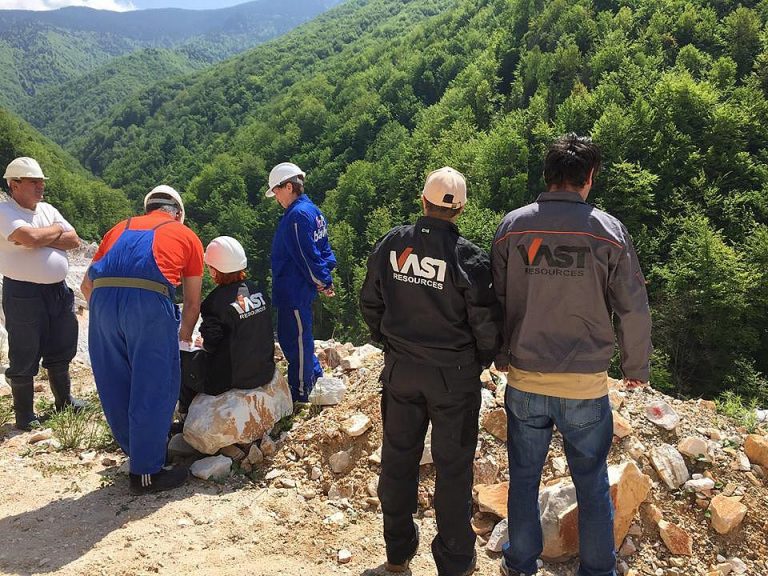
The company is putting in place all the necessary precautions to adhere to the government guidelines whilst ensuring it maintains the implementation programme to bring Baita Plai into production with minimal disruption in order to meet the timeframe stated in the previous announcement made on 11 March 2020.

Vast is an AIM-listed mining company with mining and exploration interests in Romania and Zimbabwe. Zimbabwe has not had a single reported case of the Coronavirus and has not imposed any travel restrictions from any countries yet. Its Southern neighbour however has had over 60 reported cases of the virus.

Vast Resources PLC popularly known for its stint at Pickstone Peerless Gold mine in Chegutu is expected to begin diamond operations in Chiadzwa. Vast opportunities for locals like employment creation are expected when the concluded deal takes off.

Chiadzwa Community Concessions, Marange

The Chiadzwa Diamond Fields located in Marange are widely regarded as the richest alluvial diamond deposits globally.

In September 2019, the Company announced it has signed a Joint Venture Agreement with Chiadzwa Mineral Resources (Pvt) Ltd (“CMR”), a company designated to represent the Chiadzwa Community interests in the Concession.  This resulted in the formation of Katanga Mining (Pvt) Ltd (”Katanga”). A further Joint Venture Agreement between Katanga and the Zimbabwe Consolidated Diamond Company (Pvt) Ltd (“ZCDC”), a government entity that represents the Republic of Zimbabwe in the diamond mining sector, is set to be officially signed this month.

Additional reporting by Mining Zimbabwe

Net worth evaluation for defunct Zisco

0

Kwekwe defunct miner Zimbabwe Iron and Steel Company (Ziscosteel) board has approached the Government seeking approval to engage a German consultant to evaluate the net worth of the steel producer before seeking an investor to resuscitate operations.

Zimbabwe’s integrated steel manufacturer closed down in 2008 at the height of hyperinflation. Between 2011 and 2017, two attempts to resuscitate operations at Zisco by Essar Global and R and F, failed to materialise.

In an interview last week, Zisco acting board chairman, Dr Gift Mugano, said in the past there have been many conflicting figures thrown out concerning the net worth of Zisco. He said before an investor is secured, it was critical to do a proper evaluation of the firm’s assets.

“We are very open minded in terms of the company to do the evaluation of Zisco and we can go as far as Germany because most of the technology, which is there came from Germany.

“So, we are not going to be looking at the mediocrity to do the evaluation exercise. We want the correct position from a technical point of view. If there is going to be any local person it will be someone supporting from the local knowledge, but we think we can get the technical expertise from Germany,” he said.

“We have engaged our Minister (Dr Sekai Nzenza) for approval and she is happy with that, what we now need to do is to do the normal procurement processes.”

In 2011, Zimbabwe and Essar Global signed a US$750 million deal to resuscitate operations at the Redcliff-based steel plant but the deal fell by the way side because of among other reasons, political bickering in the inclusive Government as well as numerous squabbles over mineral rights and other technicalities. Again in 2017, it was reported that the Government had secured US$1 billion investment for the revival of Zisco from a Chinese firm, R and F. 

Last year R and F advised the Government that it was pulling out of the deal amid reports that efforts to renegotiate the deal agreed on under the previous administration led by former President Mr Robert Mugabe were unsuccessful.

The arrangement entailed the acquisition of Zisco’s majority shareholding by the Chinese investor to pave way for the revitalisation of the steel plant.

Dr Mugano said it was imperative for them to engage a foreign company with technical expertise to do the valuation of Zisco assets to eliminate the possibilities of mortgaging the country given the fact that the steel manufacturer’s assets go beyond plant and equipment.

“That is why you hear sentiments that the R and F deal was like mortgaging the country because you don’t know what you are giving by giving concessions that you don’t know.

“We want to do proper evaluation to understand the net worth of Zisco because when we go out to look for investors, we need to know what we are holding in our hand. So far, I don’t know exactly the net worth of Zisco and we are engaging a company through the normal procurement processes so that we can be able to know,” he said.

“But what I know, it’s in millions of US dollars but we need to know the exact number and then we break down to say what is this section costing. Zisco is just beyond the Zisco plant, there are properties . . . and that will be a process that will take a couple of months to do proper evaluation,” said Dr Mugano.

He said their role as the board was to render strategic guidance and direction on how things should be done to resuscitate Zisco.

“We can only do that once we have agreed. First we have to do the feasibility study and then come up with a decision on which route we are taking in terms of selling all the scrap or are we resizing it (Zisco) and if we are resizing it, what can we do from a domestic resource mobilisation, or international investment,” said Dr Mugano.

He said it was also critical to take into account that the world was now in the 4th industrial revolution and it should be well-thought on what can come out of Zisco looking at the existing plant technology and modern-day equipment.

“Those are questions to be answered when we do proper feasibility study of what is Zisco of today against Zisco of 1980. Or should we start a new right size company, which should be able to fit the modern demand taking into account the pressure of green economy and the need to align with modern trends in terms of demand for steel,” said Dr Mugano.

Source: The Chronicle