Home Blog Page 57

ZAMI Bridges Divide, Champions Inclusive and Sustainable Mining

0

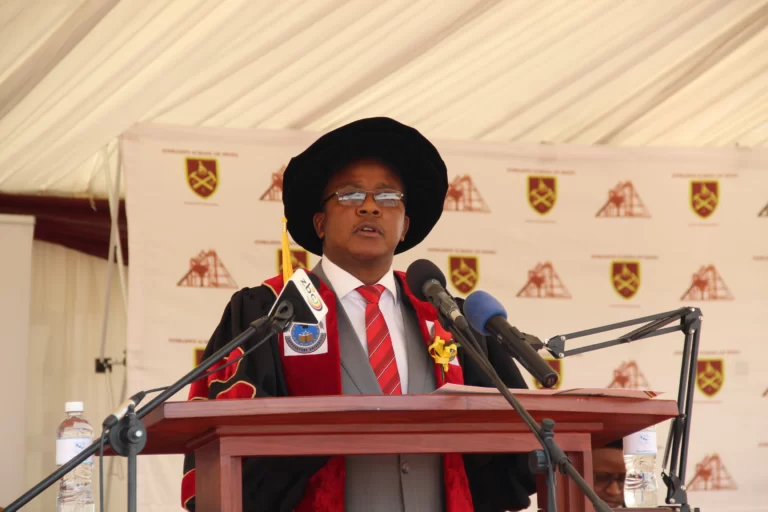
The Zimbabwe Alternative Mining Indaba (ZAMI) has solidified its role as a critical national platform for inspiring change and fostering dialogue between the government, mining investors, and communities, with top officials calling for sustainable and inclusive management of the country’s mineral wealth, Deputy Minister of Mines and Mining Development Dr Polite Kambamura said.

By Rudairo Mapuranga

Speaking during the ZAMI 14th Edition this week, Dr Kambamura emphasised that mineral extraction must look beyond immediate profit to ensure intergenerational equity.

“My view today is that when people are extracting from minerals, let it go beyond the extraction, but let’s look at sustainability. How will future generations benefit from what is happening today?” he said.

He positioned the global just energy transition, driven by demand for minerals like lithium and platinum group metals (PGMs), as a monumental opportunity for Zimbabwe, but only if managed correctly.

“This will provide employment to our people, it will provide a cleaner source of energy… It should not benefit only the investors, but our people, the owners of the minerals, the owners of the land should also benefit,” Kambamura stated, adding that everyone must be included in both upstream and downstream industries.

The Deputy Minister defended the government’s record, citing national peace and ongoing infrastructure projects as evidence of proper mineral resource management.

“When you see roads being constructed, hospitals being built, that money is coming from the minerals… So if properly managed, our people can benefit from their mineral resources. But if mismanaged, we see that there will be challenges,” he warned.

His comments dovetailed with those of the Zimbabwe Environmental Law Organisation (ZELO) Deputy Director, Shamiso Mtisi, who earlier underscored that investment and sustainable development are inseparable “twins.” Mtisi argued that platforms like ZAMI are essential for shaping policy, allowing communities to voice concerns over environmental degradation and pollution directly to lawmakers and investors.

“Those discussions will definitely help us in shaping different policies and laws in the country,” Mtisi said, revealing that ZELO is actively working with the Ministry of Mines to refine the Mines and Minerals Amendment Bill.

Both speakers agreed on the necessity of formalising the artisanal mining sector. While Mtisi detailed the need for providing “equipment, finance, and other supportive infrastructure” to small-scale miners, Kambamura highlighted the government’s commitment to collaboration.

“As a government, we stand ready to work with ZELO, that’s why I’m here today, to hear issues coming from the organisation, to hear issues coming from the people, to engage people,” Kambamura said, acknowledging that resolving complex issues is “a process, not an event” that often requires a whole-of-government approach.

The consensus from ZAMI 2025 is clear: for Zimbabwe to truly benefit from its mineral endowment, a collaborative, sustainable, and inclusive path is not just ideal—it is imperative. The platform continues to be a vital engine for inspiring the change needed to achieve that goal.

Government Revamps Mining Law for Sustainability and Global Standards

0

Zimbabwe is embarking on a transformative journey to redefine its mining sector, with the new Mines and Minerals Bill Amendment placing public consultation, sustainability, and global best practices at its core, Mining Zimbabwe can report.

By Rudairo Mapuranga

In a significant shift towards transparent lawmaking, the government has thrown the doors open for national dialogue, urging citizens, miners, and investors to help shape a law that will govern the country’s most valuable natural resources for generations to come.

Deputy Minister of Mines and Mining Development, Eng Polite Kambamura, has positioned the soon-to-come consultation process as a testament to the government’s commitment to inclusivity.

“The fact that the Mines and Minerals Bill Amendment is going through public consultation shows a government that is ready to engage its citizens and hear their comments… it’s not being done behind closed doors. It’s a show of transparency, a readiness for inclusivity, leaving no one behind,” Eng Kambamura stated.

This open-door policy marks a deliberate move away from past criticisms of opaque decision-making. The Deputy Minister explicitly called for stakeholders to present their views on critical issues, including artisanal mining formalisation, community beneficiation, and human rights safeguards.

This inclusive approach, he argued, is essential to align the law with “changing markets, growth dynamics, and the need to be in sync with regional and international standards.”

Beyond domestic governance, the Bill is intricately linked to Zimbabwe’s global economic positioning. Eng Kambamura highlighted that a modern, transparent legal framework is key to attracting quality investment.

“It was a very good experience to market our country as a friendly and responsible mining destination,” he noted, underscoring that global investors increasingly prioritise environmental, social, and governance (ESG) standards alongside mineral potential.

A central pillar of the proposed amendment is the imperative of sustainable development. The Deputy Minister defined the Bill’s philosophy clearly: “Development that meets the needs of the current generation, without compromising the ability of future generations to meet their own needs — that is sustainability.”

This principle seeks to ensure that mineral extraction contributes to long-term national prosperity rather than short-term exploitation.

Paving the Way for a National Mining Policy

In a pivotal revelation, Eng Kambamura indicated that the passage of this Bill would create the foundation for Zimbabwe’s first comprehensive national mining policy.

“I think the Bill will open up a way for the Ministry to draft a mining policy first. And all these other issues will now fall under the mining policy,” he said.

This move promises to provide a cohesive, long-term strategy for the sector, encompassing value addition, local content, and community development.

Despite the open forum, the Deputy Minister cautioned against public apathy, revealing that some are already treating the draft as a finished product.

“Some people are already taking it as if it were closed doors… That’s not the position. We’re still hoping for engagement,” he explained, issuing a direct call for robust participation to ensure the final law is reflective of the nation’s aspirations.

The message is clear: the future of Zimbabwe’s mining sector is being written now, and every voice has a role in shaping it.

Gold buying prices per gram/ ounce 18 September 2025

0

Gold buying prices in Zimbabwe per gram/ ounce, 18 September 2025, from the official gold buyer and exporter Fidelity Gold Refinery (FGR).

CategoryPrice ($/g)Price ($/oz)
SG 90% and ABOVE111.833,478.39
SG >89% <90%110.653,441.73
SG >80% <85%109.473,405.08
SG >75% <80%108.283,368.12
Sample 5–10g106.513,310.49
Fire Assay CASH112.863,509.18


NB: Fire Assay cash price is for gold above 100g; no sample is deducted.

A sample of not more than 10g is deducted for the Fire Assay Transfer price

Mine Entra 2025 Looks to Broaden Engagement with the New Virtual Marketplace

0

The Zimbabwe International Trade Fair (ZITF) has introduced the Virtual Marketplace for this year’s Mining, Engineering, and Transport Expo (Mine Entra), an innovation set to bring a new dimension to the exhibition experience at the country’s premier mining event, Mining Zimbabwe can report.

By Ryan Chigoche

The platform, which has been described as a “masterstroke,” allows exhibitors to showcase products, services, and technologies in an interactive online environment, reaching a wider audience and engaging with potential clients in real time.

Coming at a pivotal moment for Zimbabwe’s mining sector, which continues to face investment and growth challenges, the Virtual Marketplace provides a dynamic platform to connect stakeholders, highlight industry capabilities, and foster international partnerships directly supporting Mine Entra’s goal of revitalizing the sector and driving sustainable development.

Speaking to Mining Zimbabwe, ZITF Chief Executive Nick Ndebele described it as Mine Entra’s masterstroke, which will give exhibitors a global audience.

“The Virtual Marketplace is Mine Entra 2025’s coup de maître — a signature innovation that ensures connections are not limited by the space or time constraints of the physical event,” Ndebele said.

“This digital space allows exhibitors to engage a broader audience of visitors, buyers, and peers aligned with their business interests. Exhibitors will also be able to schedule one-on-one virtual meetings for detailed product demonstrations and meaningful conversations, and showcase resources, products, and solutions to a global audience, extending their visibility well beyond the exhibition halls,” he added.

To fully explore the platform, exhibitors have been urged to complete their profiles, with dedicated support from the ZITF technical team available to guarantee a seamless experience.

By combining virtual and on-site activities, ZITF aims to create a hybrid experience that enhances networking and investment opportunities.

The Virtual Marketplace reinforces the expo’s role as a dynamic platform to attract investment, showcase industry capabilities, and foster sustainable international partnerships.

Meanwhile, preparations for Mine Entra 2025 are already well underway, following a robust marketing and promotional campaign that has generated strong interest from stakeholders.

This year’s edition will run under the theme “Beyond Extraction: Sustaining the Future of Mining,” placing greater emphasis on sustainability, innovation, and community impact.

Mine Managers call for Technology Transfer & Knowledge Exchange to Fortify Zimbabwe’s Mining Sector

0

Shamva Mine General Manager Eng. Gift Mapakame has issued a compelling call for greater inclusivity and collaboration, specifically urging major Chinese-invested operations to join the industry’s premier body for knowledge sharing, Mining Zimbabwe reports.

By Rudairo Mapuranga

The appeal was made during the Association of Mine Managers of Zimbabwe (AMMZ) 3rd Quarter Technical Meeting, hosted by Sinomine Bikita Minerals in Masvingo. In his vote of thanks, Mapakame framed the integration of key players not just as an administrative formality, but as a critical strategic move to harness advanced technology and proprietary skills for the benefit of the entire national industry.

Mapakame pointed to a glaring paradox: Chinese investment now constitutes a significant and dominant share of Zimbabwe’s mining sector, bringing with it cutting-edge technology and specialised methodologies, yet remains noticeably absent from the institutions designed to foster sector-wide growth.

“The reality on the ground… is that the share of the lithium sector that Chinese investment has actually taken is quite significant. It’s much more than half of the traditional operations,” Mapakame stated. “But the reality is that there’s a lot of gaps in terms of inclusivity that we are noting.”

He elaborated that this investment is far more than just capital. “It’s coming with technology, it is coming with skills,” he emphasised. “All those things are just hanging out there and we are unable to actually harness those new establishments and just harmonise with what is existing. So it’s a major gap.”

This gap, according to Mapakame, prevents the cross-pollination of ideas that is essential for progress. Without formal channels for knowledge exchange, local mines cannot fully benefit from the technological advancements and operational efficiencies that companies like Bikita Minerals possess. Conversely, international operators may miss out on the deep, contextual understanding of local geology, regulations, and practices that established AMMZ members hold.

The AMMZ is no mere social club; it is a vital cog in the machinery of the national mining industry. Mapakame highlighted its role in “shaping the policy framework of the sector,” including the review of critical regulations. By excluding such a large portion of the industry’s technological vanguard, the association—and by extension, the sector—risks crafting policies in a vacuum, unaware of the latest innovations and challenges.

It was this imperative that drove the AMMZ’s deliberate outreach to Bikita Minerals. The technical visit was a first step, a bridge built to connect two worlds. Mapakame’s speech was the invitation to cross it.

Turning directly to the leadership of Bikita Minerals, his appeal was personal and direct. “It’s a bit sad that we actually do not have anyone from Bikita Minerals as a member of the association,” he noted before asking, “Do we have anyone who is a member of the Association of Mine Managers from Bikita Minerals? No, we don’t.”

“Please, please, please, please,” he entreated, “as we leave this part, we are going to leave you with links and application forms so that you could also join the association and bring on board… all that international assets and proprietary knowledge that you have.”

His vision is one of a unified, stronger industry. “The door is wide open. We don’t know it all. And you have got something to offer. Let’s come together. The industry is ours. Let’s shape it. Let’s build it together.”

The hosting of the event by Bikita Minerals provided a perfect case study in the value of this proposed exchange. Mapakame expressed deep gratitude for the company’s transparency in showcasing its operations. He specifically mentioned his intrigue with the reprocessing of old dumps for strategic minerals like cesium, a process that involves sophisticated technology and reflects an innovative approach to resource maximisation.

“I was particularly intrigued by the reprocessing of the old dumps in pursuit of cesium. The pricing of that particular mineral commodity is good,” he said, acknowledging the smart diversification that shields the operation from the volatility of more common mineral markets. This technological adaptability is precisely the kind of knowledge that could benefit other mines in Zimbabwe.

Mapakame’s call to action is a recognition that the future of mining is technological. It is driven by automation, data analytics, and sophisticated mineral processing techniques. For Zimbabwe to compete globally and extract maximum value from its mineral wealth, its entire sector must evolve. This cannot happen in silos. It requires a collective effort, a melting pot of international technology and local expertise.

By championing this knowledge exchange, Gift Mapakame is advocating for more than just new members for an association; he is proposing a blueprint for a more resilient, innovative, and prosperous mining industry in Zimbabwe, built on the foundational pillars of shared technology and mutual growth.

Today’s gold buying prices per gram/ ounce

0

Gold buying prices in Zimbabwe today, 17 September 2025, from the official gold buyer and exporter Fidelity Gold Refinery (FGR).

CategoryPrice (US$/g)Price (US$/oz t)
SG 90% and ABOVE112.27$3,491.99
SG >89% <90%111.08$3,454.97
SG >80% <85%109.89$3,417.96
SG >75% <80%108.71$3,381.26
Sample 5–10g106.92$3,325.58


Fire Assay CASH $112.86/g and US$3,510.79/oz

NB: Fire Assay cash price is for gold above 100g; no sample is deducted.

A sample of not more than 10g is deducted for the Fire Assay Transfer price

Beyond Minerals’ Glitter Lies Devastation if Mining Activities Remain Unchecked

0

In the relentless pursuit of mineral wealth, the line between prosperity and peril is often crossed. While mining is the undeniable backbone of the Zimbabwean economy, contributing over 50% to the GDP and 60% of export earnings, its shadow side—unregulated and irresponsible extraction—poses an existential threat to the nation’s ecological and social fabric, Mining Zimbabwe can report.

By Rudairo Mapuranga

As highlighted by Hon. Judith Ncube in her opening remarks at the Zimbabwe Alternative Mining Indaba (ZAMI) 2025, the consequences of unchecked mining are not abstract concerns; they are stark realities already devastating communities and landscapes across the country.

The most immediate and visible impact of unregulated mining is environmental degradation on a catastrophic scale. Hon. Ncube’s poignant observation that “some of our communities… are without rivers anymore” is a chilling testament to this reality. Unregulated operations, particularly in riverbeds, lead to extensive siltation and pollution. Mercury and cyanide, used in the processing of gold, leach into water systems, poisoning aquatic life and rendering water unsafe for human consumption, irrigation, and livestock. The destruction of river ecosystems disrupts entire watersheds, leading to long-term water scarcity that far outlasts the temporary boom of a mining rush.

Beyond water pollution, the landscape itself is scarred. Uncontrolled mining operations leave behind a pockmarked terrain of open, unrehabilitated pits. These pits become death traps for wildlife and livestock and pose severe safety risks to local communities, especially children. Deforestation is another critical issue, as miners clear vast tracts of land for operations and settlements, leading to habitat loss and soil erosion. The removal of vegetation cover destabilizes the land, increasing the risk of landslides and further siltation of waterways. The land, once capable of sustaining agriculture and biodiversity, is left barren and useless.

The fallout from unregulated mining extends deep into the social and economic structures of communities, often fuelling conflict and instability. The promise of quick wealth leads to massive migrations into mining areas, placing immense strain on local resources and infrastructure. This influx can lead to conflicts between newcomers and indigenous communities, between miners and farmers over land and water rights, and between different mining syndicates vying for control of lucrative claims. This environment of competition and lawlessness is a breeding ground for violence, crime, and the erosion of traditional social structures.

Furthermore, the economic benefits from such operations are often illusory for the host communities. While a few individuals may profit, the vast majority are left to grapple with the long-term costs: contaminated water, degraded farmland, and broken social cohesion. The community’s primary, sustainable livelihoods—farming and fishing—are destroyed, leaving them more vulnerable and economically dependent than before the miners arrived. This creates a cycle of poverty and desperation that is difficult to break.

The health implications are another dire consequence. Miners working without proper safety equipment are exposed to dust, toxic chemicals, and the constant risk of tunnel collapses. Respiratory diseases like silicosis, mercury poisoning, and high rates of injury and death are common. These health crises place additional burdens on already under-resourced local clinics and families who lose their breadwinners.

Hon. Ncube’s reference to the government’s recent ban on riverbed mining and the Responsible Mining Initiative is a direct response to this crisis. It acknowledges that the cost of unregulated mining is simply too high. The enforcement of environmental regulations and the promotion of responsible practices are not anti-development; they are fundamental to sustainable development. They ensure that the wealth extracted from the ground does not come at the expense of the very resources—water, land, and community health—that are essential for the nation’s long-term survival and prosperity.

The message from ZAMI 2025 is clear: the path forward must be one of order, responsibility, and accountability. The glitter of gold must not blind us to the irreversible cost of chaos.

Uzumba RDC Circumvents Parliament with New Mining Regulations Disguised as Environmental By-Laws

0

Just weeks after Parliament revoked its illegal attempt to tax and regulate miners, the Uzumba Maramba Pfungwe Zvataida Rural District Council (UMP RDC) has engineered a fresh and sophisticated strategy to control the mining sector, embedding restrictive measures within a new set of environmental by-laws.

By Rudairo Mapuranga

This move, detailed in Statutory Instrument 83 of 2025, represents a deliberate effort to circumvent the clear ruling of the Parliamentary Legal Committee (PLC), which in August declared the council’s previous mining-specific by-laws (S.I. 75 of 2025) ultra vires — or beyond its legal power. The PLC had unequivocally stated that the power to levy and permit miners rests solely with the national Minister of Mines, not local councils.

Rather than retreating, the UMP RDC has now woven a complex web of environmental regulations that effectively create a duplicate, local-layer bureaucracy specifically for mining companies. This new framework, while ostensibly focused on conservation, is designed to bring miners under the council’s authority, imposing new submission requirements, hefty fines, and a significant risk of regulatory contradiction that could paralyse operations.

The Core of the Legal Overreach

The primary flaw in UMP RDC’s strategy lies in a fundamental misunderstanding of legal mandate. In Zimbabwe’s legal system, a local authority is a creature of statute. It only possesses powers explicitly delegated to it by an Act of Parliament, such as the Rural District Councils Act or the Environmental Management Act (EMA). It cannot simply invent new powers, especially in an area already comprehensively occupied by a specific national law.

The Mines and Minerals Act is a complete and self-contained code for mining. It establishes a detailed system from prospecting to closure, including environmental management. It designates specific national authorities — the Mining Commissioner, the Secretary for Mines, and the Environmental Management Agency (EMA) — to oversee these processes.

Nowhere in this national framework is the UMP RDC, or any RDC, named as a regulatory body for mining. By inserting itself into this process, the council is acting without a legal mandate.

  1. The Illegality of the “Submission” Requirement: Section 38(2) and (3) of S.I. 83 states:

    (2) All holders of prospecting, exploration and mining rights operating in the council area shall submit copies of their licences to council.
    (3) Any holder of a prospecting, exploration or mining right operating in the council area without submitting a copy of their licence to council shall be liable to a fine specified in the Third Schedule.

    This is the most blatant overreach. The obligation to “submit” a licence implies a right to receive and process it. The Mines and Minerals Act does not create this obligation. A mining title issued by the Ministry of Mines is valid across Zimbabwe. It does not require endorsement, registration, or submission to a local council for validation. By creating this new step and attaching a financial penalty (a $1,000 fine, as per the Third Schedule) for non-compliance, the UMP RDC is effectively creating a de facto local permitting system. They are punishing miners for not following a procedure that exists only in their by-laws, not in national law. This is a clear usurpation of the Minister of Mines’ authority.

  2. Duplicative and Onerous Environmental Reporting: Section 10 of the by-laws demands that project developers (explicitly including miners) submit a full suite of environmental documents to the council, including:

    • Copies of the Environmental Impact Assessment (EIA) Report

    • The EIA Certificate issued by the EMA

    • The annual Environmental Management Plan (EMP)

    Failure to do so carries a massive penalty of $5,000 per inspection.

    This is duplicative, unnecessary, and burdensome. The EMA is the national body mandated by the Environmental Management Act to receive, approve, and monitor these exact documents. The entire EIA process, including public consultations, is already overseen by the EMA. The council’s demand for copies is not for “information” but for enforcement. It gives them a pretext to inspect and fine miners based on their own interpretation of documents already approved by the competent national authority. This creates a high risk of contradictory directives between the EMA and the RDC, paralysing operations.

  3. The Council as Environmental Enforcer: A Mandate it Doesn’t Possess
    Sections 11 and 12 of the by-laws empower the council to monitor rehabilitation plans and even carry out rehabilitation works itself, charging the cost back to the miner or landowner.

    While environmental rehabilitation is crucial, the primary legal authority for enforcing this against miners again lies with the EMA, as per the Environmental Management Act. The EMA has the technical capacity and the national mandate. The council’s role should be collaborative, reporting violations to the EMA, not unilateral. By positioning itself as the primary enforcer of mining environmental standards, the council is again stepping into a role Parliament assigned to a national body.

A Recipe for Regulatory Chaos and Extortion

The practical consequence of this overreach is not environmental protection but regulatory chaos. It creates a dual system that is unsustainable for miners:

  • Double Jeopardy: A miner could be in full compliance with the Ministry of Mines and the EMA but still be fined by the UMP RDC for violating a local by-law that imposes stricter or different requirements. For example, their EMA-approved EMP might not satisfy a local councillor.

  • Increased Cost of Doing Business: The new fines and fees (e.g., $2,000 for EIA consultation with the council) represent a new tax on mining, increasing operational costs and discouraging investment, especially for small-scale and artisanal miners who are least able to bear them.

  • Bureaucratic Bottlenecks: Operations could be halted not by the EMA or the Mining Commissioner, but by a local official demanding paperwork that the national law does not require.

  • Potential for Abuse: Such vague and expansive local powers can easily be abused for rent-seeking behaviour, where compliance is negotiated rather than based on the law.

A Solution in Search of a Problem

The UMP RDC’s concerns about environmental degradation from mining are likely valid. However, the solution does not lie in enacting legally dubious bylaws that duplicate existing national frameworks.

The correct and legal path is twofold:

  1. Collaboration, Not Regulation: The council must use existing channels. It can formally lobby the EMA and the Ministry of Mines to strengthen enforcement in their district. It can report violations directly to these bodies, which have the full legal power to act.

  2. Use Actual Mandated Powers: The council should focus its energies on its undisputed mandates under the RDC Act: waste management, land-use planning (grazing, cultivation), and protecting wetlands from non-mining activities. Its new by-laws are overwhelmingly focused on these areas and are on solid legal ground there.

Until the UMP RDC recognises that its authority stops at the mine gate, and that its role is to partner with national agencies rather than attempt to regulate them, it will continue to enact legislation that is vulnerable to legal challenge, creates uncertainty, and ultimately hinders both economic activity and genuine environmental protection. The precedent set by S.I. 83, if unchallenged, invites every other RDC in Zimbabwe to create their own patchwork of mining regulations, effectively dismantling the national mining policy and creating a regulatory nightmare of epic proportions.

Ministry of Mines Sets Up Gender Desk to Promote Inclusive Mining Policies

0

The Ministry of Mines and Mining Development has set up the Department of Gender Mainstreaming, Inclusivity and Wellness, a new unit created to ensure that women — long underrepresented in mining — are fairly included in all aspects of the sector, Mining Zimbabwe can report.

By Ryan Chigoche

The announcement was made by Deputy Chief Government Mining Engineer Eng. T. Paswavaviri at a Gender Equality and ASM Capacity Building and Strategy Workshop in Harare, led by the Intergovernmental Forum on Mining, Minerals, Metals and Sustainable Development (IGF), an organisation which assists governments in developing sustainable and inclusive mining policies.

This new department comes at a critical time for women in the Artisanal and Small-Scale Mining (ASM) sector who continue facing challenges such as limited access to finance, unsafe working conditions, and exclusion from decision-making.

Women are a key part of Zimbabwe’s ASM sector but remain underrepresented in policy. The sector employs around 535,000 people, with women making up 10–15% (53,000–80,000) of the workforce, according to the Zimbabwe Environmental Law Organisation and Delve Database.

Across SADC, women account for 40–50% of ASM workers, underscoring the need for initiatives like the new Department of Gender Mainstreaming, Inclusivity and Wellness and the SADC White Paper on Gender and ASM to address barriers and improve inclusion.

Speaking at the workshop, Deputy CGME Eng. Paswavaviri said the department will ensure gender considerations are fully integrated into mining policy, programmes, and regulations as they gather valuable intelligence from the IGF workshop and the subsequent SADC Policy Framework.

“The department’s mandate is to directly address the unique challenges faced by women in mining — from access to finance and equipment to protection from discrimination and violence. Therefore, this workshop is not just theoretical; it is directly aligned with our operational priorities. The insights we will gain on the barriers women face in ASM, the link between formalisation and gender equality, and the critical issues of health and safety will provide essential, actionable intelligence for our new Department,” Eng. Paswavaviri said.

The workshop brought together women miners from across Southern Africa, including the Zimbabwe Artisanal and Small-Scale Women Miners Association (ZASWM) and the SADC Women in Mining.

Led by IGF, participants are developing a SADC White Paper on Gender and ASM, which will guide a regional policy framework and gender-inclusive reforms across member states.

“This initiative strengthens the valued partnership between Zimbabwe and the IGF. It demonstrates a shared commitment to ensuring our mineral wealth translates into improved well-being for all our people, especially women. The insights from the SADC regional framework — including the Regional Indicative Strategic Development Plan, the Revised Protocol on Gender and Development, and the SADC Mining Protocol — will guide our new Department in aligning national policies with regional gender equality goals,” Eng. Paswavaviri said as he commended IGF efforts.

IGF is a 68-member intergovernmental body that provides technical assistance and policy reviews free of charge, helping governments strengthen mining governance and close policy gaps.

This move marks a significant step toward institutionalising gender equality in Zimbabwe’s mining industry and could become a model for other SADC countries.

How Bikita Minerals’ Novel Cesium Flotation Circuit is Redefining Profitability in a Soft Market

0

In the face of softening global prices for traditional minerals like lithium, Sinomine-owned Bikita Minerals has engineered a remarkable buffer against market volatility. The key to its resilience lies not in a new mine, but in a sophisticated, multi-stage metallurgical strategy focused on reprocessing historical waste dumps to extract a critical and high-value mineral: cesium.

By Rudairo Mapuranga

This innovative approach was detailed in a comprehensive technical presentation by Thomas Mupfumi, Senior Metallurgist at Bikita Minerals, during a recent Association of Mine Managers of Zimbabwe (AMMZ) visit. His explanation revealed a plant flowsheet of exceptional complexity and ingenuity, designed to economically liberate cesium from a previously discarded feedstock.

The story begins not with the new plant, but with the old. For decades, Bikita Minerals’ primary cash cow was petalite, a lithium-bearing mineral. The extraction process relied on Dense Media Separation (DMS), which leverages the differences in specific gravity (SG) between minerals.

“As our geologists indicated, our ore bodies were an assortment of minerals,” explained Mupfumi. “The key minerals of value are the spodumene [lithium], the petalite [lithium], and then there’s pollucite [cesium].”

In the DMS circuit, the target mineral, petalite, is a “light” fraction with a lower SG, reporting to the float product. The sink product—the heavier material—contained other valuable minerals like spodumene (SG ~2.7-3.2), lepidolite (lithium mica, SG ~2.8-3.0), and most importantly, pollucite (cesium, SG ~2.7-2.9). For years, this sink stream, deemed uneconomical to process further at the time, was stockpiled in vast dumps.

“Time immemorial, the major cash cow for Bikita Minerals is the petalite,” Mupfumi stated. “So you realise that we have got huge stockpiles of waste material that was left over after recovering petalite.”

This “waste” material became the foundation for a new business model. The new investors at Bikita (Sinomine) conducted extensive metallurgical feasibility studies on these dumps, recognizing their latent, marginal value. The challenge was metallurgical: how to separate and concentrate these minerals, particularly the low-grade pollucite, into a high-value, marketable product.

A Novel Three-Stage Concentration Circuit

The solution is a bespoke cesium flotation plant that Mupfumi described as “a novel processing setup… because there’s no other plant in the world which can recover very, very low grade pollucite and enrich it to the extent that this flotation plant is enriching.”

The feed for this novel circuit is not raw ore, but a pre-concentrated stream. The historical dump material is first retreated through the existing DMS plant. This “recycle” stage serves to marginally increase the content of pollucite and spodumene in the sink stream, creating a more suitable feed for the flotation circuit.

The heart of the operation is the flotation plant itself, a complex and sequential process designed to separate minerals based on their surface chemistry. Mupfumi detailed a three-stage recovery process:

  1. Stage 1: Lepidolite (Mica) Recovery: The first stage is a bulk flotation process designed to recover micaceous minerals. “At the first stage of recovery, lepidolite is indicated on the flotation diagram,” Mupfumi noted. In this step, reagents are added to make the mica minerals hydrophobic (water-repelling). Air is bubbled through the pulp, and the hydrophobic mica particles attach to the bubbles and are skimmed off as a froth product. This step removes a significant portion of the lepidolite, simplifying the feed for subsequent stages. The tailings from this cell, now enriched in spodumene and pollucite, proceed to the next stage.

  2. Stage 2: Spodumene Recovery: The circuit then switches to target spodumene. Through a different reagent scheme, the spodumene is made hydrophobic and is recovered in the froth phase. “Spodumene is now reporting in the froth phase,” Mupfumi said. This spodumene concentrate represents a second revenue stream, adding lithium production from the historical waste. Critically, the valuable pollucite remains in the tailings stream of this stage. “The tailings stream now, that’s where you’re going to imagine our increased enrichment of your pollucite.”

  3. Stage 3: Pollucite (Cesium) Recovery: The final stage is the most technically fascinating, described by Mupfumi as “entirely a waste flotation process.” The tailings from the spodumene circuit, now highly enriched in pollucite, are fed to the cesium recovery circuit. Here, the goal is to remove the remaining gangue (waste) minerals to leave a pure pollucite concentrate.
    · First, any remnant mica that escaped the first stage is scraped off.
    · Second, dominant gangue minerals like feldspar and quartz are targeted and removed in the froth phase. “You are now targeting your feldspars, removing them as waste.”
    · The final product, the premium pollucite concentrate, reports to the tailings stream of this flotation cell. “The product now is falling within the tailings stream of the flotation cell. That is where you are getting your cesium.”

Remarkable Metallurgical Performance: Turning 0.12% into Profit

The efficacy of this circuit is demonstrated by its stunning enrichment ratio. Mupfumi provided specific figures that highlight its world-class performance:

· Feed Grade: The material feeding the cesium plant averages a mere 0.12% Cesium Oxide (Cs₂O). This is an exceptionally low grade, making economic recovery seem improbable with conventional methods.
· Final Concentrate Grade: The novel flotation circuit upgrades this to a concentrate grading between 3% to 5% Cs₂O.
· Enrichment Ratio: This represents an enrichment ratio of approximately 25 to 40 times. “In terms of mineral processing, it’s a very high enrichment ratio,” Mupfumi emphasized.

This ability to economically process such a low-grade feed is the cornerstone of the operation’s profitability. Pollucite is the principal ore of cesium, a metal whose unique properties—it is the most electropositive and one of the least abundant stable elements—make it extremely valuable in specialized applications. These include:

· Oil and Gas Drilling Fluids: Cesium formate brines are used in high-pressure, high-temperature (HPHT) drilling operations due to their high density and environmental acceptability.
· Atomic Clocks: Cesium is the “pendulum” in atomic clocks, providing the definition of the second.
· Photoelectric Cells and IR Lamps: Used in night-vision devices and other optical applications.
· Medical and Research Applications: Used in radiation therapy and certain types of catalysis.

This niche demand and limited global supply ensure cesium commands a consistently high price, often orders of magnitude higher than lithium or tin, providing a robust shield against softer prices in other commodity markets.

A Strategic Vision for Inclusivity and Knowledge Transfer

The decision to host the AMMZ technical visit at Bikita Minerals and provide such a transparent technical briefing aligns with a broader strategic vision for the Zimbabwean mining sector, a vision passionately championed by industry leaders like Gift Mapakame, General Manager of Shamva Mine.

During the visit, Mapakame issued a powerful call for greater integration and knowledge exchange, specifically urging major Chinese-invested operations like Bikita to join the AMMZ. His words resonate deeply in the context of Bikita’s technical achievement.

“As an association, we have deliberately planned to interact and engage with the Chinese-invested operations that are in the country,” Mapakame stated. He identified a “major gap” in inclusivity, noting that while Chinese investment brings significant technology and skills, it often remains isolated from local institutions. “It’s coming with technology, it is coming with skills. All those things are just hanging out there and we are unable to actually harness those new establishments.”

Bikita Minerals’ presentation, in its technical depth and openness, can be seen as a direct response to this call. By showcasing their novel cesium flotation technology, they are not just explaining a process; they are demonstrating the very “proprietary knowledge” that Mapakame believes should be shared to elevate the entire national mining industry.

A Blueprint for Resilience

Bikita Minerals has provided a masterclass in modern mineral processing and strategic business planning. By applying advanced, proprietary metallurgical expertise to legacy waste streams, they have:

  1. Unlocked a new, high-value revenue stream (cesium) that insulates them from volatility in lithium markets.

  2. Maximized resource efficiency by extracting full value from historical operations, effectively making the mine’s waste a primary ore body.

  3. Demonstrated world-class innovation in designing a flotation circuit capable of economic recovery from a feed grade most operations would consider barren.

  4. Positioned Zimbabwe as a center of technical excellence for critical mineral processing.

The success of this circuit underscores a critical lesson for the global mining industry: profitability in the 21st century may depend less on discovering new giant ore deposits and more on innovatively and efficiently processing what has already been found. For Zimbabwe, the integration of this advanced technological knowledge into the broader fabric of its mining community, as advocated by leaders like Gift Mapakame, promises a more resilient, innovative, and prosperous future for the entire sector.