Home Blog Page 572

Gold drops

0

Gold edged down on Friday as the dollar rose and appetite for riskier assets improved after the World Health Organisation tempered fears of a global coronavirus outbreak.

Spot gold was 0,1 percent lower at $1 561,18 per ounce by 1039 GMT but holding above the key $1 550 support level and en route to a post small weekly gain of about 0,3 percent, as bets on easy monetary policy globally and lingering uncertainties on the world stage buoyed appetite for the safe haven.

US gold futures slipped 0,3 percent to $1 560,80 per ounce.

“Gold prices are facing headwinds from gaining equities and a stronger dollar but it is unlikely to fall below $1 520 as a bunch of geo-political uncertainties still exist,” Saxo Bank analyst Ole Hansen said.

European shares gained after the WHO designated the coronavirus outbreak an emergency for China but not yet for the rest of the world.

However, the spread of the virus ahead of the Lunar New Year, a peak period of travel and gold demand in China, kept investor concerns heightened.

Further, the dollar hovered close to a more than one and half month high against a basket of currencies, making gold expensive for buyers holding other currencies. — Reuters.

Mining Stakeholders Rally Against Machete Violence

0

Stakeholders in the mining sector have called for urgent action to stop pervasive involvement of political actors in illicit gold trade which they said was fomenting criminality and violence in the sector.

As calls from civil society, churches, and the general public grow over the scourge of Machete-wielding criminals, popularly known as Mashurugwi, Zimbabwe Environmental Laws Association (ZELA) convened a multi-stakeholder convention to recommend solutions to end violence artisanal mining activities.

The forty-ve organizations were drawn from Parliament, Ministry of Mines Portfolio Committee on Mines, civic organizations Zimbabwe Women in Mining, the European Union, media fraternity, representatives from mining-affected communities and artisanal and small-scale miners.

In nine key recommendations, they expressed deep concern over the President’s non-reactionary attitude to machete violence, urging the Head of State to declare it a state of emergency and called for government to hand down stiff punitive sentences to offenders, ZELA called for a lasting solution to the anarchy brought by machete-wielding gangs who are threatening the sustainability of a viable livelihood for artisanal and small-scale miners and robbing Zimbabwe of its peaceful and harmonious status.

The government was also urged to provide a legal framework that formalizes artisanal mining as well as repealing of legislation that criminalizes prospecting for gold to strengthen the justice system which ZELA warned was now being branded ‘inept’.

ZELA released a statement on the recommendations made by the “45 citizens of the Republic of Zimbabwe drawn from mining-impacted communities, civil society organizations, the parliament of Zimbabwe, artisanal and small-scale miners, captains of industry, the media fraternity and government officials…

“We now, therefore, call on the Government of Zimbabwe and its relevant stakeholders to ensure that; “It moves swiftly to formalise artisanal and small-scale mining instead of criminalizing this sector which has become a source of livelihood for many people trying to escape persistent poverty.

“Transparent and regulatory mechanisms which offer easy access to mining titles and legal production channels must be put in place. ASM is an important source of livelihood for millions of Zimbabweans.

“There is need for a holistic understanding of the machete violence. This will contribute to the development of multifaceted responses to curb criminality
“The move by the Parliamentary Portfolio Committee on Mines and Energy to undertake an enquiry is noble, however swift action is needed to urgently deal with machete-wielding gangs; Stringent and deterrent sentences must be endorsed while the judiciary must ensure that bail is not granted to these human rights violators.

“The Government of Zimbabwe must move a step further to gazette a Statutory Instrument whose objective would be to protect the citizens from machete-wielding gangs.

“Punitive measures must be enacted to arrest the corruption scourge. The pervasive involvement of some influential political actors in illicit ASM dealings has perpetuated criminality and corruption.

“The Gold Trade Act which criminalizes prospecting by artisanal miners must be repealed while the archaic Mines and Minerals Act must be urgently reviewed.

“The Government and relevant stakeholders must begin a formal process to design and implement due diligence measures consistent with regional and international principles such as the Organization for Economic Co-operation and Development (OECD) and embrace the Guiding Principles on Business and Human rights.

“The status of women in mining must be improved for the better. This is a prudent move in the
promotion of responsible and safe artisanal and small-scale gold mining” read part of the statement.


263 Chat

GDI to become Zimbabwe’s biggest platinum producer

0

AO Afromet and Landela owned mining firm, Great Dyke Investment is set to become the biggest platinum producer in Zimbabwe.

Rudairo Dickson Mapuranga

According to the mines’ Chief Operations Officer, Munashe Shava, the mine which has a life span of nearly 100 years has the potential to become the biggest platinum producer in 12 years producing an average of 8 million tonnes platinum ore annually.

The company’s Chief Operations officer said that the mine in Norton was divided into three phases with the first phase boosting of an initial capacity of producing an average of 4 million tonnes platinum ore annually.

Shava also said that the company’s ore production can move up to 12 tonnes annually at full capacity production.

“GDI phase one will generate 4 million tonnes of ore annually, the Northern part will run at not less than 30 years and the southern part will push to 65-70 years. In about 12 years, the mine will be able to produce 8 million tonnes which can move to 12 million tonnes as time goes on” said Shava.

The company which has the capacity to employ 3500 employees according to Shava is looking forward to employing more people from Norton, as a result, it is building a training center which will be paying salaries to trainees.

“The first thing we did was to build a training school so that we can Norton residents who have the knowledge to run mining machines,” said Shava.

Darwendale Integrated Platinum Group Metals (PGM) Project is operated by Great Dyke Investments (Pvt) Ltd, a joint venture established on a 50/50 basis between Russian AO Afromet and the Zimbabwean company.

Darwendale deposit is a part of the Great Dyke in the Republic of Zimbabwe, one of the world’s largest systems of PGM mineralization with shallow dipping of ore bodies. Total resources of the deposit amount 50 mln oz (1,550 t) of PGMs, of which 17.6 mln oz (550 t) have been thoroughly explored and confirmed according to JORC standards.

The Project is earmarked high priority for state and economic relationship between Russia and Zimbabwe. The Intergovernmental agreement has been signed in support of the Project by both Russian and Zimbabwean governments. Moreover, the Special mining lease and the National project status have been granted to Project which fixes significant preferences and benefits in accordance with the Zimbabwean law.

Zimbabwe’s current biggest platinum producer, Zimplats mined 6.7 million tonnes of ore in the financial year 2018.

Smelter for Great Dyke project this year-Envoy

0

Construction of a smelter at Great Dyke Investments, a joint venture platinum mining company between Zimbabwe and Russia, is expected to start this year, an envoy said on Thursday.

The project, a joint venture between the Zimbabwe Mining Development Corporation and Russian investors VPB Bank and Rustec to mine platinum in Darwendale, about 62 kilometres west of Harare, is being implemented in three phases.

It is expected to create at least 5 000 jobs and would see production of about 530 000 ounces of platinum by the second phase.

Russian ambassador to Zimbabwe Nikolai Krasilnikov told journalists after calling on Vice President General (Rtd) Constantino Chiwenga that his country was pleased that all its projects in Zimbabwe were on track.

“In terms of investments, our two national projects are all on track, namely Great Dyke Investment and Alrosa.

“It is expected that Great Dyke will start constructing smelter facilities this year and Alrosa by the end of last year they signed the agreement on establishing a joint venture so we expect major investment from this Russian company starting this year,” he said, adding that more companies from his country were keen to explore opportunities in Harare.

“We expect a number of other Russian companies and state corporations to come to Zimbabwe to explore opportunities of investment and transfer of technology.

“We have very good prospects in the field of energy, information and communication technologies,” he added.

Last year, the Zimbabwe Consolidated Diamond Company and Russian conglomerate Alrosa signed a Joint Venture agreement to explore diamond deposits in the country.

Alrosa, which specializes in exploration, mining, manufacture and sale of diamonds, is the world’s largest diamond producing firm by volume, accounting for about 30 percent of global production.

Krasilnikov reaffirmed Russia’s commitment to strengthen existing bilateral relations with Zimbabwe.

“We brought commitment to the VP that we promote further cooperation between our two countries, in various fields to fulfill the agreements made by President (Vladimir) Putin and President (Emmerson) Mnangagwa last year when H.E Mnangagwa visited Moscow.

“On the international arena, our coordination has strengthened significantly. Russia is grateful to Zimbabwe for support of Russian Federation resolutions at the United Nations.

“We appreciate the great contribution the Zimbabwean delegation made to the Russia-Africa Summit that took place in Sochi in October last year,” he said.

He added: “Together we will move forward for the benefit of our people. So we are determined to make significant contribution to the socio- economic development of the second Republic in terms of investment, trade, transfer of technology”_New Ziana

Unki’s 2019 platinum output up 2pc

0

Zimbabwean platinum producer, Unki Platinum’s 2019 platinum output, rose by 4 percent to 89 500 ounces (oz) from 89 400oz in 2018.

For the fourth quarter of 2019 platinum output declined 2 percent to 23 300 ounces (oz) from 23 700oz in the previous quarter.

But in terms of a year-on-year quarterly comparison, the local unit’s fourth quarter output was up 6 percent compared to the 22 000oz produced in the prior comparable period in 2018.

Unki Platinum is owned by South African-headquartered platinum producer Anglo American Platinum (AngloPlat).

Unki’s palladium output also jumped last year from 2018, rising 5 percent to 79 200oz from 75 500oz. However, the mine’s palladium output declined by 6 percent in the fourth quarter to 20 000oz from 21 300oz in the previous quarter.

On a year-on-year (quarterly basis) comparison, the local platinum producer’s palladium production rose 2 percent from 19,6 percent in the fourth quarter of 2018.

Meanwhile, at group level AngloPlat’s metal in concentrate platinum and palladium production both increased by 10 percent, to 531 700 ounces and 360 400 ounces, respectively.

The group said own mined platinum production increased by 18 percent to 361 900 ounces and palladium production increased by 17 percent to 275 000 ounces.

AngloPlat said refined platinum production decreased by 18 percent to 629 700 ounces and refined palladium production decreased by 20 percent to 396 600 ounces.

“Excluding the impact of the tolled volumes that were previously purchased as concentrate, refined platinum production was flat and palladium decreased by 6 percent as improved operational performance at the processing facilities was offset by the impact of Eskom power outages.

“These power outages in Q4 resulted in an inventory build-up of circa 45 000 platinum ounces and circa 27 000 palladium ounces. Platinum sales volumes decreased by 14 percent to 668 300 ounces and palladium sales volumes decreased by 4 percent to 435 800 ounces due to lower refined production in the period.

During the period under review, the full year price per platinum ounce for the basket of metals sold increased by 27 percent to $2,819/oz compared to 2018 due to 48 percent and 73 percent price increases in palladium and rhodium, respectively. For 2020, the group said its production guidance is unchanged at 2 to 2,2 million ounces of platinum and approximately 1,4 million ounces of palladium, “subject to Eskom power performance.”


Business Weekly


What is artisanal gold, why is it booming?

0

A rapid rise in the price of gold since 2000 has driven millions of people to deposits in Africa, South America and elsewhere where they dig for gold using basic technology.

Such informal digging — known as artisanal or small-scale mining (ASM) — has been around for centuries and gold offers cash to communities that may lack alternatives. There are now around 15-20 million artisanal miners, and millions more depend on them, Delve, a global platform for ASM data, estimates.

More and more people are trying to bring this fast-growing trade into the formal economy. But it has generated toxic waste and fed labour abuses, organised crime and prostitution, according to groups including the United Nations and the OECD.

What is artisanal mining?

Artisanal and small-scale miners often operate “freelance,” sometimes paying landowners to access a site, or handing bosses a share of their ore.

Many work with little more than pickaxes and shovels and carry what they dig on their backs. Others use diggers and crushers.

Often, miners use mercury to extract the gold, then turn it into semi-pure nuggets of dore (pronounced door-ray) to sell to traders.

Why has it increased?

Consumption of gold has risen, as rapid economic growth in China created millions of new gold buyers and the economic crisis of 2008 drove investors into assets — like bullion — expected to hold their value.

That pushed prices from less than $300 an ounce in 2000 to around $1 500 now, making mining more attractive than farming for many in countries with often rapidly growing populations.

It is hard to measure the output of artisanal and small-scale miners but Metals Focus, a consultancy, estimates they now produce about 560 tonnes of gold a year worth some $27 billion. Mechanised mines produce around 2 900 tonnes a year, it says.

What problems does this create?

It can leak toxins and pollute water systems.

Informal mines often collapse. Children often work on sites, sometimes forced by unscrupulous bosses to squeeze into narrow pits.

Such mining feeds a shadow economy that deprives states of taxes: Gold worth billions of dollars is smuggled from Africa every year. Narcotics dealers and warlords use the gold to launder profits or buy arms.

Who buys ASM gold?

Consumers in the West increasingly want products that are ethically sourced, so many large banks, jewellers and gold refineries are wary of artisanal gold.

Typically they only buy from carefully monitored schemes that ensure miners are treated fairly and the source of gold is traceable. But the amounts produced this way are small.

Much of the rest goes to buyers under less scrutiny, in places such as the Middle East and India, according to trade data and people in the industry. The gold can enter the global system from there. — Reuters.

Govt nears finality on 100 tonnes gold plan

0

The government says it will complete crafting the strategy for ramping up annual gold production to over 100 tonnes and grow export earnings from the sale of bullion to more than US$4 billion per year by mid-March this year.

Mines and Mining Development Minister Winston Chitando, confirmed this week that major strides have been made to ensure targets for the gold industry, Zimbabwe’s single largest export earner, are realised by fall of the first quarter of the year.

Gold is a strategic mineral for Zimbabwe as the commodity accounts for over a third of the country’s export earnings from the mining industry, which generates over 60 percent of the country’s annual export receipts.

Export earnings from the extractive sector have become more important for Zimbabwe, given that other sectors like agriculture and manufacturing are struggling with productivity amidst higher imports dependency.

Critical imports, for which Zimbabwe’s appetite for foreign currency has grown on account of weak economic performance, include fuel, electricity, maize, basic commodities, medicines, equipment and some raw materials.

The Southern African country has significant mineral wealth and Minister Chitando says it has over 40 known mineral occurrences, including gold, platinum, diamond, lithium, coal and chrome, but less than 10 are being fully exploited.

In brief response to enquiry by Business Weekly, Minister Chitando said this week the framework was “being unveiled by mid March,” and is being crafted together with large scale and small scale gold producers in the country.

Last year the minister told delegates at a 2020 Budget seminar for parliamentarians that his ministry held a breakaway session with both small scale and large scale gold producers to map out the strategies for 100 tonnes of gold.

“We did a breakaway session two months ago with members of the Zimbabwe Miners’ Federation and members of the Chamber of Mines of Zimbabwe where we closed ourselves behind doors for two days on a strategy to achieve and surpass the 100 tonnes and it was agreed that we can achieve and surpass 100 tonnes,” he said.

Minister Chitando targets for other minerals had already been achieved or were in the process of being achieved. Observers said, after decriminalising artisanal mining five years ago, Zimbabwe may already be producing 100 tonnes.

It is widely believed the country loses billions of potential export earnings to smuggling by small scale miners who are enticed by better prices offered by foreign buyers who also pay 100 percent in hard currency.

Zimbabwe’s gold output nosedived last year to 27,7 from 33,2 tonnes in 2018 due to smuggling by artisanal miners, who account for 60 percent of deliveries, who are unhappy of the Reserve Bank’s retention threshold.

The Southern African country had a target of producing 40 tonnes last year, but deliveries dipped 16,8 percent although sales kept with earnings from last year at US$1,3 billion thanks to better gold prices in 2019. Small scale miners have demanded that the RBZ reduces its retention threshold, the percentage of what it pays the  artisanal miners in foreign currency, from 55 percent to between 70 percent and 100 percent.

While deliveries by large producers to the Reserve Bank’s sole authorised buyer of gold, Fidelity Printers and Refiners, also took at dip, the decline was only marginal after coming down from 11,5 tonnes to 10,1 tonnes.

Minister Chitando last year said a concept paper was already in place and what was left were the strategies to achieve the targets of 100 tonnes and US$4 billion exports, which the industry had agreed was achievable.

This forms part of a grand vision by Government to grow the mining industry into a US$12 billion industry by 2023.

Other minerals targeted in the grand scheme are platinum ($3 bn), chrome, nickel and steel (US$1 bn), coal and hydrocarbons (US$1bn) diamonds (US$1 bn), lithium (US$5oomln) and others (US$1,5bn).

Zimbabwe has several mining projects that are under development across the various sectors of the mining      industry, the projects cut across both Greenfield and Brownfield investments, Minister Chitando said_Business Weekly


Gold price edges lower

0

Gold prices edged lower yesterday, consolidating near the $1,550 level, ahead of a policy decision by the European Central Bank, although mounting concerns over a virus outbreak in China limited losses.

The euro zone’s central bank will announce its monetary policy decision at 1245 GMT.

Spot gold was down 0,2 percent at $1 556,20 per ounce by 0855 GMT. US gold futures fell 0,1 percent to $1 555,90.

With nearly 600 confirmed cases and 17 deaths in China from the new coronavirus, the World Health Organisation will decide whether to declare a global emergency over the outbreak.

“It looks like the market doesn’t really have the impetus it needs to go one way or another, even the coronavirus outbreak did not give gold a meaningful run,” said Ilya Spivak, a senior currency strategist at DailyFx. — Reuters.

Vast finalises financial deal for Chiadzwa diamond venture

0

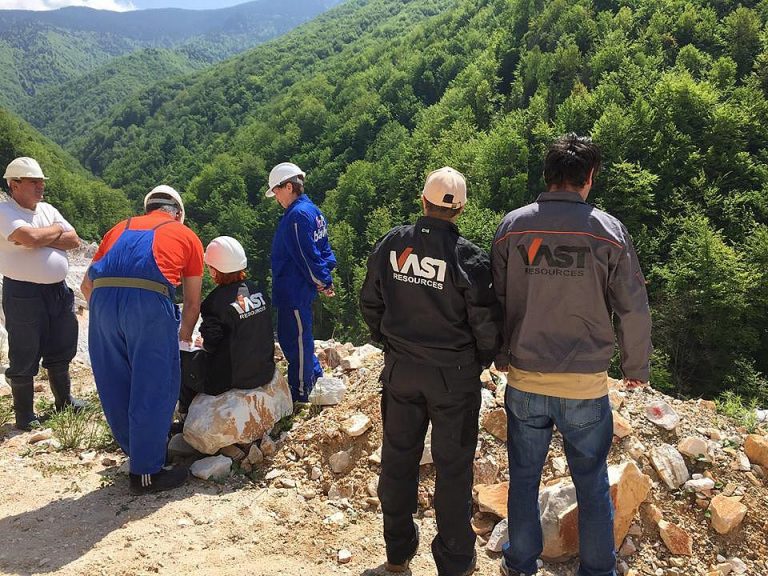
AIM-listed mining group, Vast Resources Plc Monday disclosed it had finalised a financial deal it negotiated with international financial institutions for its Chiadzwa diamond venture in Manicaland Province.

Last year, the United Kingdom based Vast Resources announced that it had agreed a joint venture deal with Chiadzwa community to create a company called Katanga, which in turn partnered State-owned Zimbabwe Consolidated Diamond Company (ZCDC).

The company’s chief executive Andrew Prelea has said the deal to mine Heritage concessions is, however, awaiting the finalisation of the agreement with government through ZCDC.

Prelea did not disclose the size of the financial package required for the diamond project in Chiadzwa.

It is, however, understood that the new company requires about US$10m for exploration.

“The Company has arranged financing which it has prioritised for the Baita Plai Polymetallic Mine (“BPPM”) in Romania and the Chiadzwa Community Concession in Zimbabwe,”Prelea said

The delay to finalise the Chiadzwa deal is said to be due to technical issues, according to well-placed sources in the Ministry of Mines and Mines Development.

Discussions, however, Prelea said were underway to finalise the joint venture deal, which will enable the concession to procure a special grant for the mining of diamonds.

He said: “Discussions continue regarding the conclusion of the company’s diamond joint venture with its Zimbabwe stakeholders. These discussions are in line with previous expectations, save on timing.”

Vast’s portfolio includes an 80% interest in the Baita Plai Polymetallic Mine in Romania, where work is currently underway towards developing and recommissioning the mine and the Community Concession Block in Chiadzwa, Zimbabwe.

Vast Resources also owns the Manaila Polymetallic Mine in Romania, which was commissioned in 2015, currently on care and maintenance.


Business Times

Oil slides

0

Oil prices fell more than 2 percent on Wednesday as a market surplus forecast by the International Energy Agency (IEA) and demand worries outweighed concern over disruptions to Libya’s crude output.

Brent crude was down $1,39, or 2,2 percent, at $63,20 per barrel. US West Texas Intermediate crude fell 2,8 percent, or $1,64, to settle at $56,74 per barrel.

The head of the IEA, Fatih Birol, said he expects the market to be in surplus by 1 million barrels per day (bpd) in the first half of this year.

“Oil prices remain heavy on oversupply concerns and after the Saudi Energy Minister Price Abdulaziz did not offer any hints of optimism that the OPEC+ production cuts would be extended beyond March,” said Edward Moya, senior market analyst at OANDA in New York.

“China’s coronavirus will likely see travel restrictions that could end up hurting demand for crude during a peak travel time in China.” — Reuters.