Home Blog Page 595

Government Slammed For Slashing Diamond Royalty

0

Mining rights advocacy groups have slammed the government for seeking to appease investors by reducing the diamond royalty instead of up-scaling its exploration capacity in the diamond sector.

Centre for Research and Development director James Mupfumi said the recent slash in diamond royalties by 33% would not result in improved production if diamond extraction remained shrouded in secrecy.

In his 2020 budget statement, Minister of Finance Professor Mthuli Ncube announced that Treasury had cut royalties for diamond mining from 15 per cent to 10 per cent of gross revenue, to reduce the cost of extracting deep-seated kimberlite gems.

Professor Ncube said diamond miners were now exploiting deep-lying conglomerate deposits, with a higher cost of extraction hence the need to revise downwards the diamond royalty.

“In order to promote investment in exploration and extraction, I propose to review the royalty on the diamond from 15 per cent to 10 per cent of gross revenue, with effective from 1 January 2020,” he said.


Zimbabwe has targeted revenue of US$1 billion through the production of 6 million carats by end of 2023, after the launch of a diamond mining policy recently under an ambitious plan to grow the mining sector into a US$12 billion industry.

However, Mupfumi contends that dangling incentives to foreign investors are an indictment of the government’s failure to invest in exploration technology to fully exploit conglomerate diamonds.

He said the decision to slash royalties was also compounded by the veil of secrecy in mining affairs as well as a weak legislative and governance structure.

“The tragedy of the mining sector in Zimbabwe is that the government lacks the capacity to undertake meaningful exploration to ascertain mineral potential in order to make informed decisions.

“The decision to slash diamond royalties is obviously informed by the investors who have knowledge of the mineral.

“Against this background it is difficult for the country to realize meaningful revenues from its mineral resources, worse of the sector is marred by governance deficits and poor legal frameworks,” said Mupfumi.

Zimbabwe Consolidated Diamond Company (ZCDC) board chairperson Engineer Ukama recently made revelations that diamond production was being hampered by high exploration costs of conglomerate diamonds.

To counter these costs, Ukama said ZCDC had partnered investors to undertake exploration activities as they vie to extend their footprint across Zimbabwe.

“ZCDC is also investing in exploration in partnership with other players in the diamond industry to
spread its footprint in the country beyond Chiadzwa.

“It is hoped that such partnerships will yield positive results for growth of the diamond industry with the associated benefits such as increased revenue generation, employment creation, economic growth, infrastructural development and investments in downstream industries,” said Ukama


263Chat.

Zim’s encouraging trade performance

0

Exports are considered an integral component of Zimbabwe’s economic recovery plans.

In fact, exports are a vital cog in the nation’s quest to achieve a middle-income economy by 2030.

Despite successive trade deficits in the past decade, there are signs of better prospects if challenges affecting production are addressed.

Although local businesses have raised concerns over challenges such as foreign currency shortages for raw materials and retooling, insufficient power and fuel supplies, exports have actually registered a 2 percent growth to US$2,82 billion in the February to September period compared to US$2,76 billion in the same period a year ago, according to Zimstat.

Imports over the review period stood at US$3,57 billion, narrowing the trade deficit to US$744 million.

This represents a 62 percent decline in the trade deficit from US$1,97 billion in 2018.

From 2017 to 2019, the trade deficit fell by 49 percent from US$1,45 billion to US$744 million.

Although this decline is largely attributed to a drop in imports, the preferred and sustainable scenario is when exports increase more than the percentage decline in imports.

At the same time, the country needs to ensure a decline of imports of value-added goods, whilst maintaining the imports of raw materials and inputs that are necessary for manufacturing of export products.

Zimbabwe’s exports are increasingly concentrated in primary commodities and resource-based products, which exposes the country to volatile global commodity prices.

The growth and diversification of Zimbabwe’s export basket can be achieved not only by altering the product composition of exports, but also by altering the range of export destinations.

This is prioritised in the National Trade Policy (2020-2023) and National Export Strategy, which envisage growth of value-added products and services from US$4,5 billion recorded in 2018 to US$7,2 billion in 2023.

There is need for the Government to encourage deeper integration, particularly of manufacturing firms, into the regional and global economy.

Central to this is cutting delays and costs of accessing imported intermediate inputs, including reducing border delays and transaction costs associated with exporting.

Adoption of inward-looking strategies and policies which emphasise import substitution could economise on scarce foreign exchange and ultimately generate new manufactured exports without difficulties associated with exporting primary products.

Currently, high costs of both exporting and importing have contributed to low participation by Zimbabwean companies, particularly among small- and medium-sized enterprises.

In terms of export performance by sector, horticulture exports increased from US$42 million in 2017 to US$55 million in 2019, a 39 percent jump over the past two years.

To continue harnessing the potential of this sector, there is a need for Government and financial institutions to deliberately finance export-oriented production.

It is encouraging to note that Government, through the 2020 National Budget presented recently, has committed to put in place an Export Revolving Fund for seed capital, which will be channelled towards the development of exports, particularly horticulture which is low-hanging fruit.

As the national trade development and promotion organisation, ZimTrade is currently offering technical intervention programmes to seven value chains – macadamia nuts, paprika, bananas, sweet potatoes, flowers, pineapples and avocados.

Further, exports of manufactured products between February and September this year topped US$167,4 million, up from US$131,7 million from the same period last year.

This represents a 6 percent contribution to total exports, up from 5 percent in 2018, and down one percentage point from 7 percent recorded in 2017.

However, the percentage contribution of agricultural inputs and implements to total exports has remained flat at 0,5 percent, but the value has risen to US$14,7 million this year from US$14,4 million a year ago.

In the past two years, the value has dropped significantly from US$17,3 million owing to the decline in shipments of hand tools such as spades, shovels, mattocks, picks, hoes, forks, including mineral or chemical phosphatic fertilisers.

There is room to boost exports if local companies increase the distribution of their products in the Southern African region during the current rainfall season.

The processed foods and beverages sector, whose importance stems not only from its contribution to foreign currency earnings but also employment creation, appears to have weathered the challenging economic environment.

Although there was a drop in exports from US$65 million in 2017 to US$47,5 million in 2018, shipments rose to US$69,1 million in 2019. This is attributable to growing sugar, fruit juices, and vegetable fats exports.

However, the sector is being negatively affected by rising imports of cereal preparations, meals, and wheat flour.

Sectors that have underperformed include the leather sector, where a 58 percent decline from US$2,6 million in 2018 to US$1,1 million in 2019 was recorded.

In 2017, exports in this sector stood at US$2,7million.

This drop is mainly caused by the decline in availability of game skins, whose volumes have progressively declined year-on-year from 75 tonnes a month five years ago to the current 35 tonnes a month.

It has also been affected by falling global prices of reptile skins caused by changes in grading standards by buyers, as well as the rising global campaign against purchasing of animal skin products.

Clothing and textile exports also slumped from US$21,2 million in 2018 to US$18,4 million in 2019.

Exports from the building and construction sector were US$33 million between January-September 2019, a 15 percent reduction from US$38 million registered during the same period in 2018.

Performance in this sector was affected by declining granite and wood exports.

Contribution of minerals to exports remained steady at US$1,7 billion recorded in 2018 and 2019.

Minerals total contribution to total exports went down from 62 percent in 2018 to 60 percent in 2019. There has also been a decline in exports of raw tobacco over the past two years from US$326 million in 2017 to US$267 million in 2019.

The sector is, however, picking up as US$117 million worth of exports were recorded last year.

But there is need to increase value addition of tobacco, so that export earnings will be increased from the same products. Statistics show that Zimbabwe’s earnings from manufactured tobacco exports have increased by 47 percent to US$28,2 million this year from US$19,2 million a year earlier due to rising exports of cigarettes and other homogenised tobacco to countries such as China, United Arab Emirates, South Africa, Indonesia and Belgium.

There is scope to earn more from manufactured tobacco if local companies set up value-addition chains in the country, which will also create more jobs.


Allan Majuru is ZimTrade’s chief executive officer

Copper cables thief battles for life

0

A BULAWAYO man is battling for life at the United Bulawayo Hospitals after he sustained severe burns following an electric shock from a high voltage overhead cable while attempting to steal copper cables in Colleen Bawn.

Matabeleland South provincial police spokesperson Chief Inspector Philisani Ndebele confirmed the incident which occurred last week. 

He said Albert Moyo (29) of Cowdray Park suburb in Bulawayo was assisted by a police officer who ferried him to Gwanda Provincial Hospital in Gwanda where he was later referred to UBH.

“I can confirm that we recorded an incident of a man who sustained severe burns while attempting to steal Zesa copper cables in Colleen Bawn. Albert Moyo is suspected to have staggered to the main road where he was assisted by a police officer who was passing-by who ferried him to the hospital. He was naked as all his clothes were burnt,” said Chief Insp Ndebele.

He warned culprits vandalising Zesa infrastructure that the hand of the law would soon catch up with them. 

Chief Insp Ndebele said by stealing copper cables the culprits were not only hindering development in the country but they were also putting their lives at risk.

“These activities by copper cables thieves are a great hindrance to development in the country. A lot of economic activities need power and therefore disruption of power supplies impacts negatively on productivity,” he said.

Gwanda Provincial Hospital acting Medical Superintendent, Dr Rutendo Manyati, said the hospital referred Moyo to UBH for specialist management. She said Moyo was in a stable condition when he left the hospital but his life was not out of danger.

Dr Manyati said Moyo sustained plus or minus 30 percent burns which were a mixture of superficial and deep.

 When the Chronicle news crew visited the hospital, Moyo was groaning in pain. 

He could hardly keep his eyes open and was speaking with great difficulty saying he wished to die because of the excruciating pain.


The Chronicle

Chasi fails to inspire as he returns Gata to ZESA, 13 years after sacking

0

Energy Minister Fortune Chasi, trying to fix the endemic corruption and mismanagement mess at ZESA, has gone back 13 years and re-appointed Sydney Gata, who was sacked as executive chairman leading to a lengthy legal battle.

Chasi announced Gata’s appointment as executive board chairman on Tuesday.

He will be deputised by Tsitsi Makovah, who was described in the ministry’s press statement as a “chartered secretary, administrator and business leader with experience in the energy industry.”

Gata was fired from ZESA in 2006 and later described his time there as a “nightmare”.

He oversaw the unbundling of ZESA into several units, each with their own management.

Zimbabwe is currently going through some of the worst power cuts in the country’s history, caused by reduced generation at the main hydro-power station in Kariba because of drought and ageing equipment at the coal-powered power plants.

Successive ZESA chiefs, including Gata, are blamed for lacking the foresight to build new power stations which would have averted the current power outages lasting up to 18 hours daily.

While looking for a new ZESA board, Chasi took the unusual step of advertising the vacancies in the media, saying he wanted to open up the process to talented Zimbabweans.

“The story of ZESA’s collapse cannot be written without the name of Gata,” said Alex Magaisa, a former adviser to the late Prime Minister Morgan Tsvangirai. “He was sacked, he fought ZESA and won a house in the upmarket suburb of Umwinsdale in Harare. But last year, he lost a US$10 million claim against ZESA. Now he’s back as top dog. It’s unbelievable.”

Magaisa said ZESA was “arguably worse off now than when he left and indeed worse than he found it.”

“When Chasi advertised board positions, he was praised for a fresh approach. No-one could have imagined it would lead to the return of tried and failed hands like Gata, with a terribly murky ZESA history behind him. It’s a complete anti-climax. Flaccid,” Magaisa tweeted.

MDC vice president and former finance minister Tendai Biti said: “Sydney Gata must rank as one of the worst mangers to ever run a state enterprise. Not only was he incompetent, but he was extremely dubious and shady. Just check his village in Chipinge. That he has been reappointed ZESA executive chairman once more is crazy. How does a hyena guard a corpse?”

Chasi said he hoped Gata and Makovah will lead other board members to be announced soon “in tackling the myriad of challenges currently being experienced in a generation, transmission, and distribution of electricity in Zimbabwe.”

ZimLive

BREAKING: VP Constantino Chiwenga is back

0

Constantino Chiwenga the second vice President of Zimbabwe is now back in the country.

He was received at RGM Airport in Harare early this morning by Chinese Deputy Ambassador, Zhao Baogang. 


World’s highest grade rare earths producer expands into Zimbabwe

0

THE world’s highest grade rare earths producer Rainbow Rare Earths (LON: RBW) has acquired ten mining claims in northern Zimbabwe as part of its mounting efforts to expand operations beyond Burundi, where it runs Gakara, Africa’s only producing rare earths mine.

The company said the properties, covering 12.6 square kilometres, have previously been explored for phosphate, used as fertilizer. One of them, the Kapfrugwa (also known as Gungwa) deposit has been identified by the US Geological Survey as potentially hosting Cerium and Lanthanum.

The goal, Rainbow said, is to conclude an interpretation report with focus on rare earths potential in terms of sizes, grades and mineralogy. The licences will be held 100% by local subsidiary Rainbow Zimbabwe, the company said, adding that it plans to immediately start an exploration program that will include geological mapping, sampling and assaying.

Zimbabwe is geologically well known for hosting a large number of minerals, including gold, battery metals and coal. Most importantly, the nation has the world’s second-largest platinum-group metals (PGM) and chrome resources.

Rainbow began production of rare earth concentrates at Gakara mine in late 2017. The asset, located 20km south of Burundi’s capital Bujumbura, holds some high-grade rare earth elements, including lanthanum, cerium and neodymium, which are expected to become essential for the manufacturing of batteries, magnets and electric vehicles.

Partly thanks to Gakara, Burundi’s mineral exports have overtaken tea and coffee as the major source of foreign exchange for the East African nation.

Hot commodities

The strategic importance of rare earths, a group of 17 minerals used in everything from high-tech consumer electronics to military equipment, has increased this year amid fears that top producer China will restrict supply to the United States as a retaliatory measure for tariffs imposed by Washington earlier this year.

Despite their name, rare earths are not rare. According to the United States Geological Survey (USGS), they are roughly as common as copper. But, because rare earth ores oxidize quickly, extracting them is both difficult and extremely polluting.

China currently accounts for 70% of global production but has lately reduced domestic production as the government cracks down on illegal mining and pollution.

That explains why speculation of supply cuts to the US, a major buyer, has opened opportunities in other jurisdictions and boosted companies including Australia’s Lynas, the only major rare earth producer outside China.

Last year, China produced about 120,000 tonnes of rare earths, while the totals of the next two leading producers — Australia and the US — were 20,000 and 15,000 respectively.

In the past three months, The Trump administration has stepped up efforts to ensure the supply of critical minerals from outside China. As part of those initiatives, it recently signed a memorandum of understanding with Greenland to conduct a hyper-spectral survey to map the country’s geology.

Washington has also gained the support of Australia, which has committed to facilitate potential joint ventures to improve rare earth processing capacity and reduce reliance on Chinese rare earths. The mineral agencies of the both countries signed a research agreement on Tuesday to quantify their reserves of critical mineral reserves. Mining.com

Rainbow Rare Earths is a mining company focussed on production from, and expansion of, the high grade Gakara Rare Earth Project in Burundi, East Africa.

With in-situ grades in the range of 47-67% Total Rare Earth Oxide (TREO), Gakara is one of the world’s richest rare earth deposits. First production and sales to Rainbow’s offtake partner, ThyssenKrupp Materials Trading, commenced in Q4 2017.

Cement firm PPC says Zimbabwe inflation hurt earnings

0

JOHANNESBURG, South Africa – South African cement company PPC Ltd reported a lower first-half headline earnings per share on Wednesday, hurt by a weaker Zimbabwean dollar and said it had started a review of its operations.

The company’s results were affected by the application of hyperinflationary accounting by PPC Zimbabwe, which it said complicated comparability at a group level.

Zimbabwe has suspended publication of annual inflation data until February, but economic analysts say the figure reached 440% last month. Many expect the country will miss its target of single-digit levels by the end of the first quarter of 2020.

“PPC has initiated a comprehensive strategic review and certain initiatives necessary for sustainable value creation are underway,” the company said.

PPC reported headline earnings per share (EPS) of 6 South African cents for the six months ended Sept. 30, compared to 21 South African cents a year earlier.

Headline EPS is the main profit measure for South African companies and removes certain one-off items.

The company’s group revenue for the six months fell 12% to 4.95 billion rand ($335.03 million) and there was a 17% decline in overall cement volumes. – Reuters

Rushwaya’s victory best for the younger generation

0

Henrietta Rushwaya’s recent victory over the Zvishavane-Mberengwa Mining Association (ZMMA) will likely see the next President of the Federation being a younger person as currently a young crop of leaders deputise her and are making huge strides in the ASM Industry.

Staff reporter

Her ascension to the ZMF Presidency has seen the rise of a younger generation with likes of Dosman Mangisi, Masango Mahlahla and many others who are currently in their early forties.

Rushwaya has allowed this generation to express themselves as we frequently see fair coverage of them in the Media and we have seen a far much improved ZMF in terms of engagement and mobilisation.

Traditionally Zimbabwe has seen key positions occupied by the older generation and the move to have a much younger generation will propel the Mining Industry to greater heights. Having a younger person at the helm will most likely see fresher ideas being implemented and a sense of ownership like the previous administration (Chinhu ndechedu) being less likely.

This will see the mining sector remaining in safe hands with a new crop of miners who have shown massive passion to move the mining sector forward.  With their input and given a chance the mining sector is set to become bigger and better.


The Slag pot carrier

0

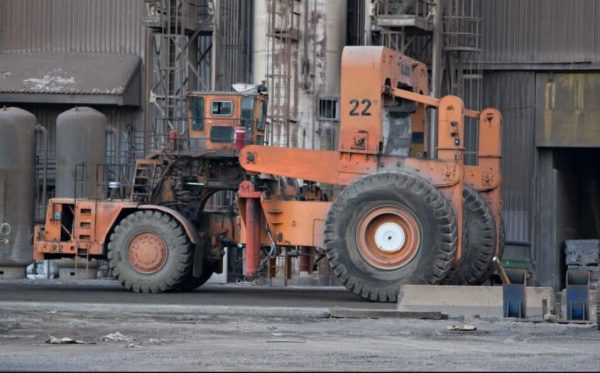
Mining Zimbabwe recently posted the truck above carrying molten steel on social media and asked our readers what it was. It is a Slag pot carrier which is transporting Molten steel in a Slagpot. There are sometimes referred to as Molten steel tractors or carriers.

The Slag pot carrier
The Slag pot tractor

Slag pot carriers are available in a wide range of models and capacities up to 227 tonnes handling slag pots up to 45 cubic m.

The slag pots and chill moulds are manufactured from either heat-resistant cast iron or 
spheroidal graphite cast iron to provide long-lasting high-quality solutions. They are also suited for a number of processes, which include lead, aluminium, iron, steel, chrome, manganese, copper and other smelting applications. Using positive hydraulic control, the pot is tipped to pour molten slag into pits for cooling and processing

Slag pots are not easy to deform and stick pot, which has significant characteristics with heating and thermal fatigue resistance, process stability and maturity of the technology.

It’s fit for many kinds of steelmaking mills, aluminium smelting plant, machinery manufacturer etc. see images below:-

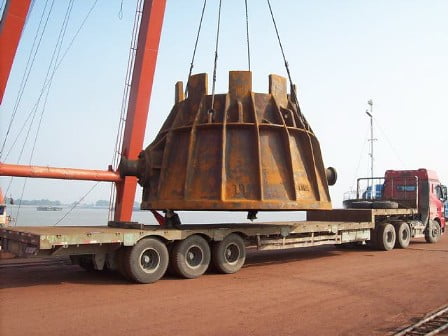
slag pot being offloaded
Slag pot being offloaded
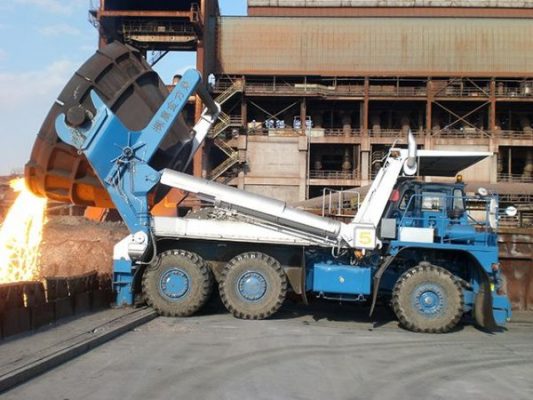
The Slag pot carrier offloading molten steel
The Slag pot carrier offloading molten steel 
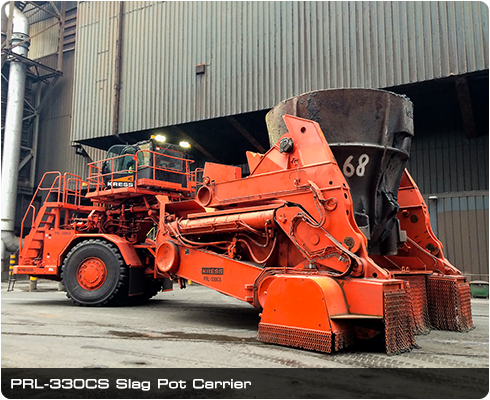
Slagpot carrier
PRL-3300CS Slag pot carrier (notice how back wheels are shielded from the heat)

Mineral producers turn to solar plants

0

Zimbabwe’s mining industry is rushing to establish solar plants for their power requirements, with plans to put the excess on the national grid as electricity problems hamper production across the economy.

Despite making concessions such as paying for power in foreign currency and securing dedicated lines from utility firm ZESA, miners are still struggling with electricity like the rest of the country, going for hours without power and having to incur huge costs in fuel for generators.

This eats into their margins. Business Times heard this week that at least four major mines, including Caledonia Mining Corporation’s Zimbabwean unit, Blanket Mine, and the platinum producer Zimplats are at advanced stages of establishing solar power plants.

The successful completion of the projects is among steps towards dealing with the electricity challenges now threatening industry. The development will also result in the country becoming a net exporter of electricity and ending overreliance on hydro power from the Kariba dam. Successive droughts in Kariba’s catchment area along the Zambezi River have caused problems for Zimbabwe despite ongoing efforts to expand capacity.

The country also has thermal plants, the major ones being in Hwange, but production is hampered by antiquated equipment. Currently, Zimbabwe relies on expensive imports and has set up a diesel generation plant at Dema which, sadly, has become a white elephant. Hundreds of independent power producer licence holders are yet to move, forcing Energy Minister Fortune Chasi to intervene by way of cancelling licenses of those who have failed to show cause.

A mega hydro power project of 2400MW capacity at Batoka Gorge to be shared between Zimbabwe and Zambia could turn Zimbabwe’s fortunes and see the country exporting, but the project is no low hanging fruit as it costs billions and could take at least five years to produce the first kilowatt-hour.

Caledonia Mining’s chief financial officer Mark Learmonth confirmed plans to put up a solar plant at Blanket Mine, saying it was at an advanced stages, having tendered for advisory services. Learmonth said the solar project would be implemented in three stages, two of which would generate power at a cost of US$8m. The plants will be 6.5MW each based on a tender document seen by Business Times.

“The first stage [will] generate enough power to meet Blanket Mine’s requirements, then we move on to the second stage,” Learmonth said in a telephone interview. The solar plant will be situated on 40 hectares near the mine, which itself is situated in the Gwanda area. At the second phase, the power will be enough to meet Blanket Mine’s demand at peak.

“The surplus will be put on the national grid. Learmonth said the company was currently in negotiations with Zesa and the Ministry of Energy to conclude agreements to either bank or put electricity on the national grid under favourable terms. Contracts for the project are expected to be issued in February 2020.

“Negotiations are going on smoothly and we are satisfied with the commitment and speed at which progress is being made,” Learmonth said, adding that the company expected a licence to produce power by year end.

Stage One works are expected to start next year, once funding is secured while stage two is subject to approvals of favourable terms by Zesa. The third stage is not an immediate priority and depends on the success of the two first stages. Learmonth said funding could be sourced globally from pro-green project funders, but Zimbabwe’s high-risk profile could be a challenge. Other options are to get debt on the international market or locally.

The last option is to give up a portion of equity to secure the funding, but indications are that shareholders have no such interest in the absence of major guarantees along the way. On its part, Zimplats, Zimbabwe’s largest platinum producer and largest investor after independence, could not be drawn to shed more light on its own project.

The company however confirmed it was considering solar energy as a solution to its power crisis. Company spokesperson Busi Chindove said the security of power supply was a critical component of Zimplats business operations.

“To this end, we are in constant dialogue with our current key power service providers and potential future power service providers in an effort to ensureaffordableuninterrupted power supply to our operations and support the government’s thrust on economic turnaround,” she said in emailed responses_Business Times

error: Content is protected !!