

Description of the ad image Description of the ad image
Home Blog Page 596

The strongest link is local: Africa must support African supply chains to unlock sustained economic growth

0

The current Covid19-related economic challenges both locally and throughout Africa starkly highlight the need for pan-African companies and governments to support African supply chains, and in so doing, to boost economic activity on the continent.

This can be achieved by procuring the production of goods and services for infrastructure and industrial projects via the mechanism of ‘Team Africa’, which is a concept in which local suppliers and manufacturers collaboratively supply mining, industrial, power generation, and other sector projects.

“Covid-19 provides further impetus for Africa to support its own supply chains which will stimulate business in a myriad of upstream and downstream supply chains,” says Nicolette Skjoldhammer, Managing Director of South African steel fabricator and erector Betterect.

“While the new intra-African trade agreement provides opportunities and incentives for African stakeholders to procure from local businesses, the effects of the Covid-19 pandemic have shown industry just how dependent Africa has become on the Asian supply of goods and services, and prices of Asian consumables – to name but one supply chain item among many – are rising exponentially,” she advises.

Skjoldhammer says that one of how industrial supply chains on the continent can collaboratively drive growth is when companies focusing on the supply, processing, fabrication, and erection of steel structures join forces to deliver pan-African infrastructure projects in the mining, power generation, petrochemical, and other industries.

“These companies are able to form a cooperative and synergistic ‘Team Africa’, which supplies and processes the steel, or fabricates and installs the finished steel structures,” she explains.

“South Africa and its counterparts like Nigeria and Ghana certainly have the expertise to successfully undertake the design, fabrication, and installation of large steel structures throughout the continent. We have not only proven this over years of successfully participating in new and expansionary mining, power generation and other infrastructure projects; but also by supplying the core expertise in large structural steel projects under the auspices of European and Asian companies,” says Skjoldhammer.

“In fact, if you peel away the various levels of project supply, frequently you will find that South African and African expertise and capabilities remain at the core,” she asserts.

What is admittedly still standing in the way of opportunities for ‘Team Africa’ to grow its business on the continent is the perception that Asian goods and services are more cost-effective than those locally available; and the fact that project financing is often provided by Asian companies.

However, according to Skjoldhammer, the truth of the matter is that when potential clients and their estimators look at sourcing costs, they often do not consider the cost of a fully erected steel fabrication project, for example.

“Our experience has shown us that equipment fabricated in China is on average about 30% more expensive on landing in Africa, and approximately 20% more expensive at this point when it is imported from Turkey,” she comments.

The goal, says Skjoldhammer, is for African companies to be instrumental in growing the local and pan-African market for African companies –- and thereby set up a virtuous cycle of stimulated economic growth throughout the continent.

“To achieve this aim, companies, and stakeholders must identify their own ‘Team Africa’ to collaboratively participate in projects during the conceptual and design stages thereof. However, she points out, when it comes to the procurement criteria in the context of Team Africa, it is more a question of ‘dangling a carrot’ than ‘waving a stick’ as requirements to include local content often hamper the undertaking of new projects.

“The intra-African trade agreement is evidence that key stakeholders are already thinking and engaging along the lines of procurement in terms of a ‘Team Africa’ concept and mechanism. Furthermore, ACFTA’S current implementation means that pan-African countries will not pay tariffs when they trade with each other.”

There are still various logistical obstacles to working in African countries, such as moving equipment and fabricated structures across borders, dealing with customs ‘red tape’ and delays, and obtaining the necessary permits to work in-country.

However, the intra-African trade agreement is geared to address some of these challenges, such as improving inadequate transport infrastructure, and this could also help to get more projects off the ground.

Skjoldhammer explains: “Undertaking more projects on the continent will create and drive the core growth that in turn generates further growth. The use of the African supply chain for projects across Africa will open up an even deeper supply chain on the continent: from, for example, a local steel fabricator buying locally-rolled steel, to the support industries which specialise in galvanising, corrosion-protecting and painting that steel, and the range of businesses both up and downstream in the supply chain which supports the steel fabricator  with telecommunications, IT, transport and a host of other items such as PPE (personal protective equipment) and stationery.”

She concedes that the continent as a whole also still faces challenges such as corruption and – in certain countries – political instability which may hinder efforts to bolster the local supply chain.

“However, for ‘Team Africa’ to thrive, only a few African countries need to support the ‘Team Africa’ supply chain. The rest will soon follow,” she asserts.

“The company that I lead recently formed a ‘Team Africa’ alliance with a steel supplier and processor, to supply a Zimbabwean gold mining operation with large steel tanks for a processing plant. This highly successful collaboration and synergistic project demonstrate that there is no limit to what a ‘Team Africa’ can do. The knowledge and experience in the industry is such that we can deliver any project throughout the continent.

African companies and countries must take the long-term view of ‘sowing the seeds for the future’: supporting one another, combining their resources, skills, and experience to realise this amazing and well-timed opportunity to transform our continent into an economic powerhouse,” Skjoldhammer concludes.

Policies standing in the way of mining investment

0

World over, Zimbabwe is regarded as one of the countries with rich mineral wealth that can sustain its economy into one of the finest.

Rudairo Mapuranga

Like many African countries, Zimbabwe is no exception in failing to attract Foreign Direct Invest (FDI) due to various factors. It is Mining Zimbabwe’s view that Zimbabwe can soar to greater heights by pushing its mining industry alone without inviting external firms as this is exporting the much-needed jobs locally.

Without a doubt, the economic resuscitation rests in the mining sector. The failure by the government to put to life the open for business mantra outside Zimbabwe is an open cheque that the push should be focused on local firms and individuals to invest in the mining sector.

Mining experts believe that it was not the government’s duty in the first place to go around looking for investors, they could have simply opened up policies so that businesses can invest.

According to renowned Geologist, Kennedy Mtetwa for the country to attract both local and foreign investors there are a lot of policies that need to be adjusted for the investor to see the value of his/her investment.

Mtetwa said, investors are not persuaded to invest but are attracted to invest because what’s important is for one to get profit after investing.

For the government to attract local investment in the mining sector monetary fiscal policies should be transparent to the miner.

“First no government goes to look for investors. Only our lot tried that and now they are surprised that they were not taken seriously. Investors simply read about the country’s mining policies and also the monetary and fiscal policies to decide whether to go and invest in a particular country. They don’t need a minister or president to tell
them to come and invest. Investors by their nature get into business to make money right across the globe. If as you say no investors came it’s up to the government to simply align our policies from mining to monetary to fiscal with those countries where these same investors go to invest” said Mtetwa.

This means that for the government to attract local investment, it has to relax issues to do with the monetary policy as a major issue. The current forex retention threshold of 50 percent for other minerals and 55 percent for gold is an elephant in the room. The retention threshold among other factors is believed to be the main push factor that led to the closure of African Chrome Fields and the partial closure of Metalon Gold mines. Zimbabwe at the moment is
producing zero consumables used in the mining industry thus, everything used should be imported yet the forex paid to the miners does not sustain its imports, this, therefore, means that companies would be operating at a loss.

The monetary policies again that are very tight when it comes to a company withdrawing money from the bank are also questionable and should be addressed for local firms to consider mining business.

The government in order to attract local investors should also not try to liquidate foreign currency in-corporate banks due to the instability of the local currency.

Some small scale or medium scale mining firms might want to save to buy expensive mining machines like dump trucks, liquidating of their forex reserves would put them out of business.

Takaedza said there is uncertainty concerning the administration, interpretation, or enforcement of existing regulations and uncertainty concerning environmental regulations, the stability of regulations, consistency and timeliness of regulatory process, regulations not based on science. Takaedza said, there are a lot of grey areas when it comes to the issue of Exclusive Prospecting Orders EPOs.

Application for an EPO takes up to 5 years before they are gazetted. This drains investment because the country is then left without clear geological data.

“At the international level, if a policy does not support exploration (e.g EPOs) then we cannot attract any foreign investment. We have EPOs that we applied for in 2008 and were gazetted in 2013 but they haven’t been issued. So imagine we are a local company being frustrated, what more of a foreign investor” said Takaedza.

There are a lot of inconsistencies when it comes to the enforcement of laws and regulations in the mining sector. There is what can be called the selective application of policy concerning environmental regulations for example most small scale miners are left to mine without complying with full regulations. However, those who would
want to invest as medium scale mining firms or large scale are forced to permit and comply even before they start any operation.

Regulatory duplication inconsistencies can also strain or frustrate investors from in the Mining sector, therefore, should be addressed. It is largely bureaucracy. The office of the District Administrator or local governance would come with their own regulations, while the Ministry of lands would also want to have a say, the Ministry of Agriculture also is sometimes very much involved in the mining business and the traditional leaders also would come with the same laws but different certificates. This can frustrate investors not to invest in the sector.

Investment avenues should be in a One-Stop-Shop to minimize overlaps, bureaucracy, permitting times, and corruption.

For example, RioZim had claims in Devuli which was later turned into the Save Valley Conservancy that keeps wild animals. The company is of late being denied entry and permission to work in the claims even though they are prior peggers and the Ministry of Mines has not intervened as of late.

Takaedza also said that the taxation regime in the country is also another course of concern when it comes to investing in the mining sector in Zimbabwe. The forex retention threshold is another form of taxation which is very painful.

“Our tax is a bit on the high side to attract investment. For example, gold which is partly paid in forex then rest in RTGS. That’s a heavy tax to attract investment. On top of that, there are other taxes in the industry. What we need is to increase the forex allocation to the investor. What we need are exemptions to attract investment” said Takaedza.

The government needs to look at how an investor would gain profit legally without going the way of smuggling minerals out of the country to survive in business. The government should consider the fact that all machinery and other consumables in the mining sector are imported that’s it is cheaper for a mining firm to buy them directly from South Africa than to buy loyally. This is, therefore, a clear indication that the government should relax its taxes, especially on forex retention in order to allow local firms to grow.

The quality of the geological database is also of importance for investors to have easy access to information. The country needs a proper cadastral system. At the click of a button, one should be able to get Geology and Tenure info. This will reduce corruption and the illegal disappearance of geological data or maps.

Ten most mined minerals in Zimbabwe

0

ZIMBABWE is a host of 60 different types of minerals, 40 of which have been historically exploited to various extents.

By Dumisani Nyoni

However, production since 2000 has been dominated by about ten minerals which are gold, platinum, coal, nickel, chrome, diamonds, black granite, copper, silver, and asbestos.

In 2019, total mining export receipts according to the Reserve Bank of Zimbabwe (RBZ), amounted to US$2, 91 billion, representing about 55.2% of total export receipts.

The contribution of mining to GDP is estimated to have increased from 3.2% in 2008 to 8.1% in 2009 and was estimated at 7% in 2019.

In this article, we look at the top 10 most mined minerals in Zimbabwe which are gold, platinum, coal, nickel, chrome, diamonds, black granite, copper, asbestos and silver.


Gold

The yellow metal is one of the most mined minerals in Zimbabwe. Gold mining and exploration in Zimbabwe, according to the Ministry of Mines and Mining Development, has been going on from ancient times and it is estimated that a third (about 700 tonnes) of all historical gold production was mined locally from the seventh century until the introduction of mechanized mining methods with the arrival of Europeans about a century ago.

The Ministry states that there are over 4 000 recorded gold deposits, nearly all of them located on ancient workings.

In 2019, gold contributed about 37% to minerals exports, down from 43% recorded in the previous year. Gold deliveries to Fidelity Printers and Refiners declined by 17% to 27.66 tonnes last year, compared to the same period in 2018 due to electricity challenges coupled with inadequate equipment for small scale miners to access deep gold reefs and gold leakages through smuggling.

The southern African nation has the second largest gold reserves per square kilometre in the whole world with 13 million tonnes of proven reserves of which only 580 tonnes have been exploited since 1980, according to the RBZ.

Some of the top gold producers in Zimbabwe include Freda Rebecca, which is located close to Bindura’s Trojan Nickel mine; Blanket Mine located in the province of Matabeleland South; Rio Zimbabwe; Metallon Corporation; Sabi gold Mine; Falcon Gold; Pickstone Peerless; Duration Gold Mine; Bilboes Holdings and Eureka Gold Mine.

The sector is also dominated by small scale producers.


Platinum Group Elements

Platinum Group Metals (PGMs) consist of platinum, palladium, rhodium, ruthenium, iridium, and osmium and have a high demand worldwide because of their wide variety of uses in industry. Zimbabwe’s Great Dyke, a linear early Proterozoic layered mafic-ultramafic intrusion trending over 550km at a maximum width of about 11kilometres, has the second-largest platinum reserves in the world after the Bushveld Complex in South Africa.

The Ministry of Mines says an estimate of 2.8 billion tonnes PGM ore at 4g/t are estimated to lounge on the Dyke.  Notably, PGMs are mined as primary metals only in the Bushveld in South Africa and along the Great Dyke in Zimbabwe.

The occurrence of PGE mineralization in the Great Dyke was recorded in the early 1920s. Following these documentations and the discovery of PGMs in the Merensky Reef of the Bushveld Complex of South Africa, there was a boom in PGM prospecting between 1925 and 1926 that resulted in the discovery of Wedza Mine. Since the 1950s, several companies have undertaken exploration. Currently, platinum exploration on the Great Dyke has been carried out by CAMEC (Todal Mining) in the Bougai section in Shurugwi, and Global Platinum Resources in Chegutu.

Mining is currently being carried out at Mimosa, Ngezi, and Unki Platinum Mines. Demand for PGMs has seen an increase in exploration and evaluation of Zimbabwe’s platinum deposits.

In 2019, PGMs contributed about 43% of the total mineral exports, up from 35,93% recorded in 2018.

The contribution of platinum and palladium increased significantly on the back of substantial investments by the PGM houses, according to RBZ. Platinum output has been on a steady increase since 2000, from 505 kilograms per annum to 15 500 kilograms in 2019.


Diamonds

The Marange diamond fields are an area of widespread small-scale diamond production in Chiadzwa, Mutare West, Zimbabwe. More than 120 kimberlites, according to the Ministry of mines, have been discovered but economic grades occur in two deposits—the River Ranch and the Murowa Diamond Mines.

Currently, the Ministry of Mines says, evaluation is being carried out on several kimberlites in the southern area of the country while some were found to be non-commercial. Of late, the discovery of diamondiferous Proterozoic conglomerates in the Umkondo basin has led to the opening of several diamond mines within the Chiadzwa area, for example, Mbada, Marange Resources, and Anjin among others.

Diamonds contributed about 5,71% to mineral exports in 2019.

Zimbabwe expects to increase diamond production to 11 million carats by 2023 from 3,2 million carats in 2018, part of an ambitious plan to raise mining output and earn the country US$12 billion a year.


Chrome

Chrome is one of Zimbabwe’s main exports after gold, platinum group metals, and diamonds.

The country has the second-largest high-grade chromium ores in the world, after South Africa, with reserves of approximately 10 billion tonnes. The country produced 320,000 tonnes of chrome in 2017.

Chrome is mainly mined along the Great Dyke of Zimbabwe and occurs as seam/stratiform deposits. In greenstone belts off the dyke, it occurs as podiform structures in serpentinites, e.g. in Zimasco mine on Shurugwi Mashava. In Mashava chrome is found in greenstone remnants in the Limpopo mobile belt south of Mberengwa. Chrome also occurs as elluvial deposits in the greenstone areas.

Chrome is mainly used in stainless steel production, as a metal coat, in the chemical industry, and in metallurgical processes.

In July 2017, African Chrome Fields launched a 600-tonnes-per-month ferrochrome plant, while chrome smelting company Zimasco was pushing to extract 560,000 tonnes of chrome ore this year, up from 350,000 in 2017.


Coal

Zimbabwe, which started coal production in the early 1900s, has an estimated 25 billion tons of coal reserves.

The country has vast high-grade coal deposits occurring as fossilized carbon. It occurs in lower Karoo sediments. These are the middle Zambezi basin to the north and Save Limpopo basin in the south of the country hosts about 12 billion tonnes of good quality coal.

Zimbabwe boasts of huge coal deposits in Matabeleland North province where companies such as Hwange Colliery, Makomo Resources, and Zambezi Gas are active.

Coal production this year is anticipated to leap to 15 million tons as new producers come on stream while existing ones are also expected to raise their output.

The new miners are Chilota Colliery, Western Coal, and Liberation Mining.


Nickel

Nickel, according to Minerals Marketing Corporation of Zimbabwe, is currently being produced commercially from two mines namely Shangani & Trojan and is solely processed at Bindura where Trojan mine is located. The Bindura Smelting and Refinery is situated less than 8km to the South of Bindura town centre.

In Zimbabwe, nickel occurs within the Archean craton in rocks of komatiitic composition for example at Trojan mine. It also appears layered or unlayered mafic-ultramafic intrusive bodies for Empress, Madziwa Great Dyke. It’s also found in nickel laterite, for instance, northern part Great Dyke hydrothermal shear zone deposits.

There are nickel deposits in several serpentinite areas in greenstone belts with igneous complexes around the country. The country has got huge potential in komatiite and laterite and more than 30 nickel deposits are known.

Nickel contributed about 1,72% to the total mineral exports last year.


Asbestos

Asbestos occurs as chrysotile. It’s found in ultramafic complexes, for example, Mashava Igneous Complex, in massive serpentinites and slip fibre zones in which shears are filled with matted fibres in the Great Dyke, for example, Ethel mine. There are 60 deposits scattered in the Masvingo, Insiza, Gwanda, Mberengwa, and Shurugwi, which have been worked on for chrysotile.

Zimbabwe was once the world’s third-largest producer of asbestos before the demand declined. After gold, asbestos was once the largest income producer in the mining sector. Production ceased with the closure of Gaths Mine and Shabani Mine.

Efforts to resume operations at Shabanie-Mashava Mines (SMM), one of the biggest asbestos miners, have suffered several false starts.

Production at the mine was expected to start in July last year when de-watering of flooded shafts was expected to be complete, but even today it hasn’t been kick-started.

SMM is believed to be sitting on asbestos deposits worth more than US$1 billion and after re-opening the firm’s mines will produce about 75 000 tonnes of high-grade fibre mostly for export.


Copper

There are over 70 known deposits of copper in Zimbabwe that have produced copper either as a primary or secondary product. The main producing area has been the Magondi Basin in an area stretching for over 150km. Similar copper deposits are found in the southeastern part of the country in the Umkondo Basin.

Several copper prospects also occur in hydrothermal deposits in Archaean Greenstone Belts and granite, for example, Inyathi, Copper Duke. Primary copper production virtually ceased following the closure of Mhangura.

Current copper production is associated with PGM, gold, and nickel operations. It is believed that enormous exploration potential remains.

Copper production has been declining in recent years because of the depletion of known reserves and low exploration expenditure levels, according to the Chamber of Mines of Zimbabwe.


Black granite

Zimbabwe produces an estimated 150 000 tonnes of granite annually with Mutoko district contributing about 75% of the total black granite output.

In 2018, the country produced 223 356 tonnes of granite, up from 161 123 tonnes in 2017, data from the Zimbabwe Chamber of Mines shows. Some of the companies mining granite in Mutoko, Mashonaland East province, include Natural Stone, CRG, Zimbabwe International Quarry, Enterprises, and Ilford Red.

Black granite accounted for 0,84% of the total mineral export receipts in 2019.


Silver

The other mineral which has been mined mostly in Zimbabwe is silver. Silver, according to Mines Ministry, occurs as native silver in association with other minerals such as gold, copper, and lead. With the exception of the Osage Mine in Zimbabwe, it is declared as a by-product from the mining of platinum, gold, and copper.  Gold mines in the Odzi greenstone belt have the highest silver and gold ratios.

The mineral is mostly found in Makoni, Makonde, and Kwekwe.


As mining resumes to full-scale Health and Safety first – Chipangura

0

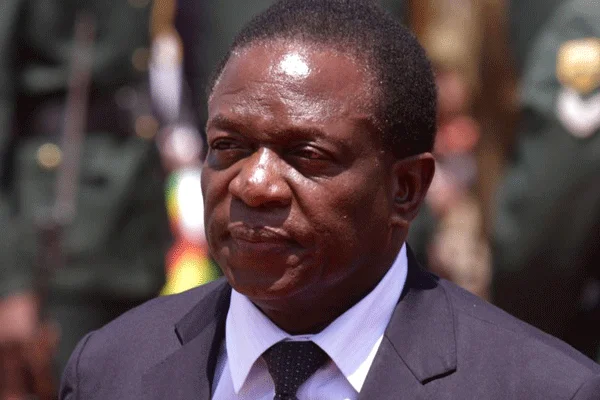
President Emmerson Mnangagwa announced that the country has now eased the Covid-19 lock-down restrictions from stage 4 to stage 2. Stage 2 fundamentally permits industry and business to resume operations, a relief for some miners to return to full-scale operations.

The President said it is now mandatory that face masks are worn in public, a series of precautions are to be undertaken and physical distancing is still to be observed even at workplaces.

The development has been welcomed country-wide by some in the mining sector who had not been able to access exemption letters. With halting of operations some miners face now an uphill task of dewatering.

Zimbabwe Miners Federation’s Mashonaland West chairperson Chiedza Chipangura said Artisanal and Small-scale Miners (ASM) are to adhere to COVID-19 guidelines.

Speaking to Mining Zimbabwe Chipangura said, “There should be consistent and right use of Personal Protective Equipment (PPE) such as face masks and shields, the use and changing gloves frequently, and disposing of the used equipment correctly. For safe disposal, we encourage the use of pit latrines”.

“Job specialisation is now critical for example a feeder should remain at the same station till the end of a shift instead of multi-touch and moving from one department to the other,” she continued.

“Equipment must be sanitised at the change of each shift and there should be limited movement of staff. Those on duty should remain at the mine site accommodation as directed by H.E. in his address of the lock-down extension as it helps in localising infections” Chipangura said.

Turning to operational challenges some ASM are now facing due to not being able to get letters of exemptions during the lock-down Chipangura said, “As a SECTOR we are grateful for the exemptions extended to our sector. Those who had genuine challenges applied and were granted the authority to operate from the beginning. As such the issues of mine flooding were curbed. However, those who did not are now facing an uphill of dewatering which is very costly and slows production”.

Zimbabwe has been under lock-down for 30 days in an effort to curb the spread of Covid-19 which ended on the 3rd of May and the President announced government had decided to extend the lockdown with another two weeks but allowed formal businesses to reopen under strict conditions.

“Health inspection teams would immediately start random checks for compliance, while those who do not meet the requirements would be stopped from operating,” Mnangagwa said.

As at 2 May 2020, Zimbabwe had 34 confirmed cases, including five (5) recoveries and four (4) deaths.

Sustainability challenges in disused mines: The way forward

0

Zimbabwe among other African countries has its economic mainstay in agriculture and mining. The existence of mines has created a mining community of citizens living on mine property and around the mine areas.

Edmond Mkaratigwa (MBA in Energy and Sustainability and Chairperson of the Parliamentary Portfolio Committee on Mines and Mining Development)

Albert Maipisi (Phd in Disaster Management).

These mines have a life span that ends, suspend operations for long periods and or cede mining rights to new investors that may come in with completely new approaches. That is when sustainability issues arise and in particular when the mining community fails to earn meaningful living post mine operations. Government approaches have focussed more on environmental sustainability while mining companies have focused on corporate sustainability (CS) that gives birth to corporate social responsibility (CSR) initiatives. Observations were however made on disused mines in Zimbabwe and reflect weaknesses in government and mining companies’ sustainability approaches post-mining.

Where mines exist, physical infrastructure and facilities development follows. Key infrastructures include tailings dams, electricity supply hardware, shops, social halls, and buildings as well as workers’ houses. On tailings dams, they are naturally supposed to be fenced and the fences among other infrastructure normally exist during the mine’s existence and are vandalised a few years later. Former mineworkers living in mine houses and the surrounding communities, therefore, are exposed to different hazards and vulnerabilities therefrom. In some disused mines, the former mineworkers have remained in mine houses anticipating a re-investment into the mine someday, without sustainable livelihoods. Where that exists, those from such communities have been observed fishing in the unmaintained tailings dams. That endangers human life to both crocodiles and pursuant health risks associated with swallowing residual mineral processing chemicals for example through eating the fish.

Former workers of the disused mines have been residing in disused mines’ residences because of different reasons. Some remain there as they await the payment of outstanding salaries, others anticipate the mining operations will resume sooner while some have nowhere to go in terms of alternative accommodation. Hence those who remain at those areas are faced with other challenges. They include failure to access essential services such as electricity, water, and viable shops than those that overprice. Electricity infrastructure gets vandalised affecting electricity supply and eventually, water supply that is mostly attached to electricity availability. Rates formally paid to responsible authorities for housing and electricity also usually remain un-serviced. That threatens further those former workers residing in the houses although that brings in the property rights issue which is not the current subject of this discussion. Those factors, therefore, further increase vulnerabilities of the mineworkers or community post-mining.

In general terms, human rights are being violated post-mine life as much as the focus has been on the day the company is still in existence. Disused mines have also been reopened in some cases and former workers have not been considered in the new takeover deals yet they might have been promised to wait for the new investor. In one case, for example, a woman was 55 years old when the company closed and waited for an anticipated mining company reopening for a further 25 years. She did not get any terminal benefits nor pension from the former employer or investor and did not own a house. Surely at 75, that woman is not able to take another job even if the company would re-open. Those families living on disused mines normally have their children that then grow under very difficult economic circumstances. They are unable to access good social services such as education and health facilities with ramifications that even where the company can reopen, those children would take up menial jobs. Some will be exposed to delinquency. Where the mine is re-opened, most times the workers are not involved in takeover negotiations to the extent that they will live in uncertainty regarding their future with the investors.

That having been said, the main question is what is the real problem and the possible remedies? The first problem lies in the monitoring and sustainability management mechanism gap on the part of the company and the responsible government authority such as the Department of Wildlife and that of the Environment relative to tailings dams post-mine life. The second gap exists in weaker employee benefits insurance and hedging in the wake of inflation. The third aspect is a lack of participation or representation of the mineworkers where company ownership is being changed although miners’ property rights are strictly observed. The fourth gap debatably lies in the nature of the CSR that is more inclined to corporate sustainability as opposed to sustainability that outlives the company life.

In order to deal with some of these challenges, government should strengthen synergy for monitoring and sustainability management between mining companies and the responsible government authorities to ensure sustainable management of the environment and infrastructure post-mine life. On the other hand, the government can motivate quality and responsible investment initiatives that form the package of the investment arrangement from the onset. On weaker employee benefits insurance and hedging in the wake of inflation, whereas NSSA exists, companies should develop diverse mechanisms that can guarantee the preservation of value to cover for the post-mine life obligations. Further, government’s economic reform efforts must be wholesome and consistent. Finally, mining companies should rethink and redefine CSR in order to foster long term responsibility and sustainability of people, planet, and profits. One way is migration from CSR to CSI as is already trending in other countries.


Published ideas are entirely views of the two authors as academics and cannot be attributed to their positions.

Temporary reprieve for Covid-19 employee testing

0

Government has announced a temporary reprieve for firms to test their employees due to the shortage of testing kits. It had been mandatory that companies first test their employees before work resumes.

More to follow…

ASM and proximity to Mozambique blamed for malaria increase

0
THE record increase in malaria cases in Mashonaland Central has been attributed largely to widespread socio-economic activities such as mining and farming that predisposed populations to malaria.

Lately, there has been an unusual upward trend of malaria cases in comparison with previous years, raising fears that some of the cases could actually be COVID-19.

However, a recent media tour of the province established that farmers, who were facing hunger, had been spending most of their nights outdoors seeking alternative sources of income.

The provincial epidemiology and disease control officer Stanley Tapesana said they had, indeed, noted a sharp increase in cases of malaria and instituted investigations.

“We have had an increase in malaria cases. This was noted from week 14. We started to implement control measures. We used different measures for each district,” Tapesana said.

“We have artisanal mining in areas like Mt Darwin and Shamva. These people will be out in the bushes with no protection and formal structures to hang mosquito nets.”

Tapesana said this exposed them to malaria and rendered interventions useless.

“Some farmers like in Mbire stay in their fields to guard against wild animals like elephants,” he added.

Another factor, which has contributed to malaria cases, is the erratic rains which created breeding grounds for mosquitoes.

Meanwhile, delays in the opening of tobacco auction floors also forced farmers to sleep outdoors where they were bitten by mosquitoes as they opted to keep their cured tobacco indoors.

This rendered useless mitigatory measures like indoor residual spraying and use of mosquito nets which normally work well in malaria prevention, Tapesana said.

Of concern also are the imported cases of malaria from neighbouring Mozambique.

In an interview, Centenary district medical officer Kelvin Mupunga revealed that some of their malaria cases were imported from Mozambique.

He expressed grave concern over the porous Zimbabwe-Mozambique border, which poses a threat to the health of locals in the district especially now, in view of the spread of the COVID-19.

Source – Newsday

Gweru Mines Ministry refuse annual fee payment, miners fear forfeiture

0

Gweru Ministry of Mines and Mining Development is reportedly refusing annual inspection fee payments which have miners fearing forfeiture. The Ministry is allegedly demanding the miners get approval from the Ministry of Health and Child Care, then exemption letters from Mines Ministry before any inspection is done.

Distraught miners have been contacting Mining Zimbabwe from Gweru since the 30th of April 2020. We first contacted the PMD Office cell number last week sent a message seeking clarity and correct procedures that are to be taken. The Whatsapp message indicated it was read but not responded to. Yesterday we called the number which went unanswered and subsequently switched off.

A miner we shall refer to as Tonderai said “We are having grave challenges getting service from Gweru Ministry of Mines. They have been refusing myself and over 20 of my fellow miners to pay for our annual inspection. We risk our businesses forfeiting because of this. I don’t know who else to talk to”.

“Apparently they want us to first get approval from the Ministry of Health and then also exemption from the Ministry of Mines. We have not refused to do so but if we fail to pay Ministry inspection fees then we lose our business to forfeiting. All other districts have no problem except us in Gweru. Mr Nelson Munyanduri has instructed all his juniors not to assist anybody with inspection of mining claims. As far as we are aware this is illegal”.

Another miner lamented how he has been up and down to the Ministry for about a month and told there was no price gazetted for mine inspection. When he went back to the Ministry on the 30th of April he was advised the price had now been gazetted but he has to be compliant or risk losing his claims.

The Miner said, ” I was told that I cannot renew my annual inspection until I have complied. I told the people at mines department that I want to pay for my claim firstly because it has expired and I’ve been up and down to the Gweru mines department for almost 1 month and been told that there is no price for inspection of a claim with a dump as of yet. I then heard that this past Friday a price was then established and today Thursday 30 April I was told they cannot inspect the claim or renew until I am compliant and risk my claim forfeiting. As I am aware this is very illegal and not professional of the PMD and his associates at ministry of mines Gweru. It is my right as a miner to pay for my claims and renew them annually”.

Zimbabwe is under lock-down in an effort to combat the spread of COVID-19 virus which has claimed four lives and 34 confirmed cases. Some miners had not been operating from the announcement of the first lockdown as they could not access exemption letters.

As operations resume miners are faced with a task of forking out around US$25 a test kit only payable in foreign currency. It is now a requirement that all companies test their workforce before the commencement of operations.

Meanwhile, Confederation of Zimbabwe Industries (CZI) president Mr Henry Ruzvidzo said while some businesses did not open after struggling to interpret the lockdown developments, the health sector was also not ready to immediately handle enquiries from industrialists.

Ruzvidzo said, “The issue of testing has been received with mixed reactions with many not sure on the effectiveness and benefit of the rapid tests from a company perspective. The precondition for the tests is seen as a major challenge for the timely resumption of business activities as indications have shown challenges in the readiness of public health institutions to conduct the tests”.

“Tests at private institutions might have cost challenges as well as the limited number of institutions that have been accredited so far. Business hopes that Government will consider extending the coverage of the $18 billion stimulus fund to include the cost of testing,” said Mr Ruzvidzo.

This may lead to delays in miners getting Health clearances whilst fears of forfeiture give the miners sleepless nights. ZMF spokesman Dosman Mangisi said he was investigating and following up on the issue but had not provided any feedback by the time of writing this article.

Mining sector to receive $1 billion

0

The Mining sector is set to receive a $1 billion fund from government aiming at reviving production as business resumes after a 30-day lock-down was eased for formal businesses.

By K Sungiso

Part of the funding would be in foreign currency since the sector requires a lot of consumables which are obtained outside the country.

Operational details, which will specify the criteria, institutional coordination and access points for the facilities, will be announced after the consultative processes.

The government has also said the mining sector will get guaranteed fuel and power to avoid production disruptions, while there will be efforts to reopen closed gold mines by designating them as Special Economic Zones.

Zimbabwe has seen a drastic decrease in gold deliveries to Fidelity Printers and Refiners (FPR) for the first quarter of 2020 decline to 5,721.71 tonnes compared to 6,523.49 tonnes delivered in the first quarter of 2019 . The drop is attributed to the worldwide Covid-19 Pandemic and rampant gold smuggling which may be linked to the frustration of gold miners with the 55/45% payment system.

While Covid-19 virus did play a role, operation “Chikorokoza Chapera” also seems to have a hand in the decline as Police arrested unregistered and partially registered miners in an effort to thwart the Machete gang menace that was bedevilling the mining sector.

Meanwhile, gold output could also be affected this quarter as the mining industry had not been fully operational due to the COVID-19 lockdown. Although miners (especially in the Small-scale sector) were exempted some only returned to work after the announcement by the President at the last weekend.

Some face an uphill task of testing their workers before commencing operation as announced by the President. Permanent Secretary of Information and Publicity also announced warned that random checks will be done by Health workers to ensure compliance.

As mining roars back to life many face a dewatering challenge which means delayed full-time operations. Some operations had been on hold or under care and maintenance after the lock-down was announced.

ZERA reduces fuel prices

0

The Zimbabwe Energy Regulatory Authority (ZERA) has revised downwards the fuel prices. The price review is effective immediately.

See prices below


zera prices down

error: Content is protected !!