Home Blog Page 597

ZCDC fulfils promise to improve Zimunya-Marange community

0

THE Zimbabwe Consolidated Diamond Company (ZCDC) recently fulfilled pledges made in 2016 to the Zimunya and Marange community of Manicaland to improve their area after it finally constructed two modern courts for traditional leaders in the area.

The 2019 construction of traditional court premises is in fulfilment of pledges made early on in 2016 by the company to improve the livelihoods of the local community and traditional leaders after it took over diamond mining operations there.

Seven companies, among them Marange Resources, Diamond Mining Company, Gyn Nyame Resources, Kusena Diamonds and Mbada Diamonds, who were licenced to mine alluvial diamonds in 2016, had failed to meet their pledges to develop the communities.

In 2016, these companies were collapsed and consolidated into State-owned ZCDC.

’The new state-of-the-art courts will now see traditional leaders moving from presiding over their cases under trees to the new courts with modern facilities,” Killian Ukama, ZCDC spokesperson, said at a recent ceremony to mark the handover of the modern courts.

This social responsibility project has been on the cards for a long time, but I am happy that ZCDC has now delivered on its promise,” Ukama said.

“ZCDC will continue to work with traditional leaders to improve the lives of the communities, as stability and development in rural communities can bring about economic opportunities,” he added.

After diamonds were discovered in Marange communal lands in 2006, many people, especially those living in villages around Chiadzwa, expected their living standards to undergo positive transformation.

The diamond mining companies had promised them decent housing, employment and compensation for loss of quality livelihoods, but had until their disbandment failed to fulfil their undertakings_Zimmorning Post

ZMF Court case finally ends, Rushwaya duly elected President

0

Henrietta Rushwaya led Zimbabwe Miners Federation (ZMF) Executive has finally won the ZMF Presidency against Zvishavane Mberengwa Miners Association (ZMMA) led by Thembinkosi Sibanda to cement their role at the helm of the organisation until the next elections.

Rudairo Dickson Mapuranga.

The Supreme Court declared Henrieta Rushwaya to have been duly, properly nominated and elected to the helm of ZMF and the entire board. The Supreme Court set aside the high court orders by Justice Moyo and Mathonsi which had stated that the elections which brought Rushwaya to the helm of ZMF were unscrupulous.

On the 26th of March this year, Ms Henrietta Rushwaya through a High court ruling declared by High Court judge Justice Nokuthula Moyo lost the Presidency of the Federation after the judge declared that the results and proceedings of the elections which brought her to the helm of the small-scale miners’ body was unenforceable.

Rushwaya, then immediately appealed to the Supreme Court against the High Court order which had stripped her of the Presidential post of the miner’s body. Rushwaya had initially lost the High Court ruling because the Zvishavane Mberengwa Miners Association who challenged her position as the President of the body had sited that, High Court judge Justice Nicholas Mathonsi had granted a provisional order suspending the holding of elections on June 14, 2018, but the Federation went ahead with the elections which were won by Rushwaya.

After Rushwaya appealed against the High Court ruling which stripped her of the Presidency then, Zvishavane Mberengwa Miners Association on April 16, 2019, urgently appealed against the petition and Bulawayo High Court judge, Justice Martin Makonese dismissed the Miners Association’s urgent appeal as not urgent.

On 25 June, the Supreme Court then dismissed Rushwaya’s appeal on sitting irregularities which meant that Rushwaya lost her presidency again.

She then quickly applied for reinstatement of the case which took some time and the debate of her as the legitimate President was always being thrown around in the miners’ circles.

On September 3 Rushwaya won the Supreme Court application for the reinstatement of appeal.

Yesterday, the Court declared that indeed Rushwaya was the official President of the ZMF as the majority of miners had voted for her in the June 2018 elections.

The ZMF court series has been one of the best entertainment scenes in the Mining Industry which miners could not afford to miss.

The politics in the Federation has left many amazed and the court series which we thought will never end has finally come to an end. ZMF is now officially under the authority of Ms Henrietta Rushwaya and it will take another year to challenge this ruling and by then it will be towards the next election.

Fuel price marginally up

0

Fuel prices marginally go up by an average 0.145 percent effective Monday, 18 November, pushed by a slight depreciation of the local currency, the energy regulator said on Sunday.

According to the Zimbabwe Energy Regulatory Authority (Zera) the price of petrol will go up by 30 cents to $17.07 while that of diesel increased by 21 cents to $17.74.

“Operators may, however, sell at below the cap depending on their trading advantages,” Zera said.

From August this year, Zera has been reviewing fuel prices weekly in tandem with the floating exchange rate and international price movements, much to the chagrin of motorists.

This was after the government stopped subsidising the price of fuel,  allowing sellers to buy foreign currency on the open market to import the commodity.

But in spite of the constant price reviews, the commodity has remained scarce, with winding queues a common feature at most fuel stations.

The government blames foreign currency shortages for the fuel shortages which have persisted for years. – New Ziana

Diamond tycoon sees Zimbabwe ‘glimmer of hope’ ahead of Marange joint venture

0

John Teeling, the millionaire Irish businessman with interests in AIM-listed explorer Botswana Diamonds, says he sees “glimmers of hope” in Zimbabwe where he is in a joint venture with Vast Resources to mine Marange diamonds.

The operation at Marange would likely start with a pilot plant once all approvals from Zimbabwe authorities, Teeling said last week on the release of the annual financial results of Botswana Diamonds.

“We also have interests in Zimbabwe. The Marange area of Zimbabwe has in recent years produced large quantities of diamonds. The geology is complex and the rocks very hard. Botswana Diamonds directors have extensive experience in mining in Zimbabwe and were pleased to agree a joint venture with Vast Resources, an AIM-traded company, over a concession in the Marange area,” Teeling said.

Botswana Diamonds, based in Dublin, will provide technical expertise to the project.

“We will have 13.3% of the joint venture and will provide technical and geological input to Vast. Vast agreed to provide the first US$1 million to the project in the form of loan. We understand that Vast are hopeful that a final agreement with the Zimbabwe authorities is imminent.”

In May 2018, Vast signed a memorandum of understanding with Botswana Diamonds to form a special purpose vehicle as Vast to develop the Marange concession. Vast then went on to sign a partnership with a local community company to form a new vehicle, Katanga, which will jointly develop the mine with state-owned Zimbabwe Consolidated Diamond Company.

Botswana Diamonds, also in 2018, exited an exploration joint venture in Botswana with Alrosa, the Russian firm that is the world’s largest diamond company. Interestingly, both Botswana Diamonds and Alrosa are now involved in Zimbabwe diamonds.

All that glimmers

Teeling, in his note to shareholders, offers an upbeat outlook on prospects in Zimbabwe’s mining, where confidence has been hit by forex and power shortages.

Said Teeling: “Turning to operations, the political situation in each of the three countries where we operate has improved. Fresh democratic elections in Botswana have led to continuity and stability. There is a slow improvement in the investment attractiveness of South Africa. In Zimbabwe there are glimmers of hope.”

Vast Resources is currently awaiting launch of the ZCDC partnership.

“Assuming Vast Resources obtain the concession in the Marange area of Zimbabwe, (the plan is) to start work most probably with a pilot production plant,” said Teeling.

Teeling is also founder of one of Ireland’s biggest whiskey distilleries. Teeling Whiskey in 2017 sold a minority stake to Bacardi, the global spirits brand.


Newzwire

BREAKING: Rushwaya wins ZMF Presidency dispute

0

Henrietta Rushwaya has won the ZMF Presidency dispute against the Zvishavane-Mberengwa Mining Association (ZMMA) which had filed an application seeking to bar her from Presiding over the Federation.

More to follow shortly…..

Corruption, child labor risk in Congo’s cobalt industry, OECD warns

0

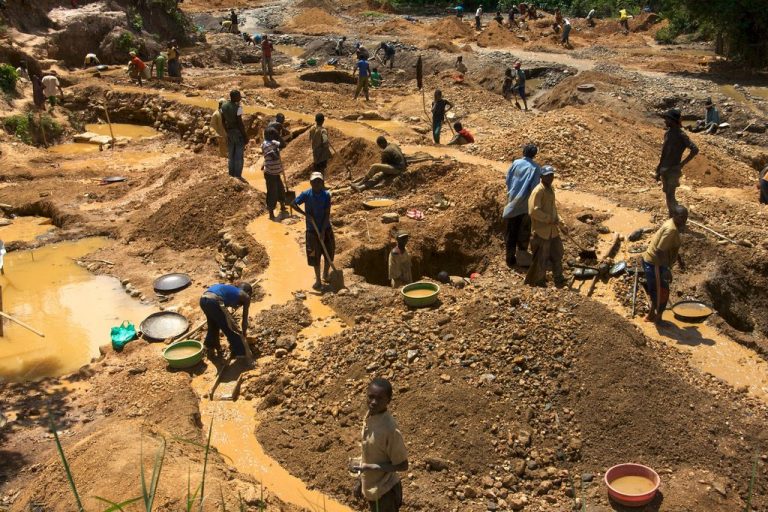
Companies mining and buying copper and cobalt from the Democratic Republic of Congo must do more to fight corruption and child labor in the country, the Organisation for Economic Co-operation and Development said.

Congo is the world’s largest cobalt producer and fifth-largest producer of copper, according to the U.S. Geological Survey. As demand for the two minerals has soared with the growth of the electronic and electric-vehicle industries, so have worries about the conditions under which they are mined. Cobalt is a key component in lithium-ion rechargeable batteries, and Congo has almost half the world’s known reserves.

THE U.S. JUSTICE DEPARTMENT IS INVESTIGATING GLENCORE FOR ITS DEALINGS IN THE COPPER AND COBALT INDUSTRY IN CONGO

Child labor and human-rights abuses are common in small-scale mining sites in Congo, where independent, artisanal miners dig by hand, the OECD said in a report published Friday. While companies have been trying to address these concerns, they should also mind reports of corruption among the country’s biggest mining firms, the Paris-based organization said.

The U.S. Justice Department is investigating Glencore Plc for its dealings in the copper and cobalt industry in Congo. The U.K. Serious Fraud Office is also probing Eurasian Natural Resources Corp., a Kazakh mining company, for fraud and bribery in Congo. After the probe opened, ENRC’s owners formed a new company called Eurasian Resources Group, which now operates the Congolese mines.

Companies should be “proactive about addressing risks, for example by improving working conditions in artisanal mining or taking action to address corruption in their supply chains,” Ben Katz, co-author of the OECD report, said in a statement. Production from Congo’s artisanal mines often gets mixed in with industrial output, he said.

The OECD is an intergovernmental organization made up of mainly wealthy nations that supports world trade. The report is part of the group’s guidance for companies “to respect human rights and avoid contributing to conflict or bribery through their mineral or metal purchasing decisions and practices.”

Richard Muyej, governor of Lualaba province, where most of Congo’s cobalt and copper deposits are located, said the country is working to formalize artisanal mining, which employs as many as 150,000 people in the region. The province is also working with companies to improve the tracing of artisanally mined minerals from their source and to create zones where diggers can work without entering industrial mine sites, Muyej told a conference Friday in the provincial capital Kolwezi, where the OECD launched its report_Mining.com

Blue diamond found by struggling Petra sold for $14.9 million

0

South Africa’s Petra Diamonds (LON:PDL) has sold a 20.08-carat blue precious rock it found in September at its iconic Cullinan mine for $14.9 million, or about $741,000 per carat, which is the highest price analysts had predicted.

The “exceptional” blue gem quality diamond, Type IIb, was acquired by a “leading diamond company” that wishes to remain anonymous, Petra said.

“We are very pleased with this result which is in line with our expectations and confirms the resilience in the value of very high quality blue diamonds, undoubtedly one of nature’s rarest treasures,” CEO Richard Duffy said. “We look forward to following this exceptional stone’s journey to its polished form.”

THE 20.08-CARAT BLUE, GEM QUALITY STONE, WAS ACQUIRED BY A “LEADING DIAMOND COMPANY” THAT WISHES TO REMAIN ANONYMOUS, PETRA SAID

Petra has been trying to turn around its fortunes after piling up debt to expand Cullinan, where the world’s largest-ever diamond was found in 1905. That rock was cut into two stones – the First Star of Africa and the Second Star of Africa – and are now part of Britain’s Crown Jewels, held in the Tower of London.

The company’s share price collapsed to a record low amid falling diamond prices that forced it to write down the value of its mines in September by almost $250 million.

The financial struggles prompted the company to launch a restructuring that ended Friday with a number of organizational changes. Among them, Petra said it had removed the chief operating officer role, which meant Luctor Rode was no longer with the company.

Duffy said all mines would report directly to him from now on.

In the same boat

Petra is just one of the many diamond miners hit by ongoing market weakness that has hit producers of small stones hardest, due to an oversupply in that segment.

Increasing demand for synthetic diamonds has also weighed on prices. Man-made diamonds require less investment than mining natural stones and can offer more attractive margins.

Buyers, those that polish and cut diamonds for retailers, have been hit this year by lower prices and tighter credit, prompting them to delay purchases.

Tiffany’s reported in August a 3% decline in like-for-like sales, while shares in Signet, the world’s largest retailer of diamond jewellery, have lost more than 60% of their value this year.

De Beers,  the world’s No.1 diamond miner by value, has responded by axing production — with a target of 31 million carats this year compared with 35.3 million in 2018. It has also given buyers more room to maneuver, by allowing them to refuse half the stones in many of the diamond parcels.

As a result, De Beers was able to sell this month the most diamonds since June, though sales so far this year are down more than $1.2 billion from the same time in 2018.Mining.com

Mimosa explores areas to invest

0

ZVISHAVANE-based platinum miner, Mimosa Mining is exploring more areas to invest in, as part of its corporate social responsibility programmes, an official has said.

Speaking during a media tour at the mine recently, Mimosa head of corporate affairs Ms Elizabeth Nerwande, said the company has so far made a substantial investment in the education sector. 

“We are exploring areas to invest in as part of our corporate social responsibility. For now, we have made notable investments in the education sector, we have built hostels for students in vocational training centres, we have paid fees for hundreds of students and we continue to do more,” she said.

Mimosa Mining Company is one of the giant mining companies in Midlands that has made significant investments in corporate social investments such as Community Share Ownership Trusts. 

Meanwhile, the mining company recently donated two vehicles to Zvishavane Police Station, as part of its corporate social investment. Speaking during a ceremony to honour distinguished police officers in Zvishavane last week, Mimosa general manager Mr Alex Mushonhiwa said the gesture was to ensure that police can carry out their work efficiently.

“We are committed to serve communities which are free from harm where citizens can enjoy life, hence our partnership with the law enforcement agents. Today as we support the work done by the police force, we are donating two vehicles with accessories and five bicycles. We hope this gesture will help motivate police officers and enhance efficiency in the delivery of the ZRP mandate,” said Mr Mushonhiwa.

Speaking during the same event, Chief Masunda of Zvishavane said lack of resources is seriously affecting the fight against crime.

“We had been having serious challenges in the fight against crime. All along, there was only one vehicle in Zvishavane and it was affecting efficiency. We are grateful to Mimosa for this wonderful gesture,” he said.

Apart from the two cars and bicycles, the platinum miner also sponsored prizes to outstanding police officers, which saw the Cop of the Year walking away with $7 000 and a refrigerator.


The Sunday News

Diamond royalty slashed by 33pc

0

Zimbabwe’s diamond output is poised for a massive boom after Treasury cut the royalty for diamond mining to 10 percent from 15 percent of gross revenue to reduce the cost of extracting deep-seated kimberlitic gems.

Zimbabwe is targeting to ramp up diamond production from 3,2 million carats to 6 million carats by end of 2023 after the country launched a diamond mining policy recently.

Diamonds are a critical component of Zimbabwe’s plans to grow the mining sector into a US$12 billion industry by 2023 with revenue from exporting the precious mineral set to hit US$1 billion.

The diamond industry has since the turn of the century been characterised by mining, organised or informally, of alluvial gems in the Chiadzwa area of Manicaland Province.

Following the diamond rush of 2006, the Government moved in to restore order using then State-owned Zimbabwe Mining Development Corporation (ZMDC) to partner private players.

A total of seven companies, namely Marange Resources, Anjin Investments, Diamond Mining Company, Gyn Nyame Resources, Jinan Mining, Kusena Diamonds, and Mbada Diamonds were given licences.

ZMDC was then renamed Zimbabwe Consolidated Diamond Company (ZCDC) in 2016 after Government consolidated the mines amid serious concerns over transparency in the mining of diamonds in Chiadzwa with Treasury receiving paltry inflows.

This was despite the fact that the Government was an equal shareholder in each of the diamond mining entities, but after the consolidation of the mines, most surface diamonds got depleted and whoever mines gems in the area must invest in deep mining.

Presenting the 2020 National Budget, Finance and Economic Development Minister Professor Mthuli Ncube said that diamond miners are now exploiting deep-lying conglomerate deposits, hence the cost of extraction has significantly increased.

“In order to promote investment in exploration and extraction, I propose to review the royalty on diamond from 15 percent to 10 percent of gross revenue, with effective from 1 January 2020,” he said.

Following the consolidation of the seven companies in 2006, and two consecutive years of exclusively Government-dominated diamond mining, the Government completed a diamond mining policy this year and reopened the sector to private players.

The new policy streamlined the mining of diamonds to only four players, namely State-owned ZCDC, Russia and global diamond mining giant Alrosa, Chinese firm Anjin and gold miner RioZim’s Murowa.

However, two additional diamond miners are expected to be announced by December this year that will undertake gem production in partnership with ZCDC.

In terms of those that have already been licensed, Anjin is expected to start production by December this year while Alrosa will commence exploration by January 2020.

A roadmap for the growth of Zimbabwe’s US$12 billion mining industry says the country will establish a gemmology centre for cutting and polishing diamonds and a value management centre for cleaning and sorting the gems to enhance their market value.

The Sunday Mail

Illegal miners close in on Harare

0

NOTORIOUS fortune seekers, mostly gold panners, have announced themselves on Harare’s door step.

The illegal miners have set up camp at Kintyre Estates, where they are tearing into a mountain supporting the walls of Lake Chivero.

As a consequence, they are increasing the pollution of an already toxic Lake Chivero through the use of chemicals such as mercury.

Harare Mayor Councillor Herbert Gomba confirmed this: “The illegal miners are discarding heavy chemicals such as mercury into Lake Chivero and as such have put the water body and human life at risk. We have referred the issue to both Government and the police so that they can be stopped.”

The gold panners and their supporting businesses have sought accommodation in nearby Norton, where they have invaded the usually sleepy town, which until recently enjoyed a low crime rate, affordable housing and prospects of economic prosperity.

Others have been operating in Hatcliffe Extension, where they are threatening anything that stands in their way — be it roads, entire suburbs, schools, Glen Forest cemetery and any other important infrastructure.

According to Chiedza Chipangura, an official with the Zimbabwe Miners Federation and a former chairperson of the Norton Miners Association, “gold is everywhere in Zimbabwe”.

This means if left unchecked, these fortune-seekers could soon be digging up buildings in Harare and disturbing the network of fibre optic, electricity cables and water pipes.

“As I speak, there is a gold rush in Chidamoyo, Hurungwe. Even Harare is sitting on top of gold and if the illegal miners are not tamed, we might wake up to see them digging up the streets,” Chipangura said.

Harare can actually learn from what these makorokozas have done to towns such as Shurugwi, Kwekwe and Kadoma, where they turned everything upside down in search of gold.

Chegutu and Norton are the latest victims of the marauding gold panners, who will stop at nothing to get the precious mineral.

Until recently, Norton was just a small town some 40km west of Harare, a bastion of tranquillity and economic growth. Strategically located near Lake Chivero, Harare’s major source of fresh water, Norton’s rich farm lands and vast organised mining activities came under attack with the arrival of the gold panners.

Founded in 1914, the town prides itself in having factories, a pulp and paper mill and even a brewery.

Thousands of people, the majority of them coming from Harare and Chegutu, flocked to Norton. Among those that fell in love with the town included the late national hero and music superstar, Oliver Mtukudzi, who called Norton his home until he breathed his last.

However, the town’s reputation as one of the fastest growing and safest urban settlements came to a screeching halt when illegal gold panners began scouring for the precious metal in areas surrounding the town.

The influx of the machete-wielding miners has resulted in some of the residents regretting their decision to set base in this town.

As a result of all the bad things associated with the violent panners, Norton has, to a larger extent, become an undesirable destination for many.

Among the prime farming areas that have been invaded by the panners are Kent Estates, Westband and Donnington farms, thereby reducing agricultural land to dangerous pits and gullies.

The panners, among them the feared “Mashurugwi” gangs, are travelling from as far afield as Shurugwi, Silobela, Gweru, Gokwe and Mutare. Apart from stealing and forcibly taking ore from mines, the panners are also wreaking havoc at shopping centres.

Most bars are now no-go areas for locals, as the panners, who have a penchant for violence, attack locals at the slightest provocation. Rival illegal panners often take their feuds to the drinking spots, resulting in some of the locals being caught up in the crossfire.

Many locals are believed to have lost both life and limb.

As news of the miners’ violent activities become more frequent, distressed calls by Norton residents for authorities to put an end to this madness are growing louder by the day.

The burning down of a house in Norton Ward 12 by a gang of panners who were fighting over a commercial sex worker has proved to be the final straw.

Civic and political leaders, farmers, miners and the residents have since joined hands as they moot ways of ending this menace.

Laston Tachiona, the Norton Ward 12 councillor, is regretting the residents’ decision to rent out accommodation to the illegal miners.

“This is a disaster. Since the miners are our fellow brothers and countrymen, we embraced them and rented out rooms to them. It appears we are now being punished for being compassionate,” Tachiona said.

Ward 12 covers the high-density suburbs of Maridale, Kingsdale and Garikai, where the majority of the panners are living. Tachiona says as a result of the panners’ violent dispositions, the residents are now observing a curfew of some sort.

“We are telling locals not to patronise the drinking spots that are frequented by the miners. We are also encouraging them not to drink late into the night. As residents, we need to stay away from these people whose motives are always dangerous,” said Tachiona.

Letwin Nyagano, vice-chairperson of the Norton Development Association, said the presence of the violent panners is bad for both social and economic development.

“They come here, forcibly take gold ore and beat up beerhall patrons. The gold they forcibly take is channelled towards the black market and we are not in any way benefiting from associating with the illegal miners,” Nyagano said.

Her counterpart, Liziwe Musevedza, the chairperson of the Norton Residents Development Trust, echoed the same sentiments.

“All they do is drink and fight. They are not adding any value to our community,” Musevedza said.

Temba Mliswa, Norton House of Assembly member, has been very vocal on the issue, calling upon authorities to find ways of dealing with the panners.

Mliswa even suggested that locals take up martial arts as a way of defending themselves from the dangerous miners.

Mululeki “Mayor” Ncube, a Norton-based journalist, said the local authority has seemingly run out of ideas in their efforts to bring sanity to the town.

“The panners are a law unto themselves and the residents are distraught and helpless. Something must be done urgently,” Ncube said.

Chipangura, who represents the Zimbabwe Miners Federation in Mashonaland West Province, said the problems that are associated with illegal gold miners are not only confined to Norton.

“There are people holding on to mining claims and are not productive, resulting in panners invading such claims. If those that own claims can be productive, we can do away with such problems,” Chipangura said.

The illegal miners have also encroached onto farming land in nearby Zvimba East.

Ruzai Muchaurawa, the Ward 25 Councillor in the Zvimba Rural District Council, confirmed the presence of artisanal miners in Zvimba.

“The illegal miners are coming from Norton and are giving us sleepless nights. Something should be done urgently,” Muchaurawa said.

With the gold panners’ foot already in the country’s capital city Harare, will authorities finally take notice and curb this marauding force of brutality, destruction and thievery?

Only time will tell_The Sunday Mail