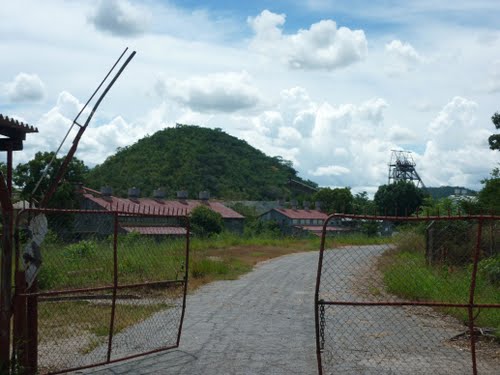
Listed diversified miner RioZim is planning to invest US$25m on a biological oxidation plant at Cam and Motor Mine which will open by September next year as the company moves to beneficiate its precious minerals to generate more foreign currency.
RioZim, which has been suffering from forex shortages as most businesses in the country, said the biological oxidation plant would only be achieved if the company got the foreign currency to complete the project.
The setting up of the plant will help to process pure oxide ores to make good grades and high recoveries. RioZim chief executive Bhekinkosi Nkomo told Business Times that the company was in the process of sourcing forex to complete the plant.
“We are planning to invest an amount close to US$25m for the Cam and Motor BIOX plant to improve the processing of oxides with high-quality grades. However, the plant will only be completed if we can get the US dollars,” Nkomo said.
RioZim board chairman Saleem Beebeejaun recently said the project was underway. He said civil works were in progress and structural steel fabrications were being moved forward.
“Key suppliers and contractors have also been appointed,” Beebeejaun said.
“The plant is expected to be commissioned in the fourth quarter of 2020 as long as we are able to find foreign currency. Its absence is the biggest risk to this project.”
Cam and Motor Mine achieved 489 kg during the half-year ended June 30, 2019, a 7% growth from the 458 kg achieved the same period in 2018. The performance was on the back of the processing of pure oxide ores with good grades and high recoveries.
Beebeejaun said to guarantee continuity of oxides while the mine was in the process of constructing its BIOX plant, the company would source ore from the Group’s One Step Mine which is within the proximity of the current Cam and Motor mine processing plant.
Preparations for mining and trucking of ore from One Step are at an advanced stage. RioZim has been affected by crippling power cuts despite the firm paying for uninterrupted power supplies in US dollars.
The mine experienced power cuts in the second quarter of the year which worsened during the month of June. Renco experienced some plant breakdowns which reduced production processing time. In addition, the incessant power cuts in the second quarter of 2019 reduced gold output.
RioZim is pursuing two power projects, a 178MW solar project and an 800MW Senga Power Station in Gokwe, with surpluses expected to be fed into the national grid.
In its financials for the six months to June 30, 2019, revenues for the company grew 211% to ZWL$137m, from ZWL$44m in the comparative prior year.
The company attributed the low revenue to the decrease in gold production due to the power cuts experienced during the period under review.
The gold price firmed at US$1344 per ounce compared to US$1298 per ounce achieved last year. Profit for the period was ZWL$38.2m compared to ZWL$406,000 during the same period in 2018.
The group’s total assets grew by more than 9000% to ZWL$1.04bn during the reviewed period, from ZWL$162.1m.
The company plans to focus on exploration and invest in cutting-edge equipment to advance exploration activities both at its active and non-active mine claims_Business Times
RESERVE Bank of Zimbabwe governor John Mangudya has said Fidelity Printers and Refiners’ monopoly in the buying and marketing of the country’s single biggest foreign currency earner, gold, will stay, warning that liberalisation will see annual output plummeting to 4 tonnes on rampant smuggling.
This comes after the parliamentary portfolio committee on Mines and Mining Development recommended the end of Fidelity Printers and Refiners’ monopoly and liberalisation of the sector to increase export earnings for the country.
“We all know that the last time the gold was liberalised production dipped to 4 tonnes and we were disqualified from London Bullion Market Association (LBMA) because we were below 10 tonnes so we have got history we know the experience,” Mangudya said at a breakfast meeting organised by Daily News and the ministry of Mines and Mining Development in Harare yesterday.
“Miners should market their gold through FPR as it refines miners’ gold and store it as a national asset and reserve asset. But if we do what we did in 2004 and 2005 thereabout whereby we liberalised we will go back to four tonnes again.
“Do you think people produced four tonnes only, actually people produced over 30 tonnes and over 26 tonnes were smuggled to South Africa,” he said. Mangudya said people’s mindset needs a reset. Government suspended SI 25 of 2005 due to rampant smuggling and does not want to suffer the same predicament.
Yesterday Finance and Economic Development minister Mthuli Ncube said over 30 tonnes of gold were smuggled to South Africa due to the forex retention policy which needs a realignment.
Mangudya concurred with Ncube on rampant gold smuggling, saying the liberalisation of the sector will only make it worse.
“Right now we are not monitoring gold to the extent we should as the gold is going out of the country at an alarming rate and smuggling of gold is rampant. I now hear a few names that I cannot pronounce that are said to be coming for gold here in Zimbabwe. Now you can imagine if we liberalise the selling of the precious mineral what will happen,” he said.
“The environment right now is not conducive, liberalisation, all present ministers, under this environment it is not possible to liberalise yellow metal sector as they are many people who are waiting to smuggle gold.”
Mangudya said the country needs to level the playing field, first, before liberalising the gold sector. He said it is premature to free up the gold market. Fidelity Printers and Refiners is the country’s sole legal buyer and marketer of the yellow metal.
Producers bemoan the monopoly, blaming it for providing fertile ground for inefficiencies that have in turn benefited the black market to the detriment of the economy at large. Producers complained Fidelity is in some cases taking up to four weeks to pay for deliveries, a situation that leaves miners vulnerable and unable to pay for suppliers.
Market watchers say artisanal miners end up selling their produce to the informal market due to the inefficiencies of the state buyer_Business Times
Closure of mines like Mhangura, Gaths Mine, Shabanie Mine, Kamativi Tin mine, just to mention a few, which were once sources of livelihood and a pillar for many families and the economy at large has caused a variety of problems to the once-prosperous mining communities.
Against the background of a successful operating mining industry which at its pick was sustaining the whole of Zimbabwe cementing its position as one of the most economically gifted nations in Africa, Zimbabwe’s shutdown mines have become a major stumbling block for the nation to embrace its vision towards economic revival.
By Mirirai Ngoya
According to a popular discourse that has been trending in the mining industry in Zimbabwe, the perception to improve the economy for the citizens lies in the mining industry particularly to the majority of Zimbabweans who live near areas with mineral deposits. As such closed mines in Zimbabwe, have made life difficult for people who live in such areas. The closure of mines like Mhangura, Gaths Mine, Shabanie Mine, Kamativi Tin mine, just to mention a few, which were once sources of livelihood and a pillar for many families and the economy at large has created a variety of problems to the once-prosperous mining communities.
Mhangura mine
For example, Shabanie and Gaths Mines had shares in Firstel, FBC Bank, Costco, Tube and Pipe industries, Turnall and Fiber Cement, PG AND Maskew industries and a cotton ginnery in Gokwe. The fall of these giant mines saw the closure and downfall of the mentioned once big and popular firms. This has had a negative effect on the economy of Zimbabwe to date.
The fall of sporting activities
Many Mines in Zimbabwe sponsored sports through The Chamber of Mines. With the closure of the mines, the majority of the teams and clubs were disbanded, thus a loss of yet another source of livelihood. For example, Gaths Mine had one of the biggest sporting stadia in Zimbabwe for athletics, Netball, soccer, volleyball, cycling among others, however, the stadium is now a sorry state with the community now using it as a paddock for their cattle. With the closure of these mines in Zimbabwe, sports in actual fact was seriously affected, however, the coming of platinum mines like Zimplats have seen football re-emerging.
Childhood destitution
Children in most towns with closed mines where mineral deposits are still found have dropped out of school, opting to search for mineral deposits selling them at low prices as a way to fend for their families. This causes a significant reduction in the literacy level of multitudes of affected children.
The Great Dyke mineral belt has turned school children into artisanal gold miners trying to create jobs for themselves as a way to move on with life.
“More awareness campaigns need to be undertaken by stakeholders in the area on disaster risk management, child labour and child protection as well as guidance and counselling. These need to be undertaken at all possible fora, the death of one pupil is one too many.” Guruve district school’s inspector Pinias Dambuza said expressing
shock.
Increased rate of prostitution
Due to economic hardships in Zimbabwe, children as young as 12 are engaged in prostitution particularly in mine areas where major mines were closed and now small scale and artisanal mining activities are taking place. There is a high increase rate of prostitution in areas where mines have shut down. This lack of income results in women and young ladies resorting to selling their bodies just to let ends meet.
This shows that the shutdown mines are leading to the deterioration of societal values as people are searching for any means possible to take make ends meet.
Prostitution has increased in areas like Mazoe where there is rampant gold panning. More so, it is sad that girls from the age of 13-22 are the most active in the world’s oldest profession. Some engage in harlotry because their fellow colleagues are doing so.
Land degradation and water pollution
Shutdown mines are to a greater extent, putting people’s lives at great risk. For example, people and animals in the
Mashava area (Gaths Mine) are at risk of falling into open pits that were just left after extraction of minerals.
The open pits overlook the area where small scale mines operate, thereby distracting the beauty of a community in particular and the nation as a whole.
One mining specialist from the Community Water Alliance, Hardlife Mudzingwa indicated to Mining Zimbabwe that closed mines are creating more opportunities for the small-scale miner, but some problems arise due to their unmonitored activities which are leading to contamination of water for the community.
He said “Small scale miners who use mercury, sulphuric acid and cyanide are leading to the contamination of water” “This is leading to water-borne diseases, as such the EMA must look towards those areas and educate the miners in as far as a good purification process to the miner”
“Many animals who live in water are affected, hence die”
Minerals just lying idle
A lot of minerals are not fully utilised as a way to build up the country’s economy due to the long-shut mines. Mhangura mine shut down but still has a lot of copper which can contribute to the economy and help the local and Zimbabwean majority with job opportunities.
Shabani mine also is sitting on loads of asbestos which can aid in reviving Zimbabwe’s economy in this era where the nation is moving towards embracing devolution.
Thus, the closing of mines has put a lot of families at risk since miners lost their jobs, as well as the nation not generating any foreign currency from the mines.
Mining Towns standards deteriorating
Towns with closed mines have declined in terms of peoples living standards because of a number of reasons:
Shops have closed and some have even collapsed/ community towns operating at low standards.
Looking at the areas like Gath’s mine, business owners of community shops have closed and left the area. People are now travelling to a distant shopping centre to access goods and this has been proved to be more expensive to community people.
Resettlement problems
The issue of resettling the once so-called miners has become a problem in areas with closed mines. Miners feel that it’s not easy to just pack and go major reason being that the mines still owe them. This can be seen through Mashava, Gaths mine have closed but the workers are still there claiming that they cannot leave until they have been paid.
According to the workers, the situation is now so bad as they cannot afford to raise money for school fees and even basic goods.
One former miner said “we have pleaded with the government that the company is failing to pay us our pensions and salaries, but nothing has come into fruition”
Shutdown mines have troubled their former employees looking at the Kusena diamond mine which was owned by ZMDC. The mine closed while some workers were on leave.
Speaking to one representative of the mine, Gilbert Kusena he said “we have been troubled by this former mine as they are refusing to pay us since 2011 up to now”
“We are in a bad state as some of our houses were destroyed by cyclone Idai and other members from are still missing”
The government must take into consideration that closed mines have haunted and continue to haunt the majority
of former workers lives. As much as Zimbabwe is facing an unprecedented time economically in many years, former
workers hope one-day promises of reopening will be fulfilled.
This article first appeared in the June 2019 issue of the Mining Zimbabwe Magazine
Despite beating a 19-year record in gold deliveries, reports have it that, over 30 tonnes of the gold was smuggled out of the country last year due to unfavourable pricing following the spreading disparity between the RTGS dollar and the USD.
By Dickson Rudairo Mapuranga
Gold delivery to Fidelity Printers and Refinery the country’s sole gold buyer and exporter is hitting a major decline as predicted when the Reserve Bank of Zimbabwe governor John Mangudya announced the New Monetary policy
reducing gold forex retention from 70 per cent to 55 yet miners were advocating for an increase up to 90 per cent foreign currency retention.
The reduction of foreign currency retention from the previous mark has sparked anger and protests from the
small-scale miners over this issue which in actuality has reduced gold prices significantly thus, making gold
submissions to Fidelity unviable.
Deliveries in the first three months of the year declined to 6,5 tonnes from 7,3 tonnes delivered at the same time last
year.
The year 2018 saw small-scale miners delivering 66 per cent of the 33,3 tonnes that were delivered to Fidelity. But five days after the 2019 Monetary Policy Statement on February 20, according to Zimbabwe Miners Federation president Henrietta Rushwaya, only 20kg of was delivered, against 60kg-per-day on average.
There is an exploding situation when it comes to the delivery of gold to Fidelity Printers and Refiners, miners have stated that selling gold to Fidelity has become unreasonable and unviable.
Small-scale miners and experts speak out
One small scale miner identified as Chawanga said “It is unreasonable to sell gold to Fidelity considering the process miners go through which is painful, stressful, dangerous and tiresome then you get paid peanuts. The money will also be affected by inflation minutes from the bank, so bond is a no-no” he said.
According to the miners, selling gold to the parallel market has become a better option since the market has proven to be reliable and rewards the miners of their hard-earned money in hard currency. Although the amount paid on the black market is lower, the market has proven to be better than Fidelity.
“It is a well-known fact that the parallel market has become more viable since the market has proven to be reliable and rewarding the miners of their hard-earned money. Although the amount paid on the Parallel market is lower, the market has proven to be much better than Fidelity.’
“It is a well-known fact that the parallel market pays lesser per gram of gold, what is surprising is that miners are running to those people, the parallel market has become the formal market in Zimbabwe,” said one miner.
On our Mining Zimbabwe Facebook page
We asked why gold submissions to Fidelity have fallen and most miners expressed disappointment with the
current payment system.
A follower known as Johannes heartily said ” 55 %-45% payment system kills the mining business. How did they arrive at such a payment system? Gold is not just picked from the ground…. You invest money, incur losses.. The moment you start to get some recovery someone says the payment system is what is there? Just to harvest gold like that? It’s bad… The culture of bad policies must stop.. Pay 100 % to the miners, export the gold at a profit… Not to exploit miners then export and get profits, pocketing a fortune by blood-sucking your citizens.. We look up to those in authority to be fair on miners. Please, review that thievery policy!”
Seasoned geologist Kennedy Mthetwa said “Been there done that got the T-shirt in 2000 to 2008 policies which saw gold production decline to unprecedented levels. History repeating itself. RBZ and Fidelity learnt nothing from the 2000 to 2008 era?”
Speaking at a post-2019 Monetary Policy Statement review meeting with small-scale miners in February, Reserve
Bank of Zimbabwe deputy director for Financial Markets William Manhimanzi said the central bank was struggling to pay miners in hard cash as it was failing to import notes via South Africa.
“The only bank that remained was FNB, and they gave notice in December 2018 that they would no longer be supplying our own local banks with cash,” he said. However, miners slammed the government of hiding behind a finger, they accused the government of stealing exporter’s money to take care of their insatiable appetite of the USD thus, robbing exporters of their dues.
“It is clear that the government badly needs foreign currency to take care of its other obligations. However, the above scenario paints a picture of a government which is failing to protect the very providers of forex. This is not sustainable and has to be remedied at all costs. There must be incentives meant to encourage and support small scale gold miners because previous gold deliveries show that this is where most of the gold to keep Zimbabwe going is coming from”. said one miner.
The miners can see the elephant, the miners have pointed it out. The government will have to address the Elephant in the room and soon.
This article first appeared in the June 2019 issue of the Mining Zimbabwe Magazine
Presenting the National Budget Statement to the Parliament of Zimbabwe yesterday, the Minister of Finance and Economic Development, Prof Mthuli Ncube said that mineral leakages in Zimbabwe have been on the rise depriving the country of foreign currency earnings, this has led the government to come up with measures to curb leakages.
Rudairo Dickson Mapuranga
The Finance Minister said that the government is reviewing and tightening the Gold trade act capacitating the gold mobilisation unit as a measure to stop gold leakages from the country.
Experts are of the belief that more than half of gold produced in Zimbabwe is finding its way out of the country due to different reasons chief being the recently reduced forex retention from 75% to 55%.
“Mineral exports remain the major sources of foreign currency, especially gold. However, leakages have been on the rise depriving the country of foreign currency earnings. Government is, therefore, reviewing and tightening the Gold trade act, and capacitating gold mobilisation unit” said Mthuli.
Professor Ncube also said that his government is looking for measures to make sure that various mining firms join the Extractive Industry Transparent Initiative (EITI) in order to improve transparency and accountability in the mining sector.
“In addition, with the increasing call for transparent and accountability in the sector, discussions are underway with various stakeholders on joining the extractive industry transparent initiative (EITI), which will be pursued during 2020,” said Prof Mthuli Ncube.
The Finance Minister also said that the “use it or lose it” policy will be implemented to curb leakages from miners supposedly on care and maintenance or on hold whilst being mined Nicodemusly.
The use it or lose it policy was proposed by indigenous Zimbabwean miners who said hoarding of claims across all minerals was limiting factor in the growth of the sector.
The Minister also said that his government is going to finalise the amendments to the Mines and Minerals act as well as pushing for digitalisation of the title registration, geological findings and other information as a way to limit leakages.
“Other interventions on improving production and transparent in the Mining sector include the following,
Enforcement of the “use it or lose it ” principle to prevent speculative hoarding of claims across all minerals.
Finalising the amendments to mines and minerals act.
Operationalising the automated mining cadastre information system
Rolling out of gold service centres in all major production centres and full capacitation of HCCL increase throughput from the underground mine.” He said.
The 2020 budget has projected that the Mining sector will improve by 4.2 per cent next year on account of the expected improvement in the availability of electricity, it also noted that it was instrumental to consider the country foreign currency retention policy to see growth in the sector taking shape.
Rudairo Dickson Mapuranga
According to the Minister of Finance and Economic Development Prof Mthuli Ncube during National budget presentation yesterday, the government of Zimbabwe is aware of challenges in the Mining sector which includes retention threshold, gold deliveries to Fidelity Printers and Refineries, ring-fencing arrangements among others and these are receiving serious attention.
“With regards to gold mining, Government is aware of challenges related to ring-fencing arrangements, retention, gold deliveries to Fidelity Printers, among others and these are receiving serious attention,” said Ncube.
The Finance Minister also said that the realisation of the USD 12 billion road map will be supported by a 2020 National budget in which the sector is anticipated to improve by over 4 per cent on account of expected improvements in the availability of electricity.
“Realising of the US$12 billion Mining industry by 2023 will be advanced through the 2020 Budget. The sector is projected to rebound to 4.2% on account of the expected improvements in the availability of electricity” said Prof Mthuli Ncube.
Professor Mthuli Ncube also said that the gold, platinum and chrome sector is expected to boost output through agreements that will be fulfilled in the coming year.
“Going forward, investment agreements in platinum, gold, and chrome among others which have been concluded, are expected to boost output in the sector,” said the Finance Minister.
The Minister of Finance and economic development also said that MMCZ was going to be supported with credit guarantee to support other minerals non-other than gold and silver which will be supported through Fidelity Printers and Refinery.
“Minerals Marketing Corporation of Zimbabwe will be supported through a credit guarantee scheme to provide funding and support to the non-gold sector,” the Minister of Finance and economic development said.
It took the intervention of the Joint Operation Command to calm the situation in Chegutu, when the Machete-wielding criminals, who usually target small scale and artisanal miners unleashed terror on anyone whom they thought deals in gold mining after a gold rush in Chegutu industrial area in the CBD, Chegutu Miners Association chairperson Mr Innocent Nicks has said.
Rudairo Mapuranga
According to Nicks, the situation in Chegutu only became calm after the involvement of JOC late yesterday which resulted in some of the criminal elements vanishing from the area without a trace.
“Thanks to the JOC team set today to end this devilish situation. The situation and area are now calm and cool due to the heavy security deployment done after 4-hour JOC closed-door meeting” said Nicks.
According to Nicks, the situation in Chegutu for the past five days has been a horror to the people of Chegutu because of the unscrupulous operations by these machete criminals who pounced on miners. The criminals were controlling the small area, robbing people of their valuables and attacking everyone whom they suspected was involved in mining or mining activities.
“The situation in Chegutu for the past 5 days was bad for the Chegutu miners, gold buyers, millers, and the general Chegutu residents.”
“The machete-wielding men from Kadoma, Kwekwe, Gokwe and their recruits in Chegutu were pouncing on everyone whom they suspect to have valuables including gold, money, cellphones, etc.”
“They attacked people at a gold rush at a David Whitehead Textile company dumpsite and seriously injured several people who were rushed to Chegutu hospital for treatment,” said Nicks.
The Joint Operations Command (JOC) is the supreme organ for the coordination of state security in Zimbabwe. It was first established by the Rhodesian Security Forces to supervise its counter-insurgency campaign in the Rhodesian Bush War as well as external incursions into neighbouring countries such as Zambia and Mozambique.
The Minister of Finance and economic development has allocated $293.2 towards exploration to promote the Mining sector, the diamond tax was also slashed by 5 per cent with the aim of enabling diamond firms to finance exploration.
Rudairo Dickson Mapuranga
It is a fact that Zimbabwe is hamstrung by lack of exploration, in order to improve the sector the Finance Minister Mthuli Ncube through 2020 budget state has channelled $293 million towards exploration which is critical for expansion of the sector.
The money will help the Ministry to acquire relevant equipment in terms of planning and promotion of exploration, data capturing and automation.
“Furthermore, in 2020, a will be fine-tuned and improve while the Ministry of Mines and Mineral Development will be resourced to enhance exploration which is critical for expansion in the sector. This will allow the Ministry to acquire relevant equipment such as computers among others.”
“Accordingly, I am, allocating ZWL 293.2 million to the Ministry of Mines and Mining Development for its capacitation in terms of planning, promotion of exploration, data capturing, and automation, among others” reads the 2020 budget in part.
According to the budget statement, the cost of prospecting for diamonds has increased and therefore in order to promote investment and exploration in the diamond sector, the government has seen it fit to decrease diamond taxes.
“Diamond mines are exploiting conglomerate deposits, hence the cost of extraction has significantly increased.”
‘In order to promote investment in exploration and extraction, I propose to review the royalty on diamond from 15 per cent to 10 per cent of gross revenue with effective from 1 January 2020″ reads the report.
With the new introduction of new versions of $2 coins the country expected some form of failure and disappointment as it usually is and already we have witnessed individuals caught with cash amounting to over $44 180 withdrawn from CBZ and another with $15 000 withdrawn from Eco bank when the maximum withdrawal amount is ZW$100.
One will wonder why the Apex bank still uses the same methods over and over but still expect a different result. It’s a well-known fact that bank employees are complicit with money changers or are even ring leaders yet the government continues to send money to banks, hand over to bank managers, knowing fully this will be a wide-open opportunity for abuse.
With just a day after the new notes were introduced the first place most people saw this money was people posing online with a few notes and suddenly today huge stacks online or with the local money changers. The exercise of injecting more cash into the system may be headed for imminent failure should the Apex bank not digitalise the whole process.
Visiting Westgate today we witnessed first-hand new fresh clean notes clearly in their thousands with different money changers yet in the morning CABS did not have a single note. On enquiring where they were getting the money from one money changer simply said, “People withdraw from banks and sell to us”. This practice will simply die a natural death should the banks be strict on how they distribute cash. Everyone in need must always have access and there will be no need to “sell cash”.
RBZ Governor Dr John Panonetsa Mangudya yesterday said preliminary investigations into the suspected illegal issuance of coins and notes revealed that a CBZ Bank customer was involved.
“Investigations by RBZ at CBZ indicated that an amount of $44, 180 was withdrawn by one of their customers. In this regard, CBZ Bank together with their customer are now assisting the Zimbabwe Republic Police with further investigations,” he said.
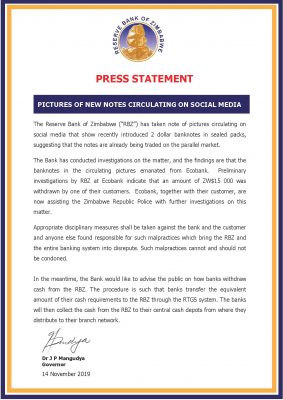
In regards to Ecobank “The Reserve Bank of Zimbabwe has taken note of pictures circulating on social media that show recently introduced $2 banknotes in sealed packs, suggesting that the notes are already being traded on the parallel market,” said Dr Mangudya. “Preliminary investigations by RBZ at Ecobank indicate that an amount of ZWL$15 000 was withdrawn by one of their customers. Ecobank, together with their customer, are now assisting the Zimbabwe Republic Police with further investigations on this matter.”
For the new money introduction to be a success tighter measures need to be implemented, very simple measures. Zimbabwe can emulate our big Southern neighbour. In South Africa cash in transit personnel strictly deliver to ATMs.
An automated teller machine (ATM) is an electronic banking outlet that allows customers to complete basic transactions without the aid of a branch representative or teller. In South Africa not even a single note is handed to bank managers or employees by cash in transit delivery personnel. Bank tellers do not hand out hard cash or even accept cash deposits (unless it is foreign currency). The ATMs is the only medium that handles that job. An ATM is programmed to give out a maximum amount and never disappoints on that front. There is easy accountability and no speculation of malpractice. There is no way an ATM could have disbursed $44 180 or $15 000 with the current cash shortages that money was headed for abuse.
For the RBZ to be taken seriously they must take a proactive approach by thwarting this practise by enacting a law that forbids bank tellers from giving or receiving cash in banks strictly assign the job to Automated Teller Machines eliminating fully the malpractice of this nature.
RBZ Press statement on Cash withdrawn from CBZ
RBZ Press statement on new notes in regards to Ecobank
The Zimbabwe Diamond and Mineral Workers Union has learned with shock the deteriorating health condition of workers employed by Shabani Mine who are suspected to be suffering from asbestosis after long years working at the asbestos mine.
The union is calling for mine to facilitate a compulsory exit test for the affected workers by independent medical doctors without interference from the government and other stakeholders.
While the National Social Security Authority (NSSA) can be mandated to carry out such an exercise, its impartiality can be compromised since it is an interested party.
This, the union believes, will be the first step towards instituting litigation if proven beyond a reasonable doubt that the affected workers could have been poisoned by years of exposure to asbestos.
We are calling on the government, international labour bodies and other stakeholders to treat this issue as a matter of urgency because this act amounts to commercial genocide and those affected should be given some form of compensation as what happened in South Africa to former mineworkers who were employed during the Wenela period in the mining industry in that country.
The union is disturbed that most of the visibly sick workers, some of whom have retired to their rural homes have been living destitute lives without any meaningful source of income since the company fired 1800 workers in 2009 in unclear circumstances throwing hundreds of workers and their families into an uncertain future.
The mine which is under judicial management now employs a skeleton workforce of fewer than 350 workers.
It is disheartening to learn that some of the workers who are on unpaid leave are being evicted from the company houses after failing to pay rentals despite the company owning them huge amounts of money in unpaid salary arrears.
Those who have reached retirement years are now being treated as lodgers and this has created a social crisis and a humanitarian disaster for the desperate workers and their families.
The union also calls upon the Zimbabwe Mine Development Corporation to ensure that sanity prevails at the mine and that normal mining operations resume and jobs are restored.
In equal measure, ZDMWU is urging the Mine to stop evicting workers from the company houses until a lasting solution is found by all stakeholders to end an impending disaster that threatens lives and livelihoods for hundreds of workers in this dilapidated mining establishment.
As a last resort, the union will not hesitate to mobilise its members against all cruel acts of victimisation that might occur as a result of this move of seeking justice for the affected workers and those who have since passed on.
To provide the best experiences, we use technologies like cookies to store and/or access device information. Consenting to these technologies will allow us to process data such as browsing behavior or unique IDs on this site. Not consenting or withdrawing consent, may adversely affect certain features and functions.
Functional
Always active
The technical storage or access is strictly necessary for the legitimate purpose of enabling the use of a specific service explicitly requested by the subscriber or user, or for the sole purpose of carrying out the transmission of a communication over an electronic communications network.
Preferences
The technical storage or access is necessary for the legitimate purpose of storing preferences that are not requested by the subscriber or user.
Statistics
The technical storage or access that is used exclusively for statistical purposes.The technical storage or access that is used exclusively for anonymous statistical purposes. Without a subpoena, voluntary compliance on the part of your Internet Service Provider, or additional records from a third party, information stored or retrieved for this purpose alone cannot usually be used to identify you.
Marketing
The technical storage or access is required to create user profiles to send advertising, or to track the user on a website or across several websites for similar marketing purposes.