Home Blog Page 621

Gold Deliveries to Fidelity 2018 – 2019 in kgs

0

GOLD deliveries to Fidelity Printers and Refiners (FPR) for the period January to 31 December 2019 were 27.66 tonnes, a decline of 17% from 33.29 tonnes recorded during the same period in 2018. The national gold target for 2019 was 35 tonnes.

Table 1: Gold Deliveries to Fidelity Printers & Refiners (FPR) in Kgs

Year 2018

Year 2019

PrimarySmall-scaleTotalPrimary       Small-scaleTotal% Change
January 1,159.821,399.132,558.96745.241,025.751,770.99-31%
February 931.721,083.822,015.55639.851,496.272,136.126%
March 953.351,781.752,735.10925.741,690.632,616.37-4%
April 982.961,904.592,887.551,006.641,119.722,126.35-26%
May 1,182.752,216.733,399.49878.851,278.772,157.62-37%
June 1,032.592,643.973,676.56814.48687.391,501.87-59%
July 1,086.392,463.443,549.82930.201,846.442,776.65-22%
August 893.383,026.043,919.42813.101,933.552,746.65-30%
September 755.112,720.873,475.98840.101,964.142,804.24-19%
October 849.301,199.132,048.44858.021,544.092,402.1117%
November 815.43602.301,417.73864.35977.021,841.3630%
December 967.26636.651,603.91864.941,914.972,779.9273%
TOTAL 11,610.06 21,678.42 33,288.51 10,181.51 17,478.74 27,660.25 -17%

Extract from the Monitory Policy Statement issued by the Reserve Bank of Zimbabwe dated 17 February 2020

Zimbabwe declares Corona Virus a national disaster

0

Zimbabwe President has declared Coronavirus a national disaster.

In his State of the Nation Address at State House this afternoon, President Emmerson Mnangagwa says all activities will resume once Government is satisfied that the country is no longer at risk.

“Government has decided to postpone, curtail or cancel public events, gatherings and activities,” he said. “We must join hands working with the rest of the world on fighting this virus even though it has not yet crossed our borders. We must have a national response plan. Humanity is at risk and stands at hazardous crossroads,” said President Mnangagwa.

The declaration will entail the following:

  • Gatherings of more than 100 people banned including church gatherings, weddings for the next 60 days
  • ZITF & Independence celebrations have been cancelled with funds budgeted for these events to be diverted to help fight against COVID-19
  • All government institutions to be capacitated to carry out Coronavirus tests;
  • Monthly national clean-up exercise must be vigilant and ensure the risk;
  • Cognisant of the fact that schools are closing in a fortnight the government has chosen to leave schools open. Dates for re-opening of schools to be announced;
  • The government discourages any travel from high -risk countries. Those coming from these countries will be quarantined for 14 days;
  • Major ports of entry will remain open, with rigorous screening while smaller border posts will be closed;

VAST responds to Coronavirus SOE in Romania

0

AIM-listed Vast Resources PLC has spent the weekend responding to the declaration of a state of emergency in Romania, where it operates the Baita Plai polymetallic mine according to www.proactiveinvestors.co.uk website.

Romania’s state of emergency began on 16 March, following an address to the nation from President Iohannis in regard to the threat of coronavirus.

The company is putting in place all the necessary precautions to adhere to the government guidelines whilst ensuring it maintains the implementation programme to bring Baita Plai into production with minimal disruption in order to meet the timeframe stated in the previous announcement made on 11 March 2020.

Vast is an AIM-listed mining company with mining and exploration interests in Romania and Zimbabwe. Zimbabwe has not had a single reported case of the Coronavirus and has not imposed any travel restrictions from any countries yet. Its Southern neighbour however has had over 60 reported cases of the virus.

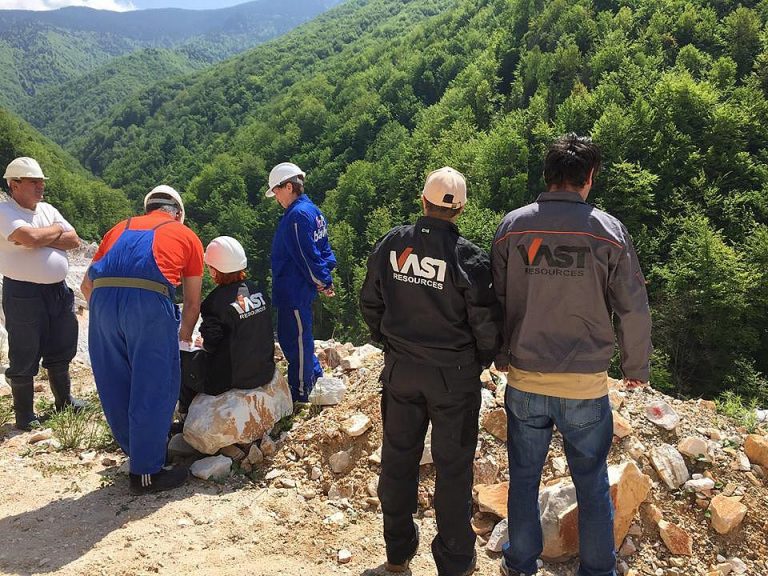
Vast Resources PLC popularly known for its stint at Pickstone Peerless Gold mine in Chegutu is expected to begin diamond operations in Chiadzwa. Vast opportunities for locals like employment creation are expected when the concluded deal takes off.

Chiadzwa Community Concessions, Marange

The Chiadzwa Diamond Fields located in Marange are widely regarded as the richest alluvial diamond deposits globally.

In September 2019, the Company announced it has signed a Joint Venture Agreement with Chiadzwa Mineral Resources (Pvt) Ltd (“CMR”), a company designated to represent the Chiadzwa Community interests in the Concession.  This resulted in the formation of Katanga Mining (Pvt) Ltd (”Katanga”). A further Joint Venture Agreement between Katanga and the Zimbabwe Consolidated Diamond Company (Pvt) Ltd (“ZCDC”), a government entity that represents the Republic of Zimbabwe in the diamond mining sector, is set to be officially signed this month.

Additional reporting by Mining Zimbabwe

Net worth evaluation for defunct Zisco

0

Kwekwe defunct miner Zimbabwe Iron and Steel Company (Ziscosteel) board has approached the Government seeking approval to engage a German consultant to evaluate the net worth of the steel producer before seeking an investor to resuscitate operations.

Zimbabwe’s integrated steel manufacturer closed down in 2008 at the height of hyperinflation. Between 2011 and 2017, two attempts to resuscitate operations at Zisco by Essar Global and R and F, failed to materialise.

In an interview last week, Zisco acting board chairman, Dr Gift Mugano, said in the past there have been many conflicting figures thrown out concerning the net worth of Zisco. He said before an investor is secured, it was critical to do a proper evaluation of the firm’s assets.

“We are very open minded in terms of the company to do the evaluation of Zisco and we can go as far as Germany because most of the technology, which is there came from Germany.

“So, we are not going to be looking at the mediocrity to do the evaluation exercise. We want the correct position from a technical point of view. If there is going to be any local person it will be someone supporting from the local knowledge, but we think we can get the technical expertise from Germany,” he said.

“We have engaged our Minister (Dr Sekai Nzenza) for approval and she is happy with that, what we now need to do is to do the normal procurement processes.”

In 2011, Zimbabwe and Essar Global signed a US$750 million deal to resuscitate operations at the Redcliff-based steel plant but the deal fell by the way side because of among other reasons, political bickering in the inclusive Government as well as numerous squabbles over mineral rights and other technicalities. Again in 2017, it was reported that the Government had secured US$1 billion investment for the revival of Zisco from a Chinese firm, R and F. 

Last year R and F advised the Government that it was pulling out of the deal amid reports that efforts to renegotiate the deal agreed on under the previous administration led by former President Mr Robert Mugabe were unsuccessful.

The arrangement entailed the acquisition of Zisco’s majority shareholding by the Chinese investor to pave way for the revitalisation of the steel plant.

Dr Mugano said it was imperative for them to engage a foreign company with technical expertise to do the valuation of Zisco assets to eliminate the possibilities of mortgaging the country given the fact that the steel manufacturer’s assets go beyond plant and equipment.

“That is why you hear sentiments that the R and F deal was like mortgaging the country because you don’t know what you are giving by giving concessions that you don’t know.

“We want to do proper evaluation to understand the net worth of Zisco because when we go out to look for investors, we need to know what we are holding in our hand. So far, I don’t know exactly the net worth of Zisco and we are engaging a company through the normal procurement processes so that we can be able to know,” he said.

“But what I know, it’s in millions of US dollars but we need to know the exact number and then we break down to say what is this section costing. Zisco is just beyond the Zisco plant, there are properties . . . and that will be a process that will take a couple of months to do proper evaluation,” said Dr Mugano.

He said their role as the board was to render strategic guidance and direction on how things should be done to resuscitate Zisco.

“We can only do that once we have agreed. First we have to do the feasibility study and then come up with a decision on which route we are taking in terms of selling all the scrap or are we resizing it (Zisco) and if we are resizing it, what can we do from a domestic resource mobilisation, or international investment,” said Dr Mugano.

He said it was also critical to take into account that the world was now in the 4th industrial revolution and it should be well-thought on what can come out of Zisco looking at the existing plant technology and modern-day equipment.

“Those are questions to be answered when we do proper feasibility study of what is Zisco of today against Zisco of 1980. Or should we start a new right size company, which should be able to fit the modern demand taking into account the pressure of green economy and the need to align with modern trends in terms of demand for steel,” said Dr Mugano.

Source: The Chronicle

Machete wielding gang storm GZU

0

Machete-wielding gang notoriously known as “Mashurugwi” attacked students at Great Zimbabwe University Mashava Campus on Saturday evening.

The gang popularity led by one called Tinashe invaded Chemberi hall were the students were entertaining themselves in an event which was called the “Clash of the DJs”.

The gang allegedly tried to force themselves onto the stage which was resisted by organisers of the show prompting them to attack any student in their path.

Three students were seriously wounded while about 300 sustained minor injuries.

More to follow….

VAST resources to soon commence diamond operations in Chiadzwa

0

VAST Resources (Vast) will soon commence operations at its Zimbabwean unit, with the government indicating that all internal processes leading to the conclusion of the joint venture (JV) would be finalised in March this year.

The AIM-listed mining company, Vast, is currently working on the JV agreement between its majority-owned Katanga Mining and Zimbabwe Consolidated Diamond Company (ZCDC) concerning the Chiadzwa Community Diamond Project.

Katanga Mining is a joint venture company between Vast and the Chiadzwa Community Development Trust while ZCDC is wholly owned by the Government of Zimbabwe.

The company recently revealed that it has “received official communication from the Ministry of Mines and Mining Development to the effect that all internal processes leading to the conclusion of the Joint Venture are expected to be finalised during March 2020.”

It said further details pertaining to this key process would be communicated to the market as and when they occur.

In an interview with Mining Zimbabwe Vast Resources Zimbabwe director Mark Mabhudhu, however, declined to share intricate details about the deal.

“Unfortunately, at this stage, we are under sanction in terms of what information we can release. We are also obliged to release information to the stock exchange. Also at this stage because we have not signed the agreement and stuff like that, it will be prejudicial,” he said.

Vast is an AIM-listed mining company with mining and exploration interests in Romania and Zimbabwe.

It is focused on the rapid advancement of high-quality brownfield projects by recommencing production at previously producing mines in Romania and commencement of the joint venture mining agreement on the Chiadzwa Community Concession Block of the Chiadzwa diamond fields in Zimbabwe.

The company’s portfolio includes an 80% interest in the Baita Plai Polymetallic Mine in Romania, where work is currently underway towards developing and recommissioning the mine and the Community Concession Block in Chiadzwa, Zimbabwe.

Vast resources is well known in Zimbabwe as a former shareholder at Pickstone Peerless gold mine and the Eureka gold mine.

It also owns the Manaila Polymetallic Mine in Romania, which was commissioned in 2015, currently on care and maintenance.


This article first appeared in the Mining Zimbabwe March 2020 issue

Beware of fake geophysics

0

I have been getting a lot of small miners contacting me about the problems they face the most and one immediately stands out!

By Edward Mushaninga

It has come to my attention that there are individuals masquerading as geophysicists and charging as high as 2500usd a claim to carry out their so called geophysical surveys which apparently tell you the depth and grade of the reef/belt.

This is in fact not true! This is not what geophysicist do and what their machines show. They do not show the grade of the reef just by carrying out surveys. Only diamond drilling can show grade at those depths. Geophysical surveys are very useful if done by the right professional and qualified people. At times these fake geophysicists do not even use geophysical machines like a magnetometer etc but use detectors and claim that at such and such a depth you will find a belt with this much grade.

I have already spoken to two such victims who have now dug as deep as 30m and still have not found anything and have wasted time and money for nothing which is sad.

I have noticed that most scale miners rely too much on gold detectors, but detectors have their limits and are mainly useful for gold nugget prospecting. I would recommend small scale miners to do more sampling around their area, this is still one of the best methods of locating your high grade e.g random sampling or grid sampling can be used.

We also offer Mining Consultancy and Geological Surveys. You can contact Edward on 0777867412 or email: edwardmush6@gmail

Operation Chikorokoza Chapera affecting partially registered miners

0

Operation Chikorokoza Chapera is affecting us big time because as Makorokoza who had been allowed by the government to operate we called for help to weed out criminal elements and murderers who were causing havoc in our sector, unknowingly by engaging our government we were shooting ourselves in the foot.

It is baffling that the Police cannot differentiate between a miner and a thief even in the presence of overwhelming evidence. Confisticating hammer mills, compressors, and jackhammers which do not symbolize tools of trade by thieves and murderers leave a lot to be desired.

Makorokozas for years earned decent incomes from their hard labour without government support. We have families to feed just like soldiers whom the government wants to cushion with the introduction of Garrison shops. We have contributed heavily to government coffers and tried many many times to regularise our operations through mines provincial offices without success but surprisingly we are getting penalised by compulsory arrests and operation stoppages.

Makorokozas are going to lose their mine sites to big and rich guys who will take over highly producing partially registered claims as we all know that our documents will not be processed. Government through the Ministry of Mines cannot afford a photocopier for their Chinhoyi office but Makorokozas get penalised for not having licenses.

Makorokozas travel up and down to provincial offices trying to regularise their operations but government department of mines does not have the manpower, motor vehicles nor fuel to attend or carry out their mandated responsibility and its so sad, an operation is effected on the affected, with the Makorokoza now branded “illegal miner”. Makorokozas invested heavily in the sector through, manpower, time, finance, machinery and research and government through its departments were supposed to consider the impact of the “Chikorokoza Chapera” operation.

Unemployment is very high in our country and it seems they want us to depend on donors. By stopping Makorokozas, the country increases the risk of surging crime. We haven’t heard of police officers being fired for failing to combat crime but when it comes to us an operation was put into force with no notice. A huge door for corruption has been opened by the operation as the rich will be grabbing from the poor, the poor will remain poorer.

Chinese who brought in hammers mills, compressors and jackhammers made their loot by selling equipment to Makorokozas in forex through government permission and regulations on imports but surprisingly the miners got their possessions repossessed by the very government. Skilled personnel is getting displaced in search of greener pastures away from the mining sector. Prisons and police cells are awash with innocent people arrested for being at a mine site. The much short income will be lost in the legal process of having miners released from holding cells or through the courts. During arrest miners are traumatised, families affected, income lost the list is endless.

We appeal to the Ministry of Mines to speed up our applications and issue us with certificates. We followed every procedure the onus is on the Ministry to get us going. “Chikorokoza Chapera” although out to root out criminal elements has affected multitudes of innocent, hard-working honest miners.

As Makorokozas we pray to God that if only Ministries can unite and share notes, until then, they will realise that we are victims of a malfunctioning system of each independent Ministry or government department.


This article first appeared in the March 2020 issue of the Mining Zimbabwe Magazine

Government to add 15 more gold centres before year end

0

Minister of Mines and Mining Development has announced that the government is adding 15 more gold centres before the end of 2020.

The Minister said this in an interview with a local paper in line with attaining the 12billion Mining Industry by 2023.

With the geology of the country making some gold deposits more amenable to small-scale mining operations as opposed to conglomerate mining, the Government also continues to explore ways to boost production in small scale gold mining.

It is against this background that the Government is now stepping up efforts to set up gold centres to facilitate the ease of doing business for small-scale miners and at least five of these are expected to start operating before the end of June. Fifteen more are expected to come into the stream before the end of the year.

“At the same time, Government is rolling out a total of 20 gold centres to facilitate and promote small scale production of gold whereby these gold centres will play a facilitatory role in the operations of small scale miners,” said Minister Chitando. 

“The first five should be operational by June and the other 15 we are targeting November,” he said.

Gold buying

Fidelity Printers and Refiners (FPR) is licensed to buy gold from large scale producers, small scale producers, and holders of gold buying permits. The company has decentralised its buying activities from Harare to cover the entire country, thereby significantly reducing the security risks associated with transporting gold for the small scale sector. Gold delivered to the centres is paid for on the spot after carrying out a specific gravity determination of the gold content. The customer has an option to select the assay method for a particular deposit or the specific gravity method.  However, if the miner opts for the fire assay method, payment will then be made after the analysis which is carried out at the Head Office in Harare.

The current Gold buying centres are:

Name Address Phone Email
HarareNo. 1 George Drive, Msasa263 242-486670, +263 242-486694, +263 242-487131, +263 242-447810-5[email protected]
BulawayoZB Bank Fife Street Branch Corner 10th Ave/Fife st, Bulawayo+263 292 880175/80, +263 292-883709/+263 292 68766[email protected]
Gwanda ZB Bank Shop No 8 NSSA Complex+263 284 2820957/ +263 775 215 272/+263 772 526 357[email protected]
FilabusiInsiza RDC Offices, Stand 171B Mthwakazi+263 775 215 437/+263 84 2801527/+263 777 137 481/+263 783 861 916[email protected]
ZvishavaneZB Bank No 86 Robert Mugabe Way+263 39 2353539/+263 772 455 741[email protected]
GweruZB Bank No 69 Robert Mugabe Way+263 54 2220328/ +263 774 700 231[email protected]
KwekweZB Bank No 90 Robert Mugabe Way+263 55 2526084/+263 773 487 113[email protected]
KadomaZB Bank No. 42 Robert Mugabe Street+263 68 212004/+263 774 769 286[email protected]
MasvingoZB Bank No 39 Robert Mugabe Way+263 39 22265288/+263 775 215 261[email protected]
MutareZB Bank 88 Hebert Chitepo Street+263 2061006/+263 775 215 259[email protected]
BinduraZB Bank No 28 Robert Mugabe Way+263 66 2106854/+263 774 111 466[email protected]
ChinhoyiZB Bank No 47 Magamba Way+263 67 2121010/+263 775 021 720[email protected]

Interview: Moshen Jena – Explosives Engineering and Blasting Specialist

Inside Mining Zimbabwe (IMZ) this month sat down with a man popular in the mining circles for the splendid work he is doing.

Moshen Jena (MJ) is an Explosives Engineering and Blasting Specialist currently working for the biggest explosives supplying company, AEL Intelligent Blasting Zimbabwe.

KS Good day Moshen Jena, a brief introduction of yourself.

MJ Thank you Mining Zimbabwe for having me. I am a results-oriented and innovative Explosives Engineering specialist with more than 10 years of cumulative experience in the industry. I have extensive knowledge of explosives, blast designing, blast planning, execution, post-blast analysis, blast technical support, and training, value-adding trials, explosives incidents investigations and management of big projects.

I am working for one of the biggest explosives supplying companies, AEL Intelligent Blasting Zimbabwe, as the Explosives Manager for the Zimplats Project. I am a holder of an Honours Degree in Mining Engineering (UZ 2009), Explosives Engineering (AEL 2016) and Masters in Business Administration (MSU 2019). Currently, I am pursuing a Masters in Explosives Engineering with Missouri Science and Technology.  I am an active member of the International Society of Explosives Engineers (ISEE).

Though I am based at Zimplats, I have done work or been involved in Blasting Technical work for several mining and construction companies including Unki, Mimosa, KW Blasting, Trojan, Murowa Diamonds, Cam and Motor, Great Dyke Investments just but to name a few.

KS When is it decided that blasting is necessary at Mining level?

MJ Blasting is one of the key processes that one will encounter at a hard rock mining project. It is done to loosen or break consolidated material or hard rock. Blasting is called for as soon as you finish your free dig material (loose material that you can load with your loading machinery). In a typical mining, setup blasting can start right at the start of the project when construction work is done in trenching, digging foundations for infrastructure, overburden stripping, mine development work as well as blasting of the ore benches or stopes right through to demolition of the infrastructure.

KS What precautions are taken to ensure no lives are harmed during blasting?

MJ Every blast should be designed with care to manage environmental constraints such as fly rock, blast-induced ground vibrations, blasting fumes, noise, and air blasts. Before taking the blast one needs to make sure that they have cleared the blast danger zone of all people and equipment.

KS Is it safe to blast underground operations or it’s just for an open cast?

MJ With proper blast designing it’s safer to blast underground (my opinion). Almost all the underground mines are using drilling and blasting to break rock save for a few exceptional tunnelling projects that use tunnel boring machines.

KS How common is the Explosives Engineering profession and what would you say to those who are interested in becoming like Engineer Moshen Jena?

MJ Every Miner or Mining engineering professional is taught the basics of drilling and blasting. After completing a Learner Miners program at a mine and satisfying the requirements in terms of the number of shifts that are required, one is examined by a board set up by the Ministry of Mines and awarded with a Full Blasting Licence (FBL). Whereas, for one to be an Explosives Engineer, one needs to go for specialised rigorous training offered by Explosives Manufacturing Companies such as AEL Intelligent Blasting and a few Universities abroad that offer the same course. In Zimbabwe, there are only a handful of qualified explosives Engineers that I know of and currently, I am the only registered member of the International Society of Explosives Engineers (ISEE). This is going to change soon, as we have already started grouping to register a Southern African Chapter of ISEE. This will help in advancing the science and art of explosives engineering.

KS What should one consider before buying explosives?

MJ Many different types of explosives exist on the market and they have different properties and applications. When choosing the type of explosive to use at a particular project one needs to have an understanding of the following:

  • Geology and rock mechanics of the rock.
  • Environmental factors of the area to be blasted.
  • Post-handling processes (loading, hauling, crushing e.t.c)
  • Properties of the explosives to be used.
  • Blast performance expectations.

Only after understanding these, then one can choose the right type of explosives to use in a particular job.

KS What would you say is a successful blasting?

MJ A successful blast is one that is safe and all the quality expectations are met. No injuries or damage to equipment and all the blasting KPIs such as fragmentation, advance, grade, perimeter control, etc. are met.

KS You are managing Explosives at one of Zimbabwe’s biggest and most progressive mines what would you say has been your biggest challenge at Zimplats?

MJ Zimplats is a demanding customer. Its operations are world-class and at the forefront of cutting-edge technology. On the other hand, AEL Intelligent Blasting offers a holistic approach to help its customers on their unique journey to optimal blast outcomes through IntelliBlast™, a model which brings out the superlative way AEL has always operated. With the help of our differentiated products and services, we partner with the mine on their journey to optimal blast outcomes, perfecting every step of the way.

KS What would you say is your greatest achievement in blasting?

MJ I have done so many value-adding projects in the explosives industry but one stands out for me. The project was entitled, Perimeter control in the incompetent ground. The project was on perimeter control in bad ground that I submitted as part of my Explosives Engineering course. The project was voted to be the best in 2017 and matched the standard that had been set by my friend and fellow Explosives Engineer, Vincent Tsoriyo. The project opened many avenues for me and I ended up being invited to present at the ISEE conference in 2018 in San Antonio.

KS More small-scale miners are using explosives. Are they doing it right? What’s your advice on correct blasting?

MJ True, there is a huge market for explosives in the small-scale mining sector and everyone agrees that this is a sector not to be ignored. My only worry is on training and technology adoption. If you look at the people who are handling explosives and conducting blasting operations you will notice that there is a big training gap and they continue to use the same blasting technology that has been passed to them by their predecessors. With proper training and the correct selection of explosives, the sector will notice an improvement in safety and productivity.

KS Many professionals in big mining organisations are of the notion that ASM are a bunch that are trying too hard but do not have the expertise but the truth of the matter is they are here to stay. Let’s say we get together people like yourself, the likes of Patrick Takaedza, Maison Phiri, just to mention a few to conduct workshops with organisations like ZMF. Can we not see an improvement in the ASM industry?

MJ I tell you Zimbabwe is well endowed with both natural and human resources to take it to the top. The only problem, is we are not singing from the same hymn. It’s up to the organisations like ZMF to pull together the different mining and processing professionals and have them work towards a common good.  Only last month, I presented at a training workshop organised by ZMF and the Zimbabwe School of Mines targeting small to medium-scale miners. The conference brought together various specialists in the mining industry together with academia.  The response from the Miners was overwhelming and I am convinced if such efforts are continued we will witness bigger things coming from the sector.

KS We once ran an article about you shining at the International Society of Explosives Engineer conference in America, in 2018. What has happened since then?

MJ That was an eye-opening opportunity and I am very grateful to my employers (AEL) for the exposure to an international audience. I got two more international invites in 2019, which I turned down to concentrate on my MBA Degree. However locally I have been very active, conducting public lectures at institutions like the University of Zimbabwe and the Zimbabwe School of Mines and various mining houses. Now that I have finished the MBA, please reserve a column in your magazine because there is a lot on the cards.

KS If there is anything you can change regarding the policy on blasting what would it be?

MJ The mining industry is moving with technology, but if you look at our policies they have remained stagnant and slowly becoming irrelevant. There is a need for a review of the Explosives Act and its regulations. I am glad to be one of the chosen to participate in the review of the act and the regulations.

KS Off work how do you spend your time?

MJ Moshen Jena is a family man, farmer and devout member of the ZAOGA FIF. I spend most of my time with my family, at the farm in Marondera or at Church in Redcliff where I stay.

KS Thank you Moshen Jena for giving us the opportunity and taking the time to talk to us. I hope our readers have learnt much from this conversation.

Moshen Jena Thank you very much for the wonderful work that you guys are doing.


This article first appeared in the March 2020 issue of the Mining Zimbabwe Magazine