Home Blog Page 634

Central banks buy gold in quest for safety

0

Net buying by central banks reached 145,5 tonnes in the first quarter, 68 percent higher year-on-year. This is the highest volume of Q1 net purchases since 2013 (179,1 tonnes), comfortably exceeding the five-year quarterly average of 129,2 tonnes. On a rolling four-quarter basis, demand reached a record high for our data series of 715,7 tonnes.

Demand from this sector remains robust.

The factors that drove central bank net purchases to a 50-year high in 2018 remained relevant at the start of 2019.

Economic uncertainty caused by trade tensions, sluggish growth and a low/negative interest rate environment continued to weigh heavy on reserve managers’ minds. And geopolitics still cause consternation.

In the face of these challenges, central banks continued to accumulate gold.

Net buying was again notable, not only for its volume but also for its global spread. Russia was again the largest buyer, adding 55,3 tonnes in Q1. This brought gold reserves to 2 168,3 tonnes (19 percent of total reserves).

Russia bought 274,3 tonnes in 2018 – the fourth consecutive year of +200 tonnes increases – while drastically reducing its US Treasury holdings, as part of its “de-dollarisation” drive.

Shortly after the end of Q1, Sergey Shvetsov, deputy head of the central bank, stated that it is necessary to “increase forex and gold reserves even more” in the face of “persisting sanction risks”.

China reported net purchases of 33 tonnes in Q1, having begun buying gold again in December after a 25-month pause. Monthly net purchases by the PBOC have averaged 11 tonnes over the last four months. Total gold reserves now stand at 1 885,5 tonnes, less than 3 percent of total reserves.

Several other banks also made significant additions to gold reserves in Q1.

Ecuador bought gold for the first time since 2014, boosting gold holdings by 10,6 tonnes. Turkey also continued its programme of gold accumulation, purchasing 40,1 tonnes and India, which began purchasing gold again in 2018 after a nine-year hiatus, bought 8,4 tonnes in Q1. RBI gold reserves have now grown for 13 consecutive months, reaching 608,8 tonnes at the end of Q1. Kazakhstan (+11, 2 tonnes), whose gold reserves have now grown for 78 consecutive months, Qatar (+9, 4 tonnes) and Colombia (+6,1 tonnes) were also notable purchasers during the quarter.

Q1 saw country-level sales total 11,3 tonnes. This is the highest level of sales we have seen for some time and was primarily from three banks. Uzbekistan, which began reporting its gold reserves in March, sold 6,2 tonnes in Q1, while Mongolia (-3, 4 tonnes) and Tajikistan (-1 tonnes) were the only other banks whose reserves declined by at least one tonne.

It should be noted that our Q1 figure of 145,5 tonnes includes – as a sale – the 2015 US$1,6 billion (-42 tonnes) swap between Venezuela and Citibank, which expired in March and has yet to be reported via the IMF. — Online.

Manganese Crushtech Systems – wear & mechanical spare parts of traditional crushers and equipment

0

Manganese Crushtech Systems is a leading, multi-disciplined company, specializing in wear & mechanical
spare parts for a large number of traditional crushers and equipment within the African market.

A full range of slurry pumps and spares including a range of capital equipment used within the aggregate and mining industry. Manganese Crushtech Systems is focused on the African market providing products suited for
the harsh environment which needs to be cost effective, of high quality and robust but most importantly
Manganese Crushtech Systems provide high quality parts and technical after sales support.


Click HERE to learn more

We stock a range of products, please visit www.crushtechsystems.com for more information on all other
products and services. +263 29 61707, +263 774 126 112, +263 778 481 438, [email protected]

11 year old girl died while panning

0

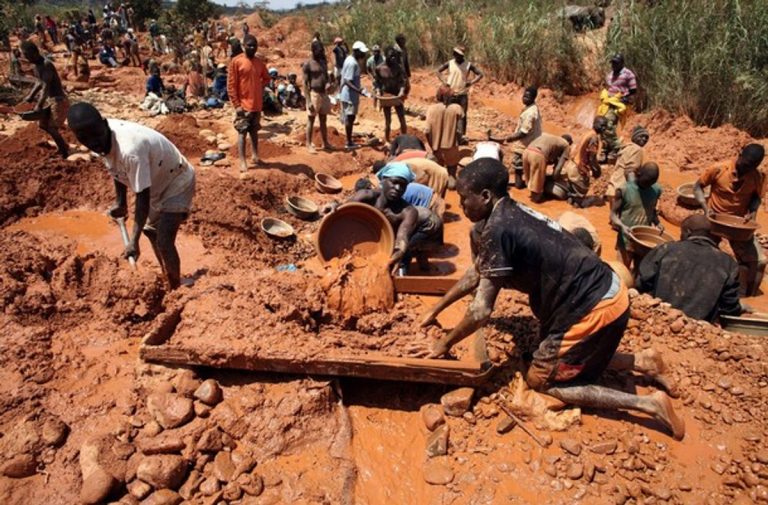
A Guruve primary schoolgirl 11, died on Sunday after being trapped in a disused mine shaft while mining gold. Her colleague escaped with minor injuries, NewsDay reports.

Violet Kumadiro of Kufandirori village, Kadzimwenje area in Guruve under Chief Chipuriro died on the spot when the shaft collapsed, while she was underground with her colleague Tryphine Tambudza (11).

Guruve district schools inspector Pinias Dambuza confirmed the incident.

“Yes, we lost a Grade 5 girl from Kadzimwenje Primary School over the weekend. The number of deaths of learners in Guruve is most disturbing to say the least,” Dambuza said.

“More awareness campaigns need to be undertaken by stakeholders in the area on disaster risk management, child labour and child protection as well as guidance and counselling. These need to be undertaken at all possible fora, the death of one pupil is one too many.”

When NewsDay arrived at the scene, the body of the deceased was being ferried to Guruve Hospital mortuary.

A witness, Muchaneta Mbida said the duo went down a shaft and suddenly a heap of sandy soil collapsed and trapped them.

“The girls entered a pit looking for gold and suddenly a heap of sand soil fell on them, Tambudza cried for help and was saved by Givemore Madiro (37) and she escaped with minor injuries while her colleague died on the spot.”_NewsDay

Cam and Motor, Renco gold production decreases 22 percent

0

ZIMBABWE Stock Exchange-listed miner RioZim’s Cam and Motor and Renco Mines closed the year end December 2018 with a gold production of 22 percent reduction from the previous year.

According to a statement issued by the group chairperson Lovemore Chihota, Kadoma based Cam and Motor Mine produced 458 kg in the first half of the year. However, due to falling recoveries and the temporary stoppage of operations, the Mine closed the year with a total production figure of 758 kg which demonstrated a 22% reduction from the prior year. While Masvingo based Renco Mine produced 591 kg in the first half of the year, 61 percent of the total year output which was a 22 percent reduction from the previous year.

While Cam and Motor Mine’s milling performances were excellent from the prior year according to the group’s chairperson, this did not translate to improved production due to the failing recoveries and ultimately this resulted in an increase in the production cost per ounce. However, according to Mr Chihota, the depressed output in the second half of the year at Renco Mine was attributed to under-performance in the milling section.

According to the statement, the deteriorating ability to access adequate foreign currency in the second half of the year hampered the company’s effort to procure consumable for the Mines which resulted in low plant availability and reduced milling time. The situation was exacerbated by the impromptu suspension of operations in Q4. Furthermore, Renco mine was unable to proceed with plans to develop an additional shaft to ramp up mining capacity due to the same constraints.

The statement further reads that, the Group is in the process of developing a Biological Oxidation (BIOX) Plant in order to treat the refractory ore reserves. Unfortunately, the scarcity of foreign currency held back the project in the year under review. Once operational, the BIOX Plant is expected to enable the Company to double its production output.


Dalny’s investment in exploration led to 8% production increase

0

RioZim group associate, Dalny Mine Compound Pco’s 2018 gold output increases by 8 percent from the previous year due to the company’s investment in exploration, despite the group’s gold production regressing by 13% to 1.792 tons which is less than the 2.071 tons produced the previous year.

According to the statement issued by RioZim chairperson Mr Lovemore Chihota, Dalny Mine produced 442 kilo grams of gold which is 8 percent increase from the previous year, necessitated by the Mine’s investment in exploration.

“Dalny produced 442kgs, an 8% increase from the prior year. The Company’s investment in exploration and development in the prior year resulted in the improved availability of ore sources with higher recoveries” he said.

The group’s chairperson also said that, the Mine’s improved milling also aided to its strong performance.

. “Improved milling also underpinned the strong performance” he said.

According to Chihota, shortages of foreign currency resulted in the delay of scheduled underground mining at the mine which would have further increased production. As a result, the mine could not access the rich underground ore resource, leading to lower grades of 2.57g/t against grades of 2.65g/t achieved in 2017.

Hwange demanding USD272 000 from former Managing Director

0

It has emerged that Hwange Colliery Company Limited (HCCL) is demanding USD272 000 from former managing director Makore as restitution for alleged shady payments made to him during his tumultuous four-year tenure at the company.

This came after an internal audit revealed that Makore had benefitted from monthly payments made to him without valid reasons throughout the four years he was employed by the company.

HCCL was placed under reconstruction late last year. This also follows a recent external audit by Ralph Bomment Greenacre & Reynolds which revealed serious corporate governance rot and plunder of the company’s finances on Makore’s watch.

Mines minister Winston Chitando, in a move largely seen as aimed at blocking the audit, dissolved the board midway through the probe and placed the company under reconstruction on the pretext that it was the only way to set it on the path to recovery and profitability.

The internal audit revealed that Makore received huge payments for his domestic workers on his monthly pay cheque, while at the same time they would get separate monthly payments from the usual HCCL payroll.

Makore allegedly received substantial amounts of money in advance payments, which he never paid back, according to an internal audit report seen by NewsDay.

The company is also demanding repayments for an unsupported “housing allowance” amounting to US$18 000 and an outstanding vehicle loan of US$73 000. In addition, Makore got US$82 000 without any supporting documents.

“Following a request by management to verify the balances due to the former managing director Stenjwa Thomas Makore who resigned on 23 May 2018, audit findings show that Mr Thomas Makore owes HCCL an amount of US$271 841,99. This includes cash advances not recovered, allowances not recovered, earnings without supporting documents and balance on a motor vehicle loan. We recommend full recovery of the amount owed and that the company stop any further payments to Makore,” the audit report read.

Cash advance payments, which have not been recovered to date, amount to US$249 443,50, including a housing allowance valued at US$114 004,80.

Vehicle loan balances that Makore is expected to pay back to the company is US$81 996, having accrued from February 2017 to May 2018.

Makore would also pay his domestic workers from the HCCL account and allegedly prejudiced the company of US$17 869,50.

Vehicle loan balances and other allowances he got without supporting documentation amount to US$72 872 and US$81 996, respectively.

Makore declined to comment, saying: “I have not seen the report so, therefore, I cannot comment. If you want anything else you can speak to my lawyer,” Makore said.

HCCL was placed under reconstruction in October 2018 after it emerged the company had become technically insolvent after years of corruption and mismanagement._NewsDay

Sengwa power station project set to start

0

LISTED mining group, RioZim, says it is set to kick start development of the proposed US$2 billion Sengwa Thermal Power Station project in Gokwe before the end of this year.

In a statement accompanying audited financial results for the year ended December 31, 2018, RioZim chairman Mr Lovemore Chihota yesterday said: “The group made strides in the Sengwa Power Station Project, which entails the development of a 2 800 megawatt power station in phases of 700MW each.

“As the project gained significant traction during the year under review, the company has now set ambitious targets for 2019, which will culminate in the project kick off in the next 12 months”.

Going forward, he said, their objectives remain consistent and well defined in pursuing growth opportunities, generating free cash flows and positive returns.

“In this regard, the group has lined up strategic initiatives, which if successfully implemented will significantly improve the group’s fortunes. The major projects include the construction of the BIOX plant at Cam & Motor Mine and the Sengwa Power Station Project.

“The group is encouraged by engagements made with monetary authorities to mitigate the currency constraints and is confident that the projects will prevail and is, therefore, looking forward to a conclusive operating environment in 2019,” said Mr Chihota.

In February, the Reserve Bank of Zimbabwe introduced the interbank foreign currency market to formalise the selling and buying of the United States dollar and other currencies through banks and bureaux de change essentially bringing sanity to the foreign currency market while at the same time promoting exports, diaspora remittances and investments.

During the period under review, RioZim posted a 15 percent decline in revenue to US$75,4 million from US$88,9 million realised in 2017.

“The group’s performance was due to low production volumes in the second half of the year and the inability to complete planned capital projects due to foreign currency funding constraints, which would have sustained and increased production.

“The group was able to record an operating profit of US$2,4 million which was 71 percent below the prior year’s operating profit of US$8,1 million,” Mr Chihota said.

“Overally, however, the group exited the year with a net loss of US$2,3 million against a net profit US$8,1 million achieved in the prior year, partly attributable to the fixed costs incurred whilst operations were suspended for the gold business.”

He said RioZim remains resolute on building and maintaining a sustainable mining concern in line with its holistic approach to business._The Chronicle

Murowa diamonds posted USD10 million profit

0

RioZim group associate, Murowa Diamonds (Private) Limited, despite the group’s gold production for the year 2018 regressing  by 13 percent to 1.792 tons which is less than the 2.071 tons achieved in the prior year, managed to maintain its momentum from the previous year and produced 740,244 carats from 732,045 carats.

According to a statement issued by the group’s chairperson Mr Lovemore Chihota, the diamond company posted a profit of USD 10 million, the magnificent performance of the mine was as a result of the mine producing 740, 244 carats against the previous year’s production of 732 045 carats.

“The Group’s associate Murowa Diamonds (Private) Limited (“Murowa”) posted a profit of USD 10 million. Murowa’s stellar performance was depicted in an increase of diamond production to 740 244 carats against prior year’s production of 732 045 carats” he said.

According the statement, the Mine’s profits were also necessitated by the courts’ declaration that the alleged ground rental fees were ultra vires the Mines and Minerals Act [Chapter 21:05] had a positive impact on the viability of the associate’s business. The associate contributed positively to the Group’s results with a share of profit of USD 1.5million (2017: USD 1.4million).

RioZim blames government for profit loss

0

One of Zimbabwe’s leading gold and diamond producer, RioZim which recorded a net loss of USD 2.3 million against a net profit of USD 8.1 million achieved in the prior year, blames government’s position on currency for creating a very difficult working environment which led to an inability to procure necessary stocks from critical foreign suppliers.

According to a statement issued by the company’s chairperson Lovemore Chihota, the government’s stubbornness on the position of the USD against the RTGS where it insisted that the currencies were at par while in actual fact the USD was trading at 1:4 against the RTGS balances, led to a situation where the company was selling 45 percent of its gold output at loss because all companies supplying mining machinery and other equipment had adjusted to the parallel market exchange rates.

“…the remaining 45% of the Company’s gold export proceeds were paid in local RTGS currency at a rate of 1:1 with the USD, notwithstanding the fact that the prevailing parallel market was as at October trading at a rate of circa USD 1: RTGS$ 4, and all local suppliers had adjusted their prices to these exorbitant parallel market rates. As a result, for a greater part of the second half of the year 2018, the Group effectively sold 45% of its gold production at only 25% of its true value” he said.

According to the group’s chairperson, the company lost production time after it unwillingly shut down all mining operations in the fourth quarter of the year citing poor government policy which led to insufficient foreign currency allocations by the Reserve Bank of Zimbabwe.

“As a result of these challenges, a whole two months production was lost albeit the fact that the company continued to meet all of its fixed costs and thus driving the business down a path of operating losses,” he said.

“The Group’s revenue decreased by 15% to USD 75.4 million in 2018 from USD 88.9 million realized in 2017. The Group’s underperformance was due to low production volumes in the second half of the year and the inability to complete planned capital projects due to foreign currency funding constraints, which would have sustained and increased production” he said.

However, the company’s chair said some strides were made by the company despite the challenges it faced last year.

“RioZim Limited, however, prides itself in being a truly resilient Zimbabwean company and despite these difficulties, various milestones were achieved during the course of the year, notwithstanding the macroeconomic obstacles which it faced” he said.

According to the group’s statement, RioZim Limited remains resolute on building and maintaining a sustainable mining concern in line with its holistic approach to business. Among the Group’s key goals is to be a responsible corporate citizen. RioZim Foundation continues to expand on its vision to create, develop and promote collaborative sustainable development programmes so that measurable socio-economic benefits are afforded to the communities in which the Group operates and to the country at large.


1,800 workers trapped underground in South Africa mine

0

About 1,800 workers are trapped at a Sibanye Gold  platinum mine in South Africa after an accident halted operation of a shaft used to transport workers.

The company is exploring options to bring the workers to the surface and could use an adjacent shaft if repairs to the Thembelani shaft take too long, said spokesman James Wellsted. It may take a couple of hours to complete work on the shaft and the company can’t say when the workers might be hoisted up, he said.

Workers have congregated at pick-up points about 1.5 kilometers (0.9 miles) underground, he said. They have been underground since the morning shift, which would have ended around 2 p.m. local time. No injuries have been reported.

“They are in a very big complex, but they are quite safe,” Wellsted said. “They have access to water and there is sufficient ventilation.”

The incident may revive concerns about safety at Sibanye, which last year suffered a spike in fatal accidents at its gold mines. About 1,000 workers were also trapped underground for more than a day at one of the producer’s operations in February 2018 after a storm damaged power supplies in the area. South African mines are some of the deepest in the world.

Sibanye’s platinum-group metal operations have been a bright spot for the miner — and it’s biggest source of revenue — as the company struggled with a range of setbacks in gold, including a crippling five-month strike over wages.

Sibanye shares closed 2.8% lower in Johannesburg on Tuesday._Bloomberg News