South Africa and Zimbabwe had the biggest mining investment deals, which accounted for about $323.8 million (R4.66 billion) of global mergers and acquisition (M&A) activity in the mining and metals sector in 2019, new data has shown.
The global M&A deals for 2019 were, however, lower than the prior year, global data and analytics company, GlobalData, said this week. This follows a decline in volumes and values for 2019.
“The metals and mining sector saw a decline in deal value in 2019, when compared with 2018,” said Global Data in a new report.
It further adds: “The overall deal value fell by 39.14 percent from $101.6bn in 2018 to $61.8bn in 2019.
“Deal volume also decreased by 3.32 percent from 1385 to 1339 tons.”
David Kurtz, a mining analyst at Global Data, said that currently top deals from Zimbabwe and South Africa in 2019 accounted for $323.8m of the $61.8bn investment deals recorded for 2019.
Kurtz, however, could not provide a projection for 2020 investment deals for the African mining sector.
Zimbabwe had one top deal, while South Africa recorded about four major M&A deals in the mining and metals sector.
Other experts expect subdued investment activity in the South African mining sector, given emerging power challenges and other wider economic problems that could lead to a credit rating downgrade.
Independent economic analyst Moses Moyo said: “There are various worries for investors that could deter those seeking entry or expansion through M&A activity, and these range from power supply to potential credit downgrades. But for risk averse investors, this also presents opportunities to snap up projects in South Africa.”
South African precious metals miner, Sibanye Stillwater, has already announced this year the exercise of an option to snap up a further 12 percent in DRDGold. This will bring the firm’s overall interest in the gold miner to about 50 percent, Sibanye said last week.
The 2019 top M&A deals for Zimbabwe and South Africa helped investment advisory companies such as Standard Bank, Prudential, Old Mutual, Imara Edwards, Coronation, and Citi Bank to climb up rankings for regional investment deals.
The top deals for South Africa had values ranging from a high of $152m and $135.6m to $16.3m, while for Zimbabwe the top deal was valued at $19.9m. Zimbabwean metals producers have also complained about power supply, which is negating productivity for nearly all major minerals such as gold, platinum, and nickel.
About 80 percent of mining executives surveyed for a Chamber of Mines of Zimbabwe report said in November that they worried about “restricted access to capital” as well as a “non-competitive environment”, which they say was weighing down investment plans for 2020.
Chief executive at Zimbabwean PGM mines said that they expected production to be down by as much as 7 percent for this year_NewZimbabwe
Zimbabwe’s fuel prices which have been surprisingly stable for the past two months have gone up.
In a statement, the Zimbabwe Energy Regulatory Authority (Zera) announced that diesel and petrol prices had gone up by 9 percent to $19.55 per litre and 4.8 percent to $18.28 per litre respectively.
“Operators may, however, sell at prices below the cap depending on their trading advantages,” said the authority.
Before the price increase, petrol was being sold at $17.44 per litre and diesel for $17.99.
Zera also announced the reduction in the level of petrol blending with ethanol on the market from E20 to E5.
As the names imply, ethanol fuel mixtures have “E” numbers which describe the percentage of ethanol fuel in the mixture by volume.
While the regulator did not immediately give a reason for the latest move, reductions have been a common feature over time depending on the availability of ethanol.
Zimbabwe’s annual gold output fell 16.8% to 27.6 tonnes in 2019, coming off its record highs in 2018, as producers battled with power cuts and a currency crisis.
The country had a record haul of 33.2 tonnes of gold in 2018, and had targeted to grow output to 40 tonnes in 2019.
Output from large mines was 10,181 tonnes in 2019, while small scale mines produced 17,478 tonnes, according to figures from Fidelity Printers and Refiners, the central bank subsidiary that is the country’s sole gold buyer. The third quarter saw the highest output of 8,327 tonnes.
Gold is Zimbabwe’s largest foreign currency earner, and the weak output points to more pressure on the local dollar in 2020.
The fall in gold output shows the impact of power cuts on both large and small miners, as well as a foreign currency shortage that has left miners unable to pay for essential inputs, from equipment to consumables.
At RioZim, production dropped by 20% to 366kg for the third quarter to September 2019, compared to the same period in 2018. In early 2019, RioZim temporarily shut down its operations over delays in gold payments from Fidelity. This was the second time, after October 2018, that the company halted operations.
Metallon, once the country’s largest producer, has placed two of its four mines under care and maintenance.
Miners say Zimbabwe’s foreign currency retention system is hurting their operations. In 2018, mines were required to surrender 70% of their earnings to the Reserve Bank of Zimbabwe.
After a warning of mass mine shutdowns, government increased the retention to 55% from 30%. However, the remaining 45% is sold at the interbank rate, which effectively dilutes what gold miners’ earn per ounce.
Mines want the retention scheme dropped to allow them to keep all their earnings.
Power woes
The power crisis worsened in 2018, after the Kariba power station slashed generation capacity drastically due to low water levels.
In a survey of mining executives released in November 2019, 60% said they faced power outages of up to three days per week. Some 90% of mine executives said they continued to suffer power outages despite signing contracts with ZESA for dedicated power.
When asked to rank their most pressing concerns, executives placed power cuts at the top of the list. This was followed by “inadequate foreign exchange retention”.
Mines Minister Winston Chitando in 2019 laid out an ambitious plan to grow gold output to 100 tonnes in 2023, a target that seems unlikely with no quick resolution to the energy and forex crises_NewZwire
Zimbabwe is facing worse power cuts after the Hwange Power Station was flooded on Saturday.
In times like these, the smaller thermal stations would be expected to pick up the demand. But none of them are working, and the Hwange flooding yet again sheds light on the poor state of the country’s energy infrastructure.
Energy Minister Fortune Chasi said Hwange stopped generating power after it was affected by flooding that hit the town at the weekend.
“The weather has conspired against us. Hwange power station coal plant flooded. Power station now down to zero megawatts. 400MW lost. Zesa working to recover,” Chasi tweeted on Sunday.
Hwange Colliery Company spokesperson, Rugare Dhobbie, said the town received 139mm rainfall in three hours on Saturday. Normally, she said, the town receives no more than 50mm of rainfall each season. The storm damaged at least 35 homes in Hwange.
With Kariba Power Station having already drastically cut power generation due to critically low dam levels, the Hwange shutdown could see a sharp increase in load shedding hours.
The thermal stations at Harare, Bulawayo and Munyati are supposed to pick up demand when base load power fails, but they are all in a state of collapse.
As at Friday, Hwange was producing 370MW while Kariba was providing 286MW, according to data on the ZPC website.
Alternative power?
Zimbabwe’s ability to import power as a substitute has been limited by a lack of foreign currency and debts owed to regional suppliers, such as HCB of Mozambique and South Africa’s Eskom.
In August 2019, Zesa reached a deal with Eskom, under which the South African utility agreed to supply up to 400MW to Zesa – but only when there’s no load shedding in South Africa.
In December, Eskom faced flooding of its own at its main power plants, forcing the company to cut up to 6 000MW of power from its national grid_NewZwire
Amid socio-economic malaise facing Zimbabwe, mining is the only remaining silver lining.
The sector underpins the country’s socio-economic growth prospects. Gold which is expected to contribute US$4 billion, a third of the anticipated US$12 billion earnings from mining by 2023, undoubtedly, is strategic to the country’s development agenda. Central to the growth of gold production is Artisanal and small-Scale Mining (ASM).
The ASM sector eclipsed gold output from large-scale miners in 2017 and 2018, a trend which is likely to continue, judging by last year’s results. Latest gold delivery data from Fidelity Printers and Refiners (FPR) shows that, in 2019, ASM accounted for 63% (17,478.74kgs) of total gold deliveries (27,650.26 kgs) to FPR. Total gold deliveries to FPR declined by 16.72% in 2019 compared to 2018. Likewise, ASM gold deliveries to FPR dropped by 19.46% from 21.6 tonnes in 2018 to 17.48 tonnes in 2019. FPR falls under the Reserve Bank of Zimbabwe (RBZ), the country’s sole gold buyer, refiner and exporter of gold.
According the Zimbabwe Miners Federation’s (ZMF) president, Henrietta Rushwaya, factors behind the plunge of ASM gold deliveries include but not limited to the unfavourable payment method, severe power cuts, and machete violence. In February 2019, the Monetary Policy Statement reduced foreign currency retention ratio of ASM gold deliveries from 70% to 55%.
Because of general preference of the US dollar over the unstable new domestic currency, Artisanal and Small Miners (ASMers) divert part of their gold to the black market which pays 100% in USD said the ZMF president. ZMF is a mother body of all associations representing artisanal and small-scale miners (ASMers) in the country.
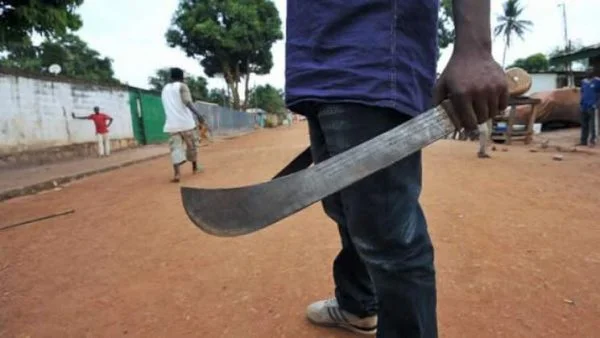
Gold smuggling, poor policy environment and rampant violence caused by machete wielding gangs in ASM casts doubt on sustainability of anticipated socio-economic development hinged on gold production. Over the years, authorities appeared to have taken a backseat whilst chaos, violence and other forms of conflict were festering in ASM.
Now, the violence appears to be malignant in most key gold producing districts, frequently flaring up on closed gold mines and gold rush hot spots. As the Zimbabwe Environmental Law Association (ZELA), a public interest organisation whose DNA is natural resource governance, we are deeply concerned with sustainability of ASM. A sector envisioned by the Africa Mining Vision (AMV) as an integral part of sustainable rural socio-economic development.
In light of climate change induced challenges which have ravaged agriculture, ASM has emerged as a fundamental source of livelihood for many Zimbabweans. ZELA, therefore, is challenged to unpack the drivers of violence, its implications and key options for stakeholders to help to end the malignant violence in ASM.
What is behind the violence?
Why paint ASMers and machete wielding gangs with the same brush?
Sophia Takuva, a woman ASMer operating in Zvishavane, explains: “There is a difference between ASMers and machete wielding gangs. The machete welding gangs are not miners, they are criminal who rob ASMers of their gold, gold ore, money or dislocate ASMers from their prolific gold sites.”
She illustrates her point by referring to a recent attack on youth miners operating under tributary arrangements with Sabi Gold Mine Zvishavane. A tribute arrangement is when a third party is given permission to mine by a claim holder in exchange of a royalty fee. Under Section 285 of the Mines and Minerals Act [Chapter 21:05] tribute agreements must be registered with the Ministry of Mines and Mining Development (MMMD). Upon learning that the young miners in Sabi were getting good gold grades, in December 2019, machete welding gangs attacked and robbed the youth of their gold ore. The helpless youth were forced to load the gold ore into trucks.
The ZMF president is worried. “Instead of viewing ASMers as victims, the police, policy makers, media and the public unfairly label them as perpetrators of violence. Painting ASMers and machete gangs with the same brush affects thousands of genuine miners who are striving to earn decent living in these tough economic conditions.”
Her fears were confirmed when the Zimbabwe Republic Police (ZRP) imposed a ban on so called illegal mining activities on 1 January 2020 after the killing of a police officer in Kadoma by a machete-wielding gang. Of course, calls for a distinction of ASMers and violent criminals must not be blind to the fact that within the sector, some elements are using violence to unfairly and illegally displace other miners from prolific gold sites.
Small scale miners face the threat of safety risks, and now violence
Another dimension of criminality by gangs is forced labour.
“A relative of mine who went missing in Hatfield, 28 January 2019, was kidnapped and forced to work at Jumbo Mine in Mazowe for about two months,” according to one woman, whose nephew was kidnapped. She chose to remain anonymous. She explained further: “After being given some food and water, they would be forced to work underground for three days and then haul their ore to the ground. If one fails to bring ore, a punishment was meted out in the form of a thorough beating. Early April 2019, he was lucky to escape. Although Jumbo Mine is guarded by the police, they are bribed to facilitate access to the closed mine.”
Lethal combination: Gold, dollars and criminals
Persistent currency woes have propped up the significance of gold as a substitute currency. Having failed to sustain a multi-currency regime which was established in 2009 to barricade the economy against hyperinflation, a decade later, government introduced a domestic currency. Officially, it is now illegal to buy or sell goods and services using foreign currency.
Consequently, most of the citizens have been hit hardest as they have limited access to foreign currency. However, the informal sector still prefers to transact in foreign currency, particularly the United States Dollars.
Notably, remittances from the Diaspora are playing a significant role but not enough to cushion citizens whose purchasing power has been severely eroded by loss of value of then domestic currency against the USD. Since digging for gold is almost synonymous with USD earnings, more and more people have been attracted into Artisanal and Small Scale (ASM).
“Criminals too, have found ASM to be a lucrative hunting ground,” according to Shamiso Mtisi, ZELA’s Deputy Director and Kimberly Process (KP) civil society coordinator. It is not only about the USD; climate change is disrupting production in the agricultural sector, thereby pushing more and more people into ASM, now a prominent source of livelihood in rural areas and some urban areas said Shamiso.
Chaotic title admin system fueling conflict
Repeated efforts by government to modernise the mining cadastre system – the award and administration of mining title have remained fruitless to date. The old system being used is prone to manipulation and mistakes leading to double allocation of mining claims. Consequently, disputes are a common feature especially when gold rushes occur with two or more people claim ownership. The disputes can easily spill into violence as people fight to secure access of prolific gold areas.
Golden technology
The use of gold dictators has made it easier to illegally prospect and discover gold. Once the gold is discovered, advanced use of social media especially WhatsApp allows information to be spread easily. Illegal gold buyers who are aware that they can easily get huge amounts of gold within a short space facilitates the movement of violent gangs to control access and guarantee gold supplies.
The illegal gold buyers normally provide transport, food and alcohol to violent gangs including protection from arrest as they can bribe the police. During the anti-corruption day, Thursday 19 December 2019, the President disclosed that he was approached by a gold buyer in Dubai who revealed that he was buying USD$60 million worth of gold in Zimbabwe from the black market. This shows that the gold mining sector in Zimbabwe’s quite susceptible to transboundary organised crime which has no respect to the rule of law and can easily contribute to violence and other illicit behaviours.
Families celebrate after news some miners trapped in a mine shaft in Kadoma had been found live, 2019 (Tsvangirayi Mukwazhi/AP)
Politics, greed and violence
Philemon Mokuele, the Secretary of ZMF’s General Council, narrates how some senior politicians in Matebeleland South are behind chaos and violence in ASM. In 2018, the West Nicholson Youth In Mining group received a tribute from Farvic gold mine in Gwanda which was registered with the Ministry of Mines.
When they started to get some good gold grades, senior politicians from ZANU PF negotiated to join the West Nicholson Youth In Mining Group. The senior politicians did not like the terms and conditions they were given. They then teamed up with youths from the party to invade the tribute and used their influence to ensure that the police do not intervene.
Philemon’s story is not an isolated incident. ZELA has noted several cases in which senior politicians from ZANU PF abuse their powers to facilitate and control access to prolific gold sites in a manner which ferments conflict and violence.
These cases were noted during the district, provincial and national alternative mining indabas, the social accountability platforms established to promote good mineral resource governance.
Who will guard the guards?
Newspapers are awash with stories of the involvement of police and military officers in ASM. In Bubi, 17 police officers were arrested for illegal gold mining activities, a story reported in the Chronicle, 28 January 2017. The NewsDay of 10 October 2019 reported a story in which the Minister of State in charge of Security, Owen Ncube, was implicated in machete violence, saying “artisanal miners had been boasting that they are linked to the Minister and were untouchable.”
Given that the security officers have their fingers in the pie, who will guard the guards? “When gold rushes occur, the police quickly move in under the guise of restoring order and then proceed to control access to the mining areas,” said a community member in Silobela.
No-questions-asked policy fuels violence
RBZ is buying gold on no questions asked basis, which is not aligned with the Gold Trade Act. This was a measure introduced by Treasury through the 2014 National Budget Statement. It was a stop gap measure meant to facilitate the registration of artisanal miners. It is almost six years now since the introduction of buying gold on no questions asked basis. Tellingly, government has been tight-lipped on progress recorded.
“…ONE CAN EVEN KILL TO SECURE GOLD AND EASILY SELL IT TO FIDELITY, NO QUESTIONS ASKED…”
Instead of leveraging this moratorium to promote registration and formalisation of artisanal miners, chaos, conflict and criminality are festering. What this means is that one can use violence or even kill to secure gold and easily dispose it to FPR without any questions asked. The Know-Your-Client rules which allow traceability of gold have been set aside.
Government has also been hesitant on re-joining the London Bullion Market Association (LBMA) after dropping out in 2007 for failing to produce the 10 tonnes of gold required for membership. It is key to note that in 2012, gold production surpassed the 10 tonnes required to join LBMA. Currently gold from Zimbabwe is being refined in South Africa as Zimbabwe lacks international accreditation.
Implications: Investors think twice
Failure to distinguish ASMers from machete gangs will lead to a wrong diagnosis which will affect the livelihoods of roughly a million people that are directly depend on ASM. The effects are already showing as ZRP has moved to ban the so-called illegal mining activities after the death of one of its offers.
Because of increased violence in ASM, the Zimbabwe is open for business agenda might have suffered a huge dent in the eyes of local and international investors and the market who are keen on responsible mineral supply chains.
Themba Sibanda, chairperson of Zvishavane-Mberengwa small scale miners, cautions: “Violence is making local investors to think twice about venturing into ASM. Even players that are in the sector fear discovering and exploiting high grade ore as this can spell trouble by attracting machete gangs.”
“IN THE GREAT LAKES REGION, MINERALS HAVE HELPED TO FUND CONFLICT AND WARS. ZIMBABWE IS FRAGILE…”
Internationally, mineral resource governance frameworks like OECD guidelines on due diligence for responsible mineral supply chains means that investors and the market will most probably shy away from increased risk associated with gold mining in Zimbabwe. The net effect is that government’s drive to achieve US$4 billion annual earnings from gold mining by 2023 will be scuttled.
In the Great Lakes region, minerals have helped to fund conflict and wars. Zimbabwe is fragile. There is a high risk that some factional elements within ZANU PF or others that lost out during change of government in November 2017 can use gold to try to finance a violent change of government. Without order, as cautioned by the Financial Action Task Force (FATF), minerals such as gold and diamonds can easily be used to finance terrorism and as havens for money laundering.
Arrest gangs, not miners
The police must target criminals, the machete gangs, not ASMers. Government must not ban artisanal mining but promote decriminalisation of artisanal mining, an important source of livelihoods for millions of people in Zimbabwe. A special permit for artisanal mining proposed by the mining technical working group on the ease of doing business offers a great starting point.
A multi-stakeholder committee must be established to probe violence in ASM. Further, a sustainable multi-stakeholder engagement platform dialogue on ASM which involves relevant government ministry, political parties like ZANU PF, industry, the security sector, civil society and ASM associations must be established.
Government must move with speed to improve mineral resource governance in Zimbabwe in line with the aspirations of the Africa Mining Vision and other international frameworks such as the OECD guidelines on due diligence for responsible mineral supply chains, and to re-join LBMA.
This entails computerising the mining cadastre system, implementation of the Extractive Industry Transparency Initiative (EITI), having a distinct ASM policy and legal framework which enables sustainable development of the sector.
Despite the bad image attached to ASM by machete gangs, it is critical to remember that ASM is an integral part of Zimbabwe’s socio-economic development discourse. It creates employment, facilitates income generation and community enterprise development. The media must be encouraged to tell stories that do not ignore the tangible benefits associated with artisanal and small-scale mining.
Way forward?
It is important to reflect, how did we get here?
The wanton violence and killings by machete wielding gangs in ASM areas appears to be malignant. Government certainly failed to prevent danger at its embryonic stage roughly five years ago. The involvement of powerful and greedy politicians, the security officers who have their fingers in the pie, the role of technology in fuelling gold rushes, and the growing currency woes, are some of the factors which conspired to cause a lukewarm response to this violence.
At a time when the gold price is surging, the spike in violence in ASM is causing irreparable damage to government’s quest to open Zimbabwe for business. Despite all this negativity, we must not forget; the ASM sector has huge transformative potential to local and national economy – employment creation, income generation and community enterprise development are some of the benefits that can be reaped from ASM_NewZwire
THREE men from Bulawayo have been arrested after they were allegedly caught prospecting for gold along Umguza River.
Simion Mudenda (32) of Cowdray Park suburb was in the company of Ferdinand (36) and Muzomuhle Wabayi (27) both of Entumbane suburb when they connived to mine illegally.
Mudenda and his accomplices were not asked to plead to prospecting for gold without a licence when they appeared before Bulawayo magistrate Mr. Lizwe Jamela.
They were remanded in custody today.
Prosecuting, Mr Denmark Chihombe said on December 16 last year at around 9 AM, police officers and rangers from the city council were on patrol targeting illegal gold panners along Umguza River near the Bulawayo-Victoria Falls road.
“The team proceeded to Umguza River where they spotted the three accused persons prospecting for gold. The first accused person was loading gold ore in an empty 50kg bag of cement using a shovel while the other two accused persons were digging with picks in the riverbank,” he said.
The accused persons allegedly failed to present a licence granting them permission to prospect for gold and this led to their arrest.
Police recovered 50kg of gold ore, two picks, two shovels, and an iron bar_The Chronicle
Caledonia Mining Corporation’s Matebeleland based miner Blanket Mine has exceeded its yearly production target after breaking quarterly gold production for the year ended December 31, 2019, due to an improvement in the electricity supply the company’s Chief Executive Officer Steve Curtis has said.
Rudairo Mapuranga
The company CEO said that the production record by the mine has been as a result of improved electricity supply in the mining sector where mining firms would pay for their electricity tariffs in foreign currency. Curtis also said that the company’s vigilant focus on grade control and production tonnage has also resulted
“I am delighted to report a production record at Blanket of 16,867 ounces in the fourth quarter. An improvement in the electricity supply and vigilant focus on grade control and production tonnage have resulted in an excellent production result for the final quarter of which our entire operational staff can be justifiably proud.
According to the company’s 2019 4th quarter report, Blanket mine has surpassed its quarterly gold production for the quarter ended December 2019.
According to the company, production during the quarter was approximately 16,876 ounces of gold, exceeding the previous production record of 16,425 ounces set in the final quarter of 2017. Production in the quarter was 24 percent higher than the previous quarter and 13 percent higher than the corresponding final quarter of 2018.
Caledonia gold production according to the report during the year 2019 was approximately 55,182 ounces, ahead of revised production guidance of 50,000 – 53,000 ounces, which means that the company has surpassed its production target which was set between 50, 000 and 53, 000 ounces.
Caledonia has also advised that gold production for 2020 is expected to be between 53,000 and 56,000 ounces.
According to Curtis, Blanket mine’s production year was very impressive and achieved without compromises on safety despite distractions posed by the challenging conditions experienced by its workers due to the economic environment in Zimbabwe.
“The impressive operational turnaround was achieved without any compromises on safety. This is a commendable achievement given the distractions posed by the challenging conditions experienced by our workers due to the economic environment in Zimbabwe. I join with my fellow directors in expressing our gratitude and congratulations to all Blanket staff on the delivery of safe, profitable gold production” said Curtis.
Curtis also said that the mine has started the 2020 production year on full momentum with its performances proving to be ahead of the previous year due to rising gold prices which will make the mine a strong cash generation.
“I am also pleased to see that we have not lost this momentum as we start 2020 with the mine continuing to perform very well into the new year. With the improved operational performance and the current buoyant gold prices leading to healthy operating margins we expect Caledonia to continue its track record of strong cash generation” Curtis said.
“I expect 2020 to be a landmark year for our business: we look forward to commissioning the Central Shaft later in 2020 which we anticipate will then deliver increased operating cash flows and reduced capital expenditure will follow. In early January 2020, we announced a 9.1 percent increase in Caledonia’s quarterly dividend; the anticipated improvement in free cash flow is expected to enable the Board to review future dividend distributions as appropriate.”
In an attempt to disarm a security guard, a 27-year-old machete-wielding criminal believed to belong to a popular group called the team Barca was shot dead at Good hope mine in Kadoma, the Zimbabwe Republic Police has said.
Rudairo Mapuranga
According to the police, the deceased was part of a 60-member gang of illegal miners who raided the mine armed with axes and knives.
The deceased according to the police was gunned down whilst trying to disarm one of the three security guards who were guarding the mine, other miners have been reportedly left the scene after the shooting incident.
“A 27-year-old man was shot dead by a security guard at a mine in Battlefields, Kadoma. The deceased was part of about 60 illegal miners who raided a mine which was being manned by 3 guards. When they were challenged to leave, the deceased, armed with an axe and a knife menacingly.
“charged towards one of the guards intending to disarm him, he was shot by one of the guards who realised that his colleague’s life was in danger. The rest of the illegal miners fled from the scene after the incident” said the police.
The police also promised to descent heavily on machete-wielding criminals.
“Violence of any form will not be tolerated and likeminded elements are warned that the wrath of the law will be severely applied,” the police said.
The Police recently issued a statement outlining that they arrested 907 at Jumbo and Mazoe river for conducting illegal mining.
The accused persons are being charged for criminal trespass, illegal possession of gold/gold ore, possession of harmful liquids/drugs and other offenses. A total of 18 vehicles were impounded while various mining equipment, an assortment of drugs and explosives were recovered.
One of the many machete gangs in the country going by the name MaZiga founded and headed by Pelah was caught on camera showing off their weapons. The group was celebrating what seemed to be a score with the gang leader holding a small packet of gold ore.
By Rudairo Mapuranga
The group of over 20 scary men were showing off weapons that included Machetes, swords, knives and more.
The machete gang leader was recently arrested for many crimes he committed with his group. The Kadoma based group believes that gangsterism in the Zimbabwe Mining sector is led by them.
See the video below: Warning this may upset some viewers, viewer discretion is advised.
To provide the best experiences, we use technologies like cookies to store and/or access device information. Consenting to these technologies will allow us to process data such as browsing behavior or unique IDs on this site. Not consenting or withdrawing consent, may adversely affect certain features and functions.
Functional
Always active
The technical storage or access is strictly necessary for the legitimate purpose of enabling the use of a specific service explicitly requested by the subscriber or user, or for the sole purpose of carrying out the transmission of a communication over an electronic communications network.
Preferences
The technical storage or access is necessary for the legitimate purpose of storing preferences that are not requested by the subscriber or user.
Statistics
The technical storage or access that is used exclusively for statistical purposes.The technical storage or access that is used exclusively for anonymous statistical purposes. Without a subpoena, voluntary compliance on the part of your Internet Service Provider, or additional records from a third party, information stored or retrieved for this purpose alone cannot usually be used to identify you.
Marketing
The technical storage or access is required to create user profiles to send advertising, or to track the user on a website or across several websites for similar marketing purposes.