Home Blog Page 640

Mine workers gang up to defraud employer

0

THREE employees at a mine in Lalapanzi in the Midlands province ganged up and allegedly defrauded their employer, a Chinese investor, of more than US$163 000 after forging invoices showing purported payments to company suppliers and pocketing the money.

The two allegedly falsified invoices to steal US$54 168,43 from Bunday Technical Mining.

They also sold 1 212 tonnes of chrome concentrate worth US$$109 080, which was meant for export to China and converted the money to personal use.

The company lost US$163 248 in total.


The Chronicle

Power cuts weigh down RioZim’s operations

0

Incessant power cuts being experienced in the country weighed down on diversified resources group RioZim’s operations during the half year to June 30, despite arrangements to be exempt from power cuts. This, together with other economic challenges resulted in an 8 percent decline in gold output.

Industry wide, erratic power supplies have been blamed for low production as production time is severely lost to load shedding, a phenomenon also affecting the domestic consumers.

According to RioZim, its mining operations were severely affected by power cuts although the group is paying for electricity in foreign currency to guarantee uninterrupted supplies.

As a result, total gold output went down 8 percent to 962kg from 1 050kg achieved in the same period last year.

“Incessant power cuts, which commenced in the second quarter of the year significantly affected production. As a direct result of these power cuts, the Group, recorded a decrease in production,” said group chairman Saleem Rashid Beebeejaun in a statement accompanying financial results for the half year period under review.

At Dalny Mine acute power cuts were the order of the day in the second quarter of the year, which worsened during the month of June with the mine only afforded an average of four to six hours of plant running time per day.

As a result, production went down 7 percent to 215kg from 232kg recorded in the same period in 2018.

Renco Mine recorded a 28 percent decrease in gold production to 259kg on the back of severe power cuts in the second quarter of the year as well as plant breakdowns which reduced production processing time.

Its flagship, Cam & Motor Mine, however, recorded a 7 percent growth in gold production to 489kg, from 458kg achieved in the same period in 2018 on the back of processing of pure oxide ores with good grades and higher recoveries.

Apart from the power challenges, RioZim has indicated the company has now reverted to paying for almost everything in US dollars which is unsustainable in an economy already experiencing severe foreign currency shortages.

“This is impacting working capital, maintenance and expansion capital expenditure. In the absence of either being allowed to retain and use 100 percent of its export proceeds or raise and use US Dollars from shareholders, the company’s position will continue to be extremely challenging,” said Mr Beebeejaun.

Meanwhile, RioZim is in the process of constructing its Biological Oxidation (BIOX) plant to treat refractory ore at Cam & Motor Mine. Civil works for the project are in full swing and structural steel fabrications are in progress.

According to the group, key suppliers and contractors have also been appointed for the project whose commissioning is expected in the fourth quarter of 2020, depending on availability of foreign currency_Business Weekly

Women break glass ceiling in mining

0

Many women are increasingly determined to rub shoulders with their male counterparts in the business circles. It appears that economic sectors previously dominated by men no longer respect any gender codes on occupations anymore. Kundai Chikonzo (35), is one of the many female businesswomen defying the odds. Just last week her company Hawkline Gold Mine in Insiza, commissioned a $1,1 million processing plant.

Chikonzo, who is based in Bulawayo, ventured into mining in January 2019 after a considerable stint in mine administration for different organisations since 2012. Mining had never been her passion, but she later developed interest after working for various mining houses.

“While doing mine administration, I ran a consultancy firm called CheeTee Consults,” Chikonzo said in an interview.

“I started introducing mine development to my clients, but then discovered that most clients were taking time to develop their mines while the takings were good. In 2017, I thought of registering my own mine and implement what I thought was the best and further establish a proper set up, taking note of employees safety.

“I started acquiring equipment, but financial constraints limited progress of the project. That is when Fidelity Printers and Refiners, came to my rescue, to partner with me, through sponsoring my education at Zimbabwe School of Mines. Dulys Motors also chipped in by supplying the tractor to make my project a success,” she said.

This marked the birth of Hawkline Gold Mine in Insiza District, Matabeleland South province. This is considered a major milestone in a predominantly male industry, which has had a poor record of attracting and retaining women. This is quite understandable as historically, the mining sector was male dominated. The winds of change have come with more roles and opportunities for women to participate.

Chikonzo said today’s mining is being reset and recalibrated to be more diverse and inclusive and as is evident today when women’s contributions are exceptional.

Mining is crucial to the economic development of Zimbabwe. Yet it is fraught with challenges of safety, risk that may exclude other players such as the vulnerable, which include widows and people living with disabilities.

“I would like to bring special attention on the need to address aspects of inclusion and participation of persons with disabilities. I believe the development and diversity in the sector creates an enabling environment to reaching new plateaus of inclusiveness.

“As Hawkline Mine, we have made great strides in ensuring that women get the opportunity to participate and work within the sector. Those who are physically challenged, have also been given an opportunity to demonstrate that disability is not inability. We have one at Hawkline Mine, who has one hand, but he proved to the nation during our commissioning of the plant that disability is not inability.”

While mining communities have the precious resources critical for economic development, such communities are plagued by poverty, income insecurity and lack of access to education, which consequently negatively impact on the welfare of children.

“Further, Hawkline is not only extracting the resource but giving back to the community through employment and helping on the construction of a community hall,” she said.

“In this regard, in the community where Hawkline Mine is situated, we want to contribute to the development of a protective ecosystem for the children of the community we work with, for them to be valued, heard, educated and nurtured,” she added.

“We want to achieve this through sports as we work hard to change the attitudes and norms around the development of children in mining communities. Through corporate social responsibility programmes we are ensuring that the mining sector is moving beyond just producing ounces but is also focusing on sustainable development.”

So far there are a number of women who have distinguished themselves in mining and these include Chamber of Mines of Zimbabwe president Elizabeth Nerwande and president of the Zimbabwe Miners’ Federation, representing small-scale miners Henrietta Rushwaya.

Business Weekly

Rushwaya survives horror crash

0

Zimbabwe Miners Federation (ZMF) President Ms Henrietta Rushwaya survived a fatal car accident yesterday on her way back from the ZMF 2019 Annual General Meeting and Exhibition.

The accident which claimed the life of one person saw the small scale miners boss coming out unscathed.

Speaking to Mining Zimbabwe Rushwaya could not hide her joy from survival from the fatal accident that left her car beyond repair.

The ZMF boss would not say much but only thanked God for coming out alive from the fatal crash and expressed her condolences over the death of one person they had a head-on collision with. It is believed the crash occurred after the deceased vehicle encroached by more than 2m into the lane Rushwaya and colleagues were travelling in leading to the deadly crash.

“I’m fine and we thank God for the gift of life,” said Rushwaya.

Here are the pictures of her wrecked vehicle….

Henrietta Rushwaya accidentHenrietta Rushwaya accident

Henrietta Rushwaya accident

Miners ambush, rob gold dealer

0

TWO mine workers have been arrested for allegedly robbing a Gwanda businessman of R27 400, $900, 35 grammes of gold and mercury after ambushing a taxi he had hired to take him home.

Lawrence Sibanda (30) from Nkayi and Pritchard Maphosa (27) from Silobela who both work at Danslok Blanket Mine attacked Mr Emmanuel Zvawanda while he was on his way to Gwanda from

Longvalle Farm on the outskirts of the mining town.

The pair is expected to appear in court on November 11 for robbery. They will proceed by way of summons pending further investigations.

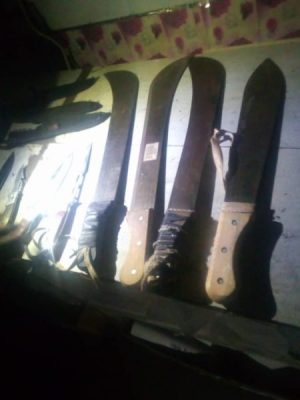
According to State papers, Sibanda and Maphosa, who were armed with axes, ambushed a taxi which Mr Zvawanda and his wife Ms Thembelihle Ndlovu had hired to take them to Gwanda Town in the middle of the night.

Mr Zvawanda buys gold from artisanal miners in Longvalle Farm.

“On 27 September in the afternoon, Sibanda and Maphosa went to Mr Zvawanda’s tent at Longvalle Farm along Lumene River in Gwanda to collect a cellphone.

“They later went back at around 7PM under the pretext of inquiring about the price of gold from Mr Zvawanda and they later left.

“On the same day at around 9PM, Mr Zvawanda, who was in the company of his wife, Thembelihle Ndlovu, hired a taxi from Longvalle Farm to Gwanda Town.

“Sibanda and Maphosa connived to rob Mr Zvawanda and they ambushed the taxi after it had travelled for a distance of about one kilometre from the farm,” read the State papers.

Sibanda and Maphosa, who were allegedly both armed with axes, approached the car and smashed the windows of the vehicle demanding cash from the complainant.

Mr Zvawanda tried to resist but the pair severely assaulted him with stones and the axes they were holding.

“Mr Zvawanda’s wife managed to flee from the scene and when he also tried to escape he fell to the ground due to injuries he had sustained during the attack.

“Mr Zvawanda then surrendered a sling bag which he was carrying containing R27 400, RTGS$900, 35 grammes of gold, a digital scale, a cellphone, three teaspoons of mercury and a driver’s licence to Sibanda and Maphosa. The pair took the bag and disappeared into the bush.

“Mr Zvawanda was rushed to Gwanda Provincial Hospital where he was further referred to United Bulawayo Hospitals.
“He lost his left eye as a result of the attack. The matter was reported to the police resulting in the arrest of the pair on October 24,” read the State papers_The Chronicle

Gaika Mine eyes 5kg gold output

0

KWEKWE Gold Mine, a subsidiary of Duration Gold Limited, has set a short-term plan of producing at least five kilogrammes of gold per month when it resumes production.

The mine commonly known as Gaika Mines which has been lying idle for close to 20 years, was invaded by youths and illegal gold panners last year before security forces stepped in to restore order. 

Following a massive rehabilitation programme rolled out by the management team, the mine is set to commence production anytime soon.

The Midlands Provincial Joint Operation Command (JOC) team led by Minister of State for Midlands Provincial Affairs, Larry Mavima visited the mine to get its plan of action. Duration Gold acting country projects manager Mr Allen Mashingaidze told the JOC that the mine would soon resume operations once it lays down a proper security team.

“We are putting down a plan where we intend to set up a strong security that will assume security of the mine. Currently we have hired the services of a security company that has ensured us security at the mine. We are also going to back that up with Closed Circuit Television (CCTV) and double-fenced electric fence,” he said.

Mr Mashingaidze said they have an immediate plan of producing 160 tonnes gold ore a day and five kilogrammes of gold per month.

“That is our short-term plan with the hope of increasing output to about 150 to 200kgs per month in the long run. In the second phase we are targeting to increase production to about 300 tonnes producing 15,5kgs and the bigger plan is to produce 150kgs per month,” he said.

He said to ensure that targeted output is achieved, the company was in the process of replacing hammer mills with more efficient ball mills, a project that requires US$860 000. Mr Mashingaidze said the mine employs a total of about 106 workers.

Minister Mavima expressed dismay over delays by Duration Gold to commence production at the mine, urging the responsible authorities to either shape up or ship out.

“I am concerned by the delays you guys are taking. I wonder what is stopping you from coming up with a proper strategy that has a security plan and production plan. Government is not there to provide security to independent companies, you are wasting State resources by so doing. You better come up with a plan quickly,” he said.

He said the mine played a crucial role in the economy and its continued closure was crippling the economy.

“Local people are supposed to be benefiting from the mine which is a major tool in the devolution process. Your continued closure and delays in opening are causing a lot of problems to the Government. You have to act fast and start production,” said Minister Mavima.

Source: Sunday News

Zimplats in relative performance

0

Zimbabwe’s major platinum producer, Zimplats Holdings Limited made commendable strides with regard to production volumes for the quarter ended 30 September 2019 on the back of fleet productivity and contribution from Mupani mine which is still under development.

Main indicators include mined and milled tonnage.
Mined tonnage soared by 10 percent to 1,796 tonnes from 1,673 tonnes achieved in the preceding quarter to June 30, 2019. The gain also represents a 10 percent increase from 1,629 that was achieved in comparable quarter to September 30, 2018.
“This was mainly due to improved fleet productivity and additional tonnage from Mupani Mine, which is still under development,” said the platinum miner in a statement.

Tonnes milled went up by 9 percent to 1,705 from 1,570 achieved in the immediate quarter to June 30, 2019.
Again the figure represented an increase by 2 percent from 1,677 that was achieved in comparable quarter to September 30, 2018.

According to the miner, increase in milled tonnes was attributable to “an increase in mill running time.” The last quarter’s tonnage was reportedly affected by “planned shut downs for mill relines at both concentrators.”

Combined, 6E metal in matte production increased by 3 percent to 151 458 ounces from 147 136 ounces for the preceding quarter to June 2019. The increase was also a 2 percent upward movement from 148 500 ounces recorded in the quarter ended September 30, 2018.

Of all the 6E, platinum contributed the highest amount in ounces to the tune of 70 000, which was a 3 percent increase from 67 978 ounces recorded in the immediate quarter to June 30, 2019.

Next in contribution was palladium with 59 795 ounces, a figure that represented a 4 percent change from 57 258 ounces in the preceding quarter to June 2019, and as well a 5 percent change from 56 727 ounces recorded in the comparative quarter to September 30, 2018.

Negatives were, however, noticed in the performance among the 6E gold, Rhodium and Iridium whose figures for the period under review represented a loss by 10, 20 and 15 percent respectively in comparison to the prior period to September 30, 2018.
The positives in 6E volumes were attributable to “higher mill volumes.”

6E production in the quarter to June 30, 2019 included 3 036 ounces recovered from the furnace during the rebuild which commenced on June 10, 2019.

In terms of financial performance, total operating cash costs increased by 15 percent to $88, 487 million from $77, 076 million posted in the quarter ended June 30, 2019 “due to the increase in mined and milled tonnage.”

This was reportedly further impacted by higher selling expenses on the back of a boost in concentrate exported during the period of the furnace rebuild.

Consequentially, operating cash cost per platinum ounce increased by 2 percent to $1,236 million from $1,209 million in the previous quarter to June 30, 2019. This also represented a 3 percent change from $1,275 million recorded in the prior quarter ended September 30, 2018.

Meanwhile, the miner achieved the safety milestone of one million fatality free shifts worked during the quarter after recording a single lost-time injury. Exploration drilling is expected to commence in the quarter ended December 31, 2019 after nothing was done in the quarter under review.

Business weekly

Zim de-miners keep the Falklands safe

0

Thirty-seven years ago, Argentine soldiers invaded the Malvinas (Falkland) Islands, planting thousands of mines.

British troops liberated the locals then – and a few dozen Zimbabweans keep them safe now.

“There are over 100 minefields flung all across the Falkland Islands from Fox Bay, Port Howard, Goose Green, Fizroy, Stanley area, Longden, all over the place,” said John Hare, the technical director of SafeLane Global, which has been contracted by the British Foreign and Commonwealth Office to clear the mines.

The Argentine army laid around 25 000 mines during its 74-day occupation of the remote British overseas territory in the South Atlantic.

For the past decade, expert Zimbabwean de-miners have been charged with clearing the fields. When the war ended in 1982, the Argentines handed over their records.

Since then, de-mining teams have undertaken the painstaking process of trawling through the documents, sourcing background information from locals and probing into minefields for evidence of potential explosives.  Only once that was done did the de-miners start clearing the explosive devices.

“The Zimbabwean de-miners are experts in this job. We’ve been doing this for quite a long time, most of us are in our 21st year doing this job,” Michael Madziva, the site supervisor, told AFP about his 100-person-strong team.

Back in 1999 a company called Bactec, which was one of several to later merge into SafeLane Global, was contracted to clear two million mines along the border between Zimbabwe and Mozambique.

Local Zimbabweans were recruited and trained, and they have since become world-renowned for their expertise. “Since 2015, I’ve had basically the same group of deminers,” said Hare, who used to be a bomb disposal expert with the Royal Engineers.  “They’re… a really great group of guys to work with.” The Zimbabwean experts have been deployed all over the world – including to Afghanistan, Iraq, South Sudan, Eritrea, Croatia and Lebanon – to clear mines following devastating conflicts.  “What made them good de-miners is they love their job,” added Madziva.

There were originally 122 areas to clear on the islands, but there are only 11 to 12 left. The project, which began in 2009, is expected to finish by the end of next year, according to Guy Marot, who heads the Falkland Islands De-mining Service Program.

The group is currently working on a beach close to the capital Stanley, where Argentina expected British troops to land.

Instead, they arrived on the other side of the East Falkland island at San Carlos.

Once located by a huge digger that sifts through the sand, the mines are either disarmed on the spot and then transferred to a quarry to be burnt, or those that are too dangerous to move are destroyed on the spot by explosives. Thrilled to see snow Even though it’s a long way from home, some de-miners went on to settle in the Malvinas.  Jonas Muza (41) quit demining and moved to the islands in 2015. His wife Anna joined him a year later, and he’s expecting to bring his three daughters over next year.  “I liked it before even I came here. I liked the place because of the weather,” Muza told AFP. “I was thrilled to see snow for the first time.”  Anna, who works as a kitchen assistant in the de-miners’ group accommodation, wasn’t quite so enamoured.  “It’s very cold here,” she said, smiling. “I was shocked.”

De-miners work on the islands from September to June, but Muza wanted employment all year round, so he found work fitting tires instead.

“In demining, when the contract finishes, it’s obvious you are unemployed until another job comes your way. I didn’t like that. I wanted constant income so I can sustain my family,” said Muza.

Although his children – Nathalie (17), Keisha (11) and five-year-old Kiara – have been enrolled in school for the next year, Muza doesn’t see the Malvinas as a permanent home.

He’s building a nine-room house in Zimbabwe. “I will go back some point in the future,” he said. “Like they say, home calls you. East, west, south: home is home.” — AFP.

Tagwirei rumoured new owner of BNC

0

Asa Resources has concluded the sale of its controlling interest in Bindura Nickel Corporation (BNC), the country’s largest nickel producer said in a statement Tuesday.

BNC said the buyer of Asa’s controlling 74.13% stake is “a Zimbabwean based mining entity with interests in the mining and production of ferrous metals, non-ferrous metals and precious metals”.

While BNC does not disclose the buyer, reports have suggested that one of the leading bidders was Sotic International, a company linked to businessman Kuda Tagwireyi, who already holds interests in Africa Chrome Fields and has been involved in bids for ferrochrome producer Zimbabwe Alloys.

“Shareholders are referred to the Cautionary statement published on 1 October 2019 advising that the ultimate holding company of BNC, Asa Resource Group plc (currently under administration), has entered into a sale and purchase agreement with a third party in relation to the 74.73% shareholding in BNC,” BNC said in a cautionary.

“Shareholders are hereby informed that the transaction involving the sale of 74.73% of BNC’s issued shares to the above-mentioned third party has been successfully concluded.”

Landela Mining Venture, another subsidiary of Sotic International, has recently emerged as the local joint venture partner in Great Dyke Investment, the Russia-Zimbabwe platinum project being developed near Darwendale_NewZwire

Gold Trade Act of Zimbabwe

0

The Gold Trade Act of Zimbabwe.

GOLD_TRADE_ACT_21_03