Home Blog Page 654

Woman killed in Lafarge compound after Cement Mine blast.

0

After losing their mother due to irresponsible mining activities, the bereaved family was told by the government not to speak to anyone about the incident.

A Pangoula Farm woman on the outskirts of Harare died when a huge stone from a Lafarge
quarry blast bore through the roof and struck her on the head. Shupikai Chitsana (36) who
was in the kitchen died on the spot while her aunt was injured after a fly rock from Lafarge
Cement quarry mine ripped through the roof and hit her in the head.

A perforation on Shukokai’s roof was left by a fly rock from Lafarge Cement Mine blasting site. The incident happened on 15 August 2019 and the deceased is survived by her spouse and
five children.

Minister of Mines Winston Chitando is said to have visited the scene a few days after the
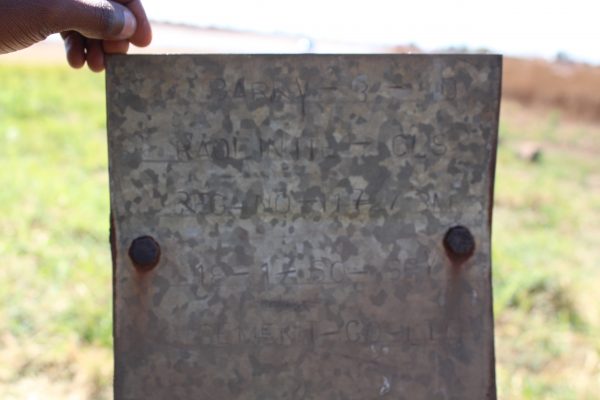
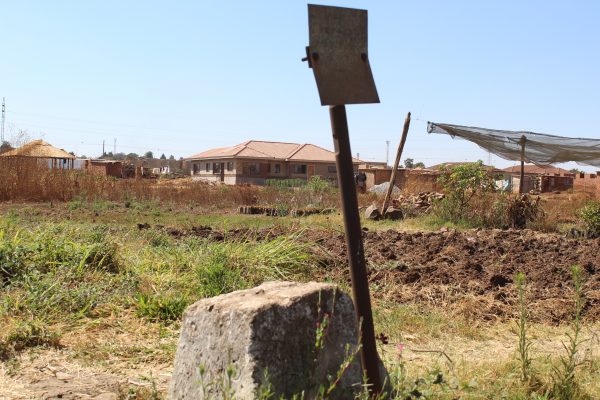
accident and ordered Lafarge to erect billboards with blasting procedures,
According to the locals there were no warning signs erected around the farm workers’
compound and they only appeared after the accident ,that is the billboard was only erected on  the 26 of August 2019.

The family was ordered not to talk to anyone about the incident and to refer all those
inquiring about the accident to the police and the farm manager.

Lafarge Cement Corporate Affairs Manager Tawanda Njerere confirmed the incident and
said investigations by the police and the Ministry of Mines and Mining Development are
underway.

“It is true, there is a lady who died and another one injured when our contractor, Afri
Mining was blasting at our quarry mining site near Pangoula Farm. We did the necessary
notifications to the Ministry of Mines and immediate action was taken. We are now waiting
for the report.”

Although Njerere said that they cannot talk of compensation before the Ministry of Mines and
the police complete the investigation, he said the insurance will take over once the report
has been produced.

Lafarge Cement reportedly covered funeral expenses and is also
meeting the medical bills for the injured.

CNRG Director Farai Maguwu said ‘this is an unnecessary loss of life, it’s an accident that
shouldn’t have happened in the first place because there are laid down procedures for
blasting which are all intended to protect lives and these were ignored. I am equally
disappointed with attempts by the government to conceal the matter by threatening the
community not to talk to anyone about the unfortunate incident.’

Zimbabwe Center for National Resource Governance

Information Department
+263718315939/+263774542019

Govt Urged to Charge Mining Investors a Fee for Land Reclamation

0

Government should consider introducing a levy on mining prospectors to be used for land reclamation, Parliament has heard.

Contributing to submissions at a public hearing by the Parliamentary Portfolio Committee on Mines held in Kwekwe last week, a miner, Silas Chaduka blamed the Environmental Management Agency (EMA) for sleeping on duty.

“The Mines and Minerals Act is a wonderful piece of legislation that is only lacking implementation. People just prospecting and mining as they see fit without any ramifications because the implementation of law is very weak,” Chaduka said.

He said Zimbabwe is losing its beauty at an alarming rate due to mining.

“The rate in which we are losing our environment is quite alarming. It is like we don’t have an environmental agency in place.

“What we must have in place as law is a security deposit fee from investors which we will use for land reclamation after the investors might have left the country.

“Otherwise if we are to continue with the business as usual approach, the situation will be worse when it comes to siltation, soil erosion and other forms of land degradation,” Chaduka told the committee chaired by Dumezweni Mawite.

Chaduka called for consistent and serious enforcement of laws to plug leakages in the mining sector.

“We must fine-tune enforcement and monitoring so that it must be watertight. The leakages are caused by lack of enforcement. It’s sad that we have security state organs but we continue to have such challenges.

“Every grain of gold extracted in this country must be accounted for. We have to harness every mineral resource in the country. There is need for monitoring, enforcement and accountability,” the mining expert said.

Another miner Evans Kadenhe said Zimbabwe is losing a substantial amount of gold to the Chinese.

“We need serious security and scrutiny when it comes to investors in the country. I want to draw your attention to the Chinese investors. The Chinese are not only looting our gold but there are also not accountable.

“There is need for security and transparency. The Chinese don’t build permanent structures but there only loot and leave our land in a mess,” Kadenhe said.

Source: New Zimbabwe

Zim should decentralize power generation to ensure adequate power supply

0

Power decentralization is a major approach that the Zimbabwean government should consider so as to desist from heavily depending on SAPP for power imports whilst it has the capability of generating surplus power, rather expenditures must be focused on importing and servicing machinery.

By Charmaine Kamambale/ Rudairo Mapuranga / Mirirai Ngoya

Corruption is the key factor contributing to Zimbabwe’s failure to fully invest in stable electricity supply and localize the generation of sufficient power for the whole nation .Notably, during the winter season, electricity supply from hydropower station is not enough to supply the whole nation. Too much fulfillment of personal interests amongst the top officials is leading to power black outs in Zimbabwe.

Zimbabwe Electricity Supply Authority (ZESA) should take arms and come up with an initiative to localize power supply in Zimbabwe, there is a need to increase penetration of renewable energy technologies for the benefit of the future . As such, using water shortages as an excuse for the failure of hydropower supply is not significant at this point in time .

Mr. Farai Maguwu highlighted as thus “the government must open up the power generation sector to Independent Power Producers who can use their resources.”

This has been further consolidated by the Southern Africa  Power Pool (SAPP) that  Independent Power Producers are going to play a critical role by supplying 22% of the new generation capacity in the same period whilst Coal, 10896, 36%Hydro, 7863,26%Gas, 5644,19%Solar, 2265,7%Wind, 3033,10%Diesel, 216,1%Biomass, 284,1%New Generation Capacity

Zimbabwe shouldn’t entirely depend on ZESA alone  for its  power supply, instead the country should utilize  the opportunity of generating more power locally hence reducing import burdens. Looking back in the history of Zimbabwe it can be traced that the government of Zimbabwe has not fully invested in power supply generation for the country from 1980.

Speaking to Mining Zimbabwe Farai Maguwu said that that the prevailailing situation in the country is due to the fact that the government never invested in electricity generation.

“Government has not invested significantly in electricity generation since independence in 1980, mainly due to corruption and lack of vision there are three possible solutions that the government must consider for the benefit of every individual” he said.

1. There is a need for the government of Zimbabwe to take away the monopoly of  ZESA and allow completion of power generation and supply within the country, in that way providers of solar power must wake up and grasp such an opportunity to generate income and play a pivotal role in dismissing the load shedding theme which Zimbabweans are reciting as a national anthem.

2 Investment which is less costly must be put on the table by the government so that they generate sufficient power for the nation rather than depending on electricity imports where they are buying inadequate power for the nation worsening  the situation, hence leading to the deterioration of many businesses in different sectors of the country.

Maguwu said that, the government must encourage clean energy technology which doesn’t require expensive infrastructure like that which is used in hydropower.

3. Since independence the load shedding theme runs in the streets of Zimbabwe  and whilst top officials are barely affected by this situation ,the citizens of Zimbabwe are suffering beyond doubt. It is time for the government to open its eyes and decentralize power generation.

“There is a need to decentralize power transmission. Provinces must be encouraged to generate electricity for local consumption first and sell the surplus to the national grid” supported Maguwu.

Zimbabwe needs to take up strides in the utilization of clean energy as its source of power . Due to climate changes , depending on hydroelectricity seems unwise hence there is no need for the government to continuously rely on ZESA or hydropower supply only , rather it must license private players who can  invest in alternative power supply.

Acting ZESA Chief Executive Patrick Chivaura reportedly said that Zimbabwe requires US 14million for monthly electricity imports  in order to meet electricity demands and currently the load shedding schedule has stirred from heavy to severe. Thus indicating that Zimbabwe should implement measures that are going to ease the situation by investing in its own sustainable national power supply.

It is actually speculated that Zimbabwe relies mostly on hydropower but the truth of the matter is that Zimbabwe is capable of producing the required amount of coal to help in providing power for the whole nation.

It is disappointing  that we could not manage to receive comments from ZESA and Rugare Dhobie from Hwange colliery concerning why Zimbabwe is failing to generate much power from coal reserves to cover up the gap left by hydropower generation.

“Coal must be used as a transitional energy resource the greater p part of the world is transitioning from coal-powered electricity to renewable energy due to climate change which is also contributing to food insecurity in Zimbabwe.  Thus Zimbabwe can easily generate enormously solar and wind energy if the government makes clean energy a priority. But as the Gwanda solar project and now the awarding of yet another solar tender to the graft-accused former Eskom CEO Koko, our government’s affinity to corruption is the main stumbling block to our dream of energy self-sufficiency” said Farai Maguwu.

Zimbabwe has a capacious coal mining industry yet the nation is experiencing serious power deficits .It is actually surprising that Zimbabwe relies mostly on importing energy from its neighboring countries yet our four coal mining firms are capable of producing 500 000 tones of coal at minimum per month  and ZPC requires about 250 000 tones of coal per month to satisfy all the 4 thermal power stations in Zimbabwe.

However, obsolete equipment pulls down productivity in the mining industry ,  as such the government’s vision of producing 20 million tones of coal per year seems surrealistic .

Zimbabwe needs to invest in importing machinery that will help boost the coal mining sector in order to rescue the nation from long frequent and long lasting blackouts .

Research has it that numerous projects that will counteract the debilitating power shortages are underway and these include the Sengwa project which is based on a coal resource of 1.3 bn tones reportedly capable of generating up to 2000MWof power , Batoka project which is a prospective hydroelectric power station planned to be on the Zambezi river , Harava solar project which targets to construct an initial 20 MW solar array.

Nevertheless , with the rate of corruption being at peak in Zimbabwe these projects only offer hope to the public but the funds invested in these projects attract greedy individuals . Consequentially these projects will take much time to be accomplished than the initial expected period .

Strive Masiyiwa the renowned  owner of diversified international telecommunications(Econet) reportedly affirmed that  he could have proffered a solution to curb Zimbabwe’s energy distress years ago but  the devastating corruption rate in Zimbabwe pushed him away .

Zimbabwe should cut power imports, rather the nation strive to  work towards importing machinery that will effectively assist in boosting our coal mines subsequently ensuring stable and sustainable power supply . Electricity imports are crippling our treasury.

Although Zimbabwe might receive power from South Africa of up to 400MW, the South Africa power utility Eskom has set tough conditions for the country which means that, Zimbabwe must lay its brains and effort in investing in its own power.

According to Eskom, Zimbabwe will be guaranteed 50MW due to the fact that Eskom is encountering some challenges and a resounding 350 MW  contract is anticipated only if there is no load shedding in South Africa.

ZESA should therefore be resolute in seeking both local and foreign genuine investment to improve Zimbabwe’s power grid, Zimbabwe through its know power stations has the capacity to produce enough electricity for the country.

The country which with a total of  total of five power stations which have the capacity of producing more than 3000MW is current producing only 813MW, with Munyati power station producing only 16MW from a supposed 120MW ,Bulawayo14MW from a supposed 120MW         ,Harare 16MW from a supposed 156MW, Kariba 359MW from a supposed 1050MW and  Hwange producing only 408MW from a supposed 920MW which will be increased to 1520MW due to the fact that, a third stage being added to the station with 2 x 300MW units being constructed.

The solution to Zimbabwe’s grueling power cuts lays in Zimbabwe investing in generating its own electricity, if all of Zimbabwe’s power station being to work at full throttle it means Zimbabwe will have more electricity to export than to consume, a tip of an iceberg.


This article first appeared in the Mining Zimbabwe Magazine August 2019 issue

Ten things that might hinder the performance of the mining sector in 2019

0

The mining sector in Zimbabwe has been predicted to be the economic resuscitator of the once giant economy in Africa.

By Rudairo Dickson Mapuranga

The president of Zimbabwe is optimistic that the mining sector will take a leading role in the economic revival of Zimbabwe .Through his famous slogan, “Zimbabwe is open for business” the president is very adamant that the reopening of the mining sector to both local and foreign investors is the way to go in making Zimbabwe a successful nation.

Having a rich mineral resource base in Zimbabwe, the Government has set a target of US$12 billion mining sector contribution to the economy by 2023.

The ministry of Mines has set 2019 targets for high-level minerals as it moves towards maximising production in the mining sector. The government expects 40 tonnes of gold from the gold sector, 10 million carats from the diamond sector and 50 tons of refined platinum.

However, last month at the Environmental Impact Assessment Launch in Kadoma, the Deputy minister Polite Kambamura  was very skeptical towards the idea that Zimbabwe is capable of producing the target  goal sighting different reasons.

The following are the possible factors that might hinder the performance of the mining sector in 2019.

1. Corruption

Authorities fail to acknowledge that corruption is very dominant in the mining industry, apparently it is too prevalent to the extent that if rationality is mislaid, the industry is deemed to collapse.

As the former United States Vice President Joe Biden said “Corruption is a cancer: a cancer that eats away at a citizen’s faith in democracy, diminishes the instinct for innovation and creativity; already-tight national budgets, crowding out important national investments. It wastes the talent of entire generations. It scares away investments and jobs.”

Corruption in the mining sector needs to be entirely cracked down in order to create a conducive environment for all miners to work without fear or favour.  According to Biden, fighting corruption is not just good governance, it is self-defense and patriotism.

The president has called for transparency in the mining sector on many occasions declaring that his administration will not condone any acts of corruption or misappropriation of national resources .However, no strides have been taken by the president so far to prove to the nation and the world over that he is walking the talk.

Last month, the ministry of mines and mining development suspended Mashonaland Central Provincial Mining Director Mr Malcolm Mazemo and nine Ministry of Mines and Mining Development officials on allegations of corruption.  Though the suspension of these executives is a commendable move, people feel that it’s not enough considering the fact that some top officials in the mining industry and the government have been involved in various cases of corruption but nothing has been done to them.

In order to save the Mining sector from this cancer, the government has to be patriotic in order to defend the nation from an unpredictable economic collapse through lack of transparency and dis order. Zimbabwe’s precious metals and minerals must be safeguarded from egocentric thieves who are negligent towards the survival of the next person or generation.

Corruption in the mining sector should therefore be curbed in order to improve the performance of the sector in 2019.

2 Lack of Exploration

The exploration work phase is defined as the search for, discovery, and first delimitation of a previously unknown mineral deposit or the re-evaluation of a sub marginal or neglected mineral deposits in order to enhance its potential economic interest based on delimited grade, tonnage, and other characteristics.

This stage is completed when a deposit has sufficient indicated mineral resources and has been the subject of a positive scoping study that justifies the decision to conduct additional, more detailed and costly deposit appraisal work. All mining investment professionals, large-scale miners and mining academics will testify to the fact that no activity adds value to mining than exploration.

According to mining experts, exploration phase is very vital for successful excavation in order to come up with a meaningful contribution towards economic growth and mineral production. High production of minerals in every country ensures profitable investments in exploration and that should be the country’s main priority. Investing in exploration is a key assert in mining development as well as mineral production.

No new deposits are being discovered because exploration orders have been granted.

Following the remarks by the Deputy Minister of Mines regarding his pessimistic interpretations concerning Zimbabwe achieving its mineral production target, one expert in the Mining sector has this to say ,“It’s more to do with no serious exploration having been carried out in the past two decades. Mines become old and eventually close down. South Africa’s gold production is also going down as we can see. Policies for serious exploration under exploration orders are long overdue. Small scale mining can’t increase our gold production significantly.”

Therefore, this means that Zimbabwe is following blind mining, subsequently it is being incompetent, no exploration, no idea or knowledge of accessible reserves, no calculation of capacity and required inputs. This is a cause for concern towards mineral production this year.

3. The current forex retention policy

Before the announcement of the new monetary policy by the Reserve bank Governor in February this year, miners were advocating for foreign currency retention increment from the 70 percent they were receiving to 100 percent. However, the new monetary policy brought in devastating results instead of increasing the retention, it managed to reduce it to 55 percent foreign currency retention, a cause for concern which might lead miners to either suspend operations or seek ways to sell their minerals outside Zimbabwe without the involvement of the government.

In 2018 Zimbabwe imported US$6.3 billion worth of goods from international suppliers, down to -1.9 per cent since 2014 but up to 26.1 per cent from 2017 with mining machinery such as bulldozers, excavators, road rollers munching US$76.9 million 106 per cent from 2017, mining machinery parts were at $43.4 million up 27.8 per cent from 2017. Since Zimbabwe is not producing any equipment, mining operations require foreign currency because most of the equipment used in the industry is sourced outside Zimbabwe. The operation of mines requires about 70-90 per cent foreign currency which means that at the moment in time miners should be paid in foreign currency to improve the industry.

Therefore the issue of foreign currency retention should be addressed if Zimbabwe aims to achieve its production target. There is inadequate forex to import consumables and other mining related apparatus at affordable prices.

Foreign currency exchange rate must fully be liberalized so that it panels inflation.

4. Unstable power supply

The mining sector in Zimbabwe is reckoned as the economic resuscitator of the nation, however with the continued power cuts and other economic problems facing the country, the industry’s predicted growth might be thrown into an abyss of no hope.

ZESA partly blames the current economic crisis in Zimbabwe for the unstable electricity supply which miners say is affecting their operations .Zimbabwe Electricity Supply Authority (ZESA) is reportedly facing serious operational challenges particularly power generation which has caused serious power deficits nationwide.

Mining operations particularly large scale mining require adequate power supply in order to carry out successful operations.

One of Zimbabwe’s highest producer gold Blanket Mine blamed unstable power supply for its immense failure to reach its intended production target in the first quarter of the year 2019.

The issue of power supply is very urgent and should be firmly addressed in order to facilitate the mining sector’s 2019 performances.

5. Awarding EPOS all over the country

 Exclusive Prospecting Orders (EPO) is a large area of ground targeting the selected minerals for exploration. The maximum is 65,000 hectares in Zimbabwe. Minimum size is up to the company to choose. In Zimbabwe EPOs tenancy is up to 3 years with an option to renew for another 3 years.

Zimbabwe sits on one of the world’s greatest mineral deposits, having the second-largest known platinum deposits after South Africa and it is also believed that Zimbabwe will be the top lithium producer in the whole world.

Although the issue of EPOs is a great move that will encourage exploration, it has caused a situation where by large companies are holding up large pieces of land for speculative purposes thus reducing extraction of resources from the ground.

The president of Zimbabwe for quite some time has supported the notion that companies who are reserving mining land for speculative purposes should lose their concessions to indigenous small scale miners, the move which Zimbabwe Miners Federation, the largest body which represents small scale and artisanal miners in Zimbabwe agreed to.

Small scale and artisanal miners are of the view that, EPOs have stopped the growth of Small-scale mining in Zimbabwe, if EPOS where not awarded to these conglomerate companies the country could produce 50 tonnes this year.

ZMF president Ms Henrietta Rushwaya has this to say, “We have areas which have been held on for the past years for speculative purposes. If a conglomerate has been holding on to mining claims since 1930 for speculative purposes, let them be given to small scale miners, to our youth artisanal miners who do not have somewhere else to carry out activities. That way we would have eradicated unemployment, we would have eradicated illegal mining activities as well as promote safe mining methods.”

The government should therefore consider the way EPOs are granted and make sure that mining concessions should not be held for speculative purposes in order to achieve 2019 mineral production target.

6. Demonisation of artisanal miners

Last year the country’s gold production and delivery to Fidelity Printers and Refineries was at 33 tonnes with 22 tonnes coming from small-scale miners.

Small scale and artisanal miners according to mining experts hold the future of Zimbabwe’s mining industry and Africa as a whole.

Artisanal miners according to experts, usually mine in areas that are not economically viable for large scale mining companies to invest and mine . Since artisanal miners are sidelined in the peripheries of the sector ,they will sell their gold production on the black market.

Therefore, if artisanal miners are formalised, their operations will automatically make them grow hence becoming small scale miners proficient in selling their mineral production to either Fidelity Printers and Refineries or through Minerals Marketing Corporation of Zimbabwe.

7. Shortage of experienced technical skills in the industry.

The ministry of Mines and Mining development has been accused of being slow in terms of addressing the grievances of miners .Some have accused the ministry officials for their desire to be worshipped in order for them to do the work they are paid for by tax payers.

The ministry of mines technical departments are reportedly understaffed because of low salaries ,hereafter the experienced staff leave for the private sector. Consequentially , the ministry hires those that are unskilled or those without adequate experience. There are technical people in the ministry who have never worked on a mining project yet they  make decisions concerning exploration and mining projects.

It is reported that, best technical skills left the country in the past 20 years and continue to leave for greener pastures.

The ministry must hire competent individuals in order to professionalise the mining sector ensuring that the industry will achieve its 2019 production target.

8. Fuel shortages

Small-scale miners’ operations have been reduced to the margins between 70 percent and 80 percent due to the prevailing fuel situation in the country.

The impacts of fuel shortages  on small-scale miners is also evidenced by the gold output being produced by players in the sector. Gold production by small-scale miners has declined significantly in recent months.

Due to fuel shortage some small scale miners are delayed to run their operations as they spend their productive time queuing for the commodity, which if they get, it is also not sustaining the operations.

The government should therefore offer miners incentives and other deals like the Zimbabwe Miners Federation and Glow Petroleum partnership which prioritise fuel delivery by Glow to small scale miners under ZMF in order to relive the miners of the stress of spending time queuing for fuel.

  1. Late payments from Fidelity

Many gold mines in Zimbabwe are shutting down operations due to various causes ,the chief reason being the late payments by the Reserve Bank of Zimbabwe.

Metallon Gold has been forced to put its mines on care and maintenance because of the unsustainable costs of running them without proper compensation for its proceeds from the Government of Zimbabwe. If payments were received, they would only amounted to a third of the total owed and  between 2016 and 2019, Metallon lost US$82m and Metallon is claiming a giant sum of US$132m for the lack of profit and procurement, including interest.

To improve the performance of the Mining sector, the government must act on paying miners their due amount to ensure viable mining operations.

The government must assist distressed gold mines through Fidelity in order for the sector to reach its target yearly production.

10. Unclear policies

Zimbabwe’s mining policies have been blasted as unfriendly to foreign investors. Experts also highlighted that the “use it or lose it” policy is an error made  by the government as it  chases away foreign direct investment.

Sir Richard Heygate  a British businessman, an admirer and friend of Zimbabwe as well as a representative of several investors who desire to invest in Zimbabwe, warned the president of Zimbabwe Emmerson Dambudzo Mnangagwa that investors will not spend even a dollar in Zimbabwe if the government is untrustworthy.

Foreign investors with deep pockets must be enticed with good mining and economic policies , realistic and sustainable laws that foster the protection of  their assets  for the country to achieve its production target.

Ten materials Zimbabwe is importing that are supposed to be made locally

0

Zimbabwe is richly endowed with 60 different economically exploitable mineral resources including gold, diamonds, platinum group of metals (PGM), Lithium and graphite among others.

Beneficiation and value addition of minerals before export is one of the four key pillars of Zimbabwe’s goal to create value, employment and accelerated industrial development from its largely unexploited mineral resources.

Government has initially prioritized diamonds, chrome, PGM’s, nickel and coal bed methane and will utilize mineral sector and related industries to develop mining input industries and services.

However below is a list of products that Zimbabwe is importing where in real fact should be processing them locally through value addition and attain more value.

Stainless Steel

Zimbabwe is importing stainless steel from countries like China, USA and Turkey where in actual fact Zimbabwe is exporting raw chrome which is used in the production of stainless steel. The average chrome content in stainless steel is approximately 18 percent.  It is also used when it is desired to add chromium to carbon steel.

If Zimbabwe add value to its chrome locally in addition to the iron ore deposits around the Chivhu area, the country should not be importing stainless steel but rather produce locally.

Batteries

Zimbabwe is importing batteries from Western countries where in actual fact the Southern African country is one of the biggest producers of lithium in the world.

The discovery of extensive lithium deposits in the country, already adding to the more than 60 existing minerals, is a huge boon for Zimbabwe’s mining future outlook.

The transition to electric vehicles and adoption of electric power technologies is gaining momentum especially in the first world with major global car manufacturers such American automaker, Tesla becoming a household name in the production of electric vehicles.

Lithium is emerging as the most sought-after mineral in the manufacture of the common batteries which power these vehicles due to its high power to weight ratio which increases vehicle performance.

Therefore, the fact that Zimbabwe is one of the biggest producers of lithium, therefore provides an opportunity for Zimbabwe to process it locally and produce batteries. At the moment there is only one company manufacturing batteries, EXIDE Batteries.

Cancer treatment drugs

In certain chemical forms, platinum has the ability to slow or stop the division of living cells. Platinum-based drugs have been developed to treat a wide range of cancers.

The first platinum-based chemotherapy drug discovered by researchers was cisplatin, which forty years later continues to have applications in certain types of cancer. In that time, scientists have searched for ways to improve the anti-tumor efficacy of platinum-based drugs, reducing the toxicity profile, and strengthening them against resistance.

Therefore, Zimbabwe is importing cancer treatment material despite being the third largest producer of platinum in the world hence providing an opportunity for the Southern African country to value-add platinum. Cancer treatment remains big business across the world.

Electric copper cables

Zimbabwe is current a big importer of copper products for its power utility ZESA Holdings. This is despite Zimbabwe being endowed with rich deposits of copper in Mhangura and Sanyati areas in Mashonaland West. This therefore means if Zimbabwe could revive Mhangura and boost production in Sanyati and Alaska while also enhancing local processing this will cut a great deal into the copper import bill of the country.

Personal Hygiene products

In addition platinum-cured silicone mixtures are used in a range of personal care products from lipsticks and shampoos to contact lenses. Zimbabwe is importing a majority of these products where in actual fact should be processing locally.

Additionally, the use of silicones in medical elastomers is one that is showing strong growth going forward. For wound healing they have excellent properties, in that they will stick to dry skin, while not sticking to and damaging the wet wound. Silicones are also air and moisture permeable which improves the healing process.

 Coal Tar

Zimbabwe is still importing coal tar for roads construction despite the country being one of the biggest producers of coal in the world. Zimbabwe imports tar valued at around US$5 million annually. A lot needs to be done to invest in coal processing so that Zimbabwe stops it’s over reliance on imported tar at a time when the country has embarked on massive road construction projects.

Gold Jewellery

Zimbabwe is importing gold jewellery like rings and neck chains. This is despite Zimbabwe having one of the biggest gold deposits in the world. The government has tried to come up with Aurex Jewelers to value add gold but the efforts have not been enough as individuals continue to import. There is need for a deliberate approach to liberalize value addition of gold so that the country doesn’t continue importing jewellery but rather licence also private players. The country stands to benefit from this.

 Diamond Jewellery

The diamond fiasco between former first lady Grace Mugabe and Lebanese diamond tycoon Hussein Ahmed opened a can of works on Zimbabweans appetite for imported diamond products. Zimbabwe remains one of the countries in the world with the biggest diamond reserves. This therefore means Zimbabwe needs to value its diamonds and stop importing finished products like diamonds rings etc.

Dental and Surgical instruments

Zimbabwe is importing dental and surgical instruments where in actual fact it has large deposits of tantalite used for the manufacturing of these critical products. Tantalite is a rare, shiny, gray, dense metal. It is highly ductile and can be drawn into a thin wire.

Its chemical properties are very similar to those of niobium. Tantalum is highly corrosion resistant due to the formation of an oxide film. It is an excellent conductor of heat and electricity.

The metal has a melting point exceeded only by tungsten and rhenium. Tantalum is one of the five major refractory metals (metals with very high resistance to heat and wear).

Phosphate fertilisers

Zimbabwe is importing phosphate fertilisers (compound D) from countries like Ukraine and Russia. This is despite the country possessing massive deposits of phosphate rock around the Dorowa area in Mashonaland East.

The most important use of phosphate rock, though, is in the production of phosphate fertilizers for agriculture.  Virtually all common fertilizers have an “N-P-K” rating.

Phosphorus is the “P” in fertilizers.  Phosphorus is involved in numerous plant functions, but its most important role is helping plants capture the sun’s energy and begin the photosynthesis process.

Despite the availability of phosphate rock, Zimbabwe is still importing Compound D.

Top ten most promising individuals in the Mining sector under the age of 45

0

The mining sector in Zimbabwe is now being driven mainly by young people. This new generation is now taking over from the likes of popular David Murangari, Winston Chitando among others who are now approaching their sell by date.

This therefore means the mining sector remains in safe hands with a new crop of miners who have shown massive passive to move the mining sector forward.  With their input and given a chance the mining sector is set to become bigger and better.

Below is a list of top five individuals under 45 years who have exude massive influence in the Zimbabwe mining sector.

Masango Mahlahla

At 44 Masango Mahlahla is an executive member in the Zimbabwe Miners Federation (chairperson Mashonaland central province). He is also an executive member of the Chrome Miners Association of Zimbabwe.

Masango is also a Mining Consultant, he specialises in mining strategic planning and development. He is the founder and chairperson of Mantle Consulting Group a company which specializes in developing small scale operations with the potential to grow, government mining policy and implementation, and International Mineral Export Trade. He is also a Chrome Miner with a Mining Operation located on the North Dyke. As stated Masango is Zimbabwe Miners Federation Mashonaland Central Chairman as well as the ZMF National Chrome Representative, Chrome Producers of Zimbabwe Representative and he is also a member of the MMCZ Chrome Consultative Committee.

Masango wrote a series of research papers regarding the greater financial potential small-scale mining held when paired with government policies designed to facilitate growth.  Some of the support highlighted was as follows: the need for government led reinvestment into the industry in the form of infrastructure such as roads, power, weighbridges, formal marketplaces for all minerals, along with the implementation of export and domestic sales pricing models to support Zimbabwe’s mineral trade.  He also wrote a $102 million USD capitalization plan via chrome ore production for the Sovereign Wealth Fund of Zimbabwe as well as a Government Revenue Generation research paper in which he noted that Zimbabwe small scale chrome miners held the potential to generate over $340 million USD in export sales revenue along with Government direct tax earnings of over $42 million USD.

He has been one of the voices in trying to see an improvement in chrome mining in the country while also being a vocal member in challenging MMCZ into increasing prices for chrome.

Mahlahla has been a voice of reason in the small-scale mining sector when he has been at the front of challenging MMCZ’s predatory stance when dealing with miners as well as challenging the rampant chrome smuggling.

He is highly regarded in the Mining Industry with many being of the opinion he will make a brilliant Mines Minister.

Dosman Mangisi (The Mining Champ)

The most popular on this list, at 41 Dosman Mangisi is the Director of Public Relations and Mining promotes at Zimbabwe Miners Federation, 5 years in the mining sector.

Dosman has been so influential as the Director of Public Relations. He was very instrumental in driving of ZMF membership ranging from Miners and Mining Equipment manufacturers and suppliers, Resuscitation of gold service centers, including Zhombe gold milling centre, Silobela at Peace Mine , Bubi gold centre and  Wanderer in Shurugwi.

He was also visible in spearheading the formalisation activities in the gold sector, through these gold centres. In Silobela about 1000 artisanal gold miners got formalised and in Shurugwi over 500 artisanal miners.

In 2016 he managed to seal a $5million deal for Bubi gold centre in Matebeleland north with a South African company.

In 2014 in the chrome sector with present team they managed to lobby for the lifting of the ban and review of its taxation. Which the then Minister of Mines Walter Chidhakwa alluded to and in 2015 he announced the new development. This also witnessed the releasing of chrome claims by big mines.

Another lobby was the formation of Apple Bridge Investment, a special purpose vehicle for small scale chrome miners on chrome trading.

He sits in in the Committee of TB in the Mining Sector where I advocated TB screening of small scale miners in the work place.

He Studied Mineral Resources Valuation and Advanced in Mineral Processing.

Morgan Mugawu

At 42 Morgan Mugawu is currently Zimbabwe Miners Federation Secretary General, 2014-2015 he was the interim Treasure General of ZMF.

A Mechanical Engineer by profession, currently studying for a Mechanical Engineering Degree. Mugawu Started Mining in Kadoma 2002 in the battlefields area for 8 years and did custom milling in Cricket Area and Chegutu Butterfly Mine.

He became the President of Gold Miners Association in Zimbabwe in 2006 , Ventured into  Gold mining in FORT RIXON from 2012 to date.

In Nkayi Morgan has a Limestone project under Karwendo Mining Syndicate where he is the operations director. The project is still under exploration.

Mugawu was also influential in facilitating the marriage between Zimbabwe Miners Federation and Fidelity Printers and Refineries which saw the two begin to work together to reduce gold leakages and promote fair gold pricing in Zimbabwe.

Dr Mercy Manyuchi

Musaida Mercy Manyuchi who is a director in the Ministry of Mines and Mining Development is a Doctor of Technology in Chemical Engineering who is currently researching options for using charcoal material as a sustainable power source in African communities.

She director for Research, Value Addition and Beneficiation in the Ministry of Mines and Mining Development. Manyuchi is also a board member for the Minerals Marketing Corporation of Zimbabwe.

Manyuchi, a PhD holder from the Cape Peninsula University of Technology in South Africa, studies sustainability focusing on the water-energy-food nexus.

She has been instrumental in bringing Nigerian Businessman Benedict Peters into Zimbabwe.

Pardon Chitsuro

Pardon Chitsuro is an economist currently with Chamber of Mines Zimbabwe. He was previously employed by the Reserve Bank of Zimbabwe of Zimbabwe. Chitsuro has been instrumental in coming up with input to the mining sector as a whole and also contributed immensely on the country’s mining policies.

Chitsuro since his coming to Chamber of Mines, he has grown in to a household name in the mining sector. He has been a regular figure at all COMZ annual conferences.

Chiedza Chipangura

At 44 Chiedza Chipangura is one of the most influential women in the Mining industry in Zimbabwe. She is currently the Zimbabwe Miners Federation chairperson for Mashonaland West province, with mining interests in gold, chrome, limestone and glitterstones.

She worked in foundries for almost 20 years. She has been supplying large scale mining companies with different engineering solutions ranging from instrumentation to mechanical spares.

She founded Norton Miners Association in 2018 before being elected to be the Chairperson Zimbabwe Miners Federation in MashWest province.

Chipangura is the face of mining in Mashonaland West province, she has helped many women and youths to venture into mining sector. she is regarded by many as the gate way into the sector because of her supporting role.

Chiedza Chipangura has taken a step further in helping disabled people to venture in the mining industry offering a pathway for them to enjoy the benefits being enjoyed by other Zimbabweans, seeing that there is no reason for this group to be sidelined in the mining sector.

Samson Dzingwe

Born on the 3rd of March 1976, Samson Dzingwe is the Zimbabwe Prospectors Association (ZPA) founder and president. He is also a Geomatician studying Academic Diploma in Applied G.I.S and Drone Photogrammetry at AlDN virtual college in partnership with reformed church university.

Dzingwe is one of miners who wrote to the parliament last year objecting the mines and minerals Bill 2015 which he highlighted that they were rotten areas in the Bill. When the parliament overlooked or ignored his submissions Dzingwe wrote to the President of Zimbabwe not to sign the Bill into law and he rejected it back to parliament.

Dzimwe was also against the blanketing or carpeting of E.P.O’s across all mining provinces that it was not good for artisanal and small scale miners unless they preclude certain areas to allow them to participate in the mineral wealth of their own country.

Dzingwe was also vocal against corruption in the Ministry of Mines and Mining development provincial offices, some provincial members were suspended.

Clever Sithole

At 39, Clever is a Mineral Evaluator/ Gemmologist at the Mineral Marketing Corporation of Zimbabwe (MMCZ). Clever is regarded as the most influential Gemmologist in Zimbabwe. In 2016 he was awarded a GIA (ODL USA) Graduate Gemologist Scholarship and in 2019 a World Gem Foundation Scholarship, USA.

Clever is a member of, Accredited Gemologists Association (USA), American Society of Appraisers (Gems & Jewellery) USA, GIA Alumni member (USA), HRD Antwerp Graduates Club (Belgium), Zimbabwe Institution of Engineers and Fellowship member of the Indian Diamond Institute.

From 2016-18 clever was involved in Chrome sampling and assaying- Apple Bridge Investment a MMCZ project.

Clever is currently   a member of the Zimbabwe Gemmology Centre Technical Committee.


This article first appeared in the Mining Zimbabwe Magazine August 2019 issue

Solution to Ecocash agent rip-off

0

Cash shortages have now made ecocash a fertile ground for ripping off Miners and Zimbabweans in general seeking hard cash for different uses.

Ecocash Agents are now charging an illegal fee of as much as 40% to people in need of hard currency as banks are always dry of hard cash. With no alternative solution in sight from ecocash other than reporting the agent that has ripped you off many have lost hope as currently ecocash seems to be the only place where cash is always readily available but for a hefty price.

The illegal 40% agent fee means if you want for example 100rtgs you transfer a total of 140rtgs whereby the ecocash agent just gives you 100rtgs pockets 40rtgs. This has prompted small businesses and shops to now demand hard cash as ecocash is getting more unattractive.

A simple solution may just be a simple verification sms system whereby whenever a ecocash customer cashes-out econet sends a sms verification where the customer respond by confirming the amount you where given against the money you cashed out.

To avoid the situation whereby the agent will cohese you into lying to the system the sms can be sent an hour or more after the transaction away from the agent.

This may prompt agents tell the person needing the money to collect later and verify in the presence of the agent so to ensure the verification process is not cheated this may just need the system to track the transaction such that it cannot be verified within 1km of where the transaction took place or simply send verification smses at night.

Mining Zimbabwe has spoken to ecocash agents in the Kadoma CBD and they said people who supply them with cash supply it at a fee so they have no choice but to add their own percentage pushing the fee upwards.

Miners work in very remote areas where now due to exorbitant percentages small tuck/shops, suppliers now demand cash leaving the Miner with no choice but get money at an agent nearby charging the ridiculous fee or travel very long distances to get daily supplies.

Whilst the verification system may mean ecocash agents may lower or stop their illegal agent fees and make money more difficult to find but for the sake of sanity in Zimbabwe this maybe be a necessary move to crack down this unscrupulous predatory behavior.

Ecocash Largest mobile phone-based money transfer, financing and microfinancing service, has reportedly shut down over 1000 Agent lines over the past three months a move that clearly has not fased active agents.

Zimbabweans affected by this shame practice are people looking for kombi fares or simply people who want to buy goods/equipment or services where now only cash is accepted. The government however has promised to bring in more cash to ease cash shortages that have been rocking the country for years.

ZMF to host semi-precious minerals meeting

0

THE Zimbabwe Miners Federation (ZMF) in collaboration with the Ministry of Mines and Mining Development will next month hold a meeting aimed at unlocking the potential value of base metals and gemstones in the country’s economy.

ZMF public relations manager Mr Dosman Mangisi said the two-day meeting to be held in Gweru on 10-11 September seeks to unravel vast opportunities existing in the country’s base minerals and gemstone industry.

“This is a great convention where we are unlocking potential and value in base minerals as well as gemstones. It will offer that opportunity to unveil opportunities that these minerals can play in economic development taking cognisance of the role which the mining sector plays towards achieving vision 2030,” he said.

Mines and Mining Development Minister Winston Chitando and Finance and Economic Development Professor Mthuli Ncube are expected to grace the occasion, which would also attract mining experts drawn across the country.

Mr Mangisi said not much attention has been made to promote the exploitation of base metals and gemstones in the country as most focus is mainly directed towards gold production.

“Much focus is on gold and to a certain extent diamond, but we also have other minerals that have the potential of playing a critical role in the economic turnaround strategy. The focus will be on how to fully benefit from base minerals like chrome, copper, tantalite and other unrecognised minerals. We will look at how these minerals can benefit the economy,” said Mr Mangisi.

Zimbabwe is home to large deposits of semi-precious minerals such as agate, amethyst, alexandrite, aquamarine and heliodor, among others, with an estimated value of US$20 billion. 

However, the minerals are largely under-explored and remain a target for smuggling by international cartels of dealers_The Sunday News

Shabanie Mashaba Mines to resume asbestos exports

0

Awakening asbestos mining giant Shabanie Mashaba Mines (SMM) is set to resume chrysotile asbestos fibre exports for the first time in over a decade as Government’s master plan to revive the mine begins to bear dividend, according to Mines and Mining Development Minister Winston Chitando.

This fibre is a key ingredient in the manufacture of roofing tiles, sheets and other asbestos-related products.

Minister Chitando told The Sunday Mail Business in an exclusive interview this week that the asbestos behemoth, which closed shop in 2007, will resume exports with an order to India in the next two weeks.

The fibre is being generated from SMM’s rich dump tailings totalling 143 million tonnes, which was accumulated during the firm’s 100 years of operation from 1907 to 2007.

Local industry is already benefiting from the SMM revival, with Turnall Holdings last week telling our sister paper, Business Weekly, that they have since cut on their asbestos fibre imports and are expecting to buy all their fibre locally in the coming weeks.

Government, Minister Chitando said, was excited by the news coming from SMM, particularly at a time authorities are seeking to grow exports from the mining sector from US$3,2 billion attained last year to US$12 billion by 2023.

“Work on the SMM dump is going on well and I am advised by their management that they are expecting to resume exports to India in the next two weeks,” said Minister Chitando.

“Information that they have given us is that they are now producing an average of 500 tonnes of asbestos fibre from the dump that is already on the ground.

“This is against an estimated domestic consumption of 300 tonnes per month,” he said.

Underground mining at Mashaba

Minister Chitando said there has also been considerable progress on the de-watering exercise at Mashaba Mine, which is effectively done, as engineers have now managed to access a lot of equipment that was submerged.

On completion, which will be about six months from closure of a funding structure to complete the de-watering exercise, an initial 800 workers will be employed at the mine.

At full throttle, Mashaba is expected to produce 18 000 tonnes of asbestos fibre worth an estimated US$8,5 million in its first year of operation.

Production is expected to jump to 21 000 tonnes in the second year and up to 75 000 tonnes in the third year_The Sunday Mail

Zim lost 160 MW

0

ZIMBABWE last week lost 160 Megawatts of power after one of the only reliable generation station Hwange Unit Five went down, further crippling power supply at a time authorities are battling to secure more imports from regional power suppliers.

The latest development saw power company Zimbabwe Electricity Supply Authority  (Zesa) implementing increased load shedding times, a week after the programme was eased after the country struck a deal with South Africa power generator Eskom to improve supplies.

Zesa agreed to pay $890 000 per week towards settling its debt with Eskom estimated at US$23 million.

In an interview yesterday, Zesa acting chief executive officer Engineer Patrick Chivaura said the Unit was likely to be back on the grip this week and ease electricity shortages. Eng Chivaura said the fault developed last Sunday and engineers have been working tirelessly to bring the unit back to fire.

“We lost about 160MW from Unit Five at Hwange Power Station on 18 August 2019 and returning today (yesterday) for service in the evening and we should see an improvement,” he said.

Eng Chivaura said once Unit Five was back on line this would reduce load shedding hours in the affected areas. According to power update by Zimbabwe Power Company, Hwange Power Station was only producing 323MW of electricity by Friday out of the total 709MW that the country was producing.

At full throttle, Hwange Power Station, the largest coal-powered power station in the country, has capacity to generate 920MW

Eng Chivaura also allayed fears that Zesa has been failing to service its debt with Eskom. He said Eskom has been honouring its commitment to supply Zimbabwe since the latest deal was struck.

“We are getting power from Eskom, South Africa continuously as contracted, there has been no curtailment. The maximum from Eskom is 400MW,” he said. 

Eng Chivaura said the country was also getting power from Hydro Cahora Bassa (HCB) of Mozambique to ease power shortages in the country.

“We are receiving 50MW from HCB according to our contract at US6cents /Kwhr flat rate. There are no conditions given save an expectation for the outstanding debt being paid. HCB has been sympathetic to our plight and I give props to them,” he said.

Zimbabwe has been battling serious power shortages that have seen some areas across the country going for more than 20 hours a day without power. The situation has been made worse by the decreasing water levels in the Kariba dam which powers the country’s hydroelectric power station — Kariba.

Apart from the issues surrounding water levels, almost all power stations in the country are generating below capacity due to ageing equipment_The Sunday News