Home Blog Page 70

Mines Bill fails to uphold key industry recommendations – Chamber

0

The Chamber of Mines of Zimbabwe (CoMZ) has said the Mines and Minerals Amendment Bill (HB 1 of 2025), gazetted on 25 June 2025, resembles the 2022 version that failed to pass through Parliament and leaves some of the industry’s previous recommendations and concerns unaddressed, Mining Zimbabwe can report.

By Rudairo Mapuranga

In its Q2 2025 Quarterly Members Brief, the Chamber noted that while the Bill introduces amendments to Zimbabwe’s principal mining legislation, it does not fully address the issues industry stakeholders raised during earlier legislative processes.

The Chamber said the 2025 Bill “resembles the 2022 version (to some extent),” a draft that did not make it through Parliament. The earlier version was criticised within the industry for provisions seen as unclear or potentially uncompetitive, and CoMZ says certain recommendations from that period remain outstanding.

“Some of our previous recommendations and concerns remain unaddressed,” the Chamber noted in its Q2 2025 Quarterly Members Brief.

Chamber’s Response and Next Steps

To respond formally, the Chamber has:

  • Initiated the development of a comprehensive position paper on the Bill.
  • Presented a preliminary report to Parliament and the ZANU PF Committee on Mines and Energy.
  • Circulated a detailed position and engagement strategy to members to guide participation in the upcoming consultations.

Parliament has indicated that a comprehensive stakeholder consultation process will be undertaken, giving the industry an opportunity to further present its positions before the Bill progresses.

The Chamber emphasised that it will continue engaging with legislators and policymakers throughout the consultation process to ensure the final law addresses the needs of the mining sector and reflects best practices.

While CoMZ did not call for the withdrawal of the Bill, it made clear that without changes to address outstanding concerns, the legislation risks repeating the shortcomings of its 2022 predecessor.

Gold Reaches $3,299 Driven by Global Uncertainty and Strong Local Supply

0

Gold prices in July 2025 edged up 0.3%, closing at US$3,299 per ounce, supported by tariff-driven inflation expectations and geopolitical tensions, according to the Gold Return Attribution Model (GRAM).

By Ryan Chigoche

Despite a stronger US dollar limiting wider gains, gold’s year-to-date return stands at 26%, underpinned by momentum factors that offset currency pressure.

Global gold ETF inflows remained strong, reaching US$3.2 billion (23 tonnes) in July. North America led with US$1.4 billion (12 tonnes), Europe contributed US$1.7 billion (11 tonnes), and Asia added a modest US$0.1 billion (0.8 tonnes).

Minor outflows of 1 tonne were recorded elsewhere.

COMEX net longs have risen since April lows, reflecting investor appetite amid tariff fears and broader market uncertainty. Fundamentals such as a weaker dollar, persistent geopolitical risks, and expectations of lower policy rates continue to support gold.

Weak US labour data for August hints at potential easing, which could reduce real yields and further underpin prices. Rising swap rates also signal growing inflation concerns, adding to gold’s appeal.

While international demand and macroeconomic factors drive much of the price action, local supply is playing an increasingly important role.

In the first half of 2025, gold deliveries to Fidelity Gold Refinery surged by nearly 46% to 20,103 kg compared to 13,784 kg in the same period in 2024.

The increase was largely driven by artisanal and small-scale miners, whose deliveries almost doubled to 14,562 kg. Large-scale miners delivered 5,542 kg, down slightly from last year.

This growth highlights improving confidence in formal marketing channels, with Fidelity offering competitive prices that encourage miners to sell legally.

Strong local deliveries not only reinforce Zimbabwe’s contribution to global gold flows but also support domestic liquidity, complementing the momentum seen in international markets.

COMEX and ETF investors historically respond sharply to shifts in yields, with a 100-basis-point change often translating to around 20% adjustments in positions.

With a softer dollar, lower interest rates, and persistent risks, inflows could continue, sustaining gold’s momentum even if central bank buying slows.

While near-term risks remain from potential dollar strength, gold’s outlook is positive, underpinned by both global dynamics and strengthening domestic supply.

Gold buying prices per gram in Zimbabwe today, 15 August 2025

Gold buying prices per gram in Zimbabwe today, 15 August 2025, from the official gold buyer and exporter Fidelity Gold Refinery (FGR).

SG 90% and ABOVE US$101.59/g.
SG ABOVE 89% BUT BELOW 90% US$100.51/g.
SG ABOVE 80% BUT BELOW 85% US$99.44/g.
SG ABOVE 75% BUT BELOW 80% US$98.36/g.
SAMPLE BELOW 10g BUT ABOVE 5g US$96.75/g.

Fire Assay CASH $102.13/g.

NB: Fire Assay cash price is for gold above 100g; no sample is deducted.

A sample of not more than 10g is deducted for the Fire Assay Transfer price.

A 2% royalty is charged on all deposits (Small-scale miners).

A 5% royalty is set for Primary Producers.

Fall of Ground Incidents Remain Leading Cause of Mining Fatalities

0

The mining sector recorded 59 fatal accidents between January and May 2025, compared to 58 during the same period in 2024, with the incidents resulting in 70 fatalities, just slightly down from the 72 recorded in the corresponding period last year, Mining Zimbabwe can report.

By Rudairo Mapuranga

According to the Chamber of Mines of Zimbabwe’s Q2 2025 Members’ Brief, Fall of Ground (FoG) accidents remain the leading cause of fatalities, accounting for 37% of all deaths in the sector during the review period. Shaft-related accidents were the second most prevalent at 18%, followed by accidents involving falls into excavations.

The Chamber’s data shows that despite ongoing safety training and enforcement measures, FoG incidents continue to dominate fatality statistics year after year. This hazard is particularly prevalent in underground gold mining operations, where rock bursts, ground instability, and inadequate support systems can cause sudden collapses.

Historical Context: Early 2024 Snapshot

Earlier data from the first two months of 2024 gives insight into the scale and nature of such accidents. Official statistics from that period recorded 37 incidents, resulting in 33 fatalities and 27 serious injuries.

Of the 33 deaths:

  • 15 were due to fall-of-ground incidents.
  • 8 from shaft accidents.
  • 5 from miscellaneous (sundry) causes.
  • 3 from gassing and blasting.
  • Single fatalities were recorded for hoist rope failure, slippery ground, TAT (Time and Attendance system-related), fall from height, tracking and tramming, and accidental detonation.

These early 2024 FoG incidents occurred across multiple operations, including Mazowe Gold Fields, Rosa J, Jim 6, Bibibi 3, Peace Mine, Cambridge Mining Syndicate, J&M Mining Syndicate, Master Cecil, Dalny Mine, Imperani 7, Black Bird North, Mimosa Mine, and Haygold Nee.

Provincial Trends in Early 2024

The January–February 2024 data also showed that fatalities were spread across several provinces:

  • Mashonaland Central: 4 fatalities across Mazowe Gold Fields, Rosa J, and Botha Mine.

  • Mashonaland West: 9 fatalities and 7 serious injuries across mines such as Cam and Motor, Dalny, One Step 16, and Imperani 7.

  • Matabeleland South: 3 fatalities, including incidents at Atlas 11 and Vumbachikwe.

  • Midlands: 12 fatalities, with multiple incidents at Jim 6, Peace Mine, and Chengxie Mine.

  • Mashonaland East: 3 fatalities and 18 serious injuries, including at Cambridge Mining Syndicate and Beatrice Mine.

  • Matabeleland North: 2 fatalities at Master Cecil Mine.

  • Manicaland: No incidents recorded in the first two months.

The Chamber of Mines continues to emphasise safety training, mine support systems, and strict adherence to ground control protocols. Fall of Ground incidents, it notes, are preventable through improved mine design, adequate support installation, and continuous ground monitoring.

However, the persistence of FoG as the leading cause of death underscores the need for more aggressive interventions, including:

  • Wider adoption of modern rock bolting and mesh systems.

  • Real-time seismic and ground movement monitoring.

  • Strengthened enforcement of safe mining depths and stope dimensions.

While total fatalities in the first five months of 2025 remain similar to last year’s figures, the continued dominance of FoG in accident statistics signals an urgent need for industry-wide focus on underground safety. The lessons from early 2024 and the latest Chamber data both point to the same conclusion: tackling Fall of Ground incidents is key to saving lives in Zimbabwe’s mines.

High Court Sets Timeline in ZDAMWU, RioZim Corporate Rescue Case

0

The Zimbabwe Diamond and Allied Minerals Workers Union (ZDAMWU)’s bid to place RioZim Limited under a court-supervised corporate rescue has taken a key step forward after the High Court in Harare set a date for the next stage of proceedings, Mining Zimbabwe can report.

By Rudairo Mapuranga

The case, lodged under High Court reference HCH2215/25, pits the union, alongside applicants Precious Mwanza and Owen Kapeta, against RioZim, the Master of the High Court, and the Registrar of Deeds and Companies. The applicants argue that a judicially managed rescue process is essential to safeguard workers’ rights and ensure transparent use of the company’s planned US$21 million investment.

Court moves proceedings forward
On Friday, 8 August 2025, Justice Mandaza issued a Case Management Order directing the applicants to file their Notice of Setdown by 13 August 2025. This procedural step will formally schedule the matter fora  hearing, bringing the corporate rescue bid closer to a decisive ruling.

T.L. Mapuranga appeared for the applicants, while RioZim was represented by E. Donzvambeva. The Master of the High Court and the Registrar of Deeds and Companies did not appear.

Investment hangs in the balance
The proceedings come as RioZim’s US$21 million investment plan, critical for maintaining operations and employment, remains uncertain. Union officials have warned that without court oversight, the funds may not be deployed in ways that prioritise worker welfare or long-term company stability.

“The workers are not against investment,” a union representative told Mining Zimbabwe. “But we believe corporate rescue under the court will ensure these resources are managed transparently, avoiding decisions that could undermine jobs and livelihoods.”

Industry and investor concerns
Mining analysts say the case will be closely watched by both workers and investors. If corporate rescue is granted, RioZim’s management structure, debt arrangements, and capital expenditure priorities could be reshaped under court-appointed supervision.

Such an outcome could bring greater transparency but also risks delaying key projects if prolonged legal wrangling stalls implementation. With the mining sector contributing significantly to Zimbabwe’s export earnings, the resolution of the RioZim case could set a precedent for how distressed mining companies navigate large capital injections.

What’s next
The filing of the Notice of Setdown will set the date for a full hearing, where the court will weigh arguments for and against imposing corporate rescue measures. The outcome could influence not only RioZim’s immediate investment strategy but also broader policy debates on balancing worker rights with investor confidence in Zimbabwe’s mining sector.

Zimbabwe’s Diamond Exports Just Nosedived. Here’s Why

0

Zimbabwe’s diamond sector has suffered a heavy blow in the first half of 2025, with export volumes collapsing by 60% to 2.72 million carats, down from 6.85 million carats in the same period last year, according to the latest Chamber of Mines of Zimbabwe (CoMZ) data.

By Rudairo Mapuranga

This sharp contraction follows a difficult 2024, during which production grew but the value of exports fell dramatically due to a collapse in average prices.

The figures confirm what industry observers have long warned: Zimbabwe’s diamond industry is at risk of becoming a high-volume, low-value producer in a global market that increasingly rewards quality over quantity.

From Rising Production to Falling Revenues

In 2024, Zimbabwe’s diamond extraction grew by 8% from 2023. Yet, according to Rapaport data from the Kimberley Process, the total value of those exports sank to US$164 million, a 46% year-on-year drop. The average price per carat fell to just US$31, the lowest among major global producers, and less than half the US$62 achieved in 2023.

For perspective, Botswana earned US$117 per carat, Russia US$89, Namibia an impressive US$417, and Lesotho US$333. The contrast underscores Zimbabwe’s reliance on industrial-grade stones rather than high-value gem-quality diamonds.

While other African producers, such as Lesotho and the Democratic Republic of the Congo, posted gains in per-carat values in 2024, Zimbabwe moved in the opposite direction, highlighting structural weaknesses in its diamond strategy.

Quality Challenge: Chiadzwa vs Chimanimani

The quality gap begins at the source. Chiadzwa, Zimbabwe’s flagship diamond field, produces only about 12% gem-quality stones, compared to Namibia’s near-total gem-quality output.

This is why developments at Chimanimani, where trial mining by the Zimbabwe Consolidated Diamond Company (ZCDC) has shown 50% gem-quality output, are being closely watched. If scaled successfully, Chimanimani could help Zimbabwe lift its per-carat value, narrowing the gap with regional competitors.

2025 Outlook: Volume Growth but Price Uncertainty

Despite the H1 2025 export slump, the diamond sector is expected to grow production by 7% this year. This growth will be driven primarily by ZCDC and Anjin Investments, which are both undertaking expansion projects.

ZCDC

As the country’s largest diamond producer under the Mutapa Investment Fund, ZCDC is expanding at Chiadzwa and preparing for full-scale mining at Chimanimani. The company is also investing in beneficiation technology, including deep boiling plants, and is working with the Scientific and Industrial Research and Development Centre (SIRDC) on diamond de-coating research to improve clarity and marketability.

Beyond mining, ZCDC maintains a strong corporate social responsibility (CSR) footprint, supporting community infrastructure, agriculture, and even running Manica Diamonds FC in the Premier Soccer League.

Anjin Investments

The Chinese-owned miner is targeting 1 million carats in 2025, up from 260,000 carats in late 2024. Its exploration at Portal B confirmed a 9.8 million tonne ore reserve, securing at least a decade of production at full capacity. However, quality remains the big question: will increased volumes translate to higher revenues if gem-quality ratios remain low?

Operational and Structural Hurdles

Power supply: Load shedding continues to disrupt production. ZCDC is developing a 10 MW solar farm to secure an independent energy supply.

Security and illegal mining: Anjin’s operations face frequent disruption from artisanal miners living near concession boundaries, prompting increased community engagement.

Closed market structure: Under Zimbabwe’s diamond policy, only ZCDC, Anjin, Murowa (RioZim), and Alrosa Zimbabwe can mine diamonds, with new entrants required to form joint ventures with these entities. While intended to curb smuggling, the system may be limiting innovation and competition.

The Path Forward: Value, Not Just Volume

The lesson from both 2024 and H1 2025 is clear: Zimbabwe cannot afford to chase production growth without addressing quality and pricing. Simply increasing volumes of low-value industrial stones risks flooding the market, depressing prices further, and exhausting resources without maximising returns.

Raising the average per-carat price will require:

  • Targeted exploitation of high gem content deposits like Chimanimani.
  • Investment in cutting, polishing, grading, and branding to capture more downstream value.
  • Modern exploration to locate new high-quality reserves.
  • Strategic marketing to position Zimbabwean diamonds as premium products.

If ZCDC’s Chimanimani project can deliver on its early promise and Anjin’s expansion yields better-quality stones, Zimbabwe could start to close the gap with Botswana and Namibia. Until then, the sector remains caught in a cycle of more stones, less wealth.

Reconciling Zimbabwe’s Royalty Valuation Regime: Toward Legal Clarity and Institutional Coherence in Mineral Taxation

0

Prepared by: ENM Advisory Group

Executive Summary

The mining industry, which accounts for about 12% of Zimbabwe’s GDP, is currently mired in a protracted administrative stalemate with far-reaching consequences. This is resulting from fundamental differences between two competing methods for valuing mineral royalties: the “gross fair market value” approach, which is enforced by the Zimbabwe Revenue Authority (ZIMRA), and the “ex-production price” model, which is applied by the Minerals Marketing Corporation of Zimbabwe (MMCZ).

Recent major verdicts in Afrochine Smelting v. ZIMRA, (2023) and ZIMRA v. Murowa Diamonds, (2024) have significantly confirmed ZIMRA’s position on royalty valuation. Nonetheless, these verdicts have raised more serious legal and structural concerns. Institutional misalignments, perceived contractual uncertainty, and statutory inconsistencies all require a rapid government response.

This Policy Brief seeks to:

  • Analyse the fundamental consequences of the current discord in mineral royalty valuation
  • Evaluate its legal and economic ramifications; and
  • Present a clear and feasible reform strategy
  1. Valuation of Royalties
  • MMCZ Framework: The “Ex-Production” Framework

MMCZ valuation is based on MMCZ Act Section 3(1)(e) [Chapter 21:06], which requires the corporation to determine mineral value at the “point of extraction” (also known as mine-gate price). With this approach, expenses, including marketing, insurance, and transportation that come after extraction, are specifically not included in royalty estimates. By acknowledging and preserving contractually agreed pricing structures, Section 243 of the Mines and Minerals Act [Chapter 21:05] further strengthens this model. The application of mine-gate valuations in legacy agreements was upheld by the court in Zimbabwe Platinum Mines (Pvt) Ltd v ZIMRA (2015), confirming their contractual sanctity and indicating regulatory stability for current operators. This decision provided early judicial support for the legality of this approach.

  • ZIMRA Model: The “Gross Sales” Standard

In contrast, ZIMRA bases its royalty calculation on “gross fair market value,” which is required by Section 37B(c) of the Finance Act [Chapter 23:04]. This approach is in line with the Mines and Minerals Act’s Section 251(2), which states that royalties are calculated as a percentage of “proceeds received.” The fundamental distinction is that all post-extraction expenses are included to maximise economic value at the point of sale.

ZIMRA’s interpretation is reinforced by Section 34 of the Revenue Authority Act [Chapter 23:11], which penalises under-declaration of revenue, and Statutory Instrument 26/2025 (Royalty Compliance Regulations), which empowers the authority to reassess revenue due retroactively. This demonstrates a clear legislative and regulatory intent to increase the royalty base and enjoy the full financial benefits of Zimbabwe’s mineral riches sale.

  1. Statutory Contradictions and Overlaps – The Fuel for Litigation
  • The development of the prevalent valuation disputes can be traced back to seemingly incompatible mandates incorporated in several pieces of legislation. Three important statutes contribute to this interpretation divergence, as they lack a clear hierarchy and harmonised definitions.
    The Mines and Minerals Act (MMA) [Chapter 21:05]: Section 244(1) charges royalties on minerals “won and disposed of,” but lacks a clear explanation of the value base, leaving space for interpretation. Section 243 muddles challenges by appearing to accord primacy to pricing systems.
  • According to Sections 245(1) and Schedule VII of the Finance Act [Chapter 23:04], royalties are calculated as a percentage of “gross fair market value.” Critically, Section 37(9) expressly prohibits deductions for processing or transportation costs, which directly contradicts the typical MMCZ ‘ex-production’ approach.
  • The MMCZ Act [Chapter 21:06] regulates mineral marketing and requires the corporation to value minerals “at the point of extraction,” but lacks integration with fiscal regulations, resulting in an operational and legal silo.
    In the lack of a clear legal primacy clause or unambiguously harmonised meanings throughout these core acts, litigation has unfortunately become the primary, and often the only, avenue for resolving these essential tax disputes. This method is essentially unsustainable and contributes to increased jurisdictional risk. The lack of a defined hierarchy or a single, harmonised interpretation of definitions (e.g., what exactly constitutes ‘mineral revenue’ for various levies, or the exact extent of ‘beneficiation’ incentives) keeps both miners and authorities in a continual state of crippling ambiguity.
  • This prevailing ambiguity spurs judicial disputes. In lieu of relying on clear legal principles or a streamlined administrative dispute resolution process, parties are driven into a hostile, adversarial environment, embarking on or appealing to seek clarity or impose a certain interpretation. This not only puts a strain on the already overburdened justice system, but it also rapidly renders the broader mining sector increasingly litigious. Investors, both domestic and foreign, are deterred by the prospect of incurring exorbitant, unpredictable legal costs, facing protracted court battles, and operating in a volatile regulatory environment where the ‘rules of the game’ are constantly being redefined through competitive legal pronouncements in lieu of clear, consistent policy.

3. Judicial Interpretation: Precedential  Risks

The judicial landscape exacerbates an already complex legal terrain, with recent Supreme and High Court decisions offering clarity in one aspect but bringing new forms of doubt in another.

In Afrochine Smelting (Pvt) Ltd v ZIMRA (2023), a shift in principle by the Supreme Court ruling was a substantial divergence from the prior Zimplats standard procedure. The court determined that “gross fair market value” refers to the arm’s-length transaction price realised at the ultimate point of sale. Importantly, it virtually eliminated the deductibility of post-extraction expenses, including transportation and insurance.
From a legal and statutory basis, this decision looks well-reasoned and consistent with a global trend towards strong transfer price enforcement. By adopting valuation based on final sale prices and expressly following OECD arm’s length criteria, the Supreme Court supported ZIMRA’s view that taxes should be assessed on the true economic value of mineral sales rather than potentially understated pricing. The rejection of the MMCZ’s price standard may derive from the judiciary’s conclusion that fiscal legislation transcends, or at least provides a different foundation for, valuation than marketing regulations, especially if transfer pricing issues are paramount. This judicial approach aligns Zimbabwe’s tax administration with international best practices for reducing illicit financial flows and guaranteeing equitable taxation of resource wealth.

  • ZIMRA vs Murowa Diamonds (2024): Reinforcing the Trajectory

The subsequent High Court ruling in ZIMRA versus Murowa Diamonds (2024) confirmed this trajectory by connecting royalties to the entire operating income produced from mining sales, therefore upholding the gross sales strategy. These recent judicial declarations substantially support ZIMRA’s interpretation, emphasising the notion that royalties should represent the actual revenue generated by natural resources.

In the landmark decision of ZIMASCO (Private) Limited v. Commissioner General of the Zimbabwe Revenue Authority (2024), the court asserted that it was both incorrect and illegal to subtract distribution or auxiliary charges from the gross selling price under the current tax regime. The judgment highlights the ongoing complexities surrounding the interpretation and implementation of tax legislation in the extractive industry, highlighting the importance of specific legislative definitions under mining law.

  • Unfairness and retrogressive effects
    In this, the industry follows the implicit, and often explicit, guidance of MMCZ’s pricing processes. To retroactively invalidate this criterion for tax purposes without clear prior statutory modification or unequivocal instruction creates a situation in which past transactions performed in good faith are vulnerable to reassessment. This violates the principle of justifiable expectation and subjects miners to devastating, unexpected tax liabilities. The retrogressive effect is possibly the most harmful feature, as the application of these new rules essentially retrospectively enforces a tax standard that was not explicitly obvious or legally prevailing at the time numerous transactions happened. This uncertainty stifles financial planning, hinders new investment, and erodes the sense of a stable regulatory climate.

While these rulings provide some clarity to ZIMRA’s interpretation, their execution, particularly the retroactive application and implied dependence of previous industry practices and contracts, raises serious concerns about contractual fairness and legal predictability.

  1. Institutional Fragmentation: The Compliance Quagmire
    The current valuation discord is compounded by profound institutional fragmentation, particularly the responsibilities and mandates of ZIMRA (tax enforcement) and MMCZ (mineral marketing). The overlapping jurisdictions and varying interpretations result in duplicate regulatory obligations and frequently contradicting valuation benchmarks. Mining businesses are required to use a costly and ineffective dual reporting system, with an ex-production price for MMCZ and a gross sales value for ZIMRA’s Rev 5C reports.

This dearth of coordination has perpetuated losses while establishing a fragmented, unpredictable compliance environment. This raises investor concerns and increases the complexity and risk of doing business for various institutional purposes, without a harmonised royalty framework, unintentionally adding to the overall operational friction.

  1. Operational and Investment Risks – The Economic Toll

The evolved and growing royalty valuation method creates numerous concerns that directly undermine the profitability of current operations and future investment in Zimbabwe’s mining sector. The retroactive implementation of SI 26/2025, along with judicial reinterpretations of past transactions, exposes the mining sector to potentially catastrophic backdated obligations. This disrupts financial planning and operations. Investors are inherently apprehensive of nations whose revenue collection regulations might be changed retroactively, creating an unstable environment. Overlapping national and subnational claims, compounded by a lack of precise definitions, may result in double taxes or revenue distribution conflicts, complicating compliance even further.

6. Comparative Lessons from Africa: Blueprints for Reform
Examining the experiences of other African countries yields excellent blueprints for comprehensive and effective mining royalty reform. Ghana and Botswana have successfully adopted valuation regulations and inter-agency revenue task forces, displaying the combination of administrative simplicity, legal clarity, and excellent cooperation. Ghana’s framework, for example, explicitly outlines deduction allowances and valuation points, whereas Botswana’s diamond sector employs robust benefit-sharing structures based on transparent valuation.

Successful regimes prioritise specific legal definitions, streamline interagency processes, and involve industry stakeholders in policy development to assure predictability and fairness. Zimbabwe may use comparable techniques to considerably eliminate legal ambiguity, increase fiscal accountability, and boost investor confidence.

  1. Reform Pathways – Charting a Path to Harmonisation

To negotiate this complicated legal terrain and promote a stable, predictable, and ultimately productive mining environment, decisive action is required at legislative, policy, and judicial levels.

  1. Legislative Harmonisation: The Foundational Pillar
  • Amend Finance Act (Section 37B(c)

The Finance Act should be modified to clearly define “gross fair market value by considering adopting a clear definition that follows international best practices, such as arm’s length principle as well as providing a definition that includes both ex-production and gross sales methodologies for specific mineral categories, considering the mineral’s nature, degree of beneficiation, and mining operation structure.

  • Align the MMCZ Act and MMA with the Fiscal Provisions

A reconciliation of Section 3(1)(e) of the MMCZ Act with Section 251(2) of the Mines and Minerals Act is paramount to address the current statutory uncertainty. This might require expressly stating that one valuation technique takes precedence over another, or defining clear, verifiable standards for their implementation, possibly through amendments to the Mines and Minerals Act, the primary statute governing the mining sector.

  1. Institutional Coordination: Bridging the Divide
  • Establish a Permanent Joint Taskforce

Create a permanent MMCZ–ZIMRA–Ministry of Finance task force, with clear terms of reference and a mandate to:

    • Draft unified, binding royalty valuation guidelines.
    • Ensure a consistent and transparent approach to valuation and collection across all agencies.
    • Develop these guidelines in active consultation with industry stakeholders to foster buy-in and practical applicability.
  • Grandfathering Legacy Agreements: To mitigate the significant risks associated with retroactive liabilities while upholding the principle of legitimate expectations, the government should consider legally grandfathering existing mining agreements that explicitly specify ex-production pricing for a defined transition period.
  1. Judicial and Constitutional Clarification: Seeking Definitive Pronouncement

Refer significant issues of statutory validity to the Constitutional Court. A clear statement on whether the Finance Act, as fiscal legislation, or the Mines and Minerals Act, as sector-specific law, takes precedence in matters related to royalty valuation would give much-needed legal certainty and authoritatively contribute to future legislative and regulatory proceedings.

When interpreting contractual agreements, courts should apply established private law principles, such as “substance over form,” to achieve equitable results without jeopardising the state’s fiscal interests.

  1. Fiscal Design Integration: Towards a Holistic Approach
  • Clarify royalty deductions under the Income Tax Act to prevent double taxation and unforeseen tax burdens. Redefining “mining” in fiscal legislation to include the entire value chain from extraction to sale, connecting it with the economic realities of mineral value generation, is crucial. This would rationalise the royalty base and advance beneficiation goals.

Conclusion

The Afrochine Smelting and Murowa Diamonds case has conclusively exposed not just a significant conflict in mineral royalty assessment techniques, but also a broader, more systemic gap of institutional and legal coherence in Zimbabwe’s mining sector. The persistent legal ambiguity and fragmentation pose a fundamental risk to the sector’s growth and ability to contribute effectively to national development.

Policy makers must now undertake deliberate, coordinated, and comprehensive law reforms to integrate its mineral taxation framework. This necessitates not only legislative changes but a comprehensive approach that promotes institutional coordination, seeks decisive judicial clarification, and incorporates smart fiscal planning. This would significantly increase fiscal accountability, administrative efficiency, and, most importantly, boost investor confidence in one of the country’s most critical economic sectors. A stable and integrated legislative framework for mining royalties is not only desirable but also necessary for harnessing Zimbabwe’s immense mineral potential and guaranteeing fiscal compliance.


Contact
Maposa Edwell – LLB LLM Doctoral Researcher LLD (Laws)
Legal Advisor/ Law Lecturer / Mining, Minerals Law / Extractives International Laws and best practices / Environmental Law / Sustainability ESG, Social Justice / Responsible Mining / Cybersecurity / Board Member

Phone: +263772568018 +27835669623

Zambia Mine Spill: Sino-Metals Disaster 30 Times Worse Than Reported, New Details Emerge

0

A toxic spill from a copper mine in northern Zambia has escalated into one of the country’s most severe environmental disasters, according to a new investigation, confirming a recent stark warning from the U.S. Embassy in Zambia.

By Ryan Chigoche

About a week ago, the embassy ordered all U.S. government personnel to leave the affected region after reports indicated that hazardous and carcinogenic substances, including arsenic, cyanide, uranium, and other heavy metals, had contaminated a major river system flowing through Chambishi and the nearby city of Kitwe. Officials also raised the possibility that some of these toxic substances had become airborne.

The warning relates to an accident at the Chinese-owned Sino-Metals Leach Zambia mine in February 2025.

A few days ago, the Zambian government dismissed concerns over dangerous pollution in the Copperbelt mining region, asserting that water quality had been restored and that there was no cause for alarm.

However, recent independent investigations now indicate the spill was far more severe than official reports suggested, raising alarm for communities, ecosystems, and Zambia’s economic future.

Massive Spill at Sino-Metals Leach Zambia

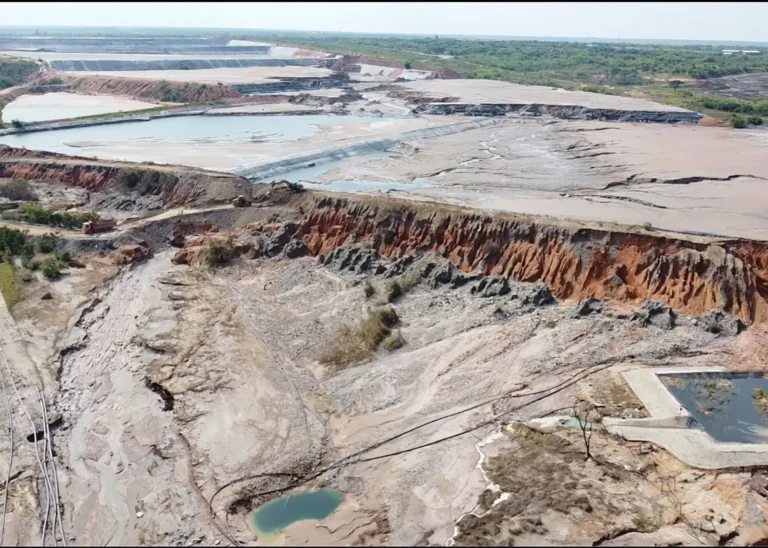
Environmental experts from Drizit Zambia Ltd estimate that approximately 1.5 million tons of toxic sludge leaked from the Sino-Metals Leach Zambia Ltd mine near Kitwe.

By comparison, official statements initially claimed only 50,000 tons had been released, highlighting significant discrepancies in reporting and transparency.

U.S. Ambassador Michael Gonzales described the incident as the “sixth-worst mining disaster in history,” underscoring the international recognition of its severity.

How the Spill Occurred

The disaster began on February 18, 2025, when heavy rains caused a dam wall at the mine’s waste reservoir to collapse.

The dam contained sulphuric acid-laden sludge used in copper extraction.

Once breached, millions of tons of toxic material flowed into the Mwambashi River, threatening downstream communities, farmland, and the broader ecosystem.

Preliminary reports suggest the dam’s structural integrity had been compromised by seasonal rains, though questions remain about maintenance and safety practices prior to the failure.

Environmental Impact

Immediate Damage

The acidic sludge quickly devastated the Mwambashi River, lowering pH levels to 1, so corrosive it could reportedly dissolve human bones. Aquatic life was wiped out for miles, and nearby farmland and crops were contaminated.

The Mwambashi feeds into the Kafue River, a critical water source for Lusaka and other communities. The presence of heavy metals, including arsenic, cyanide, and uranium, suggests that contamination could extend far beyond the immediate area. About 800 residents remain in the fallout zone.

Drizit warns that without urgent intervention, future generations could face severe health consequences, as heavy metals may accumulate in the food chain.

Government Response

The Zambian government has deployed hundreds of tons of lime into rivers to neutralise acidity. Officials claim water quality has been restored and publicly demonstrated safety by drinking tap water in Kitwe.

Independent assessments, however, indicate that heavy metal contamination persists, posing ongoing risks to local communities. No deaths or confirmed cases of poisoning have been reported, but monitoring systems may be insufficient to detect long-term effects.

Economic and Diplomatic Implications

The spill threatens Zambia’s copper production ambitions, including President Hichilema’s plan to triple output to 3 million tons.

The incident also raises questions about the $1.3 billion investment pledged by Sino-Metals’ parent company, China Nonferrous Mining Corp., in 2023.

Diplomatically, the disaster has strained Zambia-China relations, coming at a time when Zambia is restructuring $5.6 billion in Chinese debt.

The U.S. Embassy’s evacuation order highlights international concern over environmental oversight and public safety in the region.

Accountability and Transparency

Drizit Zambia reported resistance from Sino-Metals during its assessment. The company terminated the contract shortly before the report’s conclusion, raising questions about attempts to suppress the true scale of the disaster.

Health Risks

Communities along the Mwambashi and Kafue Rivers face continued exposure to heavy metals through water, soil, and food. Children, pregnant women, and the elderly are particularly vulnerable. Chronic exposure may result in cancer, developmental issues, and other long-term health effects.

Experts stress that comprehensive health monitoring and remediation are urgently needed to prevent generational impacts.

Lessons from Other Mining Disasters

With a spill volume of 1.5 million tons, this ranks among the largest tailings disasters globally. The initial underreporting mirrors patterns seen in previous accidents worldwide.

Recovery could take decades. Effective remediation will require immediate containment, chemical neutralisation, removal of contaminated soil, and long-term ecosystem monitoring. Cleanup costs may reach hundreds of millions of dollars.

A full remediation plan must address both acid and heavy metal contamination. Continuous monitoring of the Mwambashi and Kafue Rivers, restoration of agricultural land, and protection of surrounding ecosystems are essential.

Establishing accountability, independent verification, and adherence to international mining standards will be critical to rebuilding public trust. Regulatory reforms and stricter environmental oversight could emerge as lasting lessons from this catastrophe.

Gold buying prices per gram in Zimbabwe today, 14 August 2025

Gold buying prices per gram in Zimbabwe today, 14 August 2025, from the official gold buyer and exporter Fidelity Gold Refinery (FGR).

SG 90% and ABOVE US$102.21/g.
SG ABOVE 89% BUT BELOW 90% US$101.13/g.
SG ABOVE 80% BUT BELOW 85% US$100.05/g.
SG ABOVE 75% BUT BELOW 80% US$98.97/g.
SAMPLE BELOW 10g BUT ABOVE 5g US$95.35/g.

Fire Assay CASH $102.75/g.

NB: Fire Assay cash price is for gold above 100g; no sample is deducted.

A sample of not more than 10g is deducted for the Fire Assay Transfer price.

A 2% royalty is charged on all deposits (Small-scale miners).

A 5% royalty is set for Primary Producers.

Chamber Hints at New IPP Partnerships to Ease Sector’s Power Burden as Tariffs Bite

0

Zimbabwe’s mining industry is under mounting pressure from high electricity tariffs that the Chamber of Mines Zimbabwe has described as “unsustainable” for operations, Mining Zimbabwe can report.

By Ryan Chigoche

In its Quarterly Members’ Brief for the second quarter, the Chamber stated that the cost of power is eroding viability, forcing companies to explore alternative supply arrangements to maintain production.

While the first half of the year saw a relatively stable electricity supply with only minor outages caused by transmission faults and storms, the Chamber cautioned that stability could be short-lived.

Without priority allocation during peak demand periods, the sector risks disruptions that could undermine output and export earnings.

Against this backdrop, the Chamber’s Electricity and Power Development Committee has been engaging with independent power producers (IPPs) that offer solutions to supplement the grid supply.

Proposals have been received from GEnergy, Grid Power, Lafrica Energy, Genesis Energy, Unifyd Energy and SolarX Power.

Mining companies have been urged to engage these firms directly while the Chamber continues to source more partners capable of delivering reliable and cost-effective power.

Some operators are already moving ahead with self-generation projects to shield themselves from both price volatility and potential shortages.

Platinum producer Zimplats is advancing a 185 MW solar power development in phases, with the latest 45 MW stage under construction.

Once completed, this will bring its total solar capacity to 75 MW, following the earlier commissioning of a 35 MW plant.

The Chamber said it is also maintaining pressure on the government to review electricity tariffs for the mining sector, arguing that competitive pricing, alongside investment in alternative generation, is essential to safeguard jobs, stabilise production and keep Zimbabwe’s mining industry competitive on the global stage.