Home Blog Page 72

South Africa Eyes 1% Diamond Marketing Levy, Lessons for Zimbabwe’s Tight Four-Player Policy

0

Once upon a time, the diamond story wrote itself. The stones were rare, the allure unmatched, the market hungry. A few adverts and glossy campaigns were enough to keep buyers convinced that a diamond was indeed forever.

By Rudairo Mapuranga

But the world has changed. Today’s luxury buyer is not the same as the one who fell for the De Beers dream in the 1940s. Synthetic diamonds, indistinguishable to the naked eye, are entering the jewellery boxes of the middle class. Younger generations in the US and China are asking whether a diamond is worth the price tag when lab-grown versions can be had for a fraction of the cost. And the world’s economy, still staggering from COVID-19 and inflationary pressures, is forcing even the wealthier buyers to think twice before signing off on big purchases.

In the middle of this shifting market, South Africa, a country that once stood as the undisputed king of diamond production, is looking to fight back. The idea is simple in theory but ambitious in execution: a 1% levy on diamond revenue to fund international marketing of natural diamonds.

The proposal, which comes from the South African Diamond Producers Organisation (SADPO) and has been endorsed in principle by the Department of Mineral Resources and Energy, would see all producers contribute a fraction of their sales into a central marketing pot. That pot would then bankroll global campaigns positioning natural diamonds as the ultimate symbol of luxury, authenticity, and rarity — a direct counter to the rising tide of lab-grown stones.

This is not the first time the diamond world has talked about collective marketing. In the heyday of the De Beers monopoly, the “A Diamond is Forever” campaign didn’t just sell stones, it sold the idea of love, permanence, and exclusivity. Back then, producers didn’t need convincing to chip in, they simply followed De Beers’ lead. But the diamond world today is fragmented. Producers large and small compete not just for buyers but for market narrative, and convincing them to fund a shared campaign will take more than nostalgia.

Still, South Africa is pushing. The 1% levy, supporters argue, would not cripple producers’ margins but could be the difference between slow decline and market revival. The logic is clear: if the pie shrinks, everyone loses, so why not spend a little to keep it from shrinking?

The Zimbabwe Connection

As I read about South Africa’s proposal, I couldn’t help but think about Zimbabwe’s diamond sector. Here, the rules are different. Our diamond policy is one of the most restrictive in the region — only four companies are licensed to mine: the state-owned Zimbabwe Consolidated Diamond Company (ZCDC), Anjin, Alrosa Zimbabwe, and Murowa Diamonds.

The policy was born out of a belief that too many players in Chiadzwa meant chaos, leakages, and lost revenue. In tightening the space, the government hoped to centralise control and ensure a bigger slice of the proceeds went to the state. But there’s an unintended consequence: with so few players, marketing innovation is limited. Diamonds from Zimbabwe are often sold quietly, without the kind of storytelling that can push their brand in lucrative markets.

If South Africa’s 1% marketing levy works, it will raise an important question for Zimbabwe: should we be pooling resources not just to mine diamonds, but to sell them as a national brand?

Why Marketing Matters Now

It’s easy to forget that in the luxury market, a diamond isn’t just a stone — it’s a story. It’s the image of a couple in a Paris café, a model in a glossy magazine, a red carpet moment under the flash of cameras. Lab-grown diamonds can match the sparkle, but they can’t match a well-crafted narrative about rarity and heritage.

South Africa’s move is an attempt to remind the world that its diamonds are more than commodities — they are pieces of the country’s history and identity. Zimbabwe could do the same. Imagine a campaign not just about “Zimbabwean diamonds” but about their origins, the communities they support, and the landscapes they come from. This is where collective marketing becomes powerful.

Of course, in Zimbabwe’s case, there is an elephant in the room: transparency. The diamond industry here has often been criticised for opacity in sales and revenue distribution. For a marketing levy to work, producers — and the government — would need to show clear evidence that the money is being used for its intended purpose. Without trust, even the best campaign risks being dismissed as another paper promise.

Industry Concerns

South Africa’s plan is not without its critics. Some producers worry that the levy will hit smaller operators harder, eating into margins at a time when costs are already high. Others question whether a marketing campaign can really shift the tide against synthetics, whose prices are falling fast and whose appeal to younger buyers is growing.

Heraeus, a major player in the precious metals market, warns that such moves could also disrupt global supply flows. If marketing increases demand for natural diamonds, it could change how producers allocate sales, and in a tight market, that could mean price volatility.

For Zimbabwe, the question is even sharper: do we need a 1% levy when we already have such tight control over production? Or is it exactly because of that tight control that we should be thinking about how to present our diamonds to the world?

Learning From the Neighbours

South Africa’s producers know they are not just competing with synthetics — they are competing with each other, and with countries like Botswana, which has built an international reputation for ethical, high-quality stones. Botswana’s partnership with De Beers has given it a marketing platform that most producers can only dream of.

Zimbabwe, by contrast, is still fighting to shake off the negative perceptions of Chiadzwa’s chaotic past. Even with a four-player system, the global image hasn’t fully recovered. A well-funded, transparent marketing push could be one of the few tools capable of turning that around.

If South Africa can convince its often-competitive producers to pool 1% of their revenue, Zimbabwe’s four diamond companies should, in theory, find it even easier. Four boardrooms. Four signatures. One campaign.

The diamond market is in a transitional phase. Analysts predict that prices for natural diamonds will face pressure in the short term but could recover if supply tightens and marketing keeps demand stable. For platinum group metals, the story is similar — volatility now, but potential upside if the green energy revolution sustains demand.

South Africa’s 1% marketing levy is a bet on the future that storytelling and brand positioning still matter in an age of fast fashion and cheaper alternatives. Whether the bet pays off remains to be seen, but it’s a reminder to countries like Zimbabwe that mining doesn’t end when the stone leaves the ground. The real value is unlocked when the world knows and cares about where it came from.

In the end, diamonds will always sparkle. The question is: whose diamonds will the world choose to wear?
Responsible Mining Key to National Prosperity – President Mnangagwa

0

While Zimbabwe’s liberation war heroes fought for a responsible government that would protect and serve its people, the same spirit now demands that our mineral wealth be harnessed with equal responsibility, Mining Zimbabwe can report.

By Rudairo Mapuranga

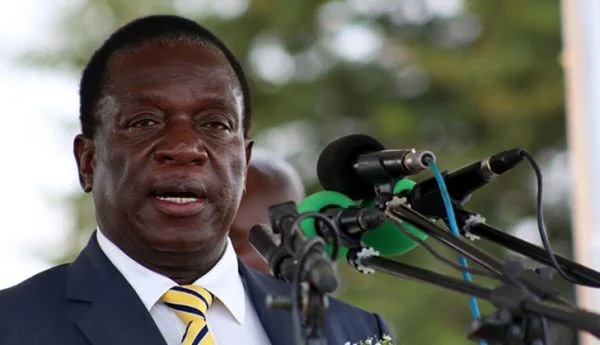
As the nation marked its 45th Heroes Day at the National Heroes Acre, President Emmerson Mnangagwa reminded the country that responsible mining is not a luxury but a necessity, a duty owed to the host communities who live with the mines, to the workers who dig the minerals, and to future generations who will inherit the land we leave behind.

President Mnangagwa, speaking at the 45th Heroes Day commemorations at the National Heroes Acre on Monday, reminded the nation that while Zimbabwe’s land is blessed with gold, diamonds, platinum, and a catalogue of other minerals, the true value of these resources will only be realised if they are mined responsibly, with communities at the heart of the benefits.

“As a nation richly endowed with mineral resources, we are determined to ensure that these should be complemented by responsible mining and empowerment of host communities. This should translate into economic benefits for all citizens, full compliance to environmental and labour laws, as well as our cultural norms and values,” he said, his voice carrying a message that was as much a challenge to the mining industry as it was an affirmation of government’s expectations.

In recent years, Zimbabwe’s mining sector has been caught between two competing realities. On one hand, there is a drive to attract investment and expand production in pursuit of the US$40 billion mining economy target. On the other, there are the persistent cries of host communities who, despite living side by side with billion-dollar deposits, still walk on dusty roads, send their children to under-resourced schools, and fetch water from unprotected sources. The President’s words were a reminder that mining cannot simply be about digging and exporting; it must be about transforming lives.

Responsible mining, as called for by Mnangagwa, is not just about ticking boxes for glossy corporate reports or showing compliance when inspectors visit. It is about a deeper commitment, ensuring that every ounce of gold, every carat of diamond, every tonne of coal leaves behind more than just an empty pit. It is about rehabilitation of mined-out land so that communities are not left with dangerous, open shafts. It is about fair treatment and safe conditions for mine workers, with wages that reflect the value they help create. It is about respecting cultural sites and traditional leadership structures so that mining is not seen as an act of displacement but as a partnership.

Across the country, there are examples that underline the urgency of this message. In Marange, artisanal miners continue to operate around abandoned pits, while communities still question whether diamond wealth has truly improved their livelihoods. In Hwange, environmental concerns over coal mining have long been voiced, from dust pollution to fears over water contamination. In Penhalonga, gold mining has brought jobs to some but left others complaining about land degradation and unsafe working conditions. These are the very gaps Mnangagwa’s call for responsible mining seeks to close.

His reference to the empowerment of host communities speaks to a long-standing demand from mining towns and rural areas that mining companies must not only employ locals but also invest in projects that will outlast the life of the mine. This means schools, clinics, clean water systems, roads, and sustainable businesses that remain viable even when the last tonne of ore has been hauled away. It means giving communities a seat at the table when decisions are made about the land they have lived on for generations.

By also emphasising our cultural norms and values, Mnangagwa was making a point that mining should not bulldoze heritage in pursuit of profit. Zimbabwe’s cultural identity is tied to the land, and ancestral graves, sacred mountains, and historical sites are part of who we are. Mining operations that ignore this risk not only incur the loss of social licence to operate but also the erasure of irreplaceable history.

The country has already made policy moves in this direction. The Diamond Policy, for example, restricts diamond mining rights to four companies, ZCDC, Anjin, Alrosa Zimbabwe, and Murowa Diamonds, as part of an effort to better regulate the sector and ensure value addition. But as is often the case, the effectiveness of such measures depends on consistent enforcement, transparent reporting, and a willingness by both government and the private sector to go beyond compliance and embrace genuine accountability.

Heroes Day is a symbolic backdrop for such a message. The freedom fighters who lie at the National Heroes Acre did not sacrifice for a Zimbabwe where wealth is extracted without benefit to its people. The President’s call is, in essence, a modern continuation of that liberation struggle, a demand that our natural resources must serve Zimbabweans first, and that mining must be a tool for development, not exploitation.

The challenge now lies in whether this vision can be translated from the podium to the pit. Can mining companies, both local and foreign, rise to the occasion and integrate responsible practices into their core operations? Can the government enforce environmental, labour, and cultural safeguards without fear or favour? And perhaps most importantly, will host communities see the tangible benefits they have long been promised?

As the dust settles on the Heroes Day speeches, Zimbabwe’s mining sector faces a clear choice to either take the President’s words as another ceremonial call to be forgotten in boardrooms or to treat them as a blueprint for a mining industry that truly serves its people. The country’s minerals are finite, but the impact they leave behind does not have to be.

Caledonia Net Profit Soars 147% in Q2 on Record Gold Output, Higher Prices

0

Caledonia Mining Corporation’s net profit jumped 147% in the second quarter of 2025 to US$20.5 million from US$8.3 million in the prior comparable period last year, driven by record gold production at its Blanket Mine in Zimbabwe and a stronger gold price environment, Mining Zimbabwe can report.

By Ryan Chigoche

The production boost came as Blanket delivered 21,070 ounces of gold in Q2 2025, a 1.4% increase from 20,773 ounces in Q2 2024.

Higher grades and improved plant recoveries underpinned the growth. Reflecting this momentum, Caledonia raised its annual output guidance on July 16 to between 75,500 and 79,500 ounces, underscoring confidence in the mine’s operational performance.

This steady production growth, combined with firmer gold prices, lifted revenue 30% to US$65.0 million from US$50.1 million a year earlier.

Gross profit rose 48% to US$33.8 million, while adjusted earnings per share more than doubled to 113.9 cents from 44.6 cents, highlighting the stronger margins achieved in the quarter.

Profitability was further enhanced by a US$8.5 million one-off gain from the April sale of Caledonia’s solar plant to CrossBoundary Energy Holdings for US$22.35 million.

The transaction not only bolstered the company’s cash reserves but also secured a stable, long-term renewable energy supply for Blanket Mine, a strategic move aimed at improving operational reliability.

Reflecting on the quarter’s performance, CEO Mark Learmonth pointed to record output and a stronger balance sheet:

“Caledonia has delivered another strong quarter, highlighted by record second-quarter gold production at Blanket and a substantial increase in profitability, reflecting strong operational performance and a higher gold price environment. I would like to thank the team for their hard work and contribution. The successful sale of our solar plant in April has strengthened our balance sheet and ensures a reliable, long-term renewable energy supply for Blanket Mine.”

The stronger earnings translated into robust cash generation, with operating cash flows rising 47% to US$28.1 million.

This helped the company swing to a net cash position of US$26.2 million at the end of June, compared to a net debt of US$1.4 million a year earlier, a turnaround that reflects both higher revenues and disciplined capital management.

Even so, costs edged higher. Consolidated on-mine cost per ounce climbed 10.9% to US$1,123 due to increased labour and consumables expenses, while all-in sustaining costs rose to US$1,805 per ounce from US$1,485, in line with planned capital investments at Blanket.

Backed by its strong balance sheet and steady operational outlook, Caledonia declared a quarterly dividend of 14 US cents per share, payable to shareholders on record as of August 11, 2025.

Namibia’s Govt 51% Local Ownership Rule Faces Backlash from Mining Industry

0

As resource nationalism gains momentum across Africa, Namibia’s mining sector has raised concerns about a government proposal requiring new mining ventures to have at least 51% local ownership.

By Ryan Chigoche

Industry leaders warn that such a policy could discourage foreign investors and threaten the sector’s long-term sustainability.

Namibia’s Deputy Prime Minister and Minister of Industries, Mines and Energy, Natangwe Ithete, explained that the move aims to ensure Namibians secure a fair and lasting share of mining benefits.

He also noted that a review of the Minerals Bill will include broad stakeholder engagement to modernise the regulatory framework.

However, at the recent 2025 Mining Expo in Windhoek, John Roos, First Vice President of the Chamber of Mines and Country Manager for B2Gold Namibia, emphasised that focusing primarily on ownership stakes overlooks the broader economic gains Namibia currently realises.

He cautioned that strict ownership requirements may push investors towards countries offering more favourable terms, especially since mining requires significant capital that is often not available locally.

Roos stressed that meaningful local participation should extend throughout the mining value chain, including procurement, skills development, and local services, rather than focusing solely on shareholding.

He noted that between 2015 and 2019, shareholders did not receive dividends as capital repayment took priority, yet the government benefited through royalties, taxes, and corporate social responsibility programs.

Drawing on B2Gold’s data, Roos highlighted that over a decade (2015–2024), government revenues from taxes and levies exceeded shareholder returns, showing that sustained engagement yields greater value for Namibia than upfront ownership stakes.

George Botshiwe, President of the Chamber of Mines and Managing Director of QKR Namibia, supported economic empowerment but emphasised that ownership is only one part of a wider strategy tailored to Namibia’s context. He urged focusing on initiatives delivering immediate community benefits, such as local procurement and CSR.

Botshiwe also noted that the Chamber is actively working with government and stakeholders to broaden empowerment opportunities, aiming to ensure mining’s benefits are visible to everyday Namibians. He warned against adopting empowerment models from other countries without local adaptation.

Zimbabwe’s Experience with Local Ownership Requirements

Namibia’s proposed 51% local ownership rule mirrors a model Zimbabwe previously implemented but later abandoned. Soon after assuming office in 2017, President Emmerson Mnangagwa scrapped the country’s 51% local ownership rule for foreign investors, allowing companies to own 100% of mining operations under his “Open for Business” campaign aimed at boosting investment.

Historically, Zimbabwe’s Indigenisation and Economic Empowerment Act mandated majority local ownership in foreign mining ventures, particularly in strategic sectors like platinum and diamonds.

This requirement was phased out between 2018 and 2020 to attract more foreign capital while maintaining some state participation through entities like the Zimbabwe Mining Development Corporation.

However, reflecting a broader continental shift towards resource nationalism, Zimbabwe’s Ministry of Mines now plans to acquire a 26% stake in future mining projects.

Mines Secretary Pfungwa Kunaka also indicated the government will seek shareholding in existing operations through negotiations.

This evolution in Zimbabwe’s policy highlights the ongoing challenge across African mining economies to balance attracting foreign investment with ensuring meaningful local empowerment—a dynamic Namibia is currently confronting with its own 51% ownership proposal.

ZiG Stability Push Chokes PGM Sector as $609m Local Currency Payments Remain Unpaid

0

The Government’s delay in paying local currency owed to platinum group metal (PGM) miners in an effort to maintain stability of the ZiG currency is crippling one of the country’s most vital export sectors, Mining Zimbabwe can report.

By Ryan Chigoche

Despite owing miners US$609 million in the local currency portion of export proceeds for the first half of 2025, authorities have withheld payment under the current 70:30 foreign currency retention system.

Analysts say this is part of a broader push to restrict money supply growth and preserve the value of the ZiG, but at the cost of operational cash flow in the real economy.

“This is not merely a payment delay; it signals systemic liquidity constraints and reveals the tensions between foreign currency retention policies and domestic monetary stability efforts,” development economist Chenai Mutambasere told Mining Zimbabwe.

“By starving miners of liquidity, the government risks curtailing production and exports. The mining sector is a critical foreign currency earner and tax contributor. With the sector’s growth now downgraded from 5.6% to 2.9% in 2025, fiscal projections may also underperform,” she added.

Already, the Mid-Term Budget showed a significant contraction in Q1 PGM output — platinum (-16.2%), palladium (-17.5%), and rhodium (-9.7%) — due in part to price pressures but also likely influenced by tight cash flows.

The Mid-Term Budget Review confirms that the government is prioritising control of broad money expansion as part of its strategy to stabilise the ZiG.

The result, however, has been a liquidity squeeze for exporters like the PGM miners who expect timely reimbursement of their surrendered forex for retooling needs.

Zimbabwe’s foreign currency retention model requires miners to liquidate 30% of their earnings into local currency, with the state obligated to pay that portion.

While the central bank retains the foreign currency for critical imports and debt servicing, it has not met its obligation to reimburse miners since January 2025.

Tafara Mtutu, Head of Research at Morgan & Co, described the development as worrying and said it is slowly killing the mining sector.

“The development paints a worrying picture on the success of efforts to establish a stable local currency. It signals that policymakers are not yet confident that disbursing these funds will not affect the ZiG’s stability. However, in doing so, they risk decimating the mining industry if they continue to delay payments and lower FX retentions.”

Zimbabwe is the world’s third-largest producer of platinum group metals, after South Africa and Russia.

Major producers include Valterra Platinum, Zimplats (owned by Impala Platinum), and Mimosa, who all had US$690 million worth of export earnings liquidated.

Yet under the current surrender model, they have not received the local currency equivalent of 30% of their earnings.

This has triggered concerns within the industry about worsening liquidity, supply chain disruptions, and possible long-term effects on production.

PGMs are Zimbabwe’s second-largest export earner after gold.

In contrast to PGMs, gold exports surged to US$1.8 billion in the same period — but gold miners have similarly criticised the surrender policy, especially due to what they see as conversion at an overvalued official rate.

The cumulative impact, analysts warn, is a strained export sector with weakening confidence in government policy, particularly as trust in the surrender model erodes.

Union Insists on Court-Led Corporate Rescue as RioZim’s US$21 Million Investment Hangs in the Balance

0

The Zimbabwe Diamond and Allied Minerals Workers Union (ZDAMWU) has maintained that only a court-supervised corporate rescue can revive RioZim Limited, as the company’s US$21 million investment faces delays linked to ongoing legal processes, Mining Zimbabwe can report.

By Ryan Chigoche

This comes as RioZim has accused the union of creating “hurdles” to its revival, after ZDAMWU and other applicants petitioned the High Court in April 2025 to place the ZSE-listed company under supervision and initiate corporate rescue proceedings.

The union’s move followed revelations of a dire liquidity crisis, with the company reportedly carrying debts nearing US$200 million.

In June, the company announced that it had secured a working capital facility of up to US$21 million from a private investor, which it described as a lifeline to stabilise operations and pay workers.

However, recently the company blamed the ongoing corporate rescue application for delaying this critical investment.

But ZDAMWU sees the situation differently. Responding to Mining Zimbabwe, General Secretary Justice Chinhema said:

“ZDAMWU believes that corporate rescue is the only way this big mining asset can be saved from total liquidation and collapse. They are giving statements without any tangible sense in it. They must demonstrate commitment to addressing the root causes of the company’s collapse and stop misrepresenting facts to cover up mismanagement and financial abuse.”

ZDAMWU argues that it is not standing in the way of recapitalisation but rather seeking a structured, transparent process. The union believes only a court-supervised corporate rescue practitioner can ensure credible oversight, safeguard the interests of workers and creditors, and prevent further mismanagement.

“They must also demonstrate that the shareholders are willing to recapitalise the mine, and show workers that the process being mentioned is transparent and that proper due diligence has been done by an independent person,” Chinhema added.

“All these processes are aimed at safeguarding the interests of our members, communities where RioZim has been operating from, and our country at large. All investments must demonstrate that they are uplifting the standard of living of the workers, the community, and the development of the country.”

While RioZim insists that the company’s planned sale or investor deal is being delayed by the corporate rescue process, unions argue the opposite: that the deal could be used as a smokescreen to dodge accountability for unpaid debts and salaries.

It’s not just labour groups raising red flags. The Zimbabwe Anti-Corruption Commission (ZACC) is reportedly currently investigating RioZim, through its subsidiary RioGold (Private) Limited, over allegations of financial misconduct and unpaid debts. A dossier of annexures seen by Mining Zimbabwe indicates that the company owes millions to stakeholders, including employees, private creditors, and the Zimbabwe Stock Exchange (ZSE).

The disclosures have intensified pressure on RioZim’s board and management, raising questions about corporate governance and financial accountability at one of Zimbabwe’s most prominent mining houses.

RioZim’s precarious state was underscored by its June 2024 financials, which revealed negative equity of ZWG149.2 million and total liabilities exceeding US$90 million. These include a US$55 million debt to its own subsidiary, RZM Murowa, and a US$30 million contingent liability tied to a foreign legal dispute. The company is also grappling with unresolved tax obligations and pension arrears, painting a grim picture of its financial health.

These figures have raised doubts over whether the US$21 million investment announced in June would be sufficient to stabilise the company without external oversight.

In previous legal battles with employees, RioZim has adopted a confrontational approach. In October 2024, the company filed a High Court application against over 1,200 Renco Mine workers, accusing them of participating in an unlawful industrial strike to demand overdue wages. While the court ordered workers to return, RioZim controversially chose to pay only 50% of salaries for the strike period, triggering another standoff with ZDAMWU, which accused the company of violating court directives.

Attempts to secure long-term financing have largely failed. While local banks have only offered short-term capital, international financiers remain wary due to Zimbabwe’s high-risk investment climate.

The health of RioZim is crucial to Zimbabwe’s economy. As a multi-commodity miner involved in gold, nickel, copper, coal, and diamonds, the company’s operations have national significance—not only for export earnings but also for employment and regional development.

Gold buying prices per gram in Zimbabwe today, 8 August 2025

Gold buying prices per gram in Zimbabwe today, 8 August 2025, from the official gold buyer and exporter Fidelity Gold Refinery (FGR).

SG 90% and ABOVE US$102.80/g.
SG ABOVE 89% BUT BELOW 90% US$101.71/g.
SG ABOVE 80% BUT BELOW 85% US$100.63/g.
SG ABOVE 75% BUT BELOW 80% US$99.54/g.
SAMPLE BELOW 10g BUT ABOVE 5g US$97.91/g.

Fire Assay CASH $103.35/g.

NB: Fire Assay cash price is for gold above 100g; no sample is deducted.

A sample of not more than 10g is deducted for the Fire Assay Transfer price.

A 2% royalty is charged on all deposits (Small-scale miners).

A 5% royalty is set for Primary Producers.

Gold buying prices per gram in Zimbabwe today, 7 August 2025

Gold buying prices per gram in Zimbabwe today, 7 August 2025, from the official gold buyer and exporter Fidelity Gold Refinery (FGR).

SG 90% and ABOVE US$102.44/g.
SG ABOVE 89% BUT BELOW 90% US$100.36/g.
SG ABOVE 80% BUT BELOW 85% US$100.28/g.
SG ABOVE 75% BUT BELOW 80% US$99.19/g.
SAMPLE BELOW 10g BUT ABOVE 5g US$97.57/g.

Fire Assay CASH $102.99/g.

NB: Fire Assay cash price is for gold above 100g; no sample is deducted.

A sample of not more than 10g is deducted for the Fire Assay Transfer price.

A 2% royalty is charged on all deposits (Small-scale miners).

A 5% royalty is set for Primary Producers.

Zim to Urgently Prioritise New IPP Framework in 2026, as Energy Deficit Is Expected to Widen 635% by 2030

0

Faced with a widening energy deficit, the Government says it will prioritise the launch of a “competitive” IPP procurement framework in 2026, in efforts to enhance investor participation in the critical energy sector, Mining Zimbabwe can report.

By Ryan Chigoche

This now urgent initiative, which was mooted some time back, comes as Zimbabwe continues to face a persistent energy deficit, with current available generation capacity at approximately 1,500 MW against a national demand of around 2,000 MW.

This 500 MW shortfall is set to worsen significantly, as demand is projected to surpass 5,177 MW by 2030, driven primarily by expansion in the energy-intensive mining, manufacturing, and agriculture sectors.

With this expected demand, if generation capacity remains stagnant, the energy deficit could widen by over 635% by 2030, underscoring the urgent need for investment and reform in the power sector.

Given the importance of energy in economic development, the Minister of Finance and Investment Promotion, Mthuli Ncube, said coming up with a competitive framework is a top priority in the coming year, as per the Budget Strategy Plan.

“In 2026, the Government will prioritise the transformation of the energy sector by launching a competitive Independent Power Producers (IPPs) procurement framework. This initiative is designed to enhance the energy market, encouraging both domestic and international investment through a more liberalised and transparent approach.”

“The new framework will be underpinned by several key measures, including facilitation by the Government to ensure that all IPP procurement processes are open and competitive, with clear and transparent guidelines for participation. This is aimed at attracting reputable investors and fostering innovation in power generation.”

“Government, in collaboration with key energy stakeholders, will strengthen the independence and capacity of regulatory agencies to ensure fair treatment of all market participants,” Ncube said.

For some time, Zimbabwe’s current Independent Power Producer (IPP) framework has struggled to attract significant private investment due to a combination of structural and regulatory challenges.

Chief among these are unbankable Power Purchase Agreements (PPAs), currency instability, and the absence of government guarantees—all of which deter both local and international financiers.

Investors face high exchange rate risk as payments are often made in local currency, while delays in licensing, bureaucratic red tape, and lack of clarity in the tendering process further weaken confidence in the system.

Additionally, poor transmission infrastructure and a lack of coordination between energy authorities continue to hamper the integration of new projects into the grid, despite the government’s stated ambition to boost renewable energy generation.

However, according to the Ministry of Finance, the regulatory and permitting processes that are going to be part of this new framework are expected to reduce delays and uncertainties for new projects, while a dedicated IPP procurement office will coordinate all related activities and stakeholder engagement.

This is a welcome development, given that the role of energy in modern economies cannot be overemphasised.

Also in support of this new framework, the modernisation of electricity infrastructure—including grid expansion, digitalisation, and the deployment of advanced storage technologies—will also be prioritised in 2026, the government said.

Going forward, the authorities will promote a diversified energy mix, prioritising investments in renewable energy sources such as solar and hydro, while maintaining flexible thermal capacity to ensure security of power supply.

In recent times, the Government has already put in place some necessary regulatory frameworks which have encouraged captive power producers to continue generating electricity for their own use, supplementing or offsetting reliance on the national grid.

The mining sector has led on this front, with almost all the major miners now generating their own power, while others have already budgeted for that.

Barrick Releases Site-Level Disclosures for 65 Global Tailings Facilities under GISTM

0

Mining major reports on risk levels, safe closures, and challenges in Mali as part of global push for transparency in tailings management

Barrick Mining Corporation has fulfilled its commitment to publish detailed information on its tailings storage facilities (TSFs), in line with the Global Industry Standard on Tailings Management (GISTM), a global benchmark introduced to enhance safety, transparency, and accountability in tailings management following the 2019 Brumadinho dam disaster in Brazil.

By Ryan Chigoche

The release includes site-specific data for 65 TSFs across Barrick’s global operations, reflecting the company’s broader push toward responsible environmental stewardship. Barrick played an active role in the formulation of the GISTM and, as a result, is already fully aligned with the standard’s rigorous requirements.

Transparent disclosure of tailings storage facilities is critical in an era where mining companies face growing scrutiny over environmental and social impacts. Poorly managed TSFs have historically led to catastrophic failures, with severe consequences for communities, ecosystems, and corporate reputations.

By releasing detailed site-level information in line with international standards, Barrick not only strengthens investor and public confidence but also sets a benchmark for industry accountability. This proactive approach helps ensure that risks are identified, monitored, and mitigated, ultimately protecting both people and the environment.

According to Barrick’s disclosure, five of Barrick’s TSFs are classified as ‘extreme’ risk and 12 as ‘very high’ risk. Despite these risk ratings, all facilities meet the GISTM’s operational and safety thresholds.

This risk classification is based on the potential consequences of failure, not the likelihood, underscoring the company’s commitment to responsible management even in higher-risk environments.

In contrast, 13 of the TSFs have already reached ‘safe closure’ status—a designation for facilities that no longer require active monitoring under GISTM guidelines.

These facilities are therefore exempt from the disclosure requirements. Additionally, one TSF is operated by a joint venture partner and does not fall under Barrick’s direct reporting obligations.

However, the company noted one exception: the Loulo-Gounkoto TSF in Mali. Due to an ongoing dispute with the Malian government, Barrick has lost access to the facility after the mine was placed under provisional administration. As a result, the company has been unable to verify its compliance with the GISTM at that site.

Despite this challenge, Barrick reaffirmed its broader commitment to responsible tailings management. President and CEO Mark Bristow said the company is continually working to reduce long-term environmental and human health risks by transitioning inactive TSFs into safe closure.

As part of this initiative, Barrick aims to move five additional TSFs into safe closure status by next year. Bristow emphasises that this process involves not only physical decommissioning but also long-term engagement with local communities, conservation of key biodiversity features, and respect for cultural heritage.

“The safe closure of these facilities requires stakeholders to be engaged, key biodiversity features to be conserved, and cultural values to be protected,” Bristow said.