Home Blog Page 74

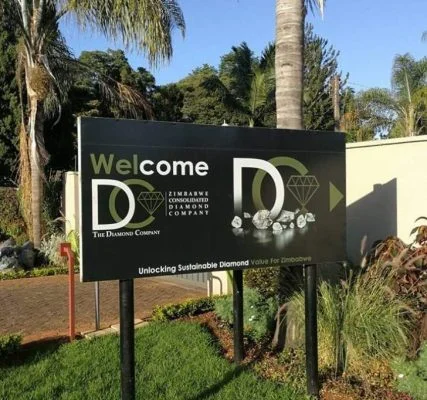
ZCDC Security Foils Illegal Diamond Prospecting as Two Jailed

0

Two men have been sentenced to two years in prison each after they were caught prospecting for diamonds without a licence in the Marange diamond fields, a powerful reminder of Zimbabwe’s strict stance on illegal mining in one of Africa’s richest diamond deposits, Mining Zimbabwe can report.

By Rudairo Mapuranga

According to the National Prosecuting Authority of Zimbabwe (NPAZ), Charles Ziwoya (46) and Keith Muzuwe (24) were arrested on July 30, 2025, by Zimbabwe Consolidated Diamond Company (ZCDC) security guards patrolling the Chiadzwa area. The pair was found in possession of two sacks filled with diamond ore, commonly referred to as “chubs,” as they tried to sneak out of the mining concession under the cover of darkness.

The suspects were apprehended around 3 a.m. and handed over to the ZCDC Criminal Investigations Unit before being taken to the Zimbabwe Republic Police in Marange for further processing. The Mutare Magistrates’ Court convicted both men of illegal prospecting for minerals without a licence, sentencing them to the mandatory minimum of two years in jail—a sentence designed to deter others from invading the highly secured diamond fields.

While some might see these arrests as routine, they are in fact a stark demonstration of Zimbabwe’s diamond policy in action. Under the country’s 2018 Diamond Policy, only four companies are licensed to mine diamonds:

  • Zimbabwe Consolidated Diamond Company (ZCDC)
  • Anjin Investments
  • Alrosa Zimbabwe
  • Murowa Diamonds

All other prospecting or mining activities in diamond-rich areas like Marange are strictly prohibited, with illegal panning or trading carrying harsh penalties. The policy is part of Zimbabwe’s strategy to bring order, accountability, and maximum benefit to the state and its citizens after years of smuggling, leakages, and violent illegal mining syndicates that once plagued Marange.

Speaking after the conviction, the NPAZ reminded the public that illegal prospecting—not only for diamonds but also for gold or other minerals—attracts a mandatory two-year jail term without the option of a fine, highlighting that #CrimeDoesNotPay.

As Zimbabwe pushes towards harnessing its natural resources under President Mnangagwa’s 2030 Vision, the government’s unwavering enforcement of mining laws and the diamond policy will remain central to efforts to ensure diamonds contribute meaningfully to the country’s economy instead of being siphoned off by rogue elements.

50kg Gold Ore Recovered as Police Nab Suspects in Small-Scale Mine Robbery at Happy Valley

0

Police in Bulawayo have busted a robbery syndicate targeting small-scale miners, recovering 50 kilogrammes of gold ore and arresting two suspects linked to a violent raid at Happy Valley C Mine, a small-scale operation emblematic of the sector’s growing vulnerability to criminal gangs, Mining Zimbabwe can report.

By Rudairo Mapuranga

According to the Zimbabwe Republic Police, Dylan Ndlovu (26) and Vuyani Ndlovu (28) were arrested on 2 August 2025 in connection with the robbery, which saw five men storm the small-scale mine, assault mine workers, and loot valuables from the mine house. The suspects allegedly made off with three smartphones, three blankets, a solar panel, a pair of shoes, and groceries—everyday essentials vital for workers at small mining operations.

In a statement confirming the arrests, National Police Spokesperson Commissioner Paul Nyathi declared:
“The Zimbabwe Republic Police reiterates that there is no going back in the fight against crime in the country. The police will ensure that robbery syndicates are brought to justice and the law takes its course without fear or favour.”

The police recovered the stolen shoes, a button stick, a 20-litre bucket, the 50kg of gold ore, and a hammer mill cracker, a piece of processing equipment suggesting the suspects intended to quickly monetize their loot.

Three other accomplices remain on the run as police intensify efforts to dismantle the gang. The incident starkly highlights the increasing dangers faced by Zimbabwe’s small-scale miners, who are not only battling economic hardships but also a surge in violent criminal activity in gold-producing areas.

Authorities have called on the public to assist with information that could lead to the arrest of the remaining suspects.

Gold Accounts for Over 30% of Zimbabwe’s Forex – ASM Delivers Big, but Are We Investing Back?

0

Zimbabwe’s gold sector continues to prove that it is the real driver of economic stability, contributing a staggering 33.3% of total foreign currency earnings in the first half of 2025. According to the 2025 Mid-Term Budget and Economic Review, gold fetched US$2 billion out of the US$6 billion in total forex receipts earned by the country between January and May, Mining Zimbabwe can report.

By Rudairo Mapuranga

And if the latest gold delivery figures are anything to go by, Zimbabwe has barely scratched the surface of what gold — especially from artisanal and small-scale miners (ASM) — can do for the economy.


Nearly 46% Growth: ASM Doubles Down

Gold deliveries to the country’s sole buyer and exporter, Fidelity Gold Refinery (FGR), from January to June 2025 reached 20,103.55 kg — a 45.85% increase from the 13,784.29 kg recorded during the same period in 2024.

Artisanal and small-scale miners delivered 14,561.68 kg — a massive 96.31% jump from 7,416.97 kg in the first half of 2024. This surge signals growing trust in the formal gold market, driven by better pricing (now above US$105 per gram) and timely payments from FGR.

On the flip side, large-scale producers delivered 5,541.87 kg, down 12.95% from last year. While restructuring and infrastructure projects are partly to blame, it’s clear the ASM sector is carrying the industry on its back.


Despite gold’s dominance in foreign currency generation — and the ASM sector’s explosive growth — the Ministry of Mines and Mining Development remains one of the least-funded arms of government.

In the 2025 National Budget, the Ministry was allocated just ZiG664.8 million, which translated to around US$20 million. Meanwhile, the same economy it is expected to support earned US$2 billion from gold alone in six months.

We’re expecting billion-dollar results from a ministry we budget like a backyard committee.


Time to Match Output with Investment

The numbers speak clearly:

  • Gold = 33%+ of forex
  • ASM = 73% of total gold deliveries
  • Ministry = Underfunded

We must stop admiring the numbers and start backing them. The ASM sector needs:

  • Exploration support
  • Access to credit
  • Timely payments
  • Fair and transparent markets
  • Safety and training programmes
  • Support for formalisation

The Ministry of Mines, which regulates this critical sector, should not be struggling with outdated vehicles, thin staffing, and no digital cadastre system while gold is plugging the national current account.


From Policy Praise to Practical Support

The government must move beyond slogans and handshakes at miners conferences. The 2026 Budget Strategy Paper has already projected mining to grow by 7.6% in 2025 and 8.3% in 2026. But growth cannot be wished into reality — it must be funded, structured, and nurtured.

With 40 tonnes targeted annually, and ASM already delivering over 14.5 tonnes by June, Zimbabwe is on course — but only if this momentum is supported through deliberate investment in small-scale operations and a fully capacitated Mines Ministry.


Feed What Feeds You

Zimbabwe’s economy is eating from the hands of small-scale gold miners. It’s about time we clean those hands, strengthen them, and place tools in them, not just clap for them after delivery.

If gold can bring a third of the forex, and ASM can deliver nearly triple the gold of large-scale producers, then our national budget and policies must reflect that reality.

We cannot afford to starve the cow that is giving us milk — or in this case, gold that’s literally keeping the economy breathing.

Kavango Plans Secondary VFEX Listing, Targets US$13.5 Million to Advance Local Projects

0

Kavango Resources Plc, a UK-based mining exploration company listed on the London Stock Exchange (LSE), has announced plans for a secondary listing on the Victoria Falls Stock Exchange (VFEX), scheduled for August 29.

By Ryan Chigoche

This strategic move aims to raise US$13.5 million to fund Kavango’s ongoing operations and exploration projects in Zimbabwe.

As of last week, the company’s market capitalisation stood at US$44.24 million, reflecting investor confidence in its growth potential.

In recent years, VFEX has emerged as an increasingly attractive platform for mining companies seeking to tap local capital markets.

Caledonia Mining Corporation, for example, has highlighted how its VFEX fundraising has outperformed efforts on the New York Stock Exchange since 2021, underscoring the exchange’s growing significance.

Kavango’s planned listing follows promising developments at its Bill’s Luck Gold Mine, part of the broader Hillside Gold Project in southern Zimbabwe.

Recent drilling results returned a high-grade intercept of 11.79 grams per tonne of gold, marking a notable exploration breakthrough.

To better communicate its progress, Kavango has resumed using traditional names for its first four gold prospects — Bill’s Luck, Britain, Nightshift, and Steenbok — which were previously designated Prospect 1 through 4.

Currently, Kavango’s core exploration focus lies on two gold projects, Hillside and Nara, both situated on the Filabusi greenstone belt just west of Zimbabwe’s Great Dyke. These projects underpin the company’s ambition to expand its resource base in the country.

In its pre-listing statement, Kavango disclosed that shareholders authorised the issuance of up to 622,841,000 ordinary shares at the annual general meeting on May 29 to facilitate the VFEX listing and related fundraising efforts.

Of the targeted US$13.5 million, US$5 million is earmarked for Comarton through a convertible loan note facility, which includes 37,034,293 shares worth approximately US$500,000 already issued at admission.

An additional US$3.5 million worth of shares — equivalent to 259,240,056 shares — has been allocated to Purebond Limited, Kavango’s largest shareholder, also issued upon admission. The remaining US$5 million is planned to be offered to new investors, subject to demand.

To meet VFEX’s minimum public shareholder requirements and to align employee interests with shareholders, Kavango will set aside a portion of the offered shares for eligible employees through a structured share ownership scheme.

Following its VFEX admission, the company also intends to launch a UK subscription offering. Purebond Limited, incorporated in England and Wales, has committed to invest around US$1.32 million in this UK round, reflecting continued support from major stakeholders.

In Zimbabwe, Corpserve Registrars will act as Kavango’s share registrar and transfer agent. Shares worth up to US$5 million will be made available for direct subscription or held through nominee accounts, depending on investor preferences.

Once the fundraising is complete and shares are allocated, Kavango will list them on VFEX by way of introduction while maintaining its primary listing on the LSE. It’s important to note that shares listed on VFEX will not be tradable on the main LSE market unless formally transferred to the UK share register.

This dual listing structure offers Zimbabwean investors greater flexibility, enabling them to hold shares locally, trade on VFEX, or migrate holdings to the LSE through Share Registrars Limited, Kavango’s UK registrar.

Should demand increase, Kavango has indicated it may issue additional shares to local investors, further deepening its presence in the domestic market.

Can Mid-Term Budget Reforms Ease Pressure on Zimbabwe’s Mining Sector?

0

Zimbabwe’s mining sector, long burdened by rising costs and regulatory red tape, may finally be seeing signs of relief.

By Ryan Chigoche

While the 2025 Mid-Term Budget and Economic Review Statement did not explicitly focus on mining, Finance and Investment Promotion Minister Mthuli Ncube announced a series of reforms that could ease pressure on the industry, particularly through reduced statutory charges and simplified compliance procedures.

Presenting the review, Minister Ncube revealed that the government had “with immediate effect” initiated the process of reviewing statutory fees and charges, alongside efforts to streamline the number of bureaucratic steps required for regulatory compliance.

“During the second half of the year, the government will be seized with the implementation of ease of doing business reforms, targeting the reduction of fees and charges, as well as regulatory requirements and the number of steps,” he said. “This is imperative to significantly reduce the operational costs of the industry to enable it to compete both domestically and internationally.”

These proposed changes may be cautiously welcomed by mining executives, who have for years raised concerns over a fragmented permitting system, overlapping institutional mandates, and excessive statutory costs all of which hamper project development and investor confidence.

“If these reforms are applied to institutions like the Ministry of Mines, EMA, and other regulatory bodies, we could see meaningful operational improvements,” noted a mining executive familiar with compliance challenges in the sector.

In addition to regulatory streamlining, Minister Ncube also hinted at broader fiscal reforms. He said the government is reviewing the existing tax framework to eliminate distortions and enhance the country’s investment competitiveness.

While not mentioned directly in the statement, the mining sector remains heavily impacted by fiscal policy shifts.

Operators have repeatedly highlighted the unpredictability of royalties, the burden of multiple taxes, and the lack of a consistent fiscal regime as critical investment deterrents.

These mid-term announcements follow the introduction of significant fiscal measures in the 2025 National Budget, which came into force in January. That budget introduced new tax provisions and royalty hikes aimed at boosting revenue, improving compliance, and encouraging beneficiation.

However, these changes have tightened the fiscal space for mining firms, who now face special capital gains taxes, beneficiation-linked penalties, and heightened compliance obligations, further stretching operational budgets.

The delayed passage of the Mines and Minerals Amendment Bill has also added uncertainty, with many in the industry viewing it as a critical reform to modernise the legal framework governing mining.

In this context, Ncube’s mid-term reforms—especially the move to review fees and ease compliance—raise an important question:

Will they be enough to counterbalance the financial and regulatory weight imposed earlier this year?

While the proposals offer a glimmer of hope, the mining industry remains cautious.

Much will depend on the speed and effectiveness of implementation and whether the reforms are fine-tuned to meet the practical needs of one of Zimbabwe’s most critical economic sectors.

As it stands, the Mid-Term Budget signals a willingness to engage with some of the sector’s long-standing structural concerns. But the road ahead hinges on execution and consistent policy direction.

For Once, the Ministry of Finance Should Meet the Ministry of Mines’ Budget Requirement to Allow Growth

0

Zimbabwe’s mining sector has long been the economy’s backbone, contributing nearly 15% of GDP, over 70% of export earnings, and anchoring the country’s foreign currency stability. Yet, despite this undeniable importance, the Ministry of Mines and Mining Development remains systematically underfunded, Mining Zimbabwe can report.

By Rudairo Mapuranga

In the original 2025 National Budget, the Ministry of Mines was allocated ZiG$664.8 million, roughly US$22 million at the time. To put this in context, the Ministry of Finance itself received ZiG$28.7 billion, and Agriculture received ZiG$22.9 billion. Education and Health received ZiG$56.9 billion and ZiG$28.2 billion, respectively.

While other ministries are undeniably critical, mining is the only sector that consistently brings in billions in foreign currency, which in turn supports all other sectors. The 2025 Mid-Term Budget and Economic Review confirmed this: Zimbabwe received US$6 billion in foreign currency receipts between January and May 2025, and gold alone fetched US$2 billion in just the first six months.

Yet, the Ministry tasked with overseeing this billion-dollar sector operates on crumbs.


The Sector Pulling the Economy – but Starved of Resources

According to the 2026 Budget Strategy Paper, mining is expected to grow by 7.6% in 2025 and 8.3% in 2026, driven by lithium, coal, and PGMs. But how can such growth be managed or sustained when the very Ministry responsible for exploration, licensing, cadastre, environmental monitoring, and ASM formalisation is under-resourced?

This contradiction — a billion-dollar industry supervised by a ministry with a barely hundred-million-dollar budget — borders on policy negligence.

In contrast, nations like Namibia, Botswana, and Zambia have heavily invested in mining cadastre systems, digital licensing, ESG frameworks, and exploration data. Zimbabwe, despite its mineral richness, continues to expect maximum output from minimal input.


Foreign Currency Cow, Budget Goat

The Government continues to milk the mining sector for foreign currency but refuses to adequately feed the cow.

Let’s recall that in just five months, the economy earned US$6 billion in foreign currency, with mining leading the charge. The sector also played a huge role in stabilising the exchange rate, strengthening the current account, and ensuring macroeconomic stability, as stated in the Budget Review. And yet, the Ministry is expected to enforce compliance, attract investment, regulate over 500,000 small-scale miners, and monitor ESG issues — with the lowest operational capacity among top-performing ministries.

This is akin to demanding Olympic performance from a barefoot athlete.


Budget Priorities Need Urgent Realignment

As of June 2025, only 35% of the national budget had been utilised. That means there’s still fiscal space to support the true drivers of economic growth, and mining must top that list. The Budget Strategy Paper correctly identifies mining as a pillar of value-chain-driven development, but policy recognition must now be followed by real resource allocation.

It’s not enough to praise mining’s contribution. We must fund it.


Time for the Finance Ministry to Finally Listen

For years, the Ministry of Finance has acknowledged mining’s potential. But talk alone doesn’t build cadastre systems, fund geological surveys, or formalise artisanal miners.

In 2026, the Ministry must break from tradition and meet the Mines Ministry’s full budget requirements. This includes funding:

  • Provincial Mines Offices and inspectorate teams
  • Up-to-date geological data collection
  • A digital mining cadastre system
  • Artisanal mining support centres
  • Environmental compliance and ESG oversight
  • Public-private partnerships in beneficiation

Let this be the year Zimbabwe feeds the hen that lays the golden eggs, not just claps when it delivers.

If we continue underfunding our most lucrative ministry, we are not being frugal—we are being foolish.

Premier Pushes Forward with Zulu Plant Optimisation Amid Ongoing Financial Concerns

0

AIM-listed mining and exploration junior, Premier African Minerals Limited, has announced the commencement of the second phase of test runs at its Zulu Lithium and Tantalum Project in Fort Rixon, scheduled to begin today, as the company continues its long journey toward achieving steady-state production at one of the country’s most anticipated lithium operations, Mining Zimbabwe can report.

By Rudairo Mapuranga

According to the latest update, all Original Equipment Manufacturers (OEMs) are now on-site to guide the plant’s optimisation efforts. Key operating parameters—including reagent dosing, flow controls, and minor mechanical adjustments—will be finalised during this phase.

According to Premier CEO George Roach, plant personnel and OEMs have been conducting inspections and maintenance, alongside implementing a minor change in the spodumene flotation section.

“Some operating parameter changes and the possible reintroduction of an additional reagent successfully used in 2024, to the extent necessary, round out the preparations,” Roach stated. He added that the company remains hopeful that the improvements will mark another “major step forward” in the optimisation process.

The company’s goal is to reach a consistent 22-day-per-month operating availability, which it believes is essential for meeting its projected spodumene concentrate production levels.


Ongoing Optimisation — But At What Cost?

While Premier has painted an optimistic outlook in its latest RNS, the path to full production has been long, winding, and fraught with delays. From multiple test phases to repeated optimisation work, the Zulu project has yet to reach the output levels initially promised when construction commenced.

In a 1 August 2024 update, Premier stated that no major plant equipment changes were required, and test work was focused on fine-tuning chemical dosing, agitation speeds, slurry densities, and cell residence times. These adjustments were aimed at achieving the required recovery and concentrate grades. At that time, Enprotec—the supplier of the flotation plant—had committed to completing all laboratory work to support the recommencement of operations. Yet, one year later, Zulu has still not entered steady commercial production.

Roach acknowledged in earlier comments that the true optimisation work only began after the commissioning of a new mill and scrubber in Q1 2024. Despite progress, frustration remains visible in the subtext of these updates. This raises questions: Why has the optimisation taken so long? Have earlier commissioning and design stages contributed to current delays?


Financial Manoeuvring Amid Delays

Beyond technical hurdles, Premier African Minerals is also contending with serious financial challenges. As reported in February 2025, the company failed to complete a US$4 million fundraising effort as initially structured. The retail offering, which was supposed to raise significant capital from existing shareholders, did not meet expectations.

To manage its obligations, Premier opted to pay US$300,000 in contractor invoices through the issue of over 1 billion new ordinary shares, further increasing the company’s share capital to nearly 40 billion shares. While this move averted immediate cash pressures, it also deepened concerns about shareholder dilution and the company’s ability to attract conventional funding.

This decision followed a previously cancelled fundraising initiative that aimed to raise £3.5 million through a placing and a retail offer, but managed just £1.2 million before being scrapped. With the project still requiring additional capital to move into production, the question lingers: can Premier continue to rely on equity financing to keep Zulu afloat?


Canmax Remains Committed — For Now

In the face of these financial and operational headwinds, Premier’s relationship with its strategic partner Canmax Technologies Co., Ltd has provided a critical lifeline. In January 2025, Canmax reaffirmed its commitment to support the completion of the Zulu flotation plant under an amended offtake and prepayment agreement.

The Chinese tech company made it clear that its involvement is limited to securing spodumene concentrate under agreed specifications and not to pursue control or ownership of the project. George Roach has continuously expressed confidence that the partnership with Canmax will help finalise the project’s commissioning, but even this alliance is not immune to market impatience and unmet delivery timelines.

Premier African Minerals has consistently framed each update as a step forward in a highly complex process. Yet, from a broader perspective, investors and stakeholders are justified in asking hard questions:

  • Why has full optimisation taken more than a year post-plant commissioning?

  • How sustainable is Premier’s current funding model, especially with heavy reliance on share issuance?

  • Can the company meet the prepayment obligations made under its agreement with Canmax?

The importance of the Zulu project—Zimbabwe’s flagship lithium development—cannot be overstated, particularly as global demand for lithium continues to surge. However, after years of updates, test runs, and incremental improvements, observers are left wondering whether Premier is truly nearing the finish line or if the goalposts will continue to shift.

As the second phase of test runs begins, all eyes will remain fixed on Zulu—and whether it can finally shift from potential to production.


Copper Prices Plunge 20% After US Excludes Refined Metal from Tariffs

0

Copper prices dropped sharply by 20% on Wednesday afternoon following a White House announcement that excluded refined copper from the latest US import tariffs.

By Ryan Chigoche

The US administration clarified that the new 50% tariff will apply only to semi-processed copper products such as pipes, wires, rods, sheets, and tubes, as well as copper-intensive manufactured items, including pipe fittings, cables, connectors, and electrical components.

After this clarification, copper futures on the COMEX market fell nearly 20%, hitting $4.52 per pound by 4:15 p.m. ET, the lowest level since early May.

Before the announcement, US copper prices had been trading at a premium of up to 28% above London benchmark futures, driven by expectations that tariffs would cover all refined copper imports.

This development follows a series of market disruptions triggered by President Trump’s earlier moves.

When he first initiated an investigation into copper tariffs this year, US prices surged, sparking a rush to import copper ahead of potential tariffs.

Then, earlier this month, his declaration of a 50% tariff—double market expectations—pushed prices to record highs.

For Zimbabwe, where copper mining has been struggling to recover, the plunge in prices could impact revival efforts at the Mhangura Copper Mine, which historically produced over 20,000 tonnes annually before its closure in the early 2000s. The government has been courting investors to restart the mine as part of its broader strategy to revitalise the base metals sector and boost export earnings.

Market analysts now believe that excluding refined copper cathodes from tariffs will cause further shifts in global copper trade. Large stockpiles accumulated in the US over recent months may now be re-exported.

Michael Haigh, Head of FIC and Commodity Research at Société Générale, commented, “With cathodes excluded, the arbitrage opportunity ends, and the market should move back toward price parity.”

The tariff distinction between refined and semi-processed copper came after lobbying efforts by industry stakeholders who argued the US lacks the capacity to immediately replace all copper imports.

Additionally, the copper tariffs will not be combined with separate auto import levies imposed earlier this year, the White House noted.

Rare Earth Demand Set to Triple by 2035 as U.S. Renews Supply Chain Push

0

Global demand for magnetic rare earth elements (REEs), the backbone of electric vehicles, wind turbines, and military systems, is expected to triple by 2035. With this surge in demand, the geopolitical urgency to secure reliable REE supply chains has become paramount, Mining Zimbabwe can report.

By Rudairo Mapuranga

In a recent meeting with industry executives, U.S. President Donald Trump’s energy policy team reportedly outlined a strategic push to revive domestic REE mining and magnet production. The private discussion focused on developing financial incentives, speeding up permitting processes, and fostering public-private partnerships to reduce foreign dependency.

The U.S. currently lacks sufficient refining capacity and depends heavily on imports—a vulnerability that has drawn increasing attention. The move by the Trump administration signals an effort to break that dependency, especially as REEs become even more critical to clean energy and defence applications.

At the same time, companies like Vital Metals are positioning themselves to become major players in North America’s rare earth supply chain. A recent study suggests Vital Metals could become one of the largest REE producers outside Asia, offering a strategic alternative for Western industries looking to de-risk their sourcing.

However, China remains central to the rare earths ecosystem. While it might not have been mentioned in the U.S. meeting, its dominance looms large in the background. China refines around 90% of the world’s rare earths and supplies the majority of high-grade magnets globally. Even with rising output elsewhere, Beijing’s integrated grip—from mining to refining to manufacturing—remains unparalleled.

China continues to strengthen this hold through increased state oversight, export licensing, and technology upgrades.

Meanwhile, the U.S. is working to catch up, but challenges remain. Rare earth mining requires significant environmental controls and capital investment. Moreover, magnet production—where most of the value lies—is technologically complex and deeply entrenched in China.

If the U.S. hopes to respond meaningfully to the REE challenge, it must not only mine rare earths but also refine and manufacture them domestically. That includes building integrated industrial ecosystems—something China has done over the past two decades.

The bottom line: As global demand for magnetic REEs surges, the U.S. and its allies are being forced to accelerate plans or risk strategic vulnerabilities. The Trump team’s engagement with industry may signal renewed focus, but time and capital will be the true tests.

In this emerging race, whoever builds the full supply chain—from mine to magnet—will not only shape the future of green technology but also wield significant geopolitical influence.

Zimbabwe Can Create a World-Class ESG Framework by Aligning Local Standards with Global Practices, Says Consultant

0

Zimbabwe has the opportunity to build a world-class Environmental, Social and Governance (ESG) framework by integrating its domestic reporting efforts with global best practices, according to Gabriela Ferolla, Founder and CEO of Seall Intelligence, an international ESG consultancy, Mining Zimbabwe can report.

By Rudairo Mapuranga

Speaking at an ESG Reporting Workshop hosted by Seall Intelligence in partnership with local sustainability firm EnvironEdge Consultancy, Ferolla praised Zimbabwe’s steps toward establishing ESG as a reporting standard — especially the move to make ESG disclosures mandatory for listed companies — and described them as aligned with international trends.

“The movement that Zimbabwe is making is in line with international practices,” Ferolla said. “Mandating ESG disclosures by listed companies can help create a more robust and transparent market ecosystem, making local firms more attractive to global investors.”

Ferolla noted that countries such as South Africa and Brazil have already begun mandating ESG disclosures in structured formats. South Africa, for example, requires integrated reporting that combines financial and non-financial disclosures. Brazil will require listed companies to begin reporting under IFRS S1 and S2 starting in 2026.

These frameworks, she said, allow for standardised comparison between companies and jurisdictions — a key requirement for large institutional investors who now routinely assess ESG performance before making capital allocations.

“When companies are able to report in a consistent way aligned with international frameworks, it enhances their fundability and increases their ability to deliver local impact,” she said.

Zimbabwe’s Position and Opportunities

Zimbabwe’s existing SI 134 of 2019, which mandates the use of IFRS S1 and S2, is seen as a foundational starting point, though Ferolla encouraged further development.

The proposal on the table is to consolidate Zimbabwe’s ESG approach by building a framework that, while anchored on SI 134, integrates elements from over 20 other globally recognised standards such as the GRI, IRMA, and the Task Force on Climate-related Financial Disclosures (TCFD). Ferolla said such alignment will strengthen Zimbabwean companies’ visibility and comparability in international markets.

Ferolla believes Zimbabwe can create a uniquely African ESG approach that respects local environmental, social, and governance realities while remaining compatible with international frameworks.

“Zimbabwe can benefit by building on what already exists locally,” she said. “There are standards here that already align with global ESG goals. The next step is to ensure that efforts from government, private sector, and even third-sector actors are integrated into a single framework.”

She stressed that establishing mandatory ESG reporting is only the first step. True impact will depend on creating a system that also supports compliance and encourages continuous improvement.

Building Local Capacity

One of the key takeaways from the workshop was the importance of ecosystem coordination. Ferolla noted that countries that succeed in ESG transformation start by setting a minimum regulatory requirement and then gradually strengthen the framework by developing local expertise, tools, and feedback systems.

She added that Zimbabwe could lead in developing reporting practices that speak to its unique industrial and cultural environment — for example, in how it treats informal mining operations such as artisanal or “Chikorokoza” mining. These could be included in ESG frameworks in a way that is locally relevant but still speaks the language of international investors.

“The aim is not just to tick boxes but to demonstrate real value and impact to the communities and the environment,” Ferolla explained.

ESG as a Bridge to Investment

Ferolla’s message echoes that of Zimbabwe’s Deputy Minister of Finance and Investment Promotion, David Mnangagwa, who told the same workshop that weak ESG reporting is costing Zimbabwe billions in investment opportunities.

“We want to make sure that when the adjudicators of the ticked boxes come to Zimbabwe, they will have confidence that our policy is being implemented and enforced well — and your reports actually mean something,” Mnangagwa said, as reported by Mining Zimbabwe.

He encouraged the private sector to submit input to the Ministry of Finance, which is currently developing a financial sector policy that could embed ESG reporting requirements more firmly into law.

Ferolla echoed this sentiment, urging all stakeholders to collaborate and build a “transparent, comparable, and integrated” ESG ecosystem. She said this would allow Zimbabwe to not only access global funding pools but also improve its domestic economic resilience.

“With the right structure, Zimbabwe can become an example of how local ESG efforts can be harmonised with global trends while still delivering impact at home,” she concluded.