


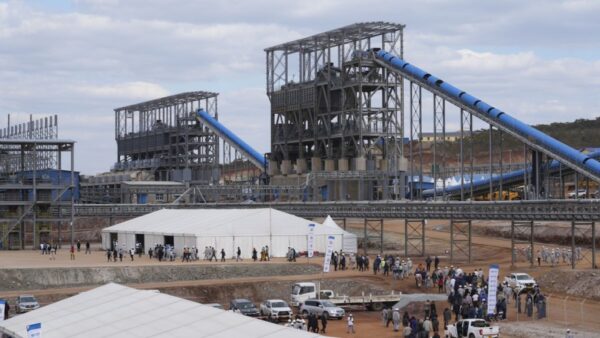

China’s Zhejiang Huayou Cobalt has taken Zimbabwe’s mineral beneficiation ambitions into a new phase through its Prospect Lithium Zimbabwe (PLZ) operation at Arcadia, establishing a lithium sulphate export industry that generated US$190 million in less than six months of commercial shipments, Mining Zimbabwe can report.
By Rudairo Mapuranga
The achievement presents an uncomfortable comparison for Zimbabwe’s established platinum group metals (PGM) industry, which, despite more than two decades of large-scale mining investment, has yet to establish domestic refining capacity for finished platinum group metals.
Zimbabwe exported approximately 33,000 tonnes of lithium sulphate worth US$190 million between April and September 2026, according to figures presented by the Minerals Marketing Corporation of Zimbabwe (MMCZ).
The exports came from Huayou’s Arcadia operation, which, through Prospect Lithium Zimbabwe and its processing subsidiary, became the country’s first and only commercial producer and exporter of lithium sulphate.
The figures demonstrate how quickly the Chinese investor has established a new processing-based export stream, moving Zimbabwe beyond its traditional dependence on lithium concentrates.
Huayou invested approximately US$400 million in the lithium salt processing facility at Arcadia, which was completed in October 2025 and has an annual production capacity of 50,000 tonnes of lithium sulphate.
Commercial exports began in April 2026, marking the first lithium sulphate shipments from Zimbabwe and Africa.
Lithium sulphate is an intermediate chemical produced through further processing of lithium concentrate. It can subsequently be converted into lithium carbonate or lithium hydroxide, which are important materials in lithium-ion battery manufacturing.
A comparison the PGM industry cannot ignore
The significance of Huayou’s investment becomes more apparent when compared with Zimbabwe’s platinum industry.
Zimplats, Mimosa and Unki have operated in Zimbabwe for decades, contributing significantly to mining exports, employment and investment. Their operations have also developed substantial domestic processing infrastructure, including concentrators and smelters.
However, the country continues to export PGM intermediate products for further refining outside its borders, meaning that a significant stage of the value chain remains beyond Zimbabwe’s industrial base.
Despite repeated discussions around establishing local platinum refining capacity, the country has yet to achieve full domestic refining of its PGM output.
Huayou’s Arcadia investment has, within a comparatively short period, established commercial production of a processed lithium chemical for export, demonstrating the possibility of moving further along the mineral value chain through investment in specialised processing infrastructure.
The comparison is therefore not about whether Zimbabwe’s platinum producers have undertaken beneficiation. They have. It is about the additional processing stage that Huayou has managed to establish locally while the PGM industry continues to face challenges in domestic refining.
Lithium becomes a major export earner
The sulphate exports formed part of Zimbabwe’s US$2.16 billion lithium sales during the nine months to September 2026.
Spodumene concentrate accounted for US$1.8 billion, while petalite contributed US$155 million, with lithium sulphate adding US$190 million.
The figures also placed lithium ahead of PGMs as Zimbabwe’s second-largest mineral export category after gold during the period, with PGM sales generating US$1.73 billion.
The emergence of lithium sulphate as a significant export product is particularly important because it represents revenue from an additional stage of domestic processing rather than the conventional export of mineral concentrates.
Government has been pushing lithium producers towards local processing, with a ban on unprocessed lithium concentrate exports scheduled to take effect in January 2027.
Huayou’s Arcadia facility has effectively positioned the company ahead of that requirement, while other lithium producers continue working towards establishing their own processing capacity.
However, lithium sulphate is not the final stage of beneficiation. Further investment in the production of lithium carbonate and lithium hydroxide would allow Zimbabwe to capture additional value from its lithium resources.
For now, Huayou has demonstrated what a substantial investment in domestic mineral processing can deliver: a new export product, an additional revenue stream and a step further into the global battery materials supply chain.
For Zimbabwe’s PGM industry, the development renews the question of when the country will move beyond smelting and finally establish the capacity to refine its own platinum group metals.