Home Blog Page 133

Gold buying prices per gram in Zimbabwe today, 8 August 2025

Gold buying prices per gram in Zimbabwe today, 8 August 2025, from the official gold buyer and exporter Fidelity Gold Refinery (FGR).

SG 90% and ABOVE US$102.80/g.
SG ABOVE 89% BUT BELOW 90% US$101.71/g.
SG ABOVE 80% BUT BELOW 85% US$100.63/g.
SG ABOVE 75% BUT BELOW 80% US$99.54/g.
SAMPLE BELOW 10g BUT ABOVE 5g US$97.91/g.

Fire Assay CASH $103.35/g.

NB: Fire Assay cash price is for gold above 100g; no sample is deducted.

A sample of not more than 10g is deducted for the Fire Assay Transfer price.

A 2% royalty is charged on all deposits (Small-scale miners).

A 5% royalty is set for Primary Producers.

Gold buying prices per gram in Zimbabwe today, 7 August 2025

Gold buying prices per gram in Zimbabwe today, 7 August 2025, from the official gold buyer and exporter Fidelity Gold Refinery (FGR).

SG 90% and ABOVE US$102.44/g.
SG ABOVE 89% BUT BELOW 90% US$100.36/g.
SG ABOVE 80% BUT BELOW 85% US$100.28/g.
SG ABOVE 75% BUT BELOW 80% US$99.19/g.
SAMPLE BELOW 10g BUT ABOVE 5g US$97.57/g.

Fire Assay CASH $102.99/g.

NB: Fire Assay cash price is for gold above 100g; no sample is deducted.

A sample of not more than 10g is deducted for the Fire Assay Transfer price.

A 2% royalty is charged on all deposits (Small-scale miners).

A 5% royalty is set for Primary Producers.

Zim to Urgently Prioritise New IPP Framework in 2026, as Energy Deficit Is Expected to Widen 635% by 2030

0

Faced with a widening energy deficit, the Government says it will prioritise the launch of a “competitive” IPP procurement framework in 2026, in efforts to enhance investor participation in the critical energy sector, Mining Zimbabwe can report.

By Ryan Chigoche

This now urgent initiative, which was mooted some time back, comes as Zimbabwe continues to face a persistent energy deficit, with current available generation capacity at approximately 1,500 MW against a national demand of around 2,000 MW.

This 500 MW shortfall is set to worsen significantly, as demand is projected to surpass 5,177 MW by 2030, driven primarily by expansion in the energy-intensive mining, manufacturing, and agriculture sectors.

With this expected demand, if generation capacity remains stagnant, the energy deficit could widen by over 635% by 2030, underscoring the urgent need for investment and reform in the power sector.

Given the importance of energy in economic development, the Minister of Finance and Investment Promotion, Mthuli Ncube, said coming up with a competitive framework is a top priority in the coming year, as per the Budget Strategy Plan.

“In 2026, the Government will prioritise the transformation of the energy sector by launching a competitive Independent Power Producers (IPPs) procurement framework. This initiative is designed to enhance the energy market, encouraging both domestic and international investment through a more liberalised and transparent approach.”

“The new framework will be underpinned by several key measures, including facilitation by the Government to ensure that all IPP procurement processes are open and competitive, with clear and transparent guidelines for participation. This is aimed at attracting reputable investors and fostering innovation in power generation.”

“Government, in collaboration with key energy stakeholders, will strengthen the independence and capacity of regulatory agencies to ensure fair treatment of all market participants,” Ncube said.

For some time, Zimbabwe’s current Independent Power Producer (IPP) framework has struggled to attract significant private investment due to a combination of structural and regulatory challenges.

Chief among these are unbankable Power Purchase Agreements (PPAs), currency instability, and the absence of government guarantees—all of which deter both local and international financiers.

Investors face high exchange rate risk as payments are often made in local currency, while delays in licensing, bureaucratic red tape, and lack of clarity in the tendering process further weaken confidence in the system.

Additionally, poor transmission infrastructure and a lack of coordination between energy authorities continue to hamper the integration of new projects into the grid, despite the government’s stated ambition to boost renewable energy generation.

However, according to the Ministry of Finance, the regulatory and permitting processes that are going to be part of this new framework are expected to reduce delays and uncertainties for new projects, while a dedicated IPP procurement office will coordinate all related activities and stakeholder engagement.

This is a welcome development, given that the role of energy in modern economies cannot be overemphasised.

Also in support of this new framework, the modernisation of electricity infrastructure—including grid expansion, digitalisation, and the deployment of advanced storage technologies—will also be prioritised in 2026, the government said.

Going forward, the authorities will promote a diversified energy mix, prioritising investments in renewable energy sources such as solar and hydro, while maintaining flexible thermal capacity to ensure security of power supply.

In recent times, the Government has already put in place some necessary regulatory frameworks which have encouraged captive power producers to continue generating electricity for their own use, supplementing or offsetting reliance on the national grid.

The mining sector has led on this front, with almost all the major miners now generating their own power, while others have already budgeted for that.

Barrick Releases Site-Level Disclosures for 65 Global Tailings Facilities under GISTM

0

Mining major reports on risk levels, safe closures, and challenges in Mali as part of global push for transparency in tailings management

Barrick Mining Corporation has fulfilled its commitment to publish detailed information on its tailings storage facilities (TSFs), in line with the Global Industry Standard on Tailings Management (GISTM), a global benchmark introduced to enhance safety, transparency, and accountability in tailings management following the 2019 Brumadinho dam disaster in Brazil.

By Ryan Chigoche

The release includes site-specific data for 65 TSFs across Barrick’s global operations, reflecting the company’s broader push toward responsible environmental stewardship. Barrick played an active role in the formulation of the GISTM and, as a result, is already fully aligned with the standard’s rigorous requirements.

Transparent disclosure of tailings storage facilities is critical in an era where mining companies face growing scrutiny over environmental and social impacts. Poorly managed TSFs have historically led to catastrophic failures, with severe consequences for communities, ecosystems, and corporate reputations.

By releasing detailed site-level information in line with international standards, Barrick not only strengthens investor and public confidence but also sets a benchmark for industry accountability. This proactive approach helps ensure that risks are identified, monitored, and mitigated, ultimately protecting both people and the environment.

According to Barrick’s disclosure, five of Barrick’s TSFs are classified as ‘extreme’ risk and 12 as ‘very high’ risk. Despite these risk ratings, all facilities meet the GISTM’s operational and safety thresholds.

This risk classification is based on the potential consequences of failure, not the likelihood, underscoring the company’s commitment to responsible management even in higher-risk environments.

In contrast, 13 of the TSFs have already reached ‘safe closure’ status—a designation for facilities that no longer require active monitoring under GISTM guidelines.

These facilities are therefore exempt from the disclosure requirements. Additionally, one TSF is operated by a joint venture partner and does not fall under Barrick’s direct reporting obligations.

However, the company noted one exception: the Loulo-Gounkoto TSF in Mali. Due to an ongoing dispute with the Malian government, Barrick has lost access to the facility after the mine was placed under provisional administration. As a result, the company has been unable to verify its compliance with the GISTM at that site.

Despite this challenge, Barrick reaffirmed its broader commitment to responsible tailings management. President and CEO Mark Bristow said the company is continually working to reduce long-term environmental and human health risks by transitioning inactive TSFs into safe closure.

As part of this initiative, Barrick aims to move five additional TSFs into safe closure status by next year. Bristow emphasises that this process involves not only physical decommissioning but also long-term engagement with local communities, conservation of key biodiversity features, and respect for cultural heritage.

“The safe closure of these facilities requires stakeholders to be engaged, key biodiversity features to be conserved, and cultural values to be protected,” Bristow said.

Zimbabwe Launches e-Regulations Platform to Streamline Investment Procedures and Boost Competitiveness

0

Zimbabwe has officially launched its e-Regulations platform, a centralised digital portal aimed at simplifying and demystifying regulatory procedures for investors and businesses. The move is a key step in the government’s broader push to enhance the ease of doing business, strengthen transparency, and create a more predictable investment climate, Mining Zimbabwe can report.

By Ryan Chigoche

The platform, developed by the Zimbabwe Investment and Development Agency (ZIDA) in partnership with the United Nations Conference on Trade and Development (UNCTAD), will serve as a real-time online guide to administrative processes across 21 government ministries, departments, and agencies. It outlines step-by-step procedures—including requirements, costs, contact points, and timelines—for setting up and running a business in Zimbabwe.

The launch event in Harare was presided over by Chief Secretary to the President and Cabinet, Martin Rushwaya, who emphasised that the platform is a strategic response to long-standing investor concerns about bureaucratic inefficiencies.

“The operationalisation of the e-Regulations Portal is one of the strategies for implementing a decision made by Cabinet to urgently review the current highly regulated operating environment, which has proved to be an output loss to business both at entry and established levels. Without doubt, these reform measures will reduce the time and procedures of doing business and improve Zimbabwe’s global competitiveness.”

“The e-Regulations Portal is designed to consolidate and codify investment-related procedures into a simple, accessible, and interactive digital ecosystem that not only aligns our regulatory practices with international benchmarks but also improves accountability across government agencies.

Let me reiterate that this intervention is situated within the broader tapestry of Zimbabwe’s public sector transformation and reform agenda,” Rushwaya added.

The launch comes at a time when Zimbabwe is working to attract more foreign direct investment (FDI) to accelerate economic recovery and support large-scale industrialisation, particularly in sectors such as mining, energy, agriculture, and manufacturing. Investors have often cited unclear procedures, delays, and excessive red tape as major impediments to doing business in the country.

ZIDA Chief Executive Officer Tafadzwa Chinamo said the e-Regulations portal represents a new era in Zimbabwe’s investment facilitation framework—one grounded in transparency, efficiency, and accountability. He noted that the launch was only the first phase in a much larger reform process.

“Today signifies far more than the unveiling of a digital platform; it marks a fundamental shift in how we, as a government and as a nation, approach the enabling environment. This launch reaffirms Zimbabwe’s commitment to fostering a transparent, efficient, and investor-friendly environment. The e-Regulations portal is not an end in itself—it is the foundation.

The next step of this initiative will focus on streamlining and simplifying the procedures that you are about to see today. Through methodical review and collaboration, we will identify opportunities to reduce costs, eliminate redundancies, and shorten turnaround times. This ongoing work will ultimately culminate in the development of the online Investor Single Window—an integrated digital platform designed to enable businesses to complete all essential registration and licensing procedures in a seamless, efficient, and transparent manner,” Chinamo said.

He added that the rollout is guided by Zimbabwe’s commitment to global best practices, including the WTO Investment Facilitation for Development initiative, which advocates for predictable and accessible administrative processes for both domestic and foreign investors.

To reinforce the platform’s effectiveness, the government has reactivated the Ease of Doing Business Inter-Ministerial Committee, which will work alongside ZIDA to continually review and modernise regulatory frameworks. In parallel, the Business Be Ready Survey, a diagnostic tool under the National Development Strategy 1 (NDS1), is identifying pain points within the investment environment, helping to target reforms where they are most urgently needed.

The ultimate objective, officials said, is to transition from fragmented manual procedures to a fully integrated Investor Single Window, where businesses can complete all key transactions—from registration to licensing—on one digital platform.

This model has already proved effective in fast-growing economies such as Rwanda, Singapore, and Mauritius.

For Zimbabwe, which aims to achieve upper-middle-income status by 2030, the e-Regulations platform is more than a technical innovation. It is a critical pillar of national economic transformation, ensuring that as the country opens its doors to global capital, it does so with speed, clarity, and credibility.

The launch also resonated strongly with Zimbabwe’s development partners, particularly the European Union. At the event, Maria Commert Homo, EU representative, said:

“Today, with the launch of this e-Regulations portal, Zimbabwe is taking a major step towards addressing that need, and we really commend the government for its proactive and quick approach. The e-Regulations portal is a powerful tool that will provide investors with easy access to information on regulations, procedures, and requirements for doing business in Zimbabwe. This will not only improve the ease of doing business, but also increase transparency, reducing the complexity and uncertainty that can often deter investment.”

She added that the portal will be an invaluable resource for European companies looking to invest in Zimbabwe, as it will provide them with the information they need to make informed decisions and navigate the investment process with confidence.

The alignment between Zimbabwe’s reform efforts and international partners like the EU highlights growing global confidence in the country’s economic future.

Gold Deliveries Increase Over 20 Percent Year-on-Year in July 2025

Zimbabwe’s gold deliveries to Fidelity Gold Refinery (FGR) in July 2025 recorded a marginal 1.42% decrease from the previous month but posted a significant 20.3% increase compared to July 2024, demonstrating continued strength in the country’s gold sector, particularly among artisanal and small-scale miners (ASM), Mining Zimbabwe can report.

By Rudairo Mapuranga

According to official data seen by this publication, total gold deliveries in July 2025 stood at 4,205.02 kg, down 1.42% from 4,265.49 kg recorded in June 2025.

The decline was primarily driven by a 3.41% drop in small-scale gold deliveries, which fell to 3,199.84 kg in July from 3,312.61 kg in June. Despite the drop, the ASM sector remains dominant, contributing over 76% of July’s total deliveries.

In contrast, large-scale miners delivered 1,005.18 kg in July, up 5.49% from 952.88 kg in June, showing signs of steady recovery following earlier restructuring within some major operations.

Year-on-year, total gold deliveries rose by 20.3% from 3,495.08 kg in July 2024 to 4,205.02 kg in July 2025.

This was underpinned by a 36.5% increase in deliveries from small-scale miners, which jumped from 2,343.31 kg in July 2024 to 3,199.84 kg in July 2025. This surge reaffirms the sector’s pivotal role in the country’s gold output.

However, large-scale gold deliveries declined by 12.72% year-on-year, from 1,151.77 kg in July 2024 to 1,005.18 kg in July 2025. The decrease may reflect ongoing infrastructure investments and production realignments in the sector.

The strong July figures follow an exceptional first half of 2025. As previously reported by Mining Zimbabwe, gold deliveries rose by 45.85% in the first six months of 2025 compared to the same period in 2024, with ASM deliveries almost doubling.

Zimbabwe recorded 20,103.55 kg of gold from January to June 2025, up from 13,784.29 kg in 2024. ASM contributions accounted for 14,561.68 kg, a 96.31% increase from 7,416.97 kg a year earlier.

The stellar performance has been attributed to improved confidence in formal gold marketing channels, with the Fidelity Gold Refinery offering over US$105 per gram, encouraging miners to deliver their gold legally.

While the slight month-on-month dip in July deliveries may raise concerns about short-term fluctuations, the broader trend remains overwhelmingly positive. Strong year-on-year growth, particularly from small-scale miners, suggests Zimbabwe remains on track to exceed its 40-tonne gold output target for 2025, provided supportive policies and fair market conditions continue.

More Than Two Years Later, Globe & Phoenix School Rebuild 78% Complete After Mining Horror That Shocked Zimbabwe

0

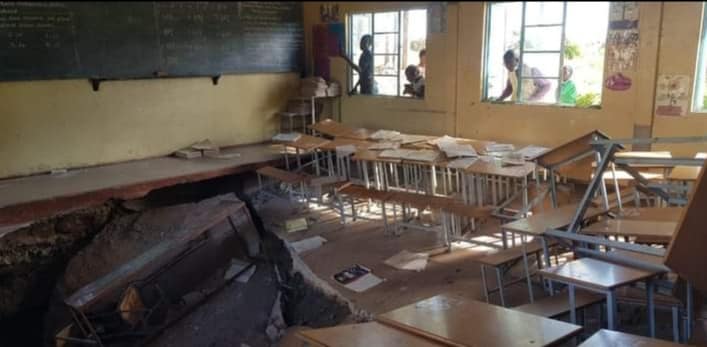
It’s been over two years since the ground at Globe and Phoenix Primary School in Kwekwe opened up, swallowing classrooms, injuring terrified children, and exposing just how recklessly illegal mining can intersect with our communities, Mining Zimbabwe can report.

By Rudairo Mapuranga

Back then, in March 2023, videos of frantic teachers pulling pupils from rubble went viral. News outlets reported on the tragedy that injured at least 14 learners, a scene that stunned Zimbabwe and put Kwekwe’s underground chaos on the global map.

Fast forward to today: the government says the reconstruction of Globe & Phoenix is 78% complete, with September 2025 set as the date for reopening the new campus that will accommodate 785 learners, a massive relief for families who have watched their children study in makeshift facilities since the collapse.

Permanent Secretary in the Ministry of Information, Nick Mangwana, confirmed the progress:

“The reconstruction of Globe and Phoenix Primary School, which was decommissioned due to illegal mining activities, is now 78% complete. The new site toured today by stakeholders, is on track for completion by September 2025 and will accommodate 785 learners. Currently, the project consists of an administration block, ablution facilities, and seven double-classroom blocks with trusses installed. An additional five double-classroom blocks have reached the roofing stage. All building plans have been approved, and site clearing is at an advanced stage.”

Let’s remember how we got here: the collapse wasn’t a natural disaster—it was a man-made horror caused by unregulated, greedy digging beneath the school, with illegal miners tunnelling like termites under a vital piece of public infrastructure. This wasn’t an isolated incident either; it was the culmination of years of artisanal miners chasing ore right into the heart of Kwekwe, ignoring laws and endangering lives.

While the reconstruction is commendable, it’s impossible to talk about rebuilding without asking whether Zimbabwe is finally serious about protecting schools, hospitals, and other community assets from the dangers of illegal mining. What is stopping local authorities from clearing out the syndicates who continue to operate dangerously close to homes and learning institutions? And who will hold accountable those who allowed mining activity so near a school in the first place?

Yes, the school’s rebirth offers a symbol of hope, but if we don’t tackle the root causes of illegal mining head-on, Globe and Phoenix won’t be the last tragedy we rebuild from. We need enforcement, we need community education, and we need policies that don’t just punish offenders after disaster strikes, but prevent these disasters entirely.

While walls can be rebuilt, the trauma inflicted on those children the nightmares, the fear of floors crumbling beneath their feet—won’t vanish so easily

Gold buying prices per gram in Zimbabwe today, 6 August 2025

Gold buying prices per gram in Zimbabwe today, 6 August 2025, from the official gold buyer and exporter Fidelity Gold Refinery (FGR).

SG 90% and ABOVE US$102.54/g.
SG ABOVE 89% BUT BELOW 90% US$100.46/g.
SG ABOVE 80% BUT BELOW 85% US$100.37/g.
SG ABOVE 75% BUT BELOW 80% US$99.29/g.
SAMPLE BELOW 10g BUT ABOVE 5g US$97.66/g.

Fire Assay CASH $103.09/g.

NB: Fire Assay cash price is for gold above 100g; no sample is deducted.

A sample of not more than 10g is deducted for the Fire Assay Transfer price.

A 2% royalty is charged on all deposits (Small-scale miners).

A 5% royalty is set for Primary Producers.

China’s Mineral Export Curbs to US Defence Sector Could Reshape Global Supply Chains — Zimbabwe Must Watch Closely

0

China has begun restricting exports of critical minerals to Western defence industries, a move that’s already causing production delays and driving up global prices, The Wall Street Journal reported earlier this week.

By Ryan Chigoche

The new controls, which target rare earth elements vital to military and high-tech applications from fighter jet engines and missile guidance systems to satellite components, tighten an already fragile supply chain.

For resource-rich countries like Zimbabwe, which hold significant deposits of these strategic minerals, the shifting dynamics present both a warning and a potential opening.

The move has rattled U.S. defence contractors, some of whom report waiting up to two months for rare earth magnets from non-Chinese suppliers.

Prices for key inputs like samarium, used in jet engines, have reportedly surged, being offered at up to 60 times their usual rate.

Supplies of other strategic minerals such as gallium and germanium are also dwindling, raising the risk of production slowdowns even among major manufacturers.

Although far removed from the U.S.-China standoff, Zimbabwe is not immune to the ripple effects. In fact, these developments may present a rare strategic opportunity.

Zimbabwe holds significant reserves of lithium, rare earths, and other speciality minerals, many of which remain underexplored or underdeveloped.

As global supply chains reconfigure, the rush to secure non-Chinese sources could draw renewed attention and investment toward Zimbabwe’s mineral sector.

Currently, Chinese firms dominate local lithium projects such as Bikita Minerals, Arcadia, and Sabi Star. However, Western governments and companies may now begin seeking alternative jurisdictions for future supply security.

If Zimbabwe can ensure transparent licensing, investor-friendly policies, and firm commitments to local value addition, it could attract diversified interest from markets looking to reduce their dependence on Chinese-origin minerals.

However, this will require a delicate balancing act. Zimbabwe must protect its existing partnerships with Chinese firms while creating space for Western capital and offtake agreements.

As global powers adjust their sourcing strategies, the country must avoid becoming locked into a one-dimensional mineral supply arrangement.

The geopolitical tension over minerals is no longer just a distant issue between Washington and Beijing—it could soon determine which mining nations thrive in the decade ahead.

Why Zimbabwe Needs a Critical Minerals Strategy — Now

China’s export controls have sent a clear warning to the West: diversify your mineral supply chains or face disruption. For Zimbabwe, this is more than a headline; it’s a call to action.

With untapped reserves of lithium, rare earths, and other strategic minerals, Zimbabwe is well-positioned to respond to this global realignment. But the window of opportunity will not remain open indefinitely. The country urgently needs a coherent, forward-looking Critical Minerals Strategy.

This strategy should begin with comprehensive mapping and systematic development of the country’s rare earth and speciality mineral deposits. It must also include robust policies on beneficiation and value addition to avoid falling into the familiar pattern of exporting raw materials without capturing downstream value.

In addition, Zimbabwe must build a diversified investment framework that not only accommodates its long-standing partnerships with Chinese companies but also actively welcomes Western and multilateral investors.

Managing geopolitical risk will be essential, allowing the country to remain neutral and adaptable in a rapidly shifting global environment. Equally important is the need for transparent, predictable, and investor-friendly regulations that can inspire confidence and attract long-term capital.

Without such a roadmap, Zimbabwe risks being left behind in the global reshuffling of mineral supply chains. Even worse, it could find itself overly dependent on China at a time when much of the world is seeking to reduce that very reliance.

The battle for control of critical minerals is accelerating, and Zimbabwe must now decide whether it will remain a passive player or take a strategic position.

A national critical minerals strategy is no longer a luxury—it is the key to unlocking long-term value from the country’s rich geological endowment and securing its place in the global mineral economy of the future.

ZINIRE to Converge Industry Minds in Victoria Falls to Address Mining Ground Stability

0

On the 20th of September, the majestic backdrop of Victoria Falls will host more than just tourists and global adventurers; it will become the convergence point for Zimbabwe’s finest rock engineering minds as the Zimbabwe National Institute of Rock Engineering (ZINIRE) stages its 2025 Annual General Meeting and Symposium, Mining Zimbabwe can report.

By Rudairo Mapuranga

Held under the timely theme “Managing Fall of Ground into the Future,” the symposium is more than just a calendar event — it’s a strategic gathering as the mining sector grapples with increasing geotechnical risks, deepening shafts, ageing infrastructure, and a rising call for safety-driven production.

Hosted at Elephant Hills Hotel, this AGM and symposium isn’t merely about institutional updates. It is a space where science meets experience, where ideas around rock mechanics, strata control, and mine stability will be shared, debated, and shaped into practical responses for an industry that has lost too many lives to preventable fall-of-ground incidents.

Not Just Another Talk Shop

For many in the mining ecosystem, “Fall of Ground” is no abstract terminology — it’s a grim reality that continues to haunt shafts across the country. With several fatalities in both large- and small-scale operations linked to rockfalls and poor support systems, this AGM could not have come at a better time.

What makes the ZINIRE Symposium stand out is its technical relevance. It is tailored for rock engineers, strata control officers, mine planners, civil engineers, SHEQ practitioners, MRM managers, geologists, and virtually anyone who influences how Zimbabwe mines.

It is also one of the few platforms that integrates students, ensuring knowledge transfer is not siloed at the top but flows to the next generation of mining professionals.

Fall of Ground: A National Concern

Zimbabwe’s mining industry has recorded multiple injuries and fatalities due to fall-of-ground hazards — a clear indication that rock engineering cannot remain a backroom function. The symposium will push the sector to rethink how support systems are designed, how data is used to predict geotechnical threats, and how policies can be aligned with modern ground control science.

It’s not just about ticking safety boxes; it’s about ensuring that every miner — whether in a mechanised platinum mine or a deep artisanal gold pit — returns home alive.

Open Call for Technical Papers

To ensure that knowledge is not just top-down, ZINIRE is calling for technical papers from practitioners and researchers across the sector. Those wishing to present during the symposium must submit their abstracts by 31st August 2025 to ZINIRE’s technical committee, led by Patrick Mushangwe and Freddy Chikwiwira. This ensures the AGM becomes a ground for home-grown solutions rooted in our own mining context, not borrowed theories from foreign operations.

Registration and Sponsorship

Registration for delegates is $150, while students attend for free — a deliberate gesture aimed at empowering the next generation. Corporate players are encouraged to support through tiered sponsorship packages ranging from Bronze ($500) to Platinum ($2,000+), with added visibility and opportunities to present from the Silver tier upwards.

This year’s ZINIRE AGM is not just about engineering talk — it’s about shaping the mining narrative around resilience, data-driven operations, and investor confidence built on safety.

For a mining sector that is determined to grow its contribution to the economy while reducing its human cost, events like these are no longer optional — they are essential.