Home Blog Page 203

Kuvimba’s Gold Output Reaches 300 kg Monthly, Eyes Further Expansion

0

The country’s biggest operational asset holder, Kuvimba Mining House (KMH), is making waves with its impressive gold production, averaging 300 kilograms of gold per month from its three gold mines.

By Rudairo Mapuranga

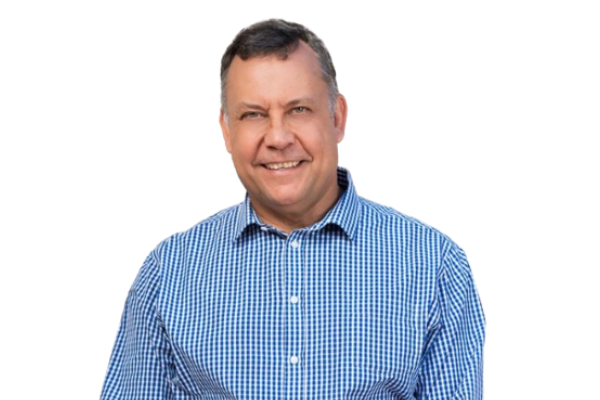
KMH is also setting its sights on expanding its resource base through new exploration projects, according to KMH Group CEO Trevor Barnard.

Kuvimba currently operates three key gold mines namely Freda Rebecca Gold Mine, Shamva Gold Mine, and Jena Mines. Despite already achieving significant output, the company is not resting on its laurels.

“Currently, we are producing around 300 kilograms of gold per month, which is the target we are aiming for. However, we are also exploring further projects in the gold sector to increase our resource base. This will help ensure long-term stability. We are developing several new projects to increase our production and improve efficiencies in our current operations,” Barnard stated.

The KMH Group CEO said that with a robust strategy and a keen eye on future opportunities, Kuvimba Mining House is poised to further solidify its position in the gold sector, ensuring continued growth and stability.

Barnard highlighted the strategic importance of gold to KMH, particularly in light of rising gold prices. He emphasized the company’s ongoing efforts to secure additional gold claims to maximize benefits from the lucrative market conditions.

“Gold has been very beneficial for us and is one of the key assets in our portfolio. We are currently managing three successful operations.

“As for the potential of further acquisitions, that possibility is always on the horizon. It depends on the value those acquisitions can bring and whether we can unlock additional value from them. It is still a bit early to provide specific details on that front,” Barnard said.

Government Pushes for Self-Sufficiency in Power Generation for Mining Sector

0

The Government of Zimbabwe has underscored the critical need for self-sufficiency in power generation within the mining sector, particularly as the industry experiences substantial growth driven by the rapidly increasing lithium mines.

Energy and Power Development Minister Edgar Moyo emphasized the significant surge in power demand and highlighted the necessity for collaboration between the government and the private sector to meet the increased demand.

“We recognize that the mining sector is growing, particularly with the coming of the lithium mines. The demand for power has surged phenomenally,” said Minister Moyo. “And, as the government, we cannot adequately provide power alone, we need to do it with the private sector,” Moyo told the chronicle.

To address this challenge, the government has approved a policy mandating that miners, especially those in the ferrochrome sector who benefit from substantial subsidies, develop their own renewable energy generation plants.

“We have approved a policy that these miners, particularly the ferrochrome miners who are heavily subsidized, should develop their own generation plants from the renewable side,” Moyo said.

The policy sets a clear timeline for implementation.

“We gave ferrochrome miners two years to set up their own generation plants. The time frame begins this year, and we expect that by 2026 they should have set up their own generation plants,” Minister Moyo added.

This move is part of a broader government strategy to boost the country’s power output. In recent years, significant attention has been given to expanding electricity production, most notably with the commissioning of Hwange Units 7 and 8 last year. These units have added a robust 600MW to the national grid, solidifying Hwange Thermal as the country’s major electricity supplier.

The proactive approach in mandating self-sufficiency in power generation for the mining sector is expected to alleviate the pressure on the national grid while promoting sustainable energy solutions.

Bravura to Power Kamativi with 6MW Diesel Generators

0

Bravura has acquired and delivered a 6MW generator to be used at its Kamativi lithium site.

This move aims to facilitate the commencement of operations by late this year or early next year.

Bravura received the dump processing lease for Kamativi in February this year and has been working rapidly to set up the necessary infrastructure. Acquiring the 6MW generator is a significant step in ensuring that the plant has a reliable power supply once production commences.

Eng. Chris Pouroullis, Chairman of Manhattan, the company responsible for manufacturing the state-of-the-art lithium TSF processing plant, provided insights into the power requirements and setup.

“We’re looking at between three and four megawatts of power for the plant. The generators have a capacity of six megawatts. We need to have enough capacity for the generators to run the plant effectively. There are four 1.5 MVA generators. When the plant is operating, we plan to run it with three generators, ensuring that we have enough capacity to start the plant and perform maintenance. One generator can be taken offline for maintenance without affecting the plant’s operation.”

“This strategic setup allows Bravura to maintain continuous operations while ensuring that maintenance activities do not disrupt production. The redundancy provided by the four 1.5 MVA generators means that even if one generator is offline for maintenance, the remaining three can keep the plant running smoothly,” said Bravura Group General Manager Gbenga Ojo.

The Kamativi dump processing project is a key component of Bravura’s expansion strategy. The site, which has significant lithium deposits represents a valuable asset in the company’s portfolio. By leveraging advanced technology and robust infrastructure, Bravura aims to maximize the efficiency and output of the processing plant.

The decision to utilize diesel generators also highlights the challenges faced by mining companies in securing reliable grid power in remote locations.

Zimbabwe gold buying prices per gram 11 June 2024

Fidelity Gold Refinery (FGR) official gold buying prices/ gram. See the Zimbabwe gold buying prices per gram today 11 June 2024.

SG 90% AND ABOVE US$70.01/g
SG ABOVE 85% BUT BELOW 90% US$69.27g
SG ABOVE 80% BUT BELOW 85% US$68.53/g
SG ABOVE 75% BUT BELOW 80% US$67.79/g
SAMPLE BELOW 10g BUT ABOVE 5g US$66.67g

Fire Assay CASH $70.38/g

NB: Fire Assay cash price is for gold above 100gs, no sample is deducted.
For the Fire Assay Transfer price, a sample of not more than 10g is deducted
A 2% royalty is charged on all deposits (Small-scale miners)
A 5% royalty is set for Primary Producers

Cash available. Fidelity Gold Refinery prices will be changing daily to match world market prices.

ASM in Shurugwi Blame Power Cuts for Decrease in Gold Deliveries

0

Artisanal and Small-scale Miners (ASM) in Shurugwi are grappling with frequent power cuts, significantly affecting their operations due to the lack of dedicated electricity lines.

According to the miners, these persistent electricity challenges have been a major contributing factor to the decline in gold deliveries to Fidelity Gold Refinery (FGR), the country’s sole gold buyer and exporter.

“The ASM community in Shurugwi is facing severe operational challenges due to frequent power cuts. Without dedicated electricity lines, the miners are forced to operate under difficult conditions, significantly impacting their productivity and the overall gold supply chain. The government and relevant authorities must urgently address these electricity issues to support the ASM sector and ensure the steady flow of gold deliveries, which are vital for the country’s economy,” stated one miner.

During a recent visit by this publication to various milling sites in Shurugwi, it was evident that many operations had ground to a halt. The mills, usually bustling with activity, were silent, with production waiting for the night shifts when grid electricity is more consistently available.

The Human Resources Manager for the Shurugwi-based BSPK mining company highlighted the severe impact of the power cuts on their operations. “Since the start of winter, electricity has been a challenge, thereby affecting some of our operations. We are now working only in the evening due to power challenges, and this has been affecting our production and operations costs to a larger extent,” he explained.

Makumba Nyenje, Chairman of the Zimbabwe Miners Federation (ZMF) for the Midlands province, echoed these concerns. “This winter, electricity has been a challenge, especially for millers, leading to production decreases. We are forced to have only the night shift to manage power costs, as diesel generators have become too expensive to run,” Nyenje said.

The reliance on diesel generators during the day has significantly increased operational costs, further squeezing the already tight margins of the ASM sector. The erratic power supply not only hampers productivity but also disrupts the entire supply chain, from mining to milling to final gold deliveries.

The decline in gold deliveries to Fidelity Gold Refinery is a worrying trend, as the ASM sector plays a crucial role in Zimbabwe’s gold production, accounting for over 60 per cent of total annual production. With the nation heavily dependent on gold exports for foreign currency, the power crisis poses a significant threat to economic stability.

Zimbabwe gold buying prices per gram 10 June 2024

Fidelity Gold Refinery (FGR) official gold buying prices/ gram. See the Zimbabwe gold buying prices per gram today 10 June 2024.

SG 90% AND ABOVE US$70.20/g
SG ABOVE 85% BUT BELOW 90% US$69.46g
SG ABOVE 80% BUT BELOW 85% US$68.72/g
SG ABOVE 75% BUT BELOW 80% US$67.97/g
SAMPLE BELOW 10g BUT ABOVE 5g US$66.86g

Fire Assay CASH $70.57/g

NB: Fire Assay cash price is for gold above 100gs, no sample is deducted.
For the Fire Assay Transfer price, a sample of not more than 10g is deducted
A 2% royalty is charged on all deposits (Small-scale miners)
A 5% royalty is set for Primary Producers

Cash available. Fidelity Gold Refinery prices will be changing daily to match world market prices.

Ministry of Mines Applauds Bravura Group’s Remarkable Preparedness

0

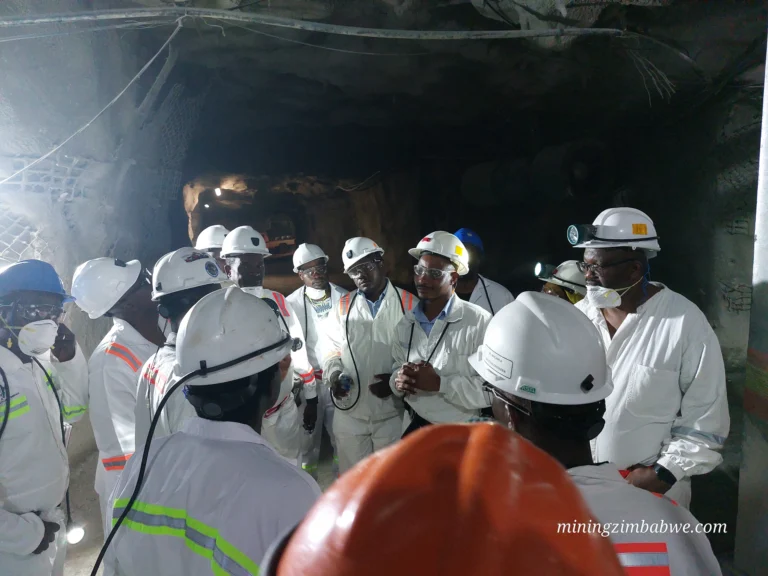
Officials from the Ministry of Mines and Mining Development, part of a delegation on an equipment and plant fact-finding mission, have expressed their excitement over the impressive preparedness demonstrated by the Pan-African diversified mining company Bravura Group.

By Rudairo Mapuranga

The delegation was particularly thrilled with Bravura’s significant investment in state-of-the-art equipment and cutting-edge technologies, underscoring the company’s unwavering commitment and substantial progress in making Zimbabwe a premier mining destination.

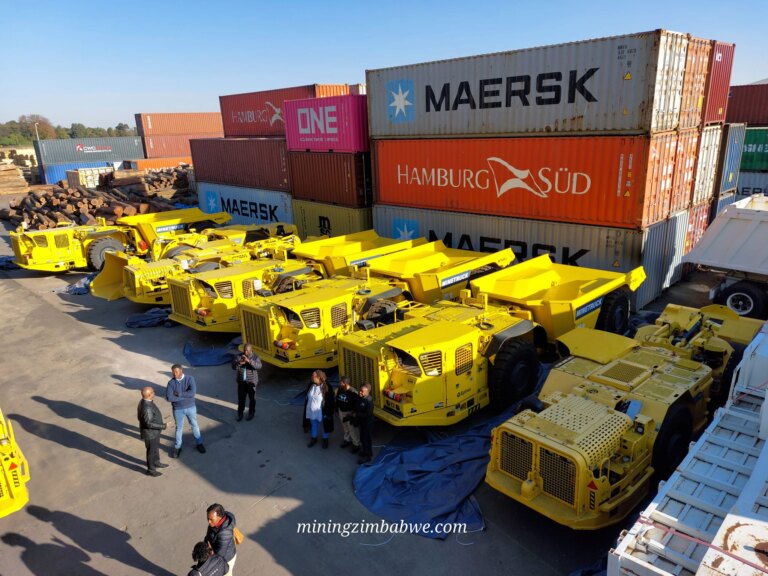
Bravura has invested hundreds of millions of USD in advanced yellow machines stationed at CWC in South Africa, ready for the Selous PGM project box cut stage. These machines are pending importation approval and duty exemptions from the Zimbabwean government.

Additionally, Bravura is set to revolutionize the Kamativi dump with a cutting-edge lithium TSF processing plant, currently being manufactured by Manhattan Corporation in South Africa.

Wilfred Runyararo Munetsi, Deputy Director of Communications for the Ministry of Mines and Mining Development, praised Bravura’s efforts, stating:

“We’ve seen massive equipment purchased by Bravura for the development of a mine, especially an underground mine. The equipment they have shown us, including drill rigs and dump trucks, is geared for large-scale mining. Bravura is set to become a major player in the platinum field. This investment demonstrates their serious commitment to Zimbabwe, given the high cost of the equipment. We hope it will pay dividends for them.”

Eng. Leonard Mtilimanja, Deputy Provincial Mining Director for Matabeleland North, echoed these sentiments:

“As the Minister of Mines always mentions, our role also includes overseeing mining development. In this regard, you can see the progress made on this project by Bravura. We have inspected their equipment, particularly the DMS plant, which is now fully assembled and ready for shipment to the site in Kamativi. We are very excited about this development and will continue to monitor the project until its completion, benefiting Zimbabwe.”

206 Delegates Attend the planetGOLD ASGM Global Annual Forum in the Philippines

0

The 5th planetGOLD annual conference wrapped up on the 7th of June in Talisay, Batangas, Philippines, drawing 206 delegates from 23 countries, including Zimbabwe.

By Wellington Takavarasha

The event, held from June 3rd to 6th, 2024, focused on advancing safer and cleaner techniques in artisanal and small-scale gold mining (ASGM) by replacing mercury use.

Zimbabwe, not yet a formal member of planetGOLD, was represented by a four-member delegation led by Mr. M. Munodawafa, the Chief Government Mining Engineer. Other delegates included A. Chikurira from the Environment Ministry, W. Takavarasha from the Zimbabwe Miners Federation (ZMF), and T. Mapooze from the Zimbabwe Environmental Law Association (ZELA).

The planetGOLD program, funded by the Global Environment Facility (GEF) and led by the United Nations Environment Programme (UNEP), aims to promote mercury-free mining practices.

The conference featured presentations on financial access, sector formalization, technical solutions to reduce mercury use, and awareness campaigns highlighting mercury’s toxicity. Zimbabwe’s presentation focused on financial access for artisanal miners and its impacts.

Currently, only nine countries are formal members of planetGOLD. Zimbabwe’s participation at the conference was a step towards potentially joining the initiative and securing US$5 million in funding from GEF to support mercury reduction and improve mining practices.

Having ratified the Minamata Convention on Mercury in 2021, Zimbabwe is actively working on its Minamata Initial Assessment (MIA) and drafting its National Action Plan (NAP) in coordination with relevant ministries and the Zimbabwe Miners Federation (ZMF).

Bravura’s State-of-the-Art Processing Plant for Kamativi Unveiled

0

Pan-African diversified miner Bravura has showcased its highly advanced, state-of-the-art lithium processing plant, which is being manufactured by Manhattan in South Africa.

Rudairo Mapuranga

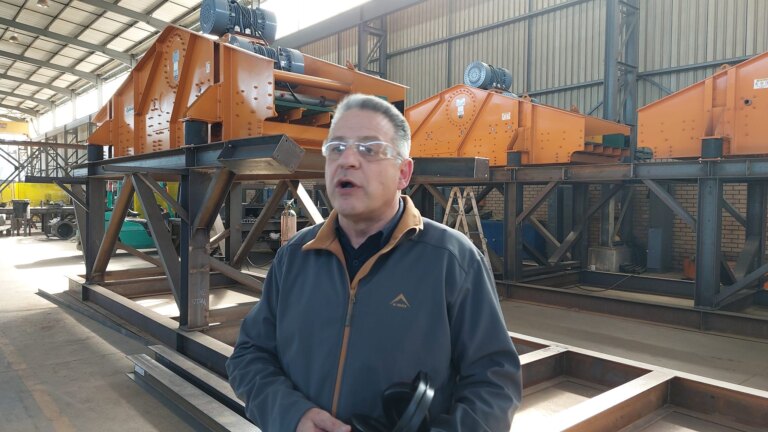
Mining Zimbabwe was part of a Media tour that was conducted on the 6th of June 2024 at Manhattan Corporation, an engineering company which is manufacturing a state-of-the-art processing plant for Bravura in South Africa.

see images HERE

Eng. Chris Pouroullis, Chairman of Manhattan, provided a detailed presentation and tour of the plant, highlighting its key features and advanced technologies. The plant has a 600-tonne-per-hour feed section at the front end, leading into a 300-tonne-per-hour wash plant. This feeds into the Dense Media Separation (DMS) section, processing 150 tonnes per hour. The final product is spodumene, produced at approximately 10 tonnes per hour, depending on the input feed grade.

The plant’s design is based on data published by Bravura and extensive test work, effectively handling the coarse fraction of the Kamativi dump, which is around 25 million tonnes. Approximately 50% of this material is processed through the DMS plant. The plant’s gross capacity is 70,000 tonnes per annum of saleable spodumene concentrate. The front end operates only during the day to align with the mining equipment’s operational schedule, while stockpiles accumulated during the day are processed during the night shift, enhancing safety and operational efficiency.

The plant spans 400 meters in length and 150 meters in width, designed for optimal operational performance. Trucks dump ore into a feed bin set against a rock platform, with material transported 125 meters away to minimize dust and airborne pollutants. Safety and operational efficiency are paramount, with approximately 27 conveyors moving ore and waste materials, keeping personnel and machinery separate.

The wash plant separates materials from the Kamativi dump, handling sizes from 2 mm to 0 mm. Plus 450-micron material goes into the DMS circuit, while minus 450-micron material is pumped to a recovery circuit for potential reprocessing. The DMS section includes two primary units, each processing 75 tonnes per hour, using dense media for gravity separation. Eight cyclones, instead of the traditional two, ensure optimal recovery efficiency.

A secondary DMS unit processes 25 to 30 tonnes per hour, refining the final product to ensure high-quality cuts free from contaminants. The final product undergoes drying and cooling to reduce moisture and temperature before packaging. A magnet plant removes any remaining contaminants, and the product is stored under cover before shipping.

The plant operates with synchronized 1.5 MVA diesel generators, providing a combined output of 5 MVA. A water pump station supplies water, with a thickener recovering and recycling water to minimize local extraction. Extensive earthworks and civil engineering efforts are ongoing to establish a stable platform for the plant, given the challenging terrain at the Kamativi site.

Eng. Chris Pouroullis emphasized the plant’s efficiency during the tour.

“You can dismantle it and ship it to the mine site. Some of the assembled equipment at the back has been trial-assembled, showing how everything fits together into a moving component. The green tanks are part of the DMS plant structures, upside down because they’ve been rubber-lined to protect the rubber before shipping. The rubber needs to be packed onto trucks, delivered to the site and assembled. We pre-assemble as much as possible without interfering with truck loading efficiency. These components form a module that allows the plant to operate as a moving machine.”

He continued, “The processing plant structures fill up 450 meters with equipment, including long overland conveyors that return waste products to the plant. Raw steel is fabricated, welded, assembled, sandblasted, and painted with three coats for rust protection and longevity. Some structures are still in their raw state, being dismantled into smaller pieces for sandblasting and painting.”

“A skilled technician, Godfrey, and the technical team design the components, which are then converted into steel. Behind us, you can see the equipment in progress, including bandsaws used to cut steel with a straight edge for neat assembly, avoiding structural problems.”

Pouroullis explained, “The workshop has shifted work outside, preparing for delivery and installation. Components have been removed for sandblasting and painting. We plan another trial assembly of the plant once it’s painted to preassemble tanks inside structures, ensuring a complete delivery to the site.”

“The plant, when complete, is about four and a half stories high, with a 450-meter footprint. It includes infrastructure and buildings. We acquired equipment from Vibramac, a reputable South African brand known for high-quality products essential for plant reliability and uptime. The plant prioritizes high-quality, reliable components for successful project outcomes,” Pouroullis added.

Pouroullis highlighted the plant’s design features, “The splitter directs material flow with gate valves, fabricated in-house using laser cutters for precise cuts. Plates are drawn on CAD and cut with smooth edges for easy assembly. Welded components are assembled permanently with color-coded safety handrails. Material is processed through the sandblasting and painting phases before final assembly. Some components were brought back for re-sandblasting and painting. Pre-assembly work tests equipment fit before shipping to the site.”

He noted the importance of conveyor belts, “Conveyor belts, crucial for material transport, are assembled and tested. Variable speed drives control drum energy, preventing coarse material from becoming fine. Coarse material is cleaned and sent to the DMS, avoiding contamination of the medium used for separation.”

Pouroullis explained the role of electrical components, “Electrical components, housed in containers, form the electronic control system. Quality checks ensure all components meet standards before packing for shipment. The control room operators use touch screens to monitor and adjust plant operations, maintaining efficiency and process control.”

“The plant processes 600 tonnes per hour, removing unwanted material and optimizing feed rates for steady process control. Feeder interlocks and weightometers adjust feed rates for optimal equipment performance. Cyclones and magnetic separators maintain slurry density, essential for effective separation,” Pouroullis detailed.

He concluded, “DMS technology offers cost-effective processing by treating material without extensive crushing or milling. The plant design minimizes energy costs and maximizes operational efficiency, making it economically viable. Electrical panels and components, integral to the MCCs, are thoroughly checked and prepared for shipping.”

Pouroullis highlighted the plant’s efficiency, “The plant’s design ensures energy efficiency and high-quality production, crucial for maintaining economic viability in fluctuating market conditions. The plant is set up to process coarse material, with future potential for fine material processing if economically viable. The design includes multiple conveyors and emergency stockpiling to ensure continuous operation, even during maintenance.”

“This state-of-the-art plant operates without a front-end loader, feeding material directly to trucks, significantly reducing costs and energy consumption. The plant’s design, guided by Bravura, ensures efficient, modern operations,” Pourou

The AMMZ to Conduct a Technical Visit at Unki Mine

0

The Association of Mine Managers of Zimbabwe (AMMZ) has announced a technical visit to the Unki Complex in Shurugwi, scheduled for 21 June 2024.

The visit presents a unique opportunity for members to gain firsthand insights into the operations and innovations at one of Zimbabwe’s premier mining sites.

Announcing on its Twitter page the AMMZ also known as the Technical Arm of the Zimbabwe Mining Industry, the Apex Association said members wishing to attend should register by the 14th of June 2024.

“Members wishing to participate in the visit can register on the link provided below before the 14th of June 2024 https://t.co/ndihkN7mZ0

The visit aims to provide a comprehensive understanding of the challenges and successes in modern mining operations.

The Unki Platinum Complex is renowned for its advanced mining techniques and commitment to sustainable practices and stands as a significant case study for industry professionals. Participants will have the chance to observe the complex’s state-of-the-art extraction processes, safety protocols, and environmental management systems. To add to the icing on the cake, visitors will also have a chance to network with the men and women running the day-to-day activities at large-scale mines in Zimbabwe.

AMMZ emphasizes the importance of such visits in fostering professional mining development and knowledge sharing among its members. By engaging directly with an advanced operational environment of a modern mine like Unki, members can enhance their technical expertise and apply learned best practices to their respective operations.

The association encourages all interested members to seize this opportunity to network with peers and industry leaders while expanding their technical know-how.

Interested in becoming an AMMZ member? register HERE