An illegal miner has been killed at the Under Care and Maintenance Fools mine in the Hopefountain area after being involved in ore-grabbing misdeeds.
Rudairo Mapuranga
The illegal miner, identified as Nkosilathi Ngoma, was allegedly thrown into a ventilator shaft at the mine, which is 130 meters deep and is feared dead.
According to Fools Mine Manager Thabani Masuku, this incident happened Tuesday night and was reported to both the mine’s office and the police.
The Police and the Ministry of Mines and Mining Development have confirmed receiving the report.
“The guys fought in the trench, where they found other guys mining, and they wanted to steal from them. The mine is not operating at the moment, so illegal miners took advantage, leading to the scuffle.
The miner ran through a ventilator and is feared dead.
The police have since arrested 4 suspects in connection with the murder case,” Masuku said.
Currently, the police have visited the area and conducted their investigations, but efforts to retrieve the deceased are still fruitless.
Anglo American Platinum Limited (Amplats) and Finnish Minerals Group have signed a memorandum of understanding (MOU), signalling their commitment to explore ways to support Finland’s battery strategy through joint initiatives. The agreement aims to strengthen the partnership between the two companies and help Finland become a leading producer of battery materials.
Patricia Rwafa
Finnish Minerals Group is a holding and development company that manages the Finnish Government’s mining industry shareholdings and supports the development of the Finnish battery value chain.
According to Alison Atki, Projects and Development Director at Anglo American, “Finland is a highly attractive investment destination and has a strong heritage in both mining and innovation. We look forward to working with the Finnish Minerals Group, whose mission is to responsibly maximize the value of Finnish minerals, to explore the wealth of opportunities that our agreement could offer.
“This agreement further strengthens our commitment to Finland as well as to our Sakatti project, a true polymetallic orebody very much aligned with Finland’s and the EU’s critical minerals priorities. Sakatti is designed as the next generation of FutureSmart Mining™, building on what we have learned in terms of minimal surface footprint and using technology and innovation to deliver ever-better environmental and social outcomes while producing essential raw materials needed to transition to a greener, low-carbon energy future.”
“Finland provides a stable and secure source of many of the metals and minerals needed for the world to decarbonize. With an increasing number of countries prioritizing sustainable access to responsibly sourced critical raw materials, Finland is well positioned in terms of its natural resources and the country’s investment across the entire battery value chain, from mineral extraction to recycling,” he said.
In an agreement between Alison Atki, Projects and Development Director at Anglo American, and Jani Kiuru, Senior Vice President, Raw Materials at Finnish Minerals Group, they said: “Exploring joint opportunities with Anglo American is a natural choice for us as they already know the Finnish operational environment. In addition, the company has a long history in mining and is a forerunner in sustainability. We believe this collaboration reinforces both parties by combining local and global know-how in sustainability and technological development, thus maximizing the value of Finnish minerals responsibly. We see there is a mutual understanding of the vast possibilities and importance of Finnish minerals for the green transition.”
“As a Finnish state-owned company with a mandate to foster the Finnish mining and battery industry, Finnish Minerals Group is a natural potential partner for Anglo American in Finland. The company’s main assets are: Terrafame, a subsidiary that produces nickel and cobalt sulphates; project Sokli, a phosphate and rare earths deposit; and a 20% interest in Keliber, a battery-grade lithium project aiming to start production in 2025. Additionally, Finnish Minerals Group is advancing several greenfield investments further downstream in the battery value chain,” he said.
SG 90% AND ABOVE US$60.64/g
SG ABOVE 85% BUT BELOW 90% US$60.00g
SG ABOVE 80% BUT BELOW 85% US$59.36/g
SG ABOVE 75% BUT BELOW 80% US$58.72/g
SAMPLE BELOW 10g BUT ABOVE 5g US$57.75/g
Fire Assay CASH $60.96/g
NB: Fire Assay cash price is for gold above 100gs, no sample is deducted.
For the Fire Assay Transfer price, a sample of not more than 10g is deducted
A 2% royalty is charged on all deposits (small-scale miners)
A 5% royalty is set for Primary Producers
Cash available. Fidelity Gold Refinery prices will be changing daily to match world market prices.
The Reserve Bank of Zimbabwe (RBZ) has collected close to a ton of gold reserves since implementing a law that requires mining companies to pay a portion of their royalties using the precious metal.
According to RBZ Governor Dr John Mangudya, the Central bank has accumulated 793 kilograms (25,000 ounces) of gold reserves as a result.
The accumulation of gold reserves is seen as a strategic move by the authorities in Zimbabwe, who are considering using gold to stabilize the nation’s struggling currency and address ongoing exchange-rate volatility. The introduction of the royalties measure in September 2022 by Zimbabwe’s finance ministry aims to bolster the country’s mineral reserves.
Gold in Zimbabwe is found in all districts and 60% of the precious mineral is submitted by Artisanal and small-scale miners. The country is also known for having the world’s third-largest reserves of platinum. The country also mines diamonds, nickel, chrome, lithium, and coal.
Among the mining companies operating in Zimbabwe are subsidiaries of Sibanye Gold Ltd., Impala Platinum Ltd., and Anglo American Platinum Ltd. These companies play a significant role in the country’s mining sector and contribute to its overall mineral wealth.
With the accumulation of gold reserves and the potential use of gold to support the currency, Zimbabwe is taking steps to strengthen its economic stability and leverage its rich mineral resources for long-term growth and development.
Mopani Gold, a high-grade gold producer owned by Maris Africa, is set to significantly increase its production at the Venice Mine Complex (VMC) in Kadoma, Mashonaland West, Zimbabwe. The company plans to triple underground ore production, upgrade processing facilities, and develop a world-class Corporate Social Responsibility (CSR) strategy.
Speaking to Mining Zimbabwe on a mine visit at Venice Complex Mine in January 2024, Mopani Gold Chief Executive Officer Marc Nicolle said Venice Mine is transitioning between two main sources of ore. The company is nearing the end of re-processing the six historic tailings dumps on site, which together hold 2.1 million tons of material. Secondly, it is undertaking underground mining operations in several of the complex’s mines following significant investment over several years.
Power generation
As part of its efforts to have a sustainable power supply, VMC engaged Equator Energy to set up a solar plant for its electricity usage. The almost 1MW plant currently powers more than half of the mine’s consumption at its peak electricity production.
According to Nicolle, the VMC solar plant was recently expanded from 7 inverters to 11 inverters and a group of women are employed from the local community at the plant to keep the solar panels clean and therefore produce power optimally. Nicolle said mining companies are well placed to benefit from a strategy whereby they allow power companies to invest and set up electricity at their premises after which they can buy the power from them. Equator Energy is a particularly good option in that the company will fund the full investment and sell power to the mine on an attractive take-and-pay basis at very competitive prices.
“In 2017 first part of the solar plant was installed. Recently there was a plant expansion from 7 inverters to 11 inverters and the installed plant is now nearly 1MW in size. The solar plant can power the Abbey hoist, elution circuit and the crushing circuit. Solar is offered by a company Equator Energy, and the power is very cost-effectively sold when we need it at USc 8 KWh. In time we will consider plans to expand the solar plant, particularly after the underground ore ramp-up.” Nicolle said.
Ramping up production
Mopani is in the process of developing the mine, looking to expand from the current underground production to more than triple that level. Although the mine has not allocated money to undertake exploration, there are intentions by Mopani to develop the Venice Mine Complex resource which currently has a life of mine of about 20 years.
“We invested nearly a million USD last year in the Abbey hoist which is now operational and is capable of hoisting the targeted 15, 000 tons per month from underground on its own. We are beginning to scale up production as quickly as possible. The Abbey hoist investment will be a cornerstone of our production.
“We want to also invest in exploration in time, at present we have completed a conceptual life of mine plan based on shallow historically mined areas. The grades in that exercise were good and are likely to be even higher as we go deeper into the unmined portions of the property at depth.” Nicolle said.
Venice Mine Underground Manager Perembe Chitambiri revealed that the mine’s underground operations have a set target to triple production from the current 4,000 tonnes per month to 15,000 tonnes per month. The current grades at the mine range from 3 to 6 grams per tonne, with an average of approximately 4 grams per tonne.
“We are currently producing 4000 tonnes a month, we want to go to about 15 000 tonnes a month,” Chitambiri said.
Processing upgrade
As already mentioned, Venice Mine is currently operating on its old tailings and underground operations. Tailings are slurried and fed to the plant using high-pressure process water. Drains then collect the tailings slurry, which is run through a trommel screen to remove larger undesirable material. The slurry passing through the screen is then transported to the carbon-in-leach (CIL) system through a series of pipes.
The recovered tailings slurry is directed into the carbon in leach (CIL) tanks. Cyanide, activated carbon and hydrogen peroxide are added to the CIL circuit for the process to work. Slurry flows by gravity through the CIL leach tanks to ensure the maximum dissolution of gold as a cyanide complex and subsequent adsorption onto activated carbon.
Loaded carbon is transferred to the elution circuit where gold is extracted from the loaded carbon and electroplated before smelting and final refinement.
Corporate Social Responsibility (CSR), strategy
As part of its CSR, the company is currently engaging communities around its operations to create a more robust and holistic CSR strategy.
According to its underground Manager Chitambiri, the mine refurbished and is currently renovating the Tafara Venice Primary School block and homes of the community that were damaged by the rains.
He said the mine also provides clean running water for 1400 pupils and teachers at the primary school.
“We have higher aspirations that will come to fruition as the mine expands and generates gold more profitably, our relationship with the community is sound at this stage. We have renovated houses that were affected by rain, about 68 houses. We have approached the community and we are in the process of formulating a more holistic and sustainable strategy with the help of the community.”
According to a senior Teacher at Tafara Venice Primary School, Mr Knowledge Kavhiya VMC has been working to ensure the school is up and running even in difficult situations.
“The mine is in the process of renovating a block that was affected by the rains. Roofs were damaged and all of the roofing sheets have now been replaced. As you can see the builders are almost done. They are currently in the process of renovating the toilets again and we are happy with the support the mine continues to provide. They also supply us with treated running water and our children are well hydrated and we are grateful,” Kavhiya said.
Environmental and Skills sustainability
VMC has a comprehensive environmental management system to monitor the effects of its operations on the environment and address any issues. VMC complies with local and international regulations, including IFC Performance Standards on measuring, mitigating and reporting environmental impact, as well as IFC Environmental, Health and Safety Guidelines for Mining.
In terms of skills sustainability, the company is currently recruiting graduate trainees from the Zimbabwe School of Mines and the Midlands State University to ensure the future of mining in the country is safe.
“We are recruiting students from Zimbabwe School of Mines even from Midlands State University. So several people are coming in as GTs (Graduate Trainees),” Chitambiri said.
Locals Employment
According to Nicolle through its rampup exercise, the VMC will more than double its employment from the current 400 to around 1200 to 1300 workers.
He said nearly 400 employees are from the local community with only some professional staff unavailable locally from other districts.
“Currently we have about 400 local people working for us and with the ramp-up of production, we can increase that to 1200. We can more than double the jobs here,” Nicolle said.
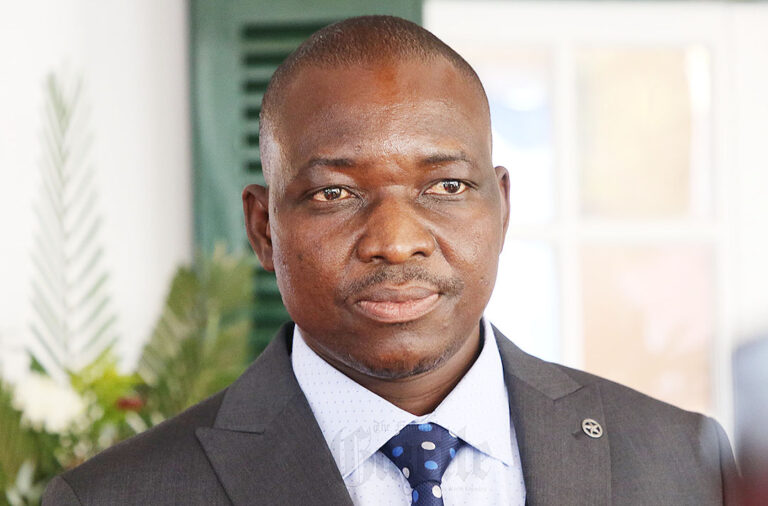
Mining Projects Startups Expert Munashe Shava has been appointed Kuvimba Mining House (KMH) Head of cluster, platinum group of metals and the Chief Executive Officer (CEO) of KMH’s Great Dyke Investments’ Darwendale Project.
Rudairo Mapuranga
Before assuming the role of CEO at the Darwendale project, Shava served as the project’s Chief Operating Officer (COO).
“Exciting news to share with my network – I am thrilled to announce that I have taken on the role of Cluster Head – PGMs & Chief Executive Officer of Great Dyke Investments Darwendale Project at Kuvimba Mining House! I am eager to embark on this new journey and lead the team towards continued success in the mining industry. Looking forward to sharing more updates soon!” Shava announced on his LinkedIn page.
Shava possesses solid multi-mineral commodity experience across regional and national geographical environments. He has both management and leadership experiences acquired when he set up and ran mines during phases of mineral economic expansion, world mineral market depressions and rapid market contraction.
He is also currently the Board Chairman for Zimbabwe Consolidated Diamond Company (ZCDC) and Kamativi Mining Company (KMC)‘s non-executive director. Shava is also the Reconstruction Administrator at Hwange Colliery Company Limited and second vice President of the Chamber of Mines of Zimbabwe.
Shava is also a member of the Association of Mine Managers Zimbabwe (AMMZ), The Southern Africa Institute of Mining and Metallurgy and the Institute of Directors of Zimbabwe.
He holds a Master of Science in Leadership and Change Management from Leeds Becket University, an Advanced Certificate in Project Management from the University of Cape Town, a Mining Engineering Diploma from Zimbabwe School of Mines and a Post Graduate Diploma in Applied Corporate Governance and Strategic Leadership from Midlands State University.
The Ministry of Mines and Mining Development have since engaged the services of the Zimbabwe Republic Police (ZRP) who are currently investigating the case.
Mining certificate books are designed the same way as receipt books that mining commissioners (Provincial Mining Directors) sign and issue when certifying ownership of mining claims or concessions.
The two books that were reportedly stolen last week in Bindura present fears for miners that they might lose their claims to unscrupulous individuals and companies.
Sources in the Ministry are saying that the Ministry has not yet come up with an official position on what happened to the missing books.
“There is no official position yet, the Zimbabwe Republic Police (ZRP) and the Ministry are investigating. They are yet to ascertain several factors whether they are missing or its misplacement,” the source said.
In 2021 a map was stolen at the Chinhoyi Mines office with many miners reportedly losing mining claims due to the misdeed.
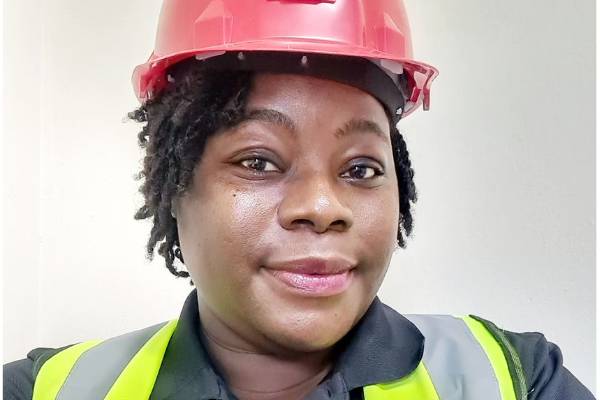
Mopani Gold has appointed Loveness Chiyanike as Head of Shared Services at Venice Mine. Chiyanike says more women in mining is good for business and shares advice for young women thinking of a career in the industry.
My background is in food science, and I started my career at Delta Beverages and Dairibord in Zimbabwe, working on business management and quality control systems. The food industry is also male-dominated because the expertise comes from the sciences and engineering, and women are less able to do shift work when they have children. The more specialized you get, the fewer women there are, so I’m used to being the only lady in the room.
When I moved across to mining, I faced three big challenges. I was the first woman at a supervisor or manager level, I was introducing new system teams had never seen before, and I was a food scientist, so people couldn’t figure out what I was doing there. It took time to earn their respect, fit into the pack, and for them to listen to me. Fortunately, I had the support of the CEO, MD, and GM – all men – who encouraged me at every turn and explained to the teams why business systems are critical.
Since my first week working at a mine, I’ve been fascinated by the mining process. I’d sit in meetings where they were discussing life of mine plans and BCMs, and it triggered my curiosity. The CEO encouraged me to pursue an MSc in Mining Engineering, and I’m doing well at it.
Changing Times
The men in senior positions I’ve worked with are very supportive, and there’s a growing recognition that we need more managers with traditionally female attributes in the industry. I was speaking with a metallurgist in the USA recently who told me he thought there would be fewer accidents if more women were in management positions – because we are more cautious, more thorough, and we have the ability to influence others’ behaviour.
More women are studying science and engineering subjects – we know this from the undergraduate groups who come to visit us at the mine – but we need a deliberate agenda to get female graduates into technical positions. Businesses have to make it a priority. And they have to support us as mothers too. Mines are usually in remote locations, and most men can leave their families in the city so the kids can go to good schools. That’s not an option for me; I’m a single mom, and my daughter has just turned four. She’s very bright, and I’m so happy that there is a school in Kadoma that ticks all my boxes.
Hold your head high
Mining is a fast-paced, sometimes aggressive environment, so it will build your resilience and push you to your limits. It has made me grow as a person, and I’ve achieved things I could never have dreamed of. As women, we have to work harder to gain trust and respect but walk in with confidence, hold your head high, knowing that you can do the job, and you will be rewarded.
The Ministry of Mines and Mining Development has signed to join the newly formed African Minerals Strategy Group (AMSG) which aims to position Africa to succeed in diversifying Global Value Chains.
The group formed on the 9th of January 2024 will be under the Patronage of Saud Arabia ruler, King Salman bin Abdulaziz Al Saud.
The fundamental purpose of this group is to unite Africans and maximise benefits from the continent’s mineral resources.
Minister Soda signed to join the group on the sidelines of the Investing in Africa Mining Indaba held in Capetown from the 5th to the 8th of February.
The country has joined Nigeria, Malawi, Uganda, the Democratic Republic of Congo, Tanzania, Botswana, Burundi, South Sudan, Chad, Somalia, Sierra Leone, South Africa, Zambia and Guinea Bissau.
The AMSG aims to achieve the following; effective collaboration and partnerships between the private and public sectors; Collaboration between African governments; Amendments to the laws that govern the value chain of minerals in Africa, with a focus on how minerals can be transformed, in Africa and by Africans, at the various stages of the value chain until they reach the end user; The need for political & economic stability, predictable legislation, and reliable infrastructure; and A focused approach towards robust innovation, technology, stable financial banking systems, and appropriate data collection and use.
The AMSG has appointed Nigeria’s Minister of Solid Minerals Development, Dr Oladele Alake as the chairperson of the group, and he has already inspired confidence that Africa’s placement within the global value chain will be emphasised and prioritised.
Midlands Province and Matabeleland South Province have emerged as the regions with the highest number of accidents and fatalities in 2023. Together, they accounted for 40.5% of the total fatalities and 41.5% of the accidents reported nationwide. This data highlights the urgent need for improved safety measures in these areas.
In total, the two provinces recorded 96 fatalities out of the country’s total of 237, as well as 88 accidents out of the national count of 212. Midlands Province had the highest number of accidents, with 48 incidents, while Matabeleland South recorded 40 accidents. Both provinces also reported 48 fatalities each during the year.
Mashonaland East and Mashonaland West followed closely in third and fourth place, respectively. Mashonaland East reported 39 fatalities from 39 accidents, while Mashonaland West recorded 34 fatalities from 34 accidents. Mashonaland Central and Manicaland ranked fifth and sixth, with Mashonaland Central reporting 26 fatalities from 20 accidents, and Manicaland recording 20 fatalities from 18 accidents.
Meanwhile, Matabeleland North had the second-lowest number of accidents, with 12 incidents resulting in 18 fatalities. Masvingo Province recorded the least number of accidents, with only 4 incidents resulting in 4 fatalities.
Official figures from previous years show a concerning trend. In 2019, there were 116 accidents resulting in 182 fatalities. In 2020, the number of accidents increased to 158, but the fatalities decreased to 161. In 2021, there were 121 accidents resulting in 139 fatalities. Finally, in 2022, there were 170 accidents resulting in 185 fatalities. These statistics demonstrate the persistent nature of mining accidents and the urgent need for improved safety practices.
Speaking at the Mine Rescue Association of Zimbabwe (MRAZ) national competitions at Mimosa Mine last year, Shepherd Dhliwayo, the Principal Inspector of Mines and Explosives at the Ministry of Mines and Mining Development, highlighted the alarming rate of mining-related deaths. He revealed that, on average, one miner dies every week, with 83% of these incidents occurring in non-chamber of mines-affiliated operations, primarily in the artisanal and small-scale mining sector.
Dhliwayo emphasized the importance of establishing provincial rescue teams within the Zimbabwe Miners Federation (ZMF) to participate in national competitions and regional exercises organized by the MRAZ. By doing so, the artisanal and small-scale miners can better understand the significance of safety measures and emergency preparedness.
He stated, “Our statistics indicate that the majority of these accidents (83%) occur in the non-chamber affiliated mines category, that is to say mostly in the artisanal and small-scale mining sector. This can be attributed to various factors, including the lack of a platform that enhances mine rescue emergency preparedness. Let us encourage the participation of these miners in mine rescue competitions to cultivate a culture of safety within their operations. I urge the ZMF to establish and enlist provincial rescue teams in future competitions. Through a coordinated and cohesive effort, we can achieve our shared vision of zero accidents in all mines in Zimbabwe.”
Dhliwayo also mentioned that his office has been conducting awareness campaigns with small-scale miners nationwide. As a result, these miners have started receiving first aid training with the assistance of the School of Mines. In Matabeleland and Midlands, there is already a pilot project in place to address safety concerns.
Concluding his remarks, Dhliwayo stressed that the high number of accidents in the mining industry is unacceptable. He called for safety to be prioritized by the entire workforce, emphasizing the need to establish a zero-accident potential for all miners in Zimbabwe.
These alarming statistics serve as a wake-up call for the mining industry, urging stakeholders to work together to improve safety standards and prevent further loss of life. It is crucial to prioritize the well-being of miners and ensure that every effort is made to create a safe working environment for all.
To provide the best experiences, we use technologies like cookies to store and/or access device information. Consenting to these technologies will allow us to process data such as browsing behavior or unique IDs on this site. Not consenting or withdrawing consent, may adversely affect certain features and functions.
Functional
Always active
The technical storage or access is strictly necessary for the legitimate purpose of enabling the use of a specific service explicitly requested by the subscriber or user, or for the sole purpose of carrying out the transmission of a communication over an electronic communications network.
Preferences
The technical storage or access is necessary for the legitimate purpose of storing preferences that are not requested by the subscriber or user.
Statistics
The technical storage or access that is used exclusively for statistical purposes.The technical storage or access that is used exclusively for anonymous statistical purposes. Without a subpoena, voluntary compliance on the part of your Internet Service Provider, or additional records from a third party, information stored or retrieved for this purpose alone cannot usually be used to identify you.
Marketing
The technical storage or access is required to create user profiles to send advertising, or to track the user on a website or across several websites for similar marketing purposes.




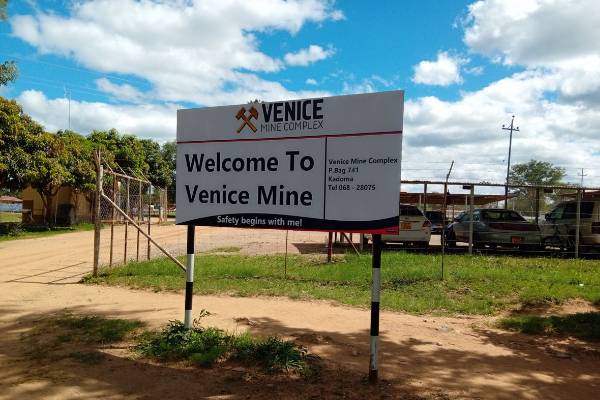
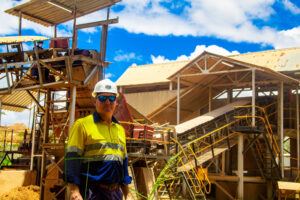 Speaking to Mining Zimbabwe on a mine visit at Venice Complex Mine in January 2024,
 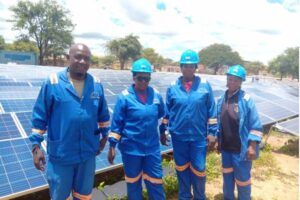 As part of its efforts to have a sustainable power supply, VMC engaged Equator Energy to set up a solar plant for its electricity usage. The almost 1MW plant currently powers more than half of the mine’s consumption at its peak electricity production.
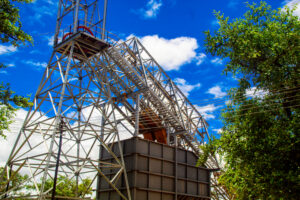 Mopani is in the process of developing the mine, looking to expand from the current underground production to more than triple that level. Although the mine has not allocated money to undertake exploration, there are intentions by Mopani to develop the Venice Mine Complex resource which currently has a life of mine of about 20 years.
 As part of its CSR, the company is currently engaging communities around its operations to create a more robust and holistic CSR strategy.
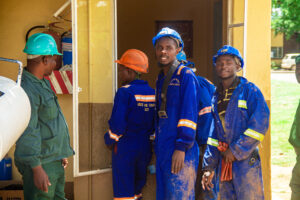 According to Nicolle through its rampup exercise, the VMC will more than double its employment from the current 400 to around 1200 to 1300 workers.