

Home Blog Page 277

Crack down on Non Compliance – gvt suspending Mining licenses

0

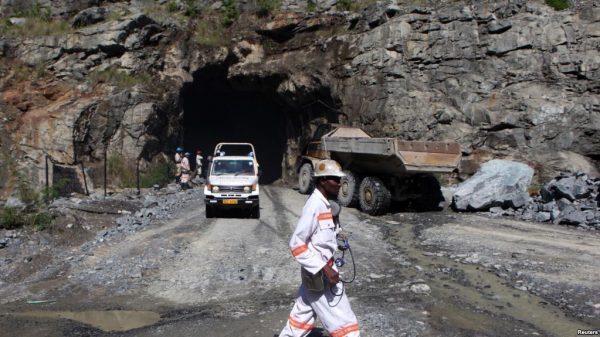
The government of Zimbabwe has taken the action to suspend mining licenses for Mining Operations who are not complying with mining laws.

The move comes as part of President Mnangagwa’s initiative, the Responsible Mining Audit which aims to promote responsible and compliant mining activities in the country.

The audit was implemented to ensure that all mining activities are carried out responsibly and in accordance with Zimbabwe’s legal framework.

During a recent Post Cabinet Press Briefing, Minister of Information, Publicity, and Broadcasting Services, Dr Jenfan Muswere, announced that the government had received and adopted a report on the “Responsible Mining Audit” as presented by the newly appointed Minister of Mines and Mining Development, Hon Zhemu Soda.

“Regarding Small Scale Mines, with a labour force of up to 200 employees, the audit established that most of them are not complying with the legal transportation and licensing issues.

“The nation is being informed that in all the identified transgressions, corrective action is being taken including the following:

  1. Imposition of fines,
  2. Confiscation of explosives,
  3. Suspensions from operating licences,
  4. Cautions with instructions to regularise within a stipulated time-frame.

The Responsible Mining Audit came up with a number of useful recommendations which Government is implementing and the Interministerial Committee should continue to develop other solutions,” said Dr Muswere.

Dr Muswere also highlighted the positive compliance of large-scale mines usually referred to as Primary Producers, with at least 1,000 employees.

These mines were found to be mostly complying with mining laws, environmental laws, regulations by Zimbabwe Revenue Authority, Immigration, labor, and energy sectors. However, there were a few isolated cases where immigration laws were being violated.

“The nation is being informed that large scale mines, with at least 1 000 employees, are to a large extent, complying with mining laws, environmental laws, Zimbabwe Revenue Authority, Immigration, labour and energy regulations. There are however isolated cases where immigration laws are being violated, said Dr Muswere.

On the latter, some Chinese operations have flouted immigration laws.

Speaking earlier this year, Minister Soda said the report is well written and recommendations well spelt out as the Ministry of Mines had an opportunity to visit over 400 ASM-run mining sites to compile the report.

“On the 10th of May HE launched the responsible mining initiative. Following the launch the Ministry then conducted a responsible audit of our mines. About 422 sights were visited and a report has since been compiled and it will soon be tabled before the cabinet. It is that report which will inform the government on the next steps that need to be taken, to also give protection and assistance to the small-scale miners but our desire is whenever mining is taking place let’s put safety first,” Minister Soda said.

Objectives of the Responsible Mining Audit

The objective of the Initiative is to ensure that all mining operations are conducted in accordance with the country’s laws. The audit team will comprise members from the following Ministries, Departments and Agencies, Mines and Mining Development, Lands, Agriculture, Fisheries, Water and Rural Development, Local Government and Public Works, Energy and Power Development, Environment, Climate, Tourism and Hospitality Industry, Departments of Immigration and Labour, the Zimbabwe Revenue Authority, the Environmental Management Agency, and the Zimbabwe Republic Police,” Mines and Mining Development Minister said in a statement.

ZACC arrests MashEast Mines Inspector for extortion

0

The Zimbabwe Anti-Corruption Commission (ZACC) yesterday arrested and charged an official from the Ministry of Mines and Mining Development in Mashonaland East with extortion.

Antony Singende, the Provincial Mines Inspector for Mashonaland East Province, allegedly demanded a substantial sum of money from Mine Manager Virimai Nyamvura in exchange for maintaining a valid blasting license.

Virimai Nyamvura, a mine manager at Koodoo 83 Mine, owned by a Mr Emmanuel Ndemera, was suspended from work on October 7, 2023. The work-related suspension lasted for 21 days before being revoked on October 20, 2023. Shortly after his return to work, Singende, the accused Mines Inspector, paid a visit to Koodoo 83 Mine and made alarming demands.

Singende demanded a sum of US$150.00 for re-endorsement of Nyamvura’s blasting license which had lapsed during the latter’s suspension. Furthermore, he insisted on an additional US$200.00 to prevent the withdrawal of Nyamvura’s blasting license. Singende subsequently ordered Nyamvura to bring the money and the blasting license to his office on November 17, 2023.

Reporting the Crime

Nyamvura reported the matter to his employer, who recommended contacting the Zimbabwe Anti-Corruption Commission. Acting on this advice, Nyamvura promptly filed a report with the commission on November 16, 2023. An investigation ensued.

Arrest and Evidence

On November 17, 2023, Nyamvura adhered to Singende’s instructions and handed over US$350.00 trap money. Singende was arrested after receiving the money, which was subsequently recovered as an exhibit. Moreover, a search of Singende’s person revealed an additional US$1,600 that he failed to account for, casting further suspicion on his criminal activities.

Legal Consequences

Singende was charged with extortion, as defined under section 134 of the Criminal Law Codification and Reform Act Chapter 9.23. This charge carries significant penalties and could potentially result in a substantial prison sentence if proven guilty. Singende appeared at the Harare Magistrates Court for his initial hearing on the matter. Singende was remanded in custody and his case was postponed to the 20th of November 2023.

Prosecutor arrested for soliciting a us$20k bribe to secure a reduced sentence for Rushwaya

0

A Harare public prosecutor Pardon Dziva was arrested for allegedly soliciting a US$ 20,000 bribe from the sister of Henrietta Rushwaya to facilitate a lighter sentence for the former by presiding judge Justice Pisirayi Kwenda.

Dziva (30) claimed she could get a favourable sentence at the High Court after he misrepresented that he was a runner for Justice Kwenda.

Ironically Rushwaya did get a “light sentence” after escaping jail for trying to smuggle 6kgs of gold to Dubai.

Dziva who is being charged together with Alexio Tombe (37) appeared before magistrate Ngoni Nduna.

The duo were remanded in custody to Monday for bail application.

The complainant is Helliate Rushwaya a former Non-Executive Board Member at the Zimbabwe Broadcasting Corporation (ZBC). She is Henrietta’s young sister.

Henrietta’s smuggling case was before Justice Kwenda at the High Court in Harare awaiting sentence on 15 November 2023 at 1430 hours.

lt is alleged that on the same day November, the informant Fungai Mangizvo received a call from Wellington Takavarasha who is a workmate to Henrietta Rushwaya.

The complainant instructed her niece to tell Takavarasha to contact her which he did.

Takavarasha contacted the informant and stated that he had been approached by Progress Maringamoyo who indicated that he was in a position to facilitate the passing of a lighter sentence in Henrietta Rushwaya’s case.

It is alleged that on the same day, Maringamoyo called Takavarasha and offered to link him to Dziva who claimed to be Justice Kwenda’s runner.

Takavarasha and Maringamoyo went to the Harare Magistrates Court where they met Dziva and Dziva demanded US$30 000-00 to facilitate the deal.

The figure was subsequently negotiated down to US$ 20,000-00.

Takavarasha informed the Informant that Dziva requested US$ 20,000. The informant managed to raise US$ 10,000-00 and reported the matter to the CID Police Anti-Corruption Unit where a trap was set.

They agreed to meet at the CABS Centre at the corner of Jason and Sam Nujoma Street, Harare.

Upon arrival at CABS Centre, Tombe approached the informant who was in the company of a detective and confirmed that he was sent by Dziva to take them where Dziva was. Tombe indicated that the complainant should drive to the basement of CABS Centre and she refused.

The informant suggested meeting at Meikles Hotel but Tombe suggested meeting at Kebab Restaurant in Milton Park.

The informant then proceeded to Kebab Restaurant driving between Dziva who was driving a Toyota Camry whilst Tombe was seated in the back seat in Helliate Rushwaya’s car.

Upon arrival at the agreed place, Dziva went into Informant’s car where he received US$10 000-00 in the presence of the detective and Tombe.

Dziva was arrested and the trap money was recovered. The trap authority and the recovered trap money will be produced in court as exhibits.

Source: Nehanda Radio

BREAKING: Abel Makura appointed AMMZ President

0

Engineer Abel Makura has been appointed President of the Association of Mine Managers of Zimbabwe (AMMZ).

At a colourful ceremony currently underway in Victoria Falls Makura was announced President replacing Caledonia Mining’s Elton Gwatidzo.

Pickstone Peerless General Manager Alfred Madowe will deputise Makura.

The following where also announved as the Council Members

George Waeni
Cloete Munjoma
Larnston Gowera
Ray Chiridza
Coburn Katanda
Gift Mapakame
Walter Madzimure
Tirivashe Eddington Vere

More to follow…

Emerging World Trends That Will Impact on the Decision Process of the Future Mine Manager – Walter Nemasasi

0

The role of a Mine Manager is continually evolving as the world around us changes. Rapid technological advancements, volatile economic environments, politically unstable periods, and the rising influence of civic organizations and NGOs are just a few of the factors that Mine Managers must take into account when making decisions for their operations, General Manager of Unki Mines Engineer Walter Nemasasi said in a presentation at the on-going Association of Mine Managers of Zimbabwe (AMMZ) AGM and Conference 2023.

His presentation explored some of the emerging world trends that will impact the decision process of the future Mine Manager.

Below is a summary of his presentation

One of the key trends in the mining industry is the call for responsible mining. Organizations like the Initiative for Responsible Mining Assurance (IRMA) have set standards and requirements for responsible mining practices, covering areas such as legal compliance, stakeholder engagement, environmental management, and worker health and safety. Mine managers must navigate these requirements to ensure that their operations align with responsible practices and maintain their license to operate.

Another trend that Mine Managers must consider is the increasing focus on zero environmental damage and zero injury to people. This means adopting sustainable and environmentally friendly practices, such as using clean sources of power like renewable energy and optimizing energy use. It also means implementing advanced safety systems, such as proximity detection systems and real-time remote monitoring, to ensure the safety of workers.

Technological advancements are also reshaping the mining industry. From drilling and excavation to processing and transportation, machines and equipment are becoming more autonomous and efficient. Remote-controlled and autonomous machines are reducing the need for manual labor and increasing productivity. Robotics, powered by artificial intelligence, are being used for tasks like drilling, blasting, loading, and conveyance. These advancements not only increase efficiency but also improve safety by keeping workers out of potentially hazardous areas.

The convergence of wireless technologies and mining is another trend that mine managers must be aware of. The Internet of Things (IoT) is transforming the way mining operations are managed. Through the use of micro-electromechanical systems and internet connectivity, mine managers can monitor and control their operations remotely. This not only improves productivity but also removes operators from potentially dangerous work areas.

In addition to technological advancements, mine managers must also consider the impact of global trends on metal prices and inflation rates. Fluctuating metal prices can greatly impact the profitability of mining operations, while high inflation rates can increase operating costs. Mine managers must stay informed about these trends and adopt agile strategies to navigate the volatile economic environment.

The article also touches on specific projects and technologies that are being developed and implemented in the mining industry. For example, the nuGen Zero Emissions Haulage Solution (ZEHS) truck, a hydrogen-powered vehicle, is being launched to reduce CO2 emissions. Processing technologies, such as online analyzers and the Kell hydrometallurgical process, are improving plant control and efficiency while reducing energy consumption and CO2 emissions.

Tailings storage facilities (TSFs) are also undergoing changes in management practices following the Brumadinho dam disaster in Brazil. More attention is being given to biodiversity monitoring using eDNA techniques, which analyze DNA traces left by living organisms in the environment. This allows for the identification of existing and historical species in an area, helping to protect biodiversity.

Overall, mine managers of the future must be proactive in staying ahead of emerging world trends. They must prioritize responsible mining practices, leverage technological advancements, and adapt to changing economic and environmental conditions. By doing so, they can ensure the viability of their mines and contribute to a greener and more sustainable world.

GET Unki Mines General Manager Engineer Walter Nemasasi’s PRESENTATION HERE


How electricity is generated at units 7 and 8 in Hwange

0

The Association of Mine Managers of Zimbabwe (AMMZ) yesterday was on a technical visit at the Zimbabwe Power Company (ZPC) to learn more about the power generation at the newly installed units 7 and 8 of the Hwange expansion project.

The team was briefed on how power is generated at the Power plant by the Acting Facility Site Manager Lucia Chibanda said her team is responsible for units 7 and 8 which have an installed capacity of 670 megawatts. The team also toured the Mega facility which is much bigger than any current operating mine in Zimbabwe.

Briefing the AMMZ members Chibanda said, to support power generation, the project includes a water pipeline spanning 42 kilometres from Deka and a new reservoir with a capacity of 250,000 cubic meters. The water is treated using reverse osmosis, ultrafiltration, and demineralization processes to ensure it is pure and free from minerals that could cause scaling in the boiler tubes. The treated water is then heated in the boiler using coal as the fuel source. The steam generated from the heated water rotates the turbine, which in turn produces electricity through generators with magnetic fields.

“In terms of power generation. Our key input is water, which comes from Deka. We built a new reservoir up there. It has a capacity of 250,000 cubic meters to hold water. That’s for approximately six, five, five days. So it is pumped to our reservoirs. From the reservoirs, we’ve got underground pipelines that we installed. We go to the raw water. Basically, raw water is treated. We’re just adding chlorine. It will be now safe to drink.

“We bring it to this building that is just behind you. We call it the chemical water treatment plant. There, we have three different types of treatments. We’ve got reverse osmosis. We’ve got ultrafiltration. Then we’ve got demineralization. What we are simply trying to do is remove all the minerals in the water to make it as pure as possible. We actually make it more pure than the bottled water that we drink, so that we avoid scaling in our boiler tubes.

“From here, the water is pumped to the boiler. We’ve got various auxiliaries that you see when you go through the plant, mainly on the ground floor. These are boiler feed pumps, condensate pumps, cooling water pumps, etc. Our water goes to the boiler. That’s where it’s heated to temperatures of 541. We increase pressure to about 167 bars. That’s almost 80 times the pressure in your vehicle tires.

“Then we have superheated steam. Our turbines use superheated steam, different from Kariba, which uses water. That’s why that water that is stored in the dam, you get the issues of water levels. Here, we use steam, which is generated from water that is heated. But for us to be able to heat the water in the tubes, we need coal. That’s our fuel source. So we have coal that comes from the coal miners. We have a coal stockyard. It’s conveyed through the conveyance system, which are basically belts. Then we have a bank, how we can store it.

“It goes to the mills. I’m sure those who come from the mines will appreciate how a mill works. We grind the coal to fine powder. It’s pushed by air, which is sucked through our fan or draft system. We’ve got big fans, the forced draft fan and the induced draft fan. The air pushes the fine powder, the coal, and it ignites. We have a fireball inside our boiler. You won’t be able to see it on the boiler. The tubes are all encased inside, and they’re insulated,” Chibanda explained.

Once the steam has done its work, it is cooled back into water using cold water from the reservoir. The cooling process takes place in a cooling tower, allowing the water to be reused in the closed cycle of power generation.

“Hot water becomes steam. Superheated steam goes to the turbine. On the turbine, what we basically want is mechanical energy. We want to rotate the turbine. Once the turbine is rotating and we have magnetic fields, that’s how we produce electricity. This is done by the generator.

“There’s a magnetic field that is in the generator and when the shaft, which is coupled to the turbine, rotor is rotating, we produce electricity. Then we have got transformers. Those ones will be outside the plant. You want to step up, would have generated electricity at 20 kVA. But when we transmit it, we need to transmit it at a higher voltage. That’s the 400 and the 330. So we then use the different transformers that we have to step it up.

“Then in terms of the steam. The steam that has done work, it’s a closed cycle, based on the Rankine cycle or the thermal cycle. We want to use that water again. So we cool the steam back to water. We use cold water, which is from the raw water reservoir. We cool the steam. It becomes water again. That water which has cooled the steam, we take it to the cooling tower, which is, I think, the most popular shape for anything. The one with the Venturi shape that you see is the one where water is cooled, and it becomes cold again. And then you see water vapour escaping from the top of the cooling tower. I would say in a nutshell, that’s the basic process of how we generate electricity,” Chibanda concluded.

The AMMZ is currently on day two of its AGM and conference. The first day saw Zimplats’ Ngwarati Mine winning the AMMZ SHE Audits scoring 97% ahead of Mupfuti’s 94%.

Both Ngwarati and Mupfuti reported zero fatalities, zero Total Recordable Injury Frequency Rate, zero Lost Time Injury Frequency Rate, and zero Lost Time Injury Severity Rate.

The Association of Mine Managers of Zimbabwe conducts last technical visit for 2023

0

The Association of Mine Managers of Zimbabwe (AMMZ) yesterday conducted its last Technical visit for the 4th quarter of 2023 at the Zimbabwe Power Company (ZPC) in Hwange.

The team of Mine Managers of Zimbabwe, accompanied by various stakeholders visited the Zimbabwe Power Company (ZPC)’s joint venture project with Sinohydro which aims to upgrade and expand the country’s power generation capabilities.

The massive project makes one of Zimbabwe’s biggest Mines, ZIMPLATS appear minified.

With Sinohydro owning 36% and ZPC owning 64% of the venture, the Giant project increased the installed capacity to the grid from the two new units, named Unit 7 and Unit 8.

Giving an overview of how power is generated at the plant the Acting Facility Site Manager Lucia Chibanda said her team is responsible for units 7 and 8 which have an installed capacity of 670 megawatts.

“The scope of the project is that we’ve got two units, that’s unit 7 and unit 8. The existing power station, or the old power station, has got an installed capacity of 920, that’s units 1 to 6. The one that I’m talking about specifically is the new units 7 and 8, which were then officially commissioned on the 3rd of August, 2023. These are two units which are similar in nature. Each generates 335 megawatts,” Chibanda said.

Chibanda said a SADC standard 400kV line was used to transmit power to substations in Bulawayo and Kwekwe.

“We had a line for over 340 kilometres from here, which is Hwange, up to Nsukamini in Bulawayo. Then we had a shorter line, which joined Nsukamini and Marvel. These are substations within Bulawayo. This new line is a 400 kV line. That is what is used in our SADC region. So it enables us to get power from either of our neighbouring countries. The old power lines were 330 kV. So there was new technology for matching the SADC region, the 400 kV line. But we then put two new substations, so that we have redundancy. The 330 line can turn in, going to the 400 kV substation, and then use the 400 kV to be transmitted. So we have a new substation in Kwekwe, which is Sherwood B. It’s basically there to interface the 330 kV lines and the 400 kV lines. Here in Hwange, it’s the same,” Chibanda continued.

A re-allocation program had to be implemented and houses built for relocated families to pave the way for the 400kV line according to Chibanda.

“But for this line to be there, there were people who were already staying in the vicinity. So we had to do what we call RAP. That’s a reallocation program, where we relocate the people to go and live elsewhere. We had to build them houses. These were people along the lines. Those were part of the project. Then we have other feeder projects into the main project, which include the houses that we built for workers. That’s in Mpumalanga and Baobab,” Chibanda continued.

The AMMZ President Engineer Elton Gwatidzo said the technical visit was to ensure the AMMZ would have an appreciation of issues to do with energy supply as energy supply.

“Today we started off with a technical visit to one of our stakeholders, the Hwange power company (Hwange Thermal Power Station) so that the association would have an appreciation of issues to do with energy supply as energy supply is our main driver to our production. We also understand their challenges as well,” Gwatidzo said.

Running under the Theme ‘Zimbabwean Mining Landscape – Transition Towards the Present-Day 4th IR’ the AMMZ’s AGM and Conference today entered its second day. The conference will be a full-day event running concurrently with the AGM (AMMZ annual general meeting). The day will end with the President’s 51st anniversary dinner which is to start at 7 pm,” Gwatidzo concluded.

ZIMPLATS’ Ngwarati Mine wins AMMZ SHE audits

0

ZIMPLATS‘ Ngwarati Mine emerged as the shining safety example reporting zero fatalities, zero Total Recordable Injury Frequency Rate, zero Lost Time Injury Frequency Rate, and zero Lost Time Injury Severity Rate, Chamber of Mines Safety, Health and Environment (SHE) Committee Report has revealed.

Presenting to delegates at the Debut of this year’s Association of Mine Managers of Zimbabwe (AMMZ) AGM and Conference, Butholezwe Dube, a committee member who is also the SHEQ Manager Hwange Colliery Company Limited said in May of 2023, a total of 17 companies and 4 smelting and processing facilities participated in the AMMZ SHE audits, marking a positive start after the lifting of the Covid-19 induced lockdown.

“The audits were conducted in May 2023, 17 Companies and 4 smelting and Processing facilities participated in the audits. This was a good start considering we were coming from lockdown. The criteria used was the revised Audit Protocol. Two mines had zero (0) fatalities, (0) Total Recordable Injury Frequency Rate, (0)Lost Time Injury Frequency Rate and (0) Lost Time Injury Severity Rate and these were Ngwarati Mine and Mupfuti Mine,” Dube said in part.

Ngwarati walked away with a winner’s trophy after attaining the best results, scoring 97 %, with Mupfuti hot on the heels with 94% on the audit checklist.

Dube said the SHE Committee was implementing a new approach towards audits. Instead of competition among companies, it will evolve into a continual improvement program.

“Going forward the SHE Committee is changing the Audits from being a competition to being a continual improvement program. Companies will no longer compete against each other but compete with their previous year’s performance,” Dube said.

These audits demonstrate the importance and effectiveness of prioritizing safety and continual improvement. With their success, the industry is taking significant strides towards creating a safer and more secure work environment.

The Association of Mines Managers of Zimbabwe (AMMZ) was assigned the responsibility of nominating the committee’s vice Chair.

Over and above other activities the SHE Committee has set priorities, these include.

  • Fostering leadership to achieve sustainable resource stewardship.
  • Protecting the health and safety of employees, contractors, and communities.
  • Biodiversity and climate change.
  • Capacity development -i.e. enhancing capacity and competency in SHE matters
  • Continual improvement on standards and systems.

To achieve compliance obligations across the mining industry the SHE committee works in close liaison with regulatory bodies such as EMA, NSSA, SAZ, Radiation Protection Authority and the Ministry of Mines and Mining Development.

The Association of Mine Managers of Zimbabwe (AMMZ) AGM and Conference will continue today. A new President will be voted into power taking over reigns from Engineer Elton Gwatidzo who has been at the helm of the Association for the past two years.

BREAKING: Rushwaya fined us$5000, gold forfeited, gets non custodial sentence

0

Henrietta Rushwaya has been fined us$5000, her 6kgs of gold forfeited to the state and has been given a non-custodial sentence by the high court in Harare today.

The level 15 fine she received of us$5000 is due on the 17th of November 2023 or 12 months in jail.

Her gold was forfeited to the State in terms of Section 62(1)(a ) of the Criminal procedure.

Henrietta had been held in custody for a 2020 case where she was caught at the airport with 6kgs of gold. Rushwaya maintains that she had picked the wrong bag.

More to follow…

Interview: Alois Kwenda, MD AECI Mining Zimbabwe & Mozambique

0

Mining Zimbabwe (MZ): Good day Mr Alois Kwenda (AK), a big congratulations to you and your team for being one of the suppliers of service products that has stood the test of time and continued to supply the mining industry and of course for achieving a momentous safety record and scooping several safety awards at the recently held SHEQ conference.

Alois Kwenda: Thank you. These achievements are testimony to the highly dedicated and motivated team that we have in Zimbabwe. The success of any business is a direct result of the combined efforts of its employees.

MZ: Before we get into the Safety achievement and the subsequent awards, please tell me who is AK?

AK: I am a mining engineer born and bred in Zimbabwe. After initially working in the mining industry in Zimbabwe I joined AECI Zimbabwe in February 1994 and rose through the ranks to head up the company in May 1999. I was relocated to South Africa in September 2002 where I held several positions until I was appointed general manager for Latin America in May 2015. I returned to Zimbabwe in August 2018 following the conclusion of my assignment in Latin America. However, this time I returned with the additional accountability for Mozambique.

MZ: You are the MD for AECI Mining Zimbabwe and Mozambique, tell me more about AECI. (a brief on AECI Mining)

AK: AECI is a diversified group of companies comprising 4 main pillars namely, mining, water, agrihealth and chemicals. It has regional and international businesses in Africa, Europe, North America Latin America, South East Asia and Australia.  I am within the mining pillar which focuses on providing optimized blasting solutions consisting of explosives, equipment and technical expertise as well as metallurgical chemicals for the extraction of minerals with the attendant expertise to optimise the use of the chemicals.              

MZ: You have been the MD for over 5 years now, how has been the experience?

AK: As already mentioned I was MD of AECI Zimbabwe previously. However, I returned to a more exciting and bigger business where mining was and continues to be on a growth trajectory. The environment is quite competitive with a number of local and international players. but as ACEI we have held our own as we are providers of holistic mining solutions rather than mere explosives suppliers or traders.

MZ: Apart from your distinguished products, what sets AECI apart from other suppliers of explosives?

AK: ACEI provides holistic blasting solutions consisting of products, equipment and technical expertise. We work with our customers in partnership to optimise blasting practices in order to meet each individual customer’s specific requirements. To this end, we put our money where our mouth is by entering into service level agreements with specific key performance indicators against which our peroducts and services are measured.

MZ: You are overseeing AECI Mining business in Zimbabwe and Mozambique, what is the operating environment like in the two countries?

AK: The operating environment in Zimbabwe is very dynamic in terms of monetary and economic policies. As a result we have had to be a flexible and adaptive organisations in order to be able to sustain our business in the current environment. We take a long term view of our business in Zimbabwe and we believe that the economy is headed in the right direction and sustained stability will be brought about over time.

MZ: AECI is very visible in the big mining corporations. What AECI Mining’s strategy with regards to small-scale miners?

AK: We understand that the small-scale miners are an integral part of the Zimbabwean mining industry and constitute a significant part of the explosives market. Our strategy is to supply this market through local distributors of our products who have the support of our technical personnel to ensure the safe and efficient application of our products.

MZ: Let’s talk about the 20 years LTI free, this achievement confirms Zero harm is possible. Please tell me the secret to achieving Zero harm.

AK: The secret to our achievement lies in the organizational culture that has been built over the years. Our employees are empowered to make decisions about safety at every level. There is constant engagement with our employees around safety and we have an environment where each employee feels free to raise concerns about anything that may impact negatively on safety but most importantly, we reward them for coming up with new ideas on how to improve safety. The safety message is driven from the top of the organisations downwards as well as from the shop floor upwards. This is how a culture of engagement on safety has been built over time.

MZ: Daily, what messages do you convey to yourself and your team regarding safety?

AK: It is that Zero Harm is achievable and that no job is so important that it cannot be done unsafely. If it cannot be done safely then it should not be done.

MZ: You and your team scooped three awards at the recently held AECI SHEQ conference, tell us more about these awards and what they mean to the business.

AK: In summary these awards were in recognition of the team’s achievements in the areas of safety, environmental protection and quality within the AECI group.

MZ: Let’s talk about explosives security. How do you keep explosives safe considering the large volumes you handle in-country?

AK: Our main strategy has been to develop bulk explosives for all applications. This type of explosive requires 2 components which are non-explosive and only become explosive upon mixing using specialised equipment. This has reduced the quantity of explosives which are kept in locked and guarded magazines.

MZ: Innovation is the key to success, what innovations are coming up in the industry and how is set AECI towards achieving success?

AK: AECI is a leading innovator in the field of explosives and blasting which is recognised worldwide. There are a number of innovations currently in development, some of which I am not at liberty to disclose. However the most exciting one is the wireless electronic detonator which will bring about safe blasting in surface and underground applications. These are programmable wireless detonators which have the potential to be set off remotely via satellite from unlimited distances from the blast. AECI has successfully tested its prototype although without the use of satellites.

MZ: Does AECI offer any courses for blasting

AK: Indeed, we offer what is known as a blasting competency course and several of our customers in Zimbabwe have already benefited from this.

MZ: Alois you are a seasoned miner. What advice would you give to an 18-year-old who is passionate about mining and thinking of becoming one?

AK: Mining is a very interesting field where science is applied constantly. It has many opportunities but it is also a tough and unforgiving environment where compromising safety will have far reaching consequences than the majority of other occupations.

MZ: Outside work, what occupies Alois?

AK: Outside work I am an avid golfer. I also believe in keeping up to date with world affairs as well new developments in science. I read a variety of business and science journals quite regularly and the area of quantum physics is very fascinating for me particularly teleportation. I believe that the next life changing invention will come from this field of science and I hope it will be in my lifetime.

MZ: What are your parting words to our readers?

AK: As individuals and organisations it is important to set goals and actively work towards achieving them. Strategies need to be adjusted when faced with obstacles but focus should remain on the goals. Our main one as AECI is to achieve Zero harm to the environment and anyone ever and as the Zimbabwean team we have demonstrated that it is possible over a 20 year period. Our challenge is to sustain it and we are up to that challenge.


This article first appeared in the Mining Zimbabwe issue 68