

Home Blog Page 278

President Hakainde Hichilema to deliver a keynote address at Mining Indaba 2024

0

Zambia’s President Hakainde Hichilema is set to deliver a keynote address at Investing in African Mining Indaba 2024, demonstrating his unwavering dedication to revitalising his country’s mining sector and delivering jobs and economic growth to the people of Zambia.

This will be Hichilema’s second appearance at Mining Indaba as President, having delivered a keynote address in May 2022, shortly after his landslide election victory in 2021.

Since this historic election, President Hichilema has made quick progress towards achieving his objectives, implementing several measures to revitalise the mining sector in Zambia. Already the seventh largest copper producer in the world, Hichilema has set out to advance Zambia’s ranking with an ambitious goal of expanding copper production from 800,000 tonnes per year currently to around 3 million tonnes of copper by 2030.

Under Hichilema’s leadership, the government of Zambia has reviewed the mining tax framework, ensuring a stable and competitive taxation system while eliminating double taxation. Furthermore, President Hichilema has personally spearheaded efforts to attract investment along the mining value chain, exemplified by the signing of a memorandum of understanding with the Democratic Republic of Congo to build a regional value chain for electric vehicle batteries. These initiatives have already yielded positive results, with major mining groups reinvesting in Zambia and the country’s copper opportunities gaining renewed interest from global players.

During his keynote at Mining Indaba, the President is expected to delve into the future of mining in Zambia, outlining his plans to expand copper production and position the country as a major player in the global mining industry. He will also address efforts for Zambian mining to expand into a wider array of critical minerals including cobalt, nickel and manganese. Furthermore, Hichilema’s speech will explore the potential for collaboration between the government, industry stakeholders, and investors, highlighting the need for partnerships to drive innovation and maximise the sector’s socio-economic benefits.

Just two years into Hichilema’s presidency, there have already been numerous positive developments in Zambia’s mining industry. Since 2019, Barrick’s Lumwana mine has contributed nearly US$3 billion in taxes, royalties, and local employment. In October 2023, the company made clear its support for the Zambian economy by announcing it will invest almost $2 billion to expand Lumwana and increase its annual production to an estimated 240,000 tonnes of copper. This will elevate a once unprofitable operation into one of the world’s foremost copper production facilities.

Similarly, a $100 million investment by First Quantum Minerals (FQM) has successfully brought the Enterprise Nickel Mine – Africa’s largest nickel producer – online. Meanwhile, FQM’s $1.25 billion expansion to its Kanshansi Copper Mine – announced at the Investing in African Mining Indaba 2022 – is expected to create nearly 2,000 jobs in Zambia.

Hichilema’s visionary and steadfast leadership has also encouraged new players to make their mark in Zambia. California-based Kobold Metals, which is backed by tech titans including Bill Gates and Jeff Bezos, is working to start producing copper and cobalt at its project in Zambia. The company has so far invested $150 million to accelerate its search for high-quality metal deposits located in the famous Copperbelt.

Other newcomers include Abu Dhabi’s International Resources, who in December 2023 announced a $1.1 billion investment in Mopani Copper Mines, funding the mine’s expansion plan and increasing copper production to 200,000 tons in the next three years.

President Hichilema’s leadership has galvanised not just the mining industry but also related industries that provide much needed infrastructure and support to the extractives sector. On 26 October, his government signed a memorandum of understanding with the United States and European Union to develop the Lobito Corridor and build a new Zambia-Lobito rail line. This includes a $250 million investment by the United States and will deliver an enormous boost to intra-regional trade, as well as stimulating growth and job creation within Zambia.

Mining Indaba 2024’s theme is ‘Embracing the power of positive disruption: A bold new future for African Mining’. Zambia’s re-emergence as a top investment destination of choice for mining investors demonstrates that positive disruption can deliver positive results and Mining Indaba is excited to provide opportunities to understand the country’s successes and processes for achieving this.

About the Investing in African Mining Indaba

Investing in African Mining Indaba is the largest mining investment event in Africa. With a proven track record of bringing together Ministers, senior Government representatives, Mining Companies – Major, Mid and Junior Miners, Investors, professional services as well as mining equipment and service providers, Mining Indaba is the place to meet everybody who’s anybody in the African and global mining industry.

It is the must-attend event that drives the mining industry forward and provides attendees with unmatched access to the entire value chain and the most influential players in African mining for four days of high-quality content, deal-making and networking opportunities.

What government should do to address artisanal mining accidents

0

In recent weeks Artisanal mining in Zimbabwe has been in the spotlight with calls to ban the practice from some quarters of the country.

Redwing mine in Penhalonga had 15 miners trapped for three days and luckily all escaped alive. Days ago two miners were reported trapped underground in Kwekwe with rescuers labelling the chances of the two making it out alive, futile. In October, 30 miners were trapped underground at Bayhorse Mine in Chegutu and sad scenes of relatives weeping seeing their loved one’s bodies being retrieved memories remain stuck in our memories.

All these accidents were attributed mainly to soft ground due to heavy rains and the horrendous practice of “pillar robbing”.

Pillar robbing is described in ASM mining as the practice of destroying “pillars” that support underground tunnels to extract visible gold from the “Pillars”.

The new Minister of Mines and Mining Development Hon Zhemu Soda jumped to action and visited the Redwing accident site till all 15 emerged from under the belly of the earth. He then called for a press conference and cautioned miners to practice safe mining. He encouraged miners from flood-prone areas to suspend operations as they risked becoming statics in the list of miners dying from collapsing shafts. The Minister also said the Ministry was to roll out training for ASMiners to encourage safe mining.

Whilst there is considerable action from the Ministry to address artisanal mining accidents in Zimbabwe, the government should consider implementing the following measures:

Strengthen Safety Regulations

The government should establish comprehensive safety regulations specifically tailored to artisanal mining operations. These regulations should address issues such as using proper protective gear, adherence to safety standards for equipment and machinery, and regular inspection of mining sites to ensure compliance. However, this can only be possible if the parent Ministry is fully capacitated. The Kadoma office for example should be made into a fully independent mines office with its own Mining Commissioner and have teams that can also be dispatched to enforce safety regulations.

Increase Awareness and Training

The government should launch awareness campaigns to educate artisanal miners about the potential risks associated with their work and provide training on safety practices. This could include workshops, training programs, and information campaigns to reach a larger audience. Short compulsory training should be introduced in the main languages of Shona, Ndebele and the government should introduce a law making this compulsory for general workers of any mine. The government must also consider introducing basic mining into the school curriculum. It is commendable that Minister Soda Zhemu has promised the rolling out of safety training for artisanal and small-scale miners aimed at preventing accidents.

Mining is part and parcel of our direct, indirect daily lives and will be for decades if not centuries. The government should prepare future generations for sustainable mining.

It is important to note that currently, Zimbabwe is not in a position to stop any legal mining as it is a major contributor to the fiscus!

Enhance Monitoring and Enforcement

One thing I have always said is the Ministry of Mines and Mining Development must be fully allocated the funds it requests from the Finance Ministry.

This makes it easier to strengthen monitoring and enforcement of safety regulations. This includes conducting regular visits to mining sites to ensure compliance with safety standards, imposing penalties for non-compliance, and shutting down hazardous operations that repeatedly fail to adhere to safety measures. However, with the Ministry being underfunded for the past years, some of the blame placed on the Ministry becomes illogical. For example, the Chinhoyi Mines office reportedly has around eleven thousand new title applications yet the provincial office has only two vehicles. As a sector which is a leading horse in Zimbabwe’s Economic Development, more effort needs to go towards capacitation. Ministry staff reportedly visit and process an average of seven mining locations a day meaning even for the hardest workers it is an extremely tall order. As long as the Ministry doesn’t get the funds it deems necessary to run efficient operations, there won’t be much it can do except react after tragedy strikes.

The Ministry of Mines is in charge of the goose that lays the golden egg, it needs the best resources to take care of the goose so that we enjoy the benefits that the goose produces.

Provide Support for Formalization

The government must encourage and support the formalization of artisanal mining operations. Informal mining always lacks proper safety protocols due to limited resources and knowledge. By assisting miners in registering their operations, the government can ensure access to better safety practices and introduction of supportive measures that reduce accidents. Getting a licence should take a maximum of three months to avoid the temptation of illegal mining. The Cadastre should also be sped up as it will as play a vital role in the formalisation of artisanal and small-scale mining.

Promote Technological Solutions

The government should explore technological solutions to improve safety in artisanal mining. For instance, introducing affordable and efficient equipment like small-scale drilling machines or personal gas detectors can help minimize accidents and improve overall safety conditions.

Establish Emergency Response Systems

Set up dedicated emergency response systems specifically tailored to artisanal mining accidents. This includes establishing proper communication channels, ensuring the availability of medical facilities, and training emergency responders to handle mining-related incidents swiftly and effectively. These can be created through big organisations such as the Zimbabwe Miners Federations (ZMF). The teams can be trained by the Mine Rescue Association of Zimbabwe (MRAZ). Several organisations claim to stand for safety in the ASM industry however they are almost nowhere to be seen in times of tragedy.

Engage and Partner with Stakeholders

The government should collaborate with key stakeholders, such as ZMF, the Chamber of Mines, industry experts, the Mines Portfolio Committee and NGOs such as ZELA, to develop holistic approaches to address safety concerns. Involving these stakeholders in policy-making and implementation processes will enhance the effectiveness, ownership, and sustainability of interventions. It is highly commendable that the new Minister has an open-door policy and should he continue on this trajectory we may see safety improvement in the sector.

Conduct Research and Knowledge Sharing

The Government should encourage research on artisanal mining accidents and foster knowledge-sharing platforms to exchange best practices and lessons learned. This can help inform policy decisions and facilitate the adoption of innovative safety measures in the sector.

Like it or not, Artisanal mining is here to stay. The best the country can do for now is work on ensuring it is done safely and sustainably. Most men and women embarking on the trade desperately to make a living and in doing so may not take precautions to ensure their safety and others. The government must jump in and enforce laws to guarantee the safety of our precious Zimbabwe Artisanal Miners’ Lives.

By implementing these measures, the Zimbabwean government can effectively reduce the occurrence of artisanal mining accidents and protect the lives and well-being of artisanal miners.

Zimbabwe gold buying prices/ gram 23 January 2023

Fidelity Gold Refinery (FGR) official gold buying prices/ gram. See the Zimbabwe gold buying prices/ gram today 23 January 2023.

SG 90% AND ABOVE US$61.42/g
SG ABOVE 85% BUT BELOW 90% US$60.77g
SG ABOVE 80% BUT BELOW 85% US$60.12/g
SG ABOVE 75% BUT BELOW 80% US$59.47/g
SAMPLE BELOW 10g BUT ABOVE 5g US$58.49/g

Fire Assay CASH $61.74/g

NB: Fire Assay cash price is for gold above 100gs, no sample is deducted.
For the Fire Assay Transfer price, a sample of not more than 10g is deducted
A 2% royalty is charged on all deposits (small-scale miners)
A 5% royalty is set for Primary Producers

Cash available. Fidelity Gold Refinery prices will be changing daily to match world market prices.

China discovers 1-million-ton lithium mine

0

A lithium mine with nearly one million tons of reserves was newly discovered in Yajiang, Southwest China’s Sichuan Province, Xinhua News Agency reported on Thursday, a development which will help raw material supply for China’s sprawling electric vehicle sector.

The newly discovered lithium mine was the largest pegmatite lithium deposits in Asia, which was an important breakthrough in China’s lithium exploration efforts and will largely assist the nation’s carbon neutrality, according to China’s Ministry of Natural Resources (MNR).

As a vital mineral which drives development of the new energy sector, lithium is widely used in China’s “New Three” export items, new-energy vehicle, lithium battery and solar panels, which together generated 1.06 trillion yuan ($148.89 billion) of exports in 2023, data from China’s General Administration of Customs showed.

The distribution of world’s lithium resources is uneven, with the metal largely concentrated in South America, Australia, the US and China.

China’s lithium reserves are believed to be scattered in various areas while exploration is still in its early stage. The national conference on natural resources held from Monday to Tuesday stressed efforts to enhance domestic lithium mine exploration, along with overseas cooperation so as to secure the material supply for China’s growing new-energy sector, according to Xinhua.

Ministry of Natural Resources has vowed to promote lithium mine transfer to increase raw material supply, in a bid to ramp up China’s lithium battery manufacturing and market consumption, according to the report.

Global Times

Australian mines cease operations due to plummeting nickel prices

0

Wyloo Metals Pty Ltd., the private nickel producer is shutting down its Western Australian mines due to a sharp slump in prices for the key transition metal.

The mines near Kambalda will go into care and maintenance from May 31, the company said in a statement on Monday. Wyloo, which bought the mines only six months ago, informed BHP Group Ltd. that it won’t be able to fulfill a nickel off-take agreement that’s due to expire at the end of 2025, a spokesperson added.

Prices for nickel, used to make stainless steel and EV batteries have slumped in the past year, mainly driven by a flood of cheap supply from Indonesia that’s threatening to disrupt the industry. Earlier this month, First Quantum Minerals Ltd. said it will halt mining at its nickel and cobalt operation in Australia and cut a third of the workforce in response to weaker metal prices and higher costs.

The closure of Wyloo’s Kambalda mines comes after BHP, the world’s biggest miner, last week warned it could be forced to write down the value of its nickel to mitigate the crash in prices.

Wyloo, which owns assets in Canada and Australia, last year also entered into a joint venture agreement with with IGO Ltd. to produce battery-ready materials at a plant near Perth. Despite the shutdown of the mines, it’s studying developing its own nickel concentrator in the Kambalda region, Wyloo said in the statement.

Mining.com

Tragedy Strikes as another Mine Collapses in Kwekwe

0

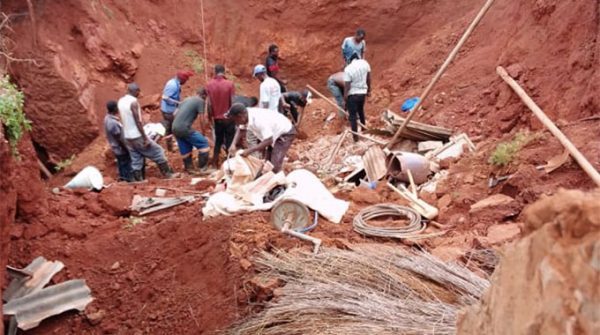
Another mine collapsed in Kwekwe on Sunday, trapping two people underground. Efforts to rescue the trapped individuals have been ongoing but was reported to be futile. The Kwekwe District Civil Protection Unit, led by Mr Reason Machina, has been coordinating the rescue operations.

According to Mr Machina, the rescue team received a report about the incident and immediately took action.

“We received a report that at least two people were trapped underground after the mine collapsed on Sunday. Rescue efforts have been futile ever since and I am told that one of the mining giants Kuvimba Mining House has provided an excavator to help in the rescue operations,” he said.

Since Sunday, rescue teams have been tirelessly working to access the mine and locate any survivors. However, the challenging conditions and the magnitude of the collapse have hampered their progress. Mr Machina expressed his concerns about the situation.

“Since Sunday to date, chances are very slim but you never know. Our aim also is to ascertain the number of people who were underground when the disaster struck,” he said.

The collapse of Artisanal and small-scale run mines is prevalent in Zimbabwe. Recently 15 miners were trapped at Redwing mine in Penhalonga and luckilly no lives were lost. Whilst there are higher concerns of accidents happening during the rainy season, throughout the year accidents continue to be recorded. A sizable number of accidents occour at disused mines, mainly due to careless mining with zero safety measures observed or implemented. Rescuers sometimes find it difficult to assist trapped miners due to lack of basic plans on how the mines will be operating.

In 2019 Zimbabwe recorded a total of 116 accidents with these resulting in 182 fatalities. In 2021, the country recorded a decrease in both accidents and fatalities as compared to the previous year with 121 accidents and 139 fatalities. As at 30 September 2022, the country had recorded 125 accidents and 139 fatalities. Some accidents do not make the news mainly because there are based in very remote areas.

ZIMPLATS Revs Up Base Metal Refinery (BMR) Renovation

0

The country’s biggest platinum group metal (PGM) producer ZIMPLATS is moving with speed to ensure it further benefitiates matte to produce refined metallic products with about US$20 million used for the refurbishment of the mothballed Base Metal Refinery (BMR) at Selous Metallurgical Complex which has an estimated cost of US$200 million.

Rudairo Mapuranga

The base metal refinery that is being refurbished separates minerals like nickel, chrome and copper from platinum metal groups, but Zimplats says outdated technology makes it too expensive to run.

Zimplats’ BMR is designed to process an equivalent 5 200 tonnes of nickel and associated base metals contained in converter matte.

The company currently sends platinum concentrate to South Africa for processing, a development economic experts argue has prejudiced the country of potential revenue and jobs. This therefore means the Zimplats base metal refinery project resonates with the Government’s thrust on mineral beneficiation.

The government has over the years been exploring possible methods of ensuring the beneficiation of minerals, with policies targeting mostly platinum, diamonds, gold and chrome mining to unlock the full potential of the mining sector. Mineral beneficiation is in line with the Government’s quest for the country to achieve an upper-middle-income economy by 2030.

According to Zimplats Corporate Affairs Manager Busi Chindove equipment has been purchased and is on site with other equipment that has been purchased currently in transit as the PGM producer moves in to support government efforts for beneficiation of minerals.

Chindove said the current expenditure for the BMR project is about US$20 million with the project expected to cost nearly US$200 million.

“Some of the equipment has been purchased and is on site, other equipment has been purchased and is in transit. The current expenditure on the plant has been about US$20 million today,” Chindove said.

Speaking on the sidelines of a Ministerial visit to the mine on Friday, the Minister of Mines and Mining Development Hon Zhemu Soda said the government of Zimbabwe has identified value-addition and beneficiation across all sectors of the economy as key measures towards setting the economy on a sustainable growth path.

He said the move by Zimplats to refurbish BMR will bring value to the country’s PGM and also create jobs for the people.

“Metals must be beneficiated and added value before they exit our borders, the coming in of the BMR is obviously to add value to our minerals and also create jobs for our people,” Hon Soda said.

The project is part of the group’s overall capital investment strategy, which has a budget of US$1,8 billion to be implemented over 10 years beginning in 2021. Of the total investment, US$1,2 billion has already been approved for implementation.

Meanwhile, the group has committed millions to its major projects, which include mine development and upgrades at Mupani and Bimha, a 185 MW solar project, and base metal refinery refurbishment.

The mine development and upgrade projects at Mupani and Bimha are progressing according to plan. The projects to develop Mupani Mine and upgrade Bimha Mine will replace Rukodzi Mine, which was depleted in FY2022, and the Ngwarati and Mupfuti mines, which will be depleted in FY2025 and FY2028 respectively, millions have been spent on the projects.

Implementation of the 35 MW solar plant project progressed as planned with a cumulative US1 million spent on the project to date and US$35 million committed as of September 30, 2023 against a budget of US$37 million. This is the first of the project’s four phases which will be implemented at an estimated cost of US$2.9 million to generate 185 MW.

ZIMPLATS is Zimbabwe’s biggest mining company.

Zimbabwe gold buying prices/ gram 19 December 2023

Fidelity Gold Refinery (FGR) official gold buying prices/ gram. See the Zimbabwe gold buying prices/ gram today 19 December 2023.

SG 90% AND ABOVE US$61.16/g
SG ABOVE 85% BUT BELOW 90% US$60.51g
SG ABOVE 80% BUT BELOW 85% US$59.87/g
SG ABOVE 75% BUT BELOW 80% US$59.22/g
SAMPLE BELOW 10g BUT ABOVE 5g US$58.25/g

Fire Assay CASH $61.48/g

NB: Fire Assay cash price is for gold above 100gs, no sample is deducted.
For the Fire Assay Transfer price, a sample of not more than 10g is deducted
A 2% royalty is charged on all deposits (small-scale miners)
A 5% royalty is set for Primary Producers

Cash available. Fidelity Gold Refinery prices will be changing daily to match world market prices.

Zero fatalities must be order of day, Rushwaya

0

The issues to do with responsible mining are of importance if artisanal and small-scale miners (ASM) are to contribute significantly to achieve the targeted 40 tonnes gold deliveries to Fidelity Gold Refinery (FGR), Zimbabwe Miners Federation (ZMF) President Ms Henrietta Rushwaya said.

Rudairo Mapuranga

Speaking on the sidelines of a press briefing on mining precautions during the rainy season by the Minister of Mines and Mining Development Hon Zhemu Soda, Ms Rushwaya applauded the Minister’s clarion call on safe Mining especially during the rainy season.

Rushwaya said small scale miners need to take precautionary measures and must ensure that shafts are collared and covered.

“As small scale miners we need to take precautionary measures at our sites and we must ensure that our shafts are collared and covered. We should also encourage our miners to make proper drainages that capture flowing water.

“Small scale miners contribute 60 percent of the gold that goes to Fidelity and they are a force to reckon with so to achieve the targeted 40 tonnes for 2024, issues to with responsible mining are of paramount importance.

“Zero fatalities in mining must be the order of the day and we should mine in a way that guarantees preservation of lives and environmental sustainability, ” Ms Rushwaya said.

Speaking during the press briefing Minister Soda said the government was going to rollout safety trainings for all artisanal and small scale miners to ensure Zero harm in the mining industry.

The Minister also said that the government will listen to the ideas of stakeholders in the mining industry to prevent or stop incidents in mining.

“Meanwhile the Ministry of Mines is going to role out safety trainings to artisanal and small-scale miners. The training will also ensure how miners can be helped to formalise their operations. Different stakeholders have also advised the government on measures to prevent and stop incidents or disasters. This meaning will not be the last but the Ministry will continue to engage miners,” Minister Soda said.

Zimbabwe did not ban ASM mining activities 

0

The Minister of Mines and Mining Development Hon Zhemu Soda has reiterated that the government did not ban the activities of artisanal small-scale miners (ASM) but only issued a statement to recommend miners to take necessary precautions during the rainy season.

Speaking at a press briefing in Harare on Thursday Hon Soda said the government did not ban artisanal or small-scale mining but only advised miners to be safe during the rainy season.

“The government of Zimbabwe did not ban artisanal and small-scale miners from mining. It was a misunderstanding. We only issued a precautionary statement meant to ensure miners are safe from incidents or disaster,” he said.

The Minister was referring to the Ministry’s previous Press Conference which made local and international headlines suggesting Zimbabwe had banned Artisanal and Small-scale activities due to safety concerns.

In addition, Hon Soda stated that the government will be rolling out safety training for artisanal and small-scale miners to prevent accidents. He said the Ministry will also hold regular meetings with stakeholders to address mining-related issues.

Hon Soda said the Ministry will have periodic meetings with stakeholders to ensure issues to do with mining are addressed.

“Meanwhile the Ministry of Mines is going to roll out safety training to artisanal and small-scale miners. The training will also ensure how miners can be helped to formalise their operations. Different stakeholders have also advised the government on measures to prevent and stop incidents or disasters. This meeting will not be the last but the Ministry will continue to engage miners,” Hon Soda concluded.