Home Blog Page 428

Zim bans raw chrome export, to establish gold centres – Cabinet briefing

0

Twenty-sixth post-cabinet press briefing 3rd August 2021

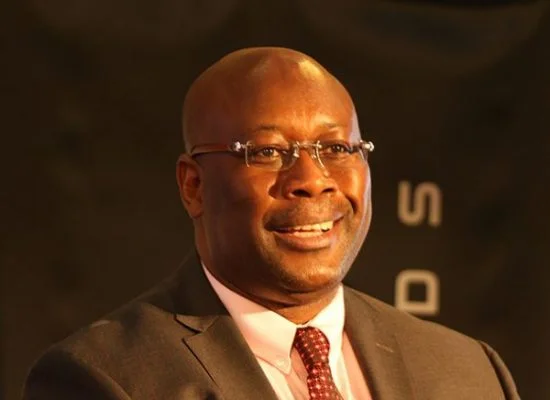
Cabinet received and noted with satisfaction an update on some of the mining initiatives which will help the nation to achieve a US$12 Billion mining industry by 2023, which was presented by the Minister of Mines and Mining Development, Honourable W. Chitando.

The nation is informed that Zimbabwe is endowed with the world’s second-biggest resources of chrome ore which is required for metallurgical processes such as steel manufacturing. A cumulative twenty-two smelters are now operating and are shared among nine foreign and local companies. Unless chrome mining capacity is expanded, the smelting operations could soon face the challenge of insufficient feedstock in the form of chrome ore.

In light of the need to safeguard the ferrochrome industry in the above regard, Cabinet approved a total ban on exports of raw chrome ore with immediate effect. The ban will capacitate current smelters and maximize the value chain to be realized from the country’s abundant resources as spelt out in the National Development Strategy 1. Cabinet approved the total ban of export of chrome concentrates with effect from July 2022.  This gives producers of chrome concentrates a year within which to make suitable arrangements for the value addition of the concentrates, the investment of which is low capital cost and relatively easy.  Accordingly, exports of any consignment of raw chrome will only be allowed provided that all the smelters are not in a position to take up and utilize that particular consignment.

The second initiative being targeted in the achievement of a US$12 billion mining industry by 2023 involves the establishment of gold centres. Gold centres are expected to provide basic equipment such as compressors and jackhammers as well as working capital to facilitate optimal production by small-scale miners who supply gold ore. The Reserve Bank of Zimbabwe shall maintain a presence, directly or through approved buying agencies, at all Gold centres so as to buy all the gold produced. The Gold Centres will also provide technical services to miners who supply the ore.

Cabinet approved proposals for the establishment of over twenty Gold Centres by mid-2022. Accordingly, memoranda of understanding will be signed with four investors who have been identified for the purpose of setting up the Gold Centres. The investors will own 100 per cent equity in the Centres, while those who operate joint ventures with the Ministry of Mines and Mining Development will fully fund the operations of the Centres in return for a 90 per cent equity stake. Cabinet, therefore, approved that the Ministry of Mines and Mining Development signs memoranda of understanding with investors intending to locate, establish, fund and run gold centres already provided for in the Mines and Minerals Act. Some of the Gold Centres are expected to be established in Makaha, Odzi, Mount Darwin, Shamva, Mazowe and Silobela.

Finally,  in the diamonds sub-sector Cabinet noted the need to facilitate a new investor, Ashelroi Trading and Services, to participate in the diamond auction system as already stipulated in the diamond value addition chain in the National Development Strategy 1. The new investor will construct an advanced diamond cutting and polishing plant in Zimbabwe and promote skills and technology transfer on cutting and polishing.

State withdraws violence charge against Hwange activist

0

THE State has withdrawn the public violence charge against a Hwange activist who had been accused of leading a protest against a Chinese company carrying out coal-mining operations in Dinde.

Never Tshuma, the Dinde Residents Association vice-chairperson, was arrested in April for leading a protest against the coal-mining project in the area.

Tshuma was barred from visiting Dinde, his home area, as part of his bail conditions.

His lawyer Gerald Musengi confirmed to Southern Eye that the State had withdrawn charges against his client citing lack of evidence.

“The circumstances were primarily that the complainants felt they could not pursue the matter anymore,” Musengi said.

The proposed Beifa Investment Company coal-mining project evoked anger in the Dinde community.

Recently, Matabeleland North Provincial Affairs minister Richard Moyo and Mines minister Winston Chitando led a government delegation to the area to convince villagers to allow the project to take off.

Beifa Investment has repeatedly said its operations are above board, and within the confines of the country’s mining laws.

“All the paperwork done by Beifa Investments (Pvt) Ltd is above board and the company is in strict adherence with the law,” said Beifa Investments (Pvt) Ltd project manager Zhou Zheng Qian in a statement.

“Beifa Investments has not evicted anyone or shown any intention to evict anyone within the Dinde community.

“Beifa Investments respects the customs and values of the communities it operates in and it has never been the company’s wish to unsettle or violate such customs and values … categorically denies ever desecrating any graves in the Dinde community as alleged or
at all.”

The company once wrote to the Zanu PF Matabeleland provincial leadership requesting protection from its members that were inciting villagers’ to protest against the firm’s coal mining operations.


Newsday

Zim sells gold refinery for US$49m

0

TEN companies will take control of Zimbabwe’s privatised gold refinery, Fidelity Printers and Refiners (FPR), for US$49 million, Finance minister Mthuli Ncube said on Thursday.

This will be the first time that the refinery will be in private hands since it was established in 1988.

The sale, first announced in December last year, will see the new shareholders owning 60% of Fidelity Printers and Refiners, while the Reserve Bank of Zimbabwe (RBZ) retains the remaining 40%.

“The process of partial privatisation of Fidelity Printers and Refiners will be through offering 60% of its shareholding in the gold refinery business to producers of gold.

“The central bank will remain with 40% in the gold refinery company and 100% in the printing, minting and gold financing business. Ten shareholders have so far accepted to take shareholding in Fidelity Gold Refinery at a total consideration of US$49 million,” Ncube told Parliament as he presented a budget review statement.

He did not name the shareholders.

However, under the ownership structure announced last year, companies will take shareholding-based on the average quantity of gold delivered to Fidelity over the previous three years. Large-scale miners will hold 50% shareholding, while 3% will go to gold buying agents and the remaining 7% to the small-scale producers through their representative bodies. Among the country’s largest gold producers are Kuvimba — which controls Freda Rebecca, Shamva and other mines — Caledonia Mining, which runs Blanket, and RioZim, which owns three gold mines.

Kuvimba’s biggest mine, Freda, produced 2,7 tonnes last year. Blanket Mine produced 1,6 tonnes while output at RioZim was 1,21 tonnes for 2020.

The privatisation of FPR came after lobbying from some players in the mining business.

It follows the model of Rand Refinery, South Africa’s biggest refinery, which is owned by the five largest gold miners Anglogold Ashanti, Gold Fields, Harmony, Sibanye Gold and DRDGOLD.

However, the privatisation will create fresh controversy over the ownership of mining assets, given the leading role that Kuvimba, whose shareholding structure has been subject to public scrutiny, is likely to play due to its commanding output.

FPR started refining gold in 1988, and at its peak producers from abroad sent in their gold for refining at its Msasa refinery in Harare. However, FPR has not used most of its installed capacity to refine 50 tonnes of gold per year, and its new owners will have to invest substantially in retooling.

The company, which buys gold from miners from at least a dozen centres around the country, has struggled to pay miners on time for gold deliveries, pushing miners to call for its privatisation.


 Newzwire

Tragic end to thieving gold mine workers

0

TWO dead bodies of gold mine workers who allegedly died while attempting to steal ore from their employer were retrieved at the weekend at the Old Timer B Lowfield Gold Mine in Goromonzi, Mashonaland East province.

The deceased, identified as Kundai Jose and Richard Kamuchoriro, died after a mineshaft collapsed.

Their bodies were retrieved two days later.

Provincial police spokesperson Inspector Simon Chazovachii yesterday confirmed the incident, saying the bodies were taken to Parirenyatwa Group of Hospitals for post-mortem.

Chazovachii said on July 29, at around 9pm, the duo hatched a plan to steal gold ore from their employer, Gerald Chirau.

It is alleged that they told their colleague, Onesimo Mutero about their plans.

When they went down the shaft, Mutero heard some vibrations and realised that the mineshaft was collapsing.

He informed Chirau, who filed a police report. He hired an excavator, but failed to retrieve the bodies before villagers joined in and removed them manually.


Newsday

Chinese firm to build world class iron and steel plant in Zim

0

A NEW town is set to be born between Mvuma-Chivhu and Manhize where Tsingshan Group Holdings, a Fortune 500 listed company is set to build a world class iron and steel plant that will also come with ferrochrome furnaces.

Already, siting for a dam along Munyati River, urban planning, logistical and other infrastructural development projects are underway in what is the fruition of one of President Mnangagwa’s flagship investment programmes under his Zimbabwe is open for business mantra.

The project will be carried by Tsingshan’s subsidiary, Dinson Iron and Steel Company which will be the largest steel plant in Southern Africa.

The US$1 billion investment project will have an annual turnover of US$1,5 billion from the processing plant and iron ore mine from next year.

Equipped with a 1,5km-by-600-metre carbon and steel plant, an iron ore mine, and a ferrochrome plant, the project will have a capacity of 1,2 million tonnes a year, while between 4 000 and 5 000 people will benefit through employment across value chains.

The project, which was almost scuppered by G40 functionaries in 2014 as a powerful figure allegedly demanded a 60 percent shareholding in the US$10 billion investment that Tsingshan had earmarked for Zimbabwe, comes at a time when the country’s economy is on a rebound.

Back then Tsingshan Group, whose annual revenue in 2018, according to Forbes exceeded US$28 billion took their money to Indonesia and only returned to Zimbabwe after the birth of the Second Republic under President Mnangagwa’s rule.

In an interview, former Norton legislator and Zimbabwean Ambassador to China Mr Chris Mutsvangwa, who has followed the project since its inception said President Mnangagwa’s vision is on display as Tsingshan, whose chairman is Mr Xiang Guangda, transforms
Mvuma, Chivhu and Manhize.

“Mr Xiang Guangda was already an investor in Selous and wanted to expand in Zimbabwe but was turned down because an influential figure in G40 wanted 60 percent of the company under the Indigenisation Act. That explains why the first thing that President Mnangagwa did when he came into power was to repeal the Indigenisation Act,’’ he said.

While he was Vice President, President Mnangagwa in 2016 went to China to revive the project but was undone by the G40 elements who stopped some of the members of the team from travelling to the Asian country.

“On two occasions, the G40 elements stalled the project. The G40 were blind moles, they didn’t see where this project was going. Look at where the company is now. In 2020 Xiang was number 329, the previous year he was number 361, and now he is 279 on the Fortune 500,” said Ambassador Mutsvangwa.

For the local communities, the project is a game-changer as it will bring employment and also give economic pulse to a region that has lost in terms of investment over the years.

The epicentre of the multi-million-dollar project is around the mountainous Manhize escarpment which forms the border with Mashonaland West and slightly protruding into Chirumhanzu but with its backbone in the Chikomba District, within an area under the traditional jurisdiction of Mambo Nyoka of the Museyamwa lineage.

Recently a site visit was conducted by the company representatives and the local leadership led by Chief Chirumhanzu within the Manhize area, to facilitate the commencement of feasibility research that will lead eventually to project implementation.


The Chronicle

MGCI seeks to end girl child exploitation in mining

0

The launch of the Mining Girl Child Indaba (MGCI) is there to bring an end to the challenging situation faced by the girl child in the mining community, Miss Mines Zimbabwe Chief Executive Officer Ms Nomsa Mpofu has said.

Rico Mutizhe

Sexual and Gender-Based Violence (SGBV) has been prevalent within the artisanal and small-scale mining (ASM) and the large-scale mining (LSM) sectors with verbal and sexual harassment, sexual violence, physical violence and socio-economic violence affecting the girl child the most.

There is no one uniform manifestation of SGBV in the mining sector and the forms can range from verbal abuse to extreme acts of sexual violence. For women as LSM employees, sexual harassment is the most common form of SGBV. Women as ASM workers experience egregious acts of sexual violence.

Mining companies according to Ms Mpofu have a responsibility to make mining communities a safe place for women, the reason Miss Mines Zimbabwe created the indaba to bring an end to sexual and gender-based violence within the sector.

“It’s the indaba’s objective to gather every relevant Stakeholder to take part in maintaining communities making them worth living for the Girlchild. The launch of the lndaba is there to bring an end to these horrible situations. Note…not to reduce but to bring an end by all costs.”

“Everything happening goes back to the responsibility of operating mining companies.  It’s their duty to maintain a safe environment for their businesses in collaboration with the Government,” Mpofu said.

According to Mpofu, women as community members need recourse to safe and functioning justice and referral mechanisms should they encounter SGBV, as well as accessible, well-designed company grievance mechanisms and gender desks that consider preventative concerns, as well as complaints after SGBV has occurred.

She said that mining sector stakeholders need to do more to tackle SGBV, this should be through collaboration with existing SGBV actors, drawing on existing professional standards and guidance on SGBV prevention and response.

Mpofu said Mining Companies should promote giving back to the community’s initiatives through

  • Supporting sustainable projects
  • Provide scholarships
  • Start stretching their Mining businesses to a Tourism related business i.e build hotels, jewelry museums, introduce travel and tours etc so as to create employment for the girls also this attracts more investors and tourists.
  • Promote building of schools and colleges
  • Support awareness for the benefit of the GirlChild

Value addition will unlock Zim’s export potential

0

THE ongoing efforts by the Second Republic towards structural transformation from an exporter of predominantly primary products to value-added products will unlock the export potential of the country.

First, the National Development Strategy 1, launched by President Mnangagwa last year, is targeting to develop and domestic local value chains.

This way, the country will be able to add more value on its export offerings, while at the same time improving local industries, creating more jobs, and substituting its imports.

Developing local value chains will also maximise revenue and provide cushion from global shocks experienced in primary commodities. Development of local value chains on the back of abundant natural resources should be easily achieved if all stakeholders play their part.

Whilst domesticating local value chains is important, it is also crucial for the local industry to participate in regional value chains, underpinned by a strong industrialisation drive.

Compared to other countries in the region, Zimbabwe has enabling infrastructure that will make it easy for local industries to play an important part in regional value chains.

But why does this matter?

Entering or participating in regional value chains and global value chains has become a key strategy for developing countries to increase their trade and attract investment from developed countries. This emanates from the fact that it may be complex to produce a whole unit, for example electric cars, but it can be easier to focus on a component that will be attached to make a whole unit.

Regional value chains refer to regional production sharing, a phenomenon where production is broken into various stages and tasks are carried out in different countries in the region. Companies over the world are creating linkages and operations, from the design of the product, manufacturing of components to assembling, marketing, and creating international production chains.

Value chains with potential

The Action Plan for SADC’s Industrialisation Strategy and Roadmap (2015-2063) approved in 2017, identifies Zimbabwe as having potential for value chain enhancement in agro-processing, minerals and beneficiation, as well as pharmaceutical products. The Action Plan also notes potential for manufacturing, machinery and equipment, as well as the services sector.

In agro-processing, local companies can participate in horticulture, as well as production and processing of sugar, meat, fish, and soya value chains. Here, there are vast options spanning from supply of agricultural inputs and implements, provision of related services and processed foods.

The strong linkages between the local agricultural production sector and the processed foods sector makes Zimbabwe an ideal hub for agricultural production and processing.

In minerals and beneficiation, local companies can participate in value chains related to energy minerals (coal), iron and steel, base metals, diamonds, fertilisers, platinum, and cement. When looking at Zimbabwe’s current export product structure, minerals and alloys account for the largest share. Whilst most of these minerals and alloys products are exported as raw materials, there is potential for the sector to contribute more to national exports and economic development through value-addition and beneficiation.

In terms of the pharmaceutical products’ value chain, the Action Plan for the SADC Industrialisation Strategy and Roadmap identifies Zimbabwe as having potential in anti-retroviral (ARV) and TB (tuberculosis) drugs.

In the manufacturing sector, Zimbabwe is identified as having potential in leather and leather products, as well as clothing and textile. There are further opportunities in automobile products and services sectors such as tourism, financial services, as well as Information and Communication Technologies (ICTs).

For local companies planning to take part in these sectors, emphasis should be on understanding the entire specific value-chain and what is required to take full advantage of export opportunities it presents.

Opportunities through value-addition With opportunities available under the African Continental Free Trade Area (AfCFTA), SADC and COMESA, Zimbabwe will also benefit more due to its land-linked status.

Zimbabwe’s trade is mainly concentrated in SADC hence value chain strategies will then act as a catalyst to assist the country in expanding its industrial base, diversifying its export product range, and pursuing unexplored African markets. Zimbabwean companies that can find a way to build or enter already existing value chains may be able to benefit under the Made in Africa concept which has gained more traction through the AfCFTA Rules of Origin.

Private businesses should take advantage of regional value chains because they are better placed to efficiently choose entry and exit points in value chains. For example, the country has potential to be a leading player in the leather and leather products value chain through production of finished leather.

With support, local tanneries can process leather coming from countries such as Botswana and Namibia into high-end finished leather, which can be exported to feed into the leather manufacturing sector across the region. Although Zimbabwean companies may not be producing electric cars as other players in the region, the country has vast deposits of lithium which is used to manufacture batteries used in electrics cars.

Instead of exporting raw lithium, local industries can build competences in the sector and produce high-efficient batteries used in the vehicles, thus playing an important role in the production process of the cars. Lithium batteries are also used in manufacturing solar batteries, given vast deposits of lithium in the country, we may become a regional hub for producing batteries giving us the competitive edge to supply them.

Opportunities for the services sector

It is important to note that the discussions around participation in value chains should not be a preserve of players in the manufacturing sector alone as there are also huge opportunities for the services sector.

There is room for local players to build competencies around available human capital. For example, there is room for some local businesses to increase their reach in the regional market by offering marketing and communication services such as operating a Regional Call Centre for companies across the continent.

With faster internet in all parts of the country, a company in towns such as Zvishavane, Mutare, Gweru, Bindura or Chinhoyi will be able to offer services without needing to move its staff across the region.

Riding on Zimbabwe’s good academic reputation, there are also opportunities in the education sector for increasing Zimbabwe’s trade in services, with easy wins such as exports in study programmes and online learning targeting foreign students.

This can benchmark and model around existing frameworks used by leading online institutions such as University of South Africa which services over 130 countries globally.

Already, Zimbabwe has a decent pool of qualified professionals that can satisfy these demands.

For example, Zimbabwe has an opportunity to export teaching services to regional markets, particularly in subjects such as English, Mathematics and Science.

Markets such as Angola, Mozambique and Namibia have a high demand for English teachers.

Going forward

To improve the participation of Zimbabwean companies in regional value chains, there is a need for local companies to identify their entry points based on resource endowments, capabilities, capacities, and skills.

Here, the private sector should participate in areas where they can easily attain best value, based on areas they enjoy comparative and competitive advantages.

There is also a need for further support to the private sector through infrastructure upgrade and retooling, which will improve current manufacturing capacities and enhance competitiveness.

Reinforcing the institutional support infrastructure and strengthening research and innovation will also go a long way in improving the participation of the country in regional value chains.


The Sunday Mail

African rare earth projects moving forward despite challenges

0

A recent report by Roskill commends the efforts by a number of African countries to establish a diversified rare earths supply chain but points out that developing projects that satisfy all parties involved comes with several challenges.

According to the market analyst, it is likely that most of such emerging projects will involve the export of rare earth mineral concentrates to other refining and separation facilities around the world.

As examples, Roskill put the spotlight on Rainbow Rare Earths’ Gakara development in Burundi which, despite being small scale (262-375,000 tonnes high-grade veins at 7-12% TREO and 252-342,000 tonnes low-grade Breccia at 1.0-1.5% TREO), has made encouraging announcements, such as their distribution agreement with ThyssenKrupp Material Trading and their co-operation agreement for downstream processing with TechMet.

Similarly, the market analyst brought to the forefront Australia’s Peak Resources, whose management announced on July 22, 2021, that the Tanzanian government has approved the special mining licence application needed to go ahead with the Ngualla rare earth project, considered one of the largest and highest grade undeveloped neodymium and praseodymium projects in the world.

DESPITE THE POSITIVE MOVES, ROSKILL MAKES A POINT OF THE POSSIBILITY OF GOVERNMENT INTERVENTIONS DERAILING PROJECT DEVELOPMENT, AS IT HAS HAPPENED IN THE PAST

The SML will provide the exclusive right to conduct mining operations at Ngualla, which is located in the southern part of the country and has a total mineral resource estimate of 214.4Mt at 2.15% REO, for a contained 4.6Mt REO (above a 1% REO cut-off grade).

In addition to these two, Namibia Critical Metals also announced it has received the mining licence for its Lofdal heavy rare earths project located in Namibia. The Canadian company received the environmental clearance certificate it needed for the project in June and now is in possession of all the required permits to commence mining activities. The mining licence is valid for a 25-year period through to 2046.

Roskill’s review states that Peak Resources will likely produce concentrate and export it overseas for subsequent refining and separation, with the Teesside freeport area in northern England as their final destination. In that region, NdPr oxide and other separated rare earths products are to be produced.

In the case of Namibia Critical Metals, its refining arrangements are currently unknown, although the company does mention the possibility of including refining capabilities in the agreement it signed in January 2020 with Japan Oil, Gas and Metals National Corporation.

The risks

Despite these general positive moves, the research firm makes a point of the possibility of government interventions derailing project development, as it has happened in the past.

“For example, the Tanzanian government revoked all retention licences in 2018, thus preventing any further development at Montero’s Wigu Hill rare earths project. A similar situation could be arising in Burundi, where the government has suspended operations of several international mining companies, including Rainbow Rare Earths, over disputes relating to the income received from mining operations,” the report reads. “Furthermore, one condition of Peak’s mining licence involves establishing an Economic Framework Agreement with the Tanzanian Government, where 16% of the project is owned by the government, in accordance with Tanzanian law.

Goldman recapitulates $5 a pound copper price by end of 2021

0

In a new research note, Goldman Sachs says the copper price is “poised for the next leg higher” as short term headwinds fade and fundamentals point to a significant demand boost further out.

Mining

Goldman says the copper concentrate market remains very tight, creating a bottleneck for primary metal production in China, reinforcing its projection for a significant 430,000 tonne refined deficit in the second half of the year.

Goldman projects a 200,000 tonne deficit next year, and also halved its projected surplus for 2023 to 129,000 tonnes “after which open-ended deficits start”.

Treatment and refining charges (TC/RCs) paid by miners to smelters to process concentrate into refined metal rise when supply is ample and fall when smelters are forced to compete for scarce material.

“…WITH A FINITE AMOUNT OF STRATEGIC RESERVES, POLICYMAKERS ARE SIMPLY RAISING RIGHT TAIL PRICE RISKS, PARTICULARLY AS WE EXPECT THE BULL MARKET TO BE SUSTAINED ON A MULTI-YEAR BASIS IMPLYING A DEPLETION RISK ON THIS STOCK SOURCE”

Goldman Sachs

While TC/RCs have risen to around $45 a tonne in July from historically low levels of just over $20 a tonne in April, today’s charges still compare to more than $70 a tonne in June last year and spikes as high as $130 in the 2010s.

Gone in 36 hours

Chinese headwinds are receding and demand in the rest of the world is robust, evidenced by premiums for physical copper in the US rising to five year highs.

Goldman believes the copper market has now moved beyond Beijing’s attempts to cool prices and the impact of sales from the country’s strategic reserves – the “final tool for generating downward price pressure (short of slowing overall activity)” – in fact creates conditions for price rises down the line:

“…with a finite amount of strategic reserves, policymakers are simply raising right tail price risks, particularly as we expect the bull market to be sustained on a multi-year basis implying a depletion risk on this stock source.”

Besides, as Goldman points out, Beijing’s first batch of copper on auction of 50,000 tonnes amounts to just 36 hours of Chinese copper consumption.

Start your motors

Goldman also upgraded its longer-term outlook for copper based on a significant lift in electric vehicle sales over the next ten years.

The EU recently put forward even tighter emissions standards – 55% reduction by 2030 and a ban on sales of gas-powered vehicles by 2035.


That, coupled with higher EV sales in China boosted by the popularity of cheaper LFP battery-powered cars,  lifted analysts’ predictions of EV sales by 30% or three million more units by 2025. By 2030 EV sales would reach 32 million a year, versus a tenth of that last year.

Goldman now expects average annual additional copper demand coming from EVs of ~200kt in the next ten years, translating to green copper demand of 2.7 million tonnes in 2025 and 5.8 million tonnes in 2030 – accounting for 18% of global copper demand.

Spec positioning cleansed

Another factor priming copper for a move higher soon is a 75% drop in net long positioning (bets that the copper would be more expensive in future) in the US from its peak in December and,  a 30% decline in open interest in Shanghai creating a re-entry point for bulls.

In the report Goldman reiterated its bullish forecast for a copper price of $11,000 a tonne (just below $5 per pound) by the end of the year and $11,500 by this time next year.

On Friday in New York copper was trending weaker with September futures down 1% to $4.48 a pound or $9,875 a tonne, implying a double digit percentage move higher if forecasts are met


Mine defies ban on alluvial gold mining

0

A MINING company operating in Mberengwa has continued to defy the Government ban on alluvial gold mining despite warnings and orders from the Environmental Management Agency (Ema).

The Government released Statutory Instrument 104 of 2021 Environmental Management (Control of Alluvial Mining) (Amendment) Regulations, 2021 (No 2) as a subsequent legislation to the Ema Act which regulates alluvial mining operations in the country.

However, the mine, which operates along Dohwe River near Mberengwa Rural Service Centre which is licensed to undertake rubble, opencast and reef mining, has now encroached into Dohwe River catchment and is now practising alluvial mining with the use of heavy equipment such as excavators, front-end loaders and tipper trucks resulting in massive environmental degradation.

Efforts by Ema to control the mining have been fruitless despite issuing the company with tickets, sources said.

Midlands provincial environment manager, Mr Benson Bhasera said several efforts to stop the environmental crimes over the past two months have not been fruitful.

“An order was served on 1 July by our district official to stop operations and rehabilitate the area but the manager refused to sign the documents, saying that she needed to consult the interpreter before signing. The order was then accepted two days later but operations continued.

“Another inspection conducted on 8 July assessed the extent of riverbed and river bank excavation and an order to cease operations was served as well as a ticket worth $800 000 was charged. Despite these efforts, the miner continues to operate. We have since engaged critical stakeholders such as the Ministry of Mines, Mberengwa RDC and the police as we seek to take the route of opening a docket.”

Mr Bhasera said the miner was wilfully disregarding the law as stipulated in the sections 6, 7 and 8 of the Statutory Instrument. Section 6 states: “Under no circumstances shall alluvial mining be carried out through use of mechanical equipment or motor-powered equipment unless express authority has been granted for such as envisaged in section 3(1).

Section 7 notes that the use of mercury and cyanide or any other chemical for purposes of processing of ore or any other mining related activity is prohibited within the defined minimum distances set out in subsection (3) and subject to verification through the EIA process, while section 8 says; Any person who contravenes this section shall be guilty of an offence and liable to a fine not exceeding level 14 or to imprisonment for a period not exceeding twelve (12) months or to both such fine and such imprisonment.

Efforts to contact the mine manager were fruitless as he was said to be in Harare.

Meanwhile, communities leaving downstream of Dohwe river are reportedly being subjected to contaminated water through the use of mercury in the processing of gold.


The Sunday News