Home Blog Page 434

Jena Mine Injects US$6m For Expansion

0

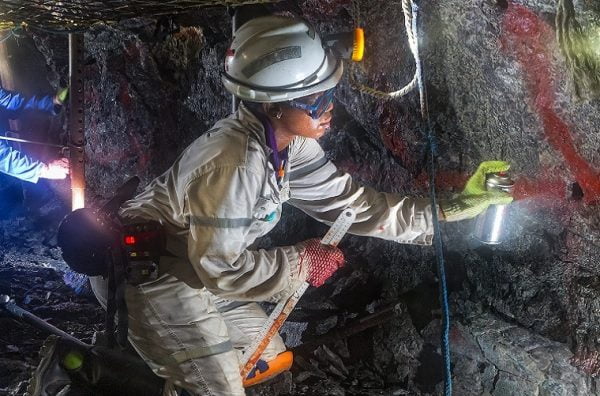
KUVIMBA Mining House has injected US$6 million for an expansion drive for its Kwekwe-based gold operations at Jena Mine.

On completion the expansion is expected to ramp-up production from monthly 24kg of gold to 83kg – an increase of 330%.

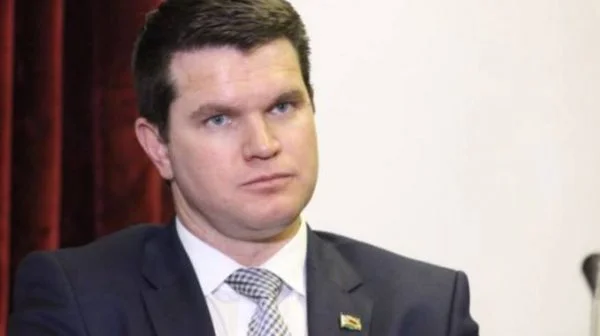
Kuvimba Mining House chief executive David Brown confirmed the development.

“Jena Mine a subsidiary of Kuvimba Mining House has a strategic plan to restructure itself to a mid-tier gold producer through organic growth phases over a two-year period,” he said.

“The organic growth will be achieved through the plant and underground mine expansion optimisation and exploration of the ore body to a depth of 500m.”

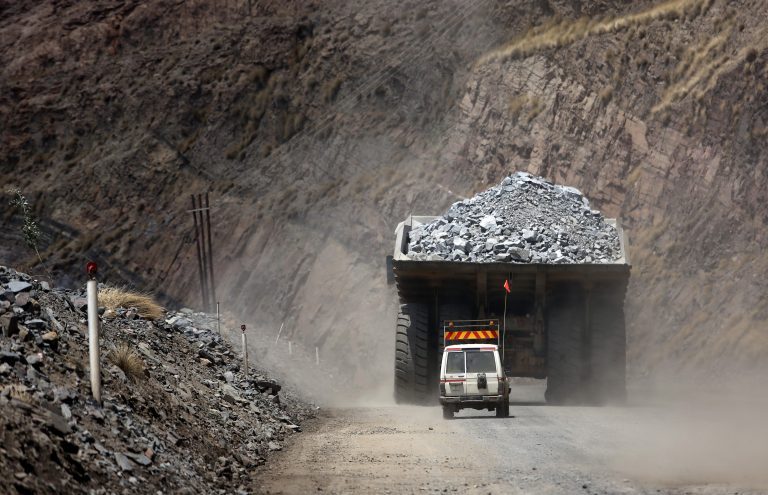
“The aim is to ramp up ore production from the current 8 000 tonnes per month to 30 000tonnes per month over the next 24 months. This translates to an increase in gold production from the current 25kg to 83kg per month, which equates to a 330% increase. The crushing, milling and leach plant capacity will simultaneously be upgraded to match the ore production ramp-up schedule,” Brown said.

He said the project started last May, and in June, Jena Mine produced 31kg of gold indicating the positive development the expansion drive is bringing.

Jena Mine has a strong workforce of 703 employees.

The government and various local investment vehicles such as Sovereign Wealth Fund of Zimbabwe, Public Service Pension Management Fund, Deposit Protection Corporation, Insurance and Pensions Commission, Datvest Nominees, and National Venture Capital Company of Zimbabwe own Kuvimba Mining House Group.

NewZimbabwe

Gold deliveries near 3 tonnes as incentives propel performance

0

Zimbabwe’s gold deliveries more than doubled to 2.92 tonnes in June from 1.409 tonnes during the same period last year on incentives as experts say the upward trajectory would be maintained throughout the year.

Last month, the Reserve Bank of Zimbabwe (RBZ) introduced a 5% incentive for those who deliver above 20kg a month.

In addition, the RBZ cut royalties and the cost of importing cash on small scale miners to improve gold production in the country amid revelations the economy was losing over 2.5 tonnes per month to smuggling.

The central bank also allowed small scale miners to sell gold at the prevailing international gold price.

Fidelity Printers and Refiners  (FPR) acting general manager Peter Magaramombe told Business Times that the June output was bound to exceed two tonnes by a huge margin, given how miners flocked the premises.

“The June 2021 gold deliveries clocked 2.92 tonnes against 1.4 tonnes in the same period last year due to a reviewed buying price of gold for the artisanal miners and small scale miners,” Magaramombe said.

“This has resulted in a positive response that propelled June deliveries to breach the 2 tonnes line for the first time since May 2020.”

Small scale miners delivered around 1.7 tonnes against large scale miners’ 1.1 tonnes.

Overall, gold deliveries for the half year fell 6% to 9.948 tonnes from 10.6 tonnes during the same period in 2020.

In May gold deliveries fell 5% to 1.38 tonnes from 1.46 tonnes recorded during the same period last year with the positive output only recorded in March where deliveries improved 2% to reach 1.80 tonnes from 1.77 tonnes.

However, with the recent surge in production, mining experts are projecting a huge recovery during the second half of the year.

In January 2021, from the output of 0.997 tonnes, primary producers delivered 0.64 tonnes against small scale who delivered 0.355 tonnes, in February 2021, the small scale extracted 0.56 tonnes and primary producers delivered 0.61 tonnes.

Recently, an FPR executive revealed that the country could be losing over 30 tonnes yearly valued at US$1.7bn due to smuggling and unfavourable mining policies.

With all miners paid to date and payment at the prevailing international gold prices, a major surge in deliveries is expected.

Gold experts say the country’s sole gold buyer is guaranteed huge volumes of gold given the current set up.

Gold Miners Association of Zimbabwe chief executive Irvine Chinyenze said leakages are expected to drop due to the new lease of life given by the central bank.

“We expect more gold to be delivered to Fidelity as miners don’t want risk and prefer to use the formal channels. Low prices, taxes and high costs were pushing miners to sell to alternative markets,” Chinyenze said.

The country’s gold output plummeted 31% to 19.052 tonnes in 2020 from 27.66 tonnes recorded in 2019 due to Covid-19 effects, delay in payments and low foreign currency retention levels.

In last year’s mining report, mining experts advised that President Emmerson Mnangagwa’s government should pay gold producers at world prices to woo them into selling the yellow metal through the formal channels.

The report blamed FPR’s flawed centralised gold buying scheme and called for the law to bring complicit powerful politicians to book as they are believed to be sponsors of machete gangs’ violence in the Midlands Province and Mazowe, Mashonaland Central.

The report said the development of the gold sector is crucial if Mnangagwa’s government is to salvage prospects for Zimbabwe’s economic recovery from decades of economic stagnation.

But with all amendments done in June, the country could be heading towards a good direction with experts expecting gold output to near 100 tonnes next year if the current trend continues.

Business Times

Holistic approach needed in curbing gold leakages

0

THE rate at which gold, the country’s biggest foreign currency earner, is being illegally smuggled out of the country is worrying.

According to official statistics, Zimbabwe is losing at least US$100 million worth of gold every month, which is being smuggled out of the country through the porous borders.

In 2019, the country earned US$946m from gold compared to US$1,3 billion earned in 2018.

Reports of people being arrested or intercepted while trying to smuggle gold out of the country have been on the increase lately.

Recently, a 33-year-old Zimbabwean man was arrested at South Africa’s OR Tambo International Airport allegedly trying to smuggle 23 pieces of gold worth R11 million into the neighbouring country and a Chinese national was also arrested trying to smuggle 7kg of gold out of the country.

The good news however, is that the Government is in the process of putting in place systems to plug the leakages.

Some of the measures that the Government is working on to plug the leakages include installing a sophisticated computerised system at the country’s border posts and airports which will be able to detect illegal activities.

The Treasury also intends to buy 500 police vehicles as part of a raft of measures to help fight crime and improve efficiency in terms of policing and fighting corruption among other illegal activities.

Mines and Mineral Development Deputy Minister, Hon Polite Kambamura said, Government had plans to address the long-standing problem of gold smuggling.

‘‘Government will be setting up an inter-ministerial committee to investigate and come up with concrete measures to plug the smuggling of our minerals,” said Deputy Minister Kambamura.

He said monitoring of ports of entry and exit will be key.

“Chief among the duties of the committee will be coming up with measures of tightening security and monitoring at our ports of entry and exit as these have become so porous,” he said.

Mines and Mining Development Portfolio Committee chairperson, Mr Edmund Mukaratigwa, said the increasing cases of gold smuggling were worrying.

“This is a serious challenge we are facing as a country and we need to find a solution. The people are smuggling the gold because the get more outside the country compared to local prices. It seems the 60-40 percent retention is not good enough,” said Mukaratigwa.

He said the mismatch between parallel market rates and official exchange rates was also fuelling smuggling.

“We have a lot of undeclared gold that we believe is being smuggled out of the country. These reported cases are just a tip of the iceberg so how much are we losing as a country?”

Mr Mukaratigwa, who is also Shurugwi legislator, said there is a need to tighten security and block leakages at the entry and exit points, including embracing technology for surveillance.

“We anticipate new measures, which are both ICT-oriented and adequate training for those manning our border posts,” said Mr Mukaratigwa.

He said there were aerodromes that are in the bushes which could be used for smuggling gold and they need to be monitored using state-of-the-art technology.

“We need to formalise artisanal and small-scale mining by creating mining syndicates which can account for all the gold mined,”said Cde Mukaratigwa.

He said his committee wants to bring together all concerned stakeholders so that they have an input into the proposed systems of curbing leakages.

“We need an integrated system where police work hand in hand with other stakeholders like airport officials, Ministry of Mines and President’s Office,” said Cde Mukaratigwa.

Zimbabwe Miners Federation spokesperson, Mr Dosman Mangisi believes the best way to curb leakages is through mechanisation of small-scale miners.

He said the hammer and chisel way of extracting gold lacked accountability.

“As long as we continue turning a deaf ear to the issue of mechanisation and continue with our hammer and chisel way of mining, which in itself is not sustainable, we will have difficulties to account for the gold produced and any miner can do whatever he wants with it,” he said.

His sentiments come at a time when RBZ Governor, Dr John Mangudya announced that the bank has started an initiative to register all small-scale miners.

Dr Mangudya said all artisanal miners will soon be registered as part of efforts by the Government to formalise their operations, curb illegal gold dealing as well as protect the environment.

The move was hailed by ZMF President Ms Henrieta Rushwaya who said the ZMF embraces the move by the Government as it goes on to decriminalise gold possession.

“We welcome the move by the Government with regards to the registration as it will ensure that we operate within the confines of Zimbabwean laws,” said Ms Rushwaya.

She said decriminalising gold possession will also reduce leakages.

“As ZMF we are saying it is a welcome move and we would also further want to urge the Government to decriminalise gold possession,” said Ms Rushwaya.

The Chronicle

Premier African Minerals makes drilling headway at Matabeleland South lithium project

0

REGIONAL mining group, Premier African Minerals has started drilling at its Zulu Lithium project in Matabeleland South province.

Last month, the multi-commodity mining and natural resource development company, announced a placement of £1 million for the ongoing Definitive Feasibility Study (DFS) at Zulu.

In a statement yesterday, Premier said drilling was underway at Zulu with the second drilling rig expected on site over the weekend.

It said laboratory equipment is expected on site next week.

Premier chief executive officer, Mr George Roach commented: “I am deeply encouraged that despite the Covid-19 related lockdowns and travel restrictions in the Sadc region, we are making progress in the drilling programme that is central to Zulu’s DFS.

“With the essential elements of Geodrill’s camp now established, I look forward to the ongoing expansion of Zulu’s camp as we progress into the various other facets of the DFS study”.

The Zulu lithium mine is one of the 25 projects the Government – through general notice 328 of 2021, has granted Exclusive Prospecting Orders for a period of three years up to 2024.


The Chronicle

Larfage targets to double cement output

0

Cement maker Lafarge Cement Zimbabwe Limited is forecasting cement production to increase by 100 percent as its US$25 million capital expansion programme bears fruit.

Chairman Kumbirai Katsande indicated the group is now in the final phase of the three pronged investment plan, which is the installation of a vertical cement mill expected to double cement production.

The supply contract was signed in August 2020 and the manufacturing of the plant commenced the following month.

“The third investment project is the installation of the Vertical Cement Mill (VCM), earmarked to double cement milling capacity,” said Katsande in a statement accompanying financials for the year to December 31, 2020.

“Civil works for the VCM have since started and expected completion date for the project is February 2022,” he said.

This follows the successful installation of alternative power infrastructure in 2019 and completion of the automated Dry Mortars Plant in 2021.

Resultantly, production capacity for the Dry Mortars business effectively increased by 1 300 percent to 100 000 tonnes from 7 000 tonnes per annum, making the Lafarge the biggest producer of Dry Mortar products in Zimbabwe.

“Significant volume growth is therefore foreseen in the Dry Mortars business following the plant commissioning in April 2021,” said Katsande.

During the past financial year, the dry mortars business drove earnings performance at a time the Covid-19 induced impacts posed severe challenges for businesses locally and across the globe.

Revenue for the year jumped 68,5 percent to $6,9 billion from $4,1 billion on significant volume growth in the Dry Mortars business and a market shift towards high strength cement which influenced a significant change in the cement product mix.

Despite losing a full month of production and sales in April 2020 due to the Covid-19 induced national lockdown the cement volumes recovered in subsequent months, with particularly strong performance in the third quarter closing at full year cement volume performance at 6 percent below prior year.

According to the group, demand was strong but volume growth was limited by capacity constraints owing to the loss of production during the April 2020 lockdown.

In the Dry Mortars business, volumes rose 115 percent compared to the prior year on the back of the relaunch of the Supagrow and SupaFix range backed by active market sensitisation of the products which has led to wider product adoption.

Gross profit margins grew 12,4 percent to 60,6 percent.

Lafarge reported an operating profit of $1,9 billion from a loss of $2,7 billion on a combination of the revenue growth, reduced costs and reduction in foreign exchange losses.

Net monetary position during the period remained favourable in inflation terms which resulted in an increase in the net monetary gain to $406 million from prior year’s $759 million, culminating in a profit for the year of $3,1 billion from a loss of $3,5 billion.

Basic earnings per share improved to 38 cents from a loss of 44 cents in the prior year. Total assets remained flat at $4 billion.

The impacts of Covid -19 pandemic are likely to remain posing challenges to businesses and impact on performance. But Katsande said the cement maker will continue to adapt its business strategy so as to thrive in the changing environment

Lafarge did not declare a dividend due to the uncertainties that prevail in the economic environment and to preserve working capital.


Business Weekly

Afrochine’s US$30m coke oven battery complete

0

CONSTRUCTION of Afrochine Dinson Colliery’s coking coal and coke oven battery projects in Hwange under the first phase is now complete with the US$30 million investment creating 300 jobs.  

In April, the company announced that it had started heating up its furnace in preparation for the start of metallurgical coke production.  The firm, a subsidiary of Chinese-owned steel producer, Tsingshan Holding Group, is one of the nine new coal mines and coking plants President Mnangagwa visited in July last year and is set to become the largest and most advanced coke oven in Zimbabwe. 

Speaking during a post-Cabinet briefing on Tuesday, Information, Publicity and Broadcasting Services Minister Monica Mutsvangwa said Mines and Mining Development Minister Winston Chitando has informed Cabinet that the projects were now complete.  

“Regarding the Construction of the Afrochine Dinson Colliery plant for coking coal production in Hwange, it was reported that the construction of the coking coal oven battery and the coking coal plant were both 100 percent complete.  

“The project has created 300 jobs to date,” she said.  

Afrochine Dinson started building its plant in 2019 but progress was stalled by the outbreak of Covid-19 until the Government engaged its Chinese counterparts to facilitate the return of experts who had been locked in the Asian country to complete the projects. 

The company which has also announced the intent to build a power station at its plant in November this year plans to produce about 400 tonnes of coke per day in the near future to meet local and regional demand of the product. 

Afrochine Dinson has also started construction for the second phase of their project, as the company seeks to deepen the value addition drive, which feeds into Zimbabwe’s Vision 2030 of an empowered and prosperous upper middle income economy. 

On the Eureka gold mining project in Guruve, Minister Mutsvangwa said Cabinet has been informed that the investment is almost complete.  The project, which is owned by Dallaglio Investments, is one of the mines being resuscitated as the Government targets a US$12 billion mining economy by 2023.  

“The Minister of Mines and Mining Development reported that the refurbishment of the Eureka Gold Mine in Guruve, Mashonaland Central province overall progress is at 94,4 percent,” she said.  

Reconstruction works at the mine were commissioned by the President in 2018 as part of a grand strategy to maximise on Zimbabwe’s economic endowment and driving the economy towards an upper middle income economy by 2030. 

Eureka was forced to shut operations after running into viability problems two decades ago with capital at the centre of the mine’s troubles. 

“At the  Bravura platinum exploration project in Selous, Mashonaland West, procurement of equipment to carry out the drilling programme is now 90 percent complete. Sampling of the economic horizon is now 45 percent complete.  The project has now employed 54 people from the surrounding communities and nearby towns,” said Minister Mutsvangwa, adding that the Unki Debottlenecking project in Shurugwi, Midlands province, was overally at 62 complete.  

The US$12 billion mining strategy was launched by President Mnangagwa in 2019 to increase the sector’s contribution to the economy. The projected increase represents a 344 percent jump from US$2,7 billion achieved in 2017.  By 2030, the Government projects that the mining sector would be contributing an upwards of US$20 billion. 

Sibanye may wind down gold mines in SA’s fading sector

0

Sibanye-Stillwater may wind down its three South African gold mines in the next decade or so as it becomes harder to exploit ageing assets in an industry that was once the world’s largest.

The company is among the few remaining South African gold producers squeezing profits from mines that are among the deepest in the world and are becoming more costly to run. Sibanye, which also mines platinum-group metals in southern Africa and North America, may look at gold assets outside South Africa as it winds down the three sites there.

Unless gold prices move much higher and the investment environment improves, Sibanye is unlikely to exploit its Beatrix mine beyond about five years’ time, spokesperson James Wellstedsaid. Driefontein — once Africa’s biggest gold mine and which now goes 4 km underground — will run out around 2030, and Kloof about three years after that.

Did you know Sibanye Stillwater is a 50% shareholder of Mimosa with the other 50% belonging to Impala Platinum the company that owns ZIMPLATS

Producers Gold Fields and AngloGold Ashanti have also shifted focus to more lucrative gold mines elsewhere in Africa, Australia and the Americas as they grapple with the costs and safety challenges of operating mines in the country. It’s currently not worthwhile spending money on extending the life of some mines, even after bullion’s rally to a record last year.

“These mines have got a finite life, some of them are more than 70 years old, so they can’t go on forever,” Wellsted said in an interview. An “investment decision requires a lot of things and at the moment it’s not warranted, the gold price is not high enough.”

The appeal of investing in the sector has waned amid regulatory uncertainty, high power and labor costs as well as community protests and violence, Wellsted said. The three mines that Sibanye plans to run down produced gold at an average all-in sustaining cost of $1 406/oz last year, and prices need to be much higher to invest in extending their lives, he said.

Sibanye, which was spun off from Gold Fields’s oldest South African mines in 2013, employs about one-third of the roughly 93,000 workers in the nation’s gold industry.

The company will consider acquiring gold operations elsewhere in the world, and dealmaking CEO Neal Froneman in March said he’s prepared to spend as much as $5 billion on assets with an annual output of more than one million ounces.

In South Africa, “the industry is a shadow of what it used to be,” Wellsted said. “As we get deeper and as cost pressures increase, you can’t continue to mine unless there is some sort of huge change in the industry, technological or other, that changes the fortunes.” – Mining Weekly

About Sibanye Stillwater

Sibanye-Stillwater is a leading international precious metals mining company, with a diverse portfolio of platinum group metal (PGM) operations in the United States (US), South Africa, and Zimbabwe, gold operations and projects in South Africa, and copper, gold and PGM exploration properties in North and South America. Recently, Sibanye diversified its portfolio geographically and by commodity – with the acquisition of a 30% stake in a lithium hydroxide project in Finland.

It is the world’s largest primary producer of platinum, the second-largest primary producer of palladium and a top-tier gold producer, ranking third globally on a gold-equivalent basis, as well as a significant producer of rhodium and other PGMs and associated minerals such as chrome. It is also a globally leading recycler and processor of spent PGM catalytic converter materials.

ZimAlloys exits receivership

0

Gweru-based ferrochrome producer, ZimAlloys has exited receivership after clearing its foreign and domestic debt.

ZimAlloys is now under Kuvimba Mining House, which is controlled by the Government of Zimbabwe.

ZimAlloys has been under judicial management since 2013. Grant Thornton was the judicial manager.

Buliso Mbano of Grant Thornton confirmed that the advisory firm handed control of ZimAlloys back to management.

“On May 26, 2021, the High Court of Zimbabwe granted an order to remove Zimbabwe Alloys and Zimbabwe Alloys Chrome from judicial management. The new board and management of ZimAlloys have since assumed management control over the affairs of the companies,” Mbano said.

ZimAlloys has been working on its dump which is inclusive of one commissioned in 2013 in a partnership with a Chinese firm, Jinan in a deal worth about US$2.3m.

The ferrochrome miner was also looking at initiatives to secure funding for refurbishment of its furnaces at the Gweru plant. This initiative was to see the miner engaging its customers and international financiers in raising funding which was expected to run into millions.

Benscore, a company owned by businessman Farai Rwodzi, acquired ZimAlloys from Anglo-American Company in 2005 before downscaling production and switching off its blast furnaces and started processing its dumps.

The company ceased operations in 2008 and was placed under provisional judicial management in July 2014. The company was then put under final judicial management in November the same year after the ferrochrome producer’s debt had risen to alarming levels.

However, bad debt-buying company, Zimbabwe Asset Management Company in 2016 agreed to take over US$21m worth of the group’s nonperforming loans which were sitting with a number of local financial institutions in a bid to clean the company’s balance sheet.

ZimAlloys together with Zimasco jointly controls the majority of Zimbabwe’s chrome ore claims, mostly found along the Great Dyke.

ZimAlloys has since ceded part of its ferrochrome reserves to government as part of the ferrochrome producer’s response to a directive given by government which ordered the country’s two ferrochrome giants, Zimasco and ZimAlloys to cede part of their chrome claims.

Initially Landela, a company linked to business tycoon, Kuda Tagwirei, wanted to take over ZimAlloys. But, the takeover of ZimAlloys by Landela was stalled after an appeal to the Supreme Court by Indian Investor Balasore frustrated the acquisition process. ZimAlloys, however, cancelled the US$100m Balasore deal after the Indian investor failed to honour its commitment within the agreed timeframe.

It is understood that the new investors, Kuvimba Mining House, is expediting the revival of ZimAlloys.


Business Times

Gvt yet to enact laws to curb mineral smuggling

0

WHILE deliberations continue over joining an international group formed to reduce corruption in mining countries, Zimbabwe continues to lose billions of dollars from the smuggling of extracted resources, including gold, diamonds, oil and gas.

Queried over the country’s position on joining the Extractive Transparency Industry Initiative (EITI), Finance minister Mthuli Ncube said talks were underway.

Ncube, in 2019 while presenting the national budget, announced the country’s intention to join EITI by mid-2020, but to date, nothing has materialised.

EITI is a transparency initiative meant to govern member States to handle their mineral wealth in a proper manner, doing away with the illegal sale of the minerals which are usually smuggled out of the country.

In an interview, he said: “We have ongoing discussions and reflections within the government. The government is mainly committed to transparency in the mining sector. It is a critical sector for the economy and also it helps us to attract even more investment.”

“The Mines ministry has been driving the US$12 billion vision, so this kind of arrangement is a contribution to our vision 2030. We are certainly looking at other investors who can come and work with the government,” he said.

From being a member of EITI, Zimbabwe stands to benefit from a properly handled output from the extractive industry, gaining part or all of the money it is losing from illicit financial flows associated with the extractive industry.

A 2019 report by the International Crisis Group estimates that the country is losing around US$1,5 billion a year through the smuggling of gold, mainly to Dubai and other countries.

Independent development economist Prosper Chitambara said the delay in joining EITI was largely a result of vested interests resisting the move.

“Any kind of change especially that brings greater transparency and greater involvement of key stakeholders is naturally resisted by vested interests that may be benefiting. That is the challenge of institutional reforms in Zimbabwe. There are a lot of vested interests that stand to lose,” he said.

A recent study by Transparency International Zimbabwe pointed out rampant political and bureaucratic corruption (involving senior politicians, bureaucrats and law enforcers) in the mining sector.

Rashweat Mukundu, an academic and political analyst, said: “Minister Ncube may be having the best intentions of ensuring transparency in the mining sector but the system, more so, the political system and its linkages with the economy of Zimbabwe, cannot allow that level of transparency.

“The fact that you have all these State institutions and individuals all connected from the ruling party to government engaging in mining and in the extractive industry means that there is no interest for transparency. To that extent, it is also an impossibility for Mthuli to meet his wish of pushing for transparency in the mining sector.”

Former member of the Reserve Bank of Zimbabwe (RBZ)’s monetary policy committee and economist, Eddie Cross said the delays in joining the EITI were largely a result of the fact that elements in the extractive sector were not happy with the initiative as it would expose poor mining practices from an environmental and operational perspective.

“I also think that corruption played a part. It would have been very helpful in establishing us as a responsible producer of base metals and minerals. In an increasingly competitive world it is critical to set high standards,” Cross said.

Local environmental watchdog Environment Management Agency estimates that there are 1,5 million illegal miners in the country, although the figure may be excluding big companies that breach their mining licences.

These illegal miners sell their stuff to intermediaries who smuggle the minerals across the country’s porous borders.

The smuggled minerals cannot be accounted for by the country as they are not declared anywhere.

The miners will be avoiding selling their minerals to the Reserve Bank of Zimbabwe (RBZ) whose pricing is lower than foreign illegal dealers.

The country, therefore, loses millions of dollars as the smuggled minerals do not contribute to the country’s revenue.

However, ZMF spokesperson Dosman Mangisi said RBZ’s monopoly as the sole buyer of gold had contributed towards losses and non-performance in the sector.

He said they were in favour of anything that ensured accountability in the mining sector, including EITI.

“Government should not monopolise the buying of gold in the country. The market should be open to allow other stakeholders, and bankers to compete. It has been recording losses from the beginning of the year because its payment system is not favourable to miners and that has resulted in miners opting for the black market.”

About Eiti

The Extractive Industries Transparency Initiative (EITI) implements the global standard to promote the open and accountable management of oil, gas and mineral resources.

The EITI Standard requires the disclosure of information along the extractive industry value chain from the point of extraction, to how revenues make their way through the government, and how they benefit the public. By doing so, the EITI seeks to strengthen public and corporate governance, promote understanding of natural resource management, and provide the data to inform reforms for greater transparency and accountability in the extractives sector. In each of the 55 implementing countries, the EITI is supported by a coalition of government, companies, and civil society.

Newsday

Caution on EPO message circulating on social media

0

Nine Exclusive Prospecting Orders (EPOs) that expired this week have one tenure and previous applicants are permitted to re-apply for an extension of tenure for another three years the Ministry of Mines and Mining Development has cautioned.

Anerudo Mapuranga

There is news circulating on social media that small-scale and artisanal miners can now peg in the areas of the expired EPOs. The news might upset many if the Mining Affairs Board (MAB) decides to renew the tenure of the EPO holders some of which have reapplied.

“Please note, these EPOs just had one tenure and the Act provides that they can apply for an extension of tenure for another 3 years. The MAB decides if the EPOs can be extended or not. The perpetrators of the news are either ignorant of this or have some agenda.

The essence of an EPO is to prospect for minerals and if discoveries are made claims are pegged by the EPO holder which may then develop into a mine,” the Ministry said in a statement.

Zimbabwe Miners Federation (ZMF) Chief Executive Officer Mr. Wellington Takavarasha issued a statement informing ZMF general council members and small-scale and artisanal miners of the development.

“Please note that technically, these EPOs have expired but the Mining Affairs Board (MAB) has not deliberated on them yet.

“Some of them have been working, doing some exploration and we stand guided by the Ministry if they are satisfied with their progress.

“This is their 1st tenure and they may apply for an extension of their tenure by up to 3 years which is provided for in the MMA Act. Some of them have done so and their applications are with the MAB.

“So, allow us to kindly continue to engage the Ministry on the issue and also check with the respective PMDs of the afore-mentioned Provinces.

We are quite hopeful that some of them are not going to be extended so that our miners get areas to mine,” Takavarasha concluded.

Pegging the areas mentioned can only be permitted only when official information is displayed on notice at the Provincial offices of the Mines and Mining Development Ministry.

The following are the nine expired EPO’s

EPO #                              HOLDER                                          PROVINCE

1622                                            Krimlin                                                            Mash West

1646                                            Bilboes  Holdings                                          Mat North

1726                                            Bilboes Holdings                                           Mat North

1727                                             Bilboes Holdings                                           Midlands

1731                                              GeoAssociates                                              Midlands

1736                                             Mukwa Mines                                              Midlands

1737                                              Mukwa Mines                                             Midlands

1739                                              Mukwa Mines                                             Midlands

1741                                              Laduma Investments                                 Mat South