Home Blog Page 44

Gold buying prices in Zimbabwe per gram/ ounce, 25 October 2025

Gold buying prices in Zimbabwe per gram/ ounce, 25 October 2025, from the official gold buyer and exporter Fidelity Gold Refinery (FGR).

1 oz = 31.1035 g

CategoryPrice ($/g)Price ($/oz)
SG 90% and ABOVE124.703,878.61
SG 85% and above but below 90%123.383,837.97
SG 80% and above but below 85%122.063,797.32
SG 75% and above but below 80%120.743,756.68
Sample 5g and above but below 10g118.763,694.91
Fire Assay CASH125.363,899.18


NB: Fire Assay cash price is for gold above 100g, no sample is deducted.

A sample of not more than 10g is deducted for the Fire Assay Transfer price.

Zimbabwe’s New Mines and Minerals Bill Under Fire for Overlooking Small-Scale Miners and Mercury Use

0

Zimbabwe’s new Mines and Minerals Bill has come under scrutiny for failing to address two critical issues — the formalisation of artisanal and small-scale miners, and the reduction of mercury use in gold processing — despite the country’s commitments under the Minamata Convention on Mercury, Mining Zimbabwe can report.

By Ryan Chigoche

Planet Gold Zimbabwe, which has been leading efforts to promote responsible and mercury-free mining, says the Bill misses a key opportunity to modernise the country’s mining framework in a way that reflects the realities of its expanding small-scale mining sector.

These concerns are drawn from Planet Gold Zimbabwe’s forthcoming publication, “Strengthening the Mines and Minerals Bill: Advancing Reforms for the Benefit of Artisanal and Small-Scale Gold Miners in Zimbabwe.” The report outlines major policy gaps and offers practical recommendations for a more inclusive and environmentally aligned mining regime.

Speaking during a recent media dialogue hosted by Planet Gold Zimbabwe, the organisation’s ASGM Technical Specialist, Mollyn Siwella, said that while the Bill represents a progressive step toward updating the outdated Mines and Minerals Act of 1961, it overlooks key issues affecting small-scale miners, who now contribute more than 60 percent of the country’s gold output.

“The Bill does not adequately reflect the operational, economic, and social realities of artisanal miners,” Siwella explained. “It doesn’t speak directly to the artisanal element of the sector, yet this is where much of the country’s gold production comes from.”

Siwella noted that the Bill’s demand for upfront compliance could push many miners further into informality rather than bringing them under regulation.

According to a recent Planet Gold Zimbabwe study, ASM operators indicated that the formalisation process remains complex, costly, and poorly aligned with their daily realities. Many miners cited overlapping statutory requirements, long approval delays, and excessive compliance costs as major deterrents to joining the formal economy.

In light of these findings, the stakeholders called for a phased formalisation model supported by financial assistance, technical training, and improved market access to help build the sector’s capacity and unlock its full potential.

Siwella added that inefficiencies within the current system create barriers to formalisation, undermine environmental protection, and reduce accountability in the sector.

Another major concern raised by Planet Gold Zimbabwe is the Bill’s silence on mercury use, despite Zimbabwe being a signatory to the Minamata Convention on Mercury — a global treaty aimed at protecting human health and the environment from mercury pollution.

“Given Zimbabwe’s international obligations under the Minamata Convention, we had expected the Bill to include clear provisions on mercury reduction, including incentives and technical support for the uptake of safer processing technologies,” said Siwella. “This was a missed opportunity.”

Planet Gold Zimbabwe is implementing a five-year initiative to reduce mercury use by nearly five tonnes within the ASM sector. Research by the organisation shows that about 96 percent of artisanal miners still rely on mercury for gold processing, with some sites using up to 100 kilograms per month.

Through partnerships with the Ministry of Mines and Mining Development, the National Metallurgical Laboratory, and the University of Zimbabwe, the project has identified 72 mine sites across 11 districts where mercury-free gold recovery technologies will be piloted. The initiative includes the establishment of both mobile and stationary demonstration plants to show that miners can recover more gold without using mercury.

“We are testing different mercury-free technologies tailored to Zimbabwe’s mining conditions,” said Siwella. “The goal is to show that clean mining is not only safer for people and the environment but also more profitable.”

Planet Gold is also developing a Mining Academy to train artisanal miners in financial management, technical skills, and sustainable practices.

Upcoming research will focus on tracking mercury supply chains, examining how mercury enters and circulates within Zimbabwe, and exploring incentives for gold buyers to pay a premium for mercury-free gold.

Siwella said these initiatives are meant to complement policy reform, but they can only succeed if the legislative framework recognises the ASM sector as a legitimate and vital part of Zimbabwe’s mining economy.

“Formalisation should not be about punishment or exclusion,” she said. “It should be about building capacity, protecting livelihoods, and ensuring that Zimbabwe’s gold is produced responsibly.”

As stakeholders await the implementation of the new law, Planet Gold Zimbabwe says it will continue advocating for an inclusive framework that bridges the gap between policy intentions and miners’ lived realities, ensuring that formalisation, environmental protection, and cleaner technologies move forward together.

VP Chiwenga Declares War on Raw Mineral Exports

0

For too long, Zimbabwe’s wealth has been shipped away in its rawest form, leaving behind little more than potholed roads and broken promises. However, on Friday, Vice President Dr Constantino Guvheya Chiwenga drew a line in the sand, announcing a radical new economic doctrine designed to ensure every Zimbabwean finally tastes the fruits of their own soil, Mining Zimbabwe can report.

By Rudairo Mapuranga

In a powerful address at the Chinese-owned Dinson Mining Investments’ Gwanda Lithium Mine in Matabeleland South, Vice President Chiwenga declared the death of the “extract and export” model, proclaiming an irreversible shift to a future where Zimbabweans are not just miners, but manufacturers; not just labourers, but owners of a value chain that stretches from the mine to the marketplace.

“We want all of us to be mindful that we must move beyond the extract and export model,” Chiwenga stated, his voice echoing across the mining site. “But we must say extract, process, beneficiate, and manufacture in the country. That’s our model. The exportation of raw material? No.”

This is more than just policy; it’s a vision of national transformation. The Vice President painted a vivid picture of a Zimbabwe where lithium mined in Gwanda is processed into components for the smartphones and laptops of the African continent—creating jobs, building local industries, and bringing “smiles up to the ear” for communities long sidelined from the riches beneath their feet.

Framing this economic revolution within the deep historical ties with China—a “people-to-people” relationship—Chiwenga argued that true partnership means mutual benefit. He demanded that investments must translate into tangible improvements for locals through corporate social responsibility initiatives focusing on roads, schools, and skills development.

“Investment in the mining sector should be mutually beneficial to the investor, to the nation, and to the communities,” he charged, instructing the Ministers of Mines and State to ensure cooperation. “Once that happens, smiles will be up to the ear. Everyone will be smiling, everyone will be happy.”

With this bold stance, the government is signalling that the era of watching raw resources leave the country is over. The new era, as declared from Gwanda, is one where Zimbabweans themselves will build, process, and prosper.

Gold Prices rise by 2.1 to 2.3 US dollars per gram

0

Gold prices in Zimbabwe have recorded modest gains across all purity categories compared to yesterday, reflecting a continued strengthening of the local market amid steady international gold demand, Mining Zimbabwe can report.

CategoryYesterday ($/g)Today ($/g)Change ($/g)Yesterday ($/oz)Today ($/oz)Change ($/oz)
SG 90% and ABOVE123.65125.89+2.243,846.843,914.21+67.37
SG 85% and above but below 90%122.34124.56+2.223,806.083,873.95+67.87
SG 80% and above but below 85%121.03123.23+2.203,765.343,833.69+68.35
SG 75% and above but below 80%119.73121.90+2.173,725.043,793.43+68.39
Sample 5g and above but below 10g117.76119.90+2.143,664.883,731.27+66.39
Fire Assay CASH124.31126.56+2.253,866.783,935.06+68.28

The upward movement ranges between 2.1 to 2.3 US dollars per gram, translating to an average rise of around 68 US dollars per ounce across categories.

Market analysts attribute the gains to a slight uptick in global bullion prices, combined with local demand pressures and exchange rate adjustments. The Fire Assay CASH category saw the sharpest increase, climbing $2.25/g to $126.56/g, underscoring robust buying interest in high-purity gold.

Overall, today’s prices mark a consistent daily increase across all categories, signalling positive short-term momentum for Zimbabwe’s gold market as traders and small-scale miners continue to benefit from favourable pricing trends.

Gold buying prices in Zimbabwe per gram/ ounce, 24 October 2025

Gold buying prices in Zimbabwe per gram/ ounce, 24 October 2025, from the official gold buyer and exporter Fidelity Gold Refinery (FGR).

1 oz = 31.1035 g

CategoryPrice ($/g)Price ($/oz)
SG 90% and ABOVE125.893,914.21
SG 85% and above but below 90%124.563,873.95
SG 80% and above but below 85%123.233,833.69
SG 75% and above but below 80%121.903,793.43
Sample 5g and above but below 10g119.903,731.27
Fire Assay CASH126.563,935.06


NB: Fire Assay cash price is for gold above 100g, no sample is deducted.

A sample of not more than 10g is deducted for the Fire Assay Transfer price.

Gold and Minerals Propel Zimbabwe to First Trade Surplus in 20 Months

0

Zimbabwe’s mining sector has powered the nation to its first trade surplus in nearly two years, with gold leading a broad-based mineral export boom that generated a US$7.2 million surplus in August 2025. This milestone—the first since the introduction of the ZiG currency in April 2024—signals a potential turnaround for the resource-driven economy, though its foundations remain closely tied to volatile global commodity prices, Mining Zimbabwe can report.

By Rudairo Mapuranga

The surge in gold exports was the undeniable engine behind this economic achievement. Accounting for a dominant 52.7% of all export revenue in August, gold solidified its position as the nation’s primary foreign currency earner. This performance is part of a much broader, record-setting trend for the year, driven by both high global prices and a significant increase in production from both artisanal and large-scale miners.

However, the golden narrative was supported by strong performances across the mineral spectrum. Nickel, a key pillar of Zimbabwe’s industrial mining, continued to be a major contributor, with exports of nickel mattes and ferronickel bringing in substantial earnings. The platinum group metals (PGMs) sector also maintained its crucial role, providing a steady and high-value revenue stream that diversifies the nation’s export base beyond gold. Together with a robust tobacco season, these mineral and agricultural exports created a powerful coalition that pushed total exports for the month to US$878 million.

On the other side of the equation, a controlled import bill was essential to achieving the surplus. Overall imports declined to US$871.1 million, aided by a notable 4.5% drop in fuel costs. A significant, though less sustainable, factor was a government ban on maize imports, which saw their value plummet from a monthly average of US$55 million to just US$1 million. This reduction in essential food imports highlights the complex and sometimes precarious balancing act behind the positive trade figures.

Despite this welcome news, economists and industry analysts urge cautious optimism. The surplus rests on a fragile foundation, as Zimbabwe’s export basket remains heavily reliant on a few primary commodities. A sudden downturn in the price of gold or nickel could quickly erase the gains. Furthermore, the mining sector itself continues to face significant headwinds, including persistent issues of gold smuggling, unreliable electricity supply, and policy uncertainties that can deter long-term investment.

For this trade surplus to mark the beginning of a sustained positive trend rather than a fleeting moment, the country must navigate these challenges. The focus will need to be on deepening economic reforms, encouraging mineral beneficiation to capture more value domestically, and creating a stable investment climate that can unlock the full potential of Zimbabwe’s diverse mineral wealth. The August data proves the mining sector has the capacity to lead the economy—the task ahead is to build a more resilient and diversified foundation for its growth.

Planet Gold Zimbabwe Set to Host Inaugural Stakeholders Conference in Harare

0

The Planet Gold Zimbabwe project is hosting its first-ever stakeholders’ conference in Harare, bringing together government representatives, development partners, artisanal miners, and technical experts to discuss progress in transforming the artisanal and small-scale gold mining (ASGM) sector toward safer and more sustainable operations, Mining Zimbabwe reports.

By Ryan Chigoche

Running under the theme “Building Together for a Sustainable Artisanal and Small-Scale Gold Mining Sector,” the two-day event—set for 27–28 October—will assess the project’s achievements, lessons learned, and challenges encountered during its first year of implementation, while setting the tone for its next phase.

Planet Gold Zimbabwe Project Manager Nyaradzo Mutonhori said the conference provides an opportunity to reflect on milestones achieved under the initiative and strengthen collaboration among key stakeholders.

“The conference will reflect on what has been achieved in the first year of implementation, lessons learned, and challenges encountered as we prepare for the second year,” she said.

Mutonhori added that the project has partnered with the Zimbabwe School of Mines to provide training and certification for artisanal and small-scale miners as part of ongoing efforts to formalise the sector and encourage responsible mining.

“We have partnered with the Zimbabwe School of Mines to support artisanal and small-scale miners through training and certification as part of promoting responsible mining practices,” she explained.

The event will also see the launch of a new publication titled Strengthening the Mines and Minerals Bill: Advancing Reforms for the Benefit of Artisanal and Small-Scale Gold Miners in Zimbabwe. The report captures miners’ perspectives on the proposed legislation and calls for inclusive reforms that address the realities of small-scale operations.

Planet Gold Zimbabwe Technical Specialist Mollin Siwela said one of the key focus areas during the conference will be policy reform on mercury management.

“The Bill does not make any reference to mercury, which is a missed opportunity,” she said. “As a signatory to the Minamata Convention on Mercury, Zimbabwe needs to ensure that legislation encourages mercury reduction and promotes safer mining practices.”

Mercury is widely used in Zimbabwe’s small-scale gold mining sector to extract gold from ore, but the practice has severe health and environmental consequences. According to Planet Gold Zimbabwe, artisanal mining is the country’s largest source of mercury emissions, contaminating soil, rivers, and communities downstream.

As part of its five-year plan, the project aims to reduce mercury use by 4.85 tonnes through training, awareness campaigns, and the introduction of alternative processing technologies. Siwela revealed that 72 mining sites have been selected for pilot testing of mercury-free gold processing technologies beginning next year, marking a critical step toward sustainable gold production.

Planet Gold Zimbabwe is funded by the Global Environment Facility (GEF) and led by the United Nations Environment Programme (UNEP). It is implemented by IMPACT in partnership with the Ministry of Mines and Mining Development and the Ministry of Environment, Climate and Wildlife.

Over its five-year span, the programme aims to reach 7,500 artisanal miners across 72 ASGM sites, promote safer working conditions, and improve environmental stewardship across 76,000 hectares of mining-affected land impacted by the use of mercury.

Digital Ventilation Solutions: Driving Safety and Sustainability Ahead of the MVSZ AGM

0

As Zimbabwe prepares for the upcoming Mining Ventilation Society of Zimbabwe (MVSZ) Annual General Meeting and Symposium scheduled for 30–31 October 2025 in Bulawayo, the conversation around digital transformation in mine ventilation has taken centre stage, Mining Zimbabwe reports.

By Ryan Chigoche

This year’s event, which aims to review and modernise ventilation practices and legislation, comes at a time when technological innovation is reshaping how the mining sector addresses safety and sustainability challenges.

With underground mines increasingly exposed to hazardous gases and growing pressure to improve energy efficiency, digital ventilation systems are emerging as a game-changer.

The integration of Internet of Things (IoT) sensors, AI-driven analytics, and real-time monitoring is transforming how air quality, gas levels, and energy use are managed—ensuring safer workplaces while supporting sustainability goals.

“The mining industry is undergoing a digital revolution, and mine ventilation systems are no exception,” said Dr. Tonderai Chikande, President of the MVSZ, ahead of the symposium. “By integrating advanced technologies like IoT sensors, AI analytics, and smart monitoring, we’re seeing major improvements in safety, efficiency, and energy management. Smart ventilation systems can optimise airflow, detect hazardous gases, and reduce power consumption—making operations both safer and more cost-effective.”

The 2025 symposium comes against the backdrop of a worrying trend: in 2024, Zimbabwe recorded 11 gassing accidents resulting in 12 fatalities—most of them in underground operations. Many of these incidents were linked to outdated ventilation systems and limited technical expertise, underscoring the urgency of adopting digital and data-driven technologies to prevent future tragedies.

Digital solutions offer a proactive approach—systems that automatically adjust airflow based on gas levels or temperature data, and platforms that allow ventilation officers to monitor underground conditions in real time. Such innovations are expected to feature prominently in the MVSZ discussions this October, as stakeholders explore how technology can bridge the gap between safety compliance and energy efficiency.

Beyond safety, the digital transformation of mine ventilation is increasingly tied to sustainability goals. Smart systems enable operators to optimise airflow, reduce unnecessary energy use, and minimise carbon footprints. This aligns with both Zimbabwe’s climate objectives and global sustainability standards, helping local mines remain competitive and environmentally responsible.

Dr. Chikande noted that the future of mine ventilation will rely heavily on data-driven decision-making, adding that as digital solutions continue to evolve, the future of mine ventilation is not only more sustainable but also smarter.

Government and industry regulators have also urged mining companies to embrace innovation to address persistent ventilation-related safety concerns. The Ministry of Mines has emphasised the importance of adopting digital tools to strengthen monitoring and prevent further gassing incidents in underground mines.

As engineers, ventilation officers, and industry leaders convene in Bulawayo this October, the MVSZ AGM and Symposium are set to provide a vital platform for knowledge exchange, training, and policy dialogue—laying the groundwork for a new era of digitally driven, sustainable mine ventilation in Zimbabwe.

Arcadia Lithium Mine Faces Labour Allegations: Company Denies Wrongdoing, Defends Expatriate Staffing

0

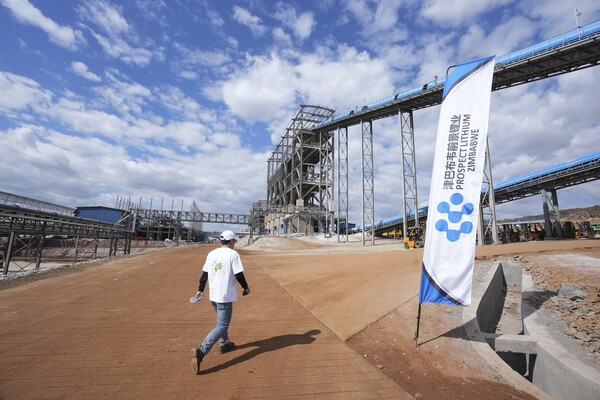
The operators of the multi-million-dollar Arcadia Lithium Mine have issued a robust defence against a litany of serious labour practice allegations, arguing that their reliance on expatriate Chinese staff is an indispensable strategy for a pioneering project of national importance, Mining Zimbabwe can report.

By Rudairo Mapuranga

This comes after Mining Zimbabwe presented Arcadia Technology Zimbabwe (ATZ) and its parent company, Prospect Lithium Zimbabwe (PLZ), with detailed claims from former and current employees alleging unfair dismissal, systemic discrimination, and a failure to implement meaningful skills transfer for Zimbabwean professionals.

In a comprehensive response from its ESG department, the company refuted the allegations point by point. It framed the non-renewal of specific employee contracts as “normal personnel turnover” and described its dependence on Chinese technical expertise as a necessary “incubator” and “catalyst” phase. The company asserted an “unwavering commitment” to localisation but emphasised the unique challenges of building a “brand-new, technology-intensive, modern industrial system from the ground up” in a region with no prior lithium industry.

The allegations, however, paint a starkly different picture of the internal environment at one of Zimbabwe’s most strategically vital mining projects.

The most immediate grievances centre on a group of qualified engineers hired in August 2025 on three-month contracts as Ball Mill Operators. These individuals, in sworn testimonies, claimed they were never allowed to operate the sophisticated machinery they were hired for. Instead, they stated they were deployed as “general hands” performing unskilled manual labour, which they contend was a fundamental breach of their employment terms.

The situation came to a head when the employees collectively requested a salary review and roles that matched their technical qualifications. They allege that their contracts were not renewed immediately following this request, a move they interpret as a retaliatory dismissal for exercising their right to fair labour practices. They cited the Supreme Court of Zimbabwe’s stance that dismissals, including non-renewals under such circumstances, must be both substantively and procedurally fair, questioning whether mandatory steps under the Labour Act were followed.

In its defence, ATZ confirmed that three employees on Ball Mill Operator contracts were not renewed upon their expiration on October 31, 2025. The company categorically stated that this “constitutes normal personnel turnover within company operations and does not qualify as unfair dismissal.”

The company provided a technical justification for the assigned manual labour, explaining that the project is still in its “construction phase” and that critical equipment, including the ball mill, “has not yet been fully installed.” As a result, it said, “some operators have been assigned to perform preparatory and other auxiliary tasks on site,” characterising this as a pragmatic temporary measure.

On the issue of wages, ATZ stated it paid the employees above their contracted rate and significantly higher than the National Employment Council (NEC) standard for a general worker, suggesting they were compensated fairly for the work they performed.

Notably, the company’s response did not address the specific query regarding whether the procedural steps for a fair termination, as mandated by Section 12B(1) of the Labour Act—including a formal hearing—were followed.


A Two-Tier Workforce? Allegations of Systemic Discrimination

Beyond individual contracts, a broader allegation looms: that of a systemic two-tier employment structure. Employees testified that while roughly 200 Zimbabweans work at the plant, the vast majority are in general hand roles, with all senior technical, supervisory, and decision-making positions occupied by Chinese expatriates. This is compounded by claims that even non-specialist roles are filled by Chinese nationals, creating a “glass ceiling” for local professionals.

The company’s rebuttal to these claims is rooted in its self-image as an industrial pioneer. It stressed that it is the first and only lithium salts plant in Zimbabwe—“indeed in the whole of Africa”—and is therefore not entering a mature industrial ecosystem.

“We are not entering a mature industrial environment but are building a brand-new, technology-intensive, modern industrial system from the ground up,” the response stated, pointing to a “lack of industrial chains, skilled workers, and management experience” in the local area.

The initial deployment of a Chinese core team was described as a “necessary measure to ensure the project’s survival and success.” The company further argued that the high-tech nature of modern mining, which relies on automated equipment and intelligent control systems, demands extremely high professional requirements that are not immediately available locally.

Addressing the claim that even administrative roles are filled by expatriates, the company provided a nuanced explanation, arguing that in a complex industrial plant, roles like production scheduler or materials manager are “intrinsically linked to the core production process” and require a deep systemic understanding currently held by experienced Chinese staff.

While the company pointed to its recruitment efforts for local positions, such as forklift drivers and welders, it did not specifically justify why roles such as security guards would require expatriate staffing.

On the alleged “glass ceiling,” the company cited internal promotions, claiming 47 local employees have been promoted to Team Leader and 16 to Assistant Supervisor. However, it did not provide the organisational chart requested by Mining Zimbabwe that would clearly show the nationality and decision-making authority of all plant manager-level positions and above.


The Localisation Promise and National Compliance

A central pillar of the government’s National Development Strategy 1 (NDS1) is skills development and the meaningful participation of Zimbabweans in the economy. The allegations questioned the existence of a tangible skills transfer plan at Arcadia.

In response, PLZ outlined a “multi-tiered talent development strategy.” It highlighted an internal training centre, a “mentorship” programme, and a tripartite cooperation with Ningbo Polytechnic University in China and Harare Polytechnic College. It noted it has already recruited 11 Zimbabwean youths who studied in China.

“We wish to emphasize clearly that reliance on Chinese staff is an ‘incubator’ and ‘catalyst’ during the project’s initial phase and is by no means a long-term strategy. Our commitment to staff localisation is unwavering,” the company stated.

However, the company did not provide the requested formal, time-bound Skills Transfer and Localisation Plan—a document that would detail the number of Zimbabwean understudies for senior roles and specific timelines for them to assume these positions.

Regarding a July 2025 directive from the Office of the President, which warned Chinese investors against a “disregard for local laws,” the company stated it has “never received any allegations from the President’s Office” on the matter and has always “actively responded to Zimbabwe’s national calls and complied with local laws.” It bolstered its compliance credentials by noting it is the first lithium miner in Zimbabwe to obtain international ISO certifications for compliance and environmental management.

Addressing its parent company Huayou Cobalt’s “Business for Good” principles, PLZ framed its entire investment as a contribution to national prosperity and its talent cultivation as part of creating “ESG best practices.”


An Unfinished Narrative

The dispute at the Arcadia Lithium Mine encapsulates the complex challenges of high-stakes foreign investment in Zimbabwe’s critical minerals sector. The company has presented a top-down narrative of technological necessity and strategic, phased localisation essential for the project’s long-term viability.

The employees, however, offer a bottom-up narrative of daily frustration, perceived disempowerment, and scepticism about the pace of change.

While the company’s detailed response provides significant context for its operational decisions, the absence of a concrete localisation timeline, a transparent organisational chart, and clarity on specific dismissal procedures means that critical questions persist. The resolution of this dialogue will be closely watched, as it will not only determine the future of the Arcadia mine but also set a precedent for how the promise of local empowerment is reconciled with the demands of cutting-edge industrial development in Zimbabwe.


Chiwenga Hails Skills Transfer at Palm River, Eyes Local Projects

0

Vice President Constantine Chiwenga has said the government is pushing for a comprehensive skills transfer programme at the Chinese-owned Palm River Special Economic Zone (SEZ), envisioning a future where Zimbabweans can independently build and run similar projects across the country, Mining Zimbabwe can report.

By Rudairo Mapuranga

Chiwenga, who was on a familiarisation tour of the SEZ, expressed satisfaction with the progress at the facility, highlighting that operations in ferrochrome production, coking coal, and electricity generation were now in “full swing.”

“We are happy with the progress that we have seen… there is great, great improvement,” Chiwenga said.

He noted that the power generation plant was now at 100 megawatts and that the on-site laboratory was fully operational.

However, the Vice President placed the strongest emphasis on the need for skills development, pointing to the presence of Zimbabwean girls in the laboratory as a positive start.

“More so is the issue of skills transfer, where they’ve started now taking the boys and girls from high schools,” he said. “You have already seen in the laboratory, there are quite a number of—in fact, there are more Zimbabwean girls than Chinese girls in there. And this is what I’ve been encouraging my brother here, that we need the skills transfer to the local Zimbabweans.”

Chiwenga described this as the ideal “people-to-people” relationship between Zimbabwe and China.

Outlining a broader vision, the Vice President said a structured plan was being developed with the Ministry of Higher and Tertiary Education, led by Professor Amon Murwira, and local leadership to identify and train talent specifically for the industrial sector.

He revealed that the strategy involves grooming students from secondary school level to become specialists, not just for the Palm River SEZ but for future national projects.

“Then develop this, you know, maybe one or two secondary schools up to A-Level. And that’s where they will take now the students, local students, to be trained—not only to work here but also on similar projects in the country,” Chiwenga stated.

In a clear signal of the government’s ambitions, the Vice President concluded, “This is not only going to be the first and last project.”