

Home Blog Page 446

Hwange women yearn for mine job opportunities

0

MS Pauline Banda, a young woman in her early thirties sits attentively at a roadside vegetable market in Lwendulu, a high-density suburb in the colliery town of Hwange.

She sits under the scorching sun watchful of any suspicious movement by her fellow vendors — a potential signal of the presence of police officers. The roadside markets are unregulated. After two years in the trade and numerous arrests by the Hwange Colliery and
Zimbabwe Republic Police, Ms Banda is contemplating on migration in search of better opportunities.

“After finishing my A-level I went for a certificate in Hotel Catering and Food Technology.

But, since then, I have never been employed despite several attempts in different mining companies. I now want to go to Victoria Falls, maybe I will get a job,” said Ms Banda.

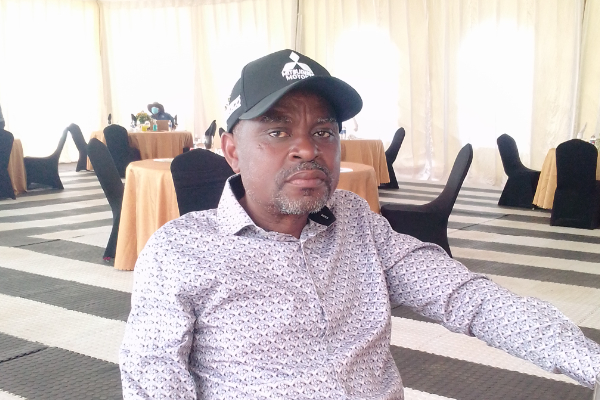
Hwange is dominated by coal mining companies. Mining companies’ world over provide job opportunities to both the educated and uneducated members of the community. But young women in Hwange are struggling to penetrate the industry. Zimbabwe Diamond and Allied Minerals Workers Union (ZDAMWU) Secretary General Mr Justice Chinhema notes that the mining sector is male-dominated.

“We feel there is a need to break this barrier. It is worse in Hwange; you hardly see female workers engaged. Most of the few women in jobs are employed as guards, janitors or general hands. These days there is no work that women cannot take. Gender equality has to be applied and every person, if qualified for a job, should be given an opportunity.

As ZDAMWU we have created a Woman, Youth and Gender department to promote gender equality, equity and empowerment of women and young workers in the mining industry. It is also pushing for the ratification of the International Labour Organisation (ILO) convention 190 which deals with sexual harassment,” said Mr Chinhema.

The eighth Zimbabwe Vulnerability Assessment Committee (ZimVAC) 2020 – Urban Livelihoods Assessment notes that urban areas provide several socio-economic opportunities for many people but are also becoming increasingly precarious places to live in, especially for low-income residents. The Covid-19 pandemic and its debilitating impacts on livelihoods has exacerbated the situation by eroding community coping capacities.

ZDAMWU says another repelling factor for young women in local mines is fear of sexual harassment.

“We have been receiving complaints of sexual harassment perpetrated against female workers. And by creating the department of Gender, we have created a platform for all women working in the mining sector to report those abuses. In Hwange district only one
percent of the employed workers are women and the abuse is so rampant,” said Mr Chinhema.

Greater Whange Residents Association Chairperson Mr Fidelis Chima acknowledges that Hwange has job opportunities considering the number of coal mining companies that are mushrooming in Hwange.

“If these companies are to pay reasonable salaries and improve working conditions, our young women will get opportunities,” noted Mr Chima. — The Citizen Bulletin

‘It’s wrong for Chinese miner to evict villagers’

0

THE Zimbabwe Lawyers for Human Rights (ZLHR) has described the planned eviction of Kaseke villagers in Uzumba, Mashonaland East province, by a Chinese mining company as illegal.

Heijin Mining Company is pushing to evict hundreds of Kaseke villagers from their ancestral land, after it was allegedly given a special mining grant to extract black granite on land covering 300 hectares by the government.

ZLHR lawyer Tinashe Chinopfukutwa, on behalf of the villagers, wrote to Mashonaland East provincial mining commissioner and to the Environmental Management Agency (EMA) demanding clarification on the existence of a prospecting licence authorising the miner to conduct mining activities in the area.

“To that end, we kindly request if any prospecting licence was granted to Heijin Mining Company and if so, we kindly request for a copy thereof,” Chinopfukutwa said in the letter.

“In the event that a prospecting licence was granted to Heijin Mining Company, it is our considered view that the pegging of Kaseke village is unlawful for the following reasons. In terms of section 31 (1) of the Mines and Minerals Act, a holder of a prospecting licence shall not exercise any of the rights conferred in terms of the prospecting licence on communal land without the consent of the occupier.

“The pegging of Kaseke village without the consultation and consent of the occupiers is therefore unlawful. Further, in terms of section 31(1)(h) of the Mines and Minerals Act, no holder of a prospecting licence can proceed to peg communal land occupied as a village  without the written consent of the rural district council of the area concerned.”

The lawyer also claimed that the company could not conduct mineral prospecting or peg the village before approval by EMA.

Since the beginning of this year, hundreds of villagers in different parts of the country have been evicted, while others are yet to be displaced, to pave way for Chinese mining projects.


NewsDay

Formalisation to enable taxation of small-scale miners

0

THERE is a need to urgently formalize the artisanal and small-scale mining (ASM) sector to create an environment that allows for the taxation of its players as well as facilitating their benefits from coordinated Government programmes.

This came under the spotlight during a Zimbabwe Miners Federation (ZMF) organised webinar for stakeholders, which was held under the topic: “Challenges involved in taxation of the ASM sector”.

The participants highlighted the importance of formalisation of the sector, which they said should play a key role to national economic development.

An estimated 40 000 ASM miners are believed to be formalised whilst about 1,5 million are said to be operating ‘illegally’ in Zimbabwe.

This is despite the fact that the small-scale mining sector is responsible of about 60 percent of gold deliveries to Fidelity Printers, contributing significantly to the country’s Gross Domestic Product.

Mining expert and University of Zimbabwe lecturer, Mr Motive Mungoni, said formalization of the ASM was beneficial to both the Government and the miners.

“Formalisation would not only improve the conditions of the sector on which millions of Africans have come to increasingly rely upon on their livelihoods but would also provide a platform for host governments to collect tax and other revenue, which the state is currently missing out on,” he said.

“An effective system of ASM taxation would be an appealing solution for both operators and the Government.

“Operators tend to mine informally because of the cost and bureaucracy involved but many would surely legalise as well as pay tax, if it meant gaining access to the wealth of the state and support schemes.”

The 2016 World Bank Doing Business Report observed that it takes 242 hours per year and 51 payments to comply with Zimbabwe’s tax laws and obligations and this resulted in high levels of noncompliance due to errors of omission and commission. The Government is reviewing these issues under its comprehensive ease of doing business drive.

“Facilitating the legalisation of the sector through the empowerment of its participants will require long term commitments from donors and policymakers to map its organisational structure, engage with its key operators and devise comprehensive policies, which
accurately reflect the realities on the ground,” said Mr Mungoni.

Mr Mukasiri Sibanda of Stop the Bleeding Campaign, however, said ASM miners were already paying taxes through purchase of fuel and other mining equipment.

“There are a lot of consultative taxes that the artisanal miners are already encountering. For example, most miners are off the grid and rely on fuel for their operations of which fuel is one of the heavily taxed commodities in Zimbabwe. They should be acknowledged for that,” he said.

“Let’s look at ways of motivating the miners to play developmental roles like assisting in construction of infrastructure like clinics, roads and schools within their communities.”

Mr Sibanda urged the Government to create a conducive environment for the miners by providing equipment. Parliamentary Portfolio Committee on Mines and Mining Development chairperson, Edmond Mukaratigwa, said:

“We are pushing hard that the ASM sector be formalised, be given means of production and that they are recognised”.

Informality makes it hard if not impossible to trace ASM’s funds as well as bringing them to benefit from Government schemes as most banks demand collateral, he said.

The legislator hoped the Mines and Minerals Amendment Bill would tackle these issues, including facilitating comprehensive exploration and equipping miners before extraction.

Zimbabwe Revenue Authority (Zimra) revenue manager, Mrs Valentine Murumbi, said formalisation was a must.

“The small-scale miners and the small-scale businesses form the back-borne of the economy contributing over 50 percent national forex in the past decade,” she said.

“Business in the SMEs, therefore, needs to be formalised.


The Chronicle

ZESA announces tough 12-hour load shedding

0

Zimbabwe’s power utility has announced a drastic loadshedding schedule, due to breakdowns and refurbishments at its two main power plants.

Dam wall rehabilitation at Kariba will lead to 12-hour power generation cuts, at a time breakdowns at Hwange had already sharply cut output, the Zimbabwe Electricity Transmission and Distribution Company (ZETDC) said in a load-shedding schedule this weekend.

“The Zimbabwe Electricity Transmission and Distribution Company is experiencing a power shortfall due to generation constraints at Hwange Power Station, limited imports and a programme of dam wall rehabilitation at Kariba, which requires that two generators be taken out daily for 12 hours. The planned outage of the two units then restricts Kariba power station output during these hours,” ZETDC says.

“The power shortfall is being managed through load shedding in order to balance the power supply available and the connected load.”

Priority would go to major hospitals, water and sewer installations, national security establishments, oxygen producing plants and wheat farmers.

Current rehabilitation of the Kariba dam wall and plunge pool has affected power supply

__

This is the worst power crisis Zimbabwe has faced since 2019, when outages lasted up to 18 hours at a time, hurting the economy. That crisis was due mostly to Hwange breakdowns and two successive droughts that caused Kariba to cut hydropower generation by up to 70%.

Zimbabwe in 2019 agreed a power import deal with Eskom, but the terms are that the South African utility can only send electricity to Zimbabwe if there’s no shortage at home.

Lack of power investment

Zimbabwe’s lack of investment in power supply has left it vulnerable to damaging power cuts.

The Hwange thermal power plant is currently made up of six units which were commissioned in phases between 1983 and 1987, with capacity to generate 920MW (four units of 120MW each and two units generating 220MW each).

Mainly due to ageing equipment, the Hwange plant has not fired from all its installed plants for a while. Currently, only four units are in service, and when they do work, they generate less than a quarter of capacity.

On Sunday morning, Hwange was putting out just 343MW and Kariba 809MW, according to data from the Zimbabwe Power Company. Total output was 1196MW, which is less than peak demand of 1400MW.

To fix this diminishing capacity due to frequent breakdowns of its antiquated plants, the government is adding two new units, 7 and 8, at a cost of US$1,1 billion.

In terms of the schedule, the first of the two units had been expected to be commissioned in 2021, adding 300MW to the grid. The second unit is expected to add another 300MW to national supplies by January 2022.

However, the Zimbabwe Power Company says COVID-19 and payment delays have pushed the project off schedule.

In Kariba, an upgrade added 300MW to the 750MW hydro-electrical plant in 2018. But work by the Zambezi River Authority to repair the dam wall and the plunge pool has meant long shutdowns of generators.

The latest power crisis will dim Zimbabwe’s economic recovery prospects. Business groups, such as the CZI and the Chamber of Mines, had pinned hopes of 2021 recovery partly on the improved power generation that had been seen since 2020. Government had forecast the electricity sector to grow by 14% this year

Newzwire

Lafarge CEO stepped down after heavy central bank fine

0

Lafarge CEO Precious Nyika has left the company after the company was hit with a heavy Reserve Bank of Zimbabwe fine over exchange rate violations, industry sources say.

Lafarge chair Kumbirai Katsande, in a memo to staff seen by newZWire on Thursday, said Nyika had “championed capital projects and introduced new technologies in building”, but that she was leaving “to pursue interests outside the Holcim Group”.

While the company has not given reasons for Nyika’s departure, executives said the board took the decision after central bank imposed a fine of the equivalent of US$1 million under exchange control regulations.

“An audit raised several corporate compliance infractions that, together with the forex issues, led to the board this week deciding on her departure,” an official familiar with the matter said.

No immediate comment was available from Nyika. RBZ has not commented on the nature of Lafarge’s violations.

CFO Amr Elmowafy Ali Mowafy is interim Lafarge CEO.

Under Nyika, Lafarge has seen strong growth over the past year.

Lafarge grew cement sales by 23.7% between January and May, taking advantage of strong demand from growth in construction.

In April, Lafarge commissioned a new US$2.8m dry mortar plant, part of a US$25m expansion plan by the cement maker to take advantage of growing demand for building materials.

The new plant, supplied by Turkish company Varlik, will sharply increase output of dry mortar products – such as adhesives and agricultural lime – from just 7,000 tonnes per year to 100,000 tonnes annually, equal to national demand.

Lafarge also plans to use output from the new plant to launch 3D-printed low-cost housing, which would be a first for Zimbabwe.

A separate Vertical Cement Mill plant, part of Lafarge’s expansion plan, is under construction and expected to be complete in the first quarter of 2022. This plant will more than double Lafarge’s annual cement milling capacity from the current 450,000 tonnes to 1 million tonnes_Newzwire

Expo Dubai 2020 a game-changer for Mining in Zim

0

Expo Dubai which is scheduled for next month will be a fitting platform that will enhance growth of the country’s mining industry. 

Rudairo Mapuranga 

The Expo is set to run from 1 October 2021 to 31 March 2022 under the theme: “Connecting minds, creating the future.” Zimbabwe will be showcasing under the theme “Zimbabwe, a Land of Great Opportunities”. The Government will be participating together with the Private Sector.  


With regards to the mining sector, the Expo will be an opportune platform that will showcase Zimbabwe’s mining and mineral potential as well as opportunities within the sector. Among many other reasons, the mining sector’s participation at the Dubai Expo will aid in,   

·                    Promoting investment into the country’s mining sector value chain; 

·                    Clarifying Zimbabwe’s mining policies through a unified voice between the public and private sector; 

·                    Unpacking the “Zimbabwe is open for business mantra” using the practical tangible results from existing mining operations.  

·                    Seeking competitive markets for our mineral commodities;  

·                    Seeking opportunities for technology transfers within the mining sector value chain.   


In line with Government’s thrust for an inclusive development and private sector-led economy, the private sector is being invited to participate at the Expo together with Government. In that regard, the Ministry is engaging mining firms individually and through various mining associations. The Ministry wrote to the private sector, inviting them to participate at the Expo. A mining sector technical committee was set up to mobilise and coordinate participation of the private sector. The committee comprises of the Ministry of Mines and Mining Development, Mining Parastatals, Chamber of Mines of Zimbabwe, Zimbabwe Miners Federation, Granite Producers Association, Diamond Beneficiation of Zimbabwe and the Jewellery Council of Zimbabwe.  

Zimbabwe is among 192 countries that will be showcasing at Expo 2020 Dubai. As a result, the Zimbabwe mining sector aims to draw lessons from other participants, particularly those with leading mining economies, on how they have developed their sectors focusing on export of value-added minerals.  

Furthermore, the Expo offers the country’s mining sector an opportunity to showcase investment opportunities in mineral beneficiation and value addition to the investment public.  

The government of Zimbabwe through the Minister of Mines and Mining Development Hon Winston Chitando in an effort to achieve vision 2030 where the country’s economy is expected to become an upper-middle-income earner has set a roadmap for the mining sector to become a US$12 billion industry by 2023.


Caledonia embarks on dividend increase structure 

0

Gold miner, Caledonia Mining Corporation, which owns and operates the Blanket mine in Gwanda has embarked on a dividend increase structure. This development comes as the company’s Blanket mine expansion project nears completion. 

Rudairo Mapuranga 

According to Caledonia Chief Executive Officer, Mr. Steve Curtis, Blanket mine has been operating extremely well, encouraging Caledonia to regularly increase and pay dividends every month. 

“So very cash generative, very good operation and that allows us Caledonia to be a regular dividend payer to our shareholders. We have recently embarked on a dividend increase structure as we get closer and closer to the project being completed.” Curtis said. 

Caledonia Mining Corp has been self-funding the growth and development of Blanket Mine with the mine production increasing to about 40 percent annually.  

“We have no debt; we are a very cash generative so we are able to be the master of our own destiny. We self-funded this whole US$70 million project out of our own resources but we are listed. If we do need access to market, we have got the support of financial market 

“We have an internal growth potential of about 40 percent from were produced in 2020. We did 58 000 ounces and we are going to go up 80 000 ounces. We are a relatively low-cost producer for an underground mine,” he said.  

Caledonia’s financial performance led to it paying a total dividend of $0.12 apiece in April, while a further dividend at the increased rate of $0.13 apiece was paid in July. 

Caledonia is currently developing a new mine underneath Blanket Mine as it seeks to produce over 2 tonnes of gold annually. 

Gold deliveries increase to all-time high

0

Gold deliveries to Fidelity Printers and Refiners (FPR) more than doubled to 2.94 tonnes in August from 1.27 tonnes reported in the same month last year amid rising confidence after authorities benchmarked prices to those offered on the international market.

The August figures are the highest delivery level this year. The closest was June figures of 2.92 tonnes.

FPR gold operations head, Mehluleli Dube, said the recently promulgated policies such scrapping of taxes on small scale miners have spurred on deliveries.

“This has seen August deliveries reaching 2.94 tonnes from 1.27 tonnes in August last year with total deliveries soaring 20% to 15.8 tonnes from 13.2 tonnes last year,” Dube said.

He said despite June having high figures, the overall gold deliveries were below those of 2020 with a first overall increase started to be recorded in July.

Experts said the country will surpass last year’s gold export receipts due to an increase in gold deliveries and firming international gold prices.

In June this year, RBZ scrapped taxes on small scale miners, began timeous payments and paid the prevailing international gold prices.

Those who deliver over 20 kilogrammes per month are given an extra 5% incentive and this has pushed volumes.

The introduction of incentives and timeous payments has reduced smuggling. Small scale miners delivered 1.91 tonnes in August 2021 and large miners delivered 1.03 tonnes in the period.

Zimbabwe Miners Federation chief executive Wellington Takavarasha said delivering to FPR was now more lucrative than all other buyers which has seen his constituency delivering the yellow metal through official channels.

“We have upped our own game to deliver almost 500kg per week from 400kg per week a month ago due to high prices and incentives for those who deliver 20% and above,” Takavarasha said.

The government has moved to provide equipment in gold centres to move towards helping the attainment of US$4bn gold export revenue.

The government wants to establish new gold centres following a sudden increase in output.

The gold centres are expected to provide basic equipment such as compressors and jackhammers as well as working capital to facilitate optimal production by small-scale miners who supply gold ore.

In August, the Cabinet approved proposals for the establishment of over 20 gold centres by mid-2022.

Accordingly, memoranda of understanding will be signed with four investors who have been identified for the purpose of setting up the gold centres.

The investors will own 100% equity in the centres, while those who operate joint ventures with the Ministry of Mines and Mining Development will fully fund the operations of the centres in return for a 90% equity stake.

Some of the gold centres are expected to be established in Makaha, Odzi, Mount Darwin, Shamva, Mazowe and Silobela.


Business Times

VFEX to replicate Dubai Gold and Commodities Exchange

0

The Victoria Falls Stock Exchange (VFEX) has signed a Memorandum of Understanding (MOU) with the Dubai Gold and Commodities Exchange (DGCX) as the two seek to strengthen bilateral cooperation and exchange knowledge around commodities trading.

VFEX is a subsidiary of the Zimbabwe Stock Exchange (ZSE) and is a US Dollar trading exchange.

Justin Bgoni, the VFEX chief executive, said the MOU will culminate into an exchange of ideas and technical know-how with a view to replicate the Dubai Gold and Commodities Exchange.

“We are looking forward to a fruitful exchange of ideas and the technical know-how that should culminate in us being able to replicate the success of the Dubai Gold and Commodities Exchange in our own country, and under the proposed VFEX –driven commodities exchange,” he said.

Bgoni said the DGCX is the region’s leading derivatives exchange and has played a pioneering role in developing the regional market for derivatives trading, clearing and settlement.
The DGCX Group owns and operates the region’s largest and only multi-assets Clearing House-Dubai Commodities Clearing Corporation.

Les Male, the chief executive officer of DGXX said the partnership with VFEX is part of a wider strategy to strengthen commodities trading across Africa.

“We are confident that our deep knowledge and expertise will help bring value to VFEX as they kick start the Offshore Financial Services Centre (OFSC) for the special economic zone in Victoria Falls,” he said.

He added that the partnership also builds on the group’s expanding international footprint and represents another opportunity to build stronger inroads into Africa, a rapidly growing market with enormous potential.

According to the MOU, DGCX will also support VFEX with the development of a clearing and settlement commodities exchange framework.

The agreement which spans for one year was signed during a high level Zimbabwean ministerial delegation, which also included the Minister of Finance and Economic Development, Professor Mthuli Ncube.

Zimbabwe is the second African country to seek an alliance with the DGCX. Earlier this year the Dubai-based exchange signed a memorandum of understanding with the Financial Markets Regulatory Authority in Sudan to boost gold trading between the two countries.


Businessweekly

Prospect surrenders Zimbabwe gold asset to Luzich Resources.

0

Australian Stock Exchange-listed mining and exploration junior, Prospect Resources Limited has announced that Luzich Resources has executed the option agreement to buy 100 percent of the company’s Penhalonga Gold project.

Rudairo Mapuranga

According to Prospect, Luzich will complete the buying of the gold mine which was pegged at US$1 million within 30 days.

Late 2020, Prospect announced that it had entered into a binding term sheet with Luzich Resources Africa, an affiliate of Luzich Partners for the asset.

In the deal, Luzich was expected to pay a non-refundable deposit of US$200 000 within 45 days of the date of the agreement and US$800 000 within 180 days.

 “Prospect Resources has announced that Luzich Resources, an affiliate of Luzich Partners LLC, has executed the option agreement to buy 100% of the company’s Penhalonga Gold Project as announced on 23 October 2020 and pay the balance owing of US$750,000 of the US$1,000,000 total Agreement consideration.

“US$200,000 of the balance owing has been paid as an additional non-refundable instalment of the purchase price, and a further US$550,000 will be paid at Completion of the Sale and Purchase Agreement within 30 days.” Prospect Resources Managing Director Sam Hosack said

About Prospect Resources Limited

Prospect Resources Limited is an ASX-listed lithium company based in Perth with operations in Zimbabwe. Prospect’s flagship, Arcadia Lithium Project is located in the outskirts of Harare in Zimbabwe. The Arcadia Lithium Project represents a globally significant hard rock lithium resource and is being rapidly developed by Prospect’s experienced team, focusing on the near-term production of high purity petalite and spodumene concentrates.

Arcadia is one of the most advanced lithium projects globally, with a Definitive Feasibility Study, Offtake Partners secured and a clear pathway to production.