Home Blog Page 445

Investors clash over Ran Mines ownership

0

RIVAL investors are planning to approach authorities to block the return of Bindura-based Ran Mines over ownership dispute. 

Vongai Mbara 

The investors who met over the weekend said a consortium led by mining executive Jack Murehwa could not operate the gold asset before government addressed the long-drawn ownership dispute. 

Murehwa’s investment vehicles, G&P Industries and Ran Mines Private Limited, announced at the weekend that extensive groundwork had been covered and Ran Mines would return to production next month, 22 years after operations grounded to a halt. 

Ran Mines drifted into the limelight in November last year after 30 artisanal miners were trapped in flooded shafts, exerting pressure on the 122-year-old operation’s aged underground support systems. 

Decomposed bodies of miners shocked the nation as they emerged out from the shaft days later, with others making it alive. 

Murehwa’s consortium is planning to sink US$6,5 million to bring the project back to life. 

Speaking in an interview with NewsDay Business yesterday, Angeline Munyeza, the director of Blackgate Investments Private Limited, said extraction of gold at the operation would be illegal as government was yet to make a determination on the ownership wrangle that erupted in 2009. 

“We heard that they are opening, but any extraction of gold there will be illegal because Blackgate is the lawful owner of that mine,” Munyeza said, noting that the consortium was lining up meetings with authorities to find out if the Mines and Mining Development ministry had allowed the mine to restart. 

“We confidently believe that this cancer of corruption we are alleging is at an advanced stage within the Mines and Mining Development ministry and if its source is not guillotined, it will substantially debilitate the endeavour of Zimbabwe having a US$12 billion mining industry by 2023, which the government is pursuing,” Munyeza said. 

A mining commissioner had recommended the cancellation of claims held by G&P Industries and Ran Mines in 2009, according to documents. 

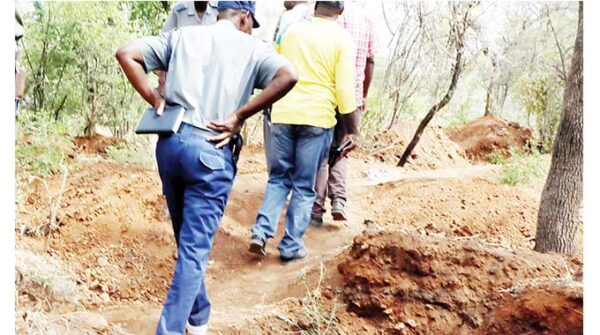
NewsDay Business understands that the shock collapse rattled Ran Mines hours after the Mines ministry led rival investors to the mine as part of efforts to find a solution. 

Documents lodged by Blackgate with the Mines ministry indicated that it identified the mine, which had been abandoned for a decade, before approaching authorities seeking permits to kick off operations. 

“The abandoned claims were then legally and procedurally awarded to Blackgate,” Munyeza, in a letter addressed to the ministry, said. 

“Pursuant to the registration of the claims in its name, Blackgate, with its partners, commenced the processes towards starting operations on the mine. Once it dawned on G&P Industries and Ran Mines that there were formal processes and set-ups at the site, they reported to the mining commissioner that Blackgate had overpegged their claims in November 2009. 

“A dispute then arose which was referred to the mining commissioner who conducted an investigation. The final recommendations of the mining commissioner were that Blackgate be allowed to continue with its planned operations on Ran Mine,” Munyeza said, noting that this became the beginning of a protracted ownership wrangle that has continued until today. 

Yesterday, Murehwa said his team was confident that it was doing the right thing. 

“At the end of this month we are getting into production. I am happy to discuss the progress that we have made, not destraction. 

“There is no mine in Zimbabwe which has no dispute. We are confident that we are on the right track,” he said 

The mine has capacity to employ 250 workers. 

Attempted murder at a gold rush in Bulawayo

0

Zimbabwe Republic Of Zimbabwe (ZRP) has reported an attempted murder case at a gold-rush which occurred at Mangwabi Mine in Bulawayo.

Shantel Chisango

Accoding to the police, Mphoengs rival groups clashed over the gold-rush leading to the attempted murder.

Allegedly, a group called Abomaripper is suspected to have been involved in the violence that took place at the Mine.

ZRP has condemned the use of violence especially at gold-rushes, and promised that the law will take its course to deal with law breakers.

Of late, the ZRP arrested three individuals in Kadoma after machete gangs clashed following a gold rush in Eiffel Flats last week, which left several illegal gold miners severely injured.

The incident occurred at Plot 5, Lornecorp Farm, Gweshe area.

Police urges the public not to practise violence in any matter and has warned that breaking the law will bring punishment upon individuals.

BREAKING: Unki chairman James Maphosa dies

0

Anglo American country Chairman and former Chamber of Mines President Mr James Maphosa has died. Maphosa passed away yesterday.

Walter Nemasasi the General manager at AngloAmerican Platinum confirmed the sad development. Anglo owns Unki mine.

Meanwhile, condolence messages have started pouring in with The Association of Mine Managers Zimbabwe conveying its heartfelt condolences to his family.

“Mr Maphosa was a notable figure in the Zimbabwe Mining Industry with over 30years of meaningful contribution,” reads part of the message.

“He consulted for Anglo American Corporation since 2006, looking after Anglo’s interests in Zimbabwe with particular focus on the development of Unki. He served on the Chamber of Mines for over 23 years rising to become the President of the Chamber and was elected as an honorary life member of the Chamber,” AMMZ said.

More to follow…


ASM to contribute US$4 billion to targeted mining economy by 2023

0

Small-scale miners are targeting to contribute US$4 billion to the targeted US$12 billion mining economy by 2023.

Vongai Mbara

Zimbabwe Miners Federation (ZMF) chief executive officer (CEO) Wellington Takavarasha said artisanal and small-scale miners (ASM) have an important role to play towards the realization of the US$12 billion mining economy.


“Statistics of production indicate that that the US$12 billion mining economy is being achieved in various mining sectors. US$4 billion has to come from the ASM. Fidelity Printers receipts of small-scale miners indicate that the sector is producing 60 percent of total gold output. The role of ASM is very important. Currently 70% of the minerals being mined is gold while 30% constitutes other minerals,” said Takavarasha during an interview.


Takavarasha pointed out that formalisation of the ASM sector is overdue.


“As long as government is benefiting from the artisanal and small-scale mining sector operations, there is definitely need to formalize. There have been some engagements at Mines and Finance Ministries and they are going to meet and come up with a Statutory Instrument that legalizes and policies that have a framework for the ASM sector. This has been on the cards,” he said.


Meanwhile, Takavarasha said the Covid-19 pandemic has adversely affected the ASM sector.


“Covid-19 has greatly impacted on the ASM sector. We have had challenges such as cash shortages. Cash shortages are emanating from the fact that commercial flights that have been coming into the country and the international flights were being restricted. Therefore, this impacted on Fidelity Printers having cash. There were acute shortages at Fidelity Printers and Refineries because of the pandemic,” he said.


Consequently, the situation led to a significant drop in production.


“Production during Covid-19 dropped drastically. Statistics indicate that we went from 22 tons to 9,8 tons,” said Takavarasha

Caledonia develops new mine underneath its Gwanda mine

0

New York Exchange-listed gold mining company, Caledonia Mining Corporation plc is developing a new mine underneath its Gwanda based Blanket Mine as it seeks to produce over 2 tonnes of gold annually.

Rudairo Mapuranga

The government through the Minister of Mines and Mining Development Hon Winston Chitando is on record optimistic that Blanket Gold Mine is vital towards the achievement of the US$12 billion mining industry where gold is expected to produce an annual revenue of US$4 billion.

According to Caledonia Chief Executive Officer Mr. Steve Curtis, after the development of a central shaft which was commissioned this year, the company is developing a three-level new mine underneath the existing mine in an effort to reach its 2022 target of producing 2.28 tonnes annually.

“We have solely ramped up production from about 20 000 ounces a year to our target of next year’s 80 000 and over the last five years we have done a five-year expansion project sinking a new shaft down to 1200 metres and we are developing effectively a 3-level new mine underneath the existing mine. The mine is over 110 years old and it’s produced over a million ounces of gold and as we stand here today it has got a life of mine up until 2034.” Curtis said.

Caledonia increased its gross revenue by 31 percent year-on-year to $30-million for the second quarter of the year 2021.

During the quarter the company produced 24 percent more gold year-on-year, at 16 710 ounces setting a new second-quarter production record.

Over 165 000 t of ore were mined and milled in the second quarter, which is a new production record for any quarter and reflects the contribution of Caledonia’s Central shaft, which was commissioned at the end of March and the build-up towards the target of 80 000 ounces per year from 2022 onwards.

In terms of production in the first half of the year, Caledonia produced 8 percent more gold in comparison to the first half of 2020.

Going forward, the miner states that production in July was 5 995 ounces, thereby showing a steady increase in average monthly production and demonstrating that the Blanket mine is on track to achieve its production guidance of between 61 000 ounces and 67 000 ounces for the full year.

The mine’s cost guidance for this year is in the range of $740 per ounce to $815 per ounce, with guidance for AISC being between $985 per ounce and $1 080 per ounce.

Meanwhile, the company has decided not to proceed with the acquisition of the Glen Hume property in the Northern part of Gweru owing to disappointing exploration results.

Curtis notes that the company’s net profit was adversely affected by the impairment of the Glen Hume exploration asset following the board’s decision not to proceed further with this project.

Nonetheless, Caledonia reports that it will conduct exploration at Connemara North, the other optioned property in Zimbabwe, and will also consider further investment opportunities in Zimbabwe and elsewhere.

As for the solar photovoltaic project being undertaken by Caledonia at the Blanket mine, the company reports that this is now in the procurement phase, with project completion expected in April 2022.

This project is expected to provide about 27 percent of Blanket’s average daily electricity use.


Ran Gold Mines return under threat

0

RIVAL investors were at the weekend planning to approach authorities to block the return of Bindura-based Ran Mines, saying a consortium led by mining executive Jack Murehwa, that is championing the project, could not operate the gold asset before government addressed a long-drawn ownership dispute.

Murehwa’s investment vehicles, G&P Industries and Ran Mines Private Limited, announced at the weekend that extensive groundwork had been covered and Ran Mines would return to production next month, 22 years after operations grounded to a halt.

Ran Mines drifted into the limelight in November last year after 30 artisanal miners were trapped in flooded shafts, exerting pressure on the 122-year-old operation’s aged underground support systems.

Murehwa’s consortium is planning to sink US$6,5 million to bring the project back to life.

But in an interview with NewsDay Business yesterday, Angeline Munyeza, the director of Blackgate Investments Private Limited, said extraction of gold at the operation would be illegal as government was yet to make a determination on the ownership wrangle that erupted in 2009.

“We heard that they are opening, but any extraction of gold there will be illegal because Blackgate is the lawful owner of that mine,” Munyeza said, noting that the consortium was lining up meetings with authorities to find out if the Mines and Mining Development ministry had allowed the mine to restart.

“We confidently believe that this cancer of corruption we are alleging is at an advanced stage within the Mines and Mining Development ministry and if its source is not guillotined it will substantially debilitate the endeavour of Zimbabwe having a US$12 billion mining industry by 2023, which the government is pursuing,” Munyeza said.

A mining commissioner had recommended the cancellation of claims held by G&P Industries and Ran Mines in 2009, according to documents.

NewsDay Business understands that the shock collapse rattled Ran Mines hours after the Mines ministry led rival investors to the mine as part of efforts to find a solution.

Documents lodged by Blackgate with the Mines ministry indicated that it identified the mine, which had been abandoned for a decade, before approaching authorities seeking permits to kick off operations.

“The abandoned claims were then legally and procedurally awarded to Blackgate,” Munyeza, in a letter addressed to the ministry, said.

“Pursuant to the registration of the claims in its name, Blackgate, with its partners, commenced the processes towards starting operations on the mine. Once it dawned on G&P Industries and Ran Mines that there were formal processes and set-ups at the site, they reported to the mining commissioner that Blackgate had overpegged their claims in November 2009.

“A dispute then arose which was referred to the mining commissioner who conducted an investigation. The final recommendations of the mining commissioner were that Blackgate be allowed to continue with its planned operations on Ran Mine,” Munyeza said, noting that this became the beginning of a protracted ownership wrangle that has continued until today.

Yesterday, Murehwa said his team was confident that it was doing the right thing.

“At the end of this month we are getting into production I am happy to discuss the progress that we have made, not destraction.

“There is no mine in Zimbabwe which has no dispute. We are confident that we are on the right track,” he said.

The has capacity to employ 250 workers.


NewsDay

Chinese miner pegs whole village in Uzumba

0

VILLAGERS in Uzumba, Mashonaland East province, are up in arms against a Chinese company, Heijin Mining, whose black granite mining claim covers the entire village.

This was revealed in a letter addressed to Mashonaland East provincial mining commissioner dated September 3, in which Lovemore Kaseke, through the Zimbabwe Lawyers for Human Rights (ZLHR) is demanding copies of the environmental impact assessment (EIA) certificate and the miner’s prospecting licence.

The letter was copied to the Environmental Management Agency (EMA).

“Our clients are residents of Kaseke village in Uzumba together with his clan, the Kaseke clan. Our client advises that Heijin Mining Company purports to be a holder of mining blocks in Kaseke village and officials from the said mining company and from the ministry have proceeded to peg the whole of our client’s village without consulting our clients,” the letter read.

“Our clients advise that the pegs cover their homesteads, grazing areas and cultivating fields. To that end, we kindly request any prospecting licence that was granted to Heijin Mining Company,” the letter further read.

The invasion of Kaseke village has irked traditional leaders, among them Chief Nyajina, who is encouraging his subjects to resist the takeover of the land.

“In the event that a prospecting licence was granted to Heijin Mining Company, it is our considered view that the pegging of Kaseke village is unlawful in terms of Section 31(1) of the Mines and Minerals Act, a holder of a prospecting licence shall not exercise any of the rights conferred in the licence on communal land without the consent of the occupier. The pegging of Kaseke village without the consultation of occupiers is, therefore, unlawful.”

“Further in terms of section 31(1) of the Mines and Minerals Act, no holder of a prospecting licence can proceed to peg communal land occupied as a village without the written consent of the rural district council of the area concerned,” the letter added.


NewsDay

Murray & Roberts nears deal to help develop Zimbabwe’s biggest platinum mine

0

JSE-listed multinational construction company Murray & Roberts (M&R) is adding Zimbabwe’s new Darwendale platinum mine among R84 billion worth of contracts that it hopes to wrap up this year.

The mine, run by Great Dyke Investments (GDI), is projected to be the country’s biggest platinum operation.

Of the R84 billion current tenders, Zimbabwe is among R30 billion of contracts where M&R is the chosen contractor, CEO Henry Laas says.

“But the important thing is that of that R84 billion, R30 billion has been negotiated on a sole source basis, which means we are not competing with other competitors on that R30 billion of work. There are three projects in that space. One is a project in Zimbabwe and two projects in Australia which collectively make up the R30 billion on a sole source basis. So there we are the preferred bidder,” Laas said last week.

“We’ve worked with the client to a point that they’re ready to proceed with the project. And all three projects are subject to final investment decisions and we can’t time that exactly, but we are confident that some of them will find their way into the order book if not by December certainly very early in the second half of the current financial year.”

M&R could not give further details, as the transaction is not yet finalised. Group media and investment executive Ed Jardim told newZWire: “As we are still working on the commercials of the undisclosed project, I cannot confirm and details around the project/s.”

However, GDI does list M&R unit Murray & Roberts Cementation (SA) among a range of key contractors and suppliers on the development of the mine. Murray & Roberts Cementation is one of the mining industry’s largest contractors in shaft sinking, engineering and mine design.

Other international contractors include contractor Fata EPC of Italy, the largest underground mining contractor within the South Africa region, DRA, which did the bankable feasibility study for the project, geology consultants MSA Group (SA), engineering company TOMS (Russia), metallurgists Metallicon (SA) and roller mill maker Loesche (Germany).

In September last year, GDI cleared a significant hurdle when the African Export-Import Bank completed a due diligence study, allowing it to proceed with a US$500 million syndicated funding program. By then, US$100 million had been spent on preliminary works. However, funding has been delayed by the impact of COVID-19 on the capital markets.

The Darwendale project, located 65 km from Harare, has a capacity of 181,3 million tons of ore and enough PGM resources to support a total mine life for more than 20 years. When complete, it is expected to produce 860,000 ounces of platinum group metals and gold a year, making it the country’s biggest mining operation.

GDI is 50% owned by Russia’s Vi Holding and Zimbabwean investors Landela Mining and Fossil. _NewZwire

Muzarabani toasts to oil, gas

0

IN 1989, American oil and gas company Mobil Corp asked for permission from Government to explore and drill natural gas and oil in Muzarabani, Mashonaland Central.

The company was convinced that the area was endowed with vast oil reserves that could be exploited commercially.
After intensive exploration work, Mobil did not find the black gold.

In 1993, it folded its US$15 million, three-year search for oil and gas after coming to the conclusion that the risks were too high to justify additional investment.

However, nearly 30 years later, another oil and gas exploration company stands on the brink of drilling its first test well around the very same area.

Australia Stock Exchange-listed Invictus Energy will this month begin drilling their first test well.

Last month, an armada of vehicles transporting state-of-the-art seismic survey equipment to be used to identify the best site for sinking exploration wells landed in the country.

The equipment is currently enroute to the site and the Muzarabani community is elated.

Chief Hwata (Olasis Tanyanyiwa Musemwa), under whose jurisdiction exploration work is taking place, said the massive project promises to transform his community.

“I know what a community can achieve with a project of such a magnitude,” he told The Sunday Mail last week.
“I was young when Mobil Corp did their exploration work.

“Five of my family members were employed on-site and in an instant, our lives changed for the better.”

He said the community is already beginning to feel the impact of Invictus’ work.

“Already, a lot has been done in the past 12 months and we expect major development here.

“The company has already promised us 162 boreholes in Muzarabani District before work commences.”

Muzarabani is a semi-arid district that receives low annual rainfall of between 450mm to 650 mm and often experiences seasonal droughts and severe intra-season dry spells.

“As community leaders, we have also presented our suggestions of infrastructural development that we would want in the area such as schools and clinics, especially for the vulnerable.

“Currently, there are 82 locals that are employed; we expect another 160 to be employed once the consignment of seismic survey machinery arrives this week (last week) and another batch to be employed when full operations begin.

“And already cash has started to circulate in the area.

“This alone is testament of bigger things to come.”

Natural gas and oil exploration in the area dates back to 1979 when the Rhodesian government initiated a search for petroleum deposits that drew blanks.

Mobil Corp latched on years later but the exercise also came to naught.

Today, Invictus says seismic study data gathered so far is promising. Seismic study refers to the process of using high-tech equipment to “listen” to underground vibrations in order to determine the existence of hydrocarbons.

Using modern sophisticated data processing techniques, Invictus reprocessed the data gathered by Mobil.

They, in turn, found strong evidence suggesting the underlying geographical structures may host domes and traps that could contain oil and gas.

Muzarabani locals remain obstinately rustic and conservative; they adhere to a strict cultural practice code.

Chief Hwata reckons the acknowledgment of the community’s cultural practices by Invictus may be one of the reasons why the project has been a success so far.

“I believe a lot of procedures were done right this time around,” he added.

“We also have a Government which was willing to follow the whole process through.

“A number of traditional ceremonies were done before exploration was done around the area in a show of respect to our culture.”

A network of rivers originating from the Mavhuradonha mountains in the south snake through Muzarabani before channelling into the Zambezi River and later into the Cahora Bassa Dam in Mozambique.

The river networks make Muzarabani a flood-prone area.

Underdevelopment has blighted the district for years.

Now, locals feel that the winds of change may finally be blowing across the area.

They, however, remain cautious.

Stanely Mudziviri, the local headman, implored Government to ensure there was development in the area.

“This is a very noble and good initiative which is set to eradicate poverty in the area,” he said.

“We would like to see an increase in secondary schools; at the moment, the nearest secondary school is 18 km away, which is very worrisome.

“There is a need for construction of dams in this area so that we can start irrigation.

“We hope that Government plays a monitoring role to ensure there is development.”

Government, he added, should guard against looting of the resources as happened in the Marange diamond fields in Manicaland.

“We heard Marange was endowed with diamonds but in terms of development, there is nothing much to talk about.

“It was only after Government intervened that some infrastructural developments started taking place there.”

In Muzarabani, however, hope continues to spring eternal.

Already roads linking Muzarambani villages to Mbire and Kanyemba have been graded.

Construction of accommodation facilities for workers has begun.

Small irrigation schemes have also been set up.

Local villagers are determined to complement the development brought about by prospects of abundant oil and gas deposits.

They reckon the sleepy town of Muzarabani will soon be a hive of activity.

After an arduous journey spanning 30 years in search of the precious black gold, they are confident of better days ahead.


The Sunday Mail

New investments boost platinum output

0

Local platinum production continues to rise on the back of sustained investments in capacity by producers over the years.

The country’s major producers — Zimplats, Unki and Mimosa — are expanding operations, while the new project, Great Dyke Investments, has opened two box cuts at its site in Darwendale.

It is expected to be operational by 2023.

Bravura, which has operations near Zimplats, has completed drilling and will open its first box cut before year-end.

According to the World Platinum Investment Council (WPIC), platinum production in Zimbabwe rose 12 percent to 243 000 ounces in the first half of 2021 from 218 000 ounces in the comparative period.

“Zimbabwean production increased by 17 percent year-on-year as a backlog of matte from the Unki smelter was processed through the Anglo Converter Plant (ACP) and refined,” the WPIC said in its quarterly report.

The country is envisioning a US$12 billion mining industry by 2023.

PGMs (platinum group metals) are projected to contribute US$3 billion as production is anticipated to jump from about 979 000 ounces in 2018 to about 2,5 billion ounces annually in 2023.

Gold and diamonds will contribute US$4 billion and US$1 billion, respectively, while chrome, iron ore and carbon steel will contribute US$$1 billion.

Coal and hydrocarbons are also forecast to contribute US$1 billion.

Lithium will generate US$500 000, while other minerals will weigh in with US$1,5 billion. Zimplats, the largest platinum producer in the country, has lined up capital projects valued at over US$570 million.

According to Mines and Mining Development Minister Winston Chitando, the investments dovetail with the country’s quest to grow the sector and contribute to a prosperous society in the next nine years.

Australian Stock Exchange-listed Zimplats spent about US$160 million on capital projects in the half-year period ending June 30, 2021, which represents a significant increase from US$104,2 million a year earlier.

Unki Mines recently indicated it had invested US$48 million towards increasing its concentrator capacity, which is expected to boost output by 30 percent.

The group’s general manager, Mr Walter Nemasasi, said the new concentrator is set for commissioning sometime this year.

The new plant will be a second major value addition and beneficiation project by the mine after the commissioning of a US$60 million smelting plant by President Mnangagwa in 2019.

In 2019, Mimosa Mining Company invested in a new processing plant worth US$10 million that was expected to shore up processing capacity and production.

According to the WPIC, Zimbabwe’s second-quarter output was 17 percent higher when compared to the second quarter of 2020.

In terms of quarterly global production report, the WPIC noted that global mine supply jumped 65 percent year-on-year to 1 557 koz (thousand ounces), the highest quarter for two years, as the major producer, South Africa, recovered from the extreme disruption of second quarter 2020, supporting refined output with a drawdown of semi-finished inventory.

South African output increased 124 percent year-on-year due to a return to full operations at the Anglo American Platinum Converter Plant (ACP) following the shutdown in the second quarter of 2020.

Global refined supply is expected to rebound to near 2019 levels in 2021, rising by 21 percent to 6 047 koz on the back of the South African recovery following the extreme disruptions of 2020.

South Africa is anticipated to add 1 103 koz year-on-years, a 33 percent increase to 4 402 koz.

According to WPIC, South Africa’s output continues to exceed earlier production guidance, with the ACP operating ahead of expectations and the largely successful navigation of Covid-19 pandemic challenges.

North American volumes are forecast to grow by 8 percent as a project in Montana rampsup.

“Zimbabwe is expected to add 17 koz, up 4 percent, as the backlog of semi-finished inventory is refined in South Africa.”

In 2020, platinum production in Zimbabwe surged by 5 percent to 476 000 ounces from 455 000 ounces in 2019, becoming the only country to register growth among other top producing nations despite the adverse effects of the coronavirus pandemic.


The Sunday Mail