Home Blog Page 45

Kavango Resources CEO Steps Down

0

Kavango Resources PLC has announced the immediate resignation of Chief Executive Officer Ben Turney, marking a sudden shift in leadership for the Southern Africa-focused metals explorer, Mining Zimbabwe can report.

By Rudairo Mapuranga

Turney has also stepped down from the company’s board, prompting a series of interim appointments to ensure operational continuity.

Executive Chairman Peter Wynter-Bee will assume the role of interim CEO while the board searches for a permanent replacement. In further temporary changes, Non-Executive Director Donald McAlister will take on the responsibilities of interim Chief Financial Officer, and Gautam Dalal has been appointed as Chairman of the Audit Committee.

During his three-and-a-half-year tenure, Ben Turney was instrumental in steering Kavango’s strategic expansion into Zimbabwe. Under his leadership, the company established a significant operational footprint in the country and achieved a referral listing on the Victoria Falls Stock Exchange (VFEX).

In an official statement, Wynter-Bee acknowledged Turney’s contributions, saying, “I thank Ben for his contribution and wish him all the best for the future.” The announcement did not specify the reasons for Turney’s sudden departure.

The newly configured interim leadership brings together executives with deep regional experience, particularly in Zimbabwe. Chairman Wynter-Bee, along with Directors Donald McAlister and Hillary Gumbo, have a proven track record of collaboration, having previously worked together at Reunion Mining PLC. That company developed mines in Zimbabwe and Zambia before its acquisition by mining giant Anglo American PLC in 1999.

Donald McAlister, now interim CFO, brings extensive finance experience in Zimbabwe, having previously served as Finance Director for both Reunion Mining and Mwana Africa PLC. He has also held board positions at Freda Rebecca Gold Mine, the country’s largest gold mine, and Bindura Nickel Corporation.

The market reacted negatively to the news, with Kavango’s share price on the London Stock Exchange falling 15% to 0.85 pence following the announcement. This drop extends a challenging period for the company, whose stock has declined by 11% over the past 12 months amid broader sector-wide challenges.

Kavango Resources is a metals exploration and gold production company focused on assets in Botswana and Zimbabwe. In Zimbabwe, the company is developing its fully permitted, 100%-owned Hillside Gold Project, which includes the Nightshift and Bill’s Luck prospects. The company is pursuing a dual-track strategy, targeting near-term gold production in Zimbabwe while exploring for large-scale copper deposits in Botswana’s Kalahari Copper Belt.

The board expressed confidence in the interim team’s ability to guide the company forward. Wynter-Bee stated, “We have a strong team with the expertise and knowledge to help realise the full potential of our assets for the benefit of all stakeholders.”
Caledonia Sets Sights on Becoming Zimbabwe’s Premier Gold Producer

0

In a bold declaration of intent, Caledonia Mining Corporation has unveiled an ambitious strategy to transform from a successful single-mine operator into the largest gold producer in Zimbabwe, targeting a scale-up to over 300,000 ounces of annual production within the next decade, Mining Zimbabwe can report.

By Rudairo Mapuranga

The announcement was made by Caledonia’s Chief Executive Officer, Mark Learmonth, during a press conference in Harare, where he outlined a 25-year vision to build a “multi-asset, mid-tier, environment-focused” gold producer on Zimbabwean soil.

“We’ve shot the lights out for a little Zimbabwean gold producer,” Learmonth stated, reflecting on the company’s remarkable journey. “When I joined this business in 2008, we were capitalised at just US$3 million, and now we’re at about US$700 million. Over that period, all we’ve done is we’ve pretty much increased production from 40,000 ounces to 80,000 ounces. So, just by doubling production, we’ve added huge value.”

The company’s growth strategy is built on a two-pillar approach. Its cornerstone asset, the Blanket Mine, will continue to be a consistent performer, reliably producing between 75,000 and 80,000 ounces of gold annually.

The real step-change, however, will come from the development of its broader portfolio, notably the Bilboes project. With Bilboes “up and running,” the company aims to replicate the model of major mid-tier producers.

“The idea is to create a business that looks pretty similar to Sentinel, which had about 350,000 to 450,000 ounces a year,” Learmonth explained, pointing to the long-term goal. “Over the course of the next 10 years, I’d be very disappointed if we don’t go from 80,000 ounces to 300,000 ounces. So, the rate of growth, the rate of profitability and return is exponential.”

The CEO bolstered his ambitious forecasts with hard data, highlighting Caledonia’s exceptional returns for its investors. Over the past decade, the company has delivered a staggering 1,000% US dollar-denominated return to shareholders—a tenfold increase in value.

“This massively outperforms both the gold price, which has only gone up three times, and the GDXJ index of smaller gold producers, which has only gone up four times over the same period,” Learmonth noted.

Central to Caledonia’s expansion philosophy is a deep commitment to being more than just an extractive industry. Learmonth emphasized that mining is fundamentally about building partnerships with all stakeholders, including employees, local communities, and the government.

He presented figures demonstrating the company’s growing contribution to the Zimbabwean economy through dividends to the Gwanda Community Share Ownership Trust, which owns 10% of Blanket Mine, royalties, taxes, and direct community investments. These contributions have seen a substantial increase in 2025, a trend expected to accelerate significantly with the higher gold price and expanded production.

“The critical point is we’ve given a great return to our shareholders, but we’re also contributing handsomely to the Zimbabwean economy,” Learmonth concluded.

This confident roadmap from Caledonia signals a new chapter for Zimbabwe’s gold sector, demonstrating how home-grown success stories are evolving to compete on a global scale while anchoring their growth and partnerships firmly within the nation.

ZERA Issues Urgent Plea for Private Sector to Embrace Net Metering in Fight against “Energy Poverty”

0

In the fight against “Energy Poverty,” the Zimbabwe Energy Regulatory Authority (ZERA) is urging the private sector to adopt net metering to support ZETDC, as only a fraction are currently feeding excess power into the grid, Mining Zimbabwe can report.

By Ryan Chigoche

This intervention was identified by the authority as key to addressing the persistent power shortages that have long hampered the country’s productive sectors.

In recent months, electricity generation has seen encouraging improvements, with output rising to over 1,400 MW, up from under 900 MW in previous years, largely thanks to the return of several power units at Hwange and Kariba.

These gains have helped narrow the gap between supply and national peak demand, estimated at around 2,000–2,200 MW.

However, despite this progress, the country still faces a shortfall, meaning load-shedding and supply disruptions continue to affect industry and households alike.

Against this backdrop, ZERA is urging private sector players to participate in net metering to ease pressure on the grid.

Samuel Zaranyika, a Senior Engineer at ZERA, explained that while many players have installed net metering systems, much of the energy generated remains unused.

By connecting grid-interactive inverters, excess power can be exported to ZETDC, supporting national supply and helping to bridge the widening demand gap.

“Energy poverty is real, but how do we mitigate it? There are quite a number of players in the industry who have installed net metering systems. At times, they are not using all the energy they generate. ZERA is saying: put a grid-interactive inverter and send that excess power into the grid. This will help ZETDC, because demand for power is currently outstripping generation. We are calling on the industry to embrace net metering and export excess electricity into the grid,” Zaranyika said.

He further highlighted that the national grid could accommodate up to 800 MW through net metering, offering participating companies the benefits of a virtual battery, lower electricity bills, and alignment with net-zero goals.

Independent Power Producers (IPPs) have long been regarded as a critical component of Zimbabwe’s solution to energy poverty.

Yet, according to ZimStat’s Index of Electricity Generation, IPPs contributed only 4.4% of total electricity generation in the first half of the year.

Zaranyika pointed out that despite the growing importance of IPPs, only a fraction are feeding into the grid, underscoring the need for greater engagement from this sector.

“Energy poverty is real. Demand is outstripping supply, and we need more players in the industry to close that gap. Over 100 people have applied for IPP licenses, but from approval to actual implementation, the heat rate I’d put it at maybe 0.1%—very few are feeding power into the grid. That’s why I believe many are applying for licenses for speculative purposes,” he said.

Data from ZimStat shows that Zimbabwe’s power generation grew strongly in the second quarter of 2025, with total output rising 18.2% from the previous quarter and 11.7% year-on-year. Hwange Power Station led production with 1,945.6 GWh (68.1% of total), followed by Kariba at 786.4 GWh (27.5%), while IPPs supplied the remaining 4.4%.

The mining sector, a major driver of national electricity demand, continues to consume significant power, with estimates ranging between 700 MW and 2,600 MW, depending on whether peak or total consumption is considered. Expansion in mining operations and energy-intensive processing means this sector remains central to discussions on supply and demand.

Looking ahead, Zimbabwe’s overall electricity demand is projected to rise sharply, from around 1,950 MW in 2022 to over 5,000 MW by 2030, with mining and industrial sectors leading this growth.

While recent gains in generation are encouraging, continued investment and modernisation will be crucial to meet the projected surge in demand, ensuring that mining and other productive sectors can thrive without being constrained by energy shortages.

Tharisa Confident in Recovering PGMs Market as Karo Platinum Project Stays on Course

0

JSE-listed South African mining company Tharisa has reaffirmed its confidence in the Platinum Group Metals (PGMs) market as it advances the Karo Platinum Project, citing strong global demand fundamentals and a structurally balanced market, Mining Zimbabwe can report.

By Ryan Chigoche

The commissioning timeline of the Karo Platinum Project, located in the middle chamber of the southern portion of Zimbabwe’s Great Dyke, has faced multiple delays due to fluctuations in PGM prices and broader macroeconomic challenges.

During the low-price environment of recent years, many PGM miners deferred or scaled back capital expenditure projects, with Tharisa postponing the US$391 million Karo Platinum Project accordingly.

Recent market movements, however, have changed the landscape. As of October 22, 2025, platinum prices have rebounded to approximately US$1,516 per ounce, an 80% year-to-date increase, while palladium has strengthened to around US$1,443 per ounce, rising over 60% since January.

In a production update for the quarter ending September 2025, Tharisa CEO Phoevos Pouroulis highlighted the company’s long-term optimism, emphasising the resilience of the market and the strategic value of Karo.

“Global demand trends, coupled with a constrained and complex supply response, have resulted in a market that is well-supported and structurally balanced. This equilibrium underpins our positive outlook, as highlighted in our continued long-term investment in our strategic assets,” he said.

Pouroulis pointed to ongoing infrastructure developments as evidence of progress at Karo.

“Karo Platinum infrastructure work is continuing, with ball mills being delivered and installed on site, while work is continuing at the Chirundazi Dam expansion. We continue to see compelling growth opportunities in our business, with material advances—despite measured capital allocation—at Karo,” he noted.

He also stressed that Tharisa’s expansion strategy aligns with disciplined capital allocation to ensure long-term value creation, balance sheet strength, and sustainable shareholder returns.

The project’s commissioning history underscores the challenges the sector has faced. Initially slated for July 2024, commissioning was delayed in October 2023 by 12 months due to weak PGM prices and global economic uncertainty.

A further postponement to the second half of 2026 was announced in January 2025, attributed to low PGM prices and financing hurdles. However, no further delays are expected, with Pouroulis identifying the PGM market—particularly platinum—as one of the strongest-performing commodities in 2025, supported by supply deficits, tightening stocks, and underlying structural market balance.

“This equilibrium underpins our positive outlook, as highlighted in our continued long-term investment in our strategic assets,” he said, signalling Tharisa’s commitment to leveraging robust market conditions to grow the Karo Project and deliver sustainable shareholder value.

The Karo operation is planned to feature a 10-year open-pit phase, followed by a 30-year underground mine, with projected annual production of up to 226,000 ounces of PGMs.

Tharisa’s steady progress at the Karo Platinum Project is underpinned by a structured financing strategy that combines equity and debt.

The company holds a 70% stake in Karo Mining Holdings, which owns 85% of the project, giving Tharisa effective control, while the remaining 15% is held by the Republic of Zimbabwe through Generation Minerals on a free-carry basis.

To fund development, Tharisa has secured a US$36.8 million debt instrument on the Victoria Falls Stock Exchange (VFEX) and a US$130 million debt facility, while exploring strategic partners or streaming agreements to cover remaining capital needs.

In line with the project’s timeline, Karo Mining Holdings has also proposed a three-year extension of its VFEX-listed bond to December 2028, aligning repayment with key development milestones.

This balanced approach ensures the financial viability of the project while supporting Tharisa’s continued advancement of Karo and the delivery of sustainable shareholder value.

Collaborative Reforms Reshape Zimbabwe’s ASM Sector, Says ZELO

0

Through a combination of civil society organisations’ efforts, miners’ advocacy, and responsive government action, Zimbabwe is undertaking significant reforms to formalise and improve the management of its Artisanal and Small-scale Mining (ASM) sector, the Zimbabwe Environmental Law Organisation (ZELO) has said.

By Rudairo Mapuranga

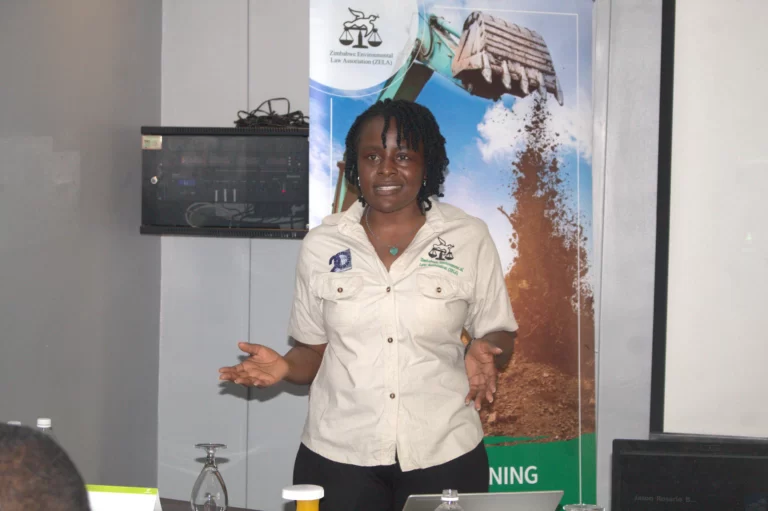
In an address at the Zimbabwe Miners Federation (ZMF) conference during Mine Entra 2025, Fadzai Midzi of ZELO detailed how this partnership is driving progress in formalisation, policy reform, and responsible mining practices.

Midzi revealed that her organisation has been actively working with both miners and the government to shape a more sustainable and profitable future for the sector.

“Our organisation has been focusing on working with small-scale miners’ associations, like the Zimbabwe Miners Federation, which is a key stakeholder in our work,” Midzi stated. “As part of this, we have also been working with the government to support the formalisation of ASM and the improvement of artisanal and small-scale mining sector governance and management.”

This collaborative effort, she explained, extends to promoting alternative livelihoods and skills for miners while championing responsible and traceable mining practices.

“Part of what we have also been doing is to promote responsible mining, responsible sourcing, and sustainable, traceable, profitable, and accountable artisanal and small-scale mining practices,” Midzi told the conference. “This we have done personally with different government stakeholders, such as the Zimbabwe School of Mines and the Minerals Marketing Corporation of Zimbabwe in the gemstone sector.”

A major focus of the collaboration has been on enhancing environmental protection and safety, with ZELO assisting miners directly.

“We have also been working to enhance environmental protection by assisting miners to develop their responsible sourcing toolkits and to implement safety and health practices,” she said.

Midzi highlighted that this important sector is key to improving livelihoods, a goal being supported by proactive government policy.

“Part of this has been the current work and interest the government has been pushing for some of the key policies, such as local content principles, and also the recent amendments that have been alluded to, such as the Mines and Minerals Bill, which seeks to make sure that the country benefits from the mineral resources that it has,” she said.

The ultimate goal, she noted, is to ensure the nation’s mineral wealth translates into real development. “So that we can be able to see the minerals—the richness that we have in the ground—turn into profits, turn into development that can benefit us.”

A critical area of ZELO’s work is assisting the government in its legal and policy reforms, with a specific focus on the licensing regime, which Midzi identified as a key gap.

“Part of the key work that we have also been doing, which we see as very important and as a gap that needs to be addressed for the profitability and empowerment of artisanal and small-scale mining, is the issue of the licensing regime and the administration of the ASM sector,” she explained.

While acknowledging progress, she emphasised that more can be done, particularly in finalising the government’s ASM strategy.

“We have seen a lot of improvements and new regulations coming in, but we believe more can be done. We have also seen the Minister of Mines developing an ASM strategy. And we think, as a starting point, if the ASM strategy can be finalised and coupled with the value addition strategy, we can see ASM benefiting many rural people, especially women.”

Midzi concluded with a call to action, urging miners to actively participate in shaping the new laws.

“We also urge and call to action all miners here to recognise that we have an opportunity to continue influencing, starting with the Mines and Minerals Bill,” she said. “It’s important that we make sure our issues and concerns are addressed—not only for our benefit, but for the benefit of future generations.”

Gold Prices fall Slightly After a Strong Run

0

Global Gold prices recorded a mild decline today across all purity categories compared to yesterday, signalling a short-term correction after recent gains driven by strong global demand and market uncertainty.

According to the latest figures, prices fell by an average of 2–3%, with the Fire Assay Cash rate — a key benchmark for pure gold — dropping from US$127.35/g (US$3,962.99/oz) yesterday to US$124.31/g (US$3,866.78/oz) today.

The detailed comparison of Fidelity Gold Refinery (FGR) prices is shown below:

CategoryYesterday ($/g)Today ($/g)Change ($/g)Yesterday ($/oz)Today ($/oz)Change ($/oz)
SG 90% and ABOVE126.68123.65-3.033,938.693,846.84-91.85
SG 85%–90%125.34122.34-3.003,897.173,806.08-91.09
SG 80%–85%124.00121.03-2.973,855.643,765.34-90.30
SG 75%–80%122.66119.73-2.933,814.123,725.04-89.08
Sample 5g–10g120.65117.76-2.893,752.153,664.88-87.27
Fire Assay Cash127.35124.31-3.043,962.993,866.78-96.21

The data indicate a uniform decline across all grades, with the sharpest drop observed in the Fire Assay Cash category, reflecting lower international spot gold prices and reduced local buying pressure.

Market analysts suggest that, while prices have dipped, gold remains well-supported by ongoing concerns about inflation and geopolitical risks. They anticipate the market will stabilise in the coming days, with a potential rebound if global demand strengthens.

Despite the short-term softness, investor confidence in gold’s long-term value remains strong, keeping the metal’s bullish outlook intact.

Gold buying prices in Zimbabwe per gram/ ounce, 23 October 2025

Gold buying prices in Zimbabwe per gram/ ounce, 23 October 2025, from the official gold buyer and exporter Fidelity Gold Refinery (FGR).

1 oz = 31.1035 g

CategoryPrice ($/g)Price ($/oz)
SG 90% and ABOVE123.653,846.84
SG 85% and above but below 90%122.343,806.08
SG 80% and above but below 85%121.033,765.34
SG 75% and above but below 80%119.733,725.04
Sample 5g and above but below 10g117.763,664.88
Fire Assay CASH124.313,866.78


NB: Fire Assay cash price is for gold above 100g, no sample is deducted.

A sample of not more than 10g is deducted for the Fire Assay Transfer price.

RioZim-ZIDAMWU Battle Continues as Union Rejects US$160k Settlement to Drop Corporate Rescue Case

0

The Zimbabwe Diamond and Allied Minerals Workers Union (ZDAMWU) has once again rejected a US$160,000 settlement offer from RioZim Limited, arguing that it fails to address critical issues affecting employees and the long-term viability of the company, Mining Zimbabwe reports.

By Ryan Chigoche

The standoff is the latest development in a prolonged struggle between the union and RioZim, which has been facing financial and operational challenges since 2022.

In April 2025, Zidamwu lodged an application to place the listed mining company under corporate rescue, citing unpaid employee salaries, job insecurity, and the company’s inability to fund major operational projects.

The filing marked a critical escalation in the ongoing dispute between the workforce and management, highlighting concerns over the company’s ability to protect its employees while remaining viable.

RioZim, which operates gold mines at Cam & Motor (open-pit) and Renco (underground), has struggled to secure funding to support operations. A major issue arose in 2019 when the ore at its flagship Cam & Motor Mine shifted from oxide to refractory sulphide, requiring a US$35 million investment that the company could not self-finance. Repeated attempts to secure local and international funding have failed, leaving the company unable to meet obligations to employees and creditors alike.

Adding further complexity, RioZim is in advanced negotiations for a US$20 million capital injection to stabilise operations. However, this potential funding is at risk due to the ongoing corporate rescue proceedings, which have placed certain company assets under judicial management.

Faced with this challenge, through its lawyers Nyahuma Law, RioZim offered the US$160,000 settlement “without prejudice,” on the condition that Zidamwu withdraw all legal cases related to the corporate rescue and consent to the company’s appeal against a High Court ruling restricting its management of assets. The company argued that the union’s legal action had hindered recapitalisation efforts and delayed payments to employees.

“The tender is made on condition that prior to the release of the funds, you make an unequivocal undertaking to withdraw and abandon all its (court) cases relative to the placement of our client under corporate rescue. This includes consenting to the application for leave to appeal the High Court judgment in terms of which our client was interdicted from dealing with its assets,” RioZim said.

Zidamwu, however, maintains that financial compensation alone cannot resolve the underlying issues.

The union is demanding comprehensive guarantees, including full payment of outstanding salaries, protection of jobs, mechanisms to ensure RioZim’s long-term viability, and strengthened corporate governance.

“Resultantly, our client proposes that a consensual corporate rescue strategy is appropriate, with clear perimeters on duration, goals, and a plan after which management can revert to the board.

“This, we trust, gives RioZim the best chance to protect its assets against creditors’ attachment whilst affording scarce resources to be applied toward working capital,” Zidamwu responded through its lawyers, Zinyengere Rupapa.

The union insists that this approach offers RioZim the best chance to survive creditor pressure, safeguard employees, and restore operational stability.

The ongoing standoff underscores the intensity and duration of the battle between RioZim management and Zidamwu. The union has emerged as a key stakeholder, asserting that any corporate rescue process must protect employee interests while providing a credible path for the company’s recovery.

As both parties continue to navigate this challenging period, the future of RioZim and its workforce remains uncertain.

Zimbabwe Gemstones Conference & Fair Postponed to Q1 2026

0

The Zimbabwe School of Mines (ZSM) has announced that the inaugural Zimbabwe Gemstones Conference & Fair, which was scheduled to take place this October, has been postponed to the first quarter of 2026, with new dates to be confirmed soon.

Organised by ZSM, with Mining Zimbabwe as the official media partner, the event remains a key platform for advancing the country’s gemstone sector—an industry with growing potential to diversify Zimbabwe’s mining economy and drive value addition through cutting, polishing, and jewellery manufacturing.

Zimbabwe is richly endowed with a variety of gemstones such as emeralds, aquamarine, amethyst, tourmaline, garnet, and agate, found in areas including Mutoko, Karoi, Hurungwe, and Mberengwa. However, the sector remains largely underdeveloped, with much of the trade occurring informally and limited beneficiation taking place locally.

The Minister of Mines and Mining Development, who will be the Guest of Honour at the conference, has identified the gemstone industry as a strategic growth sector with significant potential to contribute to Zimbabwe’s economic development.

He emphasised that the sector could create employment opportunities, boost exports, and support the Government’s beneficiation agenda.

This makes the Zimbabwe Gemstones Conference & Fair an important gathering for all stakeholders—from small-scale miners and traders to investors, gem cutters, and policymakers—to explore opportunities for formalisation, value addition, and sustainable growth.

Participants are encouraged to register online to receive priority updates and early access to event information.

Exhibitors Encouraged to Book Early

Exhibition bookings remain open, and companies are urged to secure their stands early to benefit from priority stand allocation and participation in upcoming promotional activities ahead of the 2026 edition.

The next edition of the Zimbabwe Gemstones Conference & Fair is expected to offer greater engagement, stronger partnerships, and a more vibrant showcase of Zimbabwe’s potential in the global gemstone trade.

To register or book your exhibition stand, visit https://conferences.zsm.ac.zw/.

No Need to Import PPE as Mining Sector Drives Local Industrialisation – Chitando

0

The mining industry is set to undergo a profound transformation that will see all inputs, including Personal Protective Equipment (PPE), manufactured locally as the Government intensifies its value addition and beneficiation drive in line with the National Development Strategy 1 (NDS1), Mines and Mining Development Minister, Hon Winston Chitando, has said.

By Rudairo Mapuranga

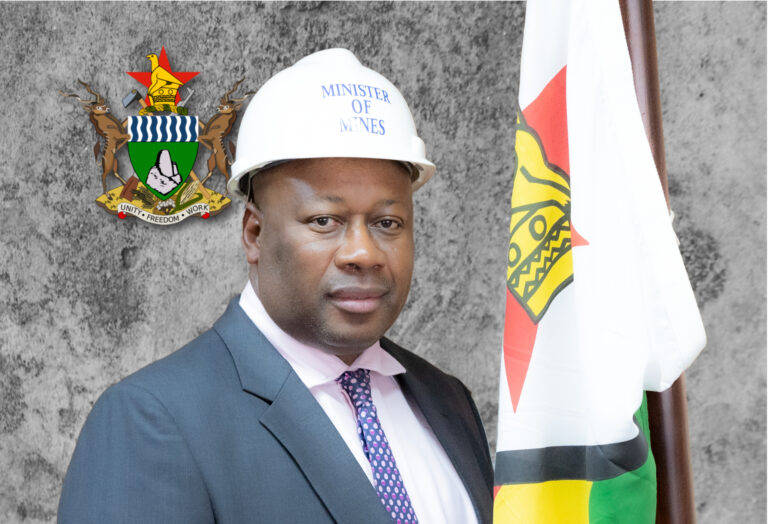
Speaking at the 2025 Mine Entra Conference, Minister Chitando outlined a future where the mining sector is fully integrated, driving local manufacturing and ensuring that the nation reaps maximum benefits from its mineral resources.

“The future of mining is where we have to take orders and follow the rules and principles of responsible mining,” Minister Chitando said. “Mining in a responsible manner also involves responsible sourcing. The whole idea is to have integration, downstream and upstream — to have inputs in the mining sector manufactured locally, and to have products from the mining sector being value-added locally.”

In a powerful directive that underscores this shift, the Minister questioned the continued importation of basic mining gear, stating, “There is no need to import PPE. Is PPE being showcased in here?” This statement signals the Government’s firm expectation that the mining industry’s procurement should stimulate domestic production and create local value.

The Minister’s vision aligns with the central pillars of NDS1, which prioritises value addition and beneficiation to structurally transform the economy. He reported significant progress, highlighting that the mining industry “is growing virtually in all the various sectors,” with the drive for qualification and beneficiation gaining momentum.

“More importantly, the drive for value addition and beneficiation is beginning to have, among others, various initiatives in the lithium sector, where by early next year, we will have the production of lithium sulphate,” he announced.

This milestone in the lithium value chain represents a key achievement of the Government’s policy to move beyond the mere extraction and export of raw minerals. The establishment of a “five-mile industrial park in Mhangura” was also cited as one of the initiatives underpinning the sector’s growth.

Minister Chitando explained that this new era of responsible and integrated mining is being codified into law. He revealed that the second phase of the formalisation initiative will soon close, introducing new regulations to ensure sustainable practices.

“Phase 1 of the responsible mining initiative emphasised the need to follow the laws. Phase 2 will close very soon. It will go beyond the laws and introduce new regulations, but also ensure that everybody mines in a responsible manner,” he said.

The Minister concluded by emphasising that responsible behaviour from all stakeholders is non-negotiable for the future of the sector. “The future of mining, I will repeat — which is my last comment — will be for all players and all stakeholders in the mining sector to behave responsibly,” he said.

The address firmly positions the mining sector as a key driver of national development, moving beyond extraction to build a sustainable, integrated, and locally empowered industry in fulfilment of the Government’s economic blueprint.