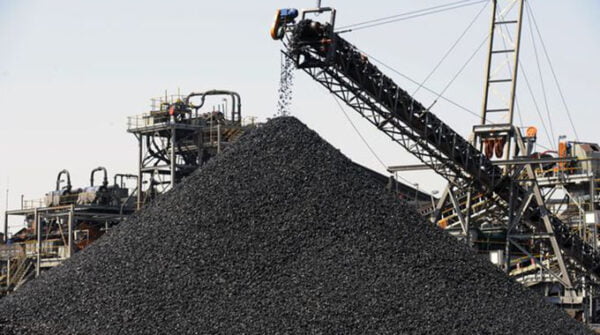


THE Environmental Management Agency (EMA) has issued Musasa Mining Syndicate in Shurugwi with a seven-day ultimatum to rehabilitate the environment after the company started operating without the mandatory environmental impact assessment certificate.
EMA Midlands provincial spokesperson Oswald Ndlovu said the mine was carrying out illegal alluvial gold mining near Mutevekwi River located just outside the mining town.
“The miner was issued with a level 14 ticket and ordered to rehabilitate the area within seven days,” Ndlovu said yesterday.
“As EMA, we will be monitoring the situation to ensure compliance with the environmental protection order.”
Over the years, both illegal and legal mining activities along Mutevekwi River have resulted in the blocking of the river with farmers downstream failing to draw water for irrigation purposes.
Mining activities in the mining town have also left severe environmental degradation with chemicals used by miners such as mercury and cyanide polluting water bodies.
Some villagers have been complaining of losing their domestic animals to poisonous substances.
Farmer-miner conflicts have also been on the increase in Shurugwi with stakeholders calling for laws that harmonise the two sectors.
FIVE years ago, Mr Douglas Msipa, the son of the late national hero, Dr Cephas Msipa abandoned artisanal mining/ukukorokoza for farming.
The decision baffled many people who believed there was more money in artisanal mining.
Furthermore, his choice of specialisation, garlic, appeared to be a poor move as many believed the market was limited.
Mr Msipa had a torrid time explaining the unpredictable nature of ukukorokoza versus the more stable and relatively stress-free life of a farmer.
Finally he decided to act and show his critics what he meant.
Mr Msipa now employs 50 people and is one of the renowned garlic farmers in the Midlands Province making more than US$5 000 per month from local sales.
Mr Msipa said he is planning to increase land to be put under garlic and other associated crops.
“I have 20 permanent employees and 30 casuals. I specialise in labour intensive crops. At the planting stage, we need almost 100 employees every day. Five years ago, I started garlic farming and stopped Chikorokoza,” he said.
Mr Msipa said garlic has up to a year of shelf life.
“We get regular monthly income of around US$5 000 from local sales,” he said.
Mr Msipa encouraged local farmers to grow garlic, ginger and turmeric saying they are good cash crops.
Minister of State in the Office of the President and Cabinet in charge of Monitoring the Implementation of Special Agricultural and related programmes, Davis Marapira tours Mr Douglas Msipa’s Cheshire Farm in Gweru recently
“Instead of buying chemical dip, garlic can keep ticks away from all your animals eliminating tick-borne diseases,” he said.
This season, Mr Msipa has garlic on 10ha and is expecting 70 tonnes.
He said he started growing ginger and turmeric last year adding that plans are under way to put value addition infrastructure at the farm.
Mr Msipa said he was producing for both local and export markets thereby saving the country the much needed foreign currency which was spent on importing garlic, ginger and turmeric.
“My advice to farmers is to start small on the high-value crops which can be grown anywhere in Zimbabwe,” he said.
Mr Msipa, who is a beneficiary of the successful land reform programme, hosted the Minister of State in the Office of the President and Cabinet in charge of Monitoring the Implementation of Special Agricultural and related programmes, Davis Marapira at his Cheshire Farm along Matobo Road in Gweru recently.
Minister Marapira urged land reform beneficiaries to fully utilise their land to assist the country to bring in the much needed foreign currency.
He said increased productivity on farms would help the country to get foreign currency and create employment.
The minister toured the 10ha of garlic field, one-hectare ginger, half ha of turmeric field under irrigation from Which Mr Msipa expects to harvest 70 tonnes garlic, 20 tonnes ginger and five tonnes turmeric.
Minister Marapira commended Mr Msipa for the massive irrigation project and encouraged other farmers to emulate him.
“Production at farms helps generate foreign currency and create employment,” said Minister Marapira
He urged farmers to venture into growing cash crops such as garlic, ginger and turmeric.
“Value addition is important because farmers realise more from their produce while also creating employment,” said Minister Marapira.
THE Zimbabwe Consolidated Diamond Company (ZCDC) has failed to account for the use of money exceeding US$400 million, while also failing to properly account for 352 583.11 carats of diamonds worth about US$146.3 million which were in stock, raising the possibility that they could have been stolen.
In her 2019 report on state enterprises, Auditor-General Mildred Chiri said she doubted the company’s ability to continue operating due to losses while questioning some of the investments of the company.
The Auditor-General is worried that ZCDC may not be able to recover money it invested in companies which have since folded.
Diamond revenue has been a contentious issue with the late former president Robert Mugabe once claiming that revenue of up to US$15 billion had been stolen. Although the figure was largely doubted, it was seen as confirmation that indeed there was looting in the diamond mining sector.
Chiri said ZCDC was failing to conduct a stock count of the diamonds at the sort house, risking possible pilferage of inventories, which may go undetected.
“There was no evidence of a documented formal process of reconciling physical stock counted to theoretical stock. For instance, the following anomalies were noted in respect of diamond stocks which then necessitated post year-end adjustments to the financial statements which had been presented for audit,” Chiri said.
“In 2019, 297 660.41 carats of diamond stock held at MMCZ (Minerals Marketing Corporation of Zimbabwe) was not counted at the time of the stock count. These parcels were packed for customers and held at MMCZ. However, at year-end, during the stock count, these stocks were not included in closing inventories; and in 2018, 41 699.85 carats of diamond stocks held at MMCZ were excluded from the stock count. It was assumed at the time that these stocks had been sold to customers.
“An additional 13 222.85 carats were excluded from the final stock sheet in error.”
The Auditor-General also noted that at the time of the audit in April 2020, there had been a sale of diamonds to a local customer in September 2019, which has not been paid for or collected, eight months after the sale. She said this was in breach of tender rules which state that a customer should pay for their parcels within three days of winning a tender.
Chiri expressed concern that “possible pilferage of inventories may occur and go undetected.”
She also said material variances between physical stock and theoretical stock may go undetected. The audit was not able to verify the valuation (recoverability) of amounts owed by related parties with a balance exceeding US$300 million on the company’s statement of financial position.
“I was not able to verify the valuation (recoverability) of amounts owed by related parties with a balance of $304 258 953 on the company’s statement of financial position. Some of the amounts are owed by companies that have since closed down whilst ZMDC have not acknowledged the amount due. Management failed to provide persuasive audit evidence on how and when these amounts would be recovered. Consequently, I was unable to determine whether any adjustments to the above-stated amounts were necessary,” she said.
“I was not able to verify the valuation (recoverability) of amounts owed by related parties with a balance of $24 347 454 on the Company’s statement of financial position. The amounts are owed by companies that have since closed down. Management have failed to provide us with persuasive audit evidence on how and when these amounts would be recovered.”
Chiri said she could also not verify the valuation of the investment of US$20 295 856 and US$178 799 841 into DTZOZGEO Limited as the company failed to enable the office of the Auditor-General to asses the fair valuation.
In addition, the ZCDC management also failed to provide the Auditor-General with an impairment assessment for the investment in the subsidiary.
“Consequently, I was unable to determine whether any adjustments to the above-stated amounts were necessary,” Chiri said.
“I was not able to verify the valuation of accruals with a balance of $51 613 628 (US$51.6 million) and trade creditors with a debit balance of $82 686 279 (US$82.7 million) and the rights and obligations of the company thereon. Delays in recording of invoices into individual supplier accounts meant that as at the time of our report, management had not provided me with sufficient and appropriate evidence to support these amounts.”
On the governance issues, Chiri noted that the mining company did not have independent directors as all board members in the interim had interests in other related parties.
The company also had some goods worth US$352 068 which were long paid for but not yet received, indicating possible deficiencies in the company’s supplier selection or capacity of selected suppliers to fulfil contractual obligations, according to Chiri.
Five carats of diamonds worth US$2 075 belonging to a producer also went missing at the MMCZ during a weight verification exercise.
“In addition, the CCTV video footages could not be retrieved as there was an internal control system failure,” the Auditor-General said.
The ZCDC paid board fees and allowances that were above the approved rates during the year under review, according to Chiri.
More than 3 500 jobs have been created since the establishment of Kuvimba Mining House last year.
The Government has a controlling stake in the mining company, which has assets in many parts of the country.
Local contractors are benefiting through opportunities created by increased activity.
Kuvimba has three operating gold mines — Freda Rebecca, Shamva and Jena Gold Mine.
It has a stake in Bindura Nickel Corporation (BNC), the Darwendale Platinum Project (Great Dyke Investments) and Zim Alloys Limited.
Speaking after Freda Rebecca broke a 20-year production record by producing 300kg of gold in May, Kuvimba Mining House chief operating officer Mr Cobus Bronn said within a space of a year the mining giant had managed to employ 3 518 workers.
BNC now has 1125 workers, followed by Shamva Gold Mine with 890, while Freda Rebecca and Jena Mine have 800 and 703 employees, respectively, all of which were taken on board in the past year.
Overall, it plans to employ 20 000 in the short to medium term.
“The number of employees is expected to significantly increase as more mines are brought to operations soon,” said Mr Bronn.
“Kuvimba Mining House’s vision is to create sustainable growth for Zimbabweans through safe and responsible mining.
“This vision is achieved by instilling the following core values, namely integrity, being a good corporate citizen, accountability and fostering good team work.”
The resuscitation of mines, he added, had brought life in Bindura, Shamva and Silobela.
“The social and economic impact that the companies have in the respective areas where they are located cannot be overstated,” he said.
“Kuvimba has an approved plan to roll out an extensive exploration programme to explore the non-operating gold assets in order to determine the viability of recommissioning them.
“This is expected to be rolled out in the second half of 2021. Collectively, these non-operating mines, which have been neglected for a while, have the potential to produce in the excess of 1 200kg of gold per year and employ more thousands of people.”
At BNC, Kuvimba has finished the shaft deepening process, which allows the firm to extend mine life by seven years, while Zim Alloys is now out of judicial management.
All Zim Alloys creditors have been paid and production is expected to start before September this year.
The Government holds 65 percent in Kuvimba, while local and international investors hold the remainder.
This week, the company is expected to declare a dividend after posting impressive results in the last financial year.
Kuvimba’s shareholding has been structured in a way that benefits about five special interest groups identified by the Government, and these include the youths, women and war veterans, depositors and pensioners who suffered losses during the currency reforms of 2019.
ZESA Holdings said the power cuts being experienced in the country are due to a technical fault at Hwange Thermal Power Station.
Zimbabwe’s power supply has vastly improved, but most parts of the country have experienced prolonged outages in the past few days.
In a statement on Friday, ZESA Holdings said efforts to restore normal power supplies were underway.
“ZESA holdings would like to advise its valued customers countrywide that there is limited power supply in the national electricity grid due to a technical fault in the transmission system, leading to generation incapacitation at Hwange Power station.
“Restoration of service to optimum levels is currently underway and customers are advised to use the available power sparingly, especially during the morning peak periods of 0500 hours to 1000 hours and evening periods of 1700 hours to 2100 hours.
“Customers will be updated as the situation improves.”
Contacted to give further explanation, ZESA spokesperson Ms Prisca Utete could not shed more light.
“I am not in a position to comment on that issue because my office does not allow me to do telephone interviews,” she said.
The global shift to clean energy is going to drive an unprecedented boom for critical minerals, according to the International Energy Agency (IEA), raising questions of supply and the overall environmental cost
(AF) Until the mid-2010s, the energy sector represented a small part of total demand for most minerals, the IEA noted in a new report. However, as energy transitions gather pace, clean energy technologies are becoming the fastest-growing segment of demand. The rise of low-carbon power generation to meet climate goals would mean a tripling of mineral demand from this sector by 2040.
“The shift to a clean energy system is set to drive a huge increase in the requirements for these minerals, meaning that the energy sector is emerging as a major force in mineral markets,” the agency said in the report, “The Role of Critical Minerals in Clean Energy Transitions”.
In a scenario that meets the Paris Agreement goals, clean energy technologies’ share of total demand rises significantly over the next two decades to more than 40% for copper and rare earth elements, 60- 70% for nickel and cobalt, and almost 90% for lithium.
Electric vehicles (EVs) and battery storage have already displaced consumer electronics to become the largest consumer of lithium and are set to take over from stainless steel as the largest end user of nickel by 2040.
In climate-driven scenarios, mineral demand for use in EVs and battery storage is a major force, growing at least 30 times to 2040. Lithium sees the fastest growth, with demand growing by over 40 times in the SDS by 2040, followed by graphite, cobalt and nickel (around 20-25 times).
The expansion of electricity networks means that copper demand for power lines more than doubles over the same period.
SIX KEY TAKEAWAYS
The IEA report makes six major recommendations:
Ensure adequate investment in diversified sources
Promote technology innovation at all points along the value chain
Scale up recycling; Policies can play a pivotal role in preparing
Enhance supply chain resilience and market transparency
Mainstream higher environmental, social and governance
Strengthen international collaboration between producers
The prospect of a rapid increase in demand for critical minerals – well above anything seen previously in most cases – raises huge questions about the availability and reliability of supply. In the past, strains on the supply-demand balance for different minerals have prompted additional investment and measures to moderate or substitute demand.
But these responses have come with time lags and have been accompanied by considerable price volatility. Similar episodes in the future could delay clean energy transitions and push up their cost. Given the urgency of reducing emissions, this is a possibility that the world can ill afford.
In addition, concerns about price volatility and security of supply do not disappear in an electrified, renewables-rich energy system, the agency said.
“Today’s international energy security mechanisms are designed to provide insurance against the risks of disruptions or price spikes in supplies of hydrocarbons, particularly oil.”
PACE OF TRANSITION
The IEA estimates that the goals of the Paris Agreement (climate stabilisation at “well below 2°C global temperature rise”, as in the IEA Sustainable Development Scenario [SDS]) would mean a quadrupling of mineral requirements for clean energy technologies by 2040.
“An even faster transition, to hit net-zero globally by 2050, would require six times more mineral inputs in 2040 than today,” the IEA says.
While hydropower, biomass and nuclear make only minor contributions given their comparatively low mineral requirements, wind and solar require lots of inputs given their infrastructure-heavy design. The rapid growth of hydrogen as an energy carrier underpins major growth in demand for nickel and zirconium for electrolysers, and for platinum-group metals for fuel cells.
Future technologies remain unknown. Cobalt demand could be anything from 6 to 30 times higher than today’s levels depending on assumptions about the evolution of battery chemistry and climate policies. Likewise rare earth elements may see three to seven times higher demand in 2040 than today.
The prospect of mineral-driven energy transformation has already excited investors. Australian minerals explorers have raised the most cash in nearly a decade as investors rush into gold as well as lithium and copper explorers expected to boom in the global energy transition.
ENTHUSIASTIC INVESTORS
A recent report by BDO, the accounting and consulting group, showed that Australian-listed explorers raised A$2.37 billion ($1.81 billion) in the March 2021 quarter, the most since 2013, and almost double the figure in March 2020.
“There’s no doubt about where the money’s going and why it’s going there,” Sherif Andrawes, BDO’s head of global natural resources, says, noting that the flood of funding towards battery minerals and clean energy companies is in line with growing environment social and governance (ESG) initiatives, including rising EV adoption and lower carbon emission targets.
Among companies that raised more than $10 million over the quarter were 10 gold companies, nine lithium companies, four uranium companies, four rare earth metals companies and four graphite companies. The remaining companies covered 14 different sectors, most notably copper-gold, copper and oil and gas, BDO said.
Fossil fuel companies have been forced to join the transition, with the IEA expecting them to increase climate-friendly investments to at least 4% of their capital spending in 2021, up from just 1% last year. The figure underscores both the rapid pace that investment is tilting toward low-carbon sources as well as the scale of the challenge.
The IEA said earlier this year that the world needs to stop development of new oil and gas fields as well as coal mines to limit global temperature increases.
ONE SIDE OF THE COIN
“Much greater resources have to be mobilised and directed to clean energy technologies to put the world on track to reach net-zero emissions by 2050,” said Fatih Birol, IEA’s executive director. “The rebound in energy investment is a welcome sign, and I’m encouraged to see more of it flowing toward renewables.”
Some critics say the IEA’s goals are laudable but that new investment is not the complete answer.
“Generating clean energy is only one side of the coin, we must also reduce the energy we waste and use what we produce more efficiently,” Jonathan Maxwell, CEO of Sustainable Development Capital, a private equity group, says. “After all, the cleanest energy is always the energy we don’t use.”
In addition, many minerals operations carry a high environmental cost. “Production and processing of mineral resources gives rise to a variety of environmental and social issues that, if poorly managed, can harm local communities and disrupt supply,” the IEA notes.
Consumers and investors are increasingly calling for companies to source minerals that are sustainably and responsibly produced.
“Without broad and sustained efforts to improve environmental and social performance, it may be challenging for consumers to exclude minerals produced with poor standards as higher-performing supply chains may not be sufficient to meet demand,” the report says.
CLIMATE RISKS
Mining assets are exposed to growing climate risks, the IEA acknowledges.
More than 50% of today’s lithium and copper production is concentrated in areas with high water stress levels, while several major production regions such as Australia, China, and Africa are also subject to extreme heat or flooding, which pose greater challenges in ensuring reliable and sustainable supplies.
Higher prices as a result of tight supply could have a major impact on the level of grid investment, the IEA says. “Our analysis of the near-term outlook for supply presents a mixed picture.”
Some minerals such as mined lithium and cobalt are expected to be in surplus in the near term, while lithium chemical products, battery-grade nickel and key rare earth elements such as neodymium and dysprosium might face tight supply in the years ahead.
“However, today’s supply and investment plans are geared to a world of more gradual, insufficient action on climate change,” the IEA says. “They are not ready to support accelerated energy transitions.”
Despite a sage in Covid-19 cases across the globe and the shutdown in major production centres, rough diamonds demand is continuing to grow, signalling a solid recovery for the industry a gemstones, diamonds and mineral trading company has said.
Anerudo Mapuranga
According to Naurish Diamonds and Gold, a company with more than 30 years of experience in gemstones, Diamonds and mineral trading the continual growth and demand of rough diamonds show that the best time to invest in the diamond sector is now.
“This seems like the best time to invest in diamonds.” the company said through its Twitter handle.
According to President Emmerson Dambudzo Mnangagwa’s vision for the mining industry to become a US$12 Billion sector by 2023, diamonds are expected to fetch US$1 Billion annually by 2023.
However, the country has only three operating diamond mining firms struggling to reach half a billion in revenue. One of the diamond operating mines Murowa diamonds reportedly running out of diamonds and depleting high-grade gems.
World largest diamond producer, Russia’s Alrosa is still carrying out exploration to find out the viability and richness of the diamond resource in the country.
The country should serious consider investing in the diamond industry if the US$12 billion mark is to be achieved by 2023.
The rewards of successful exploration and development can be large if a mineral deposit is discovered, evaluated, and developed into a mine. For a mining company, successful exploration and development lead to increased profits. this means the country needs to consider investing in exploration through issuing more EPOs if the country is to achieve the projected US$12 Billion mining sector and the US$1 Billion for diamonds.
Australian Stock Exchange Listed oil and gas exploration company Invictus Energy confirmed on Thursday that it completed the issuing of 4,000,000 shares pursuant to the conversion of options at 6 cents per share.
“Invictus Energy Limited, confirms that on 17 June 2021 it completed the issue of 4,000,000 shares pursuant to the conversion of options at 6 cents per share.
The Company gives notice pursuant to section 708A (5)(e) of the Corporations Act 2001 (Cth) (Corporations Act) that:
The Company issued the Shares without disclosure under Part 6D.2 of the Corporations Act; and
As at the date of this notice, the Company has complied with:
(a) The provisions of Chapter 2M of the Corporations Act as they apply to the Company; and
(b) Section 674 of the Corporations Act; and
As at the date of this notice, there is no information to be disclosed which is excluded information (as defined in sections 708A (7) and 708A (8) of the Corporations Act) that is reasonable for investors and their professional advisers to expect to find in a disclosure document. ‘Excluded Information’ is information:
(a) That has been excluded from a continuous disclosure notice in accordance with the ASX Listing Rules; and
(b) That investors and their professional advisers would reasonably require for the purpose of making an informed assessment of:
(i) The assets and liabilities, financial position and performance, profits and losses and prospects of the Company; or
(ii) The rights and liabilities attaching to the Shares.”
The government has issued a six-month ultimatum to all granite mining companies to come up with a beneficiation plan or risk losing their trading licences.
There are several mining companies extracting granite in Mutoko district in Mashonaland East and Mt Darwin district in Mashonaland Central Province.
The mining companies, however, are exporting granite in its raw form.
Minerals Marketing Corporation of Zimbabwe (MMCZ) general manager, Tongai Muzenda told Business Times that granite miners were seized with the matter as they scramble to save their operations as the government is seriously considering banning exports of unbeneficiated granite.
Tongai Muzenda
It is understood that the Presidium has since instructed the Ministry of Industry and Commerce to work on regulations banning exports of unprocessed granite.
Muzenda said MMCZ was also exerting pressure on granite miners to beneficiate their product before exporting as the government’s minerals marketing arm targets maximum foreign currency earnings from granite sales.
“Each and every producer must come up with a beneficiation plan. Most of them have already provided plans. Some are still looking for funding while others have already secured the required funds to set up beneficiation facilities,” Muzenda said.
He added: “Some are complaining that they are failing to secure land to set up the facilities. Government has come in and informed us that they will stop issuing licences on raw export of granite. All of them were given a six months ultimatum to come up with a plan.”
Granite contributes about 1.6% of Zimbabwe’s total exports.
According to official data obtained from MMCZ, 98% of the mined granite is exported to Italy, South Africa, Germany, Spain, United Kingdom, China, Japan, Malaysia, Singapore, Argentina, the United States, and Canada
In general, a 1-square-meter (10.8-square-foot) slab of raw granite that is 8 millimetres thick (31 inches) sells for US$50 to US$60. It is usually more expensive to buy black granite that is processed and polished in Zimbabwe than to buy slabs that are processed and polished elsewhere because the equipment used elsewhere is more efficient, according to experts.
In 2018, Finance and Economic Development Minister Mthuli Ncube instituted a 5% tax on the sale of all raw granite, to encourage local beneficiation and value addition.
However, some buyers are said to be wary of black granite that comes in any form that is not raw as some sellers have a tendency of using artificial hardeners which leads to cracking of the stone over time.
According to the Global Press Journal, mostly Mutoko granite was used in the construction of the US$82m Royal Danish Library in Copenhagen, Denmark, which measures 21 500m2.
The stone was reportedly supplied by an Italian company at a cost of US$9.12m in 2009 but the local authority got less than US$45 000 in tax royalties.
The International Monetary Fund said yesterday it was concerned by Nigeria’s move to renew fuel subsidies and urged the government to continue efforts to unify its exchange rates.
Africa’s largest oil exporter, which still has to import almost all its fuel needs due to lack of refining capacity, said in March it had ended costly fuel subsidies.
It also has multiple naira rates running in parallel that were put in place during a 2016 oil price crash to avoid a big devaluation but which have underpinned an unofficial exchange market.
“The mission (IMF team) expressed its concern with the resurgence of fuel subsidies,” the IMF said in a statement following virtual meetings with the Nigerian authorities.
“The mission recommended maintaining the momentum toward fully unifying all exchange rate windows and establishing a market-clearing exchange rate,” it added.
The country’s central bank has recently been letting the currency’s official value gradually weaken in an apparent move to allow it to converge with what is known as the NAFEX rate, a market-determined rate for investors and exporters.
The IMF’s comments come after the World Bank this week said the central bank’s management of the foreign exchange regime had reduced access to foreign exchange, undermining investor confidence and investment appetite.
The IMF also said in its statement yesterday that Nigeria’s banking industry remained well-capitalised with the level of non-performing loans (NPLs) contained.
“Nevertheless, it remains to be seen what share of forborne loans may turn non-performing as the impact of the pandemic abates,” it said, adding that NPLs often rose towards the end of an economic crisis. — Reuters.
To provide the best experiences, we use technologies like cookies to store and/or access device information. Consenting to these technologies will allow us to process data such as browsing behavior or unique IDs on this site. Not consenting or withdrawing consent, may adversely affect certain features and functions.
Functional
Always active
The technical storage or access is strictly necessary for the legitimate purpose of enabling the use of a specific service explicitly requested by the subscriber or user, or for the sole purpose of carrying out the transmission of a communication over an electronic communications network.
Preferences
The technical storage or access is necessary for the legitimate purpose of storing preferences that are not requested by the subscriber or user.
Statistics
The technical storage or access that is used exclusively for statistical purposes.The technical storage or access that is used exclusively for anonymous statistical purposes. Without a subpoena, voluntary compliance on the part of your Internet Service Provider, or additional records from a third party, information stored or retrieved for this purpose alone cannot usually be used to identify you.
Marketing
The technical storage or access is required to create user profiles to send advertising, or to track the user on a website or across several websites for similar marketing purposes.