A CRAGGY dusty road in Deka area in Hwange East constituency, Matabeleland North Province, that links the area to Hwange town and to two of the country’s tourist attractions Zambezi River and Victoria Falls via Jambezi is now a death trap because of its bad state which makes driving on the road a miserable experience.
According to villagers, mining companies are to blame because when they applied for a permit to operate in the area five years ago, they undertook to tar the road but nothing has happened to date.
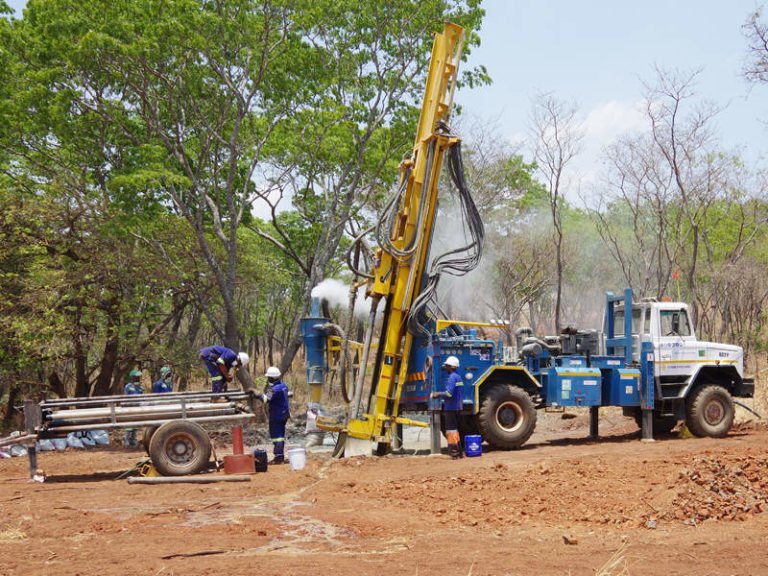
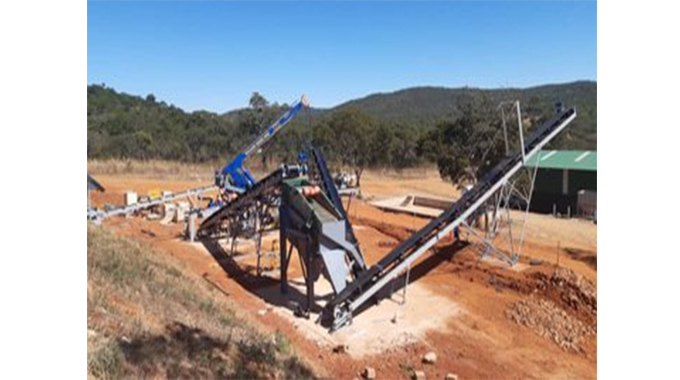
The villagers argue that the mining companies’ activities are not only causing the roads to be impassable but are also polluting Deka River causing their livestock and fish to die on a daily basis.
A villager, Mr Allen Mwembe, said while the main road was in battered condition, the interior roads were even worse, with most of them remaining mere mud tracks.
“Cars now rarely pass by and soon we will be weaned off the whole district because of the lack of road. These mining companies operating in our area are the ones who are destroying the roads and discharge effluent into rivers without any action being taken against them despite the fact that our livestock and fish are dying on a daily basis,” he fumed.
Mwembe who was also part of the villagers that recently threatened to block miners from operating in the area accusing them of continued disregarding for their pleas said the company has done little or nothing to support community development initiatives.
Another villager Mrs Ester Mulango also lamented: “We cannot permit our livestock, roads and water sources to be threatened while the companies are making a lot of fortune. It’s very absurd to experience misery amid plentiful resources.”
The situation in Deka area reflects how some mining companies working in rural communities are neglecting their Corporate Social Responsibility (CSR) obligations by not investing in development resulting in constant clashes with the locals.
CSR has been suggested as one of the ways through which the difficulties associated with mining can be ameliorated. Many, however, view the few programmes rolled out under this programme as having done little in meeting the needs of the affected mining communities.
Mining companies should now accept that the communities affected by their operations need to have basic services like roads, water, health care, electricity and sanitation.
It is important to note that while mining continues to play a key role in the economic growth of several resource-rich developing countries like Zimbabwe, however, there is evidence that mining activities in rural areas in the country have failed to benefit ordinary citizens and gravely affected the human rights and livelihoods of communities.
Over the past few years, the lack of benefits from mining has prompted those who are most affected to stand up. A case in point, is the standoff pitting Dinde Villagers and Beifer Investment in Matabeleland North province over a proposed coal mining project.
In a bid to resolve the conflict Minister of State for Matabeleland North Province Richard Moyo called for an all-stakeholder dialogue meeting with companies and investors working in the district to compel them to honour their obligations.
Addressing villagers in Dinde recently, Minister Moyo said it was high time companies exploiting natural resources in the district meaningfully plough back into the community.
“Along Deka, there are a lot of mines operating there but they are adopting a wait and see attitude to see who will start repairing the road they have damaged. We also have schools there that need to be built or maintained to ensure education is accessible to children from the area. There is a need for these mining companies to work together with the communities from which they are operating to ensure that they also benefit from their natural resources. We want investment but our people should also benefit outside of employment opportunities,” said Minister Moyo.
There is need to ensure that benefits derived from a mine are distributed properly throughout the community, as a lack of distribution can be a risk for companies, through popular uprisings and protests by local people demanding greater benefits.
Communities across the country are increasingly learning and understanding their rights regarding mining and economic development, hence it is important for companies to understand and mitigate such potential social risks and avoid conflict around the mine.
This is particularly true when it comes to local communities that are negatively affected by mining and mostly insufficiently compensated.
According to Zimbabwe Environmental Law Association (Zela) deputy director Mr Shamiso Mtisi community based human rights training is a critical element in capacitating community groups and individuals to assert and claim their rights against non-state actors in the natural resources sector.
“The rights that community members should claim to enjoy are not different from universally accepted human rights. What is important is for community-based groups to be aware of these rights and be able to assert them. In this case, communities in mining areas should be able to assert their rights against the mining companies with regard to the right to work or employment, the right to food, health, shelter and education among others. These rights entail that even people in rural areas and mining areas deserve an adequate standard of living.
“Community groups in Marange and Mutoko have been using various strategies to claim some of these rights against mining companies. In particular, the Chiadzwa Community Development Trust and community-based groups in Mutoko North Constituency have been claiming environmental, economic, social and cultural rights against mining companies that have been extracting mineral resources. Zela has used various strategies such as community rights training meetings, educational campaigns, advocacy, litigation and conflict resolution to promote and protect these rights,” said Mr Mtisi.
The environmental damages caused by mining operations are severe and long-lasting as it negatively impacts on sustainable development.
Mining companies have been struggling to build and improve on the reputation that has been damaged by the environmental devastations and social disruptions caused by their operations. The world over, mining companies have left a legacy of pollution and environmental degradation.
Meanwhile, local mining companies such as Zimplats, Unki Mine and Mimosa Mining have managed to address the social problems in communities they are operating from and beyond through the initiation of social programmes and projects. The projects cover health, education, drilling of boreholes, road construction and agro-industrial projects among others.
In 2011, Government effected the indigenisation and economic empowerment programme, one of whose facets were community share ownership trust/ schemes (CSOT/S) aimed at ensuring that communities have shares in companies that exploit natural resources in their areas and use the proceeds from the shares to fund development projects in their respective areas.
CSOT/S were introduced after a realisation that local communities, whose natural resources are being exploited, must have a say through guaranteed shareholding in the companies operating in their areas. This is because those communities bear the environmental, social and economic costs of extraction.
On why some mining companies working in rural communities were neglecting their CSR initiatives, senior researcher at the Labour and Economic Development Research Institute of Zimbabwe Mr Prosper Chitambara said there was no policy framework to govern mining companies to embark on CSR initiatives especially in rural development.
“CSR initiatives are really not compulsory so companies can choose to undertake them or not. In other words, companies do it out of benevolence and probably to spruce up their corporate images. Most organisations who are doing these initiatives, are poorly co-ordinating them. There is a lack of close-knit integration between these CSR initiatives and the organisation’s overall business strategies, goals, purposes and values,” said Mr Chitambira.
He said there was need to address issues of leakages because a number of corporate organisations were being accused of illicit financial flows and also to lock-in value to ensure that at least there was a lot of beneficiation value addition especially in those areas where the minerals were being extracted.
“I think that is the whole essence of the Government’s thrust of setting up special economic zones so that at least communities where there are minerals, they can actually benefit from those minerals through value addition. By so doing they are actually helping in creating employment opportunities for the communities and also to lock in values not just within the communities but within the country. Once that is done, we are able to achieve sustainable development in these communities,” he said.
When it comes to employment opportunities, investigations by Chronicle established that local populations may benefit relatively less from mining activity than migrants, in part due to a skills mismatch that hinders their employment in some of the better-qualified mining jobs.
The limited employment opportunities offered to locals by mining activity may also explain why neighbouring districts may not appear to benefit from mining.
Lack of corporate social responsibility also places women and girls in mining communities to provide sexual services to men in return for assistance. According to a 2016-2019 report by Centre for Natural Resource Governance (CNRG) Zimbabwean women living in the country’s mining areas are a constant target of sexual abuse, domestic violence on top of having their rights to water and other basics taken away from them.
“Women in communities hosting natural resources like minerals and wildlife suffer land and water grabbing which renders them unproductive, thereby increasing their vulnerability.
“They also endure gender-based violence and have limited or no economic opportunities for them to transform their lives. A spike in child marriages and pregnancies has been witnessed in all areas with active extractive industries. This is also exposing women and the girl child to sexually transmitted infections and social problems,” the report reads in part.
As a recommendation, the Government should set up regulations to govern CSR especially in rural communities should where mining companies should undertake their CSR programmes on a household level.
The Chronicle