Home Blog Page 503

Machete gangs an impediment to US$12bn mining industry target

0

THERE has been a outcry over machete gangs that terrorise mining communities, thereby affecting government’s ambitious US$12 billion mining industry vision by 2023. Zimbabwe Environmental Law Association (Zela) director Shamiso Mtisi (SM) blames machete gangs and rogue elements in the mining sector for hindering production. Mtisi said with proper mechanisms in place to end machete gangs, among other malpractices in the mining sector, a safe mining environment could be achieved.

Mtisi last week told NewsDay (ND) reporter Lorraine Muromo that there is need for miners to rehabilitate the environment after their operations as well as ensure that mining communities benefit from the extractive activities in their areas. Mtisi also called for measures that ensure transparency and financial probity and accountability in the mining sector.

ND: Last year, machete gangs wreaked havoc in mining communities, what is the situation like at the moment?

SM: I am happy with the situation on the ground which indicates that there has been a reduction of cases of machete gangs because of arrests made by the police in 2020. However, in 2021 there have been reports as well about machete gangs — especially in areas such as Gwanda and others. You have to understand that machete gangs are criminals; they are people who do not have anything to do with mining, but are just there to cause havoc and disorder in the sector. However, there are also rogue elements within the mining sector. This affects production as miners are raided, and people are killed in the process, thereby crippling production.

The achievement of the US$12 billion mining industry will not come to fruition if this problem is not solved. However, we have been encouraging the formation of security committees by miners within their neighbourhoods where they will share information on how best they can help each other.

ND: How have mining companies dealt with the rehabilitation of the environment where they operate? Are there cases where you have witnessed serious environmental damage due to mining activities?

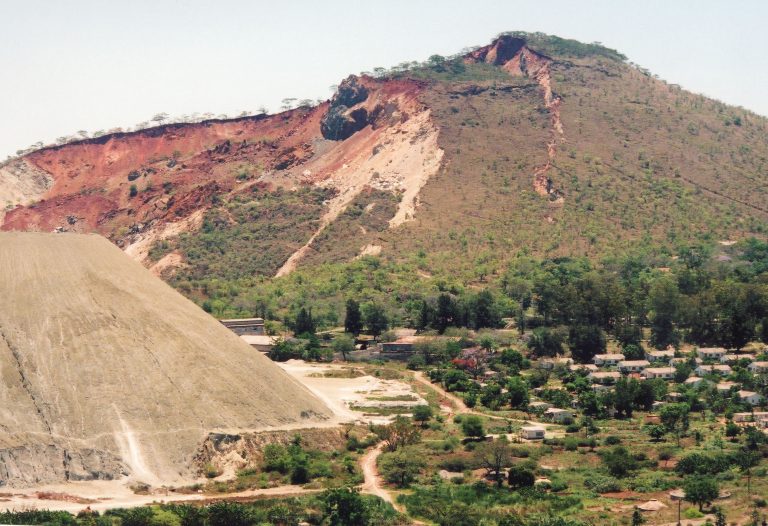
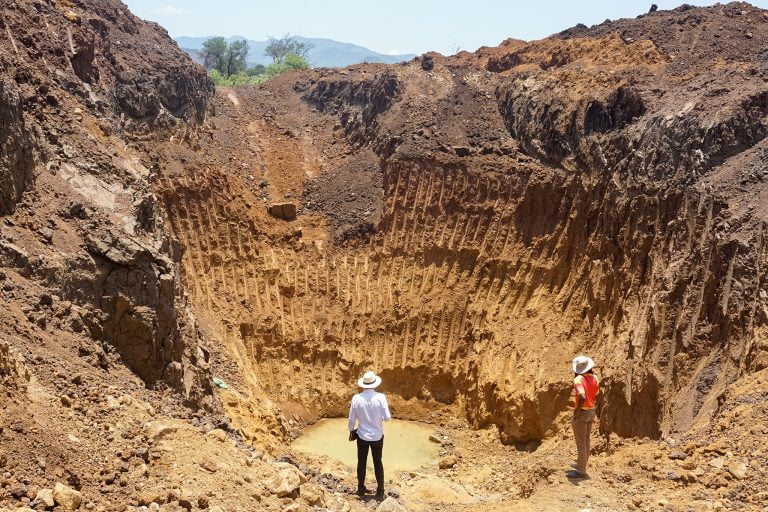
SM:  If you take a look at areas such as Zvishavane and if you move from Boterekwa and beyond, you will see massive environmental harm done by Chinese mining companies. Some of the areas have been rehabilitated, thanks to some companies such as Zimasco, but there are still some outstanding areas in Shurugwi where land has not been rehabilitated. It is a fact that during mining, environmental damage is expected, but companies should rehabilitate the areas according to environmental laws and standards.

ND: Why is it important for mining companies to get environmental impact assessment (EIA) certificates before embarking on mining operations?

SM:  EIA certificates are very important documents that companies should have in their possession when operating. They are important because they identify risks associated with any project; be it obstruction of water bodies, displacement of local communities from their land, loss of land or environmental impact.

EIA reports or certificates indicate the measures that a company will take or adopt in appreciation of environmental harm. Through these certificates, a company gives assurance to stakeholders that it is committed to rehabilitating the environment.

The major problem is that many companies start a project without EIA certificates and some are in possession of them, but do not implement their promises.

For example, a company might promise to drill a borehole for the community, but won’t do it in the long run. Most companies, to be honest, simply do not comply with their EIAs.

ND: Has there been development by mining companies in Chiadzwa through Community Share Ownership Trusts?

SM:  No, the problem with community ownership in Chiadzwa is that the money was eroded by inflation. If I remember correctly, they were promised a total of $3 million, but the money was eroded by inflation.

The mining companies that benefited from Chiadzwa tried to build a few structures, clinics, hospitals and a classroom block that were never completed and so it can be said that the community never benefited anything from the Chiadzwa expedition. We are currently in talks with the Zimbabwe Consolidated Diamond Company (ZCDC) and it has promised to deal with some of the problems caused by the Chiadzwa expedition.  But it’s not easy for them since they are dealing with legacy issues.

ND: What are your observations with regards to mining companies supporting communities?

SM: To be frank, it depends with the company involved. Some companies give back to the community and others do not.  For example, a company like ZCDC will furnish you with a full list of the things it has done and accomplished, for example, the construction of schools, borehole drilling  and roadworks.

Mimosa will also likely give you a list and on the other hand, some companies have literally done nothing. Those companies which comply with community share ownership schemes tried to do something, for example in Chiadzwa, but the projects flopped. If you take a survey, you will find out that mining companies such as Blanket in Gwanda, Zimplats, Unki, Mimosa have done some projects to give back to the communities surrounding them.

ND: I understand the Mines and Minerals Act has not been amended as yet, what are the possible effects of this on the mining industry?

SM: Yes, it has not been passed into law as yet. There are still consultations going on around the Mines and Minerals Amendment Bill. At the present, we are stuck with the old Act. The most possible effects are that we are stuck with an old and archaic piece of legislation that does not speak to the new dispensation which calls for transparency, accountability and financial probity.  It means that this piece of legislation is not adequate. However, if the Bill is crafted, it will solve a number of issues that have been a stumbling block in the industry.

First and foremost, it will set up a mining cadastre system to identify and point out who owns what mine, where, when, how and the type of licence involved. That in turn will eliminate overlaps in mining ownership and bring on board small-scale ownership. However, it will not solve the issue of artisanal miners as they are not included in the Bill. There is a huge need for government to look into that.

ND: How can issues of transparency and accountability be enhanced in the mining sector?

SM: The issues of transparency and accountability are very important and the adoption of extractive industry transparency initiatives calls for the disclosure of mining revenues and contracts.

Once those are made public, it becomes easy to achieve transparency and accountability in the mining sector.  They can be enhanced through implementation of constitutional provisions and that in turn will advance transparency and accountability. If we can implement some of these provisions, we can reach that goal.


NewsDay

Claimprenuer

0

Claimprenuer plural Claimprenuers is a person/s who survives on pegging and selling of mining claims. A Claimprenuer is popular for vehemently opposing the issue of Exclusive Prospecting Orders (EPOs) as they kick them out of business. The term originates from Mining Zimbabwe a mining publication based in Southern Africa.

Mining without EIA report illegal – Chitando

0

Mines and Mining Development Minister Honourable Winston Chitando said mining without an Environmental Impact Assessment (EIA) report is illegal.

By Shantel T Chisango

Addressing members of the Zimbabwe Miners Federation (ZMF) at the Rainbow Towers last week, Chitando said the government last year introduced the principle of orderly mining so that all mining takes place in observance of the law.

“All mining activities should operate in an orderly manner which comprises of the observing the EIA assessment, observing the laws of the country. Mining without EIA is illegal,” said Chitando.

The Minister added that there is great importance in observing the environmental provision, the provision of the Mine sand Minerals Act and all other legislation when conducting mining.

Furthermore, he stated that the government is working on harmonizing Rural District Council (RDC) charges.

“RDC charges are very little, some charge too much, so as the government we would want to make sure that there is the harmonization of the charges,” said the minister.

The purpose of the Environmental Impact Assessment (EIA) procedure is to generate information on the environmental impacts of a project, facilitate the consideration of environmental issues in planning and decision-making processes, and give the public and other stakeholders opportunities to participate in and affect these processes.

An EIA must be conducted for all mining projects that may have significant adverse environmental impacts. The EIA procedure has two main phases, resulting in the publication of an EIA programme and an EIA report. The EIA procedure is defined by the law.

Gvt to introduce a Command Agriculture like principle to mining

0

The government has pledged to come up with a mining support programme for the artisanal small-scale mining sector which will operate more or less on the principle of Command Agriculture.

By Shantel T Chisango

Speaking at a Zimbabwe Miners Federation (ZMF) meeting held Thursday at Rainbow Towers, Mines and Mining Development Minister Honorable Winston Chitando said that the government has resolved to create a support program for miners similar to Command Agriculture.

“Cabinet agreed to come up with a mining support program for artisanal and small-scale mining which will operate more or less on the principle of the Command Agriculture,” said Chitando.

He further assured miners that support was imminent since the matter was discussed at a cabinet meeting held two weeks ago.

“That was agreed and announced at a cabinet meeting two weeks ago. There will be support to the artisanal and small-scale mining sector,” he added.

He further mentioned that the government is not excluding the disabled from the mining supporting program but has rather created a desk that will meet their needs.

“There are a number of issues related to people with disabilities and we created a special desk and that desk will also cover the women and the youth’s interests.”

During the meeting, Chitando applauded ZMF for being a line of communication regarding what will be transpiring in the small-scale sector, since it represents small-scale mining.

Chitando said that the government engages with ZMF and the Chamber of Mines when in need of speculating issues happening in the small-scale mining sector, and he thanked the two organizations for making the government’s work easier.

“When we have an assessment of what is happening in the sector, we engage these two organisations and it is important that members channel their views to these two organisations. It makes sit easier for us as the ministry. Just imagine if we were to engage the 45 000 miners on an individual basis,” he said.

Chitando lastly alluded to the role being played by the small-scale sector and its importance in the achievement of the 12 billion dollar goal.

Prospect Resources fundraises for Arcadia lithium

0

Prospect Resources  developer of the Arcadia lithium project near Harare  has begun discussions with financiers to unlock funding for the staged development of a petalite pilot plant needed to achieve near-term production, the mining junior said last week.

The company is in discussions with financiers, strategic corporate and institutional funders.

Talks to consider developing a joint venture with a large corporate investor are presently in the early stages, while discussions with potential offtake partners in relation to its spodumene (chemical grade lithium) profile and staged development plan are underway.

In its half-year financials for the period ended December 31, 2020, Prospect said it had completed a strategic view which recommended construction of a smaller, commercial-scale petalite pilot plant at the Arcadia Lithium Mine.

At Arcadia, Prospect has huge deposits of both technical grade (petalite) and chemical grade (spodumene) lithium, but wants to rapidly progress the former through a low risk, low cost and high return near-term production under a staged development plan.

Lithium is envisaged to contribute to the Government’s plan to grow the mining sector to US$12 billion by 2023.

Already, mining is Zimbabwe’s largest foreign-currency earner, contributing over 75 percent of total export earnings last year.

Studies have shown that Prospect can have easy access the market, achieve higher technical certainty, reduce risk and cut capital outlay and operating costs than using the revised production process to near-term production.

“It was assessed that the potential increase in “petalite lithium” recovery (through floatation process alternative) was insufficient justification to compensate for the higher technology risk for start-up operations,” Prospect said.

In line with the revised phased development model, the junior lithium miner said it had agreed to appoint an independent, lithium-focussed engineering firm to undertake the revised feasibility study.

This will entail front-end engineering and design to increase technical certainty and reduce execution risk in providing greatest accuracy in equipment selection, sizing and project economics.

“This development strategy allows risk to be managed progressively, reduce upfront capital, supports reduced execution period and will be undertaken with the objective to achieve nameplate capacity of 2,4 million tonnes per annum (Mtpa) outlined in the feasibility study,” Prospect added.

The company notes that while staged development was the focus, Prospect had the ability to go straight to the nameplate potential of 2,4Mtpa, while internal assessment of 0,6Mtpa and 1,2Mtpa showed the project can deliver good economics.

The project has pre-tax net present value of US$710 million (after 10 percent discount), pre-tax internal rate of return of 71 percent and 15,5 years life of mine.

The Sunday Mail

Fidelity official gold buying prices Friday 19 March 2021

Fidelity Printers and Refiners (FPR) official gold buying prices Friday 19 March 2021

  • SG 90% AND ABOVE 49 662.56/kg
  • SG ABOVE 85% BUT BELOW 90% $48 830.23/kg
  • SG ABOVE 80% BUT BELOW 85% $47 720.45/kg
  • SG ABOVE 75% BUT BELOW 80% $47 165.56/kg
  • SAMPLE BELOW 10g BUT ABOVE 5g $48 275.34/kg
  • FIRE ASSAY CASH $49 940.00/kg


Cash available. Fidelity Printers and Refiners prices will be changing daily in relation to world market prices.


Contact FPR

No. 1 George Drive, Msasa, Harare, Email: [email protected]Telephone: +263 242-486670, +263 242-486694, +263 242-487131, +263 242-447810-5

Gemology Centre, transparency necessary in rebuilding Gemstone sector

0

Zimbabwe needs to improve its regulations on gemstone mining and trading at the same time creating a Gemology Centre which will be responsible for certifying and pricing Gemstones in order to increase our exports of the stones back to yesteryear’s heights, legendary Gemstone miner Mr. Jean Rheiner has said.

Rudairo Dickson Mapuranga

A Gemology Centre is an office that supports the efforts of small-scale miners and traders and allows the Government to capture the true value of its gemstones based on international guidelines.

The country has since lost its place as one of the largest suppliers of the world’s aquamarine and topaz among other stones’ spot due to unclear and straining regulations taking an exporter over 2 weeks to process papers yet taking less than 4 hours in other countries in the region.

In Zimbabwe, an exporter will pass through more than 10 offices and waits for 2 weeks or more for a permit yet it is attainable in a single day in other countries.

Rheiner said it was important for the country to rebuild its gemstone sector back to yesterday’s heights as this will help the country in achieving President Emmerson Dambudzo Mnangagwa’s vision for the mining sector becoming an upper-middle-income earner by 2023.

He said it was of great importance for the government to facilitate the growth of the sector through opening schools that teach and encourage citizens to impress their gemstone wealth and safeguard it from smugglers.

“When I came in the 1980s, Zimbabwe was very big on aquamarine and topaz production. How can we rebuild that today?  It has to be redone but in redoing it has to be facilitated of course.  In Madagascar, there are schools which teach them how to do it.” Rheiner said.

Rheiner lamented the failure by the Minerals Marketing Corporation of Zimbabwe (MMCZ) to have a simple process for gemstone exporters. The process takes more time than in other countries leading to exporters getting frustrated thereby choosing other destinations.

According to Rheiner, for the growth and development of the gemstone mining and exporting sector, a Gemology Centre was of uttermost importance. The Gemology centre will function better separated from MMCZ but supported by the government.

“We need to have a gemological Centre in Zimbabwe. The centre needs to be supported by the government away from MMCZ as in Afghanistan which is being led by Zimbabwean Gemologist Clever Sithole. “he said.

According to one of Zimbabwe’s finest young Gemologist Mr Maison Phiri, a gemology centre was the way to go in supporting and establishing the gemstone sector. However, trade policies and mining laws are to be favourable for the gem industry.

Phiri said the focus for the country should be building such an initiative in order to become a regional centre for gemstone trading.

“I cannot say detached or not detached from MMCZ, however, it is true that a Gemology Centre is the way to go. But that is not just the issue. It starts with the change of gemstone mining and trade policies. We need to stand up to the table and compete with Zambia, Mozambique and South Africa policies in terms of market attractiveness. Next, we need to identify what this Gemstone Centre shall be capable of doing. If it is done well, it can actually become a regional Centre. Because this Gemology Centre as I envision it is absent in the whole of SADC.” Maison said.

According to Phiri, the export procedure needs to be shortened and cheapened in relation to other minerals simply because the supply is the artisanal miner who sometimes produces 2 cups of gemstones and maybe a value of US$100 but still has a market. Most of these miners do not have tenure and need an incentive to achieve sustainable mining. On the side of buyers, the export procedure is long and buyers would rather buy gemstones in Zambia than in Zimbabwe because of this. We need to reduce the persecution of gemstone dealers by relaxing some of our regulations he concluded.


This article first appeared in the March 2021 issue of Mining Zimbabwe Magazine

Chitando hails ZMF transformation

0

Mines and Mining Development Minister Hon Winston Chitando has hailed the ZMF for taking a more formalised business approach.

Speaking at the Zimbabwe Miners Federation (ZMF) Stakeholders meeting held in Harare the Minister said commendably that the Federation was taking professional business direction.

The Minister said he recalls the Federation, as recent as two years back, had no operating offices making it difficult for the biggest mining body in the country to be taken seriously.

“The ZMF has drastically improved and I am impressed with the business approach the Federation is taking. Not to offend anyone but it was difficult to take them seriously because as recently as two years ago the organization didn’t have any operating offices. We did not know where to find them,” said Chitando.

Chitando said as important players in the mining sector it is imperative that the ZMF matches mining organisations like the Chamber of Mines’ way of doing business as the two organisations are crucial players in achieving a 12 billion mining industry by 2023.

“We do have two representatives of players in the mining sector, the Chamber of Mines and Zimbabwe Miners Federation (ZMF). The Chamber of Mines representing largely the medium to large scale mines and the ZMF representing the small scale and artisanal miners. ZMF and the Chamber of Mines are very important in the achievement of the 12 billion dollar goal. What is important, and what makes me feel very happy is that the ZMF formed a strategic line of interest that has been formalised is being capacitated to represent the interests of its membership,” Chitando said.

ZMF is on a concerted effort to improve its way of doing business. It recently amended key reforms to its constitution, partnered with over 25 mining equipment and services providers, launched a website and is currently pushing for timely issuance of Mining titles in a quest to have a more formalised ASM industry to support President Mnangagwa’s 23 billion mining industry by 2023 vision.

Its President Ms. Henrietta Rushwaya on Tuesday donated compressors to various women associations emphasizing that the main hurdle in the Artisanal Small-scale Mining (ASM) sector is the lack of mechanization. The compressors were donated to associations which include Mberengwa Miners Trust, Guinea Fowl Mines Trust, Great Zimbabwe Miners Trust among others.


ZMF lauches website

0

The Zimbabwe Miners Federation (ZMF) on Wednesday launched its website www.zimminersfed.org in an endeavour to keep miners and investors informed on the organizations’ business.

According to the developers who made a presentation at an event held at Rainbow Towers on Wednesday 17 March 2021 the website is responsive, automatically responds to the user’s preferences and can be accessed on many devices with an internet connection.

“The Zimbabwe Miners Federation (ZMF) is a responsive website that easily responds to the user’s behaviour and environment based on screen size, platform and device orientation. As a user switches from their desktop, laptop to iPad, or mobile phone the website automatically switches to accommodate for resolution, image size and scripting abilities. The website can be accessed globally on most devices,” the developer said.

The website outlines the duties of the ZMF, its Vision, Mission, Aims and Objectives. The website also has a live chat option to enable miners to communicate easily with Federation officials from anywhere on the globe as long as there is an internet connection. The website also has a news section to keep visitors abreast with development within the Artisanal Small-scale Mining sector.

Speaking at the Zimbabwe Miners Federation (ZMF) Stakeholders meeting held in Harare recently Mines and Mining Development Minister Hon Winston Chitando said commendably that the Federation was taking admirable professional business direction.

“The ZMF has drastically improved and I am impressed with the business approach the Federation is taking. Not to offend anyone but it was difficult to take them seriously because as recently as two years ago the organization didn’t have any operating offices. We did not know where to find them,” said Chitando.

Chitando said as important players in the mining sector it is imperative that the ZMF matches mining organisations such as the Chamber of Mines’ way of doing business as the two organisations are crucial players in achieving a 12 billion mining industry by 2023.

About Zimbabwe Miners Federation (ZMF)

The Zimbabwe Miners Federation (ZMF) is a government initiative to effect sustainable growth and meaningful transformation of the artisanal and small-scale mining industry. It is Zimbabwe’s largest mining body with over 1.5 million members, who contribute an annual average of 60% of the total gold deliveries to Fidelity Printers and Refiners (FPR) the country’s sole gold buyer.


Mining accidents claim 84 lives in Midlands

0

Eighty-four people died in 2020 due to mining accidents in the Midlands province alone amid calls for improved workplace safety.

Between January and February this year, eight people have already lost their lives to mining-related accidents.

Most accidents take place in uninspected and unsafe mines where artisanal miners work without supervision as they search for gold.

The Minister of State for Midlands Provincial Affairs and Devolution, Larry Mavima, revealed this during a recent Zanu-PF Provincial Coordinating Committee (PCC) meeting at the Winnery Convention Centre in Gweru on Saturday.

“Last year, the province lost 84 lives through mining-related accidents,” he said.

“Similarly, in the month of February as a province, we experienced another four mining-related deaths bringing the total number of mining-related deaths to eight this year only.”

Minister Mavima said the fatal mining accidents were common in uninspected and unsafe mines. Artisanal miners are popular for operating in disused mines, some of which would have been abandoned many years back.

“Given the foregoing, we are working with the Ministry of Mines and Mining Development to improve general safety in the mining industry and closing down all mines that are not inspected and are unsafe,” said the minister.

Zimbabwe Miners Federation (ZMF) spokesperson, Mr Dosman Mangisi, concurred with the minister saying unmonitored mining activities were the root cause of the accidents. Artisanal gold mining activities have been on the increase across the Province.

“The major causes of these accidents are unsupervised mining operations, lack of people who can lead and monitor operations, especially on areas of drilling and blasting. That is where we see a number of accidents taking place,” said Mr Mangisi.