

Home Blog Page 520

Parliament happy with Great Dyke tax holiday

0

Parliament has hailed the decision by Government to grant a tax holiday to Great Dyke Investments (GDI) saying this is a strategic intervention which has the potential to unlock mining sector potential.

GDI, in partnership with Kuvimba Mining House, are developing a platinum mine in Mashonaland West province which is expected to boost Zimbabwe’s global standing in the platinum group metals industry.

To this end, Finance and Economic Development Minister Professor Mthuli Ncube last week granted the project a five-year tax holiday through Statutory Instrument (SI) 26 of 2021.

Reacting to the tax relief, Parliamentary Portifolio Committee on Mines and Mining Development chairperson Edmond Mkaratigwa said the relief means Government was looking at the bigger picture.

While Government heavily relies on tax for sustainance, Honourable Mkaratigwa said such a holiday is a shrewd “give and take” strategy.

“Sometimes it’s not only the immediate revenue from tax accruals that should inform policy,” said Honourable Mkaratigwa. Mining is a powerful industry with the potential to transform the economy and it is not a coincidence that His Excellency (the President) has set it as the anchor in reviving our economy.

“To achieve this envisaged growth, we obviously need investment from both local and international capital.

“But we are in difficult times occasioned by Covid-19 which has weighed down businesses and investors might be tempted to slow down on new frontiers which are at development stage as is the case with most projects in Zimbabwe.

“So what a tax holiday does is to defend such an investment and you won’t see anyone pulling out. Even in the eyes of other would be investors, the country is sure to earn some credit,” he said.

Mr Mkaratigwa said while Government might take stick today, reality on the ground is that it’s decision means hundreds of employees have had their jobs safeguarded and thus huge economic benefit to the economy.


The Chronicle

Peace Commission Investigates Chinese Miner Over Employee Abuses

0

THE National Peace and Reconciliation Commission (NPRC) is investigating Chinese mining company, Fools Investment Mine in Hope Fountain and other mines owned by the Asian nationals for alleged ill-treatment of their Zimbabwean employees.

This is after local civil society groups petitioned the independent commissions to probe the abuses.

Matabeleland Institute for Human Rights (MIHR) and 13 other civic organisations petitioned the Zimbabwe Human Rights Commission (ZHRC), National Peace and Reconciliation Commission (NPRC) and the Zimbabwe Gender Commission demanding an immediate probe on the entire mining sector especially at mines owned by the Chinese where violence against workers is reportedly rife.

The petition came after a Chinese miner, Zhong Yi Zhang at the Fools Investment mine allegedly assaulted two employees Costan Mhasa and Tatenda Mangena after they demanded their dues backdated to July last year.

Yi Zhang was arrested for the crime and his case is pending in the courts.

MIHR said NPRC has since taken the issue up and began investigations.

“Meanwhile MIHR is still receiving more incidences of alleged abuse of local mine workers by the Chinese miners,” MIHR said.

NPRC Commissioner Charles Masunungure confirmed that they received the petition from MIHR and 13 other CSOs to probe the abuse at the said mine and were yet to come up with the findings on the issue.

“I can confirm that we received the petition and we have since deployed a team to get to the bottom of the issue on the ground.

“At the moment, we are yet to know the findings. Our approach as a commission that receives complaints is, we must investigate and make recommendations on the issues we would have found,” Masunungure said.

He said the commission is not just focusing on the Hope Fountain issue but has widened its focus to establish what is going on at other mines and after the completion of the investigations, they were going to make recommendations on the findings and proffer solutions on the issues of concern.

In their petition, the CSOs said the Chinese miners’ behaviour was unacceptable and must be stopped.

The groups include, Matabeleland Institute for Human Rights, Women’s Institute for Leadership Development, Matobo Youth Development Initiative, Rural Communities Empowerment Trust, Community Podium, Christian Legal Society Zimbabwe, Community Youth Development Trust, South Western Region Gender Network, Ibhetshu likaZulu, Greater Whange Residents Trust, Gweru Residents and Ratepayers Association, Lupane Youth for Development and Masvingo United Residents and Ratepayers Association

The CSOs said the Hoper Fountain incident was not the first one, as in June 2020, a Gweru mine worker was shot five times by Chinese miner Zhang Xuen who also injured another.

“These are not the only incidences of Chinese mining companies being accused of torturing and abusing Zimbabwean mine workers.

“Incidences like these have also been reported in Insiza, Gwanda, Bubi, Hwange, Gweru, Matobo, Masvingo, Mutare and other Districts of the country where mining is taking place,” reads the petition.

“We have gathered in many areas of the country where the Chinese mining companies are operating that these acts of wanton human rights abuse are rampant and the locals no longer report them because of the impunity they have experienced.”

The CSOs pleaded with the commission to investigate the alleged abuses.

They said their petition was backed by the fact that Section 44 of the Constitution of Zimbabwe mandated that “the State and every person, including juristic persons, and every institution and agency of the government at every level must respect, protect, promote and fulfil the rights and freedoms” set out in the Constitution.

“Realizing that our citizens have failed to enjoy ‘administrative conduct that is lawful, prompt, efficient, reasonable, proportionate, impartial and both substantively and procedurally fair’ (Section 68 of the Constitution of Zimbabwe), we thus call for the Independent Commissions to step in and protect our citizens,” further reads the petition.


New Zimbabwe

Rare earths prices continuing on an ever upward curve

0

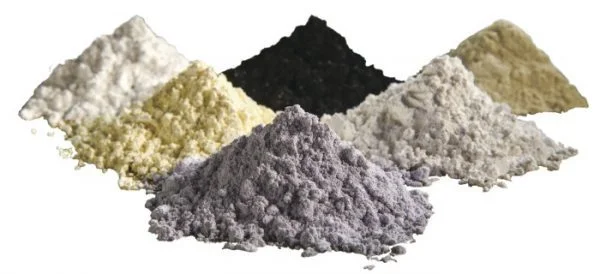
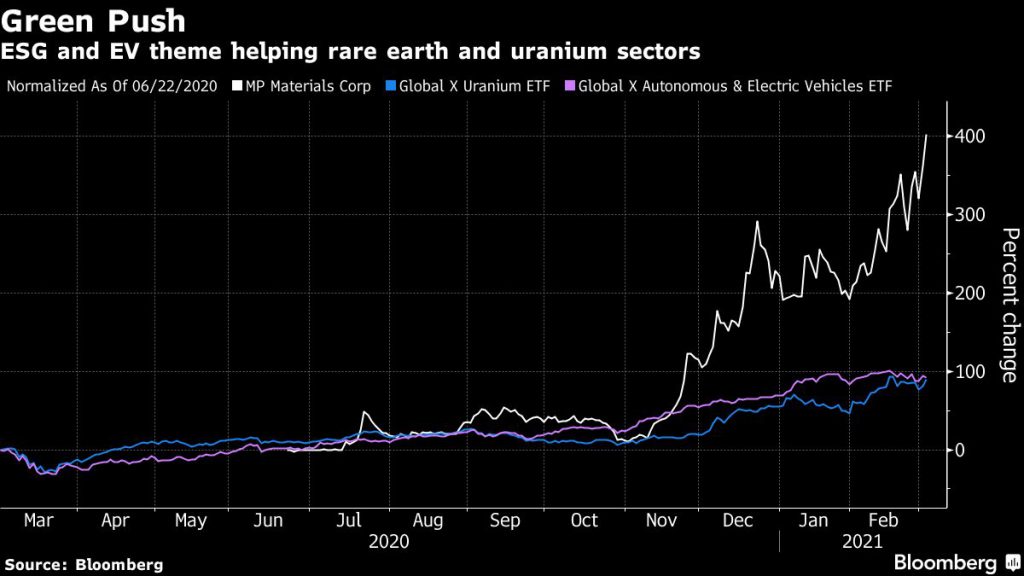
(ATF) Rare earth prices and their related stocks are on a continuous rise, with analysts wondering when this upward trend will ever end – given tight supply and mushrooming demand is projected for years ahead, it is likely the rare earth train is just leaving the station.

Minmetals Rare Earth issued a performance forecast on Thursday saying it expected the net profit attributable to its parent company in 2020 will be 222 million to 292 million yuan, an increase of 158.52% to 240.02% year-on-year.

Up to now, the firm’s subsidary Ganxian Hongjin Rare Earth Co Ltd had received a total of 157 million yuan in relocation compensation and awards, Sina Finance reported.

In addition, the year-on-year increase in the company’s main product sales gross profit, and relocation and liquidation inventory surplus, also contributed to the expected increase in the current period’s performance.

During the reporting period, it is estimated that the impact of non-recurring gains and losses on net profit is approximately 130 million yuan.

For other rare earths in early trading on Thursday, the rare earth permanent magnets sector once again strengthened, as Huahong Technology once again rose by the daily limit and Guangsheng Nonferrous Metals, Fangbang and Minmetals Rare Earths followed the rise.

Analysis believe that the strength of rare earth permanent magnet stocks stems from the recent rise in rare earth prices, which is mainly due to the continuous increase in the demand for magnetic materials downstream in new energy applications.

DOMESTIC QUOTAS

In the long run, with domestic quotas and insufficient foreign development, the contradiction between supply and demand in the rare earth market may intensify, and the space for sustainable profitability for leading companies is expected to open up.

Recently, the non-ferrous metals sector has performed strongly too. Among them, rare earth permanent magnet stocks lead the way. Northern Rare Earth’s closing price increased for three consecutive trading days and has accumulated a deviation of 20%, sparking an inquiry by the exchange.

On Monday, Southern Rare Earth Group announced the latest listing price of heavy rare earth oxides. Compared with last week, the average listed price of dysprosium oxide increased by 130,000 yuan/ton, the average price of terbium oxide increased by 100,000 yuan/ton, and the average price of lutetium oxide increased by 50,000 yuan/ton.

China’s rare earth price index shows that domestic rare earth prices have begun to rise after hitting a low in June last year, and the upward momentum has not diminished after entering 2021.

10-YEAR HIGH

According to data from Xinhua Finance, as of January 25, the price of dysprosium oxide in heavy rare earths was 2.235 million yuan/ton, reaching a five-year high; the price of terbium oxide also reached a high of 8.8 million yuan/ton, a record high in the past 10 years.

At the same time, the price trend of light rare earths cannot be ignored. The price of neodymium praseodymium oxide is also maintained at a high level of 455,500 yuan/ton.

An observer of the rare earth industry said that the market has now become increasingly popular for praseodymium and neodymium oxide as downstream magnetic material plants have continued to purchase on dips.

Some smelting and separation plants are in short supply of praseodymium and neodymium oxide, and they have received future orders, according to state media. In general, the prices of Nd-praseodymium products are firm and they are in the ascendancy as a whole.

PRICE ACCELERATION

Xie Honghe, the chief of non-ferrous metals industry at Zhongtai Securities, believes that this round of rare earth price acceleration may have just begun.

Domestic implementation of total control indicators, new overseas mines (run by Chinese firms), more limited supply, and new energy vehicles, frequency appliances, wind power and other green-based economic fields are all contributing to the demand for neodymium praseodymium oxide.

The biggest difference between this increase in rare earth prices and those surges of the past is that the rebound in demand for downstream magnetic materials from supply speculation has driven prices of rare earth products such as neodymium praseodymium oxide and neodymium iron boron up.

A number of brokerage research reports have pointed out that, in the short-term, the increase in the numbers of domestic home appliance inverter air conditioners is expected to bring about a rise in the demand for magnetic materials in 2021-2022.

ELECTRONICS DEMAND

At the same time, global sales of new energy vehicles have maintained a high growth rate, consumer electronics demand has stabilised, mid-to-high-end magnetic materials have resumed production – leading magnetic materials factories to continue to expand – and so the combined increase in light and heavy rare earth prices brought about by resupply needs will continue.

Taking the new energy automobile industry in China as an example, according to Zheshang Securities, global sales of EVs are expected to reach 2.8 million in 2020, and the demand for rare earth permanent magnets is expected to reach 14,000 tons.

By 2025, global sales of new energy vehicles are expected to reach 12 million and the demand for rare earth permanent magnet materials is expected to reach 60,000 tons, with an average annual compound growth rate of more than 30%.

China’s domestic policies have also given major support to the rare earth industry. In the past, the phenomenon of stealing and selling “black rare earths” (illegally mined) has been repeatedly cracked down on, and China’s days of selling rare earths at “cabbage prices” has come to an end.

MANAGEMENT REGULATION

On January 15, the Ministry of Industry and Information Technology publicly solicited opinions on the ‘Regulations on Rare Earth Management (Draft for Comment)’, showing China’s determination to regulate the management of the rare earth industry and promote its high-quality development.

“This is the first major legislation for the rare earth industry. The regulations have specific provisions on industry mining indicators, reserves, illegal products and traceability,” Li Shuaihua, chief analyst of the non-ferrous industry of Caitong Securities, said.

“The introduction of relevant regulations specifically for the rare earth industry reflects the government’s emphasis on the industry and the importance of the industry.”

ATF

Changes to EV supply chains signal a revolution in the new world order

0

(ATF) Innovative new indices such as the ATFI Global Green Energy Transport and Technology Leaders Index can help investors better understand supply chains as the world undergoes unprecedented economic and geopolitical change.

“There is this profound global regime change [going on] – sort of a multipolar system anchored by both the United States and China,” said Peter Knez, co-founder at Incapture Technologies and a former chief investment officer at BlackRock.

“And so that regime change, that we’re really in the early innings of in many ways, is having a profound effect on the restructuring of global supply chains.”

Knez points to the announcement that Taiwan’s TSMC is building a computer-chip fabrication plant in Arizona as symptomatic of a global upheaval. “So the US now wants to have their own fabrication plants,” he said, pointing to an increasing regionalisation of supply chains replacing the former globalised outlook.

“And you see that in the migration of technology firms from China into India,” he added.

One sector that is deeply affected is electric vehicles. “So those are all examples of sort of regionalisation of global supply chains in the electric vehicle space, or certainly components of the supply chain that are critical for EVs,” Knez said, citing batteries, as well as semiconductors.

For its part, Beijing has pushed back with its own localisation plans, venture capitalist Alfred Chu said.

“China has really pushed for Increase localisation of supply chain with a focus on input replacement and economic and innovation security,” he said. “So, in the last decade, we’ve seen that in all sort of clean energy areas, as there has been a requirement for 70% local content.”

PUSH TO LOCALISE

For the past four or five years, subsidies for EVs required them even to have locally made batteries. “And so, batteries that were previously sold very well, and design into vehicles, such as those from companies like Samsung were excluded from any subsidies and therefore had very difficult time selling into the marketplace,” Chu noted.

He expects that attitude to harden. “We’ll see increasing requirements for localisation too, as a requirement for any sort of subsidies and sort of to access the general market.”

To track such complex developments, investors need a smart index, said Christian Kronseder, professor at University of Applied Sciences and Arts Northwestern Switzerland.

“From an index construction point of view this poses a very interesting challenge, because localisation of the supply chains means we have to cast a wider net than you usually do.”

Kronseder said it takes extra effort to identify local companies that are important to the supply, chain. “So we not only have to look into financial data, but also into alternative data in order to find those companies, which then dominate the local supply-chain markets.”

For the ATFI Global Green Energy Transport and Technology Leaders Index, Kronseder said it was key to apply advanced algorithms, machine learning and artificial intelligence to actually find those suppliers, “which are not as prevalent as you might usually do in a regular index construction setting.”


ATF

Zimplats channels US$1,2m towards exploration

0

Platinum giant, Zimplats, has spent US$1,2 million in exploration activities during the quarter ended September 30, 2020 while ore mined increased by two percent.

The ore mined was also four percent up year-on-year underpinned by improved fleet productivity and additional tonnage from the company’s Mupani Mine, presently under development.

In a trading update for the third quarter under review, Zimplats said: “A total of US$1,2 million was spent on exploration projects during the quarter and a further US$0,1 million was committed.

“Ore mined increased by two percent from the previous quarter and was four percent higher than in the quarter ended 30 September 2019 because of improved fleet productivity and additional tonnage from Mupani Mine, which is still under development.”

Total operating cash costs increased by three percent from the previous quarter as a result of higher volumes mined and an increase in minerals marketing.

A total of US$5,6 million was transferred from operating costs to closing stocks during the quarter, compared with $1,2 million in the previous quarter, owing to the increase in run-of-mine (RoM) ore and concentrate stocks.

Zimplats said the accumulation of run-of-mine ore stocks will continue in preparation for the commissioning of increased concentrator capacity, which is planned for the second half of 2022.

Operating cash costs per ounce increased by 12 percent from the previous quarter due to a combination of lower matte volumes and higher operating costs.

The Chronicle

Debswana diamond exports fell 30% in 2020

0

Exports of rough diamonds mined by the Debswana Diamond Company fell 30% in 2020, statistics released by the Bank of Botswana showed Friday, as the coronavirus pandemic hit demand and global travel restrictions impacted trading.

Debswana, a joint venture between Anglo American unit De Beers and the Botswana government, produces almost all of the southern African nation’s diamonds. Lucara’s Karowe mine is the only other operating diamond mine in the country.
According to the central bank data, diamond exports from Debswana fell to $2.02 billion in 2020 from $3.05 billion in 2019. Quarterly drops of 63% and 66% were recorded in the second and third quarters respectively.

Sales picked up in the fourth quarter, when exports climbed 35% compared to the same period in 2019.

In a bid to curb the spread of the virus, Botswana closed its borders for eight months last year, locking out international buyers from centres such as Mumbai, Antwerp and China, who traditionally travel to capital Gaborone ten times a year to view and buy diamonds from De Beers.

Botswana gets about 30% of its revenues from diamond sales, via its partnership with De Beers.

The government forecasts the pandemic will see the economy shrink by 8.9% in 2020, while the budget deficit will more than double. The economy is seen rebounding to growth of 7.7% in 2021 after the country reopened its borders in December.

Botswana has so far recorded more than 19,000 covid-19 cases, with 134 deaths.

Reuters

Zera issues e-licences

0

THE Zimbabwe Energy Regulatory Authority (Zera) has introduced an electronic licensing platform for players in the petroleum sector.

The issuing of electronic licences, which are being distributed by electronic mail, began last week.

In view of lockdown restrictions on movement and the need for social distancing under the Covid-19 mitigation measures, there has been speedy adoption of digital business processes and transactions.

“Zera is delighted to announce to stakeholders that, with effect from 25 January 2021, the authority is now issuing electronic licences (e-licences) for the petroleum sector,” said the regulator in a public notice.

“Initially, e-licences will be issued for the following licence categories: petroleum retail, petroleum wholesale, petroleum production (blending), Liquified Petroleum Gas (LPG) retail and LPG wholesale.”

According to the authority, once the e-licences have been received, players are required to display printed copies in a prominent place as required by law.

Zera said all the licences will have security features namely, 2D Data Matrix, ID Linear Bar Code, unique licence number, and a watermark.

“E-licences can be verified upon request via [email protected],” said Zera.

The Chronicle

Zim urged to manufacture bitumen

0

EXPERTS have urged Government and local companies to expedite the manufacturing of bitumen to reduce the import bill after it emerged that over US$4,2 million has been used annually to import the product.

According to the World’s Top Exports, in 2019 Zimbabwean importers spent over US$4,2 million to import natural bitumen, asphalt and shale, up by 12,9 percent from the previous year. Also, Zimbabwean purchases of asphalt or petroleum bitumen mixes (up 140 percent), peat (up 51,6 percent) and petroleum oil residues (up 45,2 percent) grew at the fastest pace from 2018 to 2019.

With the Ministry of Mines and Mining Development’s geological survey stating that Zimbabwe has vast high-grade coal deposits occurring as fossilised carbon and about 12 billion tonnes of quality coal, industry experts have suggested that the country should utilise its coal deposits to manufacture bitumen.

In an interview, banker and founder of Bouyancy Capital Private Limited, Mr Innocent Chigwendere said the country was realising less foreign currency as most of the bitumen was imported instead of being locally manufactured from the vast coal deposits.

“We have vast coal deposits in the country and most of them have not been fully deployed. It’s that area as a nation that we should look at, and develop that resource. Instead of using billions of dollars importing bituminous materials for infrastructure development such as road construction, roofing, waterproofing, and other applications let us utilise our coal deposits and manufacture bitumen locally,” said Mr Chigwendere.

He added that roads in the country were in a bad state and the progress of repairing them was taking longer than expected as there were less resources and most of the bitumen was being sourced from other countries.

Mr Chigwendere also noted that there was need for import substitution to save foreign currency in the country and focus on projects aimed at locally manufacturing bitumen, thereby creating employment and producing more for export.

“There has been progress in terms of roads rehabilitation in the country but we are doing 200km per year based on what was done last year, it means we still have more years to go before we complete thorough rehabilitation in the whole country. If we look at this seriously as a country there is still time for us to cut the costs and utilise the resources that we have, at the same time also acquire environmentally-friendly equipment for infrastructure development.”

Buy Zimbabwe chairman, Mr Munyaradzi Hwengwere said as the country moves towards the attainment of Vision 2030, manufacturing bitumen locally was key.

“As part of the agenda of turning Zimbabwe into a middle economy by 2030, as a country the agenda is to be transformative, to move from a stage where we are dependent on import to realising that every cent we take out of the country we are putting it into someone else’s pocket.

“Bitumen is a key ingredient in the construction of the roads and if it can be manufactured locally, let us start moving towards that’s direction,” said Mr Hwengwere.

About 29 coal localities are known in Zimbabwe with the major producers being Hwange Colliery and Makomo resources.

Import substitution key in mining

0

GOVERNMENT’s robust drive on import substitution policy will result in further capacitation of artisanal and small-scale miners who are finding it hard to foot the bill of importing equipment from other countries, a leading mining expert has said.

There has been a renewed interest among business leaders in the equipment manufacture and supply chain who admit that import substitution was key in ensuring good returns, in particular for the artisanal and small-scale miners.

Import substitution is widely mentioned in the National Development Strategy (NDS-1), where emphasis is placed on every economic activity to adopt a policy that replaces foreign imports with local production. Players in the mining sector have for long relied on equipment from South Africa and China, a situation that suppressed local industrial growth.

Small-scale miners under the Zimbabwe Mining Federation (ZMF) constitute the biggest market for the manufacture and supply chain. ZMF said an estimated 70 percent of manufactured tools locally was bought by artisanal and small-scale miners.

The growing market for mining spares and other consumables has of late, opened up job opportunities that are sustained through the import substitution policy as well. This was what inspired a Bulawayo-based mining entrepreneur to invest in the country’s top foreign currency earner.

Mineazy Mining Solutions general manager Mr Khumbula Dube, said a combination of research, development and import substitution was the ingredient to revive the country’s economy through mining.

“We have to take seriously the issue of import substitution in the mining industry. That also calls for investment in research and development.

“Mining is positioned to change the fortunes of the country. We foresee a bright future in Zimbabwe’s mining industry but that needs to be supported by research especially on how local companies can find innovative ways to manufacture spares and reduce dependency on foreign machines.”

ZMF spokesperson Mr Dosman Mangisi said import substitution was key in serving small-scale miners.

“The Zimbabwe Miners Federation is pleased by what local companies have done to support the industry, we greatly need to grow the whole value chain to revive Zimbabwe’s mining. Mining equipment and consumables are usually expensive. Given that we have a mining background, we know all the problems that miners face, and that includes the pricing challenge,” said Mr Mangisi.

Over 80 percent of small-scale miners in the country are yet to be fully mechanised, according to Mr Mangisi. He said ZMF has it on record that the local market only supplies 10 percent of mining equipment needed by the industry.


The Sunday News

Mining fatalities a cause for concern

0

ZIMBABWE has recorded over 463 fatalities in the mining industry in the past three years as a result of not having enough enforcement of mining regulations due to the increase in the number of mining locations, an official has said.

Speaking at the Mining Safety Campaign 2021 launch, organised virtually by Young Miners Foundation (YMF) in partnership with the Midlands State University (MSU) Faculty of Engineering and Geosciences, Chief Government mining engineer, Eng Michael Munodawafa said over 463 fatalities were recorded in the mining industry from 2018 to 2020 due to various reasons.

“We have seen an upsurge in the number of fatalities in the mining industry with 112 recorded in 2018, 182 in 2019 and 169 in 2020. The above fatalities were as a result of not having enough enforcement of mining regulations due to increase in number of mining locations and not enough resources availed to the inspectorate, pure disregard of mining regulations by registered and unregistered (illegal) miners and lack of proper mining knowledge and understanding of mining environment, among others,” said Eng Munodawafa.

He noted that ordinarily, for a fatality to be classified as a mine accident, the deceased or injured should be a mine employee carrying out the assigned duties in a properly registered mining location. Any other incident in an unregistered mine is classified under illegal mining accidents.

Eng Munodawafa also added that fall of ground accounted for at least 60 percent of all accidents in mines and this was due to robbing of support pillars in old or current mines, working in unstable grounds (especially backfilled areas) without any extra support and not leaving natural support pillars to support openings induced by mining.

“Fall of ground also happens in shafts, when shafts collapse because they were sunk in unstable grounds geologically or sunk in backfilled material. Usually when fall of ground occurs either miners are crushed to death or suffocated.”
Eng Munodawafa also highlighted that shafts accidents accounted for about 18 percent of all accidents and this happened a lot in small mines. He said some of the causes were poor maintenance of winding mechanisms which normally resulted in either rope snapping or winding mechanism failure due to poor or no maintenance at all.

He further stated that other accidents which occur in shafts were loose materials falling from the sides of the shafts, with objects falling into shafts if they are not protected, thereby injuring or killing a person in the shaft or those being lowered or raised in the shaft.

As another major cause of accidents in the mining industry, Eng Munodawafa added: “Gassing accounts for about 10 percent of the fatalities in the industry. This usually happens when there is poor or no ventilation at all. Most of our miners usually do not worry about the air in the mine while working whether its flowing or not until they are overcome by gasses.”

He also said that some sources of gasses in mines were from blasting which results in emission of carbon monoxide and also stagnant water could contain hydrogen sulphide. Eng Munodawafa said statistics from 2016 to date showed that fatalities in the country due to gassing among legal mining activities were six, while among illegal mining activities were 18.

He also noted that explosives could also be dangerous if not handled by competent personnel and in most cases, accidents happened due to premature detonation of explosives and poor handling without following laid down safety precautions.

He highlighted that electrical and equipment mishandling were other causes of fatalities. Due to limited space in mining areas, he said most people were being electrocuted by high voltage equipment or run over by equipment if they did not follow laid down safety procedures.

Eng Munodawafa said, there have been cases of accidents due to flooding in mines. Among other causes, he said people were also falling into unprotected mine openings. Eng Munodawafa said in some cases, accidents or disasters were due to wrong methods of mining where miners disregard safety especially at “hotspots” where miners put too many shafts too close to each other resulting in instability of the ground.

The Sunday News