Despite Zimbabwe having vast mineral resources a lot needs to be done to improve the gains from the mineral wealth the country possesses.
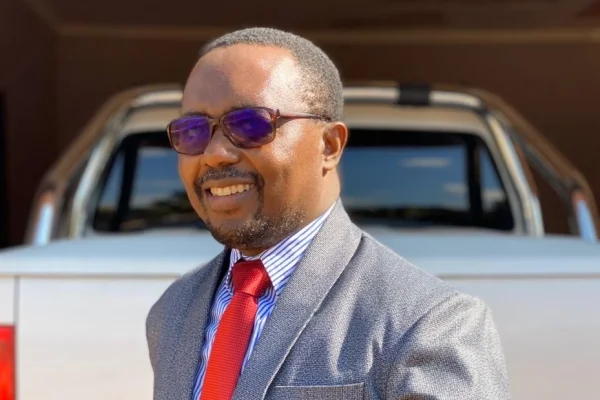
Mining Zimbabwe had a one-on-one with the Mines Parliamentary Portfolio Committee Chairman Honourable Edmond Mkaratigwa. Honourable Edmond Mkaratigwa responded to some of the pressing issues the Zimbabwe Mining Industry currently faces. Here is how the interview went>
Who is Hon Edmond Mkaratigwa
Hon. Edmond Mkaratigwa is a hands-on electrical engineer, a businessman, and a politician who holds a Master’s Degree in Energy and Sustainability from the University of Cumbria, United Kingdom. He has also embarked on a PhD programme along the same domain. In summary, I am a hands-on engineer because some engineers cease to practically use their skills in life as they move on to other professional fields.
How is it working in the Mines Committee and what are your achievements so far.
Edmond Mkaratigwa: The Mines Committee is seized with a lot of issues that need its attention. The Portfolio Committee on Mines is one of the key committees of Parliament especially given that its domain is currently one of the strategic economic pedestals in the country. It is expected to help drive the creation of wealth for the country, miners, and communities in which mining is taking place. Therefore, the Committee is a key cog in the development of the country and its citizens. I am quite excited to be involved with the Committee business, and geared-up to tackle the associated ethical, responsibility, and sustainability challenges thereof.
The first achievement is that initially there has been animosity and playing to the gallery among members of the committee to the extent that it was boat rocking but I have managed to steer it to course.
Second, there has been poor linkages between the Committee and its key stakeholders including the Ministry but we have also managed to build back those bridges. The approach is important in that you get to understand where the stakeholders are coming from and going, help them build capacity, and then easily monitor, evaluate and punish where necessary, from a more holistic understanding of their operations. It also allows the Committee to constructively input into the Ministry’s efforts for the public good.
Third, we are 90% complete with the draft Mines and Minerals Amendment Bill. The road has not been as easy but the Committee developed and implemented mechanisms to ensure all targets set are achieved.
Fourth, we have managed to advocate and score on the upward review of foreign currency retention for gold deliveries to Fidelity Printers from 55/45% to 70/30% and we will look into other possible quick and longer-term wins as we move on.
Fifth and finally among the many, we are conducting the Gold Inquiry at the moment and have progressed very well with anticipation for yielding more positive results for the country and the different sector stakeholders at large.
Is the committee given budgets to travel countrywide seeing miners and hearing their plights?
Edmond Mkaratigwa: Sustainable Committee business financing in the country is a phantasm. We however have been getting tremendously immense support from Parliament and our stakeholders. Finances from some stakeholders are nevertheless naturally attached to specific committee business threads on which they have vested interests. Constant changes in hotel rates among others have also been gobbling the budgets set aside for the committee. Mind you, our committee is among the most populous committees of Parliament hence it is heavy on costs. On the other hand, we have been very initiatively flexible towards closing that gap through engaging in friendships, collaborations, and partnerships for committee business expediency.
Mine certificates are taking forever to come out leading to more and more individuals ending up conducting mining without the certificates as they fear someone else taking over. What could be the real bottleneck in mine certificates issuance and how can this be rectified?
Edmond Mkaratigwa: Our main thrust as a committee is productivity. Lack of these certificates has mostly led to unsustainable mining due to conflicts, loopholes in mineral disposal, and unguaranteed ownership with negative effects on our main thrust. We have advocated at every platform, for computerisation of the Cadastre System in Zimbabwe and we have achieved positive responses towards that while we remain relentless on it. Attending to the Cadastre System is identified as one of the solutions to the certificates problem and it was included in the 2020 budget. His Excellency the President recently reiterated Government’s commitment to have the project funded. The main challenge has been around mobilisation of the foreign currency component partly needed for the project. Another problem that has been impinging the Ministry’s service delivery capacity is understaffing. Nonetheless, we have further advocated for the Ministry to get reasonably enough resources for its efficiency as that has been its major scapegoating ‘challenge’ always mentioned previously. We achieved on that and I understand there has been an advertisement of vacancies among other aspects and since we have resumed our sittings, we will follow-up and unclog the channel if need be.
How is the ministry going to speed up mines inspections for regular miners and new applicants in light of provincial shortages of manpower (surveyors, geologists, etc)?
Edmond Mkaratigwa: The answer to this question resonates well with the one already given above. We have advocated for resources including for recruitment of more personnel and that has been provided for. In the meantime, we have advocated further for more decentralisation models for the Ministry into other districts that previously had no offices and we are making good progress. The main pragmatic solution however lays in the recruitment of more staff as things stand.
In light of dwindling mining land due to allocations by the Ministry of Agriculture and Local government, what’s the future of mining in Zimbabwe?
Edmond Mkaratigwa: It is not true that mining land is to a greater extent dwindling in Zimbabwe. In fact, there are tracts of unexplored and underexplored lands. The challenge is the nature of our miners especially small scale miners. They lack exploration resources and also, usually gather where others are already mining and in particular sometimes closer to residential areas and other areas where minerals are closer to the surface for different reasons. In addition, a few people are holding Exclusive Prospecting Orders (EPOs) yet underutilising them or holding them for speculative purposes but denying access to those with an immediate need for using them. In that regard, the future of mining in Zimbabwe is very bright subject to proactive reforms; some of which are already underway.
What is the mines portfolio doing to directly empower locals to fully understand the mineral value and engage in fair trade with foreigners who are exploiting them in minerals like Chrome, gemstones etc
Edmond Mkaratigwa: It is true we have many minerals in the country although some are less publicised yet gaining more traction at modern-day mineral markets. The main roles of Parliament are legislative, oversight, and representative. As members of the Committee, our role is both individual and collective. Individually we are ambassadors to our constituencies and the broader citizenry of Zimbabwe and we always encourage our membership to support local miners to realise value out of their efforts.
The Committee as a collective independently has fewer avenues but to initiate, share the idea, and reinforce existing institutions to ensure they empower the citizenry. In that regard, we are engaging the Ministry as well as the Minerals Marketing Corporation of Zimbabwe (MMCZ) whose mandates fall within that administrative arena. We have started doing that particularly as part of our Gold Inquiry and anticipate to come up with brilliant recommendations which we will add to our monitoring dashboard for early and effective implementation because if MMCZ becomes efficient enough, those predators are unlikely to perpetually have fertile breeding ground but withers.
Why are miners (mainly foreign) being given access to mine at national heritage sites without share structure with locals and traditional leaderships?
Edmond Mkaratigwa: That was going to be better if I had got specific examples of such mines. However, we are trying to address that through the Mines and Minerals Amendment Bill especially given that heritage sites are naturally property that has to be protected in line with the national laws. This is also among the reasons the Mines and Minerals Amendment Bill was recently not assented to by His Excellency the President of Zimbabwe Cde E. D. Mnangagwa. Share structure may not be the solution to the preservation of these sites and it cannot legalise the illegality of trespassing into heritage sites for mining purposes unless I am not getting you well. On a different issue of sharing proceeds from mines, that area is currently in fog and the visibly existing model is rooted in philanthropy that is voluntary and manifested in Corporate Social Responsibility or Investment. The nature of philanthropy is a matter of debate but the country has been focusing on building a strong industrial base for the sustainability of national development as its initial priority. Noting that, the attributed father of philanthropy Andrew Carnage (1901) advances that no country, people, or race living on alms will develop as sometimes that will encourage vice over virtue, hence the need for us to rethink the model within the national development thrust and laws.
Is there any policy measure being implemented to bar foreign nationals from engaging in small-scale mining and reserve it for locals?
Edmond Mkaratigwa: Currently, there has not been any threshold set at policy level and the expectation has been that any fortune seeker can start at any level as long as they have the ambition to grow within existing legal parameters. Zimbabwe is currently courting more investors, the land is vast and the task ahead of us is high. As a result, we may have to embrace those who share the same aspirations with us until a time it will become unnecessary. Laws can however be initiated by the citizens and such need has to be identified, justified, and advocated for with backing scientific data so that it gets a voice in the policy black box earlier. If there is any related unmerited illegality or exploitation in our society as a result of those involved in whatever level of mining, it should be raised, reported, and denounced including through legislation, system processes, and procedures.
What is being preserved for our future generations in mining?
Edmond Mkaratigwa: The question of what is preserved for our future generations and progenies in terms of minerals was going to be easily answered if we are able to give an answer on how much we actually have in terms of resource quantities as a country. In that perspective, it basically means our mining sector still has to be developed. In trying not to appear skating the question, I perceive it to be double-barrelled.
One, minerals are finite and as I have said, without knowing the quantity on and under the ground, it becomes very difficult to devise a formula for their preservation for posterity in their raw state and definably to which future temporally.
Two, we can preserve the value of the minerals we have extracted today for future generations. In our context as Zimbabwe, to me, that is more practical and that is where the question of corporate social responsibility or investment becomes handy and relevant. Let us share our current exploitations with our future generations because what we have exploited is quantitatively known. We have better control in that approach and, the present generation is not also limited in the enjoyment of the national endowments by postponing its development maximization to unknown future generations alone; which will perceivably ultimately cumulatively enjoy the fuller benefits whose potential their predecessors would have been exploiting partly. What is important is, therefore, being responsible and ethical in our current conduct to ensure the sustainability of the benefits into our future generations.
Some mining houses are not fulfilling their company corporate social responsibilities for example many Chinese owned haven’t even fixed roads to their mines, no workers’ houses as they come from their residences, no schools nor clinics let alone transport. Is the committee monitoring this or holding the mines or responsible authority to account?
Edmond Mkaratigwa: Reinforcing what I said atop, radical redistribution of wealth from those who have is tantamount to criminality and muzzling the goose that lays the golden egg in modern democracies. By the same token wealth accumulation without redistribution is ethically unfair as much as only a few people in our societies have also mastered the art of sustainably gathering wealth. Those two ideas to me, need to be thought through and merged for the common good of all and for the mutual continuity of society in a manner that the divergent self-interests are served without suppressing the virtues of handwork and innovation. In many instances, philanthropy comes later after a company has managed to fulfill legal obligations and core purpose which is profits hence we need to understand that although we can do better as the government to ensure in all big business plans especially before approval, corporate social responsibility plans which can be monitored and evaluated for total adherence are also received and approved. At the moment, corporate social responsibility or investment is more quasi voluntary hence the need for us to innovate and make it more obligatory using social and business models than the former radical approach. Because of the lack of a definite definition of corporate social responsibility or investment framework at law, it is difficult for Parliament to monitor hence, there is greenwashing to a greater extent currently at play in that regard in Zimbabwe. Also, the best corporate philanthropy is one that sustainably provides levers for the current poor and future generations to realise, maintain, and grow their own potentials often denied by poverty through virtuous means.
Are there any plans for beneficiation plants or local trading markets for our minerals and industrial produce?
Edmond Mkaratigwa: There are plans, yes and they are part of the pathways to the broader US$12 billion mining investment mark that has to be realised as scheduled. Implementation of the plans is urgent as that is expected to have huge potential for upstream and downstream economic and social benefits for the country and the broader citizenry although several other contributory primary factors have to be concurrently and sequentially harnessed as critical paths to the successful accomplishment of the conundrum.
Schools both primary and secondary are not majoring in our vast mineral resource, research, innovations, usage, extraction, rehabilitation, trade, and values. Should this not be included in the school curriculum
Edmond Mkaratigwa: That is a very important thought although it is very debatable. We have those aspects in our curriculum although the perceptions around content depth can differ. On the other end, it is also a brilliant idea to introduce mining as a standalone subject in high school but our science has been equipping our people largely to process minerals and not really to be miners. I know of some universities teaching entrepreneurship as a compulsory course to all their students who become part of the university for the first time and maybe that can be part of the launch pads. It looks a brilliant idea and that can be shared with colleagues in the education sector as they know better in terms of current curricula gaps and how the content can be fused for the greater benefit of Zimbabweans if it does not already exist adequately.
Is it appropriate for the Permanent Secretary in the MMMD to carry out his recent notice to do a wholesale forfeiture of all claims that had not been inspected by the 1st of January 2020, in light of the Covid-19 induced crisis and when in fact the mining industry, especially the ASGM is looking for supportive measures from the Ministry that would provide a stimulus? What is the ministry’s motive for taking such a retrogressive action will this not result in killing off struggling small scale mining projects?
Edmond Mkaratigwa: Government business appropriateness is normally judged within the context of theory and practice of bureaucracy, administrative law, and existing national policy guidelines. The Permanent Secretary may have acted in line with the law and official duty expectations as failure would be attributed to him as relegation of duty in-spite of surrounding circumstances such as the COVID-19 state of disaster. He therefore may have effectively played his part. On the same note, it is the thrust of government to make sure that mines are productive hence in that mood, mines must be inspected although other external environmental factors can be taken cognisant of in terms of the decisions around forfeiture. I am happy to say we have already successfully made many breakthroughs in terms of the stimulus package for the ASGM although the wheels of government sometimes move slowly though surely. The motive of government and the Ministry never being independent of the government, is to prosper the country than to harm; hence, all serious and like-minded ASGMs shall not drown. A raft of changes and efforts toward addressing those loopholes are already with us. Therefore let the ASGMs cheer-up. However, we expect them to be more productive, responsible, ethical and ambitious in conduct as Zimbabwe can only be built by Zimbabweans and with supports from its well-meaning friends and partners.
What is the role of MMCZ and the chamber of mines in the dissemination of information on the other minerals that are mined but miners are clueless in terms of evaluation and the marketing like amethyst?
Edmond Mkaratigwa: MMCZ is the government’s minerals marketing arm and it naturally has to secure markets for the country’s minerals such as vermiculite and amethyst you have rightly mentioned above among others. It is its role to communicate related mineral value information to the miners. The Chamber of Mines is an institution registered under the private voluntary organisations Act of and in Zimbabwe. Unfortunately, the Chamber mainly serves its membership but it is a key stakeholder to Parliament and in particular, the Portfolio Committee on Mines and Mining Development that I currently preside over. Both institutions work hand in glove as the Chamber represents interests of its membership. Unfortunately, though it is being addressed, the Chamber has been mainly working with large scale mining houses as opposed to small scale miners but it is lately positively working closely with the small scale miners associations. Minerals education is more possible where the miners are well-coordinated and, where the Ministry of Mines as the coordinating arm is decentralised to the people interacting with the minerals at the lowest level as is happening with the agricultural sector. Those are some of the gaps in the Ministry we are helping to identify and have them sealed off mainly through constant advocacy for the Ministry and its parastatals to be fully capacitated so that we can strongly whip it for results. We are for production and as a Committee, we are advancing that cause, hence we are working with all progressive forces be they big and small or critics and antagonists as long as that will help us achieve the common interest of having Zimbabwe’s industry sustainably ticking again by 2023.
Is the 12 billion targets by 2023 achievable and what is the strategy and what are the anchoring minerals that form the thrust of that contribution to the GDP.
Edmond Mkaratigwa: My mind is still anchored on the certainty that the US$12 billion mining industry gross domestic product contribution target is achievable by 2023 as scheduled. The strategy is there and entails the motivation of production and delivery of minerals to the government. It further encompasses research and innovation, opening up the country for business through the reduction of legislative and administrative bottlenecks, creation and promotion of harmony among miners and farmers, allowing time for the young mines to lay their eggs and grow their chicks with the certainty of the operating environment security and, flexibility reminiscent of capital growth among other aspects. Ahead in anchoring the strategy is cooperation among all stakeholders involved in mining, capacitation of key institutions and capitalisation of the miner, loyalty to the country’s vision and commitment to sustainable partnerships that benefit the capitalist and the social contractors. Whereas minerals such as gold and platinum have been at the forefront, other minerals are not very visible locally but they are of late fetching much more than those traditionally dominating the market. Those include palladium which is part of the platinum group of metals basket, vermiculite, tantalite, lithium, rare earth among others.
Mines Ministry seems to be lagging on information dissemination. Emails are never responded to as we speak the Mines website has been down for over 2weeks. Only recently has the Mines Ministry twitter account been active. Can we say miners’ concerns are being listened to?
Edmond Mkaratigwa: It is unfortunate but if it is for the past two weeks let us assume it was not prepared for the COVID-19 wake-up call for being prepared for any eventuality in our operations since we are living in this increasingly risky society. It is commendable that they have quickly adapted and initiated a twitter handle in response to novel challenges although that was supposed to have been innovatively initiated long back in line with modern trends. Delays in replying to emails might also have been due to the same challenge that forced most operational staff to stay away from the office for a while due to COVID-19 but since most facilities should be ready to operate now, we want all hands on the deck as time and tides wait for no men. There are no sacred cows to inefficiency and let me reemphasise that the committee will never tolerate corruption, excessive bureaucratic formalism that hinder development and efficiency in any of the departments and agencies that it oversees.
There has been talk of Vast Resources (AIM Listed) which is well known in Zimbabwe about them beginning operations in Chiadzwa. We have written articles that have gone viral online in Australia and there has been optimism about them beginning operations as far as 2018. That deal is yet to go through and now it is 2020. Why are deals taking too long to be completed? Doesn’t this frustrate investors? Doesn’t this go against Zimbabwe is open for business Mantra? How can the processes be fast-tracked?
Edmond Mkaratigwa: It is true that there has been talk and there is talk of Vast Resources (AIM Listed). The general challenge with business is that it involves negotiation and renegotiation sometimes. At the same time, mining is a huge enterprise that involves due diligence and long term contracts. I want to reiterate though that the country needs to achieve targets and the committee treasures the will of the masses, hard work, transparency and accountability over corruption, unnecessary bureaucracy, and hedonism. Therefore investment by Vast Resources (AIM Limited) has to be slowed down only by the company through doctrines of capital than from our part as a government unless their investment framework interests are legally proscribed by the law rather than persons. Laws should dictate the investment framework in every sector of the economy in this new dispensation as in all progressive nations. Thank you for complementing the efforts of government as its fourth estate and we are doing our best in a satisficing manner to get to the bottom of those matters for the public good and it is also our anticipation that 2020 will end with good news in that regard. Investors can be frustrated and deals can take long indeed as a result of delays in fully amending our key legislation as talk cannot replace protection and or risk that comes with written laws. The onus is on us to make our institutions more professionally independent, transparent, and accountable through the development and implementation of a professionalisation inclined legislative framework that self-markets in all sectors of the economy as we have already orally marketed the country as an attractive investment destination. Processes cannot just be fast tracked for the sake of quantity as due diligence that leads to the sealing of business deals which are above board is equally key for investment security and sustainability. Remember, mining sector investments are usually reasonably longer term.
The 55/45% gold retention has been revised!
Edmond Mkaratigwa: Let us celebrate in that regard. We advocated for 20/80% and we have won the 70/30% which is quite plausible. The committee will continue to fight for a more reasonable, holistic and wholesome stimulus package for the mining sector. For example currently following this win, some miners are still not confident and therefore unhappy with having their foreign currency component compulsorily deposited and held in Nostro accounts. They prefer self-transfiguration of the market in terms of driving determination of how they should best handle money within their choices and environmental considerations. That is a good demand. Nonetheless, understanding that government works within systems, processes and procedures, the committee will take it up while miners need to think about it deeper for their own security and the security of those hoarding the cash, especially that the economy is bound to be transforming for the better as more motivations are initiated and advanced across sectors.
The Zimbabwe Chrome market is full of predatory buyers who purchase chrome at an average price valued at 15% of export sales prices! How can chrome producers be protected from such unscrupulous buyers?
The best way Chrome miners can be protected is through opening up local markets by the government in terms of competitiveness so that miners are compelled to deliver their minerals. Another option is for miners to form cooperatives or associations which can make their challenges collectively known, solutions collectively sought and bargaining power on the market increased. In that manner government through the Ministry and with the support of Parliament can collectively map a way to help them out.
Besides the committee what does Hon Mkaratigwa do?
Edmond Mkaratigwa: I am a businessman, a family man, an academic, a philanthropist, and a politician. I am the founder of a flagship organic company called MKE Holdings. MKE Holdings has subsidiaries focussing on electromechanical engineering projects and manufacturing, safari, entertainment and redemption gaming, textile, and real estate business among others.
Thank you very much for taking the time to engage us. There are so many questions and so little time and space. We hope to carry on with the interview in the future.
Edmond Mkaratigwa: You are welcome and on my own behalf and that of the Committee I preside over, I appreciate this opportunity. I am always available for the magazine and I cherish our cordial relationship. I will also knock at your door more frequently with our committee business updates since you have the capacity to reach out more specifically to the greater part of our audience. Thank you.
This article first appeared in the Mining Zimbabwe June 2020 Issue