25.5 C
Harare
Home Blog Page 612

Illegal miner suffers amputation of legs in freak accident

0

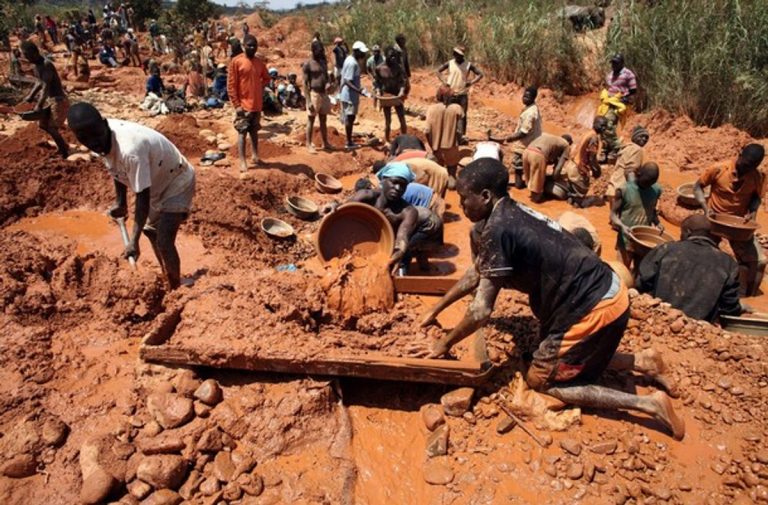
An alleged illegal miner had both his legs amputated by a digger in the City Deep area of Johannesburg on Sunday morning, paramedics said.

“The 35-year-old man apparently fell unseen into the hole they were digging with heavy machinery. The digger continued, amputating both legs, one below the knee and the other just above the knee,” said ER24 spokesman Ross Campbell.

He said ER24 paramedics and the provincial services had arrived on the scene at 10am to find the man still in the hole.

“A scoop was used to extract him before tourniquets were applied to both limbs and the patient taken straight to Chris Hani Baragwanath Hospital for emergency treatment.”_Sowetan Live

Hwange audit exposes Tundiya corruption

0

The Forensic audit at Hwange Colliery has exposed suspected acts of sabotage carried out by Shepherd Tundiya with a view to taking over control of the coal miner.

Tundiya last year allegedly attempted to remove Mota Engil from mining coal in Hwange and to fraudulently offer businessman James Goddard the Chaba Coalfields concession which HCCL holds under special grants.

Tendai Muza of Ralph Bomment Greenacre and Reynolds said in the audit that the Mota Engil contract was standing on soft ground in 2018.

“Mota Engil is contributing not less than 78% of current year (2018) tonnage, and there is a possibility that the significant drop in the Mota Engil output in the months of September 2018 to November 2018 was a result of preparing to pack and go due to possibilities of termination of contract.”

The audit said Mota Engil was facing pressure from someone acting fraudulently, or scandalously trying to replace the company.

“Tundiya allegedly mendaciously prepared a contract between HCCL and JR Goddard. He acted as an HCCL boss, who previously was the man in charge of HCCL from the President’s Office.”

A synopsis of the fraudulent activities by Tundiya began with a memorandum of understanding (MoU) between HCCL (represented by Tundiya) and JR Goddard
Contracting (Pvt) Limited, which was about giving Goddard the Chaba coalfields concession.

In the MoU which Tundiya crafted, he said Goddard had the capacity, equipment, trained staff and technical expertise to undertake drilling, blasting, loading,
hauling and dumping of overburn and coal at HCCL.

The scope of work to be done would includes bush clearing for the pit to be mined, stripping top soil, drilling, blasting, loading, hauling and dumping of
overburn and coal, the maintenance and dust suppression of haul roads relating to the mining works, dozing and management of the overburn waste dumps, lighting
of the mining works, levelling and preparation of benches of drilling and blasting.

In a letter dated September 24, 2018, Goddard then replied Tundiya after a meeting was held at his (Goddard’s) Gweru offices to discuss the Chaba concession.

In the letter, Goddard said the equipment envisaged could produce 40 000 tonnes of coal per month and five teams would be needed to achieve the ultimate
production target of 200 000 tonnes of coal per month.

“We offered to mobilise team one and two within our existing resources at Ngezi Mine, from November 1, 2018, and the establishment charge would be US$1 million
per team,” the letter read.

“For the mobilisation of the subsequent teams three, four and five, an advance payment of $5 430 000 per team would be required to purchase equipment, plus we
would require an estimated charge of $500 000 per team. The advance payment amount would need to be paid to our equipment suppliers in South Africa.”

In another letter from Goddard to Tundiya dated September 7, 2018, the Bulawayo-based businessman then thanked him for the offer to mine 200 000 tonnes of coal
per month at Chaba Mine for HCCL, but said since Mota Engil was still working there, he did not believe they should be disrupted at that time.

Goddard had projected that when his company begins mining at HCCL, they would charge between $20 and $24 per tonne of coal mined._NewsDay

Zimbabwe to announce more PGM investors

0

Government will, in the next few weeks, announce at least two more investors that are expected to deploy huge foreign capital in the country’s platinum sector as scores of local and foreign investors fall in love with the Government’s “Zimbabwe is Open for Business” mantra.

The Sunday Mail

The platinum sector is one of the few sectors in the economy that is expected to create thousands of jobs directly and indirectly through the provision of additional technical expertise from the local market and other key services.

The move is part of Government efforts to fully utilise the country’s mineral deposits as one of the key strategies to feed into President Mnangagwa’s Vision 2030, by which time Zimbabwe should attain upper middle income earning status with a per capita of US$3 500.

The mining sector is largely expected to drive this vision and the President has set a US$12 billion annual export target for the sector, up from US$3, 2 billion achieved in 2018. It is against this background that a lot of investment luring strategies are being undertaken premised on the President’s “Zimbabwe is open for business” mantra.

The impending announcement comes hard on the heels of an historic US$4,2 billion investment by Cyprus based Karo Resources into the country’s PGM sector that is expected to make Karo the country’s biggest PGM producer.

Government envisages that Karo could even produce more platinum than the already existing miners, Zimplats, Mimosa and Unki, combined, a development likely to trigger competition in the production of the mineral in the country.

Said Mines and Mining Development Minister Winston Chitando; “We do have four geological platinum ore bodies in the country, the snake’s head right at the top, the Muchingwe area where Mimosa is mining, in between we have two other platinum geological complexes which are the Shurugwi ore body and the Ngezi Geological complex.”

He added; “In simple terms one can look at the Ngezi geological complex and it can be subdivided into four, the area which is held by Zimplats, the area which has been granted to Karo Resources and two others which I won’t mention.

“The whole idea of the development, which is to ensure that all the ore bodies in the Shurugwi geological complex and the Ngezi geological complexes are made operational and that certainly will be achieved, which means the two others in the Ngezi geological complex and the one other in the Shurugwi geological complex in a few weeks will be concluded and made public.”

Other minerals expected to feed into the US$12 billion export target include gold, lithium, diamonds, and chrome among others.

In the gold sector, production is being primed to jump from a record breaking 33,2 tonnes to a projected 40 tonnes this year and ultimately 100 tonnes by 2023, according to the Government strategy.

In diamonds, state miner, the Zimbabwe Consolidated Diamond Company (ZCDC) is expected to haul 4,1 million carats this year up from 2,8 million last year and has been working on a deliberate capitalisation programme to boost conglomerate diamond mining.

In the chrome sector, international interest has already started and the decision by the International Chrome Development Association (ICDA) to hold their 35th annual meeting in Victoria Falls early next month is a sign of global chrome players’ interest in the Zimbabwean market.

Platinum is used in catalytic converters, laboratory equipment, electrical contacts and electrodes, platinum resistance thermometers, dentistry equipment and jewelry._The Sunday Mail

Peace Mine illegal miners evicted

0

MINERS who had been illegally carrying out operations at Peace Mine in Silobela were on Tuesday evicted from the mine by the Sheriff of the High Court with the assistance of the police who have since sealed off the mine.

Heavily armed support unit police officers moved in and evicted everyone from the mine and threw out their equipment including hammer mills and transformers. 

The illegal miners operating under the banner of Silobela Community Ownership Trust led by Ms Sibusisiwe Moyo who claims to be the rightful owner of the claim, had been involved in a wrangle with Chief Sigodo (real name Appollo Mhlope) over the ownership of the mine. 

Ms Moyo claimed the traditional leader wanted to abuse his authority to illegally grab the mine claiming it was benefiting the whole community.

Despite the High Court ruling in favour of Chief Sigodo and ordering the illegal miners to vacate the mine, the miners kept conducting operations, going against the order. Silobela Member of Parliament Cde Mthokozisi Manoki Mpofu confirmed the sheriff moved in and removed all the people and equipment from the mine. The eviction order dated 4 April 2019, ordered the removal of Ms Moyo and her team from the mine to pave way for the peaceful entrance of Chief Sigodo into the mine.

About 40 hammer mills and transformers were part of the equipment moved out by the sheriff.

Ms Moyo could not be reached for comment. Contacted for comment, Chief Sigodo said, going forward, the Ministry of Mines and Mining Development will have to carry out an assessment first before giving a go ahead for resumption of mining activities._The Sunday News


Africa loses billions worthy of gold to Dubai through smuggling

0

 Billions of dollars’ worth of gold is being smuggled out of Africa every year through the United Arab Emirates in the Middle East — a gateway to markets in Europe, the United States and beyond — a Reuters analysis has found.

Customs data shows that the UAE imported $15,1 billion worth of gold from Africa in 2016, more than any other country and up from $1.3 billion in 2006. The total weight was 446 tonnes, in varying degrees of purity — up from 67 tonnes in 2006.

Much of the gold was not recorded in the exports of African states. Five trade economists interviewed by Reuters said this indicates large amounts of gold are leaving Africa with no taxes being paid to the states that produce them.

The customs data provided by governments to Comtrade, a United Nations database, shows the UAE has been a prime destination for gold from many African states for some years. In 2015, China — the world’s biggest gold consumer — imported more gold from Africa than the UAE. But during 2016, the latest year for which data is available, the UAE imported almost double the value taken by China. With African gold imports worth $8,5 billion that year, China came a distant second. Switzerland, the world’s gold refining hub, came third with $7,5 billion worth.

Most of the gold is traded in Dubai, home to the UAE’s gold industry.

The UAE reported gold imports from 46 African countries for 2016. Of those countries, 25 did not provide Comtrade with data on their gold exports to the UAE. But the UAE said it had imported a total of $7,4 billion worth of gold from them.

In addition, the UAE imported much more gold from most of the other 21 countries than those countries said they had exported. In all, it said it imported gold worth $3,9 billion — about 67 tonnes — more than those countries said they sent out.

“There is a lot of gold leaving Africa without being captured in our records,” said Frank Mugyenyi, a senior adviser on industrial development at the African Union who set up the organisation’s minerals unit.

“UAE is cashing in on the unregulated environment in Africa.”

The Dubai Customs Authority referred Reuters’ queries to the UAE foreign ministry, which did not respond. The UAE government media office referred Reuters to the UAE federal customs authority, which also did not respond.

Not all the discrepancies in the data analysed by Reuters necessarily point to African-mined gold being smuggled out through the UAE. Small differences could result from shipping costs and taxes being declared differently, a time-lag between a cargo leaving and arriving, or simply mistakes. And gold analysts say some of the trade, especially from Egypt and Libya, could include gold that has been recycled.

But in 11 cases, the per-kilo value that the UAE declared importing is significantly higher than that recorded by the exporting country. This, said Leonce Ndikumana, an economist who has studied capital flows in Africa, is a “classic case of export under-invoicing” to reduce taxes.

Over the last decade, gold from Africa has become increasingly important for Dubai. From 2006 to 2016, the share of African gold in UAE’s reported gold imports increased from 18 percent to nearly 50 percent, Comtrade data showed.

The UAE’s main commodity marketplace, the Dubai Multi-Commodities Centre (DMCC), calls itself on its website “your gateway to global trade.” Trading in gold accounts for nearly one-fifth of UAE’s GDP.

However, no big industrial companies reached by Reuters – including AngloGold Ashanti, Sibanye-Stillwater and Gold Fields — say they send gold there. Reuters contacted 23 mining companies with African operations, the smallest of which produced around 2,5 tonnes in 2018: 21 of them said they did not send metal to Dubai for refining, the other two did not respond.

While the big South African miners have local refining capacity, the main reason others gave is that no UAE refineries are accredited by the London Bullion Market Association (LBMA), the standard-setter for the industry in Western markets.

The LBMA is “not comfortable dealing with the region” because of concerns about weaknesses in customs, cash transactions and hand-carried gold, its chief technical officer Neil Harby said.

Investigators and people in the gold industry say the ease with which smugglers can carry gold in their hand-luggage on planes leaving Africa helps gold flow out unrecorded. And limited regulation in UAE means informally mined gold can be legally imported, tax-free.

Gold can be imported to Dubai with little documentation, African traders told Reuters.

A DMCC spokesman said it has a robust regulatory framework that includes strict responsible sourcing rules. These are aligned with the international benchmark for responsible sourcing laid out by the Organisation for Economic Cooperation and Development (OECD).

Sanjeev Dutta, head of commodities at DMCC, said in January that the centre is building strategic relationships with most gold-producing countries on the African continent, “and we are very confident of how that production is done and how responsible” it is.

Over the past 12 months, he said, DMCC has firmed up a standard for refineries, called Dubai Good Delivery, which he said is very strict on responsible sourcing and sustainability. “We track right from responsible sourcing to sustainable development, things like human rights etc.,” he said. “We demand export certificates.”

A “very limited” number of refineries accept gold that has been imported as hand luggage, Dutta said, but gave no figures.

Some African miners are swapping their pickaxes and shovels for diggers and crushers – increasing production volumes exponentially. Regulation remains scant, and accidents are frequent.

In one week this February, three accidents at illegal mining operations in Zimbabwe, Guinea and Liberia claimed the lives of more than 100 people.

Often, miners must surrender a cut of their output, as commission, to the people who control a pit, let out the equipment, or buy and sell the gold. NGOs such as Global Witness and Human Rights Watch have documented child labour, corruption and links to conflict at some of these mines. At one mine in Zimbabwe visited by Reuters, people said they had to hand over some of their find before they would even be allowed out of the pit.

Reuters presented its analysis to 14 African governments. Of them, five said it reflected an existing concern about gold being smuggled out of their countries that they are trying to address. One said they did not think gold smuggling was a problem for them. The rest declined to comment or did not respond.

Governments across Africa are trying to work out how to manage a sector that, whatever its risks, provides a livelihood for many of their citizens, and which could be harnessed as a source of revenues.

Some, including Ivory Coast, are taking gradual steps to regulate their informal mining operations. Ghana and Zambia have sent security forces into mining areas to halt operations so miners can be registered and regulations put in place.

Ghana, concerned that a rush of mainly Chinese-led ventures is harming the environment, has arrested hundreds of Chinese miners and expelled thousands in the past six years.

At the end of last month, Ghana temporarily banned the import of excavator equipment to try to stem a surge in illegal mining using heavy machinery.

In Sudan, one of the continent’s biggest producers, the government has unveiled a billion plan for private banks to work with the central bank to buy gold from small-scale miners, offering prices that would make it less attractive to sell on the black market.

A Tanzanian parliamentary report estimated that 90 percent of annual production of informally mined gold is smuggled out of the country: The government wants the central bank to buy this up. In March, President John Magufuli launched a plan to establish hubs where the trade would be formalised by offering access to financing and regulated markets.

In Burkina Faso, Oumarou Idani, minister of mines, believes his country is leaking gold to UAE on a massive scale. Of the 9,5 tonnes of gold the government estimates informal miners dig up each year, just 200 to 400kg are declared to the authorities, he said.

Much of the gold is smuggled from landlocked Burkina Faso to its Atlantic coast neighbour Togo, according to the minister. In Togo, virtually no taxes are imposed on gold.

Togo’s director of mining development and controls, Nestor Kossi Adjehoun, said informal mining is “an area that we have not properly figured out.”

For now, he said, Togo saw no reason to suspect gold was being smuggled through the country.

“I understand that Dubai is the destination for this gold,” his Burkina Faso neighbour, Minister Idani, said in an interview last year.

“But since (the trade) is fraudulent, I have no details.” — Reuters.

Platinum production declines 5pc

0

Platinum group metals (PGMs) production at Anglo American Platinum’s local unit, Unki Platinum declined 5 percent to 43 300 ounces in the first quarter to March 31, 2019 compared to the same period last year.

The decline was mainly due to additional 2018 first quarter production mined from ore stockpiles. Normalising for this impact, production at Unki was flat.

Platinum production fell 6 percent to 19 300 ounces while palladium was 4 percent lower to 17 000 ounces.

Quarter on quarter, production at Unki was 13 percent below the 49 000 ounces recorded during the previous quarter (to December 31, 2018).

Overall, the group’s total PGM production decreased 6 percent to 998 900 ounces. Platinum and palladium production went down 5 percent to 471 900 ounces and 6 percent to 326 600 ounces.

This came after normalising for the transition of Sibanye-Stillwater material to a tolling arrangement from January 01, 2019 which equated to 115 700 platinum ounces and 58 100 palladium ounces in the 2018 first quarter.

Total production was 3 percent lower compared to the previous quarter, which recorded 1 million ounces of total PMG.

Anglo American also attributed the production decline to once-off benefit of additional ore stockpile which increased production at Mototolo and Unki in the first quarter of 2018, as well as Eskom power disruptions and operational challenges across the portfolio in the quarter.

At 210 400 ounces, joint venture PGM production fell 29 percent with platinum palladium easing 31 percent to 93 800 ounces and 28 percent to 62 400 ounces respectively.

PGM production from joint ventures is 50 percent own mine production and 50 percent purchase of concentrate.

Total PGM production from own managed mines increased 4 percent to 601 000 ounces due to the inclusion of Mototolo production as own-mine production. Platinum production rose 4 percent to 275 000 ounces while palladium production was flat at 219 700ounces.

At 871 200 ounces refined PGM decreased by 14 percent as platinum production decreased by 18 percent to 411 700 ounces and refined palladium production decreased by 8 percent to 293 600 ounces. The decline was due to maintenance on Waterval Smelter, the Anglo Convertor Plant (ACP) and the Base Metals Refinery during  the  quarter, the  annual  planned  stocktake and the impact from power disruptions.

Sales volumes decreased by 21 percent to 884 900 ounces largely in-line with refined production.

Management anticipate total group production for 2019 to be between 4,2 million to 4,5 million ounces, including platinum production of between 2 million and 2,1 million ounces and palladium production guidance of between 1,3 million to 1,4 million ounces.

Production guidance is down on 2018 due to the transition of Sibanye-Stillwater material to a tolling arrangement in place of its concentrate previously purchased by Anglo American Platinum._Business Weekly

Output at South Africa’s Amplats hit by Eskom power cuts

0

South African miner Anglo American Platinum Ltd’s (Amplats) first quarter production fell 6 percent, hit by problems at power supplier Eskom, operational challenges and ore stockpiling in the same period the year before.

Power cuts implemented by Eskom, which supplies more than 90 percent of electricity in Africa’s most advanced economy, pose a threat to miners which are among the biggest users of power in the country and are already grappling with weak profits.

Amplats’ total platinum group metal (PGM) production fell 6 percent to 998,900 ounces for the quarter ended March. 31, from 1,062,800 ounces in the same period a year ago.

Eskom cut power across the country in February and March as low coal supplies, a severe cash crunch, and multiple failures at its ageing fleet of power stations throttled supply.

Amplats said the power cuts hit PGM production at its Mogalakwena operations, which declined by 6 percent to 307,200 ounces, and at its Amandelbult operations, which decreased 7 percent to 192,800 ounces.

In February, Amplats said it lost 14,000 platinum ounces when Eskom implemented five straight days of power cuts and was considering building a 100 megawatt solar power plant at its Mogalakwena operations.

Amplats said if power disruptions persisted, there could be an impact on the timing of refining the built-up work-in-progress inventory in full, which it expects to have refined by the end of 2019._Reuters

South African government says it intends to de-register AMCU union

0

South Africa’s labour registrar said he intended to de-register the militant AMCU trade union for breaking rules on how unions should operate, a move which could reshape the balance of power on the country’s platinum belt.

The Association of Mineworkers and Construction Union (AMCU), one of the largest trade unions in South Africa’s mining sector, has thousands of members at mines operated by companies including Sibanye-Stillwater and Lonmin.

The union, which is known for its uncompromising stance after leading bruising strikes, rose to prominence during labour unrest which led to the 2012 killing of striking mine workers at Lonmin’s Marikana mine.

If the labour registrar goes ahead with his threat to de-register AMCU, it would not be able to operate as a trade union. That would be a victory for the rival National Union of Mineworkers (NUM), with is aligned with the governing African National Congress (ANC) party.

The de-registration could also spark unrest in mining communities if AMCU members protest. AMCU originally started as a breakaway from NUM.

“I, Lehlohonolo Daniel Molefe, Registrar of Labour Relations,…give notice of my intention to cancel the registration of Association of Mineworkers and Construction Union,” a notice in South Africa’s government gazette published on Wednesday said.

Giving reasons, Molefe said: “The trade union has ceased to function in terms of its constitution and the trade union is not a genuine trade union as envisaged in the Act.”

An AMCU spokeswoman said the union’s leader, Joseph Mathunjwa was not available for comment.

A spokesman for the labour ministry said labour registrar Molefe had found that AMCU had violated its own rules by not holding a national congress for more than five years. That means its senior officials have not been elected as they should, he said.

Last week AMCU ended a five-month walkout that cost Sibanye-Stillwater more than $100 million in lost revenue._Reuters

Lucara finds largest uncut diamond in recent history in Botswana mine

0

Lucara Diamond Corp has unearthed the largest uncut diamond in recent history in its Karowe mine in Botswana, the Canadian company said on Thursday, beating its own record discovery from November 2015 that it struggled to sell for nearly two years.

The 1,758-carat diamond is larger than a tennis ball and weighs close to 352 grams (12.42 ounces), it said in a statement. The stone is second in size only to the 3,106-carat Cullinan Diamond, recovered in South Africa in 1905.

The 1,758 carat diamond recovered from the Karowe mine. (CNW Group/Lucara Diamond Corp.)

Image courtesy of Lucara Diamond Corp

Lucara’s shares rose as much as 11.4% to the highest in more than two months, before trading up 7% at C$1.69 shortly after midday as the Toronto stock benchmark edged down 0.1%.

The stone is the latest in a series of high-value recoveries for the Vancouver-based company at Karowe. Since introducing its XRT diamond recovery technology, Lucara has recovered 12 diamonds over 300 carats, the company said, including a 472-carat and a 327-carat diamond in April 2018.

The 1,109-carat “Lesedi La Rona,” which Lucara recovered in November 2015, failed to meet its undisclosed reserve price at a June 2016 auction, putting pressure on the company’s shares. British diamond dealer Graff Diamonds finally bought it for $53 million in September 2017.

Forbes reported late last year that Graff had created 67 finished gems from the stone._Reuters

Africa’s Sibanye-Stillwater lowers valuation for miner Lonmin

0

South Africa’s Sibanye-Stillwater on Thursday revised its offer for Lonmin, with new terms that gave a valuation for the struggling platinum miner that was about 60 million pounds ($77 million) less than originally proposed.

Lonmin said Sibanye was offering an additional 0.033 Sibanye shares per Lonmin share in a deal to create the world’s No.2 platinum producer. Sibanye had initially said in December 2017 that it was offering 0.967 new shares for each Lonmin share.

Although the revised offers gives more Sibanye shares to Lonmin investors, an analyst said this still led to a lower valuation because Sibanye shares have fallen in value since the offer was first made in 2017.

Sibanye’s revised offer also does not fully compensate for the impact of its recent share sale that raised $120 million, meaning Lonmin shareholders will end up with less of the revised group, the analyst said.

The revised terms value Lonmin at 226 million pounds and give Lonmin shareholders 10.9 percent of the combined group, compared to a value of 285 million pounds and 11.3 percent in the original offer

The revised terms value Lonmin at 226 million pounds and give Lonmin shareholders 10.9 percent of the combined group, compared to a value of 285 million pounds and 11.3 percent in the original offer.

The boards of both firms said the new offer balanced a recovery in platinum group metal prices against Lonmin’s financial difficulties and its inability to fund investments to sustain its business and staff levels, Lonmin said.

Lonmin also said in its statement that its directors unanimously recommended shareholders accept the offer, which was conceived as a bid to ride out depressed platinum prices.

Lonmin and Sibanye shares were both up at 1500 GMT, rising 2.7 percent and 0.5 percent respectively.

London-listed Lonmin was hit hard by the drop in platinum group prices, and has had to work to cut spending in order to retain a positive balance sheet, required by conditions of Sibanye’s proposed offer.

It warned last month that it did not have sufficient liquidity to fund new projects needed to avoid shaft closures and job losses._Reuters

error: Content is protected !!