


Home Blog Page 656

Taxes, indigenisation and transparency: How Mthuli’s new fiscal regime impacts on Zimbabwe mining

0

Open for business? Totemic. That is the word which perhaps aptly sums up the potential of Zimbabwe’s huge and diverse mineral wealth to propel the country’s socio-economic development agenda. Early this year, the Minister of Finance and Economic Development, Mthuli Ncube, declared that mega mining deals worth US$8 billion have been sealed. It is anticipated that mining will generate US12 billion annually by 2023. In 2018, the mining sector earned US$3.4 billion.

Mukasiri Sibanda

Government is on record declaring that “Zimbabwe is open for business”, a slogan tailored to resonate with investors. But what it is at stake for citizens? Is government keen to be open about mining contracts and the sector’s contribution to the national purse? Against this backdrop, and clutching on the 2019 Mid Term Budget Review Statement, this article tries to decipher the implications of the Budget Review on transparency and accountability in the management of mineral revenue.

The signature objective is to help citizens – through the Publish What You Pay (PWYP) campaign – and legislators to easily figure out how agile or fragile the mining fiscal transparency reform agenda is. Obviously, the way mineral wealth is managed determines whether citizens enjoy a fair share of mining benefits. Interest in the status of mining fiscal transparency regarding the 2019 Midterm Budget Review is due to the fact that the 2019 National Budget included progressive policy proposals for improving mining sector transparency.

Key transparency reforms missing

Key policy proposals for improving mining sector transparency contained in the 2019 National Budget Statement included the implementation of the Extractive Industry Transparency Initiative (EITI), funding for modernisation of the mining title administration system; mining cadastre, monitoring and tracking of tax incentives for cost benefit analysis purposes. Sadly, the Midterm Budget Review failed to give updates on implementation of the 2019 proposed mining sector transparency reforms.

A positive, though, is that the Ministry of Mines and Mining Development together with the Zimbabwe Environmental Law Association (ZELA) organised a multi-stakeholder meeting on implementation of EITI in July 2019. Perhaps, the information blackout on implementation of EITI in the Budget Review is a sign that two Ministries, Finance and Mining, must work closely together to ensure successful implementation of EITI.

Silence on progress regarding the computerisation of the mining title administration system is a serious indictment on a government that purports to open Zimbabwe for business. The current mining title administration system is outdated, heavily susceptible to corruption and is also festering numerous claim ownership disputes.

Disclosure of tax revenue forgone

Although there was no update on tax incentives given to the mining sector, a notable exception concerns the disclosure of tax revenue forgone because of the Clothing Manufacturers Rebate. As at April 2019, revenue forgone, or tax incentives given since the start of this rebate facility amounted to US$14 million against imports worth US$43.9 million. Likewise, Treasury must disclose revenue forgone to spur growth in the mining sector. Such disclosure is important considering the Budget Review highlighted that “in the case of imports, the mining sector largely benefits from a rebate of duty regime that supresses both customs duty and Value Added Tax (VAT).”

Disclosure of tax incentives given to the mining sector, a mega economic activity, is crucial to enable the public to assess whether government is negotiating fair deals which harness well finance for development from the finite mineral resources. This domestic resource mobilisation opportunity must not be squandered, it doesn’t last forever.

Significantly, the Budget Review raised concern that beneficiaries of the Clothing Manufacturers Rebate are allegedly profiteering illicitly by “disposal of fabrics intended for value addition on the domestic market and transfer pricing.” While government hinted that an investigation will be done to bring the culprits to book, government must extend the investigation to the mining sector rebate facility to check whether similar malpractices are at play.

Mining’s dominance: Not a good sign

Mineral export earnings continue to underpin the country foreign currency earnings. According to the Budget Review, mineral exports raked in US$1.3 Billion during the first half of the year. An enormous 68% contribution to the country’s total exports of US$1.9 billion. So many indicators can be used to depict how dire the economic situation is currently. One such prominent indicator for our sick economy is the heavy reliance on mining. And this is a major concern because of several reasons which include the finite nature of mineral resources, volatility of mineral prices, and evinces a mining sector growth which is unhinged from other economic activities.

Ministry of Finance & Economic Development@ZimTreasury

Mining remains our major source for export earnings, GDP and employment. During the first half of the year, the sector contributed US$1.3 billion, which is 68% of the total exports of US$1.9 billion 

Race to the bottom?

It is disturbing to note that the Budget Review proceeded further to weaken mining fiscal linkages by giving in to industry demands on deductibility of royalties for the purpose of calculating taxable income. Starting 1 January 2020, royalties will be recognised as an allowable deduction for tax purposes. Noting the mining sector’s poor tax contribution, the 2014 National Budget Statement directed that mineral royalties will no longer be an allowable cost for the purposes of calculating taxable income.

Referring to regional best practice, the Budget Review reversed this position. However, the Budget Review failed to realign Corporate Income Tax (CIT) rates of between 15% and 25% which were noted as below the regional average. Rather, the CIT rates were deemed as competitive, a major worry because Zimbabwe must not take a leadership position on race to the bottom – using lower tax rates to woo investors. The Budget Review admitted that production in the mining sector was not responsive to a favourable tax regime, a clear sign that tax incentives are not working as intended. So why continue the same path.

Rear-view mirror forgotten?

Sadly, the Budget Review failed to make good of the promise made by the 2018 National Budget Statement to review platinum royalties in August 2019. A promise that was made when the platinum royalty rate was reduced from 10% to 2.5% in order to ensure tax fairness and equity. At the time, holders of ordinary platinum mining lease holders like Mimosa were paying 10% royalties whilst special lease holders like Zimplats and Unki were paying 2.5%. August 2019 is significant in the sense that Zimplats had a 25-year 2.5% royalty stabilisation agreement with government which was set to expire that same period.

In 2015, Zimplats won a court dispute against the Zimbabwe Revenue Authority (ZIMRA) on the legality of the royalty stabilisation agreement. Consequently, US$101.55 million was gobbled from the national purse in 2015. This is a clear testimony that stabilisation agreements can weaken government’s fiscal capabilities. Citizens, PWYP, and Parliament must pressure the Treasury to make good of its promise to review platinum royalties to ensure the platinum sector contributes fairly to the national purse.

Progressive royalty regime

Commendably, the gold royalty regime is now self-adjusting, at 3% below US$1,200 and at 5% above US$1,200. It must be noted that between 2010 and 2014, gold royalty rates were changed three times in response to gold price movements. ZELA intensively pushed for Treasury to adopt a progressive royalty regime with rates increasing or falling depending on the price. Treasury must not limit the self-adjusting royalty rate to the gold sector, this should be applied to all minerals.

The Treasury also moved upwards the gold royalty rate for small scale producers from 1% to 2% in order to prevent arbitrage. The Budget Review Noted that the gulf between royalty rates for small- and large-scale gold producers “created an opportunity for tax avoidance whereby some mining houses may sale gold through small scale producers, in order to benefit from lower royalty rates as well as higher foreign currency retention thresholds.” A situation that is made possible because of the no questions asked basis on gold deliveries to Fidelity Printers and Refiners (FPR) and higher retention thresholds then given to small scale miners.

Differentiation of royalty rates for small and large-scale producers is a product of the 2014 National Budget Statement which sought to incentivise small scale producers to channel gold into the formal market. The Budget Review was supposed to bring back traceability of gold as required by the Gold Trade Act and in line with international best practice like OECD due diligence guidelines on responsible mineral supply chains.

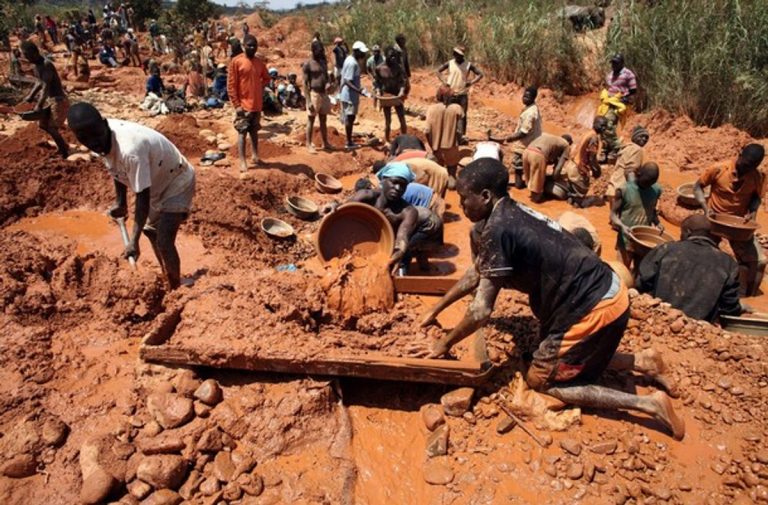
Considering wanton violence in artisanal and small-scale gold mining, it is important to curb raising criminality by restoring sanity in the sector. Of course, gold traceability must not be used as an excuse to criminalise artisanal mining, an important source of livelihood for over a million people in Zimbabwe. Precisely why the Mines and Minerals Amendment Bill must have a special permit for artisanal gold miners.

How multiple taxes hurt mining

The Budget Review noted “the mining sector has also been constrained by some levies and charges imposed by Government Departments and Local Authorities. These include fees levied Unit Tax paid to Local Authorities, mining fees & charges payable to the Ministry of Mines & Mining Development, and Environmental Fees payable to the Environmental Management Agency, among others.”

Therefore, it was proposed that the fees be streamlined. Parliament, citizens and the PWYP campaign must be on guard to ensure that the Constitutional right of local authorities to mobilise finance for development from the mining sector is not undermined.

According to Section 276 (2) (b) of the Constitution, local authorities have “power to levy rates and taxes and generally to raise sufficient revenue for them to carry out their objects and responsibilities”. This is one of the avenues for complying with the Constitutional principles on devolution, Section 274 and Section 13 (4) which compels the State to put mechanism for communities to benefit from resources in their localities.

Alignment of mineral definition

The Budget Review must be commended for aligning the Mines and Minerals Act and Income Tax Act on the definition of mining and quarry concerning dimensional stones like black granite. The Mines and Minerals Act deems 327 dimensional stones extracted from quarries as a mineral. Whilst the Income Tax Act did not deem such activities as mining but quarrying. The effect was that black granite mining producers were not enjoying the mining fiscal regime eg allowable deduction on Corporate Social Investments (CSIs) and recoupment of capital expenditure.

Indigenisation’s death certificate

Finally, platinum and diamonds were removed from complying with the indigenisation requirements. A death certificate, therefore, was issued to the indigenisation framework. It was proposed that a new empowerment framework will be crafted. Prior to this, all mineral sectors, apart from diamonds and platinum were excluded from complying with the indigenisation framework at the behest of the 2018 National Budget Statement.

It is understandable that government must make Zimbabwe a mining attractive investment jurisdiction because mining is a capital-intensive business. Certainly, foreign direct investment is crucial.

DROPPING INDIGENISATION TOTALLY “IS A CLEAR VIOLATION OF THE CONSTITUTION WHICH COMPELS THE STATE TO PUT IN PLACE MECHANISMS TO ENSURE COMMUNITIES BENEFIT FROM RESOURCES…”

Zimbabwe is ranked among the 10 least attractive investment jurisdictions in the world according to the Policy Perception Index (PPI) produced in 2018 by Fraser Institute. The Index factors in both policy and mineral potential. According to Fraser Institute “The survey is an attempt to assess how mineral endowments and public policy factors such as taxation and regulatory uncertainty affect exploration investment.”

The challenge with entirely scrapping the indigenisation requirements is that community share ownership trusts (CSOTs) no longer have any legal backing. In the platinum sector, for instance, districts such as Tongogara and Zvishavane received a massive infrastructure development boost through CSOTs.

This is a clear violation of Section 13 (4) of the Constitution which compels the State to put in place mechanisms to ensure communities benefit from resources in their localities. Also, this is a major dent on political will for devolution as communities are now dislocated from ownership and control of resources without any clear alternative.

Partial privatisation of ZMDC

To ensure State participation in the mining sector, government established the Zimbabwe Mining Development Corporation (ZMDC), a State-Owned Enterprise (SOE) through an Act of Parliament. Against the backdrop of poor performance by SOEs, the Transitional Stabilisation Programme (TSP) “recognized the need for more accountable, transparent and economically viable SOEs.” ZMDC is one of the SOEs earmarked for partial privatisation. Because of high corruption risks, the partial privatisation of ZMDC must be carried out in a manner which prejudices national interests.

Parliament must be involved in the whole tendering process to ensure that a bidder with a high development proposition is selected. If this route is taken, it resonates well with the aspirations of the Africa Mining Vison (AMV), a blueprint for guiding mineral rich African countries on how to unlock sustainable and broad-based socio-economic development hinged on mining. More so, Section 315 (2) (c) of the Constitution, requires an Act of Parliament to guide negotiation and performance of mining agreements.  It is important to note that already, Anjin and Alrosa were selected as ZMDC’s partners in the diamond sector in a manner which was not open.

Conclusion

Citizens are keen to see the totemic role of mining in terms of domestic resource mobilisation. That is, mining sector contribution to improved opportunities to fund health and education sectors. The slogan “Zimbabwe is open for business” is failing to resonate with citizens because government in not open about business, mining is a case in point.

Government must disclose mega deals, it must come up with a clear plan for implementing EITI and give constant publicly updates. Citizens, PWYP campaign and Parliament must crank up pressure to compel government to comply with the Constitution, Section 298 which among other requirements calls for transparency and accountability in the handling of public finances.

The cost of revenue forgone to incentivise the mining sector must be monitored and publicly accounted for to weed out overgenerous tax incentives. Government’s move to open Zimbabwe for business must not fuel the race to the bottom, the tax regime must be aligned to regional trends to ensure mining tax contributions are not undermined.

Certainly, investors are needed to unlock value in the mining sector, but government must not prejudice the constitutional right of communities to benefit from resources in their localities. As it stands, mining fiscal transparency reform agenda is quite fragile.

___

Mukasiri Sibanda is with ZELA, a public interest environmental law organisation that seeks to promote economic, social, cultural and environmental rights of communities in Zimbabwe. 

NewZwire

Caledonia Mining soldiers on with Blanket despite mounting Zimbabwe problems

0

CALEDONIA Mining continues to make money whilst placing the bravest of faces on operations in Zimbabwe where it operates its Blanket gold mine. It is helped by the devaluation in the southern African country’s currency, but the firm scores highly for grit in any case.


Earlier this week, it reported lower adjusted interim earnings year-on-year, but an improved cash position of $8m. This augurs well for the continuance of dividend payouts which is not common for a Zimbabwean gold producer.

Its June quarter and interim results published earlier this week give some insight into the difficulties faced by mining firms in Zimbabwe.

Briefly lit by hope following the toppling of dictator Robert Mugabe in November 2017, Zimbabwe has under President Emmerson Mnangagwa, slipped backwards with inflation back on the agenda amid a currency crisis and near round-the-clock blackouts.

Caledonia cut production guidance for the year to a maximum of 53,000 ounces compared to a previous 56,000 oz at the high end of its guided range owing to low grade at its Blanket mine, which it is expanding for $45m, but also owing to electricity shortages in July and early August.

Luckily, an improvement in the dollar gold price and lower than expected costs are expected to result in no surprise changes to share earnings guidance forecast to come in at 86 to 117 cents for the year. But the problems of operating in Zimbabwe are significant.

The flip side of the 10-fold devaluation in the Zimbabwean dollar since February – which with rand and sterling weakness reduces the dollar value of expenses incurred in them – is the impact of inflation.


Steve Curtis, CEO of Caledonia, said inflation had “made life difficult” for the firm’s staff, but he was convinced it was the function of fiscal ill-discipline of the previous regime, not the Mnangagwa administration where recent tax incentives, such as the deductibility of royalty payments, was welcomed by the company.


In order to combat the likelihood of continued disturbed electricity supply, however, Caledonia is considering building solar power. “Although the electricity situation has improved in recent days, we feel it prudent to continue to implement plans to protect Blanket from any recurrence of this problem,” said Curtis.


In the meantime, it had bought diesel generators as a back-up and recently signed a new electricity agreement in terms of which it will receive uninterrupted power at a lower cost than it previously paid.

Source: Mining MX


Zimbabwe poised for high lithium export dividends

0

Zimbabwe is primed to draw significant benefits from one of its lithium assets after an independent market report for the country’s brightest lithium project, Arcadia, certified the mineral as premium price category export.

Australia Stock Exchange listed Prospect Resources, developer of the Arcadia lithium project near Harare, said it received an independent market report by leading market analysis firm, Benchmark Mineral Intelligence.

President Mnangagwa commissioned the lithium project in November last year, which forms part of major economic projects that will drive Zimbabwe’s vision of middle income status by 2030 and US$12 billion mining industry by 2023.

The report forecast Prospect will supply 10 percent of low iron lithium, used and in high demand for production of glass and ceramics, over Arcadia’s 12 year life of mine. 

This comes as Zimbabwe is poised to reap huge dividends from exporting electric vehicle (EV) batteries lithium, whose demand is expected to soar as demand for battery powered cars continues to grow.

Lithium has gained global prominence over the past few years on the back of growing demand for the mineral, as the world continues to move towards an era where most vehicles will be powered by electric batteries. 

As such, demand will be driven by rapid expansion in the lithium-ion battery industry, as world demand for hybrid and electric vehicles, energy storage systems, and high-drain portable electronics continues to grow.

Prospect managing director Sam Hosack, said the company had received feedback from the market that its low iron lithium would receive premium prices. 

“This validation by Benchmark, a market leading research provider, confirms Arcadia as a unique asset and positions Prospect to take advantage of the rapid growth in the chemical market, whilst also being diversified with exposure to the stable but premium glass and ceramics market,” he said.

Not all petalite and spodumene can be used efficiently in the glass and ceramics industry owing to high levels of iron. As such, only specific grades are used.

Low iron is 0,08 to 0,1 percent iron for spodumene lithium and 0,04 to 0,06 percent for petalite lithium, the company said in a regulatory statement released recently.

The miner will receive 61 percent premium if it sells its lithium as (mineral) concentrates than if it sold the product as a chemical, that is lithium carbonate.

“When consumed as a mineral these industries pay a premium for the material over the lithium units contained. This is based upon the materials’ value in use, which stems from the presence of alumina and silica in the mineral, both of which are key glassmaking materials,” Prospect said.

There are currently only two major producers of the low-iron minerals (low iron lithium concentrates), who each maintain a monopolistic position. There are question marks over future supply from both producers.

Prospect said one of the miners was focusing on its supply being used for production of lithium hydroxide and the other had no known expansion plans. There are no listed lithium companies in major lithium producers in Australia, Canada or South America that can supply low iron lithium.

Despite having only a single producer, Zimbabwe is the world’s fifth largest lithium producer and Government has designated the mineral as one of the minerals expected to drive economic growth in short to medium term.

Other lithium projects in the country include Bikita Minerals (already in production), Jimbata’s Kamativi lithium project and the Zulu Lithium project near Gwanda, which are now at different stages of development.

Global demand for lithium metal is projected to rise 8,9 percent per year through 2019 to 49,350 metric tonnes. In lithium carbonate equivalent (LCE) terms, the value of the global lithium market is projected to reach $1,7 billion.

Source: Chronicle

Solar energy companies WAKE UP!!!

0

From the 17th to the 19th all roads headed towards Bulawayo to witness Zimbabwe’s biggest Mining, Engineering and Transport export (Mine Entra) where many companies exhibited to boost their brand visibility and product promotion. However, no company trading solar energy Exhibited or even advertised in Industry magazines available at the Apex event which is always graced by thousands of key industry buyers, miners alike looking for services and solutions every year.

Rudairo Dickson Mapuranga

With Zimbabwe currently experiencing gruelling power cuts, solar power has all it takes to relieve many industries of a potentially crippling. Mines like Venice Mine have an impressive solar farm and their production have not been affected by the current power shortage Zimbabwe is experiencing.

Nevertheless, not all companies and organisations recognise that it is cheaper to invest in solar energy than other forms of power because they do not have the technical know-how, therefore, it was of paramount importance that solar companies took this product this market that will likely not hesitate to invest in-order to get undisrupted operations.

With so many in solar energy business, the economy is looking for the potential of those firms to grow to remove over dependability on hydro and thermal power. It was therefore of paramount importance for companies in the solar energy business to advertise and or exhibit at the country’s biggest mining expo for greater visibility in Zimbabwe’s richest industry.

Many companies were reported to have withdrawn from exhibiting at siting shortage of funds, and some are still adjusting to the recently implemented Statutory Instrument 142 which outlawed local foreign currency transactions among other reasons, however, it is important to note that exhibiting at such an event which is one of the biggest in Southern Africa is so crucial and important for the growth of solar energy consumption in Zimbabwe boosting sales.

The futuristic philosopher Alvin Toffler once wrote, “The illiterate of the 21st century will not be those who cannot read and write, but those who cannot learn, unlearn and relearn.”

Exhibitions are organised as a way of promoting a company or firm to vibrantly step into another level of trading for them to boost sales and thrive.

An exhibition like advertising, therefore, becomes a crucial factor for every company. Advertising is of paramount importance given that the company endeavours to grow to grow or maintain it’s status quo, therefore, a budget must be always be reserved despite the company’s performances.

One advertising guru Jerry Della Femina once said “There is a great deal of advertising that is much better than the product. When that happens, all that the good advertising will do is put you out of business faster.”

Which means that advertising a product is very essential in this information society era we are living in now, people live and become successful through an unlimited consumption of information, hence products that disseminate more information means more consumption much attention.

It is of great concern that marketers are sleeping on the job that has the potential to rake in millions and create much-needed employment and keep the industry running.

Platinum records 2% reduction in ore mined in 4th quarter

0

PLATINUM producer Zimplats 4E metal production rose by 3% to 147 136 ounces in the quarter to June 30 from 143 446 ounces in the previous period due to metal recoveries.


Compared to the same period last year, the output was higher by 6% from 139 421 ounces.

“Metal production in the final product increased by 3% and 6% from the previous quarter and prior year’s comparable quarter, respectively, mainly due to metal recovered from draining the furnace for the major rebuild, which commenced on June 10, 2019,” Zimplats, in the quarterly update for the period under review, said.

In terms of platinum production, this increased by 2% to 67 978 ounces in the period under review from the previous quarter’s 66 495. It was also an increase of 4% from 62 629 ounces over the same time-frame last year.

In a quarter-to-quarter comparison, gold remained stagnant at 8 496. But this level of production was an improvement of 18% from 7 213 ounces recorded in the comparative 2018 period. Other metals that saw increases in production during the period under review compared to the previous quarter were palladium and ruthenium (4% and 3%), respectively.

Despite the increase in metal production, Zimplats recorded a 2% reduction in ore mined in the quarter under review to 1 673 tonnes from the previous quarter’s 1 708 tonnes.

This was due to a temporary work stoppage following a fatal accident experienced at Mupfuti Mine in April 2019.
However, ore mined increased by 7% from the prior year’s 1 564 tonnes, largely due to fleet productivity improvements undertaken within this year.

“Sadly, the group recorded a fatality and four other lost-time injuries during the quarter. The fatal accident, which claimed the life of Mr Richard Mapuranga, happened at Mupfuti Mine on April 5, 2019 and was reported in the previous quarter’s report. Work to re-energise the teams after this experience has commenced, and we are confident the situation will be turned around,” Zimplats said.

Despite the loss of life, Zimplats said that the group’s ultimate safety objective is the achievement of a “zero-harm” status. “This commitment continues to be the guiding principle and the bedrock on which the group’s activities and processes are built,” Zimplats said.

Zimplats added that the number of fatality free-shifts dropped from 10 million to 0.5 million.

Tonnes milled decreased by 2% to 1 570 tonnes in the period under review from the 1 604 tonnes recorded in the previous quarter. However, this was a 1% decrease from 1 578 tonnes in the comparative 2018 period.

Source: Newsday

CONFIRMED 400MW ZESA, Eskom deal almost through

0

South Africa power utility Eskom has confirmed that it is working with Zimbabwe Electricity Supply Authority (ZESA) regarding the supply of 400MW in order to assist Zimbabwe with stable electricity supply and most of the conditions regarding a new supply agreement have been met.

Rudairo Mapuranga/Melissa Ngoya

Speaking to Mining Zimbabwe, Eskom Deputy Spokesperson Dikatso Mothe admitted that her company is closely working with ZESA to assist Zimbabwe in counteracting the debilitating power shortages and presently the talks are in their late stages.

“We are pleased that most of the conditions regarding a new supply agreement are in place, as a result, Eskom and ZESA are at the late stages of concluding an agreement,” said Mothe

According to Mothe Zimbabwe will receive up to 400 MW from Eskom once approval is obtained and the payment guaranteed.

However, Zimbabwe will be guaranteed 50MW due to the fact that Eskom is encountering some challenges and a resounding 350 MW  contract is anticipated only if there is no load shedding in South Africa.

“We will revert to a 50MW firm contract and up to 350MW on a non-firm basis, meaning that when we have load shedding in our country, any non-firm exports are reduced to zero and firm exports are proportionally in accordance to the load shedding stage,” said Dikatso Mothe.

Zimbabwe has been experiencing load shedding of up to 16 hours a day soon after Eskom involved itself in power challenges. Officials in the country have been blaming Kariba water levels though, apparently, there could be many reasons behind power shortages in the country.  The chief reasons among them being the fact that South Africa is no longer giving electricity to Zimbabwe.

Zimbabwe reportedly had a debt of up to USD80 million to both Eskom and Mozambique’s Cahora Bassa, a fair amount has been paid to Eskom so far.


Chipangura takes mining further by helping the disabled to venture in the  mining sector

0

The ZMF Mash west chairperson Chiedza Chipangura has taken a step further in assisting disabled people  to venture into the mining industry suggesting that this is the time for them to enjoy the same  privileges being enjoyed by other Zimbabweans. Seeing that there is no reason for this group to be sidelined in the mining sector.

Mirirai Melissa Ngoya

Mining as an enterprise is not only meant to empower  able-bodied beings rather it inclusively empowers  every citizen in Zimbabwe regardless of their physical conditions. Gradually disabled people are beginning to venture into the industry in a bid to generate their own income deviating from entirely depending on donors and social welfare.

Chiedza Chipangura stands as an icon by encouraging and helping these individuals to take part in the mining industry just like every Zimbabwean citizen. Disabled people must be on the spotlight and they must be recognized not as idle  individuals who are solely dependent on other people, rather they must show up in the industry despite the fact that they are disabled.

Motivation from Chipangura has changed the lives of disabled people, speaking to Mining Zimbabwe Miss Sharai Makota said “I am very glad to know Chiedza Chipangura because she inspired me and helped me to come up with chrome mine claims in Darwandale even though I am not an able-bodied person.”

Joining the Norton miners association opened many opportunities for Miss Makota as she highlighted, “I then became close to Chiedza who helped me to raise funds to pay the pager then I started buying and selling chrome.”

“I assisted Miss. Makota to register a mining claim after realizing that disabled people are also human beings and they can also  do what  able-bodied individuals are doing and start benefiting from the mining sector. However, she is still looking for investors” Said Chiedza.

Chiedza Chipangura added on, “if we join hands and accommodate people with disabilities we will make life easy for them since they require a lot of things on their daily bases. Further on being in mining doesn’t mean that one must hold a pick and shovel, for this special group it is through opening doors for them and creating opportunities so that they become mine holders.”

The government should  start saving areas with mineral deposits in each mining province for PLWDs in a way to accommodate them and for them to profit from Zimbabwean resources.

Fuel prices go up

0

The Zimbabwe Energy Regulatory Authority (Zera) yesterday announced an increase in the price of fuel from $7,47 to $7,55 for a litre of petrol and from $7,19 to $7,22 for a litre of diesel.

This came two weeks after Zera increased the price of a litre of petrol to $7,47 up from $6,10 while the price for diesel jumped from $ 5,84 to $7,19.

In a statement posted on its Twitter handle yesterday, Zera said the maximum pump price of diesel and petrol had been set slightly above $7 per litre.

“Please be advised that prices for diesel and petrol effective on Tuesday 30 July 2019 are set at $7,22 and $7,55 respectively,” reads the statement.

Zera also said fuel stations were allowed to sell diesel and petrol at prices below the stipulated prices depending on their trading advantages.

Yesterday’s was the third increase in the price of diesel and petrol this month.

Zera acting chief executive officer Mr Eddington Mazambani said the adjustments were in line with changes on the international market.

“The increases are as a result of the movement in the foreign currency exchange rates and the Free On Board (FOB) price. These are global charges and are beyond our control,” he said_The Chronicle

RBZ liberalises fuel imports

0

Foreign currency-starved Zimbabwe has liberalised fuel imports by allowing authorised dealers to pay directly to foreign fuel suppliers upon exchange control approval in a move meant to ease pressure on the government and improve the supply of the precious liquid.

Fuel remains scarce on the local market, with long queues amid competing demands for foreign currency that have forced government to come up with a priority list, fuel being on pole position.

The liberalisation of the foreign exchange market by introduction of the inter-bank market in February and subsequent introduction of a local dollar and cessation of the multi-currency regime saw the interbank rates competitively chasing the parallel market.

“Authorised dealers are advised that, to facilitate increased accessibility of fuel in the country and to reduce pressure on the interbank foreign exchange market, direct fuel imports are still permissible,” said the Reserve Bank of Zimbabwe (RBZ) in Exchange
Control Circular Number 8 of 2019 to Authorised Dealers and Bureaux de Exchange published yesterday.

“Oil marketing companies licenced by the Zimbabwe Energy Regulatory Authority (Zera) shall be required to open and operate a nostro FCA (transitory) which requires prior Exchange Control approval, wherein exporting corporates, embassies, NGOs, international organisations and individuals with access to foreign currency shall transfer funds
into.”

The central bank also gave the green light for large scale chrome producers and smelters to pay for chrome deliveries from small scale producers through FCA nostro transfers.

However, no cash payouts are allowed under the scheme with all payments going through banks.

“In this regard, large scale chrome producers who wish to pay for chrome deliveries from small scale producers in foreign currency shall submit applications for operation of a nostro FCA (transitory) to exchange control, exports department for consideration,” RBZ said.

Chrome mining is largely seen as a key driver to Zimbabwe’s mining sector growth targets, key to achieving a middle class economy by 2030.

The central bank said foreign currency received by individuals and international organisations, NGOs and embassies is regarded as free funds for exchange control purposes.

Free funds may be used for settlement of foreign transactions for the procurement of goods and or services. The free funds may also be used for through nostro FCA transfers for the settlement of local contracts.

While employees of NGOs and embassies and international organisations can be paid in foreign currency, their salaries must be converted by a bureaux de change to transact locally. Expatriates or diplomats working for international organisations and embassies are allowed to remit their earnings to their home countries for the upkeep of their families through normal banking channels.

International organisations and NGOs were encouraged to convert their foreign currency earmarked for humanitarian programmes to local currency through banks.

“In cases where the cash transfers are paid in foreign currency to final beneficiary, the final beneficiary is required to convert the foreign currency cash to local currency, at a bank or bureau de change, for the day-to-day domestic transactions.

Diplomatic missions are allowed to continue charging for their services such as visa processing in foreign currency and such fees are freely remittable to their home countries in terms of the Vienna Convention, the central bank said.

Individuals can buy foreign currency from bureau de change for tuition, medical and subscription fees only after relevant documentation is submitted. The funds are not paid in cash, but direct to the beneficiary.

The bureau de change can sell and buy foreign currency of up to US$500 without asking for identities or documentation, the central bank decreed.

The RBZ, in the same notice, extended the deadline for bureau de change of equivalent of US$15 000 to December 3, 2019.

Insurance premiums in foreign currency were discontinued while for insurance premiums already paid in foreign currency, the component of the foreign currency reimbursement or payment should be given to the policyholder for the purposes of retaining the foreign currency or liquidating to local currency for purposes of paying service providers.

Blocked funds registration was limited to non-exporting companies, institutions and individuals.

Source: Business Times

Integrated energy resource plan crafted

0

Government is crafting an integrated Energy Resource Plan that would see power projects being implemented through a competitive procurement process as part of efforts to attract cost-effective projects.

It’s meant to serve as a guide for energy investment, taking into account all viable power supply options and guide the selection of the appropriate technology to meet national demand.

The development is opposed to the current situation where potential investors solicit for bids and hold on to the licences for speculative purposes.

This comes at a time when Zimbabwe is grappling with challenges of power shortages due to low local production in the country, a situation which has resulted in punitive rolling power cuts on a daily basis. Zimbabwe is also struggling to import power because acute shortage of foreign currency. Currently South Africa’s power utility Eskom is supplying 50 megawatts (MW) of electricity to Zimbabwe on noN-firm basis, meaning it can only supply Zimbabwe is it has supply.

“From a planning and policy perspective, the ministry (of Energy and Power Development) is in the process of developing the national integrated Energy Resource Plan that will  allow a systematic development of the power sector where projects will be implemented through a competitive procurement process and not through unsolicited bids,” Magna Mudyiwa, deputy minister in the Ministry of Energy and Power Development said at the Zimbabwe National Chamber of Commerce breakfast meeting on power crisis held in the capital Monday.

She added: “The Ministry seeks to increase the share of renewable energy sources in the mix. My ministry is set to launch the Renewable Energy Policy once internal approvals are completed, which will promote uptake of renewable energy projects and allow for a competitive selection procurement process for the development of future projects. This is opposed to the current situation where potential investors solicit for bids and hold on to the licences.”

Over 60 different projects have been licenced by ZERA to generate electricity with a total capacity of over 5 000 megawatts.

But, Mudyiwa highlighted: “Those who are not demonstrating capacity to execute their projects will have their licences revoked to avoid rent seeking tendencies”.

Government is currently working on Hwange 7 & 8 expansion which is expected to add 600MW into the national grid. The first unit is set to be commissioned by 2021 and the second unit in 2022.

The country also has a potential to produce about 2 100 megawatts of solar electricity by 2030. Business Times