Home Blog Page 663

Battlefields Mine accident declared a national disaster

0

The Battlefields Mine accident has been declared a national disaster.

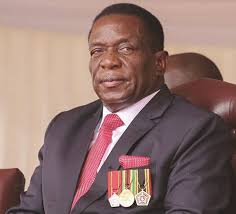
President Emmason Mnangagwa declared the accident a state of disaster. The accident occurred at the Silver Moon and Cricket Mines in battlefields near Kadoma.

The Director of the Civil Protection Department, Nathan Nkomo told ZBC News that the relatives of each victim will receive $1000 which will go towards meeting burial costs plus one blanket to each victim among other forms of assistance.

So far close to 50 people have been declared dead with some eyewitnesses believing the number could certainly be higher.


Solutions to prevent mining accidents and dangers of illegal mining

0

DUE of the unique dangers in mining operations, workers need extensive safety training. Mandatory and optional training is widely available to mining professionals,rapidly raising the safety standards of this industry.

Compulsory Training Programs for Miners

Most mining countries mandate that each mine have an approved worker training program in health and safety issues. Each plan must include a certain quantity of hours of basic safety training for new miners with no experience. In addition to new miner training, each miner must receive regular refresher safety training every year, and miners assigned to new jobs must receive safety training related to their new task.

Prevention Through Simulation

Increasingly, mines use more high-tech tools for miner training, such as machinery simulators and virtual reality simulators. By simulating actual mine conditions and emergencies, mine workers are better prepared, and companies can instantly assess a mine worker’s progress and skills.

Blasting License

People in charge of blasting operation attend specific training and are required to be licensed for the use of explosives and initiation systems. Most mining countries set up a specific refresher safety training for experienced blasters to integrate fast-paced changing legislation and the new technological trends.​​

  • Administration Classes on Health, Safety, and Mining Methods
  • Mining Machinery Manufacturers offer courses in machine operation and maintenance with emphasis on safe practices due to potential liabilities in case of an accident

Safety Legislation

Common efforts of governments, mine operators, labor, professional organizations, and academia are likely to be the rule in most mining countries to promote up-to-date, efficient safety legislation and harmonization of practices.

Nevertheless, international mining groups have developed exploitation and production health and safety standards that are implemented in their mines regardless of the countries where they are operating. As they are corporate standards adopted by listed groups, those standards and prescriptions are likely to be much more protective than many local regulations.

Technology Standard

The introduction of new technologies has been continuously contributing to reducing the injury and fatality rates in the mining industry. The larger occurrence of mining accidents in developing countries and in illegal mining operations is directly related to a lack of up-to-date technology, especially regarding:

Personal Protective Equipment: Standards personal protective equipment, including adequate radio communication devices or safety lamps that won’t potentially trigger explosives atmospheres.
Exploitation Infrastructure: Exploitation infrastructure for fire alarm, gas management, miners rescue, ventilation, etc.
Explosive Products: Now there is available a wide range of water-based emulsion explosives and precise programmable detonators to initiate it. These make a major difference in safety versus unstable TNT-based explosives or erratic traditional detonators (fuse caps). Between 1978 and 2000, 106 miners were killed and 1,050 were injured by explosives and breaking agents. Electronic detonators are a good example of technological progress towards a safer mining environment. The real safety advantage to the system is that the miner in charge can have total system verifications before he goes into a charge-and-fire sequence, which means that almost all potential problems will be known up front before firing. So corrective measures can be taken, and save lives. This level of safety and operational transparency was previously impossible.
Machinery to Replace Operators For the Most Dangerous Operations: Some mines have now set up fully robotized drilling and explosives charging processes.
ILLEGAL MINING
Illegal mining has been ravaging our planet for decades. Not only is illegal mining riskier from a safety perspective for those who choose to participate, but it encourages reckless behavior and leads to outcomes that have negative long-term consequences.

Illicit mining activities don’t follow the same provisions that legal mining does. While some may argue that all mining has dangerous consequences, the implications of illegal mining are much worse.

Negative Effects Of Illegal Mining On The Environment And Human Health

Most mining activities are extremely high-risk for not only the environment, but also those who do the actual physical labor.

The environmental risks of mining include:

  • the formation of sinkholes
  • the contamination of soil and groundwater
  • loss of biodiversity
  • chemical leakages

In addition to environmental risks, mining activities in general are also very dangerous to operate. Not only do miners have to sometimes travel to or live in remote regions, they often also work in extenuating conditions.

They face health risks due to breathing toxic chemicals or absorbing them into the skin. Miners also have to operate heavy machinery or may be exposed to flooding, gas explosions, or cave ins.

While all of these risks exist for legal mining operations, they only increase in likelihood for illegal projects. Not only is the environmental degradation much worse, but the human risks are also far greater.

Destructive cases of illegal mining across the world

In South America, the $2.4 billion illegal gold mining industry has been destroying the Amazon and costing dozens of lives.

In Peru, Bolivia, and Colombia, illegal gold mining operations by private companies have devastated local communities.

The operations have left behind pools of cyanide and mercury, twice the size of Olympic swimming pools. In just three months, the illegal mining activities damaged the ecosystem by killing the entire fish population of the Aguita River after water-pumping machines leaked toxins into the water.

According to Colombia’s National Planning Department, Colombia now ranks second in the world for mercury pollution.

Local populations have reported health issues related to mercury poisoning such as tremors and memory loss. According to some sources, illegal mining companies often extorted the local populations by forcing them to search for gold by sending in armed groups to intimidate them. Other times, they tried to barter deals by promising to repair crippling infrastructure in the region, but instead, pillaged the region and left without keeping their word.

South America isn’t the only region that has suffered from illegal mining.

In Africa, the conflict diamond industry cost thousands of lives in the 1990’s and 2000’s. During that time, the illegal industry produced billions of dollars which were used to fund civil wars that decimated countries including Sierra Leone, Angola, Liberia, Ivory Coast and the Democratic Republic of Congo (DRC).

Government up effort to rescue drowned miners

0

THE Zimbabwe government yesterday said it was mobilising resources to help retrieve the bodies of at least 23 miners who reportedly drowned at Battlefields on Tuesday night when Silver Moon and Cricket mines in Muzvezve were flooded.

Several mining experts visited the scene of the incident as the Civil Protection Unit (CPU) started the process of pumping out water from the two mines with the help of mining companies.

Mashonaland West provincial administrator Cecilia Chitiyo, who chairs the provincial CPU, appealed to miners with big pumps to help assist in the rescue efforts.

Retrieval of the bodies is expected to start from today or tomorrow when significant water is expected to have been pumped out.

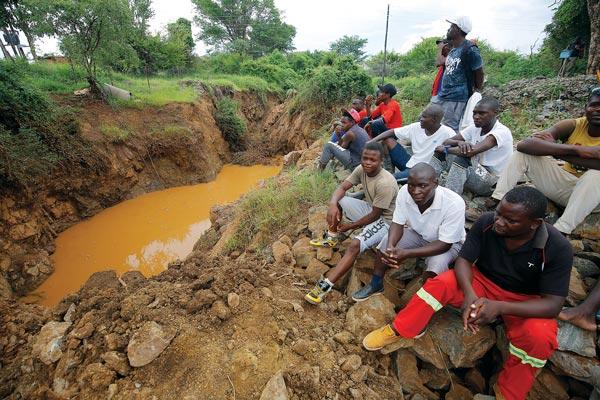
According to reports, the miners died when interlinked shafts and tunnels at Cricket Mine and one owned by a Mr Baxter, were flooded after a dam wall collapsed due to heavy rains received in the area. Newsday

More casualities expected in Battlefields accident

0

The Mining community in Zimbabwe is in mourning with the sad news of the illegal miners accident in the Battlefields area. The Authorities have reported that the number of casualties could be about 50 as none are expected to have survived flooding in the shafts.

The miners were trapped on Tuesday night when the shafts they were working in were flooded after a nearby dam burst.

Some of the shafts were 100 metres deep and rescue teams from nearby mines like Zimplats and the Civil Protection Unit were pumping water from shafts and tunnels before recovering the estimated 50 bodies.

SA labor group stages nationwide protest

0

South Africa’s biggest labor group staged a nationwide protest against job losses Wednesday, the latest setback for an economy reeling from four days of rolling power cuts. The rand fell the most against the dollar among major currencies.

The double blow comes at a terrible time for President Cyril Ramaphosa, who is gearing up to contest elections in May, is seeking to lure $100 billion in new investment and is trying to retain the nation’s sole investment-grade credit rating. The stayaway was called by the 1.6-million-member Congress of South African Trade Unions, which backs the ruling African National Congress.

The fiasco at Eskom is highly damaging for the ANC ahead of the election

Workers at embattled power utility Eskom Holdings SOC Ltd., which produces more than 90 percent of the nation’s power and has been unable to meet demand after several of its generating units tripped, were expected to be among those on strike, along with civil servants, miners and construction workers.

The rand weakened more than 1 percent against the dollar on Wednesday in Johannesburg, the most among major and emerging-market currencies tracked by Bloomberg. That added to a 1.4 percent decline on Monday, when Moody’s Investors Service said the plan to fix Eskom falls short.

Eskom ‘fiasco’

“The fiasco at Eskom is highly damaging for the ANC ahead of the election,” Ben Payton, head of Africa for Verisk Maplecroft, said in a note. “The power supply is almost certain to remain unreliable for the next several years at least. There is every chance that the situation will get worse before it gets better.”

The unions, which complain that the government isn’t doing enough to tackle a 27 percent unemployment rate, are planning a second protest in Cape Town on Feb. 19, a day before Finance Minister Tito Mboweni presents the national budget.Every 5 percent of electricity production taken off the grid can reduce gross domestic product growth by as much as 0.5 percentage points, he said.

Ramaphosa, who succeeded Zuma a year ago, announced proposals last week to rescue the utility. They include splitting it into three businesses under a state holding company and giving it financial assistance, with details to be announced in the budget. The decision to break up the utility angered Cosatu as it fears it will lead to job losses and privatization.

The ANC has won every election since the end of apartheid in 1994, but losing the support of the unions could put its campaign to keep its majority at risk. The party’s support fell to a record low of 54 percent in a municipal vote in 2016.

Crisis point

The government will announce more measures to address challenges at the company on Thursday, Ramaphosa said in an interview with broadcaster eNCA. He led a cabinet meeting on Wednesday and is due to give a speech in parliament at 2 p.m. local time. Those proposals would be separate to the detail on financial support expected next week, he said.

While South Africa has suffered electricity shortages for more than a decade, the utility is at a crisis point and is seen as the biggest threat to the economy.

Eskom expects to report a loss of about 20 billion rand ($1.45 billion) for the year through March, has racked up 420 billion rand of debt and isn’t generating enough cash to service that debt and cover its operating expenses. The Department of Public Enterprises warned in a report to lawmakers that the utility is “technically insolvent and will cease to exist at current trajectory by April 2019.”

The blackouts this week, which the utility implemented to prevent the collapse of the national grid and have shuttered businesses and caused traffic snarl-ups, are the consequence of construction problems at two new plants and years of deferred maintenance.

An Eskom request that the government take over 100 billion rand of its debt would put the nation at risk of further credit-rating downgrades if a proper turnaround plan isn’t put in place, according to Goolam Ballim, chief economist at Standard Bank Group Ltd.

Every 5 percent of electricity production taken off the grid can reduce gross domestic product growth by as much as 0.5 percentage points, he said.

Cosatu was still assessing the response to the strike call, but initial estimates are that it was heeded by at least 80,000 workers, with the mining and manufacturing industries the hardest hit, spokesman Sizwe Pamla said by phone. The Minerals Council of South Africa, which represents the nation’s biggest mining companies, said it was still waiting for feedback from its members.

Highlights of Public Enterprises Department’s Eskom report

The poor quality of maintenance at power plants is largely due to bad workmanship, with 40 percent of plant breakdowns attributable to human error. The plants are on average about 37 years old and essential mid-life refurbishments weren’t implemented. The utility faces ongoing coal shortages due to poor management and lack of investment in mines. The cost of Eskom’s new Medupi and Kusile coal-fired plants has ballooned to more than 300 billion rand, up from an original projection of 109.6 billion rand, and they have proved unreliable since being commissioned. The utility’s recovery plans include rebuilding coal stockpiles to appropriate levels, fixing Medupi and Kusile, and making a number of key appointments to critical positions.

Bloomberg News

Barrick gold reports $1.2 billion quarterly loss

0

Canada’s Barrick Gold TSX:ABX)(NYSE:GOLD), which completed its $5.4 billion merger with Africa-focused Randgold Resources at the start of the year, reported Wednesday a loss for its fourth quarter, due partly to issues at two mines in South America.

The world’s top gold producer by volume, which keeps its books in U.S. dollars, lost $1.2 billion, or $1.02 per share, for the quarter ended Dec. 31 compared with a loss of $314 million, or 27 cents per share, in the same period of 2017.

The loss included $900 million in net impairment charges related to the Lagunas Notre mine in Peru, where Barrick saw lower throughput, and the Veladero mine in Argentina, where it dealt with higher government taxes.

The company pinned the cost increases partly on mining ending at its low-cost Cortez Hills open pit in Nevada in the first half of the year.

Revenue for the quarter totalled $1.9 billion, down from $2.2 billion.

Barrick predicted cost to increase at least 7.9% this year in the  $870 to $920 an ounce margin, up from $806 an ounce in 2018 for Barrick as a stand-alone company.

The guidance “primarily reflects the planned completion of mining at the comparatively high-grade, low-cost Cortez Hills open pit in the first half of the year,” the miner said, referring to one of its operations in Nevada.

The company is in the midst of implementing a regional management structure its chief executive Mark Bristow introduced at Randgold for better oversight of local operations. As a result, Barrick is cutting about 100 jobs at the headquarters in Toronto and has already overhauled the senior management team.

“In the short time that we’ve been together, the combined team has already made great progress in applying Randgold’s proven strategy to a new global group,” Bristow said in the statement.

Waiting game on assets sale

The company has previously announced it intends to offload some assets to improve its portfolio, but when asked, Bristow declined to say whether those transactions will take place this year.

Analysts believe that as the merger between Newmont Mining and Goldcorp proceeds, it might make more sense for Barrick to put mines and projects on the market one at a time to keep prices high.

The merged miner also expects to produce less gold in 2019 than Barrick and Randgold’s combined total last year.

For the year ahead, it forecasts an output of between 5.1 and 5.6 million ounces of gold and between 375 and 430 million pounds of copper.

Bloomberg News.

Gold delivery to FPR falls

0

Zimbabwe’s gold output has fallen in volume terms.

Gold is the single largest export earner in the southern African country, whose economy is flat lining
as a result of lack of investment, electricity shortages and high cost of capital.

The recently released figures by Fidelity Printers and Refiners  (FPR) the sole buyer of all gold produced in
Zimbabwe — starkly illustrate the decline of local gold production.

January deliveries came in at 1,7 tones which is at par with the average gold deliveries in the last
three-month period of the year, as compared to an average of 2,8 tonnes a month recorded
throughout 2018, which is 65 percent ahead of January outturn.

Financial research firm Equity Axis said the decline in deliveries interestingly coincided with
government’s edict to banks to open separate accounts for local and foreign currencies.
In that very same month of October, production came off by almost half at 43 percent and has kept
falling in two more successive months.

“Miners largely small scale, could possibly have immediately diverted their produce to outside markets
notably in South Africa and Mozambique,” the research firm said”

DailyNews

Artisanal miners feared dead near Kadoma

0

The ZBC reports 38 artisanal miners are feared dead following flooding of shafts at two mines in Battlefields near Kadoma.

34 of the miners went underground at Silver Moon Mine and another four at Cricket Mine in Muzvezve constituency last night before the mines were flooded.

Police Spokesman for Mashonaland West Province, Inspector Clemence Mabweazara said civil protection teams are being activated with heavy duty pumps required to drain the water from the mines.

He also said water levels in the two mines shafts are still rising, raising fears the 38 miners could have drowned.

According to Mashonaland West Provincial Administrator, Cecilia Chitiyo, RioZim has provided one pump while a request has also been made with Zimplats to provide rescue services.

Ms Chitiyo said many pumps and generators are needed before operations to search for survivors and bodies may begin.

ZBC

Sibanye considering restructure gold making shaft

0

South Africa’s Sibanye-Stillwater said on Tuesday it was considering measures, including restructuring if alternative solutions could not be found to bring loss-making gold shafts back to profitability. Gold producers in Africa’s most industrialised economy, which have some of the world’s deepest mines, have seen profits squeezed by rising costs, labour unrest and declining grades.

Sibanye said it was in regular talks with key stakeholders, including the unions, through forums where it highlighted the challenges facing its bullion operations to solicit cooperation to address these challenges.Sibanye has signalled to unions that it may cut up to 5,000 jobs at its struggling Driefontein operation

“We continue to engage through these forums. If we are unable to find viable solutions, restructuring may be required in order to secure the future of other, profitable operations,” Sibanye spokesperson James Wellsted said.

Wellsted declined to comment on which shafts faced possible restructuring across its operations but added that no final decision had been made.

“That’s one of the possibilities in the future that there may be a restructure if we don’t find a solution. There’s loss making shafts across our gold operations,” said Wellsted.

Sibanye has signalled to unions that it may cut up to 5,000 jobs at its struggling Driefontein operation, according to digital publication Miningmx, which cited three unnamed sources with knowledge of the matter on Monday.

Sibanye flagged last month that its 2018 bullion production would miss guidance and come in at 1.1 million ounces, despite plans being implemented to curb losses after workers downed tools in mid-November.

Sibanye, which has operations in South Africa and the United States also said it expected local platinum operations to be higher than its annual forecast and production at its U.S unit to be in line with previous guidance.

Reuters

Eskom carries the most severe power cuts in years

0

South Africa’s Eskom implemented the most severe power cuts in years on Monday after seven generating units unexpectedly went offline, underscoring the challenge President Cyril Ramaphosa faces to fix the struggling state-owned utility.

Ramaphosa is trying to reform cash-strapped Eskom, which supplies more than 90 percent of the power in Africa’s most industrialised economy but is drowning in 419 billion rand ($30 billion) of debt, to lift the economy before an election in May.

 The last time Eskom had slashed so much power was in the 2014/15 financial year.

But he has been hampered by fiscal constraints, as well as a sharp deterioration in Eskom’s power plant performance after years of mismanagement during which critical maintenance work was delayed.

The rand fell to its weakest in almost three weeks, and Eskom’s dollar-denominated 2028 bond suffered its steepest daily fall in more than two months, as investors fretted about the economic impact of the power cuts.

Eskom spokesman Khulu Phasiwe said the company would cut 4,000 megawatts from the national grid from 1100 GMT on Monday, likely until 2000 GMT, and that the last time Eskom had slashed so much power was in the 2014/15 financial year.

Public Enterprises Minister Pravin Gordhan met Eskom executives and the firm’s board of directors to discuss a way out of the crisis. They decided to conduct a full audit of the country’s power system to identify weak points and avoid further crises, the board said in a statement.

Four of the seven units that unexpectedly went offline were back in service by Monday evening, while the remaining three would be back by Tuesday morning, the statement added.

Ramaphosa, who announced a plan last week to split Eskom into three separate entities in an effort to make it more efficient, said on Twitter the power cuts had come as a shock and were “most worrying”.

Ramaphosa’s plan to split Eskom faces opposition from powerful labour unions and within his ruling African National Congress party, while some analysts have said a bolder approach was needed.

Ratings agency Moody’s said on Monday an “unbundling” of Eskom into different units for generation, transmission and distribution would pave the way for greater transparency but do little to solve the firm’s financial difficulties.

“While this is a bold step, it probably won’t be enough. Splitting it in three doesn’t fix the issue that Eskom is in a very dire financial situation,” said Trieu Pham, an emerging market debt strategist at Dutch bank ING.

Eskom was also forced to cut power for a sustained period in late November and early December, also due to a shortage of generating capacity because of unplanned outages.

Reuters