


Young Miners Foundation (YMF) is informing you that the seminar to be held at Zimbabwe School of
Mines in Bulawayo has been postponed to Friday the 27th of September due to logistical circumstances
beyond our control. Any inconvenience caused is sincerely regretted.
YMF Seminar Postponed

An open market for gemstone trading
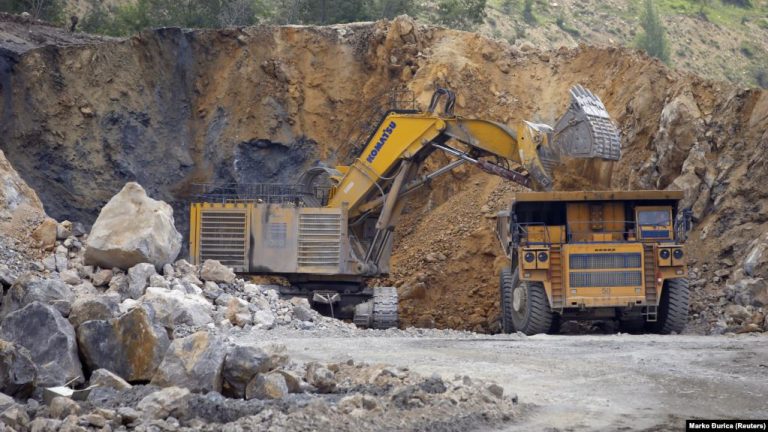
The government of Zimbabwe should work on the liberalisation of gemstone trading by creating an open market for stone buyers. The Chairperson of the Norton Miners Association who is also the sole registered gemstone buyer in Zimbabwe Privilege Moyo has said that this initiative will propel the government to gather enough information on which gemstones are mined in Zimbabwe and the tax issues involved.
Rudairo Mapuranga
Speaking to Mining Zimbabwe, Moyo said that if the gemstone business is liberalised, being fully owned by Zimbabweans through a registered open market, the country will witness substantial growth in the sector. Moyo has urged the government to relax some of its security measures until they acquire full knowledge of what is happening in the gemstone mining business.
“There should be an open market for gemstone buyers and sellers, the moment an open market place is established, the government will make it their fact-finding place, for now, they should relax all the securities on gemstones until they have enough information,” said Moyo.
According to Moyo, the government has placed too many securities on gemstone mining before the actual mining operations take place. The government should have a full account of what transpired in gemstone mining and thereafter draft procedures to be taken. Creating laws for products that are not in existence is merely surrealism.
“The government is controlling things that are not yet produced, they should first work towards the production of the stones then create a policy that is well informed, the securities made by the government are too much to the extent that they are not benefiting the nation,” Moyo said.
Moyo also said that there is no accountability for gemstones in Zimbabwe since all individuals who are buying gemstones are illegal buyers because there is no clear policy that allows individuals to trade in gemstones. Moyo said that it took him almost 2 years to acquire gemstone buying license from the Ministry of Mines.
“ There is no proper accountability for gemstones, as it stands, everyone who is buying gemstones in Zimbabwe are illegal buyers. The process to acquire that license was very burdensome for me” said Moyo
According to Moyo, the government should create only one centre of gemstone trading that is legal for all buyers and sellers without necessarily going to the mines to buy the stones, this will empower the local people to have knowledge of the stones.
“It is advisable for the buyers to buy at one central point, buying from mines would mean business for the locals’ agents or middlemen…the whole idea is to empower more local Zimbabweans to be involved in the mineral chain so that they realise the value,” said Moyo.
Gemstone mining issues have been in the mining discourse for almost 3 months with the locals selling the stones to buyers at a low cost, nevertheless, authorities are not sure on what to do to curb these unprincipled acts in the mining sector.
MaShurugwi are simply criminals – Mangisi

The spokesperson of Zimbabwe Miners Federation Dosman Mangisi has differentiated small scale miners from the machete wielding miners popularly known as “Mashurugwi” whom he labeled as robbers who masquerade as miners.
Rudairo Mapuranga
According to Mangisi, labelling all small scale miners as Mashurugwi is an ill placed statement that does not only tarnish the image of other hard working small scale and artisanal miners but it also abuses the name of miners.
“These are not machete miners, that’s a wrong term. They are simply robbers who use machetes and they target small scale miners” said Mangisi.
Mangisi further highlighted that it is high time that the people and the media in general should come to a point where they’re able to distinguish the difference between miners and robbers .According to Mangisi, those individuals who use violence to get hold of mines are not miners but they are criminals. Hence, the difference between small scale miners and the notorious Mashurugwi should be well recognized as the former are nothing but a gang of notorious trouble makers , whereas the later are hustlers in the mining industry .
“Makorokoza hunt gold, those who use machetes are robbers hence we need to separate the two”
“Violence and mining does not tally, they are criminals who are hibernating in small scale mines and they simply need to eliminated. Makorokoza are mining hustlers and those who use violence are not makorokoza but criminals” he said.
Machetes wielding miners originated from Shurugwi earning themselves the popular name Mashurugwi, these were miners who initially engaged in fights for very small arguments in the mines, (claims, women or high school rivalries) they would use shovels and picks to fight or kill each other. They further began to use axes and machetes to kill each other. The dominant cartel began to collect tribute and taxes from other miners up until they resorted to robbing citizens who are not actually miners. Until the cartel in the gold mining industry is destroyed, the machete wielding miners will still be notorious in Zimbabwe.
ASM dominate gold deliveries to Fidelity

Artisanal and Small scale miners (ASM) continue to dominate the gold delivery process to the country’s sole gold buyer and exporter, Fidelity Printers and Refineries (FPR) despite a record decline in gold delivered to the gold buying utility.
Rudairo Dickson Mapuranga
According to the 2019 first half Monetary statement released on Friday by the governor of the Reserve Bank of Zimbabwe Dr John Mangudya,, small scale miners have delivered more than 60 percent of the total gold delivered to the country’s sole gold buyer.
The statement acknowledged the fact that small scale gold producers are facing a lot of challenges, nevertheless, they have left an indelible mark in the mining sector despite the fact.
“It is however pleasing to note that small scale producers despite facing a plethora of challenges, continued to dominate the gold deliveries, accounting for more than 60 percent of total deliveries” reads the statement in part.
According to the statement, small scale miners dominated gold deliveries to Fidelity from January to May, however, in June gold delivery by the small scale sector was lower than that of large producers, producing only 687.4 against 814.5 produced by the country’s primary producers.
The government of Zimbabwe has set a target of 40 tonnes gold delivery to Fidelity however, the target seems surrealistic with the country only recording 12.3 tonnes in the first half of the year compared to 17.3 in the same period last year.
According to the statement, there was a 40 percent decline in the mid-year’s deliveries compared to the same period last year which was caused by an exchange rate, pricing and payment issues.
“Gold deliveries to Fidelity Printers and Refineries stood at 12.3 tonnes for the period January to June 2019. This was a 40.6 percent decline compared to 17.3 tonnes delivered during the comparable period in 2018. Exchange rate, pricing and payment issues which partly accounted for the decline in deliveries have however been largely resolved through the recent monetary policy measures” reads the report.
The recorded gold delivery to Fidelity last year was 33.2 tonnes in total since 1999 thus, targeting 40 tonnes this year seems to be a huge task.
The decline in gold deliveries during the first half of the year was caused by many reasons, among them: unstable power supply, abrupt changes in policies and fuel crisis which is strongly hitting the country right now.
Zimbabwe loses 100pc mining land to foreign investors
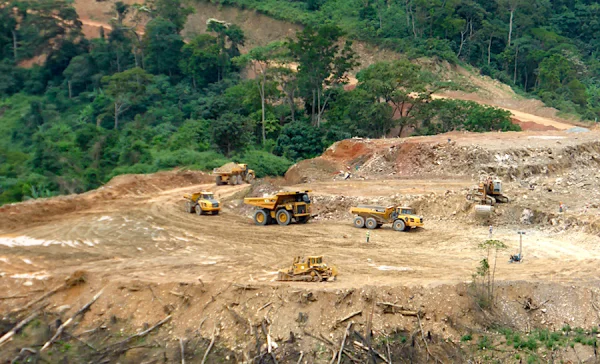
Zimbabweans are losing mining concessions and claims that they struggled to acquire through the reversal of the indigenous laws that protected Zimbabwean citizens from losing their land to foreign investors who can now own up to 100 percent of the mining land, former Minister of Youth and Indigenisation Saviour Kasukuwere has said.
Rudairo Mapuranga
Speaking at the memorial service of the former president of Zimbabwe which was hosted by South Africa’s Economic Freedom Front (EFF), Kasukuwere blasted the current government for reversing the indigenisation and economic act which was targeted at empowering Africans in having control over their land.
Chairperson of Norton Miners Association Privilege Moyo has supported Kasukuwere saying that Zimbabwe needs to look into its policies , and prioritise the local ownership by making sure that foreign investors are not treated the same as local investors.
According to Moyo, a foreign firm or investor can come to Zimbabwe and buy 1250 hectares of mining land for less than USD 4000, which is the same yardstick that is used when selling land to locals.
“…there has to be a difference in the way in which mining concessions are granted, let the fees be lower than that of foreigners and much higher to foreign investors”
“They are coming over to take our land for less than USD4000. A billionaire can pay for that and its nothing to them but he will get millions of profits from the land’’ said Moyo.
Moyo also said that the government was not supposed to remove the economic and indigenous act completely which in a way has been safeguarding the economic freedom of Zimbabweans in their land. According to Moyo, if 51 percent local ownership was not favourable, they should have reduced it to at least 25 percent to make sure that locals will still benefit.
“we are losing the benefits of the war, foreigners are owning 100 percent in our mines” he said.
Through the Economic and Indigenous act, Zimbabweans were entitled to 51 percent of every mining concession granted in Zimbabwe which meant that no foreign firm was allowed to own more than 49 percent of the land .However, the act was blasted for not being friendly in attracting Foreign Direct Investment which prompted the current president Emmerson Dambudzo Mnangagwa to scrap it off completely in order to attract foreign investment through his slogan, “Zimbabwe is open for business.”
GZU invaded by illegal gold miners
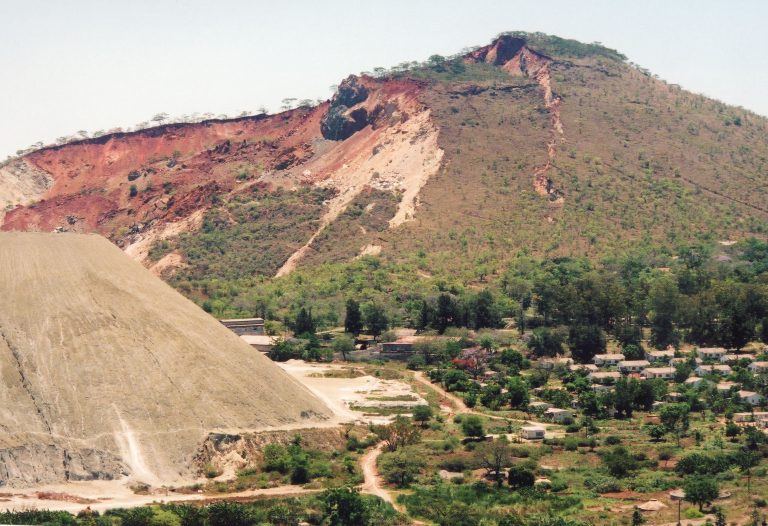
Great Zimbabwe University’s Mashava campus has been invaded by illegal miners who are alleged to be patrolling at night with machetes , also alleged to be panning gold at the campus’ residential areas.
Rudairo Mapuranga
According to a statement released by the University Student representative (Minister of Information) Forward Chaibva, the campus has been invaded by the notoriously dangerous mashurugwi, armed to mine the expensive commodity during the night .
“We are facing a problem, an area near Q and P complex has been invaded by gold panners (makorokoza) who are extremely dangerous” reads the statement in part.
The Student’s Information Minister urged the students to avoid working during the night because this rowdy gang is operating and loitering in the dark seriously armed.
“These people are extremely dangerous and they are massively working by night, therefore their movement within our residential complexes is rampant” reads Chaibva’s statement.
Chaibva has warned the students that although the University’s security is safeguarding the place, they should be cautious, they should avoiding moving at night, locking all doors and they should not open their doors to strangers.
” Our security is safeguarding the place but you also have to be cautious hence make sure (1)avoid moving at night alone (2)avoid leaving clothes outside
(3)lock all main doors and keep all valuables safe (4)do not open doors to strangers at night” said Chaibva.
Great Zimbabwe University Mashava campus executive has confirmed to Mining Zimbabwe that the school has been invaded by illegal miners who are mining during the night.
” its true there are miners who are digging at the Q and P complexes and they’re constantly roaming around .I urge the students to be very careful because these people are dangerously armed”
The rate of forceful invasions by illegal miners is increasing in Zimbabwe and this has led people to think that the police forces are captured or they are actually running a cartel thereby protecting these miners from the wrath of the law.
Machete miners forced party lovers to go ‘homosexual’

Last week, the machete wielding miners popularly known as Mashurugwi forced some men who were drinking at a local bar in Rimuka Kadoma to hug and kiss each other passionately because they were partying with no woman gracing the occasion.
Rudairo Mapuranga
According to Zimbabwe Miners Federation Youth in Mining Chairperson Mr Timothy Chizuzu, the notorious gang allegedly said that the men who were drinking and partying without a single woman where gay and therefore were supposed to kiss each other passionately.
The gang who were armed with cutlasses and machetes commonly referred to as mabhemba pounded in the bar which was filled with only male party lovers, commanded everyone to sit and then closed all the exit spaces.
According to an eye witness, the Mashurugwi ordered those that had money to pay for their release and those without money remained hostages. The individuals who were remained in the bar were ordered to kiss each other passionately after about 15 minutes of male kissing and cuddling, the group disappeared from the scene.
Machete gangs have been so rampant in Zimbabwe with the Central Intelligence Agents reportedly concerned with the way in which the police are handling the whole issue, fearing that a terror group might be created.
ASM account for 60pc gold deliveries to Fidelity first half 2019
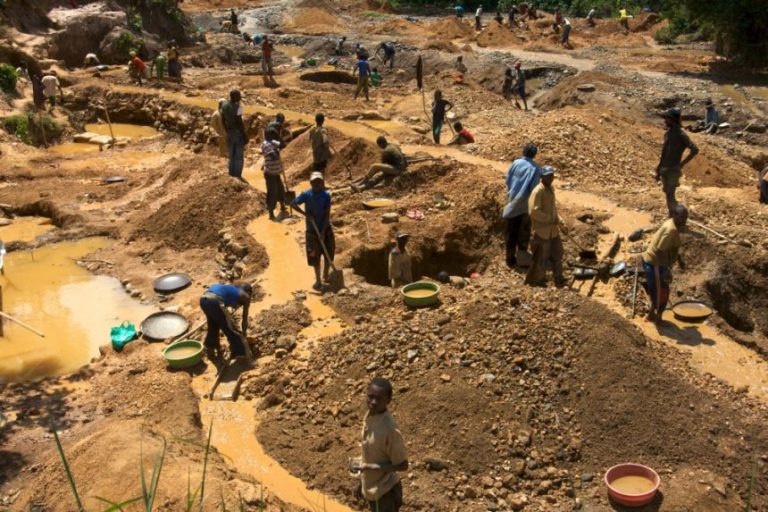
Artisanal and Small scale miners (ASM) continue to dominate the gold delivery process to the country’s sole gold buyer and exporter, Fidelity Printers and Refineries (FPR) despite a record decline in gold delivered to the gold buying utility.
Rudairo Dickson Mapuranga
According to the 2019 first half Monetary statement released on Friday by the governor of the Reserve Bank of Zimbabwe Dr John Mangudya, small scale miners have delivered more than 60 percent of the total gold delivered to the country’s sole gold buyer.
The statement acknowledged the fact that small scale gold producers are facing a lot of challenges, nevertheless, they have left an indelible mark in the mining sector despite the fact.
“It is, however, pleasing to note that small scale producers despite facing a plethora of challenges, continued to dominate the gold deliveries, accounting for more than 60 percent of total deliveries” reads the statement in part.
According to the statement, small scale miners dominated gold deliveries to Fidelity from January to May, however, in June gold delivery by the small scale sector was lower than that of large producers, producing only 687.4 against 814.5 produced by the country’s primary producers.
The government of Zimbabwe has set a target of 40 tonnes gold delivery to Fidelity, however, the target seems surrealistic with the country only recording 12.3 tonnes in the first half of the year compared to 17.3 in the same period last year.
According to the statement, there was a 40 percent decline in the mid-year’s deliveries compared to the same period last year which was caused by an unfavourable exchange rate, pricing and payment issues.
“Gold deliveries to Fidelity Printers and Refineries stood at 12.3 tonnes for the period January to June 2019. This was a 40.6 percent decline compared to 17.3 tonnes delivered during the comparable period in 2018. Exchange rate, pricing and payment issues which partly accounted for the decline in deliveries have however been largely resolved through the recent monetary policy measures” reads the report.
The recorded gold delivery to Fidelity last year was 33.2 tonnes in total since 1999 thus, targeting 40 tonnes this year seems to be a huge task.
The decline in gold deliveries during the first half of the year was caused by many reasons, among them: unstable power supply, abrupt changes in policies and fuel crisis which is strongly hitting the country right now.
Mining indaba set for Bulawayo

BULAWAYO will this week host the 8th edition of the 2019 Zimbabwe Alternative Mining Indaba where stakeholders will discuss a range of issues affecting the mining sector in the country.
The event will be held at a local hotel between Wednesday and Friday, under the theme: “Sustainability for all: Building a legacy of citizen action for equitable and just natural resource governance in Zimbabwe”.
The Zimbabwe Environmental Law Association (ZELA will host the high-level annual gathering that is expected to bring together communities affected by mining activities, civil society groups, small scale miners, academia, traditional leaders, Government agencies and the media.
“The Zimbabwe Environmental Law Association (ZELA), the Zimbabwe Council of Churches (ZCC), Zimbabwe Coalition on Debt and Development (ZIMCODD) and African Forum and Network on Debt and Development are seeking expressions of interest to exhibit during the 8th edition of the Zimbabwe Alternative Mining Indaba 2019,” organisers said in a statement.
The event would be focused on mineral resource governance with bias on views of communities affected by mining activities and activities of other organisations.
The platform also creates opportunities for citizens to hold mining entities to account in terms of how their finite mineral wealth is being managed for the benefit of all Zimbabweans_The Chronicle
Its Official: ZESA to supply electricity ONLY at night

Zimbabwe Electricity Supply Authority (ZESA) has announced that it will only be able to supply enough power to most of its customers during the night due to the current economic deterioration the country has been experiencing.
Rudairo Mapuranga
According to the Zimbabwe national power utility spokesman, Fullard Gwasira, the electricity challenges have accelerated to another level and therefore the public is urged to use electricity sparingly.
Gwasira added on saying that the power company will only be able to supply electricity to most of its customers during the night.
“The electricity supply situation is quite dire. Please use the available power very sparingly. We are able to supply most of our customers with power mostly during the night.” Said Gwasira through his official Twitter handle.
Gwasira said that although the country is exporting electricity from South Africa, the gap which was caused by Kariba water levels is getting bigger and some machines in other power stations like Hwange and Munyati are superseded.
“We are still importing, but the gap brought about by Kariba water levels is getting bigger and our machines are failing frequently due to age,” said Gwasira
Zimbabwe power utility spokesperson also said that the prevailing power cuts the country is facing come as a result of excessive power demands hence, electricity will only be supplied during the night because the rate of power demands will be low during the night than in daytimes.
“Power availability is a function of demand and supply. When demand is higher than supply, then some load will have to be curtailed. Supply is normally higher in the evenings” said Gwasira.
According to Gwasira, if rain pattern becomes friendly load shedding will be reduced in March because Kariba will be able to generate enough power.
“If we get a good rainfall season, the impact of that will be felt around March/April 2020,” he said.
The electricity problems in Zimbabwe seem to be taking ages to stabilise and people are now of the view that the normal supply will not be met anytime soon.