Description of the ad image Description of the ad image
Home Blog Page 699

Lucara finds largest uncut diamond in recent history in Botswana mine

0

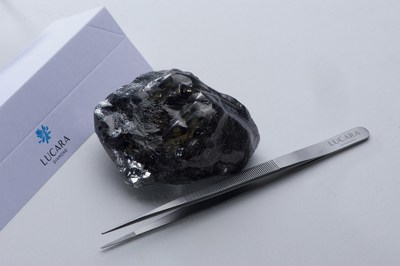
Lucara Diamond Corp has unearthed the largest uncut diamond in recent history in its Karowe mine in Botswana, the Canadian company said on Thursday, beating its own record discovery from November 2015 that it struggled to sell for nearly two years.

The 1,758-carat diamond is larger than a tennis ball and weighs close to 352 grams (12.42 ounces), it said in a statement. The stone is second in size only to the 3,106-carat Cullinan Diamond, recovered in South Africa in 1905.

The 1,758 carat diamond recovered from the Karowe mine. (CNW Group/Lucara Diamond Corp.)

Image courtesy of Lucara Diamond Corp

Lucara’s shares rose as much as 11.4% to the highest in more than two months, before trading up 7% at C$1.69 shortly after midday as the Toronto stock benchmark edged down 0.1%.

The stone is the latest in a series of high-value recoveries for the Vancouver-based company at Karowe. Since introducing its XRT diamond recovery technology, Lucara has recovered 12 diamonds over 300 carats, the company said, including a 472-carat and a 327-carat diamond in April 2018.

The 1,109-carat “Lesedi La Rona,” which Lucara recovered in November 2015, failed to meet its undisclosed reserve price at a June 2016 auction, putting pressure on the company’s shares. British diamond dealer Graff Diamonds finally bought it for $53 million in September 2017.

Forbes reported late last year that Graff had created 67 finished gems from the stone._Reuters

Africa’s Sibanye-Stillwater lowers valuation for miner Lonmin

0

South Africa’s Sibanye-Stillwater on Thursday revised its offer for Lonmin, with new terms that gave a valuation for the struggling platinum miner that was about 60 million pounds ($77 million) less than originally proposed.

Lonmin said Sibanye was offering an additional 0.033 Sibanye shares per Lonmin share in a deal to create the world’s No.2 platinum producer. Sibanye had initially said in December 2017 that it was offering 0.967 new shares for each Lonmin share.

Although the revised offers gives more Sibanye shares to Lonmin investors, an analyst said this still led to a lower valuation because Sibanye shares have fallen in value since the offer was first made in 2017.

Sibanye’s revised offer also does not fully compensate for the impact of its recent share sale that raised $120 million, meaning Lonmin shareholders will end up with less of the revised group, the analyst said.

The revised terms value Lonmin at 226 million pounds and give Lonmin shareholders 10.9 percent of the combined group, compared to a value of 285 million pounds and 11.3 percent in the original offer

The revised terms value Lonmin at 226 million pounds and give Lonmin shareholders 10.9 percent of the combined group, compared to a value of 285 million pounds and 11.3 percent in the original offer.

The boards of both firms said the new offer balanced a recovery in platinum group metal prices against Lonmin’s financial difficulties and its inability to fund investments to sustain its business and staff levels, Lonmin said.

Lonmin also said in its statement that its directors unanimously recommended shareholders accept the offer, which was conceived as a bid to ride out depressed platinum prices.

Lonmin and Sibanye shares were both up at 1500 GMT, rising 2.7 percent and 0.5 percent respectively.

London-listed Lonmin was hit hard by the drop in platinum group prices, and has had to work to cut spending in order to retain a positive balance sheet, required by conditions of Sibanye’s proposed offer.

It warned last month that it did not have sufficient liquidity to fund new projects needed to avoid shaft closures and job losses._Reuters

Gold dealer up for murder

0

Mlilo a 35 year old Gweru based gold dealer appeared before  Gweru magistrate on Tuesday facing murder and attempt murder charges after shooting two suspected machete illegal miners popularly know as “Mashurugwi”.

Mike Mlilo of Magola village under Chief Masila of Silobela appeared before Gweru magistrate Beaulity Dube, facing murder and attempted murder charges.

Mlilo was not asked to plead, but was remanded in custody to May 3.

It is the State’s case that on April 18, Mlilo was driving a white Ford Ranger twin-cab when he dropped off Innocent Mkandla at Dam Site Bottle Store, Insukamini Business Centre.

The court heard that Mlilo parked his car outside the bottle store and was allegedly approached by a group of patrons who were armed with machetes, knives and stones. The mob is said to have accused him of flashing them with his car lights.

A heated argument ensued, the court heard, resulting in Mlilo drawing his pistol, fired at Xolani Magigwana and hit him on the thigh.

Mlilo also allegedly fired a second shot at Gift Bhebhe, hitting him on the neck. Bhebhe collapsed and died on the spot.

The other patrons fled in different directions, while Bhebhe and Magigwana were rushed to Lower Gweru Mission Hospital, where the former was confirmed dead.
Magigwana is reportedly battling for his life at Lower Gweru Mission Hospital.

The matter was reported to police, leading to Mlilo’s arrest_NewsDay

Ivanhoe to fast-track DRC mine into production after CITIC invests $454m

0

Ivanhoe Mines is ready to finish building its giant copper mine in the Democratic Republic of Congo after its largest shareholder pumped an additional C$612 million (about $454m) into the Canadian company.

China’s state-owned CITIC Metal is paying C$3.98 per share, a premium of 29% over Ivanhoe’s last closing price. The investment, the second major one in less than a year, paired with the Vancouver-based miner’s current cash balance of about $512 million, will increase the company’s total cash on hand to C$1.3 billion ($1 billion), the parties said.

“The investment announced today will comfortably provide Ivanhoe with the equity cushion required to fast-track Kamoa-Kakula’s six million-tonne-per-annum Phase 1 mine to production,” billionaire Robert Friedland, the company’s founder and executive chairman said in the statement.

If fully developed, the Kamoa-Kakula mining complex could produce 382,000 tonnes of copper a year during the first 10 years, climbing to 700,000 tonnes after 12 years of operationsFriedland, who made his fortune from the Voisey’s Bay nickel project in Canada in the 1990s, has said the capacity of the project’s first phase could later be easily tripled. He believes Kamoa-Kakula has the potential to become the world’s second-largest copper mine.

“CITIC Metal has been a shareholder in Ivanhoe Mines for eight months now, and in that time, CITIC has seen what we already know — that the Kamoa-Kakula is unquestionably the best copper development project in the world,” Friedland said.

Mine grades at Kamoa-Kakula, an independent pre-feasibility study (PFS) released in February shows, will average 6.8% copper over the initial five years, and 6.4% in the first decade, with production starting in early 2021.

If fully developed, the mining complex could produce 382,000 tonnes of copper a year during the first 10 years, climbing to 700,000 tonnes of copper after 12 years of operations. Friedland believes it could restore the DRC to its historical position as one of the world’s top copper producing countries.

Kakula and Kipush first

Ivanhoe’s joint venture partner in the project, Zijin Mining Group, will have to fund its equivalent share of about $540 million of the mine’s initial capital costs.

Ivanhoe’s JV partner Zijin will have to fund its equivalent share of about $540 million of the mine’s initial capital costsThe companies also said they were in financing discussions with international export-credit agencies and equipment-finance providers. If successful, those investments will reduce the amount of funding that Ivanhoe and Zijin would need to contribute.

“We now are in a position to finance our first two mines ─ Kakula and Kipushi ─ to commercial production, and significantly advance, or achieve, production at the Platreef project,” Friedland said. “Ivanhoe also is positioned to have its planned expansions at the Kamoa-Kakula Project funded from internally generated cash flows.”

Ivanhoe Mines has been working on Kamoa-Kakula for ten years. In 2015, its now partner Zijin got on board by acquiring a stake in the company. Citic Metal followed suit last year, becoming Ivanhoe’s largest shareholder.

CITIC’s financing deal is expected to close by the first week of September.

Shares in Ivanhoe rocketed on the news, trading almost 12% higher in Toronto to C$3.46 in early trading. Year-to-date, the stock is up about 49%, valuing the company at about C$3.5 billion ($2.6 billion).

Ivanhoe to fast-track DRC mine into production after CITIC invests $454m

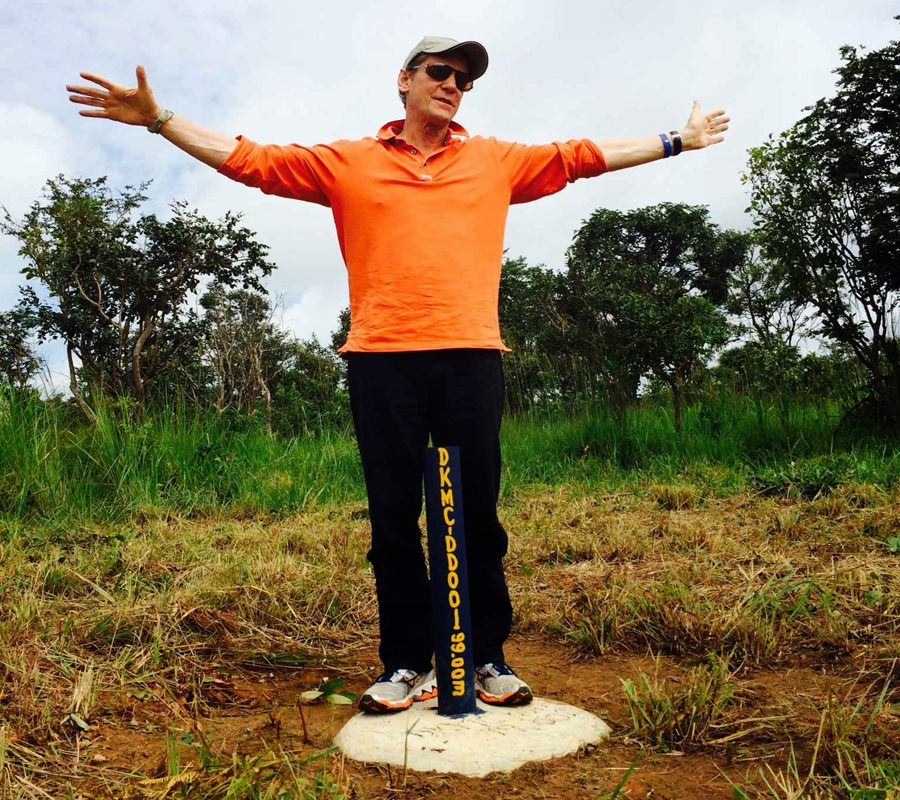
Ivanhoe Mines executive chairman Robert Friedland in 2014 at the site of the initial Kamoa discovery. (Image by Govind Friedland, 

Mining.com

Acacia Mining core profit slumps as Tanzanian troubles bite

0

Acacia Mining Plc reported a slump in underlying core earnings on Thursday as it struggled with production issues at its North Mara gold mine in Tanzania, where it said pressure was building for a settlement of its row with the government.

Acacia, majority-owned by Barrick Gold, is embroiled in a long-running tax dispute with Tanzania. It has cut output by a third since the government banned the export of mineral concentrates in 2017.

London-listed shares of the mid-cap company were down 4 percent by 1020 GMT, deepening a 12 percent drop year to date.

Underlying earnings before interest, tax, depreciation and amortisation (EBITDA) slipped to $24 million for the three months ending March 31, from $44 a year earlier.

Gold output dropped 13 percent to 104,899 ounces during the quarter, due to problems preventing access to higher-grade ore at the North Mara Gokona underground mine, the company said.

Underlying earnings before interest, tax, depreciation and amortisation (EBITDA) slipped to $24 million for the three months ending March 31

However, it stood by its production target for the rest of the year and said it believed it was nearing a settlement with the Tanzanian government that could transform its fortunes.

“We think the pressure is building on all parties to get a settlement,” Interim Chief Executive Peter Geleta said in an interview. Among the factors increasing the pressure was an international arbitration hearing in the third quarter, he said.

The company also said new board members with long experience in the mining sector would bring fresh ideas as Alan Ashworth, Deborah Gudgeon and Adrian Reynolds were appointed independent non-executive directors with immediate effect.

Mike Kenyon and André Falzon will step down at the end of July after around nine years at Acacia.

The company is focused on addressing its challenges in Tanzania, but also has exploration projects, including in Kenya, where Geleta said Acacia could seek to bring in a strategic partner depending on further research into the prospect._Reuters

Govt to pursue local lithium beneficiation

0

Zimbabwe intends to vigorously  pursue local value addition of its lithium resources to maximise  export earnings from the mineral, a cabinet Minister has said.

Lithium is used to make various items including special glasses  and ceramics, lithium-ion batteries and can also be alloyed with  aluminium and copper to make strong, lightweight metals for aircraft.

According to estimates, the global lithium-ion battery market alone is  expected to reach $93,1 billion by 2025 due to their increased usage in  electric vehicles and portable consumer electronics.

The prospect creates greater scope for prioritising local value  addition and beneficiation of the mineral.

Mines and Mining Development Minister Winston Chitando said Zimbabwe  ought to maximise benefits from its mineral resources.

“As Zimbabwe we are one of the few countries which are blessed with  lithium resources and the more we can have in terms of lithium value  addition can be good for the country,” he said.

Last year, the Government indicated that Zimbabwe was aiming to produce  at least 10 percent of global lithium output within the next four years,  following the discovery of new deposits of the mineral in different  parts of the country over the past year.

The discovery of the new deposits in areas including Matabeleland North  and Mashonaland Central provinces has spawned a scramble for lithium  exploration and extraction by foreign investors. Some of the projects that are being pursued include the Zulu Mine  located about 80 kilometres outside Bulawayo, Zimbabwe’s second largest  city, which is being spearheaded by Premier African Minerals.

Another company, Bikita Minerals is currently extracting the mineral in  Masvingo province.  Lithium has been described as a “hot commodity” due to rising demand,  with another Australian listed firm, Prospect Resources also pushing  another project in Zimbabwe. — New Ziana.

Top miners back autonomous systems guidelines

0

BHP, Barrick Gold, Teck Resources and Antofagasta are some of the major mining companies that, together with equipment suppliers and universities, have helped develop global guidelines on automation.

The document, published this week by Canada-based Global Mining Guidelines Group (GMG), outlines a framework for miners to follow when they’re considering adding autonomous equipment to their operations. It also provides a maturity model for companies to emulate as they expand the scope of their unmanned fleets.

Document divides operations into six levels, from zero (entirely manual ) to five (fully autonomous), and assists in the preparation of a business case for autonomous mining for each.

More specifically, the publication divides operations into six levels, from zero (entirely manual operations) to five (fully autonomous operations), and assists in the preparation of a business case for autonomous mining, depending on level and stakeholder needs.

Its advice includes guidance for the slow, phased or fast implementation of autonomous systems, depending on stakeholder needs.

BHP principal, risk and business analysis technology, Chirag Sathe, said the outlined recommendations are relevant even to those who have already embraced autonomy.

“I would say that even though some mining companies have implemented autonomy, it hasn’t been a smooth ride and there are a number of lessons learned,” said Sathe, who also is one of the project’s co-leaders. “This guideline would be a good reference material.”

Although implementing autonomous systems creates new challenges, such as changes to the workforce and the workplace, the authors of the new guideline believe if successfully deployed, the technology adds definite value, with improved safety and efficiency and lower maintenance costs._Mining.com

De Beers expands pilot scheme in Sierra Leone to sell ethically sourced diamonds

0

Anglo American’s De Beers is stepping up efforts to remove so-called “conflict” diamonds from the market by expanding a pilot program in Sierra  Leone, which is set to help trace the route of precious stones dug up there by small miners.

The world’s largest rough diamond producer by value said Wednesday the decision to scale up its GemFair trial was made to give more artisanal and small-scale miners (ASM) the opportunity to benefit from the program.

After training ASM in 16 mine sites across Sierra Leone on how to use provided tablets to digitally track their diamonds throughout the supply chain, De Beers has extended the pilot to work with a further 38 sites and widen its impact, it said in the statement.

De Beers’ GemFair program gives small miners an app and dedicated tablet as well as a diamond “toolkit” that enables the digital tracking of diamonds throughout the supply chain. 

The company has also partnered with the Diamond Development Initiative (DDI), an NGO in helping to formalize the diamond ASM sector in Africa.

De Beers’ plan to encourage mine owners to join GemFair is based on a membership model whereby mine sites that meet a strict set of core requirements, aligned with the OECD’s standards can join the program sell diamonds to GemFair.

Miners then work with DDI towards achieving full Maendeleo Diamond Standards (MDS) certification, within a one-year timeframe, De Beers said.

“While registered miners have no obligation to accept offers to purchase diamonds through the GemFair buying office, they are provided with free training in diamond valuation, so they can make an informed assessment about the value of their diamonds and negotiate the best possible deal,” it added.

Since the launch in April 2018, GemFair has seen significant progress across its operations, opening offices in both Koidu and Freetown, and developing a set of publicly available ASM standards to ensure a best practice approach for responsible sourcing.

The program has developed a digital solution to ensure the traceability of all diamonds mined by members. The toolkit contains an application and dedicated tablet that creates a digital record of each diamond found using GPS locations and QR-codes.

Tainted reputation

Artisanal mining accounts for only 20% of global diamond production, but carries a tainted reputation that’s damaged consumer confidence for almost 20 years.

Between 1991 and 2002, the district of Kono, in Sierra Leone, was at the centre of the “blood diamond” trade that funded the country’s brutal civil war as rebel groups exchanged gems for weapons.

Despite the establishment of the Kimberley Process in 2003, aimed at removing from the supply chain the now called “conflict diamonds” (those mined in an area of armed conflict and traded illicitly to finance the fighting), experts say trafficking of precious rocks is still ongoing.

According to Canada-based Centre for Research on Globalization (CRG) about one-fifth of diamonds on the global market in value terms are still a significant source of funding for regimes accused of committing crimes and human rights violations.

De Beers sells its diamonds mostly to authorized buyers at a series of so-called “sights” in Botswana, Namibia and South Africa. Then, they are normally sent to be polished or cut before ending up with retailers._Mining.com

China’s Tsingshan expands plans for Zimbabwe steel plant

0

China’s Tsingshan Holding Group has expanded its plans for a steel plant in Zimbabwe to include a power plant and a lithium concession, Zimbabwe’s Mines Minister Winston Chitando said on Tuesday.

President Emmerson Mnangagwa’s government is trying to woo foreign investors, especially in mining, as part of efforts to revive an economy that suffered in the later years of Robert Mugabe’s rule.

Tsingshan signed a $1 billion outline agreement to build a 2 million tonne-per-annum steel plant in Zimbabwe in June last year.

Its original agreement included chrome, nickel, iron and coal concessions, but the new deal allows it to build a 600-megawatt power plant in two phases as well as to mine lithium.

Tsingshan’s subsidiary, Afrochine, already has a ferrochrome operation at Selous, 85 kilometres west of Harare.

“The Memorandum of Understanding (MoU) signed today expands the scope of the original MoU,” Chitando said at a briefing attended by Mnangagwa, his two vice presidents and Tsingshan executives led by Chen Shansong.

Chitando said Tsingshan now aimed to produce 1 million tonnes of ferrochrome for local use and for export as part of the project, versus an initial target of about 550,000 tonnes of ferrochrome for local use only.

Tsingshan will also explore the viability of upgrading Zimbabwe’s rail link to Mozambique’s Beira port, Chitando added._Reuters

Ten Myths on in investing in Zimbabwe mining

0
The Zimbabwe investment environment has been coupled with a lot of issues ranging from mistrust between Government and investors (mostly foreign) emanating from transgressions of the past.
This comes out from how Government treated investors in the past particularly during the land reform programme and the consolidation of diamond operations in Manicaland. These actions therefore have been sending a negative signal to several investors. However some of these things are now myths considering efforts being made President Emmerson Mnangagwa and his new dispensation under the theme “Zimbabwe is open for Business.”
However there are 10 myths that have proven to be a challenge as Government works towards creating an all inclusive investment climate in the mining sector.

(1) The Indigenisation Policy

Zimbabwe in the past 10 years was running with the Indigenisation and Economic Empowerment policy which gave Zimbabweans the right to take over and control many foreign-owned companies in  on a 51-49 percent ratio. This law has been a massive impediment to investment in mining considering the amount of capital required in mining only for an investor to wake up 49 percent share of that investment. The law has remained a challenge up until recently that Government decided to scrap the legislation and it now only applies to the diamond and platinum sectors.
So the scrapping of the legislation still has not sunk in most investors but the law is no longer in existence for multiple sectors but it still remains a myth that Zimbabwe has an existing repressive indigenisation law.

(2) Property rights violations

Coupled by how Government conducted the land reform which saw white farmers loosing property worth billions of dollars, the Zimbabwe investment climate was deemed toxic all over , and this attitude by investors also cascaded to the mining sector.
There is a general belief that Zimbabwe has no respect for property rights and all they need is the money from the investor and once that money is invested, immediately the respect for property rights vanishes as well.
The situation was also exacerbated by how Government grabbed Shabanie and Mashava Mines which belonged to local businessman Mutumwa Mawere. The situation was also made worse when Government lodged a hostile takeover of diamonds operations in Manicaland when it decided to be the sole miner in the area. A lot of mining companies mostly Russian and Chinese lost their operations.

(3) Difficulties in dividends repatriation

Most investors have been experiencing challenges in repatriating their dividends not just in the mining sector but in the wider economy in general.
To date arrears in dividends repatriation are running into billions and that fact has seen most investors seeing Zimbabwe as unattractive investment destination. Most companies have since engaged the RBZ in getting sovereign guarantees for their dividends to foreign shareholders. But the situation has since improved but it remains a misconception that repatriation of dividends is a challenges.

(4) Favouritism towards Chinese investors

There is a general misconception that investing in Zimbabwe, someone has to be Chinese. When Zimbabwe had a fallout with its Western counterparts, former President Robert Mugabe launched what was dubbed the Look East Policy. This saw an influx of Chinese companies invading the local mining sector mainly in chrome and diamonds. Chinese generally are aggressive in nature , and in this case they came in with massive investment which somehow sent a message that they were in Zimbabwe for business. The influx of Chinese therefore somehow painted a picture that maybe Government had a bias towards Chinese investors but that has not been the issue considering that China is the second largest economic super power that has since identified Africa as the new economic frontier, with Zimbabwe among the horizons.  Therefore it remains a misconception that Zimbabwe favors Chinese but investment in mining in Zimbabwe remains open to any nationality.

(5) Mining investments only for foreigners

In addition there is also a general misconception that investing in mining in Zimbabwe remains something that can only be done by foreigners because of the huge capital demands. This misconception has seen many locals failing to venture into the multi-billion dollar industry out of fear.This therefore has seen many locals preferring to undertake small scale ventures. But in the fourth industrial revolution it is critical that locals are involved in the mining sector ,also on huge capital project. Mining should be for both local and foreign investors.

(6) Corruption as the only way to get mining rights

The resource curse is a paradoxical situation in which countries with an abundance of non-renewable natural resources experience economic stagnation and lack of development. And in most instances corruption because the order of the day.
Zimbabweans have become accustomed to announcements of “mega deals” over the years that never come to fruition. The opaque nature of the deals has been a breeding ground for corruption and looting.
The opaqueness of these deals has to a greater extent bred a misconception among investors that corruption is the order of the day and that for one to get mining rights has to pay a bribe.

(7) Zimbabwe labour laws draconian

Zimbabwe is open for business has become a common phrase in Zimbabwe. Events leading to the ushering in of the new dispensation in Zimbabwe has introduced these phrases.

There has been a positive vibe and commitment to invest in the country by big organisations. One of the major setbacks, thus being an impediment to quick investment into the country by investors, is the Zimbabwean labor laws.

The laws are rigid, restrictive to investment and they turn to be more favorable to the employees. This is an aspect that scares away many prospective investors.

Here, it is easy for an employer to acquire cheap labour, but it is not the case with the employers when they want to get rid of excess labour in their organisations.

Therefore there is a myth that labour laws in Zimbabwe are rigid but there are efforts being made at the moment by Government to adress issues around labour laws.

(8) Zimbabwe labour too expensive

There is a myth that Zimbabwe labour is too expensive and this has seen out Asian counterparts Chinese opting to bring everything including labour whenever they come to invest in Zimbabwe.
Zimbabwe’s ability to attract foreign investors is however being frustrated by high cost of labour. Comparing minimum wages, Zimbabwe has one of the highest labour costs in the region, second to South Africa.
Given that Zimbabwe’s productivity per unit of labour compared to other countries is low, it implies that labour costs are a major cost driver which affects the country’s competitiveness in the eyes of investors.

(9) Erratic power supply

There is still a misconception that Zimbabwe still faces erraric electicity supplies and high cost of power, a situation which has seen most investors shunning mining investment in Zimbabwe.
In terms of power supply, the country once faced an acute shortage of electricity that resulted in frequent power outages. This was a result of subdued power generation caused by inefficiencies in the running of thermal power stations, also associated with ageing equipment and outdated technology.

This development rendered  commercial and industrial activities less competitive as companies resorted to more expensive alternative power sources such as diesel generators. But this is now a thing of the past and Zimbabwe right now has better electricity supply compared  to South Africa following the commissioning of Kariba South Hydro extension.

(10) High taxes

Another misconception is that Zimbabwe has a rigid and painful tax regime. Zimbabwe’s tax regime is regarded as more costly and disadvantageous to businesses in relation to comparative countries, with the exception of Mozambique.
A medium-size business can expect to pay 35,3 percent of its commercial profit, which is about five percent higher than what a similar company would pay in South Africa (30,1 percent), twice as much as what would be expected for a similar company in Zambia (15,1 percent) and about 10 percent higher in Botswana at 25,4 percent.
This has proven to be an impediment to investment but government is currently working on relaxing the tax regime as it seeks to attract more investors across the whole investment front.
This article first appeared in the APRIL ISSUE of the Mining Zimbabwe Magazine

error: Content is protected !!