

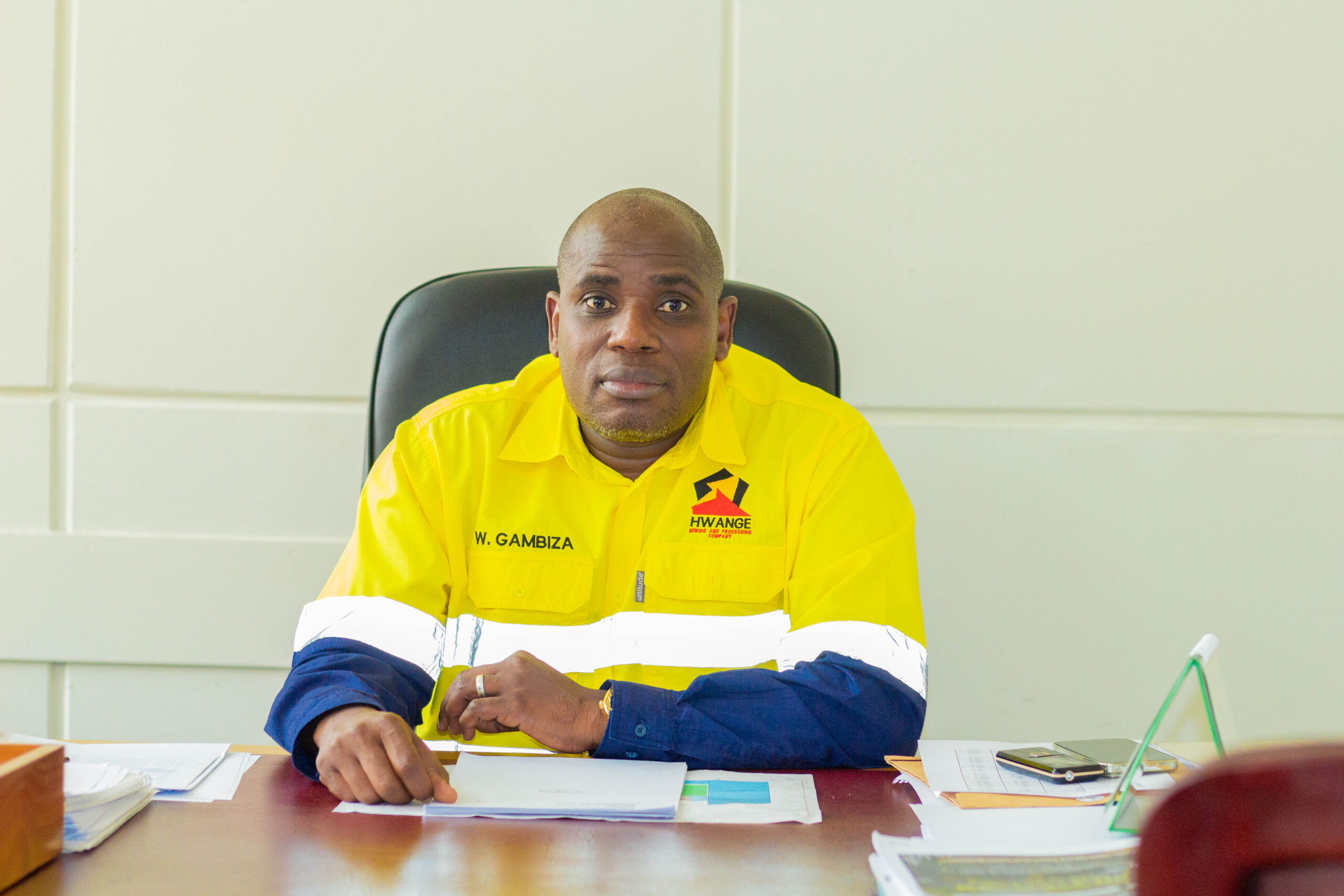

Hwange Colliery Company Limited Holdings (HCCL) Chief Executive Officer Eng William Gambiza has urged Zimbabwe’s mining industry to strengthen its safety culture, warning that the pursuit of higher mineral output and financial returns must never come at the expense of workers’ lives. Mining Zimbabwe can report.
By Kelvin Sungiso
The call comes as Zimbabwe’s mining sector faces renewed safety concerns, with 156 people losing their lives in 116 reported mining accidents, according to figures presented by Chief Government Mining Engineer Eng Michael Munodawafa.
The message was delivered on Gambiza’s behalf by Eng Mutiti, who read the Guest of Honour’s speech at the 2026 Chamber of Mines of Zimbabwe Mine Rescue Competitions in Hwange.
Addressing participants, Gambiza said the competitions went beyond testing technical skills, providing an opportunity for the industry to reaffirm its commitment to ensuring that every miner who goes underground returns home safely.
He said Hwange was a fitting host for the event, given its association with the Kamandama Mine Disaster of 6 June 1972, in which 427 miners lost their lives. The tragedy remains one of the darkest chapters in Zimbabwe’s industrial history and helped shape the country’s approach to mine safety, emergency preparedness and organised rescue operations.
Gambiza said honouring the victims required more than commemorations, arguing that the most meaningful tribute was to strengthen safety systems and improve the protection of workers across the industry.
“No tonne of coal, ounce of gold or platinum concentrate is worth a human life,” the speech stated, emphasising that safety must be treated as a leadership responsibility and a foundation of operational excellence rather than merely a compliance requirement.
The latest accident figures highlight the scale of the challenge facing the industry, with Munodawafa warning that many incidents go unreported. He also identified falls of ground and structural instability as major contributors to mining fatalities, accounting for approximately 70% of deaths in reported incidents.
The concerns extend beyond accident prevention to occupational health, with Zimbabwe’s mining workforce also facing exposure to hazards such as respirable silica dust, toxic gases and inadequate ventilation, reinforcing the need for stronger monitoring and protective measures.
This year’s competitions brought together 13 rescue teams representing 11 mining operations, including Mimosa, Shamva Gold, Zimplats, Freda Rebecca, How Mine, Blanket Mine, Jena, Unki, Redwing, Pan African and HCCL Holdings.
Gambiza said the participation of different mining houses demonstrated the importance of collaboration beyond commercial interests, noting that when emergencies occur, corporate boundaries become less important than response time, the competence of rescuers, reliable equipment and collective preparedness.
He described mine rescue teams as guardians of life and the last line of defence when conventional safety systems are overwhelmed, adding that the competitions provide an important platform for strengthening technical skills, teamwork and decision-making under pressure.
He urged mining companies to translate the lessons gained from the competitions into practical improvements at their respective operations, particularly through stronger and more integrated safety management systems.
As Zimbabwe’s mining industry expands and modernises, Gambiza said its progress should not be judged solely by production volumes and export earnings, but also by how effectively it protects the health, safety and dignity of the workers whose efforts sustain the sector.