Home Blog Page 255

Zimbabwe’s Gold Deliveries Declined in February

0

Zimbabwe witnessed a notable 22 per cent decrease in gold deliveries for February, recording 1.85 tonnes compared to the 2.38 tonnes submitted in January to Fidelity Gold Refinery (FGR). The decline is attributed to a substantial reduction in output from the artisanal and small-scale miners, who traditionally contribute around 60% of the country’s total bullion production.

In a departure from the usual trend, large-scale producers outperformed their small-scale counterparts delivering 988.7 kg, which is 53% of the total for the reviewed period.

Conversely, artisanal and small-scale miners delivered the remaining 47% of the yellow metal output at 864.3 kg, reflecting a notable 31.76% decline from January’s figure of 1266.51 kg.

Comparing year-on-year data, the 1.85 tonnes of bullion delivered by small miners in February 2024 marks a 2.2% decrease from the 1.89 tonnes achieved during the same period last year.

While production decline is usually attributed to rains, output from the ASM industry was expected to be higher due to little to no rainfall across across the country.

Caledonia transforms Sitezi School, Clinic

0

Victoria Falls Stock Exchange-listed gold-focused producer, Caledonia Mining Corporation, through its Corporate Social Responsibility (CSR) drive, has brought hope and excitement to the people of the Sitezi area in Gwanda through the construction and upgrade of the community school and clinic.

According to Caledonia CEO Mark Learmonth, CSR is a fundamental aspect of Caledonia’s business, not just a social license to operate. He mentioned that his company regards education as a pillar of the company’s CSR strategy.

He stated that their involvement at Sitezi School has transformed the school into a better and more modern learning facility.

“Education is one of the six pillars of our CSR strategy, and this particular project is one of several that we’ve done in the educational sector. I’m very proud of what we’ve achieved here. We’ve turned this school into something that looks fantastic, with great facilities,” Learmonth said.

Gezani Nkala, Headmaster of Sitezi Secondary School, mentioned that before Caledonia got involved with the school, it was falling apart. The floors were potholed, the roofs were leaking, and the walls were also very dirty. However, Caledonia has managed to bring the much-needed transformation to the school.

“Over the last year, Caledonia Mine has done several things here. They have repaired the potholes, done the walls, replaced the roofs, painted the school, plastered the school, and built new buildings.

“We never had running water here. Now we have running water. The impact that it has had on the children at school here is quite great. Absenteeism has gone down. They are now participating. They feel good about the changes that have taken place here in the school. We never used to have furniture. Students used to share chairs and desks. Now each student has their own desk and chair. You see a different student walking into the school now. They never used to have that confidence that they have. Now you see a student who is walking, you see that student is confident,” he said.

Samson Gombingo, CSR officer at Blanket Mine, mentioned that the issues at Sitezi Clinic were extremely negative when they came in. There was no facility for expecting mothers at the clinic, no water in sanitation and the wards, and no electricity for the “Cold Chain” at the clinic.

“Currently, what has been completed is we have provided water recirculation and sewer recirculation at the clinic.

“We are in the process of building a ten-bed mother’s shelter that will finish. We are also in the process of establishing a solar plant. The solar plant will supply unlimited solar energy and power to the clinic. And we also have other facilities that will benefit from the solar plant,” he said.

Zulu to produce 6.1% lithium concentrate

0

Following the announcement that its plant at the Zulu lithium project is running, Premier African Minerals has revealed that its spodumene flotation plant has indicated a concentrate of 6.1% Li2O to be potentially achievable from current ROM ore.

Rudairo Mapuranga

According to Premier African Minerals CEO George Roach, while analysis of the concentrates is underway, the plant is now running, and concentrates are being produced from both Mica and Spodumene flotation sections.

He however said that several issues need attention by the plant contractors that are affecting both quantity and quality of production.

“Most important is that instrumentation related to pH measurement does not cover all plant components that need to be monitored and the reagent dosing system is unable to adjust pH to design specifications. The plant contractor will need to remedy this forthwith.”

Roach said Premier is, however, encouraged that the initial spot analysis by Zulu’s internal laboratory on the material transferred to the spodumene flotation plant has indicated a concentrate of 6.1% Li2O is potentially achievable from current ROM ore.

“Premier believes that we are getting there. Not as quickly as Premier had hoped and with more unnecessary remedial issues than Premier had anticipated.

Premier therefore remains simultaneously encouraged and frustrated. Further updates will follow” he said.

Zimbabwe bans cement imports

0

The government of Zimbabwe has discontinued the issuance of cement import licenses to boost local demand. Depressed local demand has led to cement producers stockpiling and reducing production, as stated by the Minister of Information, Publicity, and Broadcasting Services of Zimbabwe, Jenfan Muswere.

Rudairo Mapuranga

Speaking at a post-cabinet briefing, Minister Muswere mentioned that the cabinet considered and adopted the Report on the outcome of measures instituted to address the country’s cement market supply and demand situation. The report was presented by the Minister of Industry and Commerce, Hon Sithembiso Nyoni.

He added that following the decision to allow temporary importation of cement, the Ministry of Industry and Commerce issued 971 licenses, resulting in imports of over 300 thousand tonnes of cement, leaving the local market stranded.

“Cabinet advises that, following the Cabinet decision to allow temporary importation of cement in October 2023, the Ministry issued 971 licenses totalling 337,776 metric tonnes, out of which 218,000 metric tonnes passed through the borders. The four major cement manufacturers in the country have an installed capacity of 2.6 million metric tonnes per annum, against a national demand of 1.6 million metric tonnes.

Cabinet notes that the local industry is now producing above optimal levels. The four companies are producing a combined 160,500 metric tonnes per month against the installed capacity of 241,000 metric tonnes per month. Depressed local demand has resulted in the companies stockpiling cement and reducing production. The cabinet advises the nation that there is now adequate cement on the market. Accordingly, the issuance of cement import licenses is being discontinued to boost demand for local cement.

Tharisa Transfers Treasurer Shares and Voting Rights

0

Tharisa Minerals has transferred the treasurer shares and voting rights, as reported in the update on 1 March 2024.

Patricia Rwafa

Tharisa had its Annual General Meeting of shareholders held on 21 February 2024, approving a final dividend of US 2.0 cents per ordinary share. The dividend payment date is 13 March 2024, with the last day to trade cum-dividend rights on the JSE being 27 February 2024.

The last day to trade cum-dividend rights on the LSE is 28 February 2024. The record date for payment on both JSE and LSE is 1 March 2024. Shares will trade ex-dividend rights on the JSE from 28 February 2024.

Shares were traded ex-dividend rights on the LSE from 29 February 2024.

In compliance with the FCA’s Disclosure and Transparency Rule 5.6.1, Tharisa hereby addresses the market that, as of 29 February 2024, Tharisa has 302,596,743 issued ordinary shares of US$0.001 each admitted to trading.

During February 2024, Tharisa transferred 10,457 ordinary shares from its treasury shares account to satisfy the exercise of Appreciation Rights by the participants of the Tharisa Share Award Plan.

Following these transactions, 300,030,151 shares have voting rights, and 2,566,592 are held in treasury.

The total number of voting rights in Tharisa is therefore 300,030,151. This figure may be used by shareholders as the denominator for the calculations by which they will determine whether they are required to notify their interest in, or a change in their interest in Tharisa under the FCA’s Disclosure and Transparency Rules.

Tharisa owns Karo in Zimbabwe.

ZINIRE to Launch Rock Engineering Forum at MSU

0

In an effort to ensure students find practical solutions to the world of rock mechanics challenges, the Zimbabwe National Institute of Rock Engineering (ZINIRE) will launch the Midlands State University (MSU) ZINIRE Young Rock Engineering Forum on Friday.

Rudairo Mapuranga

Speaking to Mining Zimbabwe, MSU Association of Students in Mining President Ope Muranda said the launch will be officiated by ZINIRE President Renius Tirivabaya, accompanied by the Institute Vice President Omberai Mandingaise and the Secretary General Eng Chikwiri.

He mentioned that the students are determined to ensure a deeper understanding of the world of rock engineering for all students.

He also expressed that the forum’s launch will ensure students are prepared to come up with solutions to tackle the fall of ground in the artisanal and small-scale mining industry.

“We want the students in Mining to gain a deeper understanding of the world of Rock Mechanics as we try to find practical solutions to real-world rock mechanics challenges that Zimbabwe is facing in small-scale mines. The symposium will help students prepare for the future of mining as we delve deeper,” he said.

Mimosa hit by metal price decline, retrenches Managers and Supervisors

0

Mimosa, Zimbabwe’s second largest platinum-producing mining company, recently undertook a significant workforce reduction, retrenching 33 managers and supervisors due to a persistent 35% decline in metal prices since April 2023.

In response to the challenging market conditions, nine of the affected employees opted for early retirement, while 24 chose voluntary separation packages, as detailed in a company statement released on the 5th of February 2024.

“Metal prices have been on a downward trend since April 2023 and remain depressed to date, having decreased by up to 35% during this period. This decline has significantly impacted our cash flow and profitability, and the outlook suggests that prices will continue to remain depressed in the medium term,” the statement read in part.

The company said its taking steps to minimise impact including capital expenditure curtailment, cost reduction initiatives, and cash conservation efforts among others.

“In response to these challenging market conditions, we have implemented several measures to ensure the viability of our business in the low-price metal environment. These proactive steps include capital expenditure curtailment, cost reduction initiatives, and cash conservation efforts,” the company said.

A voluntary separation package was offered to twenty-four employees, while nine opted for early retirement.

“Furthermore, given the prevailing economic landscape, we found it necessary to review our staffing structures to optimize efficiency. As a result, a staff rationalization exercise was conducted, affecting thirty-three managerial and supervisory employees. To address this, a voluntary separation package was offered to twenty-four employees, while nine opted for early retirement. At this stage, no further rationalization of the permanent staff complement is planned,” the company continued.

It is crucial to emphasize that people remain the most important asset of our business, defining who we are and serving as the primary source of our success. Despite the challenges, we have actively engaged our employees in all the processes implemented, fostering a sense of unity to maintain morale and continue achieving our production targets.

Zimbabwe gold buying prices/ gram 5 March 2024

Fidelity Gold Refinery (FGR) official gold buying prices/ gram. See the Zimbabwe gold buying prices/ gram today 5 March 2024.

SG 90% AND ABOVE US$63.74/g
SG ABOVE 85% BUT BELOW 90% US$63.06g
SG ABOVE 80% BUT BELOW 85% US$62.39/g
SG ABOVE 75% BUT BELOW 80% US$61.72/g
SAMPLE BELOW 10g BUT ABOVE 5g US$60.70/g

Fire Assay CASH $64.08/g

NB: Fire Assay cash price is for gold above 100gs, no sample is deducted.
For the Fire Assay Transfer price, a sample of not more than 10g is deducted
A 2% royalty is charged on all deposits (small-scale miners)
A 5% royalty is set for Primary Producers

Cash available. Fidelity Gold Refinery prices will be changing daily to match world market prices.

Kavango Begins 16-line KM IP Over Four Prospects at Hillside

0

London Stock Exchange-listed Southern Africa-focused metals explorer, Kavango Resources plc, has commenced ground-induced polarisation (IP) surveys over four Hillside Gold Projects in Bulawayo.

Rudairo Mapuranga

According to the company’s CEO, Ben Turney, Kavango is completing 16-line km of IP survey lines over targeted areas within four prospects on the Hillside Project.

He said surveys are designed to identify sulphide bodies associated with high-grade gold-bearing shear structures related to historical and artisanal workings.

Turney also mentioned that four diamond core holes have been completed for a total of 1,306m at four prospects on the Hillside Project gold targets. Visual observations from the cores are encouraging, and samples are awaiting export permission for assay testing.

He added that an additional 1,400m of diamond drilling is planned to test targets identified by the current IP survey programme and to extend intersections observed in recent drilling.

“We have now drilled four of the Hillside prospects, and the initial visual inspections are promising. We brought forward the Induced Polarisation (IP) surveys here based on visual observations of cores and other field measurements taken by our team. While we must await the assay results for confirmation of possible gold values, we feel confident to continue further exploration at Hillside.

“IP surveys can be used to map underground metal mineralisation that is associated with gold. This can be a powerful exploration tool to plot the extent of possible ore bodies. The extra IP data will help guide future drilling by providing Kavango with focused target areas,” Turney said.

Hillside Project Update

Four diamond core holes have been completed for a total of 1,306m at Hillside over four prospects. The core has been logged, cut, and sampled, with selected samples being sent for shipment to a laboratory for assay testing.

Visual observations from the cores are encouraging. These visual intersections are coincident with multiple known mineralised zones projected down from the surface and are associated with sulphides and alteration.

Kavango’s drilling objective is to acquire representative intersections from multiple gold-bearing structures at the prospect of improving its understanding of their individual mineralisation style, extent, distribution, and potential grade. Kavango will use this information to inform follow-up drilling and assess the potential for hosting bulk-mineable gold deposits.

Kavango has placed a contract for 16-line kilometres of IP survey lines over targeted areas within the four prospects at Hillside. The work is now in progress.

The company will follow Initial Gradient Array IP on 25m spaced lines with IP sections to aid drill planning. The survey lines are designed to bisect the extent of historic and artisanal workings along with Kavango’s recently completed scope drilling sections. The IP surveys are planned to target sulphide-associated high-grade gold hosted in quartz veins along shear structures.

Kavango is planning an additional 1,400m of diamond drilling to test targets identified by the IP survey and further assess intersections observed in recent drilling.

The planned intersection depth for each of the prospects is up to 350m, ensuring coverage of both the current observed sulphide intersections and the anticipated IP targets. Subject to results, Kavango plans to use the drilling to inform follow-up drilling targeting a bulk-mineable gold discovery.

Zimbabwe Discovers Higher Priced Oil in Muzarabani Exploration

0

Oil and gas exploration in the Muzarabani-Mbire district has yielded significant results, with the government of Zimbabwe confirming the discovery of light oil.

This type of oil fetches higher prices, requires less refinery purification, and produces a higher percentage of diesel and gasoline.

Rudairo Mapuranga

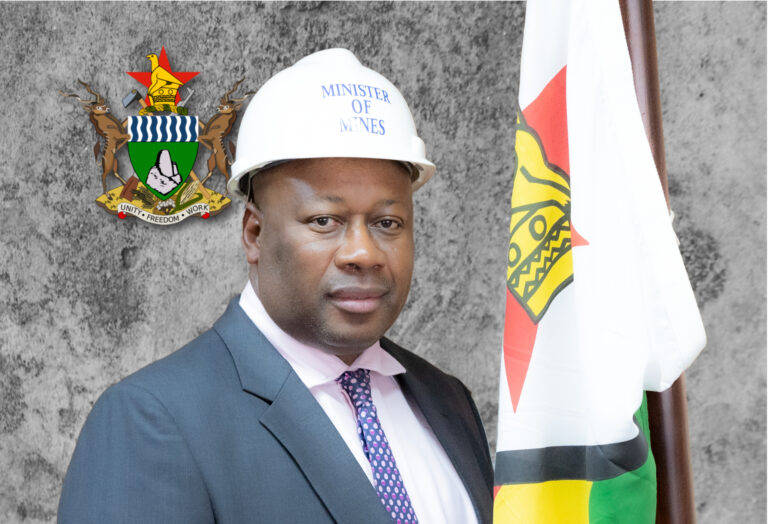
Speaking to the Media at a press conference held on Monday, the Minister of Mines and Mining Development, Hon Zhemu Soda, stated that, in addition to natural gas, the investor Geo Associates and its partners, Invictus Energy and One Gas Resource, undertaking exploration at Mukuyu-2 exploration well have discovered light oil, helium, and hydrogen.

“The results are that the natural gas is of high quality with minimal impurities, and there is no hydrogen sulphide in the samples (which is an undesirable constituent in oil and gas). Above all, the discovered oil falls into the light oil classification. This classification produces diesel, petrol, as well as jet A1. The presence of helium and hydrogen, which has also been confirmed, becomes a welcome bonus from the Mukuyu deposit,” Minister Soda said.

According to Minister Soda, reserve fluid samples by Invictus Energy show that there is an estimated 14-22 barrels of condensate/light oil for every one million standard cubic feet of gas. The natural gas is of high quality with minimal impurities, and there is no hydrogen sulphide in the sample, with CO2 being less than 2%.

Invictus Energy Managing Director Scott McMillan said Mukuyu-1 mud gas analysis results also confirmed the presence of light oil and gas condensate yields of 30-135 barrels/MMscf and high-quality natural gas with minimal impurities.

McMillan stated that the preliminary analysis from Mukuyu-2 and results from Mukuyu-1 are consistent with Invictus’ geological modelling, which shows increasing liquid hydrocarbon content in the south of Mukuyu towards the Basin Margin, where multiple drill-ready prospects have been mapped, and increasing dry gas contribution from the deeper kitchen and higher maturity source rock to the north of the Mukuyu structure.

The preliminary gas isotope analysis from processed downhole reservoir fluid samples in Mukuyu-2 is consistent with mud gas samples from comparable depths, allowing for additional insights to be generated from the extensive suite of samples gathered from the Mukuyu-1 and Mukuyu-2 wells.

McMillan also mentioned that consistent with the Mukuyu-1 results, gas samples from Mukuyu-2 show a general increasing dryness (lower liquid hydrocarbon/condensate yield) with depth.

“We are extremely pleased with the early results from the downhole reservoir fluid sample analysis, which confirms a large and rich gas-condensate discovery at Mukuyu. The analyzed samples demonstrate a consistent, high-quality natural gas composition, exhibiting low inert content, containing less than 2% CO2, and nil H2S, which will require minimal processing. The results from Mukuyu-2 are consistent with our geological modeling of the Cabora Bassa Basin, and the presence of both light oil and gas-condensate provides us with confidence as we prepare for the next phase of our appraisal program and work towards the monetization of the Mukuyu gas discoveries and further exploration of our exciting portfolio of multiple drill-ready prospects, substantially enhanced by the positive results from Mukuyu,” McMillan said.