Home Blog Page 325

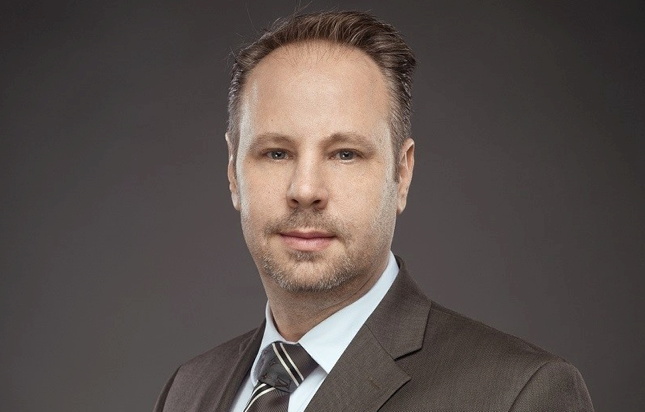
Interview: Tongai Muzenda MMCZ General Manager

0

Minerals Marketing Corporation of Zimbabwe (MMCZ) General Manager Mr Tongai Mzenda interview.

Can you please tell us about yourself and as the person at the helm of the Minerals Marketing Corporation of Zimbabwe (MMCZ) what does your position entail?

My name is Tongai Matthew Muzenda, the General Manager of the Minerals Marketing Corporation of Zimbabwe (MMCZ).  I joined MMCZ in February 2019. I am a holder of a Masters of Business Leadership degree from the University of South Africa and BSc Honours in Economics from the University of Zimbabwe. Having over 30 years of experience l can say I am a seasoned business and marketing leader who has gained knowledge across several sectors including Mining, Agriculture and Public Sector Services. I have worked for Anglo American Corporation Services Limited in different managerial capacities as well as Marketing and Commercial Director and Chief Executive Officer of Zimbabwe Alloys Limited, a company involved in the production of low & high carbon ferrochrome and ferrosilicon chrome.  I was also a Member of Parliament for Gutu West, Masvingo for five years and served as a Deputy Minister of Public Service, Labour and Social Welfare for two years. I have had various directorships in Government entities and private organisations.

What does your position entail

As MMCZ our operations are guided by the MMCZ Act Chapter 24:04 and the roles that are attached to my position are clearly outlined in the MMCZ board charter. These roles include but are not limited to; ensuring that the Corporation is run efficiently and effectively in accordance with the functions of the MMCZ as enunciated in the MMCZ Act, chapter 21:04 and the strategic decision of the board, ensuring that performance objectives, goals, and targets are met.

Furthermore, I am responsible for establishing effective management structures as well as ensuring that there are effective internal operations and implementing governance measures.

Why should a foreign investor invest in Zimbabwe?

The most common response is that Zimbabwe has vast mineral resources, making it a remarkable resource centre that is appealing to investors. However, as a nation, we are moving away from being known as a resource centre by encouraging investors to come in and set up value-added plants in Zimbabwe, ensuring that the nation receives more value from its exports rather than simply being known as a resource centre.

Aside from direct mining investment, there is a significant opportunity to provide heavy underground mining machinery and other supplies, as well as transportation infrastructure and materials, including railways. The country is also building related and supporting industry infrastructure, such as roads and weighbridges. The government’s renewed interest in increasing domestic production of value-added mineral products will necessitate greater capital investments in the mining sector than the current business model, which is based on exporting unprocessed or semi-processed natural resources.

Another factor that favours investors is political stability, and this ensures that their investments are not affected by civil wars or other forms of violence. Zimbabwe is also rich in human capital and is an open economy.

What does Zimbabwe have to offer better than any other African country?

Zimbabwe has among the greatest deposits for PGMs, gold and base metals – the Great dyke, second only to South Africa’s Bushveld complex and very privileged that its resources are still virgin, only slightly exploited; great Li and rare earth elements – bearing pegmatite deposits, which explains the current rush on lithium, hosts some of the rare carbonatite ring complex deposits for vermiculite for which we are one of the few suppliers from the African continent outside South Africa. Zimbabwe has a diversified mineral resource base spanning across all mineral groups – energy minerals ( coal, gas, Uranium and Thorium), metallic nonferrous minerals (base metals – copper (cu), lead (Pb), tin (Sn), nickel (Ni), aluminium (Al), zinc (Zn), etc), metallic ferrous minerals (Iron ores, chrome ores, manganese, nickel ores, cobalt ores, steel, etc), metallic precious metals (PGMs – platinum (Pt), iridium (Ir), palladium (Pd), rhodium (Rh), ruthenium (Ru); gold (Au), silver (Ag)), nonmetallic minerals (dimension stones – granite and slates; industrial minerals – graphite mica, limestone, dolomite, silica (quartz), kyanite, etc), and gemstones (various coloured gemstones (emerald, aquamarine, other beryls, garnets, tourmalines, chrysoberyls, amethyst, etc and diamond). The country is not fully explored but has a fairly good road and communication network to access the whole country thus offering tremendous opportunities for exploration and new mineral discoveries. In addition, Zimbabwe has the human capital, be it in exploration or value addition or logistics and is centrally positioned in Southern Africa to be a centre of mineral exchanges.

What activities has the MMCZ carried out to market the country’s diverse geological mineral resources to potential investors inside and outside the country under your motto “Revealing Zimbabwe’s Mineral Wealth & Heritage”?

MMCZ participates in both local and international exhibitions to search for lucrative markets and market the vast minerals produced in Zimbabwe except silver and gold.

What are your main marketing platforms and to what extent have you taken advantage of digital technology to enhance your marketing efforts?

MMCZ is a brand on its own, known locally and internationally as the sole exporting authority for all minerals except gold and silver. We receive a number of enquiries from international customers who want to buy minerals and those who want to invest in the mining industry, and from locals who seek partners from abroad. We are also actively pursuing digital marketing through the following platforms: online diamond tenders platforms, e-commerce in process, website and social media.

We have the deadline approaching (end of the year) for the achievement of the USD12 billion Mining Industry target. What are you doing, as a key entity in the supply chain, to ensure this target is achieved?

To ensure that the vast minerals produced in Zimbabwe are sold at competitive prices MMCZ benchmarks prices against lucrative international markets.  Through the bans on exporting unbeneficiated mineral ores, the nation continues to push increased sales of value-added minerals like granite, chrome, lithium and gemstones. At the same time, the Corporation has embarked on a market development exercise to prepare markets for the beneficiated minerals.

To promote the value addition of gemstones, the Corporation together with relevant authorities is setting up a gemstone lapidary. The Lapidary will be offering cutting and polishing facilities and training services on cutting and polishing, gemstone grading and evaluation.

To ensure that all the gemstones exported from the country are accounted for the Corporation appointed subagents. The appointment of sub-agents is expected to bring about higher volumes of gemstones and information on gemstone occurrences in Zimbabwe.  The Corporation confirmed the appointment of eight (8) coloured gemstone sub-agents. The Corporation is still taking applications from individuals and companies who are interested in becoming gemstone sub-agents.

Through the trainings we conduct around Zimbabwe annually, the Corporation continuously encourages small-scale miners to formalize as a way of doing away with leakages.

What are the mineral marketing opportunities that are found in Zimbabwe and what is the position of MMCZ in attracting new markets for our minerals?

The country has a large mineral resource base in demand across the globe, these minerals can be legally extracted by small, medium and large-scale miners. Some of these minerals can be sold to local industries to produce value-added products.

Other numerous mineral marketing opportunities in Zimbabwe include the fact that miners can sell their products to their own customers, after approval by the Corporation. The Corporation through its brand name attracts a number of customers, who are referred to suppliers of the minerals. The Corporation actively participates in shows, fairs and exhibitions to market Zimbabwe’s minerals to international and local customers. We participate in Mine Entra and ZITF, platforms that expose our services to both local and international customers; Mine Indaba in RSA where we meet with international clients and a number of other Fairs and Exhibitions in Dubai and Asia. Polished gemstones, be they diamond or coloured gemstones can be bought by any Zimbabwean for their use or further selling to those niche markets that we may not be aware of. This presents an opportunity for every Zimbabwean as a marketer. Critical is to ensure that as they sell the stones outside Zimbabwe, they do so through the Corporation.

Which minerals currently you would say need more buyers from across the world due to a shortage of Markets in Zimbabwe?

We need more buyers for all minerals that we sell locally or export. Market diversification is always good. When one segment of the market is not doing well, maybe the other could be doing fine. That ensures we get maximum value for our minerals as our mission states.

How much did the country fetch from mineral exports other than gold and silver in 2022?

As of December 2022 the cumulative total of sales was at US$3.176 billion.

Lithium has been popular worldwide due to the green revolution, how much raw lithium was exported from Zimbabwe in 2022?

There is a misconception on the market when we talk of the market for lithium. Lithium is a very light metal, number 3 on the periodic table, and very unstable and reactive in air, so are a number of its compounds such as lithium carbonate – the intermediary product to battery manufacturing. More stable are its minerals – spodumene, pollucite, lepidolite, amblygonite, etc. We export these as mineral concentrates, i.e concentration of each of these lithium minerals is achieved by crushing the ores (rocks containing any of these lithium minerals in quantities that make them economic to extract) to liberate these minerals and picking them to form concentrates through a number of extractive metallurgical processes. We, thus, export lithium mineral concentrates – spodumene, pollucite, amblygonite, lepidolite, etc. Cumulative to date, a total of 86,759.25 mt of these mineral concentrates valued at US$70.595 million were sold in the year 2022 compared to 33,314.18 mt valued at USD 11.13 million sold in 2021.

In the gemstone sector, what opportunities are there for investors in terms of buying and exporting all gemstones including diamonds?

You may be aware that we introduced an SI 256 of 2019, called the Gemstones Subagents Regulations. This was to ensure the inclusivity of all miners and those not able to mine but have a passion for buying and selling coloured gemstones in the value chain of these minerals to create value with what they know best. Miners would mine while subagents would offer alternative markets to miners, sidelining illegal traders all to the benefit of our miners through competitive pricing by the Corporation and Subagents. This created a business opportunity for those with a passion for buying and selling gemstones. We hope to create new gemstone trading businesses and maximize prices achieved by small-scale miners on their production. So investors can actually finance the Gemstones Subagents, creating a cycle of revenue creation in the value chain to the benefit of the citizens and the nation at large. Investors can also come in to set up value-adding and cutting and polishing factories for gemstones in Zimbabwe since the main objective for the mining sector is to push for value addition before our mineral resources are exported in a raw state.

Diamonds are classified as strategic minerals. As such, there is a government policy on who mines, export or value add this mineral. Miners are any of the four – ZCDC, Anjin Investments (Pvt) Ltd – a joint venture between Zimbabwe and China, Murowa and Alrosa Zimbabwe (a joint venture between Zimbabwe and Russia). Cutting and polishing are however open to any investor local or international. SI 157 of 2010 and SI 79 of 2014 regulate the sales and cutting and polishing of diamonds, while the Finance Act gave price discount incentives to local diamond cutting and polishing entities. All being done to attract more investors.

The government recently banned the export of raw minerals, as the organization which markets minerals in Zimbabwe how are you going to ensure that mines that were exporting raw minerals find a market within the country?

We are encouraging investors to come and invest –foreign direct investment such as green field `

What are other measures that you’re currently undertaking to ensure value addition and beneficiation of the country’s minerals?

We are offering advisory services to producers in terms of markets and prices for beneficiated and value-added products, government through the MMMD has put in place restrictive measures on raw mineral exports through legal instruments while at the same encouraging investors to come and invest in beneficiation and value-addition. This has been done for granite, chrome, diamonds, and lithium minerals.

What range of business opportunities are available in the marketing sphere for other players to participate in collaboration with MMCZ as the sole marketing agent for all minerals except gold and silver?

MMCZ has appointed Subagents to participate in the mine-to-market value chain for gemstones, the MMCZ has also entered into strategic partnerships with some diamond cutting and polishing factories for beneficiation of rough diamonds for sale to strategic markets. The Corporation also buys minerals on its own account thereby encouraging small to medium-scale miners to participate in the mine-to-market value chain.

In cutting and polishing of coloured gemstones diamonds and granite slabs, marketing opportunities are open to all individuals – both citizens and aliens as they can all freely buy and export any of these minerals through the Corporation.

Are there any plans for a central market where semi-precious mineral buyers can just jet into the country, get into the market, look for the stones they desire to buy and leave without travelling across the country?

Yes, of course. We have a model that has the supply side and the demand side of semi-precious mineral marketing. SI 256 of 2019 addressed the supply side of that model, modelled along the Mbare-Musika Marketing Model. The demand side is addressed by marketing our semi-precious stones to various markets through Fairs/Shows/Exhibitions and the various digital marketing platforms we are using. The next stage will be addressing the turn-around time for export documentation clearance to be done instantly once payment for the minerals has been done. We will be engaging stakeholders in the export documentation processing chain for a one-stop-shop concept to actualize instant export documentation processing in the marketing model. We believe this can be done under one roof, where Evaluations and Sales can take place instantly, while the same will be extended to online digital platforms for virtual transactions.

Trading centres have many advantages including access to gemstones by buyers and local factories, access to local and international markets, competitive prices are achieved and very effective in terms of gathering and sharing information with our clients and obtaining documentation. It is very necessary for the Corporation and key stakeholders to come up with a trade centre and boost gemstone sales. MMCZ has facilities that are used for precious stones sales that can also be utilized for sell of coloured gemstones

You have done exceptionally well in training people across the country. Is this opportunity open to foreign students interested in this initiative?

The trainings are meant to capacitate small-scale miners including special groups as a way of encouraging formalization, growth and boosting of efficiency gains in small-scale mining operations towards reaching the 12 billion mining economy by 2023.

Research is the mainstay of any marketing agency. What marketing studies or research have you carried out or commissioned to understand the short-term and long-term dynamics in the global market for the various mineral products that the country is producing and exporting, beyond establishing databases of producers and buyers?

MMCZ visits many mineral markets around the globe through indabas (Mining Indaba, RSA), Africa Down Under, mineral conferences and exhibitions where both short and long-term mineral and market trends are discussed. In this way, the Corporation keeps abreast of global market developments. In addition to these platforms, MMCZ makes direct visits to end-user factories where mineral products performance is assessed through a firsthand information-gathering process.

Research has mainly centred on primary data analysis on exports in the different global market segments. We know where most of our mineral products are going, how they move – the logistical challenges and capacities required and what these minerals are used for and our vision, mission and marketing strategy are anchored on such statistical analysis.

The Main Components of Electric Vehicle Batteries are Lithium, Manganese, Cobalt, Graphite, Steel and Nickel. Are there any open opportunities for these other 5 minerals other than Lithium?

Of course yes. I alluded to exploration opportunities earlier to open more deposits. There are opportunities to work on the brown field and greenfield deposits of manganese, graphite and nickel while a number of companies are investing in steel manufacturing.

The country is endowed with manganese, graphite, nickel and copper deposits. Investors and locals are welcome and encouraged to invest in mining, beneficiation and value addition of these minerals. Battery minerals present good investment opportunities for both local and foreign investors. Demand for these minerals is expected to increase in tandem with demand for EVs and clean solar energy.


This interview first appeared in the February 2023 issue of Mining Zimbabwe Magazine

Gold buying prices Friday 3 March 2023

Fidelity Gold Refinery (FGR) official gold buying prices Friday 3 March 2023.

SG 90% AND ABOVE US$56.08/g
SG ABOVE 85% BUT BELOW 90% US$55.19/g
SG ABOVE 80% BUT BELOW 85% US$54.60/g
SG ABOVE 75% BUT BELOW 80% US$54.01/g
SAMPLE BELOW 10g BUT ABOVE 5g US$53.13/g
FIRE ASSAY CASH US$56.08/g

NB: Fire Assay cash price is for gold above 100gs and no sample is deducted.
For the Fire Assay Transfer price, a sample of not more than 10g is deducted
A 2% royalty is charged on all deposits (small-scale miners)
A 5% royalty is charged to Primary Producers

Cash available. Fidelity Gold Refinery prices will be changing daily in relation to world market prices.

Marange Resources efforts to evade US$234k security services debt flop

0

Efforts to evade a US$234 500 debt by Marange Resources Pvt Ltd flopped after the High Court said the company cannot be excluded from the claim given existing facts.

The company has not yet been ordered to pay the amount but High court judge Justice Bongani Ndlovu ruled that it must explain its defence against the evidence of the complainant Brandon Bowen.

Bowen issued a summons in his individual capacity in 2016 claiming payment of US$234 500 plus costs of suit from Marange Resources.

The claim was for unpaid security services Bowen had allegedly rendered to the mining company.

Defendant defended the action.

Bowen told the court that he was contracted by Marange Resources’ predecessor, Canadel (Pvt) Ltd sometime in 2009 to provide men on horses security services in the mining fields of Marange.

When Canadel left the mining fields Marange Resources took over, and the contract which was predominantly oral, tacitly relocated to the company in that Bowen continued providing the security services and continued engaging the Accounts Department personnel of the company who coincidentally had been with Canadel previously, regarding payment of the outstanding bill.

The communication was through emails.

In some instances, Marange Resources personnel negotiated varying amounts for the security services and even paid him for the service.

For Marange Resources’ audit purposes, Bowen was classified by the company as its creditor.

The money paid to him was deposited into Two Mile Trading (Pvt) Ltd /Two Mile] bank account.

Bowen is one of the directors in the company.

On one occasion a payment was made into Bowen’s father’s bank account.

The court heard these payments to third parties were done with the knowledge and consent of the company because Bowen did not have a personal bank account.

The amount claimed was not disputed as well as the engagements between the parties.

However, in its plea Marange Resources denied entering into an agreement with Bowen.

It stated that Bowen was wrong in his view that Canadel “turned into” Marange Resources.

The company said Bowen must direct his claim to Canadel.

Marange Resources also denied ever making any clear or unequivocal acknowledgement of debt with respect to Bowen’s claim.

The company said Bowen entered into a contract for the provision of security services with an entity called Two Mile which is not a party to these proceedings and wanted his application trashed.

The judge however ruled otherwise.

“In this matter having considered the pleadings filed of record, the evidence adduced by the plaintiff, and the cross-examination that ensued, I find that this is not a case fit for absolution from the instance.

“Plaintiff has tried to explain why the payments made to him by Defendant were made into third parties’ bank accounts.

“Whether or not that explanation sustains his claim is not to be decided at this stage of the trial.

The judge said Marange Resources has to explain its defence against the evidence of the plaintiff and pleadings filed.

“It is trite that only when both parties have testified can a court decide on issues of fact in a matter.

“Accordingly, I find that Plaintiff has managed to establish a prima facie case upon which a reasonable court might find for the plaintiff,” said the judge.

He ruled, “It is therefore ordered as follows; The application by the defendant for absolution from the instance after the closure of the plaintiff’s case is dismissed.”

New Zimbabwe

Coburn Katanda appointed Eureka Mine Manager

0

Coburn Katanda has been appointed Dallaglio Investments’ Eureka gold Mine Manager.

The former Association of Mine Managers of Zimbabwe (AMMZ) President announced the news of his LinkedIn Account.

According to Engineer Katanda a Mine Manager is responsible for the overall performance of a mining company.

“Generically, duties include occupational health and safety management, monitoring and evaluation of production targets, budgeting and cost optimisation, human resources and industrial relations management, asset management, stakeholder and environmental management and project management. As Mine Managers, our major responsibility is to manage mines so that they perform as designed with respect to all operational and strategic aspects. To that end, we routinely equip our members through on-the-job training and development, and exchange of proven practices through structured technical visits or technical papers amongst other initiatives,” Katanda told Mining Zimbabwe in an interview in 2021.

We at Mining Zimbabwe wish him the best in his new role.

Zimbabwe, a country with plenteousness of minerals

0

ZIMBABWE is home to 60 different types of minerals, 40 of which have been traditionally exploited to varying degrees.

Platinum group metals (PGMs), chrome, gold, coal, and diamonds are the main minerals. Other minerals found in the country include gemstones, granite, manganese, lithium, asbestos, iron ore, copper, nickel, cobalt, limestone, coal-bed methane (CBM) and rare earth minerals.

With over 2,8 billion tons of PGM and 10 billion tonnes of chromium ore, the nation has the second-largest platinum deposit and high-grade chromium ores in the world. Approximately 12% of the nation’s gross domestic product is made up by this sector (GDP).

The government estimates that by 2023, the industry will have the capacity to produce US$12 billion annually. However, analysts have cautioned that this is anticipated to occur if only the government addresses issues including ongoing power outages, a lack of foreign currency, and policy uncertainty.

Low foreign exchange retention requirements have presented difficulties for mineral exporters, especially when the black-market exchange rate significantly deviated from the official rate and encouraged smuggling.

According to Mthuli Ncube, Minister of Finance and Economic Development, the mining industry was predicted to grow by 10% in 2022, up from the mid-year prediction of 9,5%. This is primarily caused by the anticipated rise in the production of coal, PGMs, chrome, nickel, diamond, and gold, which is supported by record-high global commodity prices and increased investments in the industry.

The prognosis predicts that the mining industry would expand by 10,4% in 2023, supported by expected high worldwide mineral prices and an increase in investments, particularly in exploration, mine development, and mechanization.

Due to new mining activities that are currently being explored, the sector is anticipated to continue growing in the medium term, until 2025.

Gold, PGMs, chromium, coal, diamonds, lithium, nickel, black granite, copper, silver, and asbestos are the most mined minerals in Zimbabwe.

Below, we briefly examine them.

Gold

One of the most mined minerals in Zimbabwe is gold. According to the Ministry of Mines and Mining Development, gold has been mined and explored in Zimbabwe since ancient times. From the seventh century until the introduction of mechanized mining techniques with the arrival of Europeans about a century ago, it is estimated that a third (or about 700 tonnes) of all historical gold production was mined locally.

According to the Ministry, there are more than 4000 documented gold deposits, almost all of which are situated on historic workings.

Due to new mining ventures, prompt payments, and incentives for miners, Zimbabwe’s gold output increased to a new record high of 35,38 tonnes in 2022.

Statistics from Fidelity Gold Refinery, the only buyer of gold in the nation, show that the output increased by 19,5% from the previous year.

According to the Reserve Bank of Zimbabwe, the country in southern Africa possesses the second-largest gold reserves per square kilometre in the world, with 13 million tonnes of confirmed deposits, only 580 tonnes of which have been used since 1980.

Top gold producers in Zimbabwe include Freda Rebecca, which is near Bindura’s Trojan Nickel mine, Blanket Mine in the province of Matabeleland South, Rio Zimbabwe, Metallon Corporation, Sabi gold Mine, Falcon Gold, Pickstone Peerless, Duration Gold Mine, Bilboes Holdings, and Eureka Gold Mine.

Small-scale producers currently lead the sector.

Platinum Group Elements

Due to their numerous industrial applications, PGMs, which include platinum, palladium, rhodium, ruthenium, iridium, and osmium, are in high demand all over the world. The second-largest platinum reserves in the world are found in Zimbabwe’s Great Dyke, a linear early Proterozoic layered mafic-ultramafic intrusion trending over 550 km with a maximum width of roughly 11 km.

According to the Ministry of Mines, the Dyke is home to an estimated 2,8 billion tonnes of PGM ore grading 4g per tonne. Notably, only in the South African Bushveld and along the Zimbabwean Great Dyke are PGMs exploited as primary metals.

PGM mineralization was discovered in the Great Dyke in the early 1920s.

Between 1925 and 1926, there was a surge in PGM prospecting as a result of these documentations and the discovery of PGMs in the Merensky Reef of the South African Bushveld Complex, leading to the discovery of the Wedza Mine. Numerous businesses have engaged in exploration since the 1950s. Global Platinum Resources and CAMEC (Todal Mining) are now conducting platinum exploration on the Great Dyke in the Bougai region of Shurugwi and Chegutu, respectively.

The Mimosa, Ngezi, and Unki Platinum Mines are currently operating as mines. Exploration and assessment of Zimbabwe’s platinum deposits have increased due to the demand for PGMs.

Diamonds

In Chiadzwa, Mutare West, Zimbabwe, there is extensive small-scale diamond production in the Marange diamond resources. According to the Ministry of Mines, more than 120 kimberlites have been found, but only two deposits—the River Ranch and the Murowa Diamond Mines—had economically significant grades.

According to the Ministry of Mines, evaluation is now being done on a number of kimberlites in the country’s southern region, however, some were discovered to be non-commercial. Recently, many diamond mines in the Chiadzwa region have opened as a result of the finding of diamondiferous Proterozoic conglomerates in the Umkondo basin, including Mbada, Marange Resources, and Anjin.

According to the Chamber of Mines, the production of diamonds was predicted to increase by 19% last year to five million carats from the 4,2 million produced in 2021. As part of an ambitious goal to enhance mining output and bring in US$12 billion annually, Zimbabwe anticipates increasing diamond production to 11 million carats by 2023.

Chrome

In addition to diamonds, platinum group metals, and gold, chrome is one of Zimbabwe’s principal exports. With deposits of roughly 10 billion tonnes, the nation contains the second-largest high-grade chromium ores in the world, behind South Africa. Chrome is primarily mined from the seam and stratiform deposits along Zimbabwe’s Great Dyke. It can be found as serpentinites with podiform structures in greenstone belts away from the dyke, such as in the Zimasco mine on Shurugwi Mashava.

In Mashava, south of Mberengwa in the Limpopo mobile belt, chromium is discovered in the remains of greenstone. In the greenstone zones, chrome can be found as alluvial deposits as well. Chrome is primarily utilized in the manufacture of stainless steel, as a metal coat, in the chemical sector, and metallurgical procedures.

Coal

Zimbabwe began producing coal in the early 1900s and is thought to have 25 billion tons of coal reserves. Large amounts of high-grade coal that have been fossilized can be found throughout the nation. Lower Karoo sediments contain it. About 12 billion tonnes of high-quality coal are found in the middle Zambezi basin in the north and the Save Limpopo basin in the south of the nation.

In the province of Matabeleland North, where businesses like Hwange Colliery, Makomo Resources, and Zambezi Gas are active, Zimbabwe can boast of enormous coal resources. The amount of coal produced this year is predicted to increase to 15 million tons as new producers come online and older ones increase their output. Chilota Colliery, Western Coal, and Liberation Mining are the newest miners.

Nickel

According to the Minerals Marketing Corporation of Zimbabwe, nickel is only processed at Bindura, where the Trojan mine is located and is currently produced commercially at two mines, Shangani and Trojan. Less than 8 kilometres to the south of the Bindura town centre is where you’ll find the Bindura Smelting and Refinery.

Nickel is found in Zimbabwe’s Archean craton in komatiitic-composed rocks, such as those found at Trojan Mine. For Empress, Madziwa Great Dyke, it also seems to be stacked or unlayered mafic-ultramafic intrusive bodies. It can also be found in nickel laterite deposits, such as those in the northern Great Dyke hydrothermal shear zone.

Around the nation, there are nickel deposits in a number of serpentinite regions in greenstone belts with igneous complexes. The country has got huge potential in komatiite and laterite and more than 30 nickel deposits are known.

Asbestos 

Chrysotile is one kind of asbestos. It can be found in enormous serpentinites, slip fibre zones, and ultramafic complexes that are packed with matted fibres in the Great Dyke, such as the Mashava Igneous Complex and the Ethel mine. 60 deposits have been worked on for chrysotile and are dispersed throughout the Masvingo, Insiza, Gwanda, Mberengwa, and Shurugwi.

Prior to the demand reduction, Zimbabwe was the third-largest producer of asbestos in the world. Asbestos used to be the second-largest revenue generator in the mining industry, behind gold. Gaths Mine and Shabani Mine were closed, which put an end to production.

One of the largest asbestos miners, Shabanie-Mashava Mines (SMM), has made repeated failed attempts to restart operations. Even now, the mine’s production hasn’t been started, despite plans to do so in September 2019 when the dewatering of flooded shafts was finished. SMM is thought to possess asbestos reserves worth more than US$1 billion, and if the company’s mines are reopened, they will generate roughly 75,000 tonnes of high-grade fibre, largely for export. 

Copper

In Zimbabwe, there are more than 70 copper deposits that have generated copper as a primary or secondary product. The Magondi Basin, which spans more than 150 kilometres, has been the primary producing region. Similar copper resources can be discovered in the Umkondo Basin in the southeast of the nation. Numerous copper possibilities can also be found in hydrothermal formations in granite and Archaean Greenstone Belts, such as Inyathi and Copper Duke. After Mhangura was shut down, primary copper production all but halted. Current PGM, gold, and nickel operations are connected to copper production. There is still a huge amount of exploratory potential, it is thought.

Copper production has been declining in recent years because of the depletion of known reserves and low exploration expenditure levels, according to the Chamber of Mines of Zimbabwe.

Black granite

An estimated 150 000 tonnes of granite are produced in Zimbabwe each year, with the Mutoko district producing roughly 75% of the total amount of black granite. Ilford Red, Natural Stone, CRG, Zimbabwe International Quarry, and the province of Mashonaland East’s Mutoko Granite Mining Company are a few of the businesses that mine granite there.

Silver

Silver is the other resource that has primarily been mined in Zimbabwe. According to the Mines Ministry, silver is found naturally in combination with other minerals including gold, copper, and lead. It is classified as a by-product of the mining of platinum, gold, and copper, with the exception of the Osage Mine in Zimbabwe. The highest silver-to-gold ratios can be found in the gold deposits of the Odzi greenstone belt. The locations of the mineral are mostly Makoni, Makonde, and Kwekwe. 

Lithium

Zimbabwe is the sixth-biggest producer of lithium in the world and is thought to have the greatest untapped resource in Africa. The greatest lithium mines in the nation are found at the Bikita mine, which is 308 kilometres south of Harare, the capital.

Other lithium mines include Kamativi Lithium Mine, Sabi Star Lithium Mine, MIRRORPLEX Lithium Project, Zulu Lithium and Tantalum Project, Step Aside Lithium Project, Kamativi Lithium Project, and Arcadia Lithium Mine, which is expected to produce 2,5 million tonnes of lithium ore per year.

According to the Ministry of Mines and Mining Development and the Minerals Marketing Corporation of Zimbabwe, the areas with confirmed lithium deposits in Zimbabwe are Goromonzi, Mudzi, Buhera, Bikita, Chegutu, Hwange, Harare, Insiza, Rushinga, Mutoko, Mutare, and Hwange. However, lithium is still being found in numerous locations all around the nation. The mineral has so far been found in locations including Mberengwa, Shamva, Bindura, and Kadoma.

Due to its high electrochemical potential, lithium has emerged as a crucial component in the production of high energy-density rechargeable batteries as the world moves toward clean energy, particularly electric mobility.

Since lithium-ion batteries are now 30 times less expensive than when they initially entered the market in the early 1990s, battery manufacturers believe that they will continue to dominate the sector.


This issue first appeared in the Mining Indaba issue of the Mining Zimbabwe magazine.

UK company completes pilot coke plant in Zimbabwe

0

Contango Holdings has advised that the construction of a small-scale coke battery has been completed at the Lubu Coal Project in Zimbabwe.

The pilot coke plant has been constructed to provide on-site capability to manufacture coke from washed coking coal produced at Lubu for testing by future offtake partners and for the company’s internal studies and quality control.

The ultimate coke batteries to be installed at Lubu for future production and sales will be considerably larger and a different specification.

As previously reported, to date the manufacture of coke and subsequent studies from washed coking coal from Lubu has taken place remotely, with highly encouraging results. The ability to now manufacture coke on site is a significant step, providing accurate in the field results, a crucial step in securing partners in the company’s coke manufacturing strategy.

First coke manufacture

Following the completion of the pilot plant in February 2023, the company has subsequently produced approximately 4 tonnes of coke, from a sample of washed coking coal from Lubu.

A significant portion of this production will be delivered to the Multi-National Company that entered into a Memorandum of Understanding with Contango in December 2022. This is part of the ongoing due diligence process to confirm suitability for their requirements ahead of a potential transaction.

Carl Esprey, CEO of Contango, said:

“Whilst the expected margins on our coking coal production are very attractive, we have always maintained the highest margin business stems from the manufacture of coke at Lubu.

“Accordingly, we have already completed numerous small-scale tests remotely to assess the coke characteristics from Lubu, with highly encouraging results.

“The completion of the pilot coke plant will now enable us to generate larger coke production for testing, something required to enable us to conclude discussions under our MOU and, as required, provide additional samples to other parties who have expressed interest in coke produced from Lubu.

“This is a notable step in the evolution of the Lubu Project and I look forward to providing further updates with respect to the planned manufacture of coke in due course.”

Chitando, DRC Minister to headline WFDB’s World Diamond Congress

0

The 40th World Diamond Congress, which will be held in Israel from 28-30 March 2023, will feature a full roster of illustrious speakers, from the world of diamonds and beyond, the World Federation of Diamond Bourses (WFDB) said.

The list includes (in alphabetical order): Edward Asscher, President, World Diamond Council; David Block, CEO, Sarine Technology Group; Gaetano Cavalieri, President of CIBJO, World Jewellery Confederation; Prof. Alon Chen, President, Weizmann Institute of Science; Conroy Cheng, Vice-Chairman of Chow Tai Fook; Winston Chitando, Kimberley Process Chair and Minister of Mines and Mining Development (Zimbabwe); Bruce Cleaver, Co-Chairman of De Beers Group; Yoram Dvash, President, WFDB; David Kellie, CEO, Natural Diamond Council; Aryeh Lightstone, former senior advisor to the US Ambassador to Israel; Boaz Moldawsky, President, Israel Diamond Exchange; Antoinette N’Samba Kalambayi, Minister of Mines, DRC and Moshe Salem, Vice-President, WFDB.

The World Diamond Congress, the WFDB’s most important event, convenes representatives of the 27-member bourses as well as leaders of the world diamond community every three years in a different diamond centre. Due to the Covid-19 pandemic, the last World Diamond Congress was held virtually in September 2020. This time the event is being held as part of Israel Diamond Week, being organised by the Israel Diamond Exchange.

Yoram Dvash said, “There has been an amazing level of interest in the 40th World Diamond Congress, especially as it is the first major event of the Federation, post-Covid. We have lined up a top-level roster of speakers, who will address the key issues facing the diamond industry today, as well as fascinating topics in science and diplomacy. We are certain that this will be a Congress to remember.”


A Chinese company to acquire a lithium mine in Zimbabwe

0

China Natural Resources Inc said on Tuesday it would acquire Williams Minerals, the operator of a lithium mine in Zimbabwe, amid surging demand for the metal used in batteries for electric vehicles.

The company plans to issue restricted shares and promissory notes to fund the acquisition for a maximum of $1.75 billion, with $140 million as initial payment. It may also pay some of the amounts in cash.

Williams Minerals is owned by Top Pacific Ltd and Feishang Group Ltd, the latter also being the controlling shareholder of China Natural Resources.

Africa’s lithium production is likely to soar this decade, with the bulk of that coming from Zimbabwe.

China Natural Resources, however, said there was no guarantee that the transaction, expected to close in the second fiscal quarter of 2023, would take place under the current terms.

Mining.com

Fidelity strategies to attract more gold

0

Fidelity Gold Refinery (FGR) has come up with strategies to ensure that gold deliveries increase significantly in 2023 compared to 2022.

Rudairo Mapuranga

FGR General Manager Mr Peter Magaramombe has projected gold deliveries to reach 40 tonnes in 2023 compared to 35 tonnes of gold in 2022, an increase of 18.9 per cent.

Speaking at the gold mobilization workshop and task force send-off on Wednesday, Magaramombe said FGR was confident that its strategies to ensure gold deliveries increase in 2023 will be of positive impact.

Magaramombe said the FGR would continue to offer United States dollar (USD) spot cash payments for gold lodgements as part of the strategies.

This will be done to ensure that small-scale gold producers are not financially constrained.

He also said that his company was ready to establish more buying centres to eliminate the hurdle of travelling long distances to sell.

“As Fidelity Gold Refinery we are going to offer international Gold buying prices. At the moment Fidelity has cash across all its branches. We are also going to open some new buying centres. Plans are in place to open new buying centres.

“FGR is now ready to open Gold centres within Gold service centres,” Magaramombe said.

He also acknowledged the importance of gold incentives in delivery increased and ensure that the government was going to continue with the program to encourage deliveries.

“The government has approved that we continue with incentives,” Magaramombe said.

He also said that, as part of its strategies, FGR was going to support artisanal and small-scale miners getting into strategic partnerships with them to ensure an increase in production.

“We are going to continue and actively support the Gold mobilization exercises.

“We are going to enter into some strategic partnerships targeting Gold mining and processing projects with potential. This will be done through the Gold development initiative fund,” Magaramombe said.

Mines bill public hearings, Mashonaland Central speaks

0

It was a full house as Mashonaland Central Stakeholders heeded the call to attend Public hearings on the Mines and Minerals amendment bill HB 10 2022 held in Bindura.

Some attendees braved fatigue and chose to attend the proceedings standing as all seats were occupied signalling the importance of inputs to get a desirable Mines Bill.

Miners raised a lot of issues and the most outstanding was displeasure with the Mines Affairs Board (MAB), the slow pace of mining title allocation amount others.

Members who will seat on the Mines Affairs Board (MAB) should go through public interviews instead of being hand-picked by the Minister of Mines and Mining Development, stakeholders voiced their concerns.

Speaking at the Mines and Minerals Amendment Bill public hearing held in Bindura on Tuesday a miner who attended said the Permanent Secretary was not supposed to be a member of the board and worse off, chairing it.

“The Board Members will be appointed by the Minister and the Permanent Secretary who is also the CEO of the Ministry will be chairing the MAB. The Permanent secretary should not be the chair of the board because it will be difficult for the board to hold him to account. I also think that the board Members will be very influential therefore should be appointed through Parliamentary interviews,” he said.

Speaking at the same event, Zimbabwe Geological Survey Director Forbes Mugumbate said stakeholders were not reading well through the lines of the Bill by suggesting that it is taking away the rights of land owners, particularly farmers.

He said that the Bill doesn’t allow miners or prospectors to peg without written consent from the farmers.

“You can’t peg without written consent from the holder of the farm,” Mugumbate said.

A miner submitting his views to the Parliamentary Portfolio Committee on Mines and Mining Development said it was of importance for the government to ensure that when a person discovered a mineral, they should be given discovery certificates so that no one can peg the land except themselves.

“There should be a temporary licence to ensure that people who discover minerals are protected,” he said.

Meanwhile, miners stressed disdain in the handling of disputes saying they preferred disputes be finalised by the Mines and Mining Development Ministry.

Addressing the gathering a Bindura miner said unscrupulous individuals are taking advantage of the court orders and will use the order to mine and even attain EIAs.

“There is an individual who went to court for a dispute and got Police officials to evict a miner with a mining title and started mining with a Court order. By law, we know that only a person with a title should conduct mining yet court orders are being used to mine right here in Bindura,” he said.

Mkaratigwa asked the miner to petition parliament in writing so that they can conduct an enquiry to get to the bottom of the issue.

Another miner stressed the importance of timely processing of titles and EPO applications saying at least 90 days should be the maximum time it takes for approval or disapproval as miners are forced to mine without requisite certificates.

On CSR a miner said it must be made a law that the community gets a share they agree on and it has to be fixed. Miners concurred that mining companies are currently taking advantage of the situation in some instances just buying school exercise books which they claim are good enough yet they make millions from the communities they are operating from. They said sometimes they are surprised to see in Media, mining companies claiming to have done non-existence projects therefore it should be made a law for communities to get at least 5% from mines operating in their areas.

A farmer also stressed the importance of separating mining from farming. He said proper planning needs to be done as they are losing cattle to haphazardly dotted pits and bridges are collapsing from miners who follow gold belts, mining without a care for the environmental impact their operations create. He also said that sometimes they are subjected to heartbreaking situations where Miners mine pits that run over each other leading to mine shaft collapses.

Another called for the ban on alluvial or river bank mining saying the practice which is mainly done by foreign-owned companies does more harm than good.

The Portfolio Committee on Mines and Mining Development is currently on a two-week tour conducting public hearings on the Mines and Mineral bill which if passed with become law replacing the existing one enacted in 1964.