

Home Blog Page 324

Government encourages collaboration in the Lithium Industry

0

The government of Zimbabwe has made clear its intention to move the whole value chain of lithium concentrate processing to higher levels.

Through the Ministry of Mines and Mining Development, the government implored all Lithium players to work together giving an example of collaboration in the mining industry that can be seen in the platinum sector, where producers came together to create a study that demonstrated their commitment to value addition.

As a result, they received government support, which led to the withdrawal of export taxes on unbeneficiated platinum.

In a speech directed at lithium players in Zimbabwe, the Minister of Mines and Mining Development emphasised the importance of Collaboration in the Zimbabwe Lithium Industry.

“Let me emphasize and emphasize and emphasize again that the lithium players in this country have to work together more closely than you are today.

“I’ll give you an example.  A few years back, the government came up and said for platinum,  platinum concentrates with effect from this date, will be subject to a surcharge of so much because they are not being value-added.  That’s still the legislation. The platinum players got together and say government,  please hold on. We are serious about value addition.

“We’ll come up with a study to ensure that we achieve the goal which you have for value addition.  And sure they did. The symposium of three years ago was a platinum symposium where the platinum producers were unpacking their plans to have established a base metal refinery. And as a result, the government withdrew the export tax for the unbeneficiated platinum which had been imposed.

“Now, with lithium where are we, I was talking and making reference to lithium concentrates. Obviously, the intention that the government of Zimbabwe wants to see is moving the whole value chain,  moving up the whole value chain,  but it won’t happen overnight.  What is important is for us to work together with the industry to ensure that the industry achieves your goals, but also in government, we achieve all goals for value addition.  As things stand, we do have some extent,  I could say plans by individual companies to establish value addition of lithium concentrates,” Chitando said addressing Lithium miners in the country.

Chitando indicated that government will support entities that can process lithium concentrate to the next stage cautioning that this requires collaboration among the players to ensure they can collectively achieve this goal.

“Now, as a government, once we have an entity which can value add beyond the lithium concentrates and go a stage higher, two things will happen.

“The extreme case will be to ban the export of lithium concentrate which won’t happen,  but we impose a levy. We’ll say, oh, there’s an entity which can do value addition beyond lithium concentrate. Why can’t you do it? Send it to them for processing.

“Then you come and say, no, but they don’t have space for me.  They have only established space for themselves.  So they don’t have the capacity to process our stuff well. The answer is too bad. So it is important that is the lithium players, you get together.  Those who are establishing plans for value addition to the next stage, work together.  Either at the end of the day, this is the same message again, I’m using the example of platinum. As a government, it’s not a question we say,  if so and so should do platinum-based metal refining.  No, if every company wants to do base metal refining,  that’s fine. In lithium, if every player wants to do value addition beyond lithium concentrate to the next stage, that’s quite fine with us as a government,” Chitando concluded.

Overview of the lithium policy in Zimbabwe

0

Mines and Mining Development Minister Winston Chitando has finally addressed the nation on the long-awaited Lithium policy.

In his speech at the ongoing Chamber of Mines Annual Conference and Exhibition happening at Elephant Hills in Victoria Falls, Chitando gave an overview of lithium in Zimbabwe namely the mining of lithium, processing of lithium, storage of lithium, transportation of lithium, export of value-added lithium and the export of non-value-added lithium.

“The starting point is where are we? And the second question, where are we going? As things stand, the regulations of the law, which is the Mines and Minerals Act, in combination with the various Statutory Instruments, provide this place lithium is concerned, with five things. First, is the mining of lithium. The second is the processing of lithium, and the third is the storage of lithium. The fourth is the transportation of lithium. The fifth is the export of value-added lithium. And to some extent, I will say number six, the export of non-value-added lithium.

Minister Chitando gave the below remarks on the overview of the Lithium policy in Zimbabwe.

The Law

Anyone who has a lithium mining concession, can mine lithium.

Processing lithium ores

You require an approved processing plant license, which you get from the Ministry of Mines.

Transportation of lithium

If you have a mining concession and you’ve mined ores, those ores, you either utilize them for processing at your approved processing plant or you can only transport them. The ore movement permit will only be given if the ore is being moved to someone with an approved processing plant license.

Storage

Lithium ores can only be stored at the site where the lithium is mined or at an approved processing plant site. So the storage of ores in Msasa, and in Southerton, is now illegal and is subject to penalties as stipulated in the Statutory Instrument.

Exportation of value-added lithium

What some people were doing was just grinding ores, coming up with some powder, say I have value-added, you know, this is now lithium concentrate. We have then said for the exportation of value-added lithium, it has to satisfy two conditions.

The first condition is that the lithia content for spodumene should be a minimum of 3% and the lithia content for petalite and lepidolite should be a minimum of 2.5%. That’s the first condition for the exportation of value-added lithium. And the second condition is that the prices which the exporter fetches should be a minimum of what is provided for by the Minerals Marketing Corporation in Zimbabwe from time to time.

Ladies and gentlemen, in simple terms that’s the overview of the lithium policy as it is.

Approved processing plant license

And for one to get an approved processing plant license, it’s simple, you have to satisfy the Ministry of Mines and Mining Development that the setup and the investment you have can manage a minimum threshold of the 3% lithium content for spodumene and the 2.5% lithia content for petalite and lepidolite.

That’s the provisions of the lithium policy.

Beyond that, it says however, if for a wholly owned Zimbabwean entity, once you have intended an approved processing plant license or site license, you can apply for a waiver to export lithium ores up to a period, maximum period of two years.

So for wholly owned Zimbabwean entities, once you have demonstrated that you’d want to set up an approved processing plant site and you get that license and you are working towards that, you can then be given a waiver to export ores for a maximum period of two years, during which time we expect that you have put up your approved processing plant license.

Dallaglio CEO resigns

0

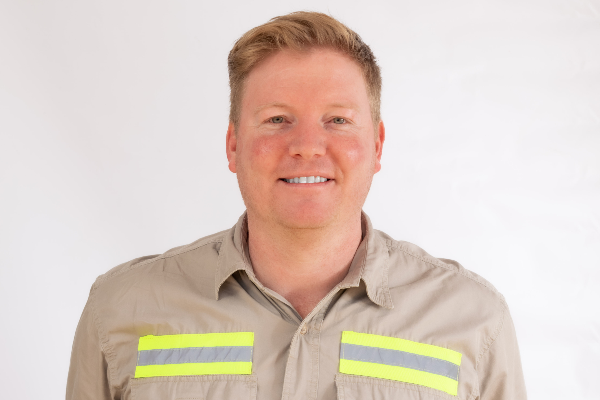
Dallaglio Chief Executive Officer (CEO) and prominent mining personality Marc Nicolle has resigned.

Nicolle announced his resignation from the gold mining company on his LinkedIn account.

In reflecting on his time at Dallaglio, the outgoing CEO said he is grateful for the experiences and memories gained at the gold mining company. Nicolle said he is proud of what he has accomplished alongside the Dallaglio team and has every confidence that the company will continue to prosper under new leadership.

“As many of you know, it has been an incredible journey serving as the CEO of Dallaglio, the gold mining company that owns and operates Pickstone and Eureka Mines in Zimbabwe. It has been an honor to build and work with such a talented and dedicated team, and to be a part of the growth and success of the company.

After much consideration and reflection, I have decided to step down from my role as CEO and take a sabbatical to define what’s next. This decision was not an easy one, but I believe it is the right one for me at this time,” Nicolle said.

Nicolle’s decision to leave came as a surprise to many in the industry, however, he was applauded for his leadership role, technical expertise and bravery in taking the time to focus on personal growth and development.

“All the best Marc. In the short stint we worked together, I admired and learnt a lot from your business acumen and technical expertise. Here is to more ‘so what?’ analysis reports,”

“All the best for the future Marc Nicolle. You really laid the foundations for Dallaglio Gold Mining. I am sure the adventure will continue and the next challenges will be just as awesome. Good luck,”

With over 16 years of experience in the mining and metals value chain prior to joining Dallaglio Marc Nicolle worked at Outotec, a global process technology company, where he undertook several senior positions, including driving the growth of their hydrometallurgy business in Sub-Saharan Africa.

Marc holds a B.Eng in Chemical Engineering from Stellenbosch University.

Nicolle was instrumental in bringing back to life the Pickstone Peerless and Eureka gold mines which have grown to be one of the biggest gold producers in the country employing thousands.  Eureka is arguably the most technologically advanced mine in Zimbabwe. The two mines averaged close to 160kgs of gold in 2022.

We at Mining Zimbabwe wish Marc Nicolle the best as he embarks on a new journey.

Zimbabwe gold buying prices 31 May 2023

Fidelity Gold Refinery (FGR) official gold buying prices Wednesday 31 May 2023. See the Zimbabwe gold buying prices for today.

SG 90% AND ABOVE US$59.63/g
SG ABOVE 85% BUT BELOW 90% US$58.69/g
SG ABOVE 80% BUT BELOW 85% US$58.06/g
SG ABOVE 75% BUT BELOW 80% US$57.43/g
SAMPLE BELOW 10g BUT ABOVE 5g US$56.49/g
FIRE ASSAY CASH US$59.63/g

NB: Fire Assay cash price is for gold above 100gs and no sample is deducted.
For the Fire Assay Transfer price, a sample of not more than 10g is deducted
A 2% royalty is charged on all deposits (small-scale miners)
A 5% royalty is charged to Primary Producers

Cash available. Fidelity Gold Refinery prices will be changing daily in relation to world market prices.

Chamber of Mines Annual Mining Conference and Exhibition kicks off

0

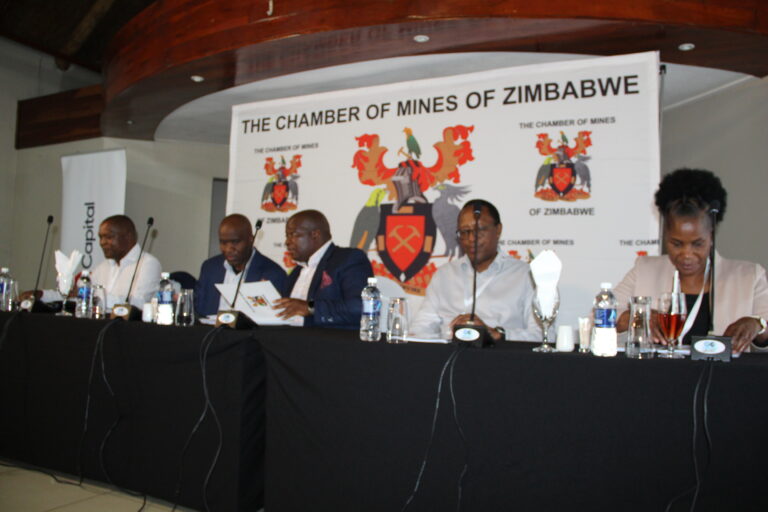
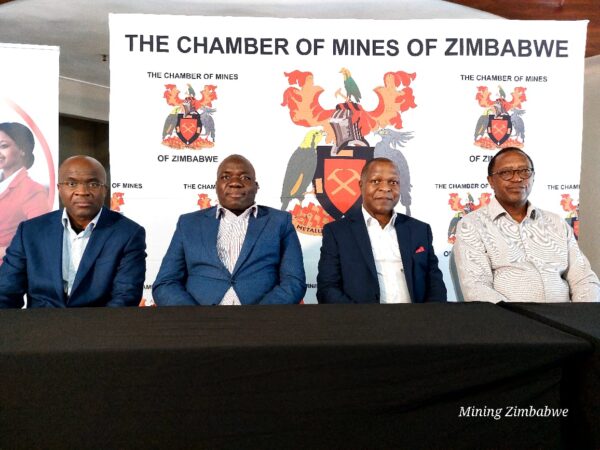
The Chamber of Mines of Zimbabwe‘s Annual Mining Conference and Exhibition 2023 kicked off yesterday in Victoria Falls.

The Conference is the Prime Event for the Zimbabwe mining industry, and it provides a platform for key stakeholders in the sector including Government, senior executives in the mining industry and investors to deliberate on pertinent matters in the mining industry.

Running under the theme Mining for Economic Transformation: “Creating Growth Enablers for the Mining Industry” the event yesterday began with Closed Door Sessions for Members AGM and Council Meetings where Golden Reef Chief Executive Officer (CEO) Thomas Gono was appointed the Chamber of Mines of Zimbabwe (CoMZ) President. Gono will be deputized by ZIMASCO CEO Mr John Musekiwa who was appointed First Vice President and Munashe Shava as Second Vice President. Shava is Kuvimba Mining House’s technical director.

On Today’s program, the event continues with the Lithium and Battery Minerals Value Chain Symposium titled “Unleashing the Growth Potential of the Battery Minerals Value Chain”. The symposium will be addressed by the Guest of Honour Minister of Mines and Mining Development Hon Winston Chitando and many other industry players.

Lithium miners namely Bikita Minerals, Zulu Lithium, Sabi Star, Arcadia Mine and Zimbabwe Lithium (Kamativi) will also give Project Overviews of their operations.

This will be followed by an address by the Vice President of the Chamber of Mines of Namibia Mr George Botshiwe who will be talking about the Prospects for a Regional Battery Minerals Value Chain.

Lots are lined up for the day including the Strengthening Governance in the Batteries Minerals Value Chain and emerging global trends on responsible sourcing of critical minerals.

Mining Industry heavyweights are currently attending the event including Caledonia Mining CEO Mark Learmonth and Director Mr Victor Gapare, and ZMF President Ms Henrietta Rushwaya, among many others.

Mining Zimbabwe will be broadcasting live some of the proceedings on our social media platforms.

Kwekwe house “swallowed” by mine tunnel

0

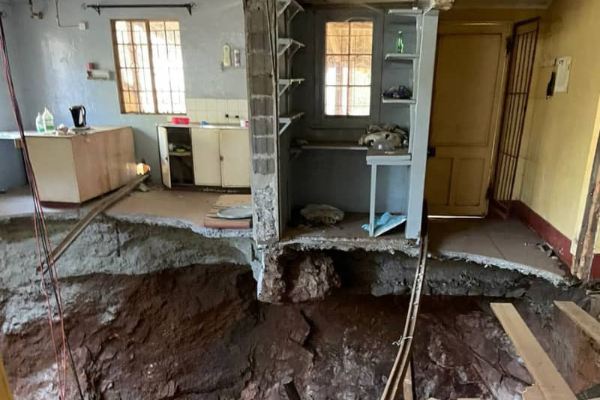
A house near Globe and Phoenix Mine in Kwekwe has been “swallowed” by a mine tunnel.

According to the Permanent Secretary of the Ministry of Information, Publicity and Broadcasting Services the kitchen and bathroom collapsed into an underground tunnel following explosions in the area.

“This is a house in Silver Oaks Street, near Globe and Phoenix Mine, belonging to Mrs Rusike and her family. The dining room collapsed into a tunnel a year ago, forcing them out of their home. Last evening, the kitchen and bathroom gave in, owing to the dynamite explosion from the mining activities around the area. This revealed a huge shaft that has been underneath the house. Cabinet has an inter-ministerial team to deal with this,” Mangwana said on his Twitter account.

Earlier this year the Mine Rescue Association of Zimbabwe swiftly attended to an emergency at Globe and Phoenix Mine in Kwekwe when a classroom collapsed resulting in the injury of 18 schoolchildren. This was after some ground subsidence caused by illegal small-scale mining activities gave way at a primary school resulting in the injury of 18 schoolchildren.

41 kids were geared to start lessons around 0730hrs when suddenly half of the floor of their classroom gave in following the ground subsidence. 14 kids went down with the collapse but luckily the desks and chairs went in first and closed the gaping floor and that saved the kids.

During the collapse, other kids from adjacent classes panicked and jumped out through the windows resulting in four more children being injured. Fortunately, all the children were taken to the hospital and were all discharged by the end of the day.


BREAKING: Thomas Gono appointed Chamber of Mines President

0

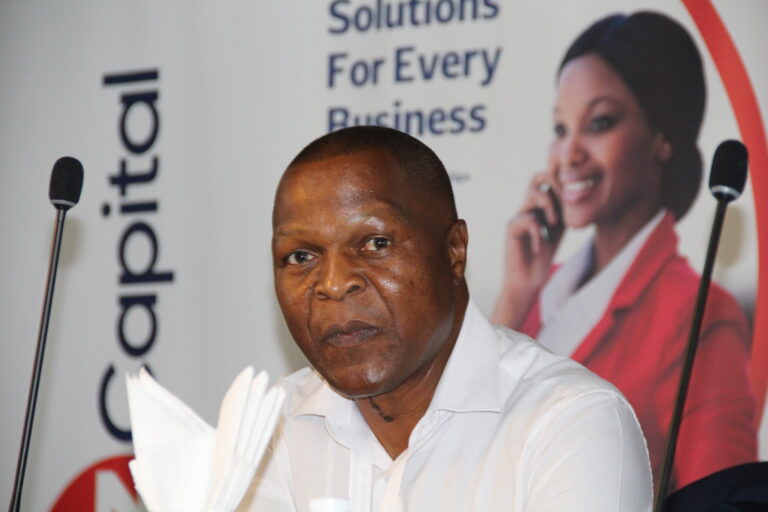
Golden Reef Chief Executive Officer (CEO) Thomas Gono has been appointed the Chamber of Mines of Zimbabwe (CoMZ) President at the ongoing Chamber of Mines Annual Conference and exhibition happening in Victoria Falls.

Gono will be deputized by ZIMASCO CEO Mr John Musekiwa who has been appointed First Vice President and Munashe Shava as second Vice President. Shava is Kuvimba Mining House’s technical director.

The CoMZ President and vice Presidents are elected at the CoMZ council. The council is the highest policy-making body of the Chamber and it is also an elective council or an elective forum.

Thomas GonoGono takes over Presidency from Colin Chibafa who has been at the helm of the organisation for the past two years.

More to come…

Kamativi Mine’s progress satisfies government!

0

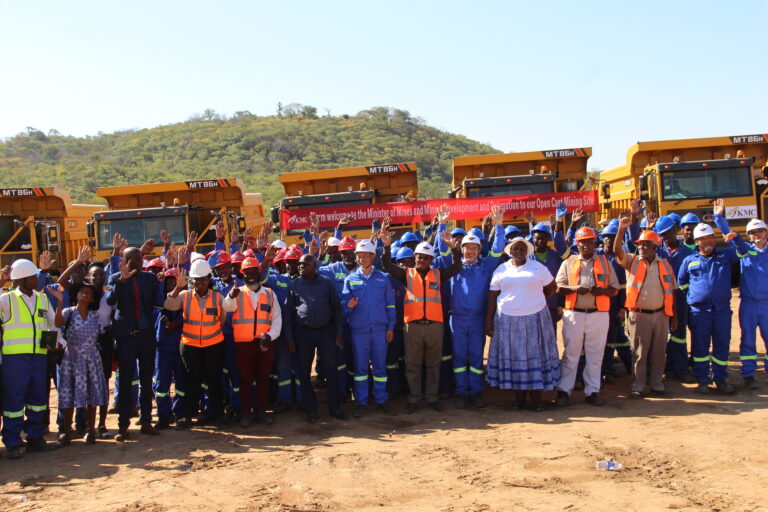
The government of Zimbabwe through Mines and Mining Development Deputy Minister Hon Polite Kambamura has expressed satisfaction with the progress by Kamativi Mining Company (KMC) at its Kamativi Mine.

Speaking at the tour of Kamativi Mine, the Deputy Minister praised KMC for its adherence to the government’s objective of local beneficiation and value addition in minerals exports. He cited KMC as one of the country’s most exceptional investors.

Kambamura further lauded KMC for investing in state-of-the-art equipment, a move that he expects will improve the mine’s productivity levels.

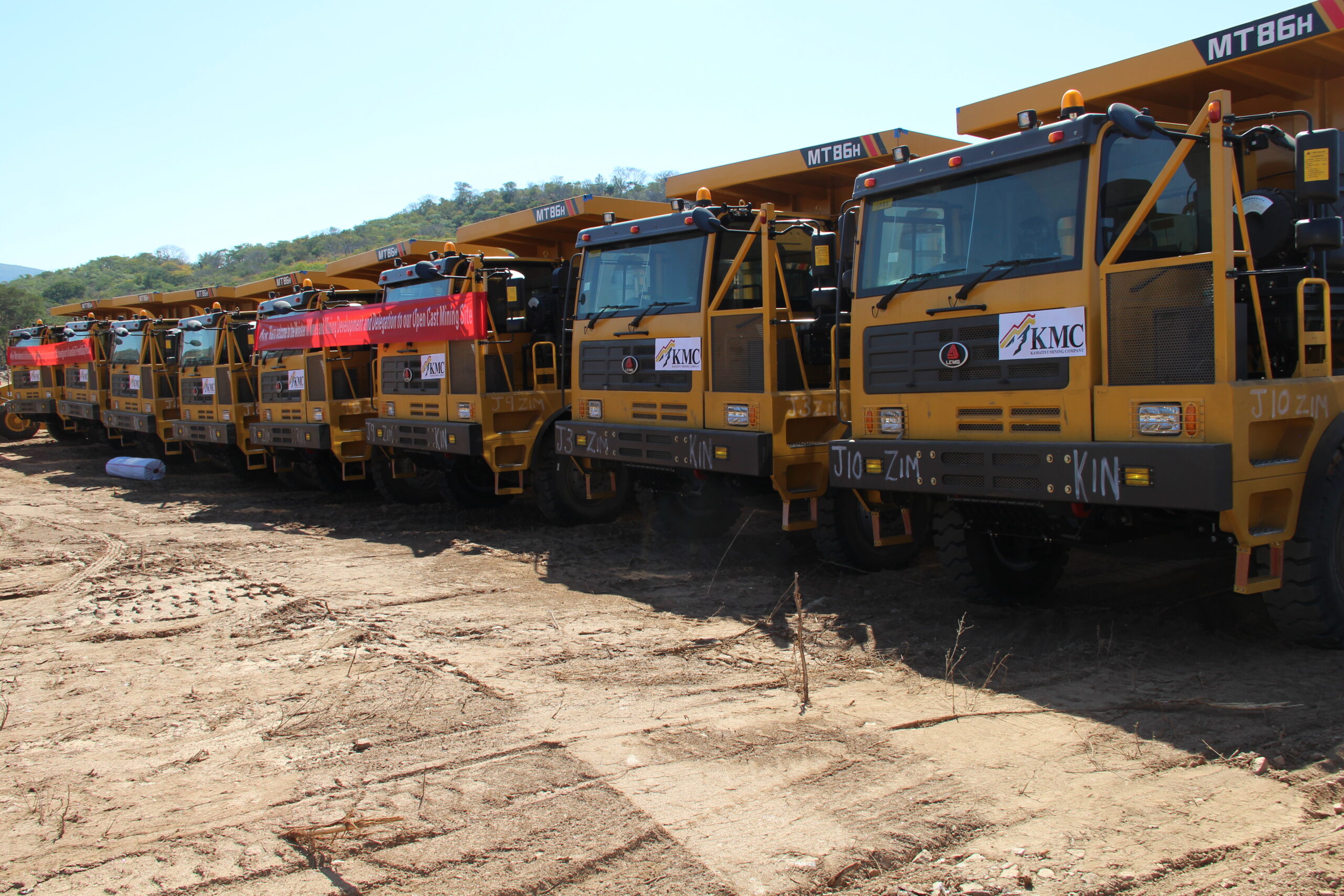
Kamativi mining Company (KMC) dump trucks“Kamativi Mining Company (KMC) has purchased a lot of state-of-the-art equipment, drill rigs, dump trucks, excavators, and craters. They are already on site and they have already started stripping the open pits to expose the old bearing rock,” Kambamura said.

Additionally, the Deputy Minister noted that KMC had been successful in its exploration, having drilled more than 19,000 meters and exposed more than 20 million tons of ore. These exploratory activities have extended the life of the once-abandoned Kamativi Mine to ten years.

“They are continuing exploration and drilled over 19,000 meters and exposed more than 20 million tons of ore reserves, which puts the life of the mine span of about 10 years,” Kambamura said.

He said the first phase will be done by October 2023 and KMC will invest a total of us$100 million by 2024 furthermore construct a phase two plant for lithium beneficiation.

“We are looking forward to this mine finishing the first phase in October this year, where they have already sunk 25 million US dollars. And come early 2024, they will be finishing the second phase, which is going to grow to about 75 million US dollars, to make a total of 100 million US dollars. This shows seriousness on the side of the investor. Also, following the government’s ban on the export of raw lithium ore, KMC has gone further to construct a lithium beneficiation plant. They are also going to resuscitate the old plant and we are looking forward to the construction of the plant by October this year, which is expected to be handling 1,000 tons of ore per day. Come early 2024, they will be producing about 350,000 tons of lithium concentrates from 2.3 million tons of mined ores per year.

He said progress at the mine places the Kamativi as one of the largest lithium producers in Zimbabwe which is expected to employ 1500 locals.

“So this shows much, much progress and this also positions this mine as one of the country’s largest lithium producers. And in the long term, we are looking forward to doing lithium salts. After doing concentrates, they will further beneficiate to lithium salts. So we are much, much excited about this project, given that after the second phase, the mine will be able to employ between 1,100 to 1,500 Zimbabwean employees.

Kambamura singled out KMC for its commitment to Corporate Social Responsibility (CSR), despite its non-production status.

“Currently, KMC is employing over 250 employees, with a bigger chunk of employees coming from the local community. And one impressive thing is that the company has not waited to start production to work with the community. They have already drilled eight boreholes, and they have already renovated the local clinic, with some donations, and they are working well with the local community. KMC is one good example of an investor who follows the government’s vision of local beneficiation and value addition for the export of minerals. So we are looking forward to the company finishing the first and second phases, and we will come for commissioning,” Kambamura concluded.

Zimbabwe gold buying prices 29 May 2023

Fidelity Gold Refinery (FGR) official gold buying prices Monday 29 May 2023. See the Zimbabwe gold buying prices for today.

SG 90% AND ABOVE US$59.49/g
SG ABOVE 85% BUT BELOW 90% US$58.55/g
SG ABOVE 80% BUT BELOW 85% US$57.92/g
SG ABOVE 75% BUT BELOW 80% US$57.30/g
SAMPLE BELOW 10g BUT ABOVE 5g US$56.36/g
FIRE ASSAY CASH US$59.49/g

NB: Fire Assay cash price is for gold above 100gs and no sample is deducted.
For the Fire Assay Transfer price, a sample of not more than 10g is deducted
A 2% royalty is charged on all deposits (small-scale miners)
A 5% royalty is charged to Primary Producers

Cash available. Fidelity Gold Refinery prices will be changing daily in relation to world market prices.

Botswana Refuses to Back Down in Demand for Greater Share of Rough Diamonds

0

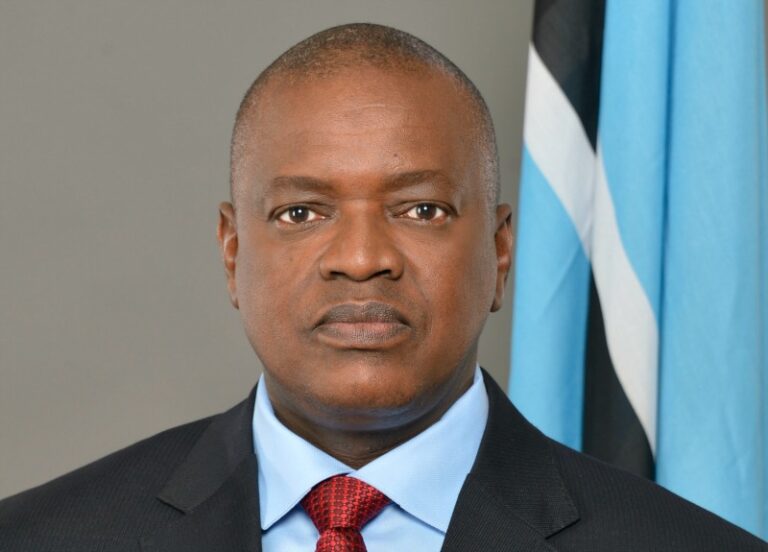
Botswana’s President, Mokgweetsi Masisi, stated that his country will not back down from its demand for a bigger share of rough diamonds from its joint venture with De Beers.

This comes as talks for a new sales deal appear to be stalling. Botswana and De Beers mine the precious stones through their equally owned, 54-year-old mining venture, Debswana Diamond Co. The current diamond sales deal has been in place since 2011 but is set to expire next month.

De Beers, a unit of Anglo American, acquires 75% of Debswana’s production, while the remaining 25% is sold to the State-owned Okavango Diamond Company. Masisi wants Botswana to sell more diamonds outside the De Beers channel.

“Our agreement with De Beers is very restrictive to us. We signed it at a time when we didn’t know much, but now our eyes are open,” Masisi said at a community meeting in Mmadinare, 400 km north-east of the capital, Gaborone.

Although the government has not publicly stated what share it seeks, it is believed to be as high as 50%, double the current allocation. Masisi hinted at the possibility of litigation over the sales agreement, stating “even if we lose the litigation, our diamonds will remain ours and we will never give in,” said Masisi.

Last month, Masisi threatened to walk away from talks to renew the sales deal unless Botswana gets a larger share of output from the joint venture. He did not specify the size of the share it sought.

Masisi told reporters at the time that Botswana had denied itself the opportunity to sell its own diamonds through the 54-year-old joint venture agreement.

He added that the experience of selling diamonds outside the De Beers system, which sells unpolished, or rough, stones, had shown that Botswana could get more revenue.

“Besides the fact that the diamonds are ours, it doesn’t make sense for us to continue to relegate ourselves to participating in the rough space only. So, it’s only logical that we want more and we are going to get more. But through negotiation,” Masisi said.

De Beers says Botswana receives more than 80% of returns from Debswana, after taxes and royalties are factored in, and has expressed confidence that its five-decade partnership with Botswana will continue, on terms “that make economic and strategic sense for both parties”. De Beers, a global diamond market leader, has not yet commented on Masisi’s latest statement.

Botswana is playing hardball in its ongoing negotiation with De Beers regarding diamond sales. Masisi’s stance may be driven by upcoming elections, and De Beers will have to decide whether to accept the demand or risk losing its partnership with Botswana.