Home Blog Page 389

Crypto can’t beat gold as an inflation hedge, says Barrick boss

0

The world’s second-biggest gold miner is confident prices will hold firm this year, if not rise, as investors use the metal rather than cryptocurrencies to hedge against inflation and jewelry demand picks up.

“The risk is on the upside,” Barrick Gold Corp. Chief Executive Officer Mark Bristow said in an interview in Riyadh, Saudi Arabia. “I don’t think there’s very much risk on the downside.”

The mostly likely scenario is that gold trades between $1,750 and slightly above $1,800 an ounce, he said. Spot bullion gained 0.4% to $1,809 by 8:45 a.m. in London, paring its loss this year to 1.1%.

Bristow, a geologist who’s lead Barrick since early 2019, is more bullish than analysts, many of who forecast gold will drop as the U.S. Federal Reserve raises interest rates this year. Its price will average $1,683 per ounce in the fourth quarter, according to a Bloomberg survey of analysts and economists.


Gold spot price  2021 2022

Gold’s status as a store of value when inflation accelerates has taken hit since the coronavirus pandemic struck. The metal fell 3.6% in 2021 even as inflation rates across the developed world soared with governments and central banks keeping fiscal and monetary policies loose to stimulate their economies.

Bullion faces growing competition from Bitcoin and other cryptocurrencies that are increasingly pitched to investors as a modern-day gold and an effective hedge against inflation. Goldman Sachs Group Inc. argued that Bitcoin is taking market share from gold as a store-of-value investment.

“Look at gold and its precious nature — you can’t print it and you can’t make it,” Bristow said. “You can make cryptocurrencies, and there are many of them. When you’re in a dynamic phase like we’re in now and the world’s uncertain, it’s always good for gold.

Bristow is in Riyadh to attend Saudi Arabia’s first major mining conference. The Toronto-based company digs up copper in the west of the kingdom in a joint venture with the state miner Maaden.

Bloomberg

Foundries target capacity utilisation increase

0

COMPANIES in the foundry industry are targeting to increase capacity utilisation to 80 percent by the end of the year following the Government’s interest in supporting the multimillion industry, an official has said.

The foundries sector is presently operating at 40 percent capacity utilisation.

In December last year, the Zimbabwe Institute of Foundries (ZIF) held an indaba in Bulawayo where stakeholders raised issues that affects foundry operations, among them shortage of raw materials and high production cost.

In an interview this week, ZIF chief operations officer Mr Dosman Mangisi said the indaba was a great success as the Government was working tirelessly towards improving the operation of the foundry industry.

The Government’s commitment to promoting the operations of companies in the foundry sector, he said has started bearing fruits as seen by the ban of chrome ore exports.

“Foundry in Zimbabwe should be operating at 80 percent by end of 2022 and this can only be achieved through the Government’s support on the ban of scrap metal export and enforcing policies which can allow the foundry industry to buy inputs like coke and other local products in local currency and reducing cost of doing business,” he said.

Zimbabwe’s foundries were operating at 40 percent due to shortage of raw materials and this has resulted to unemployment as some firms in the sector were operating once or twice a week.

“Metal casting industry was the biggest employer operating on shifts but due to reduced operational capacity, the industry now employs few people. Therefore, by end of this year the industry should be able to provide jobs to at least 30 to 50 percent of people it used to employ as we are looking forward to increasing operational capacity,” said Mr Mangisi.

He said the foundry sector was seeking to improve human capital development through engaging relevant institutions of higher learning to work together in providing skills on metal casting.

Mr Mangisi said ZIF would fully engage the Government to come up with key strategic policies on metal beneficiation as many countries have shown interest in Zimbabwean metals. “Botswana is eager to have Zimbabwean metal products and this is possible only if the Government rallies behind with policies that promote the growth and development of the sector.

“This alone will see the appreciation of our local currency because we will have more exports to the region and globally which will also reduce the need of foreign currency to buy raw materials,” he said.

“Also, the South Africa Institution of Foundry has already contacted Zimbabwe seeking some synergies to develop Zimbabwean foundry in technology side and the World Foundry Organisation has offered membership to us as you may be aware that Zimbabwe have best key base metal that drive the foundry industry in the world.”


The Chronicle

Invictus Energy meets share purchase plan target

0

INVICTUS Energy has met its $2 (AS) million share purchase plan target it requires to fund the development of the Muzarabani oil and gas project.

A further A$1 million of oversubscriptions have been opened bringing the total amount to A$3 million.

The latest development further consolidates the firm’s ability to fund the development of its oil and gas project in Muzarambani, Mashonaland Central province.

In an update release this week, Invictus said: “Given the demand of the SPP (share purchase plan) on the opening day and having reached the SPP target of A$2 million, the board has exercised its right under the SPP prospectus to accept oversubscriptions of a further $1 million and to increase the SPP total from A$2 million to A$3 million.”

A few weeks ago, the Australia Stock Exchange-listed company announced a placement of A$3,5 million and a share purchase plan of up to A$2 million to raise a total aggregate amount of up to A$5,5 million.

So far, Invictus has registered significant milestones in the exploration for and the development of the Muzarabani oil and gas project.

The progress achieved includes the completion of a seismic (subsurface data gathering study and conclusion of drilling agreement with a United Kingdom company.

The company said the SPP funding would assist with drilling costs of Muzarabani-1 well targeting prospective resources of 8,2 trillion cubic feet (TCF) and 247 million barrels conventional gas condensate.

Invictus Energy is an independent oil and gas exploration company focused on high impact energy resources in sub-Saharan Africa.

Its asset portfolio consists of a highly prospective 250 000 acres within the Cabora Bassa Basin in Zimbabwe.

The Special Grant 4571, which Invictus was granted by the Government contains the world class multi-TCF Muzarabani and Msasa conventional gas-condensate prospects.

The project received environmental approval from Zimbabwean authorities in August last year.

In the early 1990s, Mobil, a France headquartered company carried out initial seismic surveys but decided not to follow it up.

However, Invictus using more modern data processing techniques, reprocessed the data gathered and found strong evidence that the underlying geological structures had the domes and traps that could indicate oil and gas in Muzarabani


The Chronicle

Power cuts derailing production targets’

0

Players in the industry and mining sector have warned that continued power cuts could derail first quarter 2022 GDP growth targets due to lost production time.

This follows an announcement by the Zimbabwe Electricity Supply Authority (ZESA) that there will be increased load shedding due to maintenance works at Kariba Hydro Power Station, one of its power generating sites.

Chamber of Mines CEO Isaac Kwesu said the increase in load shedding has a greater impact on the production side of the mining sector.

“Many businesses have reverted to alternative power sources such as fuel-powered generators which have become even more expensive to operate given the increase in global oil prices that has rippled to the local US-dollar pump prices due to power supply failures,” he said.

The Government has this year set economic growth projection at 5,5 percent, underpinned by higher output in mining, manufacturing, agriculture, construction as well as the tourism sector.

The Confederation of Zimbabwe Industries (CZI), has often highlighted that the issue of power has remained a cause for concern hence CZI continues to engage the power utility on the issue.

Manufacturing processes rely on electric machines that require power to perform the precise and repetitive tasks to increase production with industrialists saying the chronic shortages of electricity are starting to damage the economy.

The costs vary from direct economic costs, indirect costs, and social costs. Indirect and social costs are equally important components when considering the impact of power interruptions.

Economist Dr Prosper Chitambara said, “The increased load shedding will definitely affect industry production targets as some production lines are too costly to run on a generator.”

He added that this will affect inflation as increased cost of production through increased fuel procurement for generators will be pushed to the consumer, causing cost-push inflation.

As a result, a number of companies suspended shifts owing to rolling power cuts amid fears the use of expensive diesel generators will increase the cost of production by about 20 percent delivering the final blow to the already troubled industry.

Industry is, however, calling for a sustainable solution to the current power situation which has become perennial at a time inefficiencies at the country’s smaller thermal power stations Bulawayo, Munyati, and Harare have also worsened the situation.

ZESA is also battling to service debt owed to two regional power utilities, Eskom of South Africa and Hydro Cahora Bassa that hitherto supplied electricity to Zimbabwe to cover its huge deficit.

The country’s power utility is currently generating an average of about 1 100 MW against a national demand at peak period of approximately 2 000MW due to frequent breakdown at its aging thermal power stations.

To cover for the shortfall, Zimbabwe is importing from regional power utilities especially Eskom of South Africa and Cahora Bassa of Mozambique.


Business Weekly

Hwange residents appeal for review of mining grants

0

VILLAGERS in Hwange’s Lusumbani area have appealed to government to review underground mining concessions granted to coal miners to ensure they don’t pollute the environment and endanger their lives.

Greater Whange Residents Association chairperson Fidelis Chima said Lusumbani residents were opposed to the opening of underground mines near their villages.

“We acknowledge that Hwange Colliery Mining Company is mining within the stipulated legal framework, 250 metres away from the community. However, we are saddened by the colonial system of concessions where individuals or companies were given vast pieces of land that had been idle.  We appeal to our Parliament to revisit this issue,” Chima said.

Hwange Colliery Mining Company spokesperson Beauty Mutombwe said the coal miner last week met residents and reached consensus on the matter.

“We had a meeting with residents last week; they don’t have problems with our mining activities. If there is any individual that is still experiencing problems, that person can approach us,” she said.


NewsDay

Zisco pays off $40m Zesa debt

0

DEFUNCT steel manufacturer, Zisco, has paid off a $40 million debt it owed the country’s power utility, Zesa after securing a loan from the Industrial Development Corporation of Zimbabwe (IDCZ) recently.

In November last year, Zesa disconnected power supply to Zisco over a $40 million debt leaving the Redcliff-based steel plant relying on expensive diesel-powered generators.

Redcliff Municipality and ZimChem Refiners, a subsidiary of Zisco were also affected by the disconnection as they share the same electricity grid with the steel producer.

In a recent interview, Zisco group chief executive officer, Dr Farai Karonga said the company had to secure a loan from IDCZ to settle the debt.

“We were bailed out by the Industrial Development Corporation who loaned us the required $40 million which we deposited to Zesa.

The money had been accrued over a long period of time and something had to be done hence we took the route of a loan.

We felt we needed to break the vicious cycle,” he said.

“We are now working on the modalities of seeing how much can be paid by Redcliff, ZimChem and ourselves.

As you may be aware, Redcliff used most of the power which they use to pump water to the residents, translating to about 70 percent,” he said.

ZimChem accounted for about 20 percent of the power with Zisco accounting for the remaining 10 percent.

He said they were yet to be connected since they were working on separating the grid so that each entity can be charged separately.

“They are in the process of separating the grid so that Redcliff, ZimChem and ourselves can be charged separately.

Each entity can now stand on its own and be able to pay for their own power,” said Dr Karonga.

The process is expected to be completed in a month’s time.

Meanwhile, Dr Karonga said the development may come as a boost to ZimChem who are supposed to start producing chemicals used in road rehabilitation.

“As you may be aware, ZimChem was given a contract by the Government to supply tar for road refurbishment under the Emergency Road Rehabilitation Programme (ERRP) 2.

“So, the disconnection had negatively impacted on the production since they could not produce as they were relying on generators like us,” he said.


The Chronicle

Small-scale miners’ security sought after gold deliveries

0

THE Parliamentary Portfolio Committee on Mines and Mining Development has recommended the introduction of electronic vouchers for small-scale miners to enhance their security after receiving payment for gold deliveries.

Of late, small-scale miners across the country have become targets of robbers after receiving payment from Fidelity Printers and Refiners (FPR) at milling centres where the country’s sole gold buyer would be buying the yellow metal.

As part of boosting gold production in the country, FPR has established gold buying units milling centres across all the mining regions in the country.

In an interview yesterday following their recent tour of gold mines and gold mining communities in the southern region of the country, Mines and Mining Development Portfolio Committee chairperson Edmund Mkaratigwa, who is also Zanu-PF legislator for Shurugwi South constituency, said: “We established that at some milling centres
particularly in Gwanda, many a time, the robbers would know when Fidelity has been to the site, when the people have been paid and they pounce on the unsuspecting miners who would have been paid for their gold deliveries.

“We also recommended that it will be good to probably introduce electronic vouchers so much that miners would ordinarily visit a bank at an opportune time only known to them, a bank of their choice unbeknown to the criminals or would-be criminals and en-cash their vouchers in hard cash to enhance security of their rewards.”

During their tour, the portfolio committee visited Bubi Milling Centre in Matabeleland North and milling centres in Gwanda, Matabeleland South.

Mkaratigwa said at the Bubi Gold Milling Centre it was established that among other challenges, the miners were faced with power challenges due to incessant power cuts by the Zesa.

“At Bubi Gold Milling Centre, there were some challenges with neighbouring milling centres who seemed to be actually getting more throughput from miners around the Bubi community as opposed to this establishment.

“We found that the challenge was to do with some operational teething problems as some equipment was not up to standard in terms of operation, maintenance and continuity in terms of guaranteed service to the miners.

“Our recommendations were that the miners around support their facility by ensuring that their product which they would have mined for processing at the milling centres and Fidelity should ensure that they pay timeously and also the issue to do with pricing is addressed so that its attractive to the miners,” he said.

Bubi Milling Centre is a joint venture project between the Zimbabwe Mining Development Corporation (ZMDC) and small-scale miners in Bubi district.

Towards the end of last year, ZMDC announced that it was pouring US$2,2 million into Bubi Milling Centre (Private) Limited to capacitate artisanal and small-scale miners with mining equipment and accessories.

The capacitation programme involves the installation of a Carbon-in-Pulp (CIP) plant at Bubi Milling Centre as well as equipping ZOO 7 and ZOO 9 small-scale mines with mining equipment and accessories such as hoist, generators and electricity transformers.

A CIP plant is an extraction technique for recovery of gold, which has been liberated into cyanide solution as part of the gold cyanidation process.

Vice-President Dr Constantino Chiwenga commissioned the Bubi Milling Centre in July 2018.

Under the Second Republic, the country targets to establish more gold service centres across all the mining regions as a strategy towards attaining the US$12 billion milestone by 2023 with the gold sub-sector expected to contribute US$4 billion.


The Chronicle

Outcry over illegal miners

0

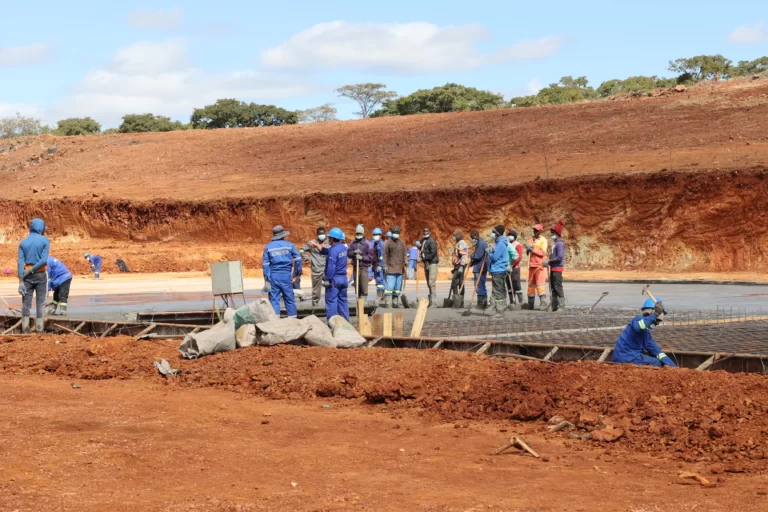
Villagers in Chimanimani, Chiadzwa and Penhalonga districts have raised concerns over illegal artisanal mining activities in the areas which have left uncovered pits that are death traps for both humans and livestock.

The pits have also become fertile breeding areas for mosquitoes during the rainy season.

Apart from that the miners were using chemicals that are harmful to animal and plant life.

“The open pits being left behind have become death traps for our livestock. Locals have lost hundreds of their cattle, goats, donkeys and even sheep.

“This year alone we have recorded eight human deaths. Most of these are drowning as the pits are now filled with water,” the Amalgamated Chiadzwa Community Development Trust vice chairperson, Jey Kasakara, told  Business Times.

He said a new challenge has also emerged in the pits being mosquito breeding sites.

He added: “Our area has become a hotbed for malaria, something that was unheard of prior to this mining venture that began in 2007.”

The Environmental Health technician with the Ministry of Health and Child Care stationed at Chishingwi Clinic in Marange, Mavis Chanakira, said malaria cases had shot up in Chiadzwa, in Marange district.

“We have made the random surveys and they proved that Marange (district) had become one area that is a malaria zone. This can be easily traced or linked to the huge open pits left behind by mining firms and artisanal diamond panners that are abundant in the area,” Chanakira said.

She added: “Had these pits been filled up we are sure the cases of malaria would not be as high as they are in the area at the moment.

“Our appeal is for the provision of mosquito nets to the communities around the areas with these pits to control mosquito bites and ultimately malaria.”

Kudzai Mlambo from Chimanimani said the illegal gold panners were encroaching into the fields of locals as they seek the precious mineral.

“We have seen some families losing their houses as the underground gold mining takes root. Others have lost their fields as the marauding gold panners stop at nothing to get the gold at any cost and stop at nothing,” Mlambo said.

At Fairview Farm in Mutasa district, commercial farmer Felix Kamba said nearby farmers had lost vast pastureland to the illegal gold processing being done on his property by the illegal gold miners from Tsvingwe in Penhalonga through contamination of the land and dam water.

“The mining is not being done on the property, but the processing of the gold where they use their hammer mills and cyanide and mercury is what is affecting me and other neighbouring farmers. These chemicals they use on our properties are causing havoc on the farm. The cyanide and mercury have polluted the water and destroyed the grazing land,” Kamba said.

He added: “The gold dealers just invaded the farm and set up their hammer mills. The noise pollution from that is unbearable, the pollution levels on the dam are unimaginable, we are thinking of abandoning our dairy project we had set up at the farm as pollution levels are escalating. Soil has been contaminated as well as the water bodies.”

The Manicaland Provincial Mines and Mining Development director Ernest Mugandani told Business Times  that proper and safe ways of mining needed to be adhered to at all times to safeguard the environment. He said those involved in mining activities should not endanger human, animal and plant life while carrying out their activities.

“We keep on saying mining should be smart and we will always say it again and again. We advise the reclamation of once mined areas to be used for other purposes such as agricultural use. Open pits need to be fenced off or filled up. We want our people to be economically empowered while at the same time we leave peacefully with surrounding communities,” Mugandani said.

“Our supervisors are always on the ground to look at these grievances coming from the communities. We do not want them to lose their livestock from these open pits or from cyanide poisoning.

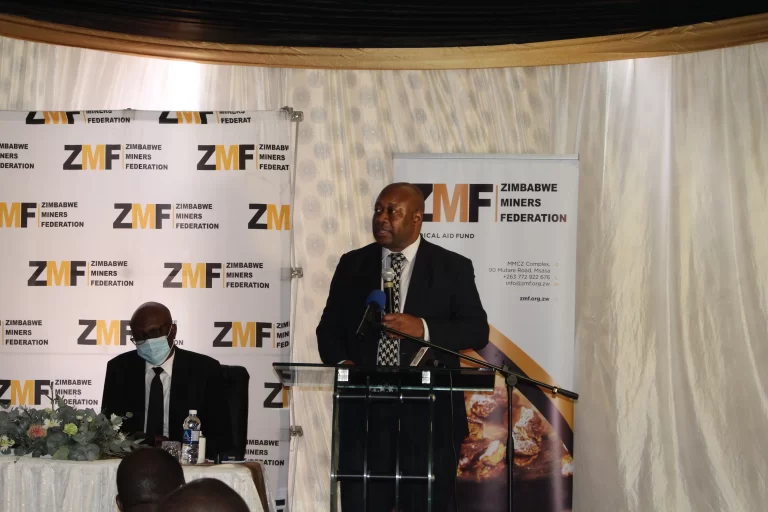
The Zimbabwe Miners Federation Manicaland Province representative Judith Shadaya whose members have been largely blamed for the environmental degradation said the organisation has embarked on a provincial awareness campaign on safe methods of mining with minimal damage to the environment.

“As an organisation we are currently going around mining areas to educate our membership on the best practices of mining,” Shadaya said.

James Mupfumi, director for Centre for Research and Development said it was critical to push the agenda for the speedy enactment of the Mines and Minerals Amendment Bill into law.

“We want the laws to be passed such as the Mines and Minerals Amendment Bill, the Devolution and others as we realised that there is a lot of lawlessness going on in Chiadzwa, Chimanimani and Tsvingwe in Penhalonga. The absence of the implementation of such laws is impacting negatively on the people,” Mupfumi said.


Business Times


Just In: Small-scale lead gold submission of 2021

0

Artisanal and Small-scale Miners (ASM)‘s contribution to the national fiscus particularly to the achievement of the US$4 Billion gold industry by 2023 continues on an upward trajectory compared to their counterparts in the large-scale sector as they accounted for 62 per cent gold deliveries to Fidelity Gold Refiners (FGR).

Rudairo Mapuranga

According to a press statement released by the Reserve Bank of Zimbabwe (RBZ) Governor John Panonetsa Mangudya on Wednesday, a total of 29.6 tonnes of gold was delivered to FGR posing a 55.5 per cent increase from the 19 tonnes delivered in 2020.

Small scale producers delivered a total of 18.5 tonnes while large scale producers contributed 11.1 tonnes of the total deliveries.

“The Reserve Bank of Zimbabwe wishes to express its appreciation and gratitude to the country’s small and large gold producers for having delivered a total of 29 629.61 kg of gold to Fidelity Gold Refinery (Private) Limited (FGR) in 2021, a 55.5% increase from the 19 052.65 kg delivered in 2020. Large gold producers delivered 11 159.0 kg to FGR in 2021 whilst small-scale producers contributed 18 470.61 kg,” Mangudya said.

The Reserve Bank Governor said the gold incentives scheme introduced by the government contributed significantly to the increase in gold deliveries.

“The Bank also commends Government for the Gold Incentive Scheme introduced in May 2021, which scheme has had a significant positive impact on gold deliveries to FGR. It is projected that the quantum of the country’s gold exports in 2021 will increase beyond the 29 629.61 kg when the gold component in the Platinum Group Metals is eventually included in the tally of gold deliveries to FGR,” he said.

Zimbabwe’s largest mining body the Zimbabwe Miners Federation (ZMF) last year said their membership of 1,5million will strive to ensure they contribute an overall 4billion across all minerals by 2023.

Boost for Zulu Lithium as Premier appoints Errico Vascotto as COO

0

London Stock Exchange-listed mining and exploration company, Premier African Minerals Limited has appointed Mr Errico Vascotto as Chief Operating Officer (COO) with immediate effect a move meant to benefit Definitive Feasibility Study at Zulu Lithium, company CEO George Roach said.

Rudairo Mapuranga

According to Roach, Errico who joins the Company as non-board Chief Operating Officer is an accomplished and qualified Mining Engineer with extensive project management, mine development and mine management experience. He has wide multinational experience in Africa and South America.

Roach said the appointment of Errico said the COO will immensely benefit the Zulu lithium project as the company is looking forward to making the mine a world-class lithium producer.

” We are delighted to welcome Errico to the team. His experience in project management and mine development will be invaluable and I expect to see early benefits in regard to progress on our Definitive Feasibility Study at Zulu Lithium and Tantalum Project, and the possible return to production at RHA Tungsten.

Errico’s direct mine management experience coupled with Premier entrepreneurial approach promises an exciting and positive start to 2022″ Roach said.