

Home Blog Page 467

‘Competitive opportunities in Zim mining sector’

0

INVESTORS have been urged to consider investing in Zimbabwe’s mining sector as it presents many competitive opportunities to different needs.

The mining sector in Zimbabwe accounts for around 65 percent of the country’s foreign currency receipts. The country has witnessed several big developments on the mining front in the past years.

In a presentation at the Expo 2020 Dubai Zimbabwe Mining Promotion Conference in Dubai last Thursday, Mines and Mining Development Minister Winston Chitando said Zimbabwe’s mining sector presented many competitive opportunities to different needs of diverse investors.

“Zimbabwe has abundance of mineral resources, availability of a highly skilled labour force that is willing to work, attractive investment incentives and investor-friendly Mines and Minerals Act – currently being amended to make it more competitive.

The country has effective and efficient minerals marketing system, functional systems and responsive Government Ministries, progressive policies such as Ease of Doing Business and RRI and availability of good basic infrastructure,” said Minister Chitando.

He said the country had a membership to regional and international trade and cooperation organisations such as SADC, COMESA, WTO, EU/ACP Convention which ensured easy access to world markets.

Minister Chitando said mining was one of the key sectors tasked by the Government to anchor economic growth and transformation towards its vision of making Zimbabwe an  Upper-Middle Income country by the year 2030.

In line with that vision, he said the mining industry was expected to contribute US$12 billion by 2023 and US$20 billion by 2030.

“Zimbabwe has huge potential in minerals of the future and those expected to drive the economy such as gold with over 4 000 recorded gold deposits, nearly all of them located on ancient workings. More than 90 percent of gold deposits in Zimbabwe are associated with greenstone belts which are considered to be some of the richest in the world.”

He said the country had highly diversified mineral endowment and investment opportunities therefore existed across entire mining value chain.

“There is exploration of both brownfield and greenfield. The country is still under-explored and there is huge potential for new discoveries, particularly using the modern exploration techniques.

In mining most of the mines are using antiquated machinery and require retooling to increase efficiency and productivity.

Also, across linkages with entire economy, these include local value addition, support services such as supplies of mining equipment and consumables, financial services, management and technical consultancy services,” he said.

Parliamentary Portfolio Committee on Mines and Mining Development chairman Edmond Mkaratigwa who is also in Dubai said that mining investments in Zimbabwe were not only in the extraction of minerals.

“There is vast unexplored land in the country and the known diverse minerals have already been discussed. In the country moreover, mining sector related business include mineral extraction, processing, market based environmental reclamation as well as mining sector mechanisation and consumable supplies, among others.

One of the windows is coming through the imminent global ban on mercury in particular and cyanide,” he said.

Mkaratigwa said there was a need for innovation and for a replacement to the technologies which harm the environment and livelihoods.

He said supply of equipment in the sector was a huge niche because most of the small-scale miners were using rudimentary methods of mining.

“As Parliament, we are embarking on a raft of measures to ensure water tight legal protections of investors’ interests which are in general, “the profits”.

We are also continuously monitoring and reviewing our systems, processes and approaches to ensure ongoing improvement, effectiveness, efficiency, friendliness and sustainability. In that regard the one stop shop, Zimbabwe Investment Development Agency, already exist.”

Meanwhile, presenting the 2022 National Budget on Thursday, the Minister of Finance and Economic Development Professor Mthuli Ncube allocated $3 billion to the Ministry of Mines and Mining Development for implementation of the programmes and activities.

“Among others these include amendment of Mines and Minerals Act Amendment, operationalisation of the Cadastre System, mining exploration, decentralisation of operations, opening of closed mines, hiring and capacitating mining extension officers, establishment of gold service centres and mineral value addition and beneficiation.” Zimbabwe is among 192 nations participating at the expo.


The Sunday News

Govt focuses on private sector-led mining growth

0

The Mines and Mining Development Ministry budget allocation of $3 billion, approximately  US$3 million at last auction rate, points to the Government’s desire for a private sector-led mining sector growth.

The sector is estimated to grow 3,4 percent in 2021, before reaching 8 percent in 2022, as the country continues to leverage its mineral resources to achieve the desired growth in line with the US$12 billion mining industry milestone by 2023.

Zimbabwe is targeting a fourfold increase in revenue from minerals by 2023, under the policy document, known as the Strategic Road to the Achievement of $12 billion by 2023, which will see gold exports at $4 billion and platinum at $3 billion.

Through the policy document, the Government is focusing on “value addition, enhanced investment within the sector, increased productivity and employment creation and increased exports and foreign-currency generation.

Private sector is expected to play a big role in the attainment of the envisaged growth while the Government will facilitate the ease of doing business to encourage investments in the area.

Earlier in the year, the country’s largest platinum producer, Zimplats, committed to spend US$1,8 billion on capital expansion projects that are currently at different stages of implementation until the year 2028.

The envisaged investment of US$1,4 billion by Zimplats will see the setting up of integrated projects, including the development of new mines, expansion of the smelter, construction of an additional concentrator, base metal refinery, sulphuric acid plant and the setting up of a 110MW solar power plant.

Chamber of Mines Zimbabwe President, Mr Collins Chibafa, recently said the mining sector remains committed to play its part to ensure the industry maximises contribution to the socio-economic development of the country.

“To this end we are working closely with the Government to ensure all challenges that are weighing down the performance of the mining sector are addressed,” he said.

He noted that there is a need for supportive measures for exporters that will guarantee increased foreign currency generation and all bottlenecks that are currently weighing down the performance of the export sector should be resolved to unlock the growth potential of foreign exchange earnings.

“When all these are taken into account, most mining companies do not have sufficient foreign currency to fund their operations,” he said.

According to Mines Minister Winston Chitando, in the platinum sector, other mining firms like Unki and Mimosa are expanding their operations while new projects are at different stages of development.

Great Dyke Investments, a consortium of Zimbabwean and Russian investors, has opened two box cuts at its site in Darwendale, near Harare, and they would be operational by 2023.

Bravura, which is owned by a Nigerian investor, has completed its drilling and will open its first box cut this year.
Karo Resources, partly owned by South Africa’s Tharisa Holdings, is also completing its exploration.

In the coal and hydrocarbons sector, Minister Chitando said, there are thermal power projects at various stages of development.

In the diamond sector, the Zimbabwe Consolidated Diamond Company (ZCDC), a diamond mining company wholly owned by the Government, is looking to produce 3 million carats this year.

Meanwhile, Minister Ncube in the 2022 Budget presented on Thursday said the ongoing economic recovery as well as favourable international mineral prices, on the back of strong global demand is expected to sustain the mining sector.

He said the budget allocation will enhance the capacity of the Ministry of Mines and Mining Development to implement a number of programmes and activities aimed at stimulating growth.

Minister Ncube said the budget will capacitate Mining Promotion Corporation (MPC) to enable it to spearhead exploration by the private sector and the Zimbabwe Geological Survey.

“In this regard, a total of $203,6 million is estimated to cater for the exploration needs for the year 2022,” he said.

In addition to that, the Government will operationalise the Cadastre System, after its successful pilot in Manicaland province.

A Cadastre system is an up-to-date electronic land information system that contains a record of interests on a particular piece of land including a geometric description of land parcels and nature of the interests, ownership or control of those interests which help to reduce title disputes and buoy the mining sector.

“In support of the programme, an amount of $146 million has been set aside under the 2022 National Budget for that purpose,” he said.

In line with the Devolution and Decentralisation agenda, the Ministry of Mines and Mining Development is establishing provincial office centres, such as Hwange, Kadoma, Zvishavane and Lupane.

The Lupane Office will be transformed into a fully-fledged Provincial Office, and the 2022 National Budget has allocated $60 million for acquisition of land, construction of appropriate offices and provision of requisite tools of trade.

On opening of closed mines, Minister Ncube said efforts towards resuscitation of the mines is being pursued to increase investments and production in the sector.

Minister Ncube noted that the small-scale and artisanal miners contribute significantly to mining production, delivering over 60 percent of gold, among other minerals.

However, this sector faces high cost of capital and other consumables required for mineral processing.

Therefore, as part of measures to capacitate small miners, the Government set aside US$10 million of the SDR resources for the opening of Bubi gold service centre.

The Finance Minister said in order to realise maximum value from the country’s minerals, the Government will target beneficiation of mineral value chains such as the gold ore to bullion processing – through setting up of gold processing/milling service centres.

On Diamond cutting and polishing, Government will facilitate establishment of more cutting and polishing factories while on base metals (nickel, copper, iron, cobalt) recovery from PGMs, Government is supporting the private sector towards establishment of Base Metal Refinery (BMR).

The Government is also aiming to improve access to international markets, increased productivity, and enhanced liquidity and better pricing of our mineral resources, through establishing the Mineral Commodities Exchange riding on the existing Zimbabwe Mercantile Exchange.

The Finance Minister said the Exchange will provide for both spot market and futures market that enables the trading of mineral commodities on an organised, transparent and regulated marketplace for the benefit of all miners including artisanal and small-scale miners, and the nation at large.


The Sunday Mail

Elton Gwatidzo elected AMMZ President

0

Elton Gwatidzo was yesterday elected the Association Of Mine Managers of Zimbabwe (AMMZ) President taking over from Tharisa’s Engineer Coburn Katanda at the Annual General Meeting (AMMZ) held at Caribbea Bay Resort, Kariba.

Kelvin Sungiso

Zimbabwe Consolidated Diamond Company (ZCDC)’s Head of Mining Innocent Guvakuva retained the Vice President post. Unki mines’ Freddy Chamboko joined Eng Tawanda Mutiswa, Eng Cloete Munjoma, Eng Tapiwa Munenerwa (all Zimplats), Ray Chiridza (Acol Chemicals), Eng Gift Mapakame (Freda Rebecca), Eng Abel Makura (Unki), and R Davis’ Head of Mining Eddington T. Vere as Councillors.

Elton Gwatidzo, Coburn Katanda and Innocent Guvakuva

Prominent miner who is the current Freda Rebecca and Shamva mine Managing Director Eng Eliakem Hove was an Honorary Member at the colourful event at the resort town of Kariba.

Elton Gwatidzo term of office began yesterday until November 2022 when the next elections will be held.

About Association Of Mine Managers of Zimbabwe (AMMZ)

The Association of Mine Managers of Zimbabwe provides a platform for mining industry professionals to share and discuss

  • Knowledge Sharing
  • Mining and Mineral Policy
  • Technology and Innovation
  • Safety, Health and Environment
  • Sustainable Mining, ESG
  • Mining Operations

The AMMZ was formed in 1972 to advance the science and practice of Mining and supporting disciplines such as Survey, Geology, and Metallurgy. It is a vehicle for information exchange and dissemination on good practices and seeks to promote the study and growth of Mining and allied disciplines. The AMMZ is an affiliate of the Chamber of Mines of Zimbabwe.

Gvt must address coal seam fires in Hwange – CNRG

0

The Centre for Natural Resource Governance (CNRG) has urged government agencies like the Environmental Management Agency (EMA) to address coal seam fires that have left several people burnt in Hwange. 

Vongai Mbara 

This comes after an eight-year-old girl was burnt by coal fires after she accidentally fell into a coal-ash disposal site belonging to the Hwange Colliery Company on Saturday. 

The girl is currently battling for life at Mpilo Central Hospital in Bulawayo and several other people in the coal-rich district have been left injured after stepping on coal seam fires. 

Speaking in a report titled “Effects of coal seam fires and other environmental hazards on children in Hwange”, the CNRG said the fires continued to jeopardise children’s lives. 

“Many of the victims of these fires are children whose future has been ruined by permanent injuries, lengthy periods spent in hospital and unending excruciating pain that has become a permanent experience in their lives, largely due to inadequate therapy they receive,” read the CNRG report. 

“Despite clear evidence of the huge risk posed by coal-mining activities in Hwange, government, HCCL and EMA have not done anything so far to protect the children and the community. 

The organisation said measures like policy interventions to protect children from mining hazards should be taken. 

“Ema is expected to execute its mandate of monitoring the adherence of mining companies to environmental management regulations without fear or favour.” 

It added that concessions owned by the HCCL had become silent killers due to poor implementation of environmental laws. 

“Residents have noted that mine residue dumps found in Number 2 and 3 areas of HCCL are some of the most hazardous sites with raging underground coal seam fires.” 

Mutare City leases entire mountain to Chinese for a paltry $629/month

0

Mutare City Council is under fire for leasing an entire mountain to a Chinese quarry miner for a paltry amount of US$7 500 per annum. 

According to the lease agreement, the local authority, and the miner, Freestone Mines agreed on a deal to extract quarry in the Dangamvura Mountain for a fee of just US$629 per month. 

Residents are now up in arms with the city authorities who granted the permission to mine within a highly-populated area, without the necessary Environmental Impact Assessment (EIA) certification. 

Residents want the council to relocate Freestone Mines quarry to a new site that is far from the sprouting Dangamvura high-density suburb. 

As per the 10-year lease agreement, Mutare leased its 6,5-hectare stand situated at deforested Dangamvura mountain to Freestone Mines so that it can establish its stone quarry mine. 

The lesser will be exempted from paying rentals to the border town authority during the first eight months of the lease agreement. 

“The lessee shall pay to the lessor an annual rental of US$7557 for the use of the site. As an exemption inceptive, the lessee will be exempted from paying rentals during the first eight months of the duration of the lease agreement,” the lease agreement reads in part. 

Freestone Mines shall not be entitled to compensation for any leasehold improvements including fixed assets, roads, electricity, water and sewer developments. 

Mutare City may constantly review lease rentals after the first eight months of agreement and changes will be communicated to the lessee through a one month written notice. 

“Should there be any need for relocation of sites due to developments by the lesser of the property, the lessor is to give two months written notice to the lessee and both parties are to meet the costs of relocation,” the lease agreement further reads. 

It is believed the Chinese company has already paid the Zimbabwe Electricity Supply Authority (ZESA) Manicaland in advance for electricity to be connected at the quarry site. 

“ZESA was paid a lot of money so that the Chinese miner gets connected to the grid. Even the workers who were conducting the connections of the quarry to the main grid had a big bonanza,” a source said. 

In a statement yesterday, a local youth rights group, Manica Youth Assembly (MAYA) condemned Freestone Mines for running afoul with the county’s constitutional obligations by ignoring the EIA process. 

“This attitude casts in very bad light the image of our Chinese friends who of late have been receiving the hard end of the stick for undermining local communities in Mutoko, Dinde (Hwange), Goromonzi, Uzumba and Manhize in Chivu. It is this extractivism mentality that must be exorcised from these investors. We are worried by the seemingly business as usual demeanour displayed by our institutions especially EMA and Mutare City Council who stood akimbo while Freestone freely carved open Dangamvura mountain,” MAYA said.

New Zimbabwe 

Caledonia Non-Executive Director Exercise of share options

0

New York Stock Exchange-listed gold mining company, Caledonia Mining Corporation has announced that its non-executive director Mr John McGloin has exercised options in respect of, and the Company has issued and allotted, 18,000 common shares of no-par value each in the Company (the “Option Shares”).

The exercise price was CAD$11.50 per Option Share.  Following this transaction, Mr McGloin holds an interest in 18,000 shares in the Company representing approximately 0.15 per cent of the issued share capital of the Company.

Application has been made by Caledonia for the Option Shares to be admitted in the form of depositary interests to trading on AIM and it is anticipated that trading in such securities will commence on or around November 19, 2021.

Following the issue of the Option Shares, the Company has a total number of shares in issue of 12,136,823 common shares of no par value each.  Caledonia has no shares in the treasury; therefore, this figure may be used by holders as the denominator for the calculations by which they determine if they are required to notify their interest in, or a change to their interest in, the Company.

About John Gloin

John is Member of Audit, Governance, Nomination, Strategic Planning and Technical Committees of Caledonia Mining.

John McGloin is the former Chairman and Chief Executive of Amara Mining and is currently a Non-executive director of Perseus Mining. Mr McGloin joined Caledonia in August 2016, he is a geologist and graduate of Camborne School of Mines.

Mr McGloin worked for many years in Africa within the mining industry before moving into consultancy. He joined Arbuthnot Banking Group following four years at Evolution Securities as their mining analyst.

He is also the former Head of Mining at Collins Stewart.

Zulu lithium points to increase resource estimate

0

London Stock Exchange-listed mining and exploration company Premier African Minerals Chief Executive Officer Mr George Roach said following observations from preliminary drilling at its Zulu lithium project it expects to substantially add to the existing resource estimate.

Anerudo Mapuranga

Roach said his company is yet to reach an agreement regarding the future funding of the remaining Definitive Feasibility Study (DFS) programme.

He said Premier was still in negotiations with interest parties considering a direct investment in the project in exchange for a minority stake but was yet to reach a definitive agreement.

“We continue to make good progress and visible mineralised intersections in core from drilling in the main zone continue to add confidence to the original 20.1 million tonnes inferred resource estimate already declared on 6 June 2017. At the same time, preliminary drilling in the first two-step out zones has now been completed and based on visible intersections and observations by our geological team at the site, and subject to assay and modelling, we do expect that this will add substantially to the existing resource estimate. The step-out zones drilled to date form extensions to the main ore body and had not formed part of the original resource estimate.

“Our sample preparation team at Zulu has been strengthened with a second core cutting and management team and the commissioning of a second primary laboratory crusher. It is worth noting that whilst the act of analysing a prepared sample using the LIBS system is a matter of seconds, the accuracy, repeatability and confidence in that analysis is entirely dependent on the quality of the sample prepared. Considerable time, effort and expertise goes into this, over and above the care and effort associated with drilling through particularly abrasive wide intersections of pegmatite.

‘’On the one hand, this is frustratingly slow, but on the other, it is indicative of widely dispersed pegmatite and wide intersections of potentially mineralised material at Zulu. It should also be noted that Premier only drills core and whilst this is considerably slower and more expensive than other drilling methods such as reverse circulation, the benefits include the ability to better define the ore body, better identify mineralisation and mineralogy, deal with geotechnical requirements needed to support mine and pit design, and generally allow other aspects of the Definitive Feasibility Study (“DFS”) to proceed simultaneously with the drilling programme.

“We have submitted sample material from the first 5 boreholes to independent laboratories for definitive assay and will be using these results to specifically validate and calibrate our LIBS system which will facilitate a better turn-around as we progress. I do not have an indication of the time that the laboratory will require to process the 159 samples submitted but I will update as soon as I do.

“At the same time, exploration activities in the wider Exclusive Prospecting Area (“EPO”) area continue and preliminary results of spectral mapping and interpretation are generating anomalous areas of further potential interest for ground follow up. Premier is not restricted to any specific mineral within this EPO area, that is known to include historic gold workings.

“Upward price pressure on chemical-grade spodumene for lithium hydroxide production is pervasive and strongly supports our efforts to optimise timelines to completion of our DFS, scheduled for Q3 2022.

“Premier is in negotiations with interested parties that have indicated an intention to consider a direct investment such that the complete DFS program may be fully funded in return for the acquisition of a minority interest in the Zulu project. Premier continues to consider all alternatives and options that may add value and accelerate the development of the project including further direct funding. No agreement has been reached at this time in regard to future funding for the balance of the DFS programme.” Roach said.

Mother, children perish in an Anjin neglected open pit

0

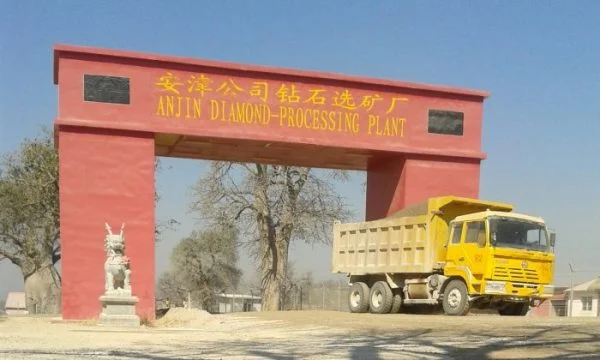
A‌ ‌Chiadzwa‌ ‌woman‌, and her‌ ‌two‌ ‌infant‌ ‌children‌, ‌aged‌ ‌three ‌years, and‌ ‌two‌ ‌weeks,‌ ‌who‌ ‌went‌ ‌missing‌ ‌on Sunday‌ ‌were discovered‌ ‌dead yesterday‌ ‌in‌ ‌an‌ ‌open‌ ‌pit‌ ‌‌left‌ ‌unsecured‌ ‌by‌ ‌Chinese‌ ‌diamond‌ ‌miner‌ ‌Anjin. 

Vongai Mbara 

Zimbabwe’s Centre for Research and Development (CRD) confirmed the incident via Twitter. 

“Following a domestic dispute, a woman and her 2 children aged 2 weeks and another 3 years commit suicide by drowning in unsecured slime dams left by Anjin in Muedzengwa village in Marange. Anjin has failed to rehabilitate former mining areas that have continued to claim lives,” CRD tweeted. 

‌The bodies of ‌Elizabeth‌ ‌Mukachiti‌ ‌and‌ ‌her‌ ‌two‌ ‌children‌ ‌Kelvin‌ ‌and‌ ‌Costin have‌ ‌since‌ ‌been‌ ‌ferried to‌ ‌Victoria‌ ‌Chitepo‌ ‌Provincial‌ ‌Hospital‌ ‌formerly‌ ‌Mutare‌ ‌General‌ ‌Hospital‌ ‌for‌ ‌a post-mortem.‌ 

‌George‌ ‌‌Bonyongwe‌ ‌-‌ ‌husband‌ ‌to‌ ‌the‌ ‌deceased -‌ ‌confirmed‌ ‌the‌ ‌incident‌ to New Zimbabwe ‌which‌ ‌reportedly‌ ‌emanated‌ ‌from‌ ‌an unresolved ‌domestic‌ ‌dispute. 

“There‌ ‌was‌ ‌no‌ ‌problem‌ ‌as‌ ‌such,‌ ‌but‌ ‌that‌ ‌my‌ ‌wife‌ wanted ‌to‌ ‌go‌ ‌back‌ ‌ (to‌ ‌her‌ ‌parent’s) ‌ home,”‌ he ‌said. 

‌Bonyongwe ‌said‌ ‌had‌ Anjin rehabilitated ‌the‌ ‌open‌ ‌bits, ‌his‌ ‌family‌ would ‌still‌ ‌be‌ ‌alive.‌ ‌ 

“These‌ ‌pits‌ ‌were‌ ‌left‌ ‌without‌ ‌being‌ ‌rehabilitated‌ ‌by‌ ‌the‌ ‌Chinese‌ ‌(Anjin)‌ ‌and‌ ‌they‌ ‌have‌ ‌accumulated‌ ‌water‌ ‌over‌ ‌the‌ ‌years.‌ ‌Had‌ ‌these‌ ‌pits‌ ‌been‌ ‌rehabilitated,‌ ‌this‌ ‌unfortunate‌ ‌incident‌ ‌could‌ ‌have‌ ‌not‌ ‌happened.‌ 

“‌This‌ ‌pit‌ ‌is‌ ‌just‌ ‌100‌ ‌metres‌ ‌away‌ ‌from‌ ‌my‌ ‌house‌ ‌and‌ ‌one‌ ‌can‌ ‌just‌ ‌walk‌ ‌out‌ ‌the‌ ‌house‌ ‌straight‌ ‌into‌ ‌it‌ ‌with‌ ‌ease,”‌ ‌Bonyongwe said.‌ ‌ 

According‌ ‌to research‌ ‌‌conducted‌ ‌by‌ ‌the Centre‌ ‌for‌ ‌Research‌ ‌and‌ ‌Development‌ ‌(CRD),‌ ‌Anjin‌ ‌has‌ ‌a‌ ‌total‌ ‌of‌ ‌eight‌ ‌open‌ ‌pits‌ ‌‌filled‌ ‌with‌ ‌water‌ ‌in‌ ‌Muedzengwa‌ ‌village‌ ‌while‌ ‌another ‌10‌ ‌have‌ ‌no‌ ‌water.‌ ‌ 

The‌ ‌Chinese‌ mining ‌company‌ ‌also‌ ‌left‌ ‌behind‌ ‌unsecured‌ ‌four‌ ‌slime‌ ‌dams‌ ‌in‌ ‌Gamunorwa‌ ‌village,‌ ‌six‌ ‌open‌ ‌pits‌ ‌with‌ ‌water‌ ‌in‌ ‌Chirasika‌, ‌and‌ ‌eight‌ ‌open‌ ‌pits‌ ‌without‌ ‌water‌ ‌in‌ ‌the‌ ‌same‌ ‌community. 

Some ‌years‌ ‌ago‌ ‌a local ‌villager ‌Touchmore‌ ‌Shiripinda‌ ‌fell‌ ‌into‌ ‌an‌ ‌open‌ ‌pit‌ ‌full of water‌ ‌dug‌ ‌up‌ ‌by‌ ‌Anjin and drowned in the pool. 

Bonyongwe‌ ‌appealed‌ ‌to‌ ‌the‌ ‌responsible‌ ‌authorities‌ ‌to‌ ‌ensure‌ ‌that‌ ‌Anjin‌ ‌rehabilitated‌ ‌the‌ ‌open‌ ‌pits. 

“I‌ ‌think‌ ‌we‌ ‌are‌ ‌better‌ ‌off‌ ‌and‌ ‌safe‌ ‌with‌ ‌these‌ ‌open‌ ‌pits‌ ‌closed.‌ The government‌ ‌should‌ ‌help‌ ‌us‌ ‌to‌ ‌ensure‌ ‌that‌ ‌this ‌is attended‌ ‌to,”‌ ‌he‌ ‌said.‌ ‌ 

Chinese miner speaks on Uzumba controversy

0

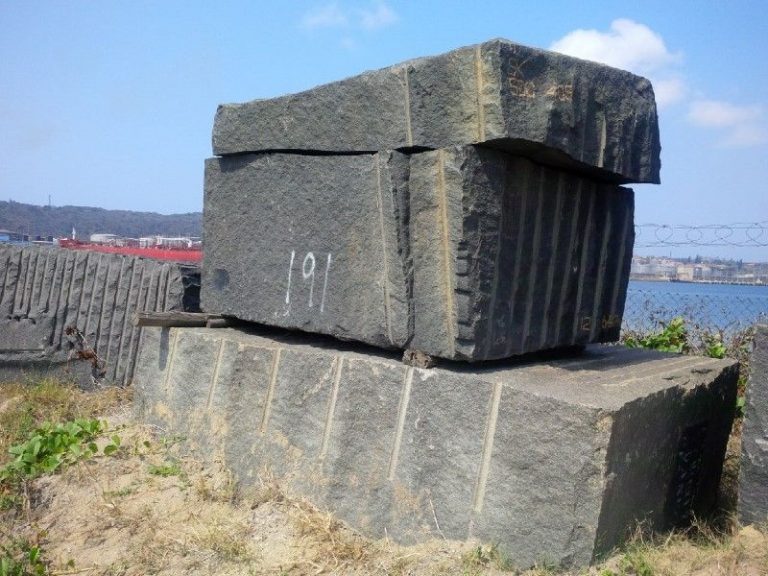
Chinese granite miner Heijin, which is being accused of putting up a mining operation in Uzumba that is likely to displace villagers, has claimed that only six villagers will be displaced by its activities.

This comes after the government last month issued a notice to shut down its operations in Kaseke Village in Uzumba after villagers resisted their removal from the 300-hectare piece of land earmarked for the operation.

But the miner yesterday said only six homesteads were directly sitting on the resources to be mined, and that it had already agreed on compensation with villagers.

“The mining project zone area has people occupying it.

They are sitting directly on the black granite rock to be mined. They are six and the company is prepared to compensate them as they are directly affected. We understand that there is a need to relocate them. A good place to relocate them has already been found. The affected will be given the opportunity to have first preference in gaining employment at Heijin provided they are able-bodied,” it said in a statement.

“Moreover, each household will be given US$2 000 as a compensation to start income-generating projects. The mining company will offer assistance with knowledge of desired projects. Heijin pledges to cover full costs required for resettlement and compensation for the affected households in the mining area. Heijin managed to come up with a relocation and compensation plan for the affected,”

It said under the agreement reached with the families, it was set to build five-roomed houses with separate round-thatched kitchens, a double blair toilet with a bathroom, solar power for lighting per household, boundary fence for each homestead and security, drill boreholes for water and provide a good accessible road network.

The company is also set to construct classroom blocks, a clinic, supply medical consumables and provide the community with skills to engage in good agricultural practices as well as maintain the roads in the area.

Heijin, said it was bound by the host country’s laws and regulations such as the Rural District Councils Act, Traditional Leaders Act, Environmental Management Act and the Communal Lands Act.

Last month, Chief Nyajina told Cabinet ministers and Zanu PF officials that around 80 families would be affected by the project.

However, the company refuted the claims, saying it was not given the chance to speak at the meeting. It also claimed that there was an agenda to cause a rift between Kaseke villagers and Heijin.

Newsday

Zimplats recruited 47 women in 2021

0

Australian Stock Exchange-listed platinum group of metals (PGM) producer Zimplats this year recruited 47 women, according to Implats Social and Governance (ESG) report for 2021.

Anerudo Mapuranga

According to Implats, gender diversity and gender mainstreaming have been a focus for the company over the past few years and for the industry through the Minerals Council initiatives to advance gender diversity and inclusion.

The company focuses on creating an environment conducive to gender equality and on addressing barriers to the employment, retention and advancement of women.

Implats said gender equity forums at its operations have made significant progress in advancing gender mainstreaming activities over the past few years which has led to Zimplats employing 47 women to aid in the mine development.

“Women account for 8.7% (309 of the 3 549 permanent employees) of the total workforce at Zimplats. Despite a restriction on external recruitment for non-critical skills due to the tough economic environment, an additional 47 women were recruited this year.

“Zimplats has established a gender management framework and a dedicated gender forum and implements similar initiatives to those at our South African operations aimed at recruiting and advancing women into higher positions,” Implats said.

Implats recognises that pay differentiation on the basis of race or gender is unacceptable and must be eradicated. The company has further analysed the findings and have developed a fair pay policy and strategy to remediate the disparities over the next three years by implementing targeted interventions to adjust pay levels where gender or race pay variables exist.