GOVERNMENT’s robust drive on import substitution policy will result in further capacitation of artisanal and small-scale miners who are finding it hard to foot the bill of importing equipment from other countries, a leading mining expert has said.
There has been a renewed interest among business leaders in the equipment manufacture and supply chain who admit that import substitution was key in ensuring good returns, in particular for the artisanal and small-scale miners.
Import substitution is widely mentioned in the National Development Strategy (NDS-1), where emphasis is placed on every economic activity to adopt a policy that replaces foreign imports with local production. Players in the mining sector have for long relied on equipment from South Africa and China, a situation that suppressed local industrial growth.
Small-scale miners under the Zimbabwe Mining Federation (ZMF) constitute the biggest market for the manufacture and supply chain. ZMF said an estimated 70 percent of manufactured tools locally was bought by artisanal and small-scale miners.
The growing market for mining spares and other consumables has of late, opened up job opportunities that are sustained through the import substitution policy as well. This was what inspired a Bulawayo-based mining entrepreneur to invest in the country’s top foreign currency earner.
Mineazy Mining Solutions general manager Mr Khumbula Dube, said a combination of research, development and import substitution was the ingredient to revive the country’s economy through mining.
“We have to take seriously the issue of import substitution in the mining industry. That also calls for investment in research and development.
“Mining is positioned to change the fortunes of the country. We foresee a bright future in Zimbabwe’s mining industry but that needs to be supported by research especially on how local companies can find innovative ways to manufacture spares and reduce dependency on foreign machines.”
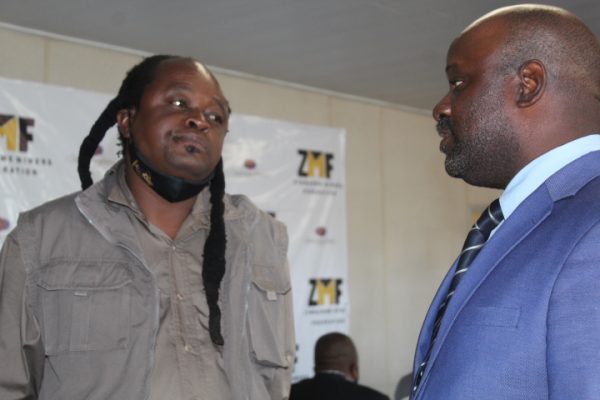
ZMF spokesperson Mr Dosman Mangisi said import substitution was key in serving small-scale miners.
“The Zimbabwe Miners Federation is pleased by what local companies have done to support the industry, we greatly need to grow the whole value chain to revive Zimbabwe’s mining. Mining equipment and consumables are usually expensive. Given that we have a mining background, we know all the problems that miners face, and that includes the pricing challenge,” said Mr Mangisi.
Over 80 percent of small-scale miners in the country are yet to be fully mechanised, according to Mr Mangisi. He said ZMF has it on record that the local market only supplies 10 percent of mining equipment needed by the industry.
ZIMBABWE has recorded over 463 fatalities in the mining industry in the past three years as a result of not having enough enforcement of mining regulations due to the increase in the number of mining locations, an official has said.
Speaking at the Mining Safety Campaign 2021 launch, organised virtually by Young Miners Foundation (YMF) in partnership with the Midlands State University (MSU) Faculty of Engineering and Geosciences, Chief Government mining engineer, Eng Michael Munodawafa said over 463 fatalities were recorded in the mining industry from 2018 to 2020 due to various reasons.
“We have seen an upsurge in the number of fatalities in the mining industry with 112 recorded in 2018, 182 in 2019 and 169 in 2020. The above fatalities were as a result of not having enough enforcement of mining regulations due to increase in number of mining locations and not enough resources availed to the inspectorate, pure disregard of mining regulations by registered and unregistered (illegal) miners and lack of proper mining knowledge and understanding of mining environment, among others,” said Eng Munodawafa.
He noted that ordinarily, for a fatality to be classified as a mine accident, the deceased or injured should be a mine employee carrying out the assigned duties in a properly registered mining location. Any other incident in an unregistered mine is classified under illegal mining accidents.
Eng Munodawafa also added that fall of ground accounted for at least 60 percent of all accidents in mines and this was due to robbing of support pillars in old or current mines, working in unstable grounds (especially backfilled areas) without any extra support and not leaving natural support pillars to support openings induced by mining.
“Fall of ground also happens in shafts, when shafts collapse because they were sunk in unstable grounds geologically or sunk in backfilled material. Usually when fall of ground occurs either miners are crushed to death or suffocated.”
Eng Munodawafa also highlighted that shafts accidents accounted for about 18 percent of all accidents and this happened a lot in small mines. He said some of the causes were poor maintenance of winding mechanisms which normally resulted in either rope snapping or winding mechanism failure due to poor or no maintenance at all.
He further stated that other accidents which occur in shafts were loose materials falling from the sides of the shafts, with objects falling into shafts if they are not protected, thereby injuring or killing a person in the shaft or those being lowered or raised in the shaft.
As another major cause of accidents in the mining industry, Eng Munodawafa added: “Gassing accounts for about 10 percent of the fatalities in the industry. This usually happens when there is poor or no ventilation at all. Most of our miners usually do not worry about the air in the mine while working whether its flowing or not until they are overcome by gasses.”
He also said that some sources of gasses in mines were from blasting which results in emission of carbon monoxide and also stagnant water could contain hydrogen sulphide. Eng Munodawafa said statistics from 2016 to date showed that fatalities in the country due to gassing among legal mining activities were six, while among illegal mining activities were 18.
He also noted that explosives could also be dangerous if not handled by competent personnel and in most cases, accidents happened due to premature detonation of explosives and poor handling without following laid down safety precautions.
He highlighted that electrical and equipment mishandling were other causes of fatalities. Due to limited space in mining areas, he said most people were being electrocuted by high voltage equipment or run over by equipment if they did not follow laid down safety procedures.
Eng Munodawafa said, there have been cases of accidents due to flooding in mines. Among other causes, he said people were also falling into unprotected mine openings. Eng Munodawafa said in some cases, accidents or disasters were due to wrong methods of mining where miners disregard safety especially at “hotspots” where miners put too many shafts too close to each other resulting in instability of the ground.
The government’s commitment to follow through on promises it makes to investors is likely to make Zimbabwe a top investment destination, according to Great Dyke Investments (GDI), which is currently developing a platinum mine in Darwendale.
Last week, GDI got a five-year tax holiday through Statutory Instrument (SI) 26 of 2021.
A tax holiday is a temporary reduction or elimination of a tax that is used to incentivise investors.
GDI vice chairperson Mr Igor Higer told The Sunday Mail Business that the dispensation extended to the mining company was a culmination of a promise that had been made to Russia.
“The SI was issued based on a signed mining agreement, which was signed in Moscow in the presence of President Putin and His Excellency President Mnangagwa (in 2019),” said Mr Higer.
“So from an investor point of view, the most important thing here is the stability and the evidence that when the Government of Zimbabwe promises something, they deliver.
“So obviously this gives us the comfort to continue investing in the country and to develop the project as per agreed roadmap.”
He said everything “is going on well in terms of the agreed roadmap”.
According to a 2018 United Nations report on design and assessment of tax incentives in developing countries, tax holidays are a tool that has been relied upon not only in the developing world, but in developed countries as well.
“As a matter of fact, developed countries normally use tax incentives to promote research and development activities, export activities and support the competitiveness of their enterprises in the global market,” notes the UN report.
Tax incentives, adds the report, do not warrant any expenditure such as provision of grants and cash subsidies from the Government.
The Darwendale Platinum Project is one of the anchor projects forecast to grow the mining sector and create employment.
The scope of current works include development of two mining portals.
Engineering work is envisaged to be completed in March.
Overall, the two portals are projected to produce up to 3,5 million tonnes of platinum ore once full production kicks in later this year.
Speaking during a tour of the mine in September last year, GDI chief operating officer Mr Munashe Shava said the mine was employing 450 workers at the time.
Of those employed, 70 were on full-time contracts, with the rest being on the books of contracted companies that are partaking in mine development works.
INVICTUS Energy, the Australia-Stock- Exchange (ASX) listed firm exploring for oil and gas in Zimbabwe’s Muzarabani area, has received an inter-ministerial approval for petroleum development and production agreement (PEDPA), which sets the terms and rights of all parties.
This comes after Invictus recently said it had received a non-binding offer for a farm-in agreement to the Cahorra Bassa prospective area, located in the Muzarabani area.
The PEDPA with the Government provides the framework for progression and development of the oil and gas project, terms and rights of all parties, including each part’s entitled share of the product, assuming commercial discovery.
“The Petroleum Exploration Development and Production Agreement (PEDPA) between Geo Associates and the Republic of Zimbabwe, was reviewed by the Inter-Ministerial Committee established to review the agreement and has been approved,” Invictus said in an update statement.
The PEDPA provides the framework for progression of the Cahora Bassa (Muzarabani) Project through the exploration, appraisal, development and production phases and the obligations and rights of each party over the project life cycle.
Invictus said earlier the farm-in offer for the proposed transaction is subject to completion of further technical, legal and commercial due diligence by both parties, approvals and agreements by the Government of Zimbabwe and execution of binding farm out agreement(s).
Farm-in agreements are contractual arrangements common in the Australian exploration sector.
Typically, the owner of an interest in a tenement (farmor) agrees to transfer a percentage of their interest to another party (farmee) if the farmee meets specified exploration commitments or contributes a defined level of expenditure towards exploration activities.
The Australian resources company said after receiving the final approval of the agreement the PEDPA now awaits execution.
Invictus said it was working on a petroleum product sharing agreement (PPSA), which contains the fiscal provisions of the project, including the Republic of Zimbabwe’s profit/product share, and takes effect following the commencement of the production phase of the project.
The PPSA is undergoing independent review, which is expected to be completed early in the new year, following which the PPSA is expected to be finalised and executed.
Together, the PEDPA and PPSA form the Production Sharing Agreements (PSA) between Zimbabwe and Geo Associates and, Invictus said, demonstrates the Government’s commitment to implementing investor friendly reforms and promoting and protecting foreign investment.
The PSA will ensure that a predictable, stable and transparent legal and fiscal regime is put in place that is commensurate with terms in the region, follows international best industry practice, meets the country’s aspirations and provides investors and the country with a fair share of any developed resources.
Invictus said following the completion of the field reconnaissance programme and receipt of submissions from multiple vendors, the company had selected its preferred contractor to undertake a seismic acquisition campaign in 2021.
The company will commence detailed planning post formal contract award to enable the acquisition campaign to commence following the conclusion of the rainy season.
Invictus is planning to acquire a minimum of 400km line of 2D seismic which exceeds the work programme obligations for the current (2nd) exploration period.
Invictus Energy is an independent oil and gas exploration company focused on high impact energy resources in sub-Saharan Africa.
Its asset portfolio consists of a highly prospective 250 000 acres within the Cahora Bassa Basin in Zimbabwe.
Special Grant 4571 contains the world class multi-trillion cubic feet (TCF) Muzarabani and Msasa conventional gas-condensate prospects.
Five illegal miners were today trapped in an old working shaft at the Kuvimba owned Elvington mine in Chegutu this morning.
Chegutu Miners Association Chairman Mr. Innocent Nicks confirmed the development and said one person was rescued around 08:00hrs rushed to the hospital.
“Five people were trapped underground at the Elvington mine in Chegutu in the morning. One was rescued and rushed to the hospital. We can hear the voices of the other four who are currently stuck and are hopeful they will be rescued as efforts are currently underway,” Nicks said.
Elvington mine is currently under care and maintenance and sources say the security guards employed at the mine demanded bribes for miners’ entry.
“We hear Miners are currently paying between 100 – 1000usd for entry to guards manning the mine. We would like to encourage mines to employ monitored security service providers to avoid unnecessary accidents like these,” Nicks added.
Kuvimba official Mr. Toindepi Muganyi acknowledged that he was informed of the accident and on his way to the site.
“I have been informed of the collapse and I’m on my way to the mine. I cannot comment much on the issue until I am on the ground as you can hear I am travelling,” Muganyi said.
Mashonaland West ZMF Provincial representative Ms. Chiedza Chipangura said it was high time authorities arrested illegal miners as a deterrent to would-be perpetrators.
“It is a sad situation, however, we encourage the Police to do their job to deter would-be perpetrators,” Chipangura said.
Zimbabwe has been experiencing mine accidents lately and most have been attributed to careless workmanship rife in the Artisanal and small-scale mining industry.
The small-scale mining sector has of late become one of the pillars of the economy of Zimbabwe contributing significantly to national fiscus.
Rudairo Dickson Mapuranga
The small-scale gold mining sector contributes up to 12 percent of total exports cementing its position in prop (up) the country to achieve the President’s vision of an upper-middle-income earner by 2030 as well as the mining sector becoming a US$12 BILLION earner by 2023.
2020 has not been a good year in terms of business due to the Covid-19 pandemic which forced governments to lockdown many businesses. Mining in Zimbabwe was however not restricted from operating but the effects of the pandemic in terms of marketing and selling of minerals were widely experienced.
Despite all the obstacles in the mining sector, small scale miners still managed to return their mark as the biggest gold and chrome producers in 2020.
However, the sector has continued to be linked with informal activities with the current Mines and Mineral Bill under heavy criticism of trying to close down all the activities of small-scale miners to create a medium scale.
There have been individuals in 2020 who have managed to set a standard on what the small-scale miners need to do in terms of mining, growth and community development. Below are small scale miners who managed to set an exemplary standard of a small-scale miner in 2020.
Scott Sakupwanya
Mr. Pedzisai Scott Sakupwanya is a gold buying agent as well as Better Brands Jewellery (BBJ) founder. Through BBJ Sakupwanya has empowered many youths in the country in a time where unemployment is at its highest level by allowing them to work on his several claims around the country. BBJ has over 5000 youths operating at Redwing mine in Manicaland under tribute for the next several years. Apart from Manicaland, BBJ has empowered many youths in Mashonaland and Matabeleland regions providing them with equipment and capital. BBJ delivered over 850 kilogrammes of gold to Fidelity Printers and Refiners (FPR) in 2020.
Sakupwanya encouraged small-scale miners to practice social corporal responsibility when he led his company to donate 100 tonnes of maize-meal to vulnerable groups affected by the COVID-19 pandemic.
Sakupwanya was named the most influential and innovative mining director by the Institute of Corporate Directors Zimbabwe (ICDZ), while the Chartered Institute of Project Managers Zimbabwe (CIPMZ) recognised him as one of the top executives under 40 in 2020.
Marufu Sithole
Marufu Sithole is currently Zimbabwe Miners Federation (ZMF) Acting President who has proven that artisanal mining like operations in small scale mining can become a thing of the past.
Sithole has been engaging different artisanal miners into a formalised mining setup where he encourages them to set up syndicates and sometimes provide them with capital to kick start their endeavour to formalised mining.
Sithole’s mining operations employ qualified staff just like an ideal large-small mines were all professional mining departments are found.
In 2020 Marufu delivered over 55 kgs of gold to the country’s sole gold buyer and exporter Fidelity Printers and Refiners (FPR) from his mines leading by example that miners should sell their productions to FPR.
Sithole through his mine Chimona Mining has been leading in social corporate responsibility in 2020.
The mine scooped the 2014 Corporate Social Responsibility award in the Small-Scale Mining Sector at Mine Entra 2014 as well as Zimbabwe National Chamber of Commerce 2014 National Small-Scale Miner of the Year.
Spencer Tshuma
Mr. Spencer Tshuma is the Director and founder of Tshuma Milling as well as the Director of Abacus Mining Investments operating around Chegutu, Kadoma and Kwekwe. Tshuma has been assisting several small scale miners around the country with mining equipment and capital. Many miners have received trucks and excavators from the miner these miners include Zimbabwe Miners Federation Youth in Mining chairperson Mr. Timothy Chizuzu.
Tshuma through the National Environment Awareness Trust (NEAT) and Kadoma Miners Association donated groceries to windows affected by the pandemic in Kadoma and has sponsored youth sporting activities.
In June 2020, Tshuma handed 30 tonnes of maize and 60 tonnes of maize meal to His Excellence the President of Zimbabwe, Emmerson Dambudzo Mnangagwa towards benefit communities in Bulawayo affected by the lockdown.
Johanne Sithole
Johanne Sithole is the Managing Director of Murasta Mining as well as a member of the Zimbabwe Miners Federation and the Kadoma Miners Association. Sithole reportedly employed interns of Harare Institute of Technology (HIT) in 2020 to use computer-aided valuation and mine design systems to provide great facilities in project development and planning to curb mine accidents and increase mining transparency.
He also through National Environmental Awareness Trust (NEAT) donated USD thousands wealth of food to the less privileged during the lockdown period and is also known for supporting local youths through different sustainable projects.
Through his Murasta Mining, Sithole also empowers other small-scale and artisanal miners with equipment and other consumables.
Engineer Chris Murove
Engineer Chris Murove
Engineer Chris Murove is a Former Zimbabwe Miners Federation (ZMF) Deputy President, Former President and CEO of Zimbabwe Artisanal and Small-Scale for Sustainable Mining Council (ZASMC) and currently the Managing Director and owner of Munyati Milling (Pvt) Ltd, a mining and mineral processing company operating within the small-scale gold mining sector. The company has developed a model to formalise artisanal mining by embedding artisanal miners in small-scale mining claims in a structured and sustainable manner.
Murove has also developed his mine by employing graduates from the school of Mines as a way to professionalize his mining ventures. He employs youth and promotes gender equality. His mine development has a major focus on continuous improvement and growth of the artisanal sector to small scale then to medium scale. Engineer Murove’s mining ventures have a major focus on research and innovation.
Engineer Murove has been also writing articles and researching as well as implementing alternative methods to mercury in gold recovery. Some of his proposed measures have been embraced by a large number of miners as a way of safeguarding the environment from the dangers of mercury. He is also regarded as the voice of reason in the sector and is nothing short of a legend in the sector.
Makumba Nyenje
Makumba Nyenje is currently Zimbabwe Miners Federation (ZMF) chairperson and the Secretary for Health and Safety under Mberengwa Miners Association (MBA).
Nyenje has taken tours around Mberengwa and Zvishavane teaching small scale miners on the importance of worker’s safety as well as their health, to ensure that the community benefits from mining activities and to prevent pollution and environmental degradation, and ensure sustainable management and use of natural resources while promoting justifiable economic and social development. Nyenje also owns Rose 25 custom milling which he has been developing to function as a gold service centre to ensure that leakages of gold are minimised in the country.
Nyenje has also been supporting small scale miners to venture into iron mining and smelting as well as small scale steel manufacturing. He is also working with the Minerals Marketing Corporation of Zimbabwe (MMCZ) to ensure that women iron ore miners in Mberengwa operating in Buchwa Mountain find a lucrative market for their iron ore which they have been struggling to sell.
Nyenje is an accountant by profession with a Higher National Diploma, he is also pursuing a Hon Degree in Accounting with Zimbabwe Open University (ZOU).
Philimon Mokuele
Philimon Mokoele with ZMF SG Mugawu (in blue)
Philemon Mokoele is currently Zimbabwe Miners Federation (ZMF) Secretary for the General Council. Mokoele has been pivotal and vocal this year when it comes to small scale mining growth and development.
Mokoele has been encouraging small scale miners to grow from small scale mining to medium scale and has been leading by example at his mine by creating both vertical and inclined shafts at his mine with steel and concrete headgears. The headgear supports wheel mechanisms for suspending winding cables that transport workers and ore up and down deep level shafts.
Mokoele has also called for the government to educate miners on issues of Exclusive Prospecting Orders (EPOs) and has also called on the Ministry of Mines to include small scale miners in terms of budget allocation to help speed the growth and development of small-scale mining to medium scale.
He has been encouraging small scale miners to improve from artisanal operations to imitating large scale mines like Blanket Mine in Gwanda. He has also spearheaded the rescue of tens of miners trapped underground after shaft collapses in his province.
Sheila Mabasa
Sheila Mabasa (Cde Yondo)
The late Sheila Mabasa was a Director and biggest shareholder of Moflegosh Mine in Norton. She was also a member of the Norton Miners Association as well as a member of the Zimbabwe Miners Federation (ZMF).
Through her mine, Mabasa proposed a model where she was going to supply several communities in Norton with fresh purified water from her mine. Moflegosh mine is also currently supplying fresh water to the residents of Norton Police station. She had also promised to build houses for the police officers at the station after a fire destroyed several blocks last year.
The mine has an operating a horticulture site that supplies Norton with fresh farm produce. Norton like Harare has challenges with a consistent supply of clean water. Mabasa has also been involved in various community development schemes as well as awareness campaigns for women empowerment.
Mabasa sadly passed away on the 31st of December 2020. Norton Member of Parliament Temba Mliswa on Twitter claimed she succumbed to Covid-19.
Jean Rheiner
Jean Rheiner is a geologist by profession who started mining in the 1980s with an interest in tantalite, he then moved into the gemstone subsector as both a miner and geologist in 1995. Rheiner has created an empire through gemstone mining however, complications around the export of gemstones have been wearying his business down.
Rheiner like many other gemstones miner’s belief that the gemstone sector in Zimbabwe has the potential to create a billion-dollar industry in the country. Besides mining gemstones, Rheiner is involved in the value addition of the stones where he is famous for supplying jewellery to the Zimbabwean community with some exported to the countries in the European Union.
Rheiner has proven that through the gemstone industry small-scale miners can create a formidable and cash cow industry. The government has constantly called for value addition in Mining, Rheiner has proven that small scale miners can add value to their productions that they can gain more from mining. Value addition has been at the centre of the government for the mining industry to achieve a USD12 billion mark by 2023.
Rheiner is arguably the most experienced Zimbabwean in the gemstone business and his vast knowledge should be utilised by those intending to grow in the semi-precious sector.
Timothy Chizuzu
Zimbabwe Miners Federation (ZMF) Youth in Mining Chairperson Mr. Timothy Chizuzu
Timothy Chizuzu at 35 years is a miner, mining consultant and Environmentalist with 15 years’ experience in consultancy.
Chizuzu is currently the Zimbabwe Miners Federation (ZMF) Youth in Mining Chairperson as well as Zimbabwe Prospectors Association (ZPA) Secretary-General. He is also the founder of the National Environmental Awareness Trust (NEAT). NEAT is a Non-Governmental Organisation that deals much with environmental activities. Our main activities are awareness and advocacy. We move around educating people on safe practices of mining, how to keep our environment safe and clean, how to manage our affluence as miners.
Chizuzu has been vocal on mining safety in 2020 and organised several workshops on the health and safety of mineworkers.
Chizuzu also heads Timella Mining Consultancy an independent Consultancy company that provides focus, advice, and instruction in the mining industry. It offers services from mining rights acquisition, exploration through feasibility mine planning and production to mine closure. The organisation also assists with disputes and legal matters in the mining industry.
He has also engaged the services of professionals (mining graduates) on his mining concessions to have professional mining operations. He has also called for small-scale miners to employ graduates as a way to professionalize the small-scale and artisanal mining sector. He through different platforms also called for the graduates from different fields of mining to form syndicates or register companies and peg their own claims and implement what they learnt from school.
Canada’s Lucara Diamond (TSX:LUC) has unearthed an unbroken 378-carat white gem-quality rock, the second major stone found so far this year at the company’s prolific Karowe mine in Botswana.
The diamond, described by Lucara as “magnificent” and “superb”, was found from milling of ore sourced from the M/PK(S) unit of the mine’s South Lobe. This is the same area where the Vancouver-based miner found an unbroken 341-carat diamond on January 15. Both gems were recovered from the coarse X-ray transmission circuit.
Lucara says the find is a further testament to the strong resource and process circuit performance at Karowe.
IT IS THE 55TH STONE OVER 200 CARATS RECOVERED AT KAROWE SINCE IT BEGAN COMMERCIAL OPERATIONS IN 2012
“The 378 carat joins a rare and special lineage of exceptional, high value diamonds recovered at Karowe and continues to highlight the wonderful diamond potential of Botswana,” chief executive Eira Thomas said in a media statement.
BMO Capital Markets analyst Ray Raj said the diamond, the 55th stone over 200 carats recovered at Karowe since it began commercial operations in 2012, could fetch over $15 million.
Previous historic recoveries include the 342-carat Queen of the Kalahari, the 549-carat Sethunya, the 1,109-carat Lesedi La Rona found in 2015, and the 1758-carat Sewelô, recovered in 2019.
Beyond Sewelô, the only larger diamond ever unearthed is the 3,106-carat Cullinan Diamond, discovered in South Africa in 1905. The Cullinan was later cut into smaller stones, some of which now form part of British royal family’s crown jewels.
Thomas noted that the continued recovery of large diamonds at Karowe comes at a critical time for the sector. It also provides an additional foundation to the opportunity to finance and build the underground expansion, she said.
Karowe’s highest value section
Botswana renewed Lucara’s mining license earlier this month for another 25 years, which allowed the company to move Karowe’s underground expansion project to its execution phase.
“With the sales process for the 549ct/998ct stones recovered [in] 2020 also to be concluded in 2021, Lucara’s cash flow potential is looking strong which is likely to support efforts to secure a financing package for the underground expansion,” BMO’s Raj wrote in a note to investors.
The $514 million-underground extension of the mine is expected to take five years and extend Karowe’s productive life for at least another 13 years after the open pit ceases operations in 2026.
The development will allow Lucara to exploit the highest value part of the orebody first and generate over $5.25 billion in gross revenue_Mining.com
China is paying a heavy toll for its efforts to punish Australia by banning or restricting certain commodity imports, while conversely, Australia seems to have avoided any serious financial ramifications so far.
It is perhaps surprising that the authorities in Beijing, having witnessed how the trade war launched by former US President Donald Trump backfired on his own country, would be keen to try the same thing on Australia.
Trump tweeted in March 2018, as his administration was ramping up its tariffs against Chinese goods that “trade wars are good, and easy to win.”
It turns out that he was somewhat right, but only in the reverse of what he expected, insofar as the country that launches the trade war tends to be the loser, and the country that is the intended target seems to prosper.
OVERALL, AUSTRALIA’S EXPORTS TO CHINA WERE A$13.34 BILLION IN DECEMBER, THE HIGHEST SINCE JUNE
Coal is the highest-profile Chinese target in the Australia row. Beijing effectively all but banned imports from Australia as part of its efforts to pressure Canberra on several issues, ranging from Australia’s call for an international investigation into the origins of the coronavirus pandemic to the decision to block Huawei from Australia’s 5G network rollout.
China’s imports of Australian coal have collapsed, with Refinitiv vessel-tracking and port data showing just 687,000 tonnes were discharged in December, down from the 2020 peak of 9.46 million tonnes in June.
But the data also show that Australia’s overall exports haven’t really suffered, with December shipments of 33.82 million tonnes being the best month in 2020.
While the cold snap across north Asia boosted demand from Japan, South Korea and Taiwan, it also appears Australia has managed to ship more coal to other regional consumers, such as India, Vietnam and Thailand.
Coal is more than just a volume story, with prices moving in favour of Australia and against China.
Australia’s coal exports were worth A$3.7 billion ($2.87 billion) in December, the most since May last year, according to data from the Australian Bureau of Statistics.
The benchmark Australian thermal coal price, the Newcastle Weekly Index, as assessed by commodity price reporting agency Argus, ended at $87.52 a tonne on Jan. 22. That was up 89% from its 2020 low of $46.37, reached in September, at a time when market concern over the impact of China’s effective ban on imports was highest.
The rise in seaborne coal prices has made it more expensive for China to buy imported coal. In turn, that has allowed domestic prices to remain elevated as they aren’t facing competition from overseas producers.
The price of thermal coal at Qinhuangdao has retreated in recent days, ending at 873 yuan ($135.14) a tonne on Jan. 26, down from the recent high of 1,038 yuan.
But even with the recent drop, the Chinese benchmark is still some 87% higher than the 2020 low of 467 yuan a tonne from May – well above the 520-570 yuan range believed to be preferred by the authorities as it ensures mines remain profitable but fuel costs for utilities aren’t too high.
Iron ore, copper
It’s not just coal where Australia seems to be more than holding its own in the trade dispute: exports of cereals rose to A$1.19 billion in December, the highest on record and almost three times the value of shipments in November.
China imposed an 80.5% tariff on imports of Australian barley in May last, collapsing the trade between the two nations. But while Australian barley farmers were initially hit hard, they have successfully managed to switch to alternative markets or plant other crops.
China also has an unofficial ban on imports of copper ores and concentrates from Australia, which had been its fifth biggest supplier.
However, a global shortage of mined copper ores means China is being forced to pay more for supplies. At the same time its smelters are having to pay less for treatment and refining charges, as they struggle to source material.
Again, what has happened is that China has cut itself off from a source of supply at a time of global shortage. It has imposed costs on itself and no penalty on Australian copper miners, who can sell easily to other buyers.
China hasn’t mandated any restrictions on the most important commodity it buys from Australia, namely iron ore. But it is having to pay handsomely for buying the steel-making ingredient given supply issues in Brazil, the second-largest exporter behind Australia.
Australia’s exports of metal ores, which include iron ore and copper, rose to a record A$15.2 billion in December, up 22.6% on November, according to official statistics.
Overall, Australia’s exports to China were A$13.34 billion in December, the highest since June, reflecting strong demand for iron ore, liquefied natural gas and some agricultural commodities.
Since China started its trade actions against Australia, the numbers seem to be tilting heavily in favour of Canberra.
This supports the lesson from the US-China trade dispute: if you still need the products you are targeting for tariffs or import bans, it will cost more to source them from other suppliers.
Government has exempted platinum miner Great Dyke Investments (GDI) from paying income tax for the next five years.
GDI is 50% owned by local consortium Landela and Afromet JSC, wholly owned by Russia’s investment and industrial group Vi Holding, which has spearheaded the Darwendale project since its inception in 2013.
In Statutory Instrument (SI) 26 of 2021, gazetted last week, Finance and Economic Development minister Mthuli Ncube said GDI has gained tax exemption effective January 1, 2021.
According to the SI, the receipts and accruals must be generated from the exploitation of platinum group metals (PGMs) deposits at Darwendale and the consequences of this approval is that the receipts and accruals of GDI are exempt from income tax for five years.
“Resident shareholders’ tax payable on dividends paid to shareholders of GDI resident in Zimbabwe in connection with special mining lease operations of GDI and also that additional profit tax for a period of five years commencing from the date of receipt of income from mining operations and sales of mining output payable in respect of the special mining lease area for any year of assessment,” Ncube said.
GDI’s first phase is expected to cost US$500m, targeting annual output of 280,000 ounces of PGMs and gold.
The African Export-import Bank (Afreximbank) was last year appointed as the main financial partner and lead arranger for the project.
The continental bank has put up US$192m towards the project.
According to the agreement, Afreximbank’s mandate covers both debt (project) financing and equity raising portion in the amount sufficient for the successful implementation of the Phase 1 of the Project.
The company is negotiating with Zimbabwean, South African and Russian funders to raise cash for equipment, machinery and services procurement, the company said.
The Darwendale project will be implemented in three phases and is expected to produce 860,000 ounces of PGM and gold per year at full capacity.
A rally in the price of copper globally is a major boost for Zambia in its efforts to revive the economy impacted by the coronavirus (Covid-19) and drought.
The sharp recovery in the price of the commodity has been on the back of United States policy expectations as the new administration of president-elect, Joe Biden, assumes office.
The administration has announced an aggressive fiscal stimulus package.
Copper prices are up to more than US$7,95 per tonne, having already gained 2,42 percent for the year.
Rand Merchant Bank (RMB) concurred with market sentiments that prices were expected to climb with potential scenarios similar to the global financial crisis where prices climbed to over $9 000/tonne.
“Such moves would greatly benefit environments like Zambia that need to beef up their reserve base as part of their economic recovery plan targets,” RMB experts, Daniel Kavishe and Neville Mandimika, stated.
Zambia is Africa’s second-largest producer of copper, after the Democratic Republic of Congo.
In 2020, it produced more than 646 000 tonnes of the metal in the first nine months of 2020, up from 590,321 tonnes in the same period last year
Copper mining is central to the economic prospects for the Southern African country and covers more than 80 percent of all exports.
On Tuesday, Glencore, the Anglo-Swiss firm, confirmed the sale of its 73 percent stake in Mopani Copper Mines to Zambia Consolidated Copper Mines (ZCCM).
Kavishe and Mandimika gave the transaction a thumbs-up.
“Our current analysis suggests that an increased stake in the mine would enable the Zambian government to benefit from higher dividend pay-outs in future,” the RMB experts stated. — CAJ News.
To provide the best experiences, we use technologies like cookies to store and/or access device information. Consenting to these technologies will allow us to process data such as browsing behavior or unique IDs on this site. Not consenting or withdrawing consent, may adversely affect certain features and functions.
Functional
Always active
The technical storage or access is strictly necessary for the legitimate purpose of enabling the use of a specific service explicitly requested by the subscriber or user, or for the sole purpose of carrying out the transmission of a communication over an electronic communications network.
Preferences
The technical storage or access is necessary for the legitimate purpose of storing preferences that are not requested by the subscriber or user.
Statistics
The technical storage or access that is used exclusively for statistical purposes.The technical storage or access that is used exclusively for anonymous statistical purposes. Without a subpoena, voluntary compliance on the part of your Internet Service Provider, or additional records from a third party, information stored or retrieved for this purpose alone cannot usually be used to identify you.
Marketing
The technical storage or access is required to create user profiles to send advertising, or to track the user on a website or across several websites for similar marketing purposes.