

Home Blog Page 423

Hope lost as miners bodies remain underground one year later

0

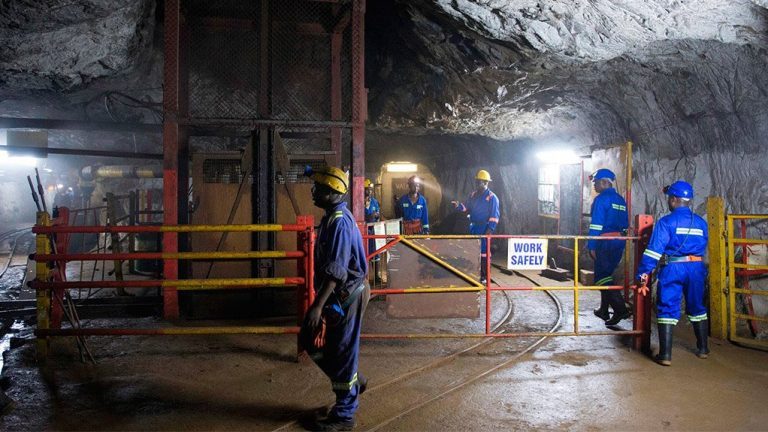
Families of four trapped bodies at Task Mine in Chegutu have lost faith in the government recovering their loved one’s remains, and have accepted that their loved ones’ corpses may never be unearthed.

Rudairo Mapuranga

Mr Gwatidzo, one of the parents who lost a 17-year-old school-going son, said the situation is difficult because the shaft has been filled with water from the broken water pumps, it is impossible to exhume the bodies.

The government had since last year offered assistance with the exhumation of the bodies underground, but there has not been any help offered to family members since the onset of the disaster.

“The government was supposed to fully intervene in the case so that there was full support, but no support has been offered to the families whose remaining bodies are still trapped underground.

“The water pumps are not working, now with the water which is down there, l don’t even know if it’s still possible to retrieve the bodies,” Gwatidzo said.

Commenting on the issue, Mines Parliamentary Portfolio Committee Chairperson Honourable Edmond Mkaratigwa said the committee’s position pertaining to the matter has not changed and it is unacceptable to defy cultural values, people need to be buried decently, but due to Covid-19 restrictions, he says it has been difficult to speed up the process of exhuming the bodies.

“Covid-19 has had an effect on the speed of processes but we need to quickly adapt, since the committee’s position has not changed, people need to be decently buried,” said Mkaratigwa.

Gwatidzo expressed his sorrow towards the situation on the ground at Task Mine because the families there have been struggling to make ends meet while waiting on the government to come and help with the exhumation of the bodies.

“It’s so sad, we are still checking with each other, and supporting each other with food and paying fees for a few children of which the government is supposed to lend a hand so it does not get difficult to get by,” said Gwatidzo.

He further stated that the government must at least retrieve the bones of the remaining dead bodies underground so that families can get closure.

On the 8th of September 2020, five miners got trapped underground after the shaft they were working on collapsed and only one body was retrieved. Since then, no help has been offered to the families who lost their loved ones in the mine collapse with the government remaining mum on the tragic accident. Mine owners have since resumed work at the site and no effort is being put to retrieve the dead bodies from the shaft.

Hichilema: From the boardroom to State House, and now to the mining crisis at hand

0

When Hakainde Hichilema first ran for President in Zambia, his background as a wealthy businessman was used against him.

“Rich people don’t understand the struggles of ordinary people,” an opponent said in the 2011 election, in which Hichilema came a distant third with 18.5% of the vote.

Since then, he worked to strip down that image of an elitist, swapping business suits for jeans and casual jackets. He carefully crafted a social media strategy that cast him as an everyday-man, and not one of Zambia’s richest men.

“I am just a cattle boy,” he told an interviewer ahead of the 2021 elections.

But, yet, it is his business background that voters now look to, as he faces the challenge of solving the economic crises he inherits from his successor, Edgar Lungu.

Here is a profile on Hichilema, and some of the key economic questions that he faces as he enters office.

Who is Hichilema?

He was born in 1962, in Monze, a district in the South of Zambia. He studied business at the University of Zambia and took an MBA at Britain’s University of Birmingham. He became leader of the United Party for National Development (UPND) in 2006, after the death of one of his mentors, the long-time opposition leader Anderson Mazoka.

Since then, he contested in elections five times without success. He was third with 25% the first time out in 2006, third again in 2008 with 19.7%, and third in 2011 with 18.5%. In 2015, now leading a coalition, he lost narrowly to Edgar Lungu by just under 30,000 votes. He once again lost narrowly to Lungu in 2016.

He has now won at the sixth time of trying.

What about his business interests?

Hichilema was CEO of accountancy firm Coopers and Lybrand at 32, from 1994 to 1998, and of the company’s successor firm Grant Thornton, up to 2006.

He has chaired and held substantial shareholdings in large firms such as Barclays Zambia, and Sun International, which holds the country’s biggest tourism resorts.

Other investments and corporate roles include Greenbelt Fertilisers, Seed Co Zambia, and Zambezi Nickel.

He is one of the largest cattle ranchers and beef suppliers in Zambia.

In 2020, he joked about this: “I was asked, ‘HH, do you have beef with Mr. Lungu?’ I replied, ‘Of course. I always have beef’”.

Hichilema has built strong networks with influential business groups.

He has publicly received the support of the Brenthurst Foundation, which is chaired by former Nigerian president Olusegun Obasanjo. The foundation is run by the Oppenheimer family, which has vast mining interests such as a stake in Anglo American, and will likely be key in the economy under Hichilema.

Copper: The job at hand

Copper accounts for over 70% of Zambian exports. This means that copper prices directly affect the country’s currency and inflation.

When world copper prices fell during Lungu’s term, 15,000 mineworkers lost their jobs. This sparked violent protests, in which workers blamed Lungu for failing to protect them. This was a factor in Lungu’s poor results in the Copperbelt.

Hichilema ran his campaign on promises of slowing down inflation, which has hit record highs above 25%. Since January last year, the kwacha has fallen by 40%.

The crisis in the mines has also been worsened by low tax payments from big mining companies.

Even when copper prices peaked in the early 2010s, Zambia received little from the mines. Lungu tried to fix this by raising mining royalties, but this worked against him as large mining investors protested by holding off on new investment and threatening to shut down operations.

Zambians hoping to get more from their mines (Pic: Trendsnafrica)

__

This February, under pressure from miners, Lungu approved a lower mining royalty scheme, halving royalty rates for open-pit mines. But relations between Lungu and miners were already damaged, beyond repair.

Hichilema pledged to mend ties with the big mining investors, winning himself more investor support.

Zambia’s state mining investment arm ZCCM-IH agreed in January to take on US$1.5 billion in debt in exchange for full control of Mopani Copper Mines. This was because Glencore, the company that owned the mine, had threatened to shut it down. Lungu said this step was good for workers, but Hichilema said it added more debt.

At one time, Zambian authorities had even detained Mopani’s CEO, Nathan Bullock, as he attempted to leave the country.

In 2019, Lungu placed Vedanta Resources’ Konkola Copper Mines in provisional liquidation, accusing Vedanta of underpaying taxes and lying about the scale of its investment. Solving this standoff will be one of the Hichilema’s key priorities.

While Lungu ran for re-election on vast infrastructure projects, the Hichilema campaign countered by saying the projects were paid for by debt, such as Chinese loans and Eurobonds.

Foreign debt has risen from under US$2 billion to over US$12 billion, up from 35% of GDP to 110%.

Last year, Zambia defaulted on US$3 billion of foreign bonds. Hichilema has pledged to immediately start talks for a quick aid package from the International Monetary Fund (IMF), as he negotiates debt restructuring with other lenders.

The IMF expects Zambia to be among the countries to see slow economic recovery this year, with growth of 0.6% after a 3.5% contraction last year.

How do investors see Hichilema?

Hichilema was the pro-business candidate in the election.

Investors were rooting for Hichilema. Ahead of the poll, Kevin Daly of Aberdeen Standard Investments, part of the Zambia External Bondholder Committee, a grouping for investors holding Zambia’s Eurobonds, said a win for Hichilema would see a rally in Zambian assets.

Hichilema won more support from big business when he promised to reverse mining royalties that had been imposed by Lungu. These would have hit international groups such as Glencore, First Quantum, Barrick Gold and Vedanta.

Hichilema told Radio Christian Voice in January 2019 that miners were backing his cndidacy: “The mining companies are saying ‘HH [Hakainde Hichilema] we are waiting for you to come [into power]. We will pay the tax which you will introduce because we know it is a fair tax’.

It is also a good time for Hichilema to be going into office.

Copper prices have since recovered, which is good news for the kwacha, and Hichilema.

Relations between Lungu and the IMF were so bad that, in 2018, he pushed for the expulsion of the IMF’s resident representative, Alfredo Baldini. But IMF was already signalling a deal for aid last year.

Ahead of the expected IMF support, Zambian government bonds had already gained more than 30% since November. International banks such as Bank of Nevis have recently announced investments in local banks. Ratings agency Fitch also upgraded Zambia’s long-term local currency debt in April, attracting foreign money back into local bonds.

Zambia will also benefit from IMF SDR allocations, which will double Zambia’s foreign reserves, shore up the currency, and boost Hichilema’s efforts to turn around the economy.

“I’m a businessman; I know how to create jobs,” Hichilema told one rally.

Zambian people will be hoping that he is right.


Newzwire

Caledonia’s new shaft lifts record ore tonnage, earnings double

0

Caledonia Mining’s investment in a new shaft at Blanket Mine is starting to show results; ore tonnage reached new records in the second quarter, helping the company double earnings for the period.

The company commissioned a central shaft earlier this year, and in the three months to June, Blanket mined and milled 165,000 tonnes of ore, the biggest quarterly tonnage.

“This is a new production record for any quarter and reflects the contribution of the Central Shaft which was commissioned at the end of March 2021 and the build-up towards the target of 80,000 ounces per annum from 2022 onwards,” Caledonia says in a trading update released Thursday.

Gold output was 16,710 ounces in the quarter, 24% higher than the 13,499 ounces produced in Q2 2020. This is also a new production record for a second-quarter at the mine. Production was 29,907 ounces in the First Half, 8% more than the 27,732 ounces in the first half of 2020.

Golden profits

EBITDA – excluding asset impairments, net foreign exchange gains and losses, and export incentives – of US$14 million, sharply rose by 103% from US$6.9 million in Q2 2020.

Gross revenues of US$30 million were 31% above the US$22.9 million in the second quarter of 2020. Gross profit for the quarter was US$13.9 million, up 51% on the US$9.2 million in the same quarter last year.

Caledonia’s revenue for the six months was US$55.7 million from US$46.5 million, as a result of the increased output and a firmer gold price over the period. Gross profit was US$24.3 million from US$19.7 million last year.

The company is targeting 61,000 – 67,000 ounces for 2021, before ramping up to over 80,000 ounces per year from 2022, as a result of the new shaft. Last year, Blanket produced a record 57,899 ounces. There are signs that the company will meet its targets, with production in July, at 5,995 ounces, being above average monthly production.


NewZwire

Zim’s Energy Sector Potential, Investments To Drive Agenda at Cape Town’s African Energy Week

0

ZIMBABWE represents an exciting new frontier, with recent exploration activities leading to strong indications of significant oil and gas prospects.

The country has no proven hydrocarbon reserves and derives its energy primarily from hydropower and coal, along with petroleum imports from neighboring countries.

However, with the promise of potential prospects in the Muzarabani Basin – which borders Zimbabwe and Mozambique – the country is sitting on the verge of a hydrocarbon boom, set to be unlocked through foreign capital, technology, and expertise.

As Zimbabwe prioritises the expansion of its energy sector and invites global stakeholders to explore its uncharted territory, African Energy Week (AEW) 2021 in Cape Town will serve as the official platform whereby Zimbabwe will showcase its potential to prospective investors.

In a bid to establish a domestic hydrocarbon industry and achieve energy independence, Zimbabwe has recently focused its efforts on exploration, with Australian-based Invictus Energy Limited leading the way.

In 2018, Invictus signed a petroleum exploration development and production agreement with the Government of Zimbabwe to explore commercial deposits in the Muzarabani prospect.

The company has since revealed significant hydrocarbon potential located in the prospect, leading to a planned 2D seismic survey campaign and the drilling of the first oil/gas test well in October/November 2021.

If successful, confirmed hydrocarbon deposits could not only lead to enhanced energy independence by reducing petroleum imports but also drive gas-to-power projects that could power the country’s mining sector and industrialization.

In other words, the Muzarabani Basin has the potential to catapult Zimbabwe into both an energy and industrial hub.

Additionally, the potentially hydrocarbon-rich Muzarabani Basin could justify other commercially viable deposits in other basins across the country.

In total, Zimbabwe has six sedimentary basins – Kariba Basin, Tuli Basin, Mozambique Basin, Okavango Basin, Zambezi Basin, and Nama Kalahari Basin – which hold the right geological address for hydrocarbons, thereby warranting further exploration.

This has created attractive opportunities for global explorers and upstream stakeholders looking to cash in on one of Africa’s final frontiers.

As Zimbabwe seeks to develop its burgeoning oil and gas sector, AEW 2021 recognizes the significant potential that Zimbabwe holds, and will present the country and its investment opportunities to both regional and global stakeholders at Africa’s premier energy event.

In addition to oil and gas opportunities, Zimbabwe may be the solution to and a key driver of Africa’s energy transition, boasting significant mineral deposits that serve as key inputs into clean energy technologies.

The country’s mining industry, which focuses on gold, asbestos, chromite, coal, platinum, and diamonds, is made up of a diverse range of small- to medium-sized operations and contributes eight percent towards the country’s GDP.

However, it is the country’s lithium potential that could drive international investors into the country and propel Africa’s energy transition.

According to the International Trade Administration, Zimbabwe has the largest lithium deposits in Africa and one of the top ten reserves globally, with the country’s largest mine – the Bikita mine – holding approximately 12.8 million tonnes of lithium ore with a lithium content of 1.4%, or 150,000 tons. With the recent rebound in the lithium market – in part attributed to increasing demand for lithium-ion batteries associated with green power for utilities and car production – Zimbabwe is on the precipice of a mining sector revolution.

By showcasing the country’s potential and positioning Zimbabwe at the forefront of Africa’s energy transition, AEW 2021 will unite investors with on the ground opportunities in one of Africa’s most sought-after markets.

Accordingly, AEW 2021 will drive a productive discussion on Zimbabwe and its oil, gas, and lithium resource potential, as well as facilitate the critical deals necessary for the country to realize its long-term development objectives.

Join investors, stakeholders, government officials, and policymakers at AEW 2021 and be awarded exclusive insights into Zimbabwe’s fast-growing hydrocarbon and mineral resource sectors.

NewZimbabwe

Zimbabweans: Surrounded By Mineral Riches, But Living In Poverty

0

ZVISHAVANE: In the mining town of Zvishavane, in central Zimbabwe, lies Maglas, an aging, broken-down community burdened with crumbling houses.

The town’s lack of water and ablution facilities leaves a pervasive stench of feces and urine. In the rainy season, potholed roads fill with water.

Nearly 400 kilometers (248 miles) to the northeast sits Mutare, a city in Zimbabwe’s eastern highlands, where Redwing mine is located. Along one road, children have just filled their buckets at a burst pipe. Their homes don’t have running water.

These scenes repeat themselves throughout Zimbabwe’s mining towns, as critics of the government say weak laws and policies, combined with a lack of transparency, have left these communities flailing.

The towns are rich in mineral resources. But their people are among the country’s poorest.

“To say they are not benefiting much [from mining] is an understatement,” says Farai Maguwu, director of the Centre for Natural Resource Governance, a Zimbabwe-based research and advocacy organization. “Reality is they are not benefiting anything.

In fact, mining is further impoverishing them by attacking their environment, which they depend on for livelihoods.”

Zimbabwe boasts more than 60 types of minerals, and about 40 are already being mined. At least 4,000 gold deposits dot the country, along with platinum, chrome, lithium, coal, diamonds and more.

Diamonds in Mutare’s Marange fields were worth an estimated $800 billion a decade ago. Zvishavane is blessed with gold, chrome and platinum deposits.

A 2015 Zimbabwe Open University study on mineral revenue argues that “governments and mining companies promise communities from which minerals are mined both social and economic benefits, but still there are no tangible benefits that go to these communities.”

Another study, in 2012 by the Institute of Environmental Studies, found that more than 90% of households involved with mineral extraction lived in poverty.

Midlands province, where Zvishavane is one of several mining towns, is one of the country’s most mineral-rich regions, but it’s saddled with the second-lowest access to basic water services, at 51%, according to a 2019 Zimbabwe Vulnerability Assessment Committee survey.

More than half of children in rural Midlands don’t have access to healthy food.

Onesimo Moyo, permanent secretary in the Ministry of Mines and Mining Development, says it’s unfair to say that mining towns remain undeveloped.

“These towns were built on the back of mining,” Moyo says. “The schools, clinics and housing were a result of mining companies building infrastructure in the towns they were operating in. Zvishavane is a good example of such a town.”

Tinoda Mukutu, Zvishavane’s town secretary, agrees that mining companies have brought schools, clinics and other benefits to the region.

What’s missing, he says, is help from government-backed structures such as community share ownership trusts, which were introduced in 2007 as an offshoot of Zimbabwe’s indigenisation law.

Amended in 2018, the law was meant to ensure more economic power for black Zimbabweans.

Mining companies gave the trusts one-time payments for income-generation projects. And Moyo says the enterprises do share profits via the community trusts. But activists such as Joyce Nyamukunda are dubious.

Since the change in the indigenisation law, towns can’t force mining companies to pay into the trusts, says Nyamukunda, coordinator of the Zimbabwe chapter of Publish What You Pay, an initiative that promotes the rights of communities affected by mineral extraction.

“There is no law that specifically provides a system of allocating revenue collected from mining companies between central government, local authorities and communities,” she says.

In Gwanda, a town in Matabeleland South province in southwest Zimbabwe, the trusts improved access to water, electrified rural areas and provided capital for entrepreneurs.

In platinum- and gold-rich Shurugwi, located 88 kilometers (55 miles) from Zvishavane, old buildings and dilapidated roads mar one part of town. But on another section, the town’s biggest mining company –AngloAmerican Platinum – has erected gleaming new apartments for its employees.

“Mining companies [that came before] built infrastructure,” says Walter Nemasasi, general manager at AngloAmerican Platinum, which operates Unki Mine in Shurugwi.

“To the eye they may look dilapidated, to some, but it is not the responsibility of existing mining companies to take up that responsibility…We have our community social responsibility programs that we do and we continue to make our community better the best way we can.”

Residents say the local trust has improved sanitation and educational infrastructure and built more health facilities.

Maguwu, from the Centre for Natural Resource Governance, notes that of Zimbabwe’s 64 registered trusts, only a few can boast of such gains. “They are not serving any purpose because the government is not compelling companies to contribute,” he says.

His organisation and other civil society groups also blame a lack of government transparency for holding back mineral-rich communities.

The government fails to provide data about a range of mining-related areas, according to a 2018 Auditor General’s report. Those areas include tax incentives, licenses and mining revenue the government receives.

A decade ago, the government promised more transparency for the mining sector, but officials are still mulling whether to join the global Extractive Industries Transparency Initiative, which mandates that governments release mining revenue data.

“We cannot go blindly into it,” Moyo says. “It takes a lot of planning and consultation. Many think it’s a delay tactic, but it’s not. We just have to do due diligence.”

Maguwu, however, argues that joining the initiative isn’t the solution.

“Global governance mechanisms must be reproduced at the national and local level instead,” he says.

“The government, industry, civil society and local communities — including traditional leaders — must be involved in transparency issues. That is how investment decisions [should be] made.

Colliery company acts on Deka river

0

HWANGE Colliery Company Limited (HCCL) is working towards implementing a lasting solution to the Deka River pollution which has haunted it for decades.

The company has been cited as one of the major polluters of Deka River alongside Zimbabwe Power Company (ZPC). The companies are accused of discharging acid mine drainage from old underground mining activities.

Underground mining results in collapse of the overlying rock strata and when mining terminates, the voids in the fractured rock fill with water and decanting occurs from the lowest opening. The water is acidic as a result of its reaction with pyrite in unmined coal and
in the host rocks.

Acid mine drainage is one of the mining’s most serious threats to water. A mine draining acid can devastate rivers, streams, and aquatic life.

Responding to queries on what the company was doing to address the problem during a stakeholders meeting organised by Zanu-PF Hwange District Coordinating Committee last week, HCCL Safety, Health and Environmental Quality manager Mr Butholezwe Dube said the company was working on finding a permanent solution to the Deka pollution.

“Our challenge with coal is acid mine drainage where the No. 1 Old Ground Mine accumulated water over time resulting in some of it escaping through old exploration boreholes. We have among other interventions come up with a wetland system where we grow plants that absorb the chemicals.

We are also using a neutralisation system of adding lime to reduce the acidity of the water. We accept blame in that we are discharging effluent, we are doing our best to treat the water and have managed to plug the old exploration boreholes save for one problematic one near Zinwa which we are working on addressing.

We are currently exploring a technology of converting this water into drinkable, it is doable but expensive. Countries such as South Africa are doing that to manage the issue and this will help bring a permanent solution to the constant pollution,” said Mr Dube.

He said since their activities had compromised the quality of water for both human and livestock, the coal miner was drilling and rehabilitating boreholes with three having been done in some of the affected areas.

“We have drilled and handed over a borehole while three more will be ready for commissioning before September.”

Environmental Management Agency district environment officer, Mr Nothani Ndlovu said a permanent solution was needed to address the Deka pollution as fining or prosecuting offenders was not enough to deal with the problem.

“The pollution is a concern to us. We have been having that issue over a period of 20 years.

We have direct and indirect sources of effluent but our biggest problem is AMD which are toxic and have a negative impact on the environment. Yes, there have been interventions put in place but there is a major parameter which remains even after treatment such as manganese whose levels are too high downstream. We have issued tickets and orders but we expect them to come up with plan,” he said.

The companies were given up to 14 August to address the raised concerns.


The Sunday News

ZMF lobbies for mobile clinics in mining areas

0

THE Zimbabwe Miners Federation (ZMF) has called on the Government to set up mobile clinics in mining areas to help vaccinate miners so that they can positively contribute to the country’s target to turn the mining sector into a US$12 billion industry by 2030.

In an interview with Sunday News Business, ZMF national secretary for women affairs Mrs Jescah Mazivazvose said some miners were being ignorant of the Covid-19 and were not adhering to World Health Organisation (WHO) Covid-19 regulations.

“Miners both men and women are ignorant of the Covid-19, they do not adhere to WHO regulations with most of them not even wearing masks. They think that the pandemic only affects those living in urban areas and they are spared.

“They lack the right knowledge and that is why as female miners we are calling upon the Government to visit mining areas and educate people about the Covid-19 pandemic and at the same time bring mobile clinics to vaccinate the miners,” said Mrs Mazivazvose.

She said that a large percentage of miners were not vaccinated due to ignorance and the fact that vaccination points were far and needed to be decentralised.

Mrs Mazivazvose said vaccination of miners will help revive the mining sector that has been severely affected by the pandemic and preserve lives that can immensely contribute towards the Government achieving its goals.

“Getting miners to be vaccinated will ease the way of doing business and preserve lives giving female miners as well a chance to participate and contribute towards the 2023 vision of making the mining sector a US$12 billion industry,” said Mrs Mazivazvose.

She said female miners were of paramount importance in making sure that gold mined was delivered to Fidelity Printers and Refiners.

“As women we have transparency and integrity. We do not use the illegal markets and we try by all means to deliver our gold through the right channels.”

She said women in the mining sector continue to face a number of challenges.

“Government should consider allocation of claims to women so that we can have our own space to work without disturbances. Working in male-owned claims is very difficult looking at the percentage we get after all the hard work we would have put in,” she said.

Mrs Mazivazvose said as some Exclusive Prospecting Orders (EPOs) have now been reserved for artisanal miners, it was their hope that Government would consider women first so that they could at least have their own claims.

Meanwhile, she commended the Government and ZMF for trying to make the mining sector a bearable place for women in the mining industry.

“I would love to thank our Government for the effort they are putting in the process of helping women in the mining industry. Loans provided by the Government have been helpful to a number of women although we are asking that they ease the terms to accessing
those loans.

“I also want to thank ZMF for doing a good job for miners, women included and president Ms Henrietta Rushwaya for making sure that women in the mining sector are catered for.”

Mrs Mazivazvose said through ZMF, women miners were getting loans coming from different banks, while the Women’s Bank was offering equipment to female miners.

As one of the beneficiaries, she said she was offered a compressor to aid her mining activities.

However, Mrs Mazivazvose said women in the mining sector have continued to face challenges in trying to remain relevant in the male dominated industry.

She said for a long time, most women miners are considered as incapable of doing what men in the industry are doing.

“Women miners have not been spared by the Covid-19 pandemic with most of them failing to remain afloat in business due to challenges brought about by the pandemic and vandalism caused by the machete gangs during the total lockdown period,” she said.


The Sunday News

Mining sector records major milestones

0

The country has made significant headway in its quest to grow the mining sector to US$12 billion in the next two years from US$2,7 billion realised in 2017 driven by planned, ongoing and completed projects.

While critics considered the target “ambitious” and “unattainable”, developments in the sector in the past three years have been encouraging.

The Government believes mining, which contributes 12 percent to GDP, is a critical pillar to support economic recovery, create decent jobs and a prosperous society.

Mines and Mining Development Minister Winston Chitando said recently “day-by-day, month-by-month production is increasing”.
In interviews with The Sunday Mail Business last week, experts said a combination of incentives and improved sentiment might help achieve set targets.

“A closer analysis on various mining projects paints a rosier picture,” research analyst Mr Carlos Tadya said.

“We are seeing much activity even in minerals that have not been fully explored before andnthis puts the country on firm ground to achieve the US$12 billion target.”

It is, however, believed Government has to double down on fixing key enablers such as rail and power supply.

“There is huge interest in mining that could be a result of anticipated boom in commodity prices, as well as improved business environment in Zimbabwe (since the New Dispensation took office in 2017),” said economist Mr Joseph Musarwa.

Gold
Notable progress has been made in reviving Eureka Gold Mine, as the processing plant has since been completed.
At its peak, the project is envisaged to produce 1,5 tonnes per annum.

Dellaglio Investment, which owns Eureka, said recently: “We are very proud of what has been delivered and looking forward to ramping up to full production in the coming months.”

The mine was closed more than 20 years ago.

Shamva Gold Mine — owned by Kuvimba Mining House — reopened in December following an investment of over US$8 million to resuscitate the mine and US$1 million for exploration.

It plans to produce 400 kg of gold per annum by 2023.

Over 800 workers who had been laid off have since resumed work, with more expected to be taken on board once the mine completes its expansion.

Kuvimba has also injected US$6 million for the expansion of Kwekwe-based Jena Mine, which will see output rising from 24kg of gold to 83kg.

Overall, the firm, which is owned by Government, intends to raise US$1 billion for variousmining projects in platinum, chrome and nickel.

Another gold producer, Blanket Gold Mine, recently completed its central shaft expansion programme that is already paying dividends.

Last week, it reported that production in the first six months of the year rose by 8 percent to 847,8 kg (29 907 ounces) from 786kg (27 732) in the comparable period a year earlier.

Production in July was 170 kg (5 995 ounces), a further increase in average monthly production and demonstrates that Blanket is on track to achieve its production guidance of 1,7 tonnes to 1,89 tonnes (61 000 – 67 000 ounces) for the current year.

“Over 165 000 tonnes were milled in the quarter, which is a new record for Blanket and reflects the contribution of Central Shaft which is now operational,” said Caledonia chief executive officer Mr Steve Curtis in a market update.

Caledonia is Blanket Mine’s parent company.

Nickel, granite & oil

Similar headway has been made in other sub-sectors.

Trojan Nickel Mine, for example, completed its shaft expansion programme during the first three months of this year.

There has also been significant investment in black granite, with Dingmao Mining Mutoko planning to add five more polishing plants by October 2022 to the existing two.

The increase in their granite polishing capacity would enable the company to polish 100 square metres per day.

Currently, they have granite polishing capacity to polish 25m2 /day.

Further, Yang Sheng is constructing a granite cutting and polishing plant, which has been completed and is expected to be up and running by next month.

But prospects in the oil and gas sector have been most promising because their potential to increase exports and create high-value jobs.

State-of-the art exploration equipment to be used by Australian firm Invictus Energy in a seismic survey to identify the best site for sinking oil and gas wells has since been delivered.

Preliminary investigations for commercially viable reserves of oil and gas in Zimbabwe have been encouraging. Similarly, an expansion project is already underway at RioZim’s Murowa Diamond Mine in Zvishavane.

Once completed it will raise capacity from 190 000 tonnes to 500 000 tonnes.

The current scope of works includes constructing a processing plant with a 500 tonnes perhour capacity.

Commissioning is earmarked for the final quarter of this year.

Coal, Coal & Platinum

Zambezi Gas’s northern coal pit is set to produce 100 000 tonnes per month, while Lokalise is looking to ramp up production from 80 000 tonnes per month to 200 000 by year-end.

Also, Sunrise Chilota is planning to develop an underground mine to produce 15 000 to 20 000 tonnes per month of coking coal by December.

Makomo, the country’s largest coal miner, is working on recapitalisation of plant and machinery.

There are also Chinese investments that will not only produce coal but electricity for the national grid as well.

In addition, firming commodity prices, especially for copper, have raised prospects of renewed investments in the sector.

While oil remains a key energy source, analysts believe the use of copper will play a critical role in replacing internal combustion engine vehicles with electric cars.

In terms of the platinum group metals (PGMs), Unki mine’s debottlenecking project will increase concentrator capacity from 179 000 tonnes per month to 210 000 tonnes per month, while Mimosa is investing in opening a new portal at North Hill to increase life of
mine. Likewise, Zimplats is investing in new mines to replace old ones.

Massive investment

One of the biggest boosts for the mining industry remains preliminary works for a US$1 billion carbon steel plant, including an iron ore mine, by Fortune 500-listed Chinese company Tsingshan Holding Group.

The project is projected to generate US$1,5 billion annually in exports. It will have a multiplier effect on the economy.
Equipped with a 1,5-kilometre-by-600-metre carbon and steel plant, an iron ore mine and a ferrochrome plant, the project will have a capacity of 1,2 million tonnes a year, while between 4 000 and 5 000 people will benefit through employment across value chains.


The Sunday Mail

BREAKING: Hakainde Hichilema wins Zambia elections

0

Hakainde Hichilema has won Zambia’s Presidential elections.

Zambia’s electoral commission said on Monday when releasing the final results from 156 constituencies, barring one.

Hichilema beat the clearly unpopular Edgar Lungu who had resorted to block internet access after sensing defeat only for Zambian courts to issue an order for restoration.

Hichilema secured 2,810,777 votes while Lungu was in second place with 1,814,201 votes, out of 7 million registered voters.

“I therefore declare that the said Hichilema to be president of Zambia,” said Zambia electoral commission chairman, Esau Chulu, to a packed results centre in the capital Lusaka.

This is a developing story

Plight of Shurugwi child gold panners

0

WITH pans and shovels in their hands, children, some not yet 15 years old, wash the muddy contents and look through heaps of soil and sand that has been removed from part of Mutevekwi River in an attempt to extract gold.

They do not have any real equipment or protection.

Submerged knee-deep in the now dirty river, the boys 12, 14 and 15-year-old risk sliding and drowning.

The three pupils (names withdrawn) who learn at Musasa Primary School in the area are part of scores of women gold panners who have invaded this part of the river which is between Ward 18 and 19 in Shurugwi.

The panners are taking advantage of distillation process that is being done by an Indian Mining Company ENR- Zimbabwe.

ENR is one of the three companies that were granted special grants by the Government to do pilot alluvial gold mining for the next six months in the area.

The other two companies are doing the same in Save River that divides Manicaland and Masvingo provinces and Angwa river in Mashonaland West province.

For the past three months the children gold panners, working with their mothers or other female relatives have been taking advantage of ENR-Zimbabwe excavators which remove sand and mud from the river.

The company is carrying out operations legally, but people come to the area to search for gold illegally.

Gold panning is the cheapest method or tool (and oldest method of mining gold) of mining to extract gold from gold placer deposits which occur in river or stream beds.

A 14-year-old boy who is in the company of his aunt said he spends over seven hours a day in the water doing the tiresome process.

“I am a gold panner together with my friends and relatives. We have been doing this for the past three months since this company started scooping sand and mud to the river bed. So, we take advantage of the loose soils and pan using the water from the river,” he said.

He said he wishes he was raising money for fees but alas — the money was going towards food and their general upkeep.

“Mostly aunt buys food with the money. When we sell the gold to the gold buyers, she collects it and does what she wants. I hope she is keeping some for school fees,” he said.

Another boy aged 13 said it’s not an easy job as there is a possibility of slipping and drowning since the water level sometimes rises.

“We have no protective clothing, sometimes we just pee in the river since getting out is time consuming. Panning is tiresome but we are now getting used to the hustle. One works the pan, that is shaking it in a circular manner so that the gold goes to the bottom. The other will be collecting the sand, soil from the heaps of soil on the river bank or some metres away
from the river which have been put there by excavators. So, one cannot work on it alone. We have to be in pairs,” he said.

His aunt identified only as Miriam said they wake up at 4am and using torches for lighting, start panning before ENR employees come to the river.

“We have been playing a cat and mouse game. ENR employees do not want us in the river.

They accuse us of causing siltation. So, we normally wake up very early so that by 8 am when they start work, we would have worked a bit and disappeared,” said Miriam.

So, what changed today because it’s 10 am and they are still panning?

“It’s because we heard there is a meeting and they won’t be concerned about us, so we have to take advantage,” she said.

“For an ounce of gold we are paid US$4 imagine that it has to be shared between two people because we work in pairs. That’s US$2 per person which comes after two to three days. It’s not easy.”

Environmental Management Agency Manager for Midlands Province Mr Benson Bhasera said alluvial gold panning poses as a serious threat to water bodies as it leads to the siltation.

He said there was a lot of siltation in the river because of uncontrolled gold panning.

“What is happening here is distillation of Mutevekwi River by this company following years of siltation. At the same time, we have realised that gold panners have invaded the area taking advantage of heaps of sand and soil that is being removed from the river.

Gold panning is illegal and the use of children in panning is also illegal. This mining company was given a special grant to practice river bed mining and the gold panners must not be allowed to operate as they are the main cause of siltation of the river,” said Mr

He said there is a lot of siltation in the river because of uncontrolled gold panning.

Midlands Provincial Mining Director Engineer Tariro Ndlovu condemned the use of children as gold panners.

He said even the Constitution of the country is against child labour.

Section 19 of the Constitution of Zimbabwe provides that the State must take appropriate legislative and other measures to ensure that children are not required or permitted to perform work or provide services that are inappropriate for the children’s age or place at
risk the children’s wellbeing, education, physical or mental health.

“The company working on that part of the river is doing it legally and it is therefore, illegal that these women and children are practising gold panning. If they are caught, they will be arrested. The Constitution of the country, the labour laws speak against child labour. So, such a practice is criminal. The children should be at home or school,” he said.

In terms of the Children’s Act Chapter 506, no parent or guardian of a child or young person shall permit such a person to engage in child labour.


The Chronicle