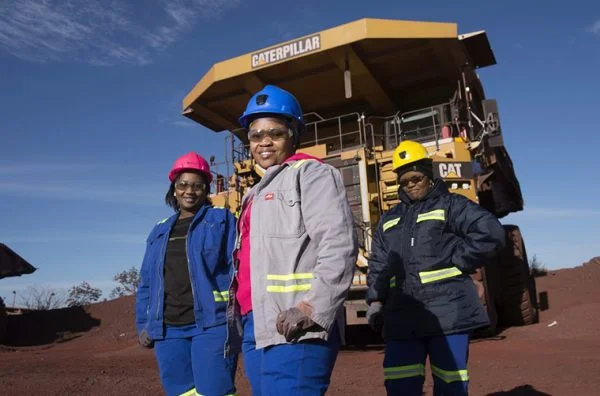
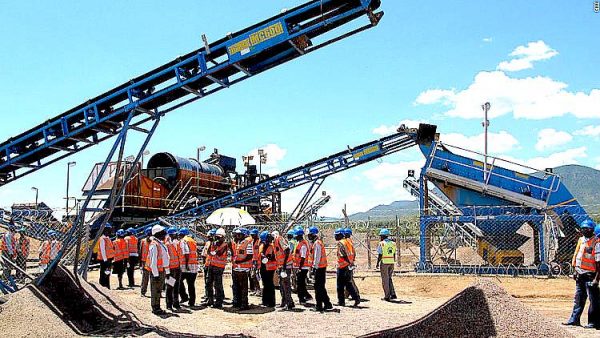
Marange community is urging mining corporations to make them beneficiaries of the minerals they extract from their land.
By Shantel Chisango
A resident of the Marange community, Billian Matambo, stressed the necessity of being made benefactors of mineral extraction, saying that infrastructural development by mining companies is vital.
“We need permanent structures built by mining companies that are mining from our community,” said Matambo.
He further went on to emphasise the importance of community development by mining companies saying diamonds are non-renewable hence the need to develop vicinities while exploring minerals.
Adding on, Matambo said that diamonds are non-renewable minerals, that is why communities are urging companies to develop their land.
“Modern schools, better roads, bridges, and modern hospitals must be established so that when the mining companies are gone, we can have something tangible that will be of benefit to us,” he added.
Mining companies continue to enter remote communities to search for exploitable mineral reserves and most of these frontier locations are home to indigenous, poor and vulnerable people.
Sarin (2006) says mining may have the potential to have positive development impacts, but companies can inadvertently or carelessly exacerbate an already poor situation for some community members, particularly those with the least resources.
Adding to people’s vulnerability is the fact that the legal frameworks of many mining frontiers fail to adequately protect civil rights or are ineffective, corrupt or not trusted.
The International Council on Mining and Metals (ICMM), concludes that governance weakness, particularly at the sub-national level, is the main factor limiting positive development impacts from mining companies, (McPhail, 2008).
The Zimbabwe Miners Federation (ZMF) President Ms. Henrietta Rushwaya in an effort to push for the growth and development of artisanal and small-scale mining will do a mining mechanization outreach program for data collection, the organisation CEO Wellington Takavarasha said.
ZMF is targeting Small-scale miners to contribute US$4 billion to the targeted US$12 billion mining economy by 2023, the outreach program is therefore of significance to the achievement of the mark.
Takavarasha said Rushwaya and her team are going to visit at most three mining sites in each province for the data collection.
“President Ms. Henrietta Rushwaya will do a mining mechanization outreach program to all the mining provinces. The purpose of this outreach program is to do an artisanal and small-scale mining needs assessment data collection. Apart from the Know Your Client (KYC) issues, other parameters that will be looked at during the visit include but are not limited to the following
➢ Mine management and records
➢ Statutory compliance
➢ Geological information
➢ Capitalization of the project and expansion capabilities
“The President and her entourage will visit at most 3 mining sites in each province. This will be coordinated by Provincial Council Executive Committees. Full details of the calendar of events for the outreach program will be unveiled in due course.” Takavarasha said.
Earlier this month ZMF CEO Takavarasha said artisanal and small-scale miners have an important role to play towards the realization of the US$12 billion mining economy.
“Statistics of production indicate that the US$12 billion mining economy is being achieved in various mining sectors. US$4 billion has to come from the ASM. Fidelity Printers receipts of small-scale miners indicate that the sector is producing 60 percent of total gold output. The role of ASM is very important. Currently 70 percent of the minerals being mined is gold while 30% constitutes other minerals,” said Takavarasha during an interview.
Takavarasha pointed out that formalisation of the ASM sector is overdue.
“As long as the government is benefiting from the artisanal and small-scale mining sector operations, there is definitely a need to formalize. There have been some engagements at Mines and Finance Ministries and they are going to meet and come up with a Statutory Instrument that legalizes and policies that have a framework for the ASM sector. This has been on the cards,” he said.
Meanwhile, Takavarasha said the Covid-19 pandemic has adversely affected the ASM sector.
“Covid-19 has greatly impacted the ASM sector. We have had challenges such as cash shortages. Cash shortages are emanating from the fact that commercial flights that have been coming into the country and the international flights were being restricted. Therefore, this impacted on Fidelity Printers having cash. There were acute shortages at Fidelity Printers and Refineries because of the pandemic,” he said.
Consequently, the situation led to a significant drop in production.
Communities have been complaining about politically and financially stable individuals who snatch mineral resources from poor communities, and are demanding that minerals must be reserved for communities.
Such complaints came after rich tycoons have been recorded to forcefully grab mines from locals using their political powers.
MiningZimbabwe recently visited a community in Chegutu where the community was crying foul of rich people coming to their communities taking their mineral resources.
Cases have also been reported all around the country whereby foreigners or rich businessmen come claiming mines that locals would have been extracting minerals from.
There is urgence from the government’s side to form policies that protect local communities from being robbed of their resources by rich tycoons.
Furthermore, the government must make an initiative to educate local communities over all the procedures that must be followed when mining so that they do not engage themselves in illegal mining.
Moreover, communities must always research information about all that needs to be done before engaging in mining activities to avoid being duped by rich tycoons.
Local communities must be given the privilege to enjoy mineral resources that surrounds them do that their communities can be developed.
In addition, policies must be enforced to stop daylight robberies of minerals from the community.
Investors must not be given more of the minerals and more profits than the country can benefit from the venture that would have been done.
Zimbabwe Environmental and Law Association (ZELA) said the government must establish a quarter system whereby a portion of land is set aside for women who wish to venture into mining.
Speaking on the issue of empowering women, ZELA Programme Assistant Fadzai Midzi stated that the mining sector is a male dominant and labour-intensive place, hence there is a need to set aside land for the women so that they do not face harsh conditions when working.
“We need affirmative action, some form of a quarter system whereby the government sets aside maybe a piece of land meant for women who want to do mining.”
Mrs Midzi mentioned that there is still plenty of work which needs to be done when it comes to empowering women in the mining industry.
“There is a need for the government to create diversification for all women in the sector, as well as create an enabling environment to make sure that women are knowledgeable of all the procedures in mining,’ said Fadzai.
Although there is still a long way to go in empowering women in the mining sector, Fadzai said the government has been trying its level best in supporting them.
She mentioned that through the Fidelity Life Printers (FPR), the government was able to establish the gold funding for women which assists women with all they need in mining.
She went on to say that the presence of the School of Mines has been greatly appreciated since it has assisted women in becoming knowledgeable in the mining industry.
Women in the mining sector have been vulnerable to abuse, victimisation, and men using intimidation to forcefully take their mines.
Zimbabwe’s platinum output has increased by 17% to 128 000 ounces (oz) during the second quarter of this year compared to last year after processing matte backlogs from Unki mine.
In a report, World Platinum Investment Council (WPIC) confirmed the development.
“Zimbabwean production increased by 17% year-on-year as a backlog of matte from the Unki smelter was processed through the ACP and refined,” the report said, noting that platinum production stood at 110 000oz during the second quarter of 2020.
The WPIC projected that Zimbabwe’s platinum output would rise by 17 000oz this year as the backlog of semi-finished inventory is refined in South Africa.
Last year, Zimbabwe produced 448 000oz of refined platinum.
Zimbabwe is currently the world’s third-largest proven platinum reserves after South Africa and Russia, and what it produces has an impact on global output and pricing trends.
Platinum is one of Zimbabwe’s biggest foreign currency earners, with South African mining companies such as Impala Platinum (Implats) and Anglo-American Platinum (Amplats) owning the biggest PGM mines in the country.
According to the government’s vision of attaining a US$12 billion mining economy by 2023, platinum is expected to contribute US$3 billion per year.
According to WPIC, global supply jumped by 65% year-on-year to 1,6 million ounces during the period, the highest output per quarter in the past two years.
The Zimbabwe Republic Police (ZRP) on Wednesday in an effort to stop the rising of illegal mining in village 5 Lornekope Kadoma, recovered abandoned mining equipment which includes four windlasses, a 30-kilowatt generator, and Jackhammer.
The area has become a haven for machete-wielding robbers who target artisanal miners and the police has been fighting to sanitize the area.
“Following the proliferation of illegal gold panning at village 5 Lornekope, Kadoma, on 15/0921, Police descended on the illegal mining site and recovered abandoned mining equipment which include four windlass, 30 kilowatt generator and Jack hammer.” The Police said.
Last week three people were arrested in Kadoma after machete-wielding gangs clashed following a gold rush in the village, which left several illegal miners seriously injured during the battle.
Most of them were armed with machetes which they used to attack each other and there are unconfirmed reports that some of them had their ears cut off while others sustained deep cuts on their heads and faces during the melee.
National police spokesperson Assistant Commissioner Paul Nyathi confirmed the arrests of the three and said they will appear in court tomorrow.
“From the information that we have gathered so far, there is a gold rush in that area and they are also rival parties who clashed between the weekend and yesterday,” he said.
He said following the clashes, the gangs decided not to make a report to the police but went to Kadoma Hospital to seek treatment.
While at the hospital, it is alleged that another confrontation erupted resulting in the officials making a report to the police.
Police reacted and managed to arrest three of the suspects who are still assisting police with investigations.
Before his death, the late chairperson of Mhandamambwe Quarry Mining Company Mr Amos Matweya agreed to get 1 percent of quarry sales on the company’s 120-hectare claim in Chegutu surrendering the other 99 percent to Mr. Li Zhongqiang of Draishing Construction who was to install a crushing plant.
According to the contract seen by this publication, Mr. Li Zhongqiang was permitted to mine the quarry mountain owned by Mhandamambwe in Jinkstown Farm paying US$1 (by means of bank transfer) per every cubic processed.
The contract which was signed in 2018 was expected to last for 20 years.
Zhongqiang was to for the purposes of crushing, set up a crushing plant and electricity requirements; supply all labour and equipment for crushing purposes; drill a borehole for provision of safe water and construct an access road from the main road.
The contract has been labeled as exploitative by many miners who saw it castigating the Chinese for pushing an imperialistic and capitalistic agenda.
The Chinese have been accused across the country and the continent at large for disadvantaging locals in mining deals with some Zimbabweans questioning the country’s look east policy.
Earlier this month Mr. Felix Tshisekedi, the president of the Democratic Republic of the Congo (DRC) called for a review of mining contracts signed with Chinese companies saying he wanted to get fairer deals.
“It is not normal that those with whom the country has signed exploitation contracts are getting richer while our people remain poor,” he said.
“It is time for the country to readjust its contracts with the miners in order to seal win-win partnerships.” Tshisekedi.
THE Zimbabwe Consolidated Diamond Company (ZCDC) has pledged to implement infrastructural development programmes aimed at improving the lives of Marange villagers displaced from the gem-mining sites.
ZCDC chief executive Mark Mabhudhu made the remarks in Chiadzwa this week after a visit by the Parliamentary Portfolio Committee on Mines and Mining Development led by Edmond Mukaratigwa.
The committee toured Marange diamond fields before addressing community-based organisations, civic society organisations, among other stakeholders at Headman Chiadzwa’s compound.
“As the leader of the ZCDC, I want to make a commitment that we will change the lives of villagers through social responsibility programmes and infrastructural developmental projects,” Mabhudhu said.
“All along, ZCDC has been struggling, but things are going to be better in the near future so we need to work together so that we achieve our main aim.”
Mining companies operating in Chiadzwa have often been accused of neglecting villagers displaced by the mining venture. Mabhudhu urged Marange villagers not to speak ill about the company’s mining activities since that would affect the marketing of the precious stones.
“There is no market of diamonds in the country, so what you say about our diamonds contributes a lot on how we sell the diamonds. So, we need to be united on what we say as a community about our diamonds,” he said
Centre for Research and Development director James Mupfumi said Marange villagers had an obligation to demand corporate and social responsibility from the diamond miner.
“We cannot solve adverse impacts of mining in communities without a sustainable policy regime. The Mines and Minerals Bill has been shelved by the Executive for personal reasons. The present Mines and Minerals Act is extractive for personal reasons.”
He added: “I have noted with concern that the Marange community is wallowing in poverty amid some human rights abuses by the State security agents.”
HIGH Court judge Justice David Mangota has dismissed an application by Chegutu West MP Dexter Nduna in which he sought to be declared the lawful owner of Danly Mine.
The lawmaker had sued RioZim Private Limited for grabbing his lucrative gold mine in Chakari.
Nduna told the High Court in an urgent chamber application RioZim had erected a fence within his boundary and carried out mining activities to his prejudice.
However, Justice Mangota ruled Nduna did not give the court any evidence to prove he was the owner of the claim, and as such his request was invalid.
“The applicant, it is evident, portrays the picture that he has a claim at the mine. He insists that the second respondent invaded his claim. He produces no evidence which shows that he has any mining claim in any part of Zimbabwe, let alone at the mine,” the judge said in his ruling.
“The prospecting license he attached to his application, it has been observed, has no relationship at all with the mine. Nor do their contents translate into conferring upon him the right to any claim in Zimbabwe. All they do is to allow him to prospect for minerals in Zimbabwe.”
The court also ruled the sequence of events as narrated by Nduna in his founding affidavit were incoherent.
Justice Mangota said Nduna’s application was contradictory and did not show a clear picture of events that led to the filing of the urgent court application.
“The application is everything which an urgent application should not be. It contains an incoherent narration of events. It is contradictory in many respects. It is panel beaten in other respects. It is a complete sham which cannot be condoned let alone accepted. The application is dismissed with costs.”
Nduna approached the High Court last month accusing RioZim of invading his claim and a building fence around the perimeter to bar him access.
He also accused the local police of assisting the mining company and one Langton Ndlovu to take over the mine.
He sought a spoliation order against RioZim, claiming that it was the only way to stop the illegal mining at the claim which was causing him to suffer irreparable financial damages.
Those that are not well-connected and cannot afford bribes end up mining without permits. They have to pay huge royalties to the owners of mining permits, normally 30% of net proceeds, after deducting costs. Ultimately, it is the government that loses out, writes Mukasiri Sibanda
Mining is the spine of the economies of many African countries. But, for all their mineral wealth, African countries are spineless concerning capabilities to mobilise resources to finance sustainable development on the continent.
The poor, and marginalised groups, particularly women, youth, people with disabilities and elderly, are the hardest hit as they largely depend on public services – health, education, water, and sanitation.
Mineral-dependant countries, as noted by the report of the High-Level Panel (HLP) on Illicit Financial Flows from Africa, are highly vulnerable to illicit financial flows (IFFs). Although there is no consensus on what IFFs are, the HLP report’s definition covers both criminal and immoral components – tax evasion and aggressive tax planning to exploit legal grey areas. Large scale mining companies are the main culprits when it comes to tax fraud in Africa as revealed by the HLP report.
A double jeopardy is suffered because on top of tax shenanigans by large scale miners, artisanal and small-scale mining (ASM), mainly informal, gives nightmares to tax collectors. A colossal annual loss of US$1.8 billion through smuggling, illegal dealing in gold and precious stones, corruption, fraud, tax evasion, and externalisation, among others was revealed by the Zimbabwe Treasury in 2015.
Unlike large scale mining, ASM is a major source of employment and income generation in Africa. More than 1.5 million in Zimbabwe directly depend on ASM, with three million people indirectly benefiting. Essentially, the ASM sector is an important buffer against poverty, lack of formal employment opportunities, limited community enterprise development avenues, and unreliable agriculture production due to climate change effects.
That is why ASM is recognised by the Africa Mining Vision (AMV), a blueprint that was adopted by African head of states and government in 2009 to leverage mining for sustainable economic growth and broad-based economic development.
This article takes special interest in taxation of the ASM sector, with Zimbabwe as the main reference point. What motivated this article is the discussion that was organised by the Zimbabwe Miners Federation (ZMF) on Thursday, 09 September 2021, to try to solve ASM taxation challenges. The speakers comprised the Zimbabwe Revenue Authority, civil society, academia, and the leader of Parliament portfolio committee on mines and mining development.
Fiddling with tax rates for ASM
The Zimbabwe government has many times fiddled with taxation of the ASM sector, a delicate balancing act of trying to ensure compliance levels by stifling the black market for gold and the mobilisation of tax revenue. Prior to 2014, the royalty rate for ASM and large-scale miners in the gold sector were similarly pegged 7%. As an incentive for selling gold on the formal market, the 2014 National Budget Statement lowered the royalty rate for ASM from 7% to 3% for gold output not exceeding half a kilogram per month with effect from 01 January 2014.
Further, the ASM gold royalty rate was slashed to 1% from 3% with effect from 1 September 2015. All along, government was lauding the impact of a lower ASM gold royalty rate as a significant driver of increased gold deliveries on the formal market.
There was a policy U-turn when ASM gold royalty were increased to 2% from 1% with effect of September 2019. Although the lowering of ASM gold royalty was well intentioned, Treasury noted that it has side effects on tax revenue collection. There was a huge risk that some unscrupulous large mining houses were selling gold through small scale producers, to benefit from lower royalty rates as well as higher foreign currency retention thresholds. Royalties for large scale gold producers were pegged at 5% and 3% for any annual incremental production. In the same period that ASM gold royalties were increased to 2%, sliding gold royalty rates were introduced – 3% for price below US$1,200 per ounce and 5% for the price above US$1,200 per ounce.
Faced with a sharp decline of ASM gold deliveries, the royalty rate was slashed back to 1% from 2% in 2021. Presumptive taxes for ASM were scrapped in 2014. Before that, presumptive tax for all informal businesses was pegged at 5% in 2009 and slashed to 2% in 2011.
A huge tax burden means informalisation and loss of revenue
According to the 2016 midterm Monetary Policy Statement, the number of registered custom millers reduced to 51 from 485 after annual registration fees were raised sharply from US$2,000 to US$8,000. The Statement noted that there are many millers who cannot afford to pay the required fee of US$8 000 but they are still operating and selling their gold on the black market and/or smuggling gold out of the country. Likewise, the number of permit holders for explosives in the ASM was about 5,000 when the fee was US$100 and fell to 300 when the fee spiked to US$2,000.
Challenging the false narrative that ASM doesn’t pay taxes
It is a stylised fact that ASM does not pay taxes. One of the major sources of government tax revenue is Value Added Tax (VAT). For the first half of 2021, according to Zimbabwe Revenue Authority’s (ZIMRA) revenue performance report, VAT contributed 23.92% to total tax revenue. Because of their strong consumptive power, artisanal and small-scale miners (ASMers) are key contributors to VAT. Notably, because of the informal nature of ASM, it is safe to say that most players are not registered for VAT. On that note, they cannot claim their VAT refunds as opposed to large scale miners.
ASM is also burdened by "underground" taxes, especially bribes. It is not easy to get a mining title with others waiting for more than three years for the permits to be processed. Some end up paying bribes to speed up the processing of mining permits.
Those that are not well connected and cannot afford bribes end up mining without the permits paying owners of mining permits huge royalties, normally 30% of net proceeds after deducting costs. Ultimately, government loses out.
Significant inroads made with taxpayer registration but no clarity of what this means for ASM
In the hunt for more tax revenue, 21,643 new taxpayers were registered in 2020 with a revenue contribution of $558,234 million, according to ZIMRA’s 2020 Annual Report. This was attributed to tax education and engagement programs. No disaggregated data was availed to sift the information on newly registered taxpayers to see how many were from ASM.
Snapshot interviews I had with local ASM leadership in Gwanda, Bubi, Shurugwi, Zvishavane, and Mberengwa, some of the key ASM gold mining producing districts in Zimbabwe revealed there was hardly any significant interventions undertaken by ZIMRA to register new taxpayers among their constituency. ZMF says that there are roughly 40,000 fully registered ASM players out of 1,5 million, and there is need to dig for more information those fully registered are also tax compliant.
An ideal scenario would be a computerised mineral rights cadastre, managing the application, award, maintenance, and forfeiture of mining titles to be integrated to ZIMRA’s data base of taxpayers. That way, ZIMRA, for example, would have a fair chance of collecting taxes like capital gains in case of changed ownership of claims or mineral rights through buying and selling as speculative practices are alleged to be rife.
Above all, ZIMRA collected ZWL$1.81.96 billion which was 5.85% above the target of ZWL$171.9 billion. Considering the strong evidence that the mining sector is highly prone to IFFs due to poorly negotiated contracts, under invoicing, abusive transfer pricing, corruption and smuggling of minerals, recording a positive revenue tax collection could be a mask the true tax collection challenge.
A worker at Fidelity’s Msasa refinery: many artisanal miners prefer the black market
Ring fence government revenue from ASM
One of the important roles of taxation is representation. It creates a social contract between the taxpayer and the government. Transparency is a key enabler for a strong social contract between government and players in the ASM sector. Several high-ranking government officials and political heavy weights are involved in ASM, and the suspicion that they are not paying taxes because of high levels of corruption can dissuade others to pay taxes.
Communities in mining areas must see the benefits of taxes.
If ASM gold deliveries amount to US$1 billion in one given year, a 2% royalty fee means that government would have collected US$20 million. Government ploughs back ASM royalties to improve rehabilitation of the environment, access to finance, mechanisation, skills building, bolster investment in education, health, water, roads, power, and communication, ASMers can be motivated to comply with their tax obligations.
Also, government must widely consult with ASMers on taxation of the sector to ensure that they have a voice on matters that affect them as part of their constitutional rights. Policy inconsistencies must be avoided.
Government must stop going around in circles concerning tax rates such as royalties and other charges. Tax administration must be simplified to ensure that ASMers are not dealing with multiple government institutions who are not coordinating their charges and tax collection.
Tax collection must be supported by fair payment methods for gold deliveries
While unfair tax rates have an acted as an impediment to ASM formalisation, or even erode some gains made, the unfair payment mechanism have pushed many to go underground and deal on the black market that pays fairly and promptly in US dollars. ASMers have been losing more money from the manipulated exchange rate when part of their proceeds was collected by government as part of the local content policy for enhances foreign currency linkages for procuring fuel, electricity, raw materials, and machinery among others.
Importantly, government is now paying ASM 100% foreign currency for gold deliveries but for roughly four years, ASMers were robbed by unfair payment methods that meant that the part payment in local currency was liquidated at an unfavourable official exchange rate compared to the black-market rate.
To provide the best experiences, we use technologies like cookies to store and/or access device information. Consenting to these technologies will allow us to process data such as browsing behavior or unique IDs on this site. Not consenting or withdrawing consent, may adversely affect certain features and functions.
Functional
Always active
The technical storage or access is strictly necessary for the legitimate purpose of enabling the use of a specific service explicitly requested by the subscriber or user, or for the sole purpose of carrying out the transmission of a communication over an electronic communications network.
Preferences
The technical storage or access is necessary for the legitimate purpose of storing preferences that are not requested by the subscriber or user.
Statistics
The technical storage or access that is used exclusively for statistical purposes.The technical storage or access that is used exclusively for anonymous statistical purposes. Without a subpoena, voluntary compliance on the part of your Internet Service Provider, or additional records from a third party, information stored or retrieved for this purpose alone cannot usually be used to identify you.
Marketing
The technical storage or access is required to create user profiles to send advertising, or to track the user on a website or across several websites for similar marketing purposes.