

Home Blog Page 403

Miner worker robbed of US$15 000, 49g of gold and a cellphone

0

Two armed robbers who were posing as police officers were arrested by the police in Mutawatawa Mashonaland East province. 

Vongai Mbara 

The pair of Chikomborero Gono (28) and Luckson Tsingano (32), robbed Tinotenda Karumazondo (21) employed at a local gold milling company of USD15 000, 49g gold and a cellphone then kidnapped him, tying him with shoelaces and spraying him with an unknown substance which made him unconscious. 

The Zimbabwe Republic Police (ZRP) confirmed the arrest in a Twitter post said, “Police in Mutawatawa joined hands with members of the public and managed to arrest two of the several armed robbery suspects, who were masquerading as police officers. 

“The suspects robbed Tinotenda Karumazondo (21) employed at a local gold milling company of US$15 000, 49 grammes of gold and a cellphone before kidnapping him, tying him with shoelaces and spraying him with an unknown substance that made him unconscious.” 

A member of the public reportedly sustained a gunshot wound on the palm during the robbery. 

Gono and Tsingano are assisting police with investigations, while a manhunt has since been launched for the other unidentified suspects. 

US$360m needed for the resuscitation of Zisco

0

Industry and Commerce deputy minister Raheshkumar (Raji) Modi has revealed the defunct Zimbabwe Iron and Steel Company (Zisco) requires US$360 million for its resuscitation.

Vongai Mbara 

Once Africa’s largest integrated steelworks company, Ziscosteel was shut down in 2008 owing to the economic decline in the country, mismanagement and corruption. 

Speaking at the 2022 pre-budget seminar in Victoria Falls, the deputy minister told legislators that his Ministry had appointed a board of directors to spearhead the resuscitation of the steelmaker and bids to invite investors had already been advertised. 

In his report, Modi said his Ministry had successfully addressed corporate governance issues that contributed to the collapse of the former steel giant which was one of the major employers for engineers in the country. 

“In line with NDS 1 (National Development Strategy 1), the iron and steel value chain is prioritising the resuscitation of Zisco,” Modi said. 

“The Ministry of Industry and Commerce addressed corporate governance issues at Zisco.  A full board of directors was put in place. It will lead to the resuscitation of Zisco through identifying a strategic partner. The board immediately held its strategic planning session and identified that it needed US$360 million for resuscitation. Resuscitation of Ziscosteel will go a long way in establishing a sustainable engineering, iron and steel industry. It will have positive spillover effects to other sectors of the economy.  Around US$1 billion will be saved with the revival of Zisco,” he said. 

According to Modi, the country is spending over US$1,1 billion annually to import steel raw materials following the closure of Ziscosteel. 

“There are a total of seven iron and steel companies which are involved in the process of shaping steel, aluminium and other metals. The sector currently employs 13 527 people and has an average capacity utilisation of about 36,4%.  The sector has a huge import bill for raw materials which amounts to about US$1,1 billion annually.  The huge import bill has been attributed to the closure of Zisco which was the major supplier of the required raw materials.” 

The Ministry said it was working towards reviving key strategic industries so as to create employment and increase export earnings, thereby reducing the import bills. 

In January 2018, the government took over a Ziscosteel debt of about US$500 million in a bid to entice new investors and remove litigation hurdles. 

Now, Ziscosteel is 89% owned by the government, while the remainder is in the hands of private shareholders. The company owns Buchwa Mining Company, Lancashire Steel, ZimChem and Frontier Steel. 

The new investor is expected to give 35% of the design, procurement and construction operations to local companies and residents. 

If resuscitated, Ziscosteel can provide a lifeline to various companies in the value chain. The company used to produce mainly for the export market. 

Revisit indigenous and economic emancipation – Moyo

0

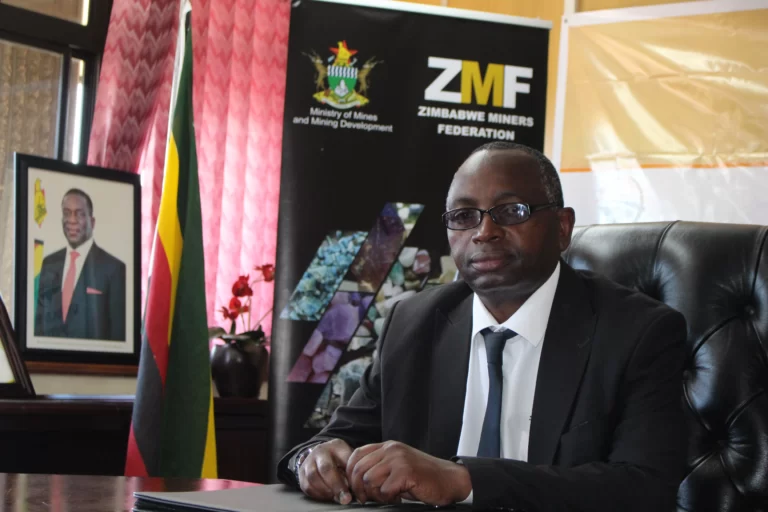
Zimbabwe Miners Federation (ZMF) Secretary for Semi-Precious and Gemstones Mr Privalege Moyo has implored that Zimbabwe needs to revisit the Indigenization and economic Act to help communities benefit from their minerals.

Anerudo Mapuranga

According to Moyo, the situation where foreign companies own 100 per cent of mining and agricultural land in the country should be revisited so that the local people benefit from displacements and environmental impacts happening in their areas. He said the minerals have zero attachment to local communities’ growth and development because they are benefiting other nations.

“Chrome is attached to foreigners at zero per cent, it is as good as handing over our minerals to other countries. The registration and taxes are insignificant, that is why many are making a lot of money on stock exchanges. Indigenization needs to incorporate minerals, agriculture, no one should own a farm or a mine without locals. In Dubai, it is being done,” Moyo said.

Chrome Miners Association Chairperson Mr Shelton Lucas said it was of importance for the country to revisit the economic and indigenization blueprint which intended to empower the local people to benefit from minerals.

He said the government is supposed to take the harsh approach taken by the previous dispensation to discourage through the law any foreign companies and individuals for having more than 49 per cent shares in any business.

“On indigenization, that 51/49 should be adopted since these are finite resources which cannot be replenished and the mines act tributary ratio of 5% to the claim holder should be revisited because it arm-twists local miners in terms of negotiating prowess. The local miners will end up settling for less.”

According to the chairperson for the Parliamentary Committee on Mines and Mining Development Hon Edmond Mkaratigwa, although it is important for communities to benefit from any development or investment happening in their areas of residence, it is of importance if the initiatives go through a rigorous consultation so that those leading could not take community project for personal enrichment.

“My view is that the agency is important for this initiative to succeed but the thinking that should be embedded in whatever choice of agency or the vehicle that should drive the initiative. Councillors and headmen are important in all this because naturally, they are there to facilitate community development, however, they should be bound by a contract that limits human personal ambition and desire for self-enrichment that can easily be visible even where publicly shared resources are concerned. In terms of the amount of share ownership, those are issues that can be arrived at through participatory negotiation between investors, the government, and the communities. Experience has revealed that it is one way to be allocated the resources and another thing to have the resources visibly impactful to all in the community. Whatever arrangement arrived at should offer some kind of flexibility, guarantee for implementation into a future secure from conflicts as a result of such development. Basically, the development should not cause any harm but more benefits,” Mkaratigwa said.

Prospect Resources debt-free to advance Arcadia

0

Australian Stock Exchange-listed mining and exploration company’s investment in the Zimbabwe mining industry has been boosted with the company ending the quarter ended 30 September debt-free.

Rudairo Mapuranga

The company has recorded a debt-free cash balance of A$5.7M, as of 30 September 2021.

According to the company’s Managing Director Sam Hosack the September quarter mainly focused on developing Arcadia and extracting value from our other assets.

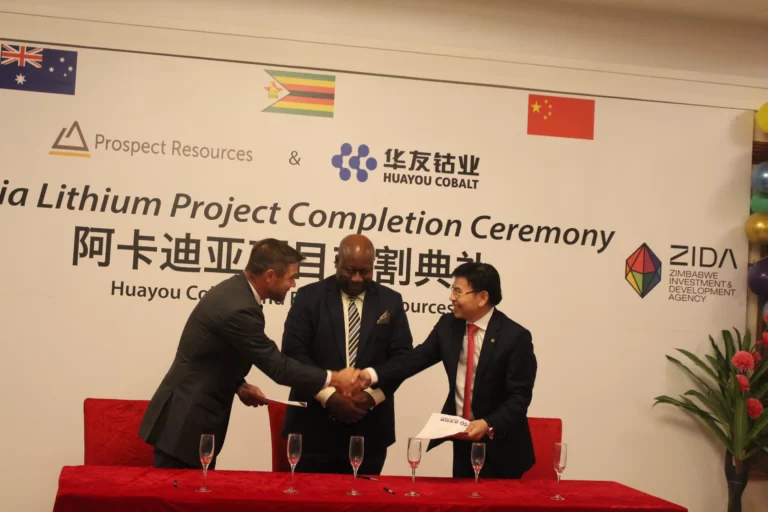
He went on to say that completion of the Farvic transaction increased Prospect ownership in Arcadia to 87%.

“The September 2021 quarter was focused on the further development of Arcadia and extracting value from our other assets. We completed the Farvic transaction, increasing Prospect’s ownership in Arcadia to 87% and operated the pilot plant and shipped on-spec technical grade petalite concentrate. Our key focus is to showcase Arcadia’s technical grade petalite to our existing off-takers and their customers in the global glass and ceramics markets.”

“The appointment of Azure Capital and Vermilion Partners as advisers to run a structured partnership process aims to leverage the extensive inbound interest we have received in the Arcadia Project.

The objective of the partnership process is to introduce a competent and aligned partner to provide funding and work alongside Prospect in bringing Arcadia into production, on terms that are favourable to Prospect’s shareholders. I am very pleased with the level of engagement with the potential partners in the process and have received positive feedback regarding the quality of the team’s work in the Staged OFS recently released.

Going forward, along with our colleagues at Lycopodium, we are now working hard to finalize the final phase of study on the Project (being the Direct OFS), as this is a key focus for our potential partners. We look forward to providing further updates to the market in due course.”

On 4 October 2021, Prospect announced that the first 25-tonne container of technical grade petalite concentrate from the Arcadia Pilot Plant was shipped to offtaker Sibelco, with a current inventory onsite of over 70 tonnes.

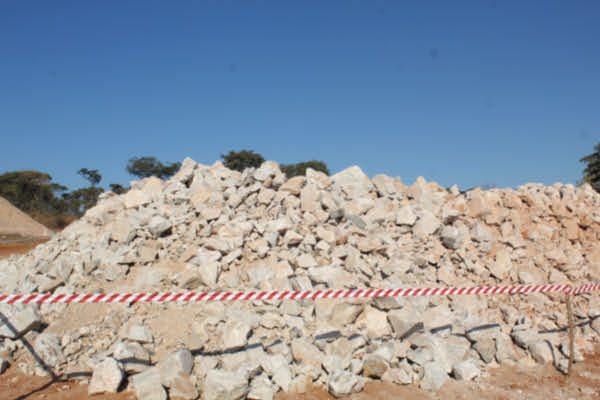
The Pilot Plant results were consistent with previous lab-scale test work and confirm the amenability of the Arcadia Ore Reserves to the production of an ultra-low iron, technical grade petalite concentrate product containing >4.0% Li2O, <0.06% Fe2O3.and <1.0% combined alkali (Na2O and K2O). The quality of the petalite concentrate in the shipment exceeds the specifications set out in Prospect’s offtake agreement with Sibelco.

Prospect received a pilot plant purchase order from Sibelco in May 2021 for up to 2,000 tonnes of technical grade petalite concentrate. The pricing in the purchase

order represents an implied premium to the prevailing chemical-grade spodumene concentrate (SC6) price of approximately 40%, at the time the order was received.

While the price of technical grade petalite concentrate is typically linked to the price of technical grade lithium carbonate (for which it is a more direct substitute), this comparison to SC6 pricing highlights the significantly higher unit value of the technical grade petalite concentrate product relative to SC6.

The Arcadia Project is one of the most advanced hard rock lithium development projects globally. Following a review of various funding options, and in response to multiple inbound enquiries received from a range of international parties in relation to funding and development of Arcadia, the Prospect Board decided to commence a structured process for the submission of competitive partnership proposals to fully fund the Arcadia project.

The Board is prioritising the development of Arcadia through this partnership process over other funding options, to provide more flexibility, accelerate project execution and bring the project into production at the earliest possibility.

Azure Capital and Vermilion Partners have been appointed by Prospect to run this process. The parties have continued due diligence, including site visits, in line with the process timetable.

About Prospect Resources

Prospect Resources Limited (ASX: PSC, FRA:5E8) is a battery minerals company with a focus on lithium in and around Zimbabwe, with the flagship project being the 87% owned Arcadia Lithium project, located on the outskirts of Harare in Zimbabwe.

Arcadia Lithium Project represents a globally significant hard rock lithium resource. The project is being rapidly developed by Prospect’s experienced team, with the focus on near term production of petalite and spodumene concentrates.

Coal producers invest US$10 Million in mining equipment

0

Zimbabwe’s major coal producers, Zambezi Gas and Coal Mine in Hwange have invested more than US$10 million in buying a variety of mining equipment which will see monthly production topping 300 000 tonnes.

Vongai Mbara

This comes as the Hwange-based colliery is producing 150 000 tonnes per month.

Speaking during a tour of the mining operation by staff and students from the Zimbabwe National Defence University (ZNDU), operations director Engineer Menard Makota said the equipment was bought from BLC in South Africa at a cost of US$10,4 million.

The tour was led by ZNDU Vice-Chancellor and Commandant Air Vice Marshal Michael Tedzani Moyo, and it is part of the institution’s 10th edition of the National Defence Course and was organised to expose students from various security agents and other countries to Zimbabwean developments, traditional, municipal, provincial and national governance systems.

Before acquiring the new equipment, the mine had between 50 and 100 haulage trucks on-site transporting coal whilst some is carried via rail transport from the site.

“We recently acquired 12 pieces of equipment which includes six dump trucks each with a capacity of 100 tonnes, three excavators, two dozers, water trucks and graders.

“With this equipment, production is going to increase to between 250 000 and 300 000 tonnes from the current 150 000 tonnes per month,” said Eng Makota.

Some of the purchased equipment is already on-site while the other is at the Beitbridge border awaiting clearance while some is still in South Africa.

He added, “We are also going to increase employment levels to over 800 people from the current 450.”

Makota revealed that Zambezi Gas, which sits on an 8 624 hectare concession south-east of Hwange town, was pushing to be the biggest coal producer in the region.

The concession has 180 million tonnes of coal deposits and its biggest customer is the Zimbabwe Power Company, which procures coal for its four thermal power stations, Hwange, Bulawayo, Munyati and Harare.

The mine also supplies coking coal to companies such as South Mining, Afrochine and Dinson Colliery among others, as well as other firms in different sectors like sugar processing, steel-making, and mines such as Zimplats and Unki.

In addition, it supplies to firms in the food and beverages sector, brick and cement-making companies and tobacco farmers. Zambezi Gas and Coal also export to the Democratic Republic of Congo, Malawi, and Zambia.

Govt proposes environmental levy to support rehabilitation of rivers degraded by illegal mining activities

0

The government has approved plans to impose stiffer penalties for environmental offenders as well as avail funds through the proposed environmental levy to support the rehabilitation of rivers that have been degraded by illegal mining activities.

Vongai Mbara

Speaking in a post-Cabinet media briefing on Tuesday, Information Minister Monica Mutsvangwa said the government would engage third party companies through the Environmental Management Agency (EMA) to rehabilitate the country’s environmentally degraded rivers.

These include Mazowe in Mashonaland East province, Munyati and Angwa in Mashonaland West, Manzimudhaka in Midlands province, and Save in Manicaland as well as Insiza and Umzingwane in Matabeleland South province.

Concerns over environmental degradation resulting from artisanal mining activities have been raised on multiple occasions by the Zimbabwe Environmental Law Association (ZELA).

“To remedy the situation, the government will, in the long-term, establish an environmental levy on all activities that degrade the environment,” Mutsvangwa said.

“In the short to medium-term, the government will engage third party companies through EMA to rehabilitate damaged mined-out areas on our rivers in the northern, southern and eastern regions.

She added, “As a way to promote participation of the third-party companies, EMA will initially meet the rehabilitation costs, with the Treasury providing the necessary budgetary support.

“Where rehabilitation is to be undertaken on areas that have the potential for mineral recovery, the contracted third-party company will be prohibited from processing the alluvial sand within three kilometres of the river,” Minister Mutsvangwa said.

Women Miners Hit Hardest By Covid

0

Several women miners in the Shurugwi area of the Midlands province say they have suffered large and disproportionate consequences because of Covid-19 lockdowns and have been slower in recovering from the effects of the pandemic.

Vongai Mbara

According to the women, they have incurred losses after they failed to service loans that they took from banks before the pandemic to finance their mining operations.

Speaking in an interview, Shurugwi Women in Mining treasurer, Alice Mdutshwa said women are affected by the lockdowns as they fail to utilize their leased mining claims.

“Most of the women have been finding it very difficult to work during COVID-19 lockdowns. During the lockdown, women miners failed to mine on their claims which were leased to them by Falcon Gold through the Shurugwi Development Trust (SDT). This presented a lot of challenges to the miners because they were expected to pay for their rentals yet they were not doing any production,” said Mdutshwa.

Mdutshwa, who is also the former chief executive officer of SDT, said some of the miners were also struggling to service their loans which they took from banks.

“The plight of some of these miners is being worsened by the fact that some borrowed money from the Women Bank and they are now failing to service their loans. If the loans are not written off, the miners risk losing their properties,” said Mdutshwa.

She also revealed that the COVID-19 pandemic affected the subscriptions of the association as some members can no longer afford the US$10 monthly subscriptions.

“Since COVID-19 started we have lost a significant number of our membership. A lot of our members would now rather prefer to buy food and pay rentals than to pay subscriptions.

Caroline Mahanangandi, Director of a Mberengwa based mining company, Silver River Mining (PVT) LTD said COVID -19 curfews posed numerous challenges to women miners.

“During the lockdowns, it was very difficult for women miners to access mining accessories. Travelling from Mberengwa to Harare or Bulawayo where most mining equipment is found was not easy. Although mining was declared an essential service during the lockdown, most female miners did not have exemption letters. In future the authorities should consider mining certificates as proof,” said Mahanangandi

The Silver River Mining (PVT) LTD Director said most women miners in her area incurred huge losses due to non -productivity.

“It will take quite some time for some of us to recover from the effects of COVID-19.  During the lockdown we were forced to pay non-productive workers and at the same time look after our families,” she said.

Mahanangandi said at one point, she, her maids and manager tested positive to COVID -19.

“Fortunately, all of us recovered from the disease because we all followed the COVID-19 prevention protocols,” she said.

The miner however bemoaned what she described as lack of information about the pandemic in the area.

While Mahanangandi and her workers were lucky to survive COVID-19, some women miners lost their workers to the deadly pandemic.

“I know some of the miners who have lost workers to COVID-19. Some workers have also not returned to work after the lockdowns. Some of the miners also lost their mining equipment to thieves and vandalism during the lockdown,” said Maria Masimba, Manicaland Women in Mining chairperson.

The chairperson said the pandemic has also stalled resolutions of various mining disputes in the province

She appealed to the government to assist the women miners in re-establishing themselves following almost two years of inaction.

Eureka looks to produce 200kg of gold monthly

0

President Emmerson Dambudzo Mnangagwa last week officially opened Eureka Gold Mine, the mine is expected to become one of the leading gold producers in two years’ time.

Anerudo Mapuranga

The owners, Dallaglio Investments, plan to produce an initial 140 kilogrammes of gold per month gradually increasing to 200 kilogrammes monthly positioning the mine to be a significant contributor to the US$12 billion mining industry by 2023.

According to Mashonaland Central Minister of State in the president’s office Hon Monica Mavhunga, Eureka mine has proven to be a key player in the growth and development of the province as well as being important to the transformation of the economy of Zimbabwe to become an upper-middle-income economy by 2030.

“The impact on the resuscitation of Eureka gold mine has inflicted smiles on many and the social-economic life of the people of Guruve is set to improve. Exceedingly delighted that the mine has employed over 500 people with over 64 per cent of them being locally based. The company has also embarked on serious transformative programs for the local community under its corporal social responsibility,” Mavhunga said.

Eureka Mine, which employed over 400 workers at its peak, producing about 1,5 tonnes of gold per annum, had been idle for the past 20 years, an investment of nearly US$50 million by Dallaglio Investments, which purchased the mine from Delta Gold in 2018 and went on to re-design the mine and install new plant and equipment is considered significant to the achievement of the Mines and Mining Development national gold target where 100 tonnes annual production has been projected by 2023.

Eureka Gold Mine will initially operate as an open-pit mine and the ore body has been explored to a 650-metre depth producing 1.3 grams per tonne with the hope that as they mine deep, the grade will increase.

Invest more in exploration, research, miners told

0

PLAYERS in the mining sector should invest more in exploration operations and research to ascertain the actual mineral reserves before extraction to avoid unnecessary degradation and losses, an industry executive has said.

Speaking during a recent Antech Laboratories open day in Kwekwe, Midlands provincial mines director, Mr Tariro Ndlovu, said unlocking higher mining value should ride on comprehensive exploration and research outcomes.

Antech Laboratories is a Kwekwe based company, which offers mining and exploration services, industry geochemical analysis, mine site assaying and metallurgical testing support mining and exploration companies to measure and develop their resources.

The inaugural open day brought together miners and stakeholders in the mining sector to discuss challenges facing the mining industry and how to overcome them.

“The decisions about exploration and grading should be based on the data generated by these analytical laboratories, not guesswork. Zimbabwe’s mining sector is highly diversified with close to 40 minerals, which are very key in economic development, particularly attaining Vision 2030,” said Mr Ndlovu.

“Zimbabwe’s transition into an upper-middle-income economy status requires reliable and reproducible test results in the mining sector since the country’s economy relies heavily on mining and mineral exploitation.

“Metallurgical assaying laboratories like Antech play a critical role in the mining and mineral processing sector in that it conducts mineral assays in support of exploration, research and control in the processing plant.”

The mine’s director also said exploration was key in the monitoring of the environment as the mining companies carry out their mining activities. The mining sector continues to be the bedrock of the country’s economy in terms of export earnings.

As such, Mr Ndlovu said the Government was committed to the full support of the sector to ensure improved output and quality operational standards.

He said the theme for the event: “Optimising mining operations and exploration through rapid reliable analytical services” was timely and in line with the objectives of the Government’s Vision 2030.

Laboratory manager Mr Edson Luwobo highlighted the need to strengthen synergies between mining and exploration industry and assaying labs.

The Chronicle

Mines Ministry to engage investors on closed mines

0

The Ministry of Mines and Mining Development has said it requires $8 million to enhance efforts towards the resuscitation of closed mines through engagement with investors and relevant stakeholders.

Mines Minister Winston Chitando, speaking at the 2022 pre-budget seminar, said more effort is also being done through the Zimbabwe Mining Development Corporation (ZMDC) whereby they are engaging various investors to reopen closed mines.

“The public urged the government to set aside resources for opening up closed mines across the country in order to raise more revenue and create employment.

“A total of $8,172,604 is required to support promotional activities, engagement with investors and relevant stakeholders towards the reopening of closed mines,” he said.

Minister Chitando said the government has come up with various incentives, both fiscal and non-fiscal incentives, to attract investment as the country strives to attain the target of a USD12 billion industry by the year 2023.

The US$12 billion industry ultimately feeds into the Government’s vision of Zimbabwe becoming an Upper Middle-Income Economy by 2030.

“It is important to benchmark our incentives regionally and globally and the Ministry does that periodically,” he said.

He noted that in terms of the Mines and Minerals Act [Chapter 21:05], any mining company that invests more than US$100 million may apply for a Special Mining Lease which allows the company to negotiate various tax concessions with the Government.

Minister Chitando also said that the Ministry will capacitate Mining Promotion Corporation (MPC) by approximately $5 million to help it spearhead the exploration needs for the year 2022 by the private sector and that of the Zimbabwe Geological Survey.

He said in line with Devolution and Decentralization, the Ministry of Mines and Mining Development is planning to establish offices in a number of communities including Hwange, Kadoma, Zvishavane and Lupane.

Minister Chitando said the ministry is seeking to transform the Lupane office into a fullyfledged Provincial Office as currently the Bulawayo Metropolitan hosts most of the staff and operations of the province.

“Funding will therefore be required for acquisition of land, construction of appropriate offices, fully furnishing the offices and provision of requisite tools of trade. In this regard the Ministry requires $150 million to achieve this target,” he said.

According to Minister Chitando, currently there are two Lithium Producers in Zimbabwe. He said

Prospect Resources commissioned their lithium processing pilot plant in June 2021.

He said the pilot plant is producing petalite ore with four percent lithium and 0,05 percent iron oxide.

“The low iron quantity makes the product highly marketable. Phase 1 of the Arcadia Lithium Project will establish a plant that produces Low Iron Spodumene used in the Chemical Industry and Ultra Low Iron Petalite used in the Industrial Market.

“Phase 2 will establish a Lithium Hydroxide Plant and this plant will beneficiate low iron spodumene into Lithium Hydroxide, Lithium Carbonate and Lithium Sulphide.”


Business Weekly