Home Blog Page 418

Congo says 12 dead, 4,400 sick following Angola mine tailings leak

0

The Democratic Republic of Congo will seek compensation from the owners of an Angolan diamond mine after a tailings dam leak polluted drinking water, causing 12 deaths and making thousands of people ill, the country’s environment minister said on Thursday.

The late-July leak from Angola’s biggest diamond mine turned a tributary of the Congo River red following a rupture in a spillway for the mine’s tailings dam, which stores mining industry waste meant to stay undisturbed.
Researchers at Kinshasha University last month pointed to “huge pollution” that affected some 2 million people, killed fish and caused diarrhoea among river communities.

Congo, which shares a 1,600-mile (2,575 km) long border with Angola, will seek compensation in line with the “polluter pays” principle, where those who produce pollution should bear the cost of mitigating it, Eve Bazaiba told a media conference after visiting the country’s southern Kasai province.

Bazaiba said she could not yet say how much in damages the country could seek. She said 4,400 people had fallen ill.

The leak and deaths represent the latest in a string of tailings disasters for the global mining industry that investors, executives and environmentalists have tried to curtail with safety and inspection standards introduced last year.The mine’s operator, Sociedade Mineira de Catoca, did not immediately respond to a request for comment on the damages claim and deaths listed by the minister.

Not all companies – including Catoca – have publicly committed to the standards, which are non-binding, further fuelling questions about how the standards can cause industry-wide change if not all mines and mining companies adhere.

Catoca, a joint venture between Angolan state diamond company Endiama and Russia’s Alrosa, said in a press release last month that tailings leaked into the Lova River, a tributary of the Tshikapa River, which eventually feeds into the Congo River, in late July.

Satellite images reviewed by Reuters show the Tshikapa turned red on July 25.

Catoca said it immediately sought to repair the leak, built two dykes to filter sediment out of the water and by Aug. 9 the breach was sealed.

Alrosa, which holds a 41% stake in Catoca, did not disclose the incident and told Reuters it was not its responsibility to do so as it does not control the mine site.

Endiama, which also holds 41% of the company, also said it was Catoca’s responsibility to make the incident public. In answers to Reuters’ questions, Endiama said it was made aware of the leak on July 30, three days after Catoca said it was seen.

Catoca said it donated food baskets to riverine communities to mitigate the impact of the pollution. Endiama said other measures were being worked on, without providing details.

The International Council on Mining and Metals (ICMM), the global mining industry trade group, which worked to draw up standards on tailings dams, said it had offered support to Alrosa – which is not an ICMM member – after the leak.

Adam Matthews, chief responsible investment officer for the Church of England Pensions Board, which was also instrumental in drawing up the safety norms, said the leak was a reminder that tailings management requires continued attention from industry, governments and investors.

He said investors and the United Nations are developing an Independent International Institute which would implement the standard and verify companies’ compliance with it.

Reuters

Zimplats lays out expansion plan as FY revenue climbs to US$1.4bn

0

Zimplats spent US$159.1 million on capital projects over the past year, and has laid out an even bigger budget on an expansion programme to grow platinum output.

In the year to June, revenue grew by 56% to US$1.4 billion, as Zimplats benefited from firmer world platinum prices. As a result, profit after tax increased to US$563.1 million from US$261.8 million same time last year.

The company is investing more into its operations, redeveloping and expanding its mines.

“The redevelopment of Bimha Mine is largely complete with cumulative spend of US$100.3 million, in line with the estimated project budget of US$101 million,” Zimplats says in its latest financials.

Rukodzi and Ngwarati mines will be depleted in 2022 and 2025, respectively. The two mines are being replaced by the new Mupani mine, whose development is “progressing well and remains on schedule”.

The project has a design capacity of 2.2 metric tonnes per annum, which is expected to be achieved in September 2024. Mupani and Bima will be further upgraded to replace Mupfuti mine, which reaches the end of its life in 2027.

“The upgrade project encompasses the following: Mupani Mine will be upgraded from the current design capacity of 2.2Mtpa to 3.6Mtpa at a total additional cost of US$122.6 million, thereby increasing the estimated total project cost from US$264 million to US$386 million. US$48.4 million was spent during the year increasing the cumulative total project expenditure to US$146.6 million at year end,” Zimplats says.

Full production capacity of the upgraded mine is expected to be achieved in August 2028.

Zimplats has set a budget of US$81.7 million to upgrade Bimha from the current design capacity of 2Mtpa to 3.1Mtpa. A total US$6.9 million was spent in the year and the project is expected to be done in 2023.

Zimplats: processing expansion

Zimplats is not just expanding the mining capacity; it is also growing the processing end.

The board approved a US$93.8 million concentrator expansion plan that will increase capacity to 900 000 metric tonnes per year.

Says Zimplats: “The project comprises the following: A third concentrator plant project at Ngezi which commenced in FY2021. The plant will process the additional ore volumes from the early ramp up at Mupani Mine and Bimha mines and is expected to be commissioned in the first quarter of FY2023. During the year, US$14.7 million was spent from the project budget of US$93.8 million.”

Zimplats is also buying new mobile mine machinery worth US$17.6 million.


NewZwire

‘US$3bn Sengwa deal still alive’

0

THE Industrial and Commercial Bank of China (ICBC) has not reneged on an agreement to finance the US$3 billion coal fired power plant Zimbabwean firm, RioZim, wants to develop in Sengwa, Gokwe North, sources have said.

If it collapsed, this would be the umpteenth time that potential funding deals for the Sengwa thermal power project, which was mooted in the 1990s, would have gone off rails for RioZim, a Zimbabwe Stock Exchange (ZSE) listed diversified mining entity.

This would also be a setback for Zimbabwe, which faces acute shortage of power and has dished out several permits to independent producers for electricity projects, in attempts to drive investment in production of electricity in order to become a net importer.

Zimbabwe faces a crippling power deficit that at times see the southern African country resorting to regular load shedding in order to balance supply and demand. At peak periods, the country needs 1 800 megawatts against supply capacity of roughly 1 600MW.

The Government is working on a number of projects to bridge the gap, including the 600MW expansion of Hwange Power Station, its second largest plant after Kariba South, as well as a 2 400MW joint venture with Zambia to be built on the riparian Zambezi River.

Company executives with intimate knowledge of the deal said while an environmental lobby claimed, through international media, that the deal was dead in the water, the claim was in fact incorrect, as no such official communication had been received from ICBC.

The report claimed ICBC told Go Clean ICBC, which includes environmental activist group 350.org, that it would no longer fund the 2 800 MW Sengwa coal project RioZim wants to develop in Northern Zimbabwe.

The project is based on a coal resource of 1,3 billion tonnes, capable of generating up to 2000MW of power, almost as much as Zimbabwe’s total installed capacity. The proposed project envisages the construction of a number of smaller power plants over the next ten years.

ICBC had reportedly signed a formal notice of interest in funding the plant, which would be constructed by China Gezhouba Group, while associated transmission lines would be built by Power Construction Corp of China.

The bank also allegedly claimed that they would no longer proceed to fund the Lamu coal project in Kenya as well as the Sengwa coal project in Zimbabwe.

But company officials who spoke on condition of anonymity this week said the agreement between RioZim and the bank still subsisted and no official communication had been received from ICBC over the issue.

In fact, they claimed the 1 400 megawatts coal fired project had been delayed by Zimbabwe’s outstanding sovereign debt with China, which if cleared, the bank was willing to finance the Sengwa project.

All outbound investments by Chinese State owned banks are insured by the Asian economic giant’s state insurance entity, Sinosure, which reportedly raised the red flag over further loans to Zimbabwe, including to private entities.

As such, RioZim executives are scheduled to meet with the Finance and Economic Development Minister Mthuli Ncube and other key Government stakeholders to discuss how the issue of the sovereign debt can be resolved to unlock funding.

“We do not have any conclusive report that they abandoned the project, or that they have written any letter to say that they have exited the deal. For us the project is still on but has been delayed by other issues, including (Covid-19) travel restrictions.

“There is no communication from them, (and if those who say the funding deal has been terminated have seen the communication from ICBC) they should just publish it,” said an executive who has inside knowledge of all internal affairs of the company.

Efforts to get a comment from company spokesperson Wilson Gwatiringa were not successful by the time of going to print, but other sources within the company’s board said the company was working to seek the intervention of the Government on the matter.

“We are having meetings and this coming Friday (today) we are going to meet the chairperson of ZERA (Zimbabwe Electricity Regulatory Authority) so that we can approach the Ministry of Finance and Economic Development.

“Look, the real issue is that they cannot finance the project because of Zimbabwe’s sovereign debt, Chinese banks require guarantees from Sinosure to extend loans, but the problem is that Zimbabwe is in arrears,” said a board member who cannot be named.

The source said the Chinese bank had advised RioZim to engage the Ministry of Finance to renegotiate the terms of outstanding loans from China, adding once this scenario is achieved, the Chinese banks would be more than willing to give the loan.

The source said the bank may be playing the right politics, as it was easier to claim it had pulled out over environmental issues than to come out in the open and say it had withheld funding over Zimbabwe’s multi-million US dollar sovereign debt arrears.

The African Forum and Network on Debt and Development (AFRODAD) says Zimbabwe’s sovereign debt reached US$18 billion in 2018.

The Chinese share of Zimbabwe’s total debt stock as of 2018 was 34 percent. According to the China World Investment Tracker, Zimbabwe received in excess of US$9 billion in aid, investment and grants between 2005-2019.

It would be uncharacteristic, sources said, of the Chinese to decline funding a US$3 billion project, and supply about US$1 billion of the equipment to be used in the project, because of the pressure from environmentalists, when 60 percent of China’s power comes from coal.


Business Weekly

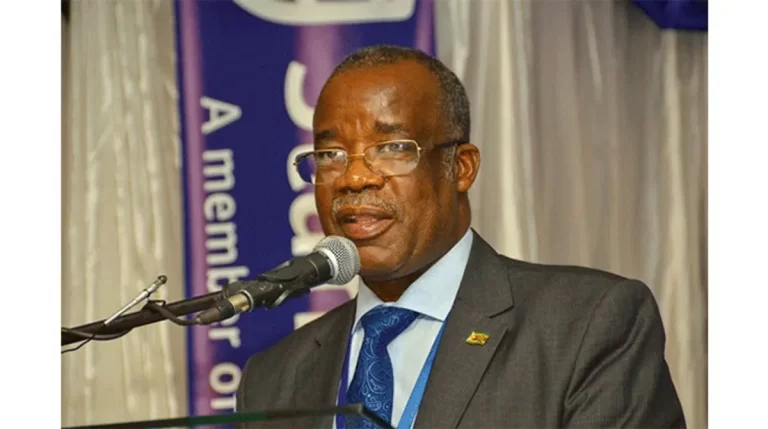
Zinyemba takes the reins at Hwange Colliery

0

DR ZINYEMBA had been in the acting position for HWANGE Colliery Company Limited (HCCL) since October 2018 until August 17, 2021 when he was confirmed the substantive managing director.

A holder of an MBChB from University of Zimbabwe (1986), Dispensing Medical Practitioner certificate (2001, MCPCPZ (2002) and an MBA he attained from National University of Science and Technology in 2014, had been the coal miner’s medical services manager since January 2011.

He left the post in October 2018 when he was appointed acting managing director, a position he diligently held until recently.

Arguably one of the oldest and largest mining companies in the country in terms of size, production and employment, HCCL is a company which explores, mines, processes coal and its related products in the coal mining town.

The company is also one of the local authorities that co-own Hwange town where it provides various services including social amenities such as health, accommodation and education.

As managing director, Dr Zinyemba will be reporting to the Board of Directors.

However, because the company is under reconstruction, the position currently reports to the Administrator.

His role and responsibility hovers around the overall success of the business and involves

supporting the whole team to deliver a successful coal mining business.

“The role directs core mining, processing operations and support services including the Estates and Medical Services Divisions,” said the company in a statement.

Dr Zinyemba’s role, just like his predecessors, will be to ensure that the mining company is profitable and involves a sharp focus on mining, processing and delivering coal and its related products in a strategic and operational nature to the nation and across the region.

Dr Zinyemba has proven to be the tonic the colliery company needs to turn around its fortunes and return to profitability, after driving the company to a profit two years ago.

“As managing director, I am pro-actively working for the benefit of the whole team as well as focusing on individual goals. Under my leadership and stewardship of the administration team HCCL reported a first half profit for the first time since 2012 in 2019. The company also posted an operating profit for 2021.

“Two new excavators, a grader, an LHD and dozer together with three new buses and several new utility vehicles were purchased and paid for in full as part of recapitalisation. Since the start of reconstruction to date, the company has paid salaries in full and on time and has cleared all pre-reconstruction salary areas while making steady progress towards clearing local debts incurred prior to administration,” said Dr Zinyemba, adding that production is steadily improving.

He did his medical internship at Mpilo Central Hospital and United Bulawayo Hospitals between January 1987 and December 1988.

From January 1989 to December 1990 he was a general duty medical officer at the Zimbabwe National Army referral hospital at Imbizo Barracks outside Bulawayo.

He rose to be senior medical officer in charge of the smooth running of all military hospitals and clinics in the Midlands and along the Limpopo Corridor (all military dressing stations and the Field Hospital at Mapai) from Sango border post along the route to Maputo during the Renamo war in the period January 1991 to December 1993.

He was a medical officer for HCCL from January 1994 to December 1998.

He also was in private medical practice providing medical services mostly in the Midlands for Zisco, Zimasco, Sable Chemicals, ZPC Munyati Power Station and Haggie Rand.

As a medical practitioner, Dr Zinyemba’s main line of business is in medicine, general surgery, orthopaedics, obstetrics and gynaecology and paediatrics.

He is also a member of College of Primary Care Physicians of Zimbabwe (CPCPZ), Zimbabwe Medical Association (ZIMA), associate member of the Institute of Directors of Zimbabwe, the CEO Africa Round table, past secretary general of Midlands Chapter of ZIMA, past chairman of Midlands Independent Medical Practitioners Association (MIMPA) and past vice chairman of MIMPA.

Outside work, Dr Zinyemba is a Christian and loves sport particularly cricket, chess and soccer, and the latter could be what Hwange Colliery Football Club needs to get full support for a quick return to topflight football.

He sits in various boards and councils, some of them the Council of the Anglican University in Zimbabwe, member of the Zisco Advisory Group —Technical, member of the ZIMCHEM

Refiners Board of Directors and member of the Stanley House (Pvt) Ltd Board of Directors.

As medical services manager, Dr Zinyemba was in charge of Hwange Colliery Company Hospital and eight clinics which are all owned by the coal miner.

This was an executive position reporting to the managing director.

Hwange Colliery Hospital has a private wing for senior staff and paying patients, three generalwards, and a maternity ward.

The facility has a Registered General Nurses’ training school and has been instrumental in spearheading Government health programmes in Hwange District.

The hospital has three theatres, a laboratory, an X-ray department, physiotherapy, pharmacy and dental surgery.

It runs its owhttps://www.chronicle.co.zw/n kitchen, laundry, mortuary and ambulance services and is a member of the private Hospital Association of Zimbabwe.

Hwange Colliery Hospital is ISO9001:2015 Certified and the hospital uses the same QMS system being a division of the main company subject to all the SAZ audits.


The Chronicle

Unki’s de-bottlenecking project to create jobs

0

Unki Mine’s de-bottlenecking project will result in increased employment and enhanced foreign currency generation, Information, Publicity and Broadcasting Services Minister Monica Mutsvangwa said this week during a post-cabinet briefing.

While Minister Mutsvangwa, who was highlighting some of the selected projects under Government’s 100-Day Cycle did not elaborate much on the project, Business Weekly understands Unki is undertaking the project aimed at expanding its metals concentrator.

The expansion, referred to as the “de-bottlenecking” project will help Unki increase throughput capacity to 210,000 t/mth.

In previous media reports, Unki said the concentrator, built in 2010, only treated up to 180,000 t/mth before the ongoing expansion.

Once it becomes operational the project Unki is expected to result in a reduction in transport costs by 60 percent as most of the ore will be processed locally before being exported for separation of base metals and precious stones. The project is part of Unki’s commitment towards implementing the government’s mineral beneficiation process meant to derive maximum benefits from the industry.

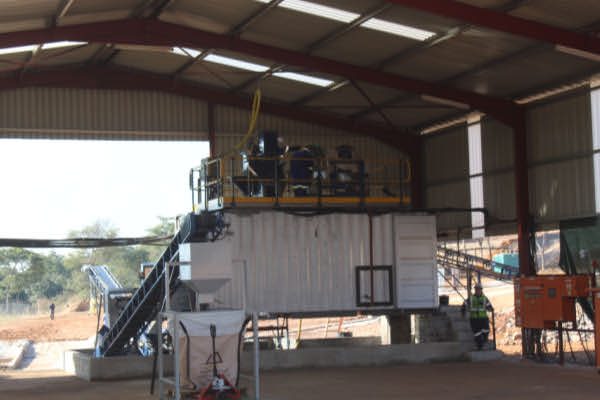
Unkie Mines General Manager Mr Walter Nemasase confirmed to this publication that the project is set to be commissioned on the 26th of this month. The new concentrator, debottlenecking plant was put up at a total cost of US$48 million.


Business weekly

1 dies in Makonde mine collapse

0

A WORKER at a Chinese-owned gold mine, Dee Troop, in Chikuti, Mashonaland West province, died at the weekend after he was trapped in a collapsed mineshaft.

The deceased has been identified as Herman Musona (29).

Mashonaland West provincial police spokesperson Inspector Magret Chitove confirmed the incident.

“As he tried to come out of the underground mining shaft where he was trapped, the deceased was knocked off by a large stone boulder that fell on him. Other mine workers tried to rescue him without success as he passed on in the shaft mine.”

She added that a report was made at ZRP Murereka Police Post in Lions Dens.

‘‘As police, we are deeply concerned with the high prevalence of deaths in the mining sector. We are urging all those in the mining industry to carry out regular inspections and check on mine safety before workers go underground. This will help to avoid loss of life.’’

Zimbabwe Diamonds and Allied Workers Union of Zimbabwe secretary-general Justice Chinhema said mine workers face a lot of challenges including the COVID-19 pandemic.

‘‘The mine workers also face poor working conditions, poor remuneration and general poor welfare in our mines. Mine workers face threats of a new coloniser in the form of Chinese miners in the name of investors,’’ Chinhema said.

He called on strict measures by mining inspectors.

‘‘A lot needs to be done to safeguard mine workers,’’ said Chinhema.

NewsDay

MSU embarks on US$11m modified coal tar project

0

The Midlands State University (MSU) has embarked on a US$11 million modified coal tar plant that is expected to create 2 500 jobs and save the country 40 percent of the money it uses to import bitumen.

The university’s silicon oxide nano-particles manufacturing plant is located in Zvishavane where the project’s main raw materials are found.

Preliminary studies conducted revealed that there will be 40 percent cost saving on road surfacing costs as a result of the new product developed by Midlands State University.

The university has already patented this product through the African Regional Intellectual Property Organisation (ARIPO).

This is a cost effective, and high-quality road surfacing material using 100 percent of locally available materials and expertise.

The modified coal tar surfacing product will assist the country and region in their quest toconstruct new tarred roads and rehabilitate the ever-increasing deteriorating road networks across the nations.

Currently, the nation is producing tar from bitumen which is imported from South Africa at a heavy cost to the country’s already burdened fiscus.

A team of engineers, safety and design experts from Verify Engineering, a technology development company under the Ministry of Higher and Tertiary Education, Innovation, Science and Technology Development visited the Modified Coal Tar Project to assess and recommend the best possible options for operating the plant.

The Verify Engineering team toured the proposed plant site where civil engineering and preparatory works are nearing completion.

They also visited the Shabanie-Mashaba Mine offices to assess the quality and availability of raw materials.

Verify Engineering Technical Services Manager, Engineer Passmore Dube, Safety Health Environment and Quality Officer Mr Abiota Gawe constituted the Verify Engineering team.

“We have come to conduct a site assessment where we are looking at possible scenarios to site the plant, utilities and all the infrastructure that is required at the plant.

“After this, we will sit with the design team and come up with the most appropriate arrangement of the plant equipment and produce a design report,” said Eng Dube.

MSU’s technical leader in the Modified Coal Tar project, Dr Munyaradzi Shumba said the role of Verify Engineering also included coming up with plant designs for the project.

“We have brought in a team of engineers from Verify Engineering, whose role is to assess where we are setting up the plant and also come up with plant designs, after which we will start procurement of the plant equipment,” he said.

“The major impact of this project will be the rehabilitation of roads using locally available raw materials and we are going to be utilising mine waste dumps that are scattered all over Zvishavane.”

Dr Gift Mehlana, one of the project inventors and MSU lecturer said the invention is both environmentally friendly and promotes import substitution since it will use locally available raw materials.

“This invention will make use of a locally available resource namely coal tar, which is a byproduct in the destructive distillation of coal. We will then blend this coal tar with silicone oxide nano-particles that we will produce at our plant using waste asbestos fibre,” he said.

MSU’s modified coal tar manufacturing business is expected to supply both the local and regional road construction industries.

MSU Zvishavane Campus Director Professor Advice Viriri indicated that at its optimum, the plant will create 2 500 direct and indirect jobs.

“This project will lead to employment creation in Zvishavane since it will employ about 2 500 people in and around Zvishavane,” he said.

During the tour of the Shabanie-Mashaba Mines offices, a senior staffer at the asbestos mining company confirmed that there were enough waste dumps in Zvishavane and Mashaba to feed production at the MSU plant.


The Chronicle

Zimplats splurges US$159m on capital projects

0

Zimbabwe’s largest platinum miner, Zimplats has spent US$159.1m on capital projects including mine expansion in the 12 months to June 30, 2021.

Zimplats said it has completed redeveloping Bimha Mine.

The development of Mupani Mine, the replacement production source for Rukodzi and Ngwarati mines which will deplete in 2022 and 2025, respectively, is progressing well and remains on schedule, the miner said.

“The project has a design capacity of 2.2 metric tonnes per annum (MTPA), which is expected to be achieved in September 2024 at a total estimated cost of US$264m,” Zimplats said.

The project to upgrade Mupani and Bimha mines as replacements for Mupfuti Mine, which depletes in 2027, was approved by the board this year.

Mupani Mine will be upgraded from the current design capacity of 2.2 metric tonnes per annum to 3.6 metric tonnes per annum at an additional cost of US$122.6m, thereby increasing the estimated total project cost from US$264m to US$386m.

About US$48.4m was spent during the year increasing the cumulative total project expenditure to US$146.6m at year-end. Full production capacity of the upgraded mine is expected to be achieved in August 2028.

Zimplats said the Bimha Mine upgrade was progressing well and is currently ramping up to achieve full production capacity in 2023.

About US$6.9m was spent during the year from an approved budget of US$81.7m.

During the year, the board approved the Phase 3A concentrator expansion, which will increase production capacity by 0.9MTPA.

The project comprises the third concentrator plant project at Ngezi which commenced in this year.

The plant will process the additional ore volumes from the early ramp up at Mupani Mine and Bimha mines and is expected to be commissioned in the first quarter of 2023.

Revenue for Zimplats increased 56% to US$1.4bn in the period under the review, largely due to the increase in the prevailing average metal prices during the year.

Despite the 2% decline in volumes sold, cost of sales increased by 14% to US$546.7m primarily due to an increase in revenue indexed expenses resulting from the higher revenue achieved in the year.

Operating cash cost per 6E ounce increased by 8% to US$661 per ounce from US$613 per ounce in 2020.

The gross profit margin increased to 60% from 45% in 2020 primarily due to higher metal prices while income tax expense increased to US$237.4m on higher profitability.

As a result, profit after tax stood at US$563.1m while net cash generated from operating activities increased to US$453.1m.


Business Times

Gold miners edge closer to clinch deal

0

Zimbabwe’s small scale miners are edging closure to sealing a deal with Chinese companies that will supply mining machinery, a move which is expected to boost gold production in the country.

The development has seen gold miners bullish about the prospects of reaching 100 tonnes target by 2023.

Multiple government and mining sector sources said this week small scale miners in conjunction with the Ministry of Mines and Mining Development are at an advanced stage of clinching a deal with the Chinese firms to supply of basic mining machinery to improve the gold output.

“We would like to revisit those areas which we mined in a rush (surface mining) so that we can extract everything on that area. With the basic equipment together with incentives, the 100 tonnes target is within reach,” one well-placed source told Business Times.

Gold Miners Association of Zimbabwe CEO Irvine Chinyenze told Business Times that Zimbabwe could reach 100 tonnes by 2023 if the mining deals with the Chinese firms were to be concluded within the prescribed time frames.

“So far small scale miners are enjoying some best moments in their mining careers as there are incentives and timeous payments at an international gold price.,” said Chinyenze. “I can’t give you the details on the [equipment] deal as this would jeopardise our negotiations but what I can tell you is that the current mining conditions and basic mining equipment would turn a 100 tonne dream into a reality.”

He said the small scale miners have achieved imaginable numbers without equipment.

The country’s sole buyer of gold, Fidelity Printers and Refiners acting general manager Peter Magaramombe said the gold sector needs massive investment.

“Instead of depending on gold rushes we should be attracting long term, ‘patient’ investment into gold mining so that we can ramp-up production. A resolution of current challenges which include equipment investment for small scale, tackle leakages and reopening of closed mines will redirect the country towards the 100tonnes a year target,” Magaramombe said.

Monetary authorities are urging gold miners to increase production in an effort to get high returns from the prevailing international gold prices.

The country’s gold exports receipts shot 132% to US$184.2m in July 2021 from US$79.3m in the same period last year.

Overall, gold export receipts rose 42% to US$648.4m for the seven months from US$457.2m due to 5% incentives, scrapping of taxes on small scale miners and timeous payment in line with the international gold prices.

Smugglers were believed to be taking out close to 2.5 tonnes every month but with new policies in place, the majority of them are leaving the country in search of greener pastures.

Small-scale miners were also confirmed to be selling their gold to Fidelity Printers and Refiners.

The small scale miners are delivering above 400 kg weekly and more is expected.

Small scale miners, who were behind large scale miners up to May in terms of gold deliveries, eclipsed large mining houses after a scintillating performance in June and July where they delivered over 1.4 tonnes each month.

Small scale miners now account for 52% of this year’s gold output with 6.6 tonnes with large scale accounting for 6.06 tonnes from the 12.7 tonnes delivered by July.

Business Times

ZANU PF youths invade ZimAlloys mining claims

0

ZANU PF youths have invaded ZimAlloys’ chrome mining claims in Darwendale, Zvimba district, in Mashonaland West Province.

It comes after the government, through the Ministry of Mines and Mining Development, forced ZimAlloys to surrender almost half of its chrome mining claims to enable a wider inclusion of locals in the sector.

ZimAlloys had been reluctant to comply.

But, it was forced to comply after another ferrochrome producer Zimasco complied with the directive.

However, Business Times can report that ZANU-PF youths have invaded ZimAlloys’ mining claims, which were not part of those ceded to the government.

The move, multiple sources told Business Times, has created chrome mining claims barons in the area, who are now said to be leasing the mining claims.

ZimAlloys area manager Welcome Kazhazhe told Business Times: “There is an issue of forfeited claims as well as some ceded claims in the area. Therefore, I would like to understand that these ZANU PF youths have been mining in those areas.”

A ZANU PF youth and a miner in the area who requested anonymity said they were allocated the claims.

“This is part of the mining land allocated to the youth by the party (ZANU-PF) and we are mining here based on our allegiance and hard work in the party. This is part of the ceded claims by ZimAlloys,” the miner said.

Investigations by Business Times, however, revealed that the youths have invaded mining claims that were not part of the ceded ones.

There was no documentation from the Ministry of Mines and Mining development to substantiate the youth’s claims.

Mashonaland West Province has been subject to mining wars of late.

Recently an empowerment trust called Zuvarabuda Empowerment Trust based in Mashonaland West Province appealed for President Emmerson Mnangagwa’s intervention into the conduct of ZANU- PF provincial leadership.

Part of the provincial leadership, which include ZANU -PF Mashonaland West Province Youth Chairman Vengai Musengi were accused of dropping names of the party’s national leadership in grabbing gold mines in the province.

Cartels within the same area are accused of allegedly grabbing chrome claims belonging to individual miners along the Great Dyke using tactics such as intimidation and the mined chrome is eventually smuggled either to China or South Africa.

The group is accused of creating an environmental disaster along the rich Great Dyke stretching to Shurugwi where there are rising concerns on the destruction of the environment by chrome mining groups that have been mining and abandoning operations without rehabilitating the area.


Business Times